Teacher Portal:
Exploring Ecosystems
SIGNIFICANCE OF THIS CELL
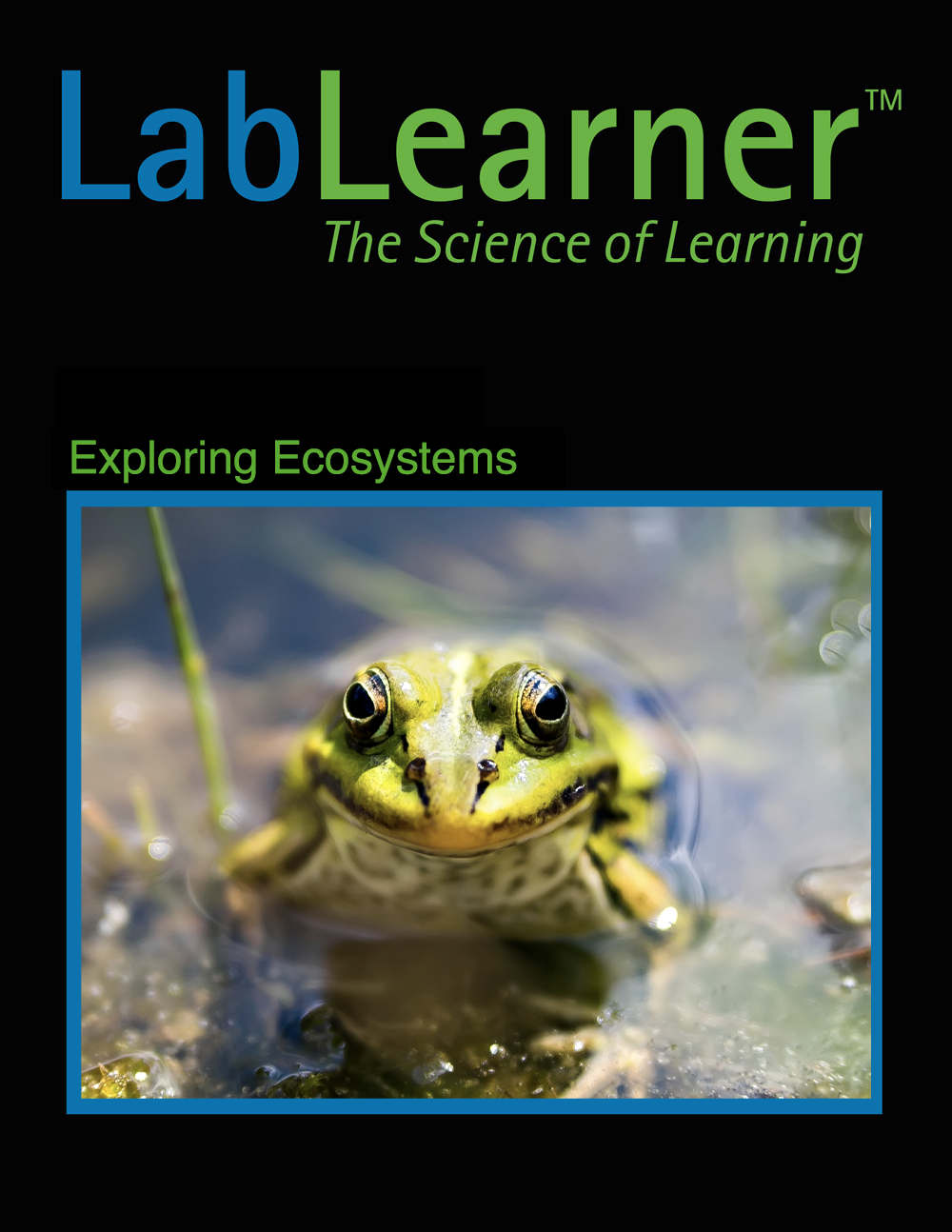 During this CELL, students will explore the fascinating and highly relevant science of Ecology. They will specifically focus on the concept of ecosystems and the adaptations made by organisms to survive in them.
Through experiments aimed at modeling food chains and food webs, students will begin to understand how a disturbance in one segment of an ecosystem can affect other, if not all, segments of that system. They will learn that food webs consist of different levels of organisms that all contribute to the total biomass of an ecosystem. They will see how important the plant producers are since they are able to directly harness energy from the sun through photosynthesis, converting it into forms that feed the entire ecosystem.
Students will come to appreciate that plants and animals in ecosystems are directly and indirectly affected by non-living components of the system, such as soil, precipitation, and temperature. By performing experiments, they will see that certain adaptations are required for plants and animals to survive in one ecosystem (wetlands, for example) versus another (forests, for example).
The concept of adaptation is further developed in experiments in which students will find that specific body structures can provide one species with a survival advantage over other species. In these same experiments, students will see that over long periods of time the environment in which organisms live may change and that organisms that cannot adapt to the changes may lose in competition to other species and become extinct. Further, the concept of extinction events in the fossil record is introduced in analyzing their experimental results.
Following further with the concept of adaptation in terms of a changing ecosystem, students will perform experiments that model the impact of the introduction of pollutants into the environment. Through analysis, students will ascertain the effect of lethal levels of toxins on animals that consume contaminated plants. They will also see how the impact of pollution moves up the food chain, from contaminated plant producers to herbivore consumers, and finally to carnivorous predators.
The ultimate goal of this CELL is to have students begin to understand and appreciate how fragile and interconnected ecosystems are. Ultimately, through experiments involving pollution, students will see that human beings are important members of ecosystems and that they can damage ecosystems and their own environment. They will appreciate that they themselves are interconnected to other organisms and non-living components of the ecosystems in which they live.
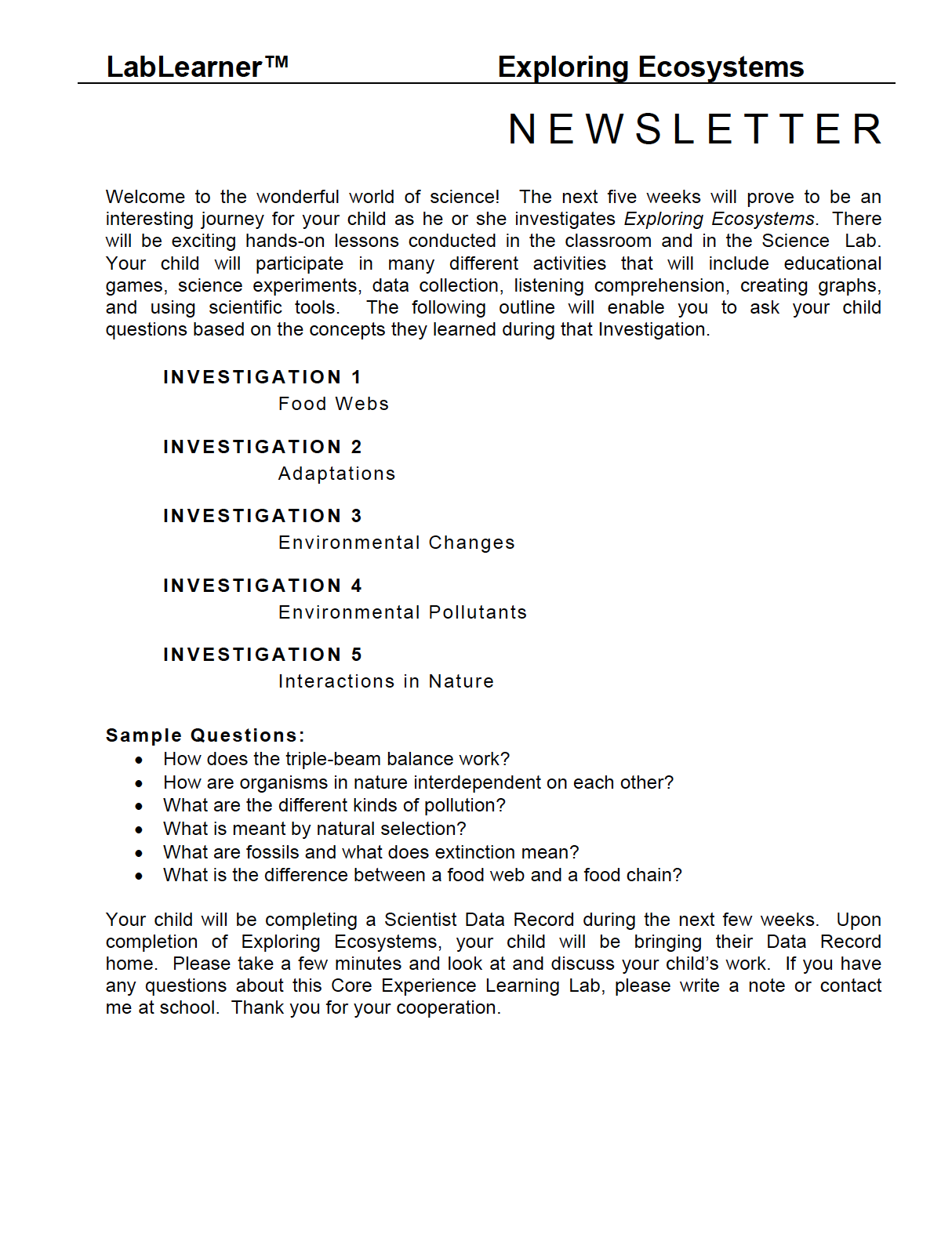
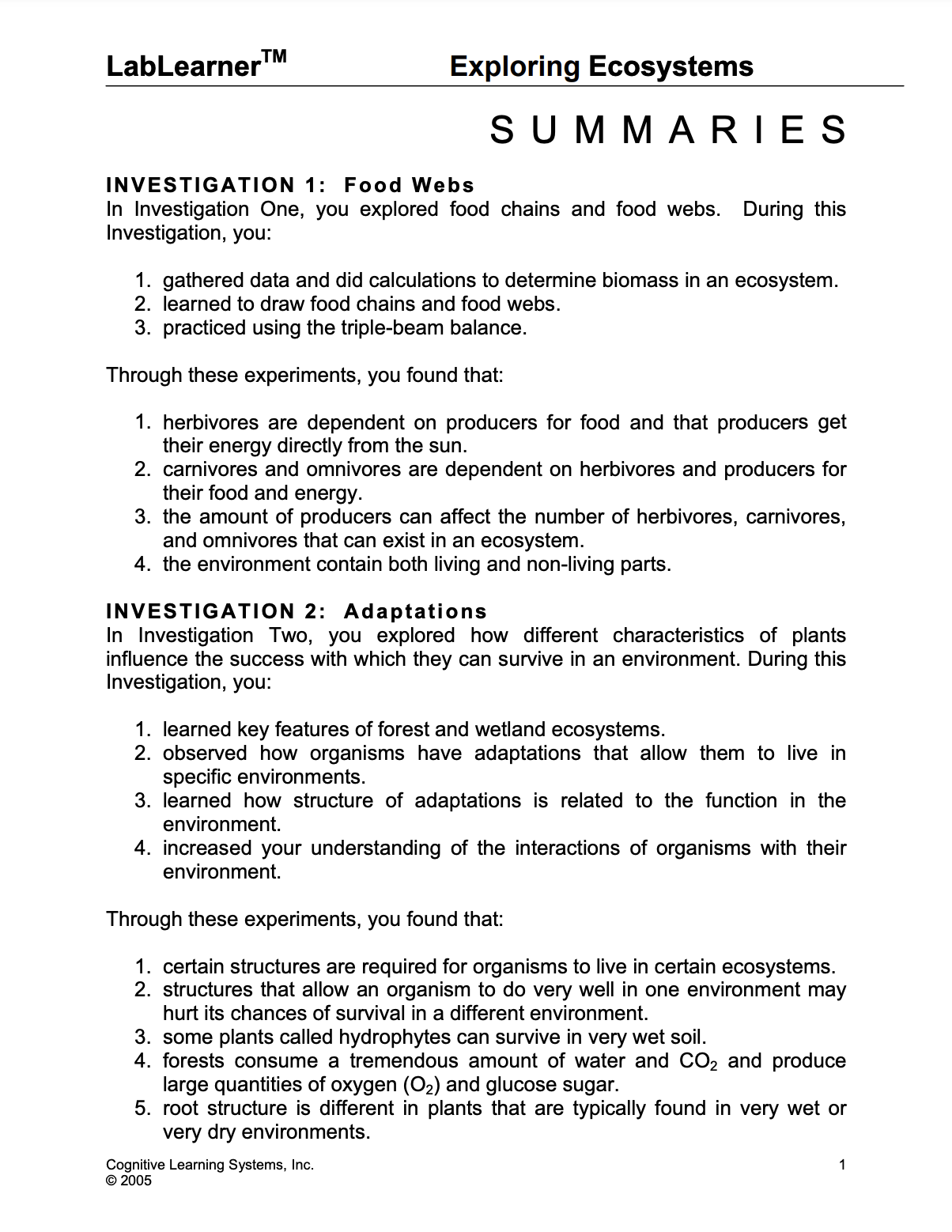
Exploring Ecosystems: Investigation 1 - Food Chains and Webs
In Investigation One, students perform experiments to understand the concepts of food chains and the food webs. They gather data and do calculations to determine the total biomass in an ecosystem.
Exploring Ecosystems: Investigation 2 - Adaptations
Students perform experiments that introduce them to the concept of adaptation to an ecosystem. They discover that certain types of structures are more suited for one ecosystem than another and that therefore one might expect that plants and animals living in specific ecosystems may have similar structural adaptations for their survival.
Exploring Ecosystems: Investigation 3 - Environmental Changes
Through experimentation, students explore the impact of environmental changes on the primary food supply in an ecosystem. Through analysis of experimental data, they discover that changes in food supply directly affect animal consumers and that consumers are in competition with each other to survive in a changing ecosystem. They also are introduced to the concept of extinction and the fossil record.
Exploring Ecosystems: Investigation 4 - Environmental Pollutants
Students explore the impact of pollution on ecosystems. They discover, through model building and experimentation, that pollution does not stay in one place in an ecosystem, but may move from one place to another, thereby contaminating segments of the environment quite remote from the point of pollution.
Exploring Ecosystems: Investigation 5 - Interactions in Nature
Students conclude their exploration of the environment by investigating the impact of pollution on an entire ecosystem and the animals that live there. They discover, through experimentation, the impact of pollution on reducing the amount of plant producers and its subsequent impact on herbivore consumers and their carnivorous predators. Students find that animals may not even know that they are consuming contaminated food. They also examine how toxic pollutants may pass up the food chain from contaminated plants to herbivore consumers to the carnivores that feed on them.
Exploring Ecosystems: Investigation 6 - Performance Assessment
In this Performance Assessment, students are required to combine conceptual knowledge regarding extinction and the structure of a fossil record with knowledge of the effect of environmental changes and the amount of a novel species – trilobites. Students apply procedural skills such as using the triple beam balance and interpreting a graph in order to construct a model fossil record that can then be used to support further reasoning.
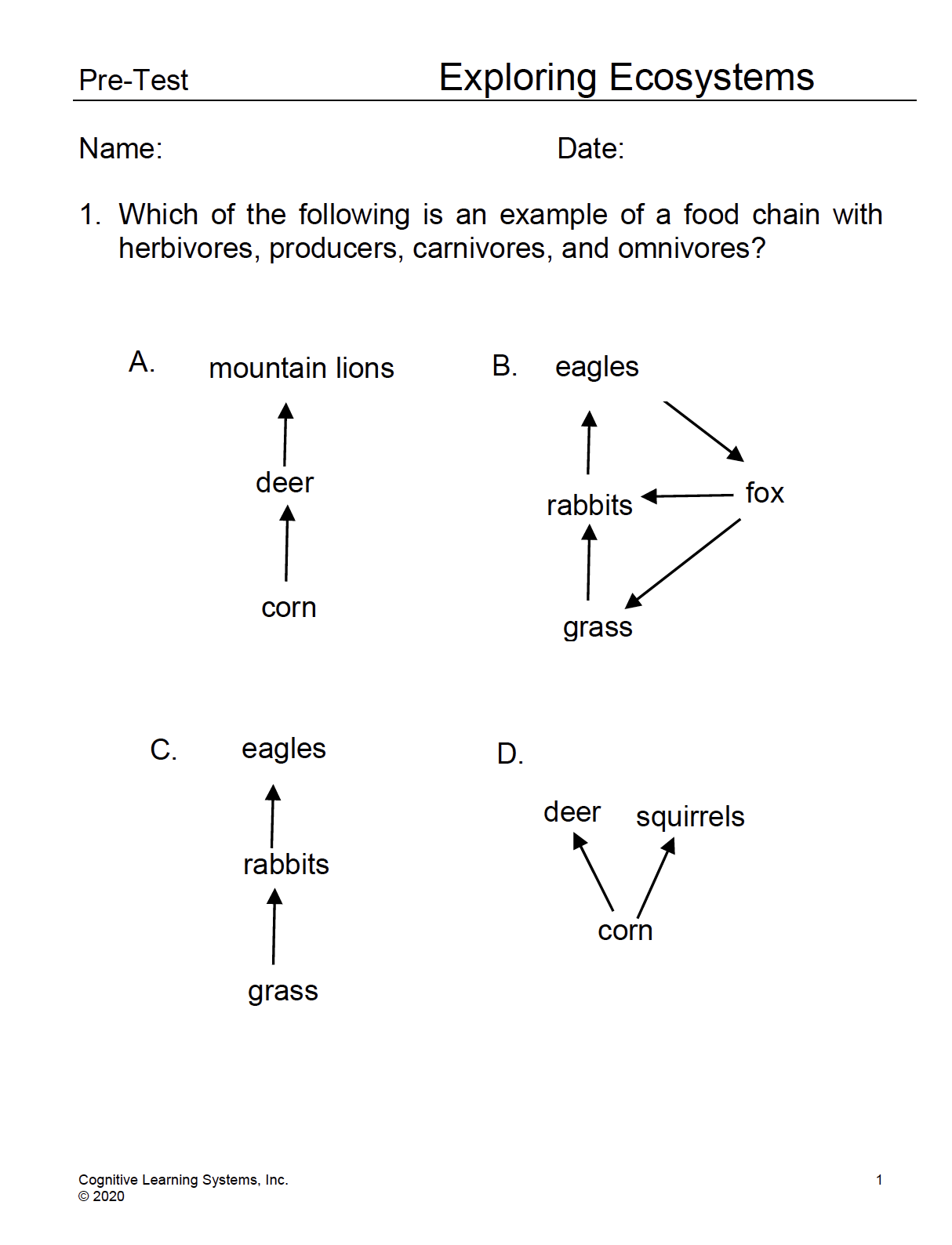
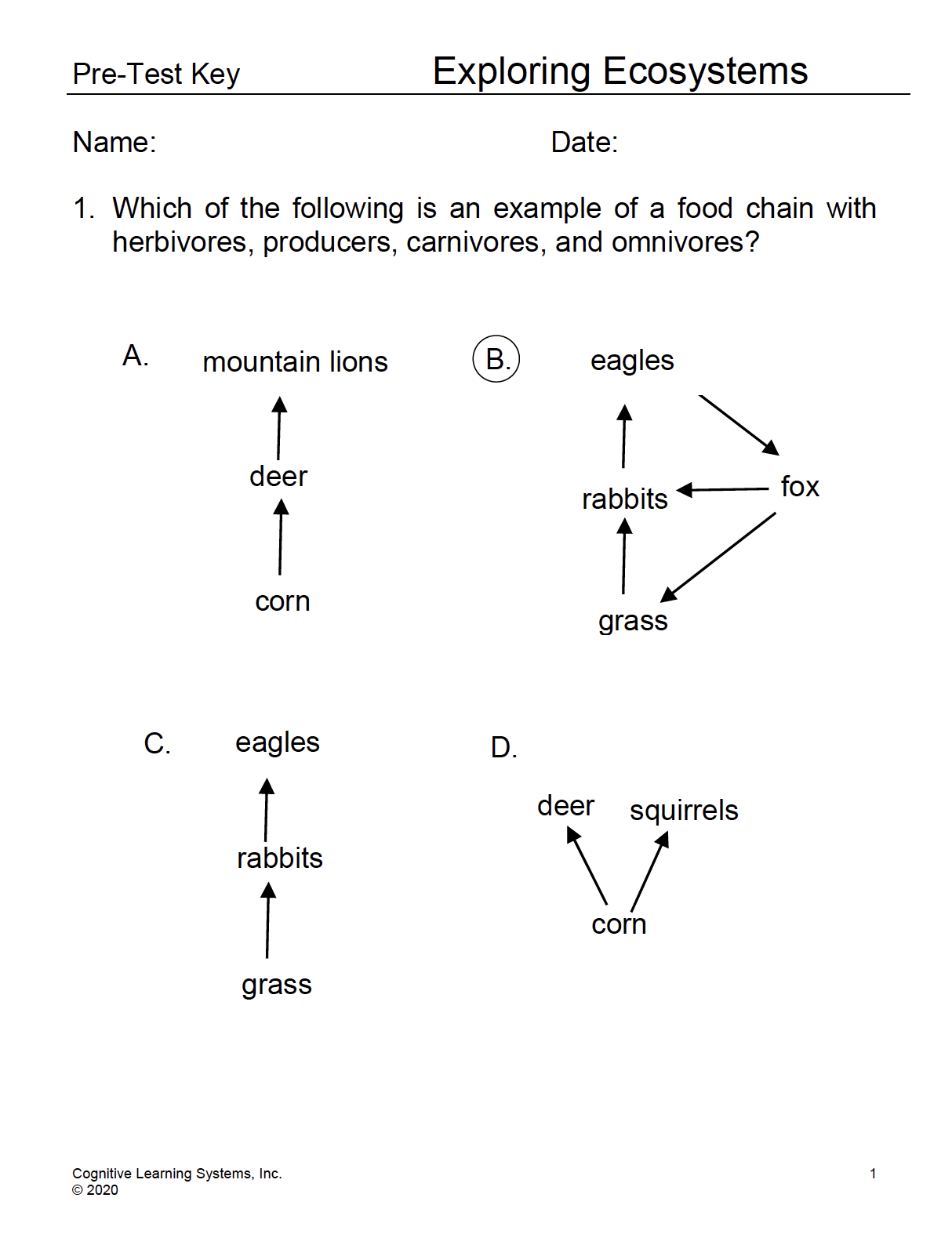
Pre-Test KEY
Includes NGSS correlations
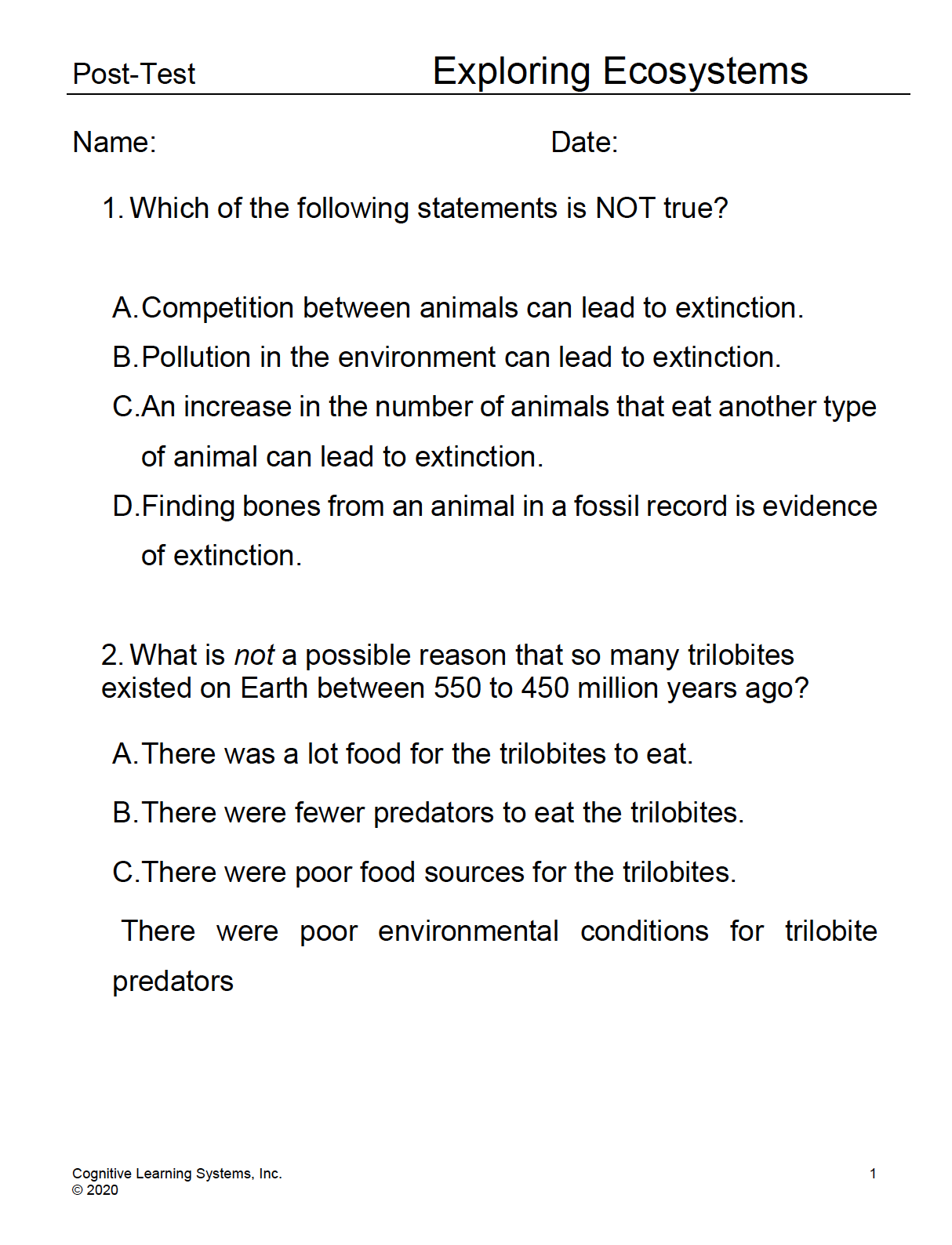
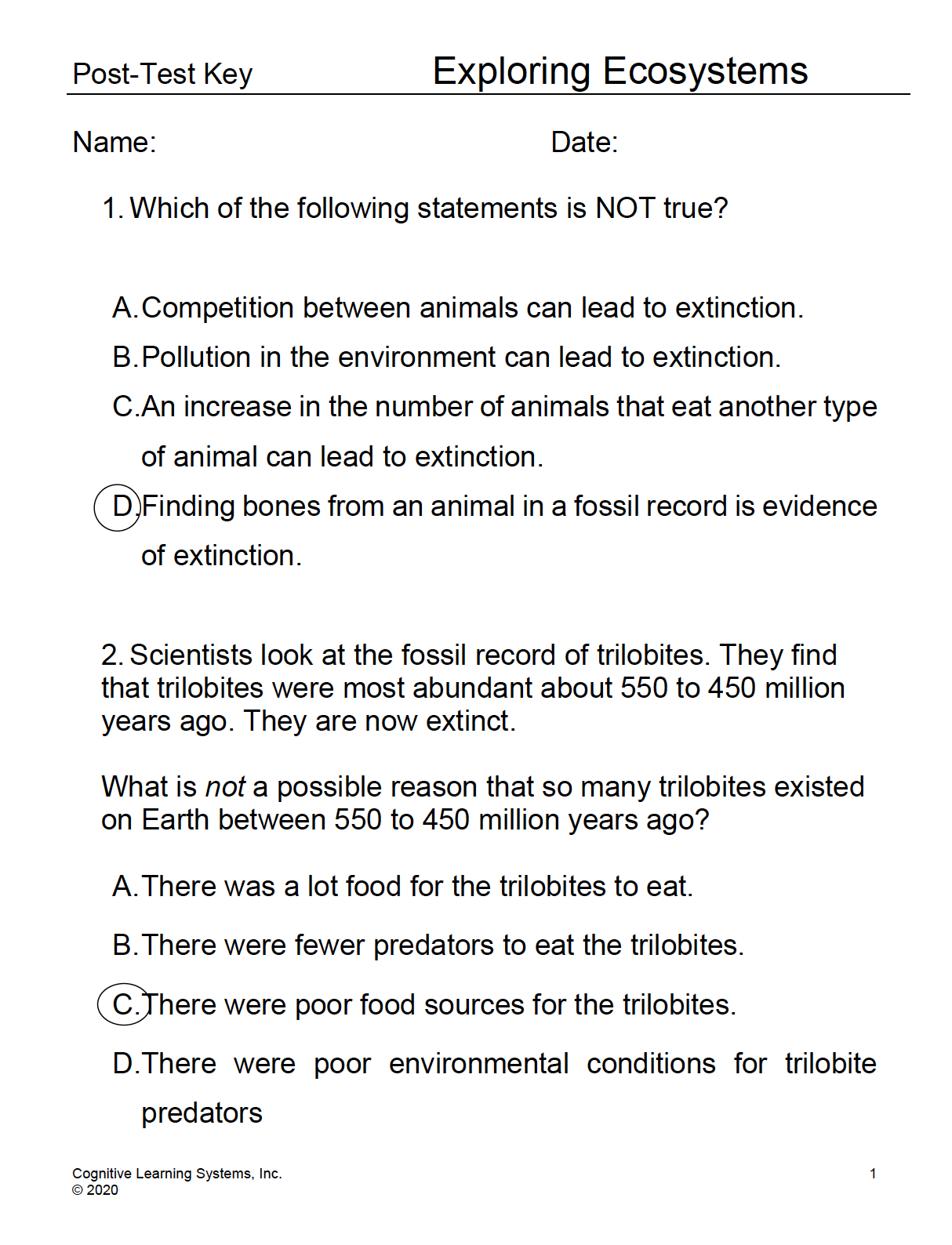
Post-Test KEY
Includes NGSS correlations