
Teacher Portal:
Exploring Ecosystems
Investigation 1
Investigation One: Food Chains and Webs
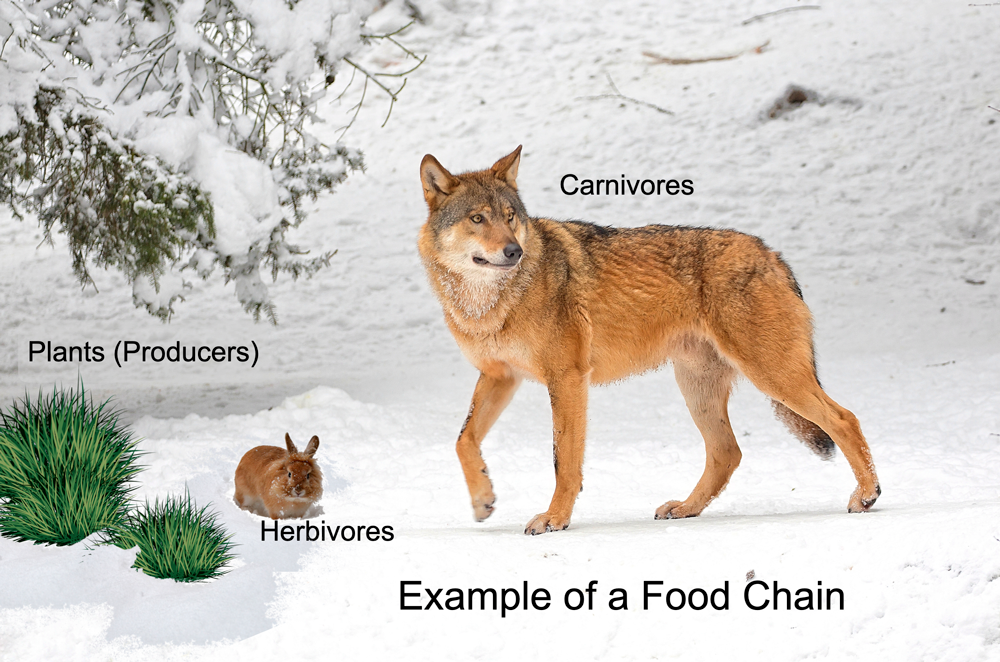
The environment is defined as all of the factors, both living and nonliving, that surround and affect an individual organism or biological community. An ecosystem is defined as a community of organisms and their non-living environment. The environment includes weather, climate, as well as soil and rocks, humidity, and rainfall. Earth’s ecosystems include forests, deserts, oceans, the Arctic, coral reefs, grasslands, and tropical rain forests. Every ecosystem contains patterns of feeding and being fed upon, a pattern known as a food chain. All animals eat other living things. Some animals eat only other animals, some eat only plants, and some eat both. Every ecosystem supports many food chains, most of which consist of three to four levels. An example of a simple food chain is shown below.
Producers: Plants and Photosynthesis
Plants are Producers. They form the bottom of many food chains. Plants are called producers because they make their own food. They do this through a light-requiring process known as photosynthesis. Photosynthesis produces oxygen and sugar (glucose) from carbon dioxide and water in the presence of the pigment chlorophyll and sunlight. The illustration below shows the photosynthesis reaction. In this reaction, energy from the Sun is used by plants to make them grow. In the process, they form lots of oxygen gas (O2). This is very fortunate for us animals because we need oxygen to breathe and play.
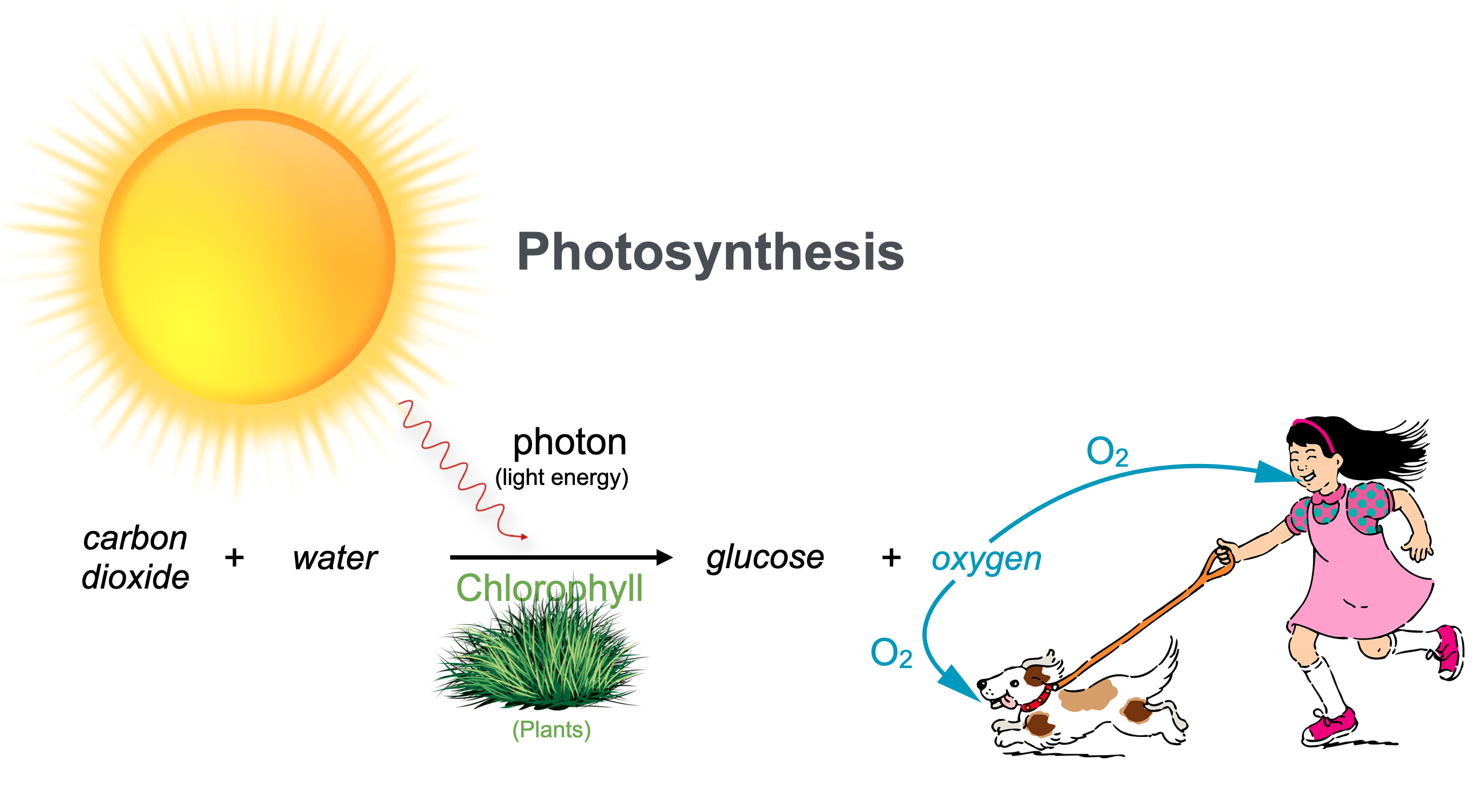
In order to perform photosynthesis, plants must get their water from the soil and absorb carbon dioxide through their leaves. Chlorophyll is found in photosynthesizing plants. It absorbs energy from the sun and uses it to help the plant grow and produce oxygen and glucose. Plants are vitally important to many ecosystems, for without them the air would soon lose oxygen, and oxygen-breathing organisms would die.
Herbivores
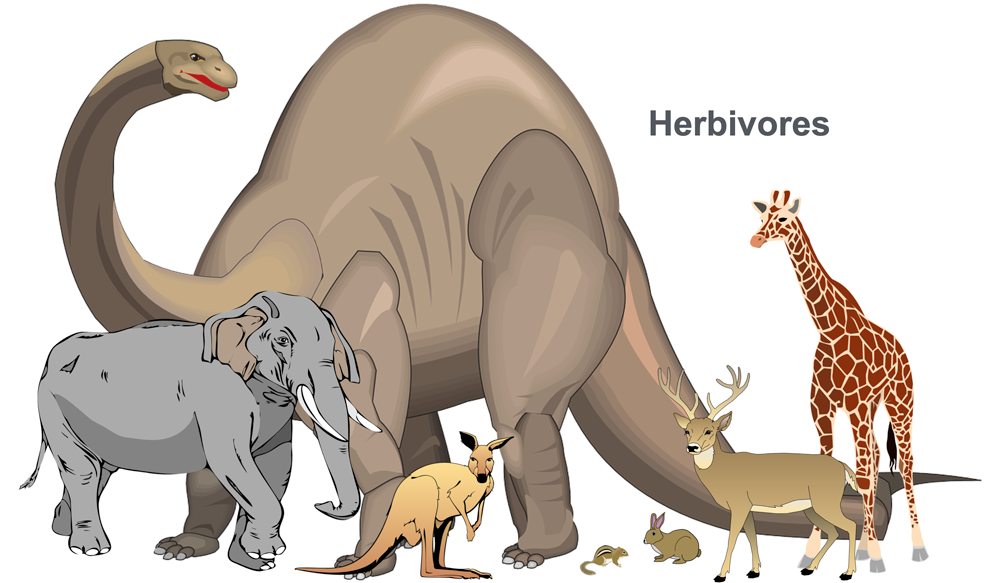
After the producers, herbivores form the next level of any food chain. These are animals that only eat plants. Herbivores must eat a lot of plants to survive. In fact, many herbivores must spend most of their time eating in order to survive.
Carnivores
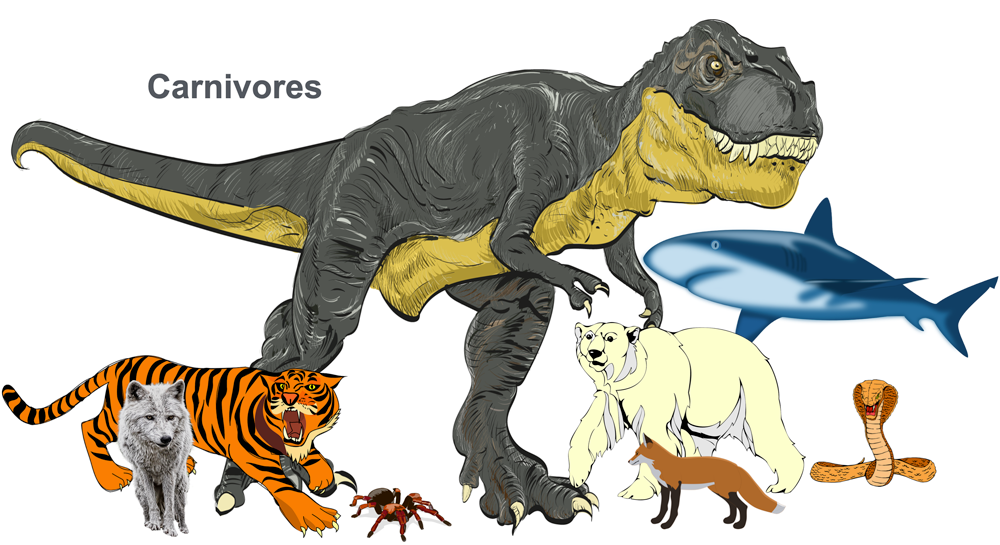
After producers and herbivores, either carnivores or omnivores or both form the next level of food chains. Carnivores are meat eaters and most are predators that hunt and kill their food (their prey). (However, it is interesting to note that although the majority of many carnivores’ diet consists of other animals, there are some carnivores that may eat small amounts of seeds or berries in addition to meat.)
Omnivores
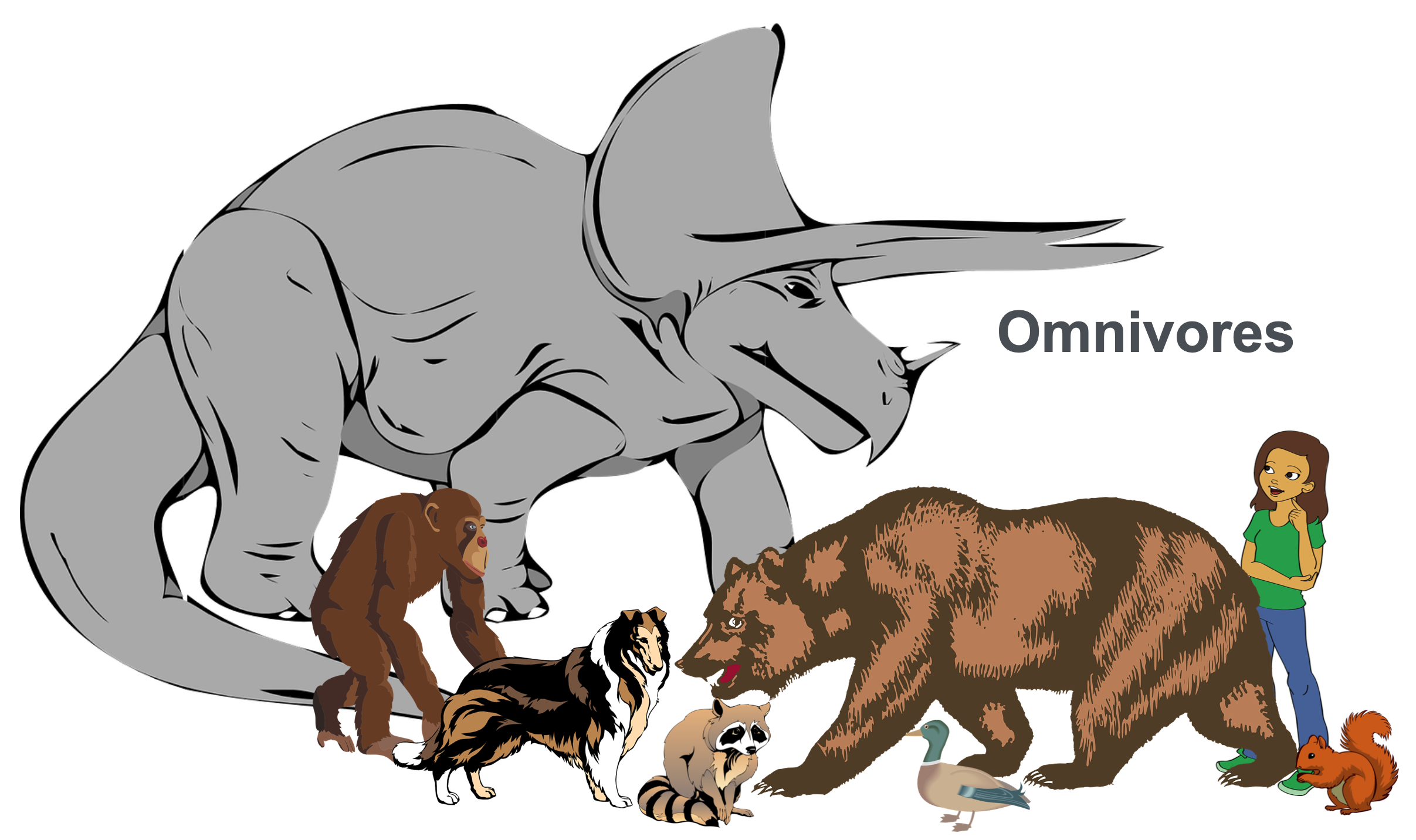
Omnivores, on the other hand, have diets that routinely contain both plants and meat. Through predation, predators (both carnivores and omnivores) tend to exert control over the number of herbivores in an ecosystem. If a sufficient number of herbivores are not stalked and killed, their populations would increase to the point that plant life in the ecosystem could actually become threatened.
Biomass
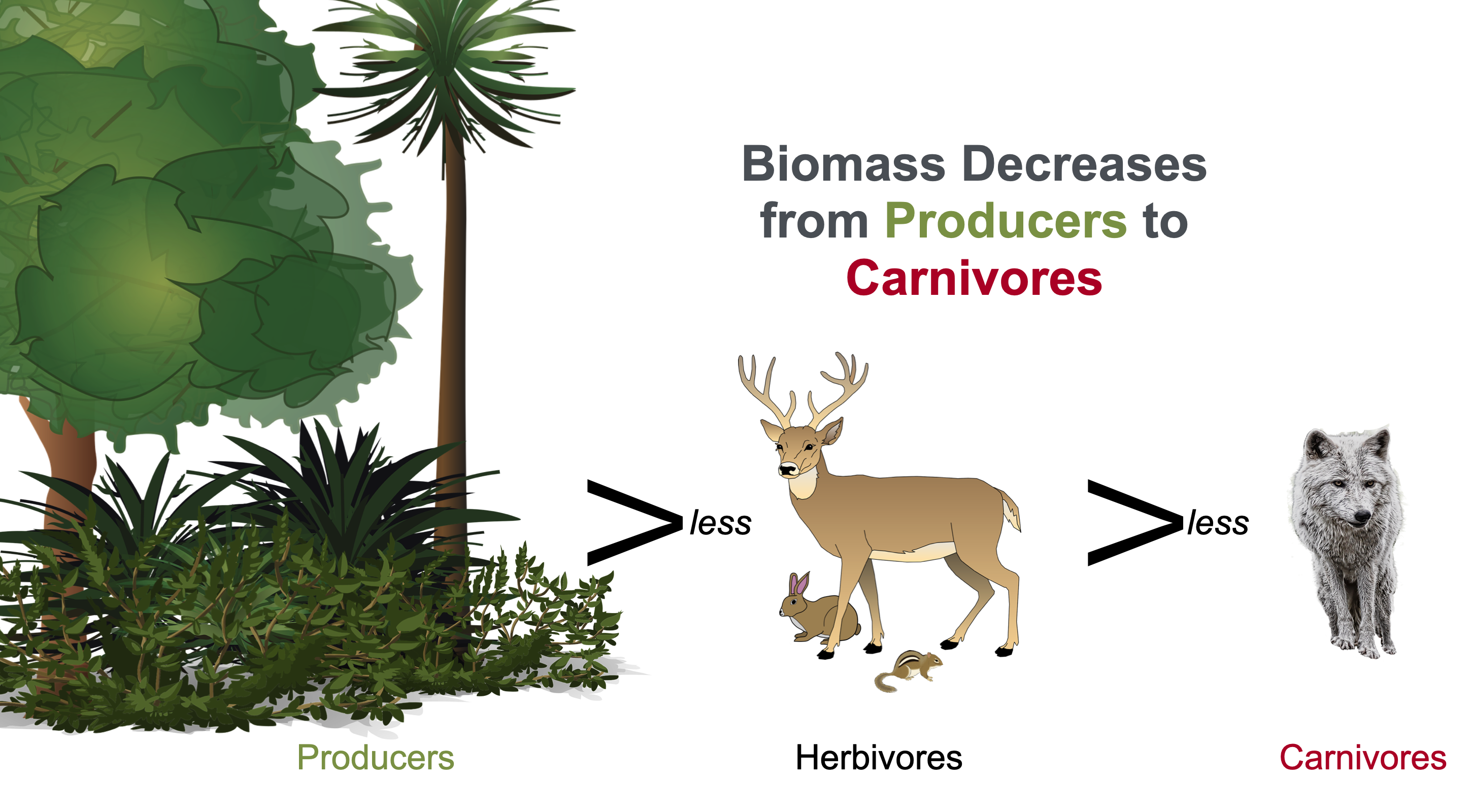
The total mass of living matter in an ecosystem is its biomass. Biomass is typically measured in kilograms (often in millions of kilograms). All living members of an ecosystem, plants, and animals, contribute to its total biomass.
The biomass of the producers is generally greater than that of any other level. Biomass then progressively decreases going up through the food chain. Therefore, the biomass of herbivores is less then that of the producers while the biomass of carnivores and omnivores is still less. In this Investigation, students will compare producers, consumers, and the relationship of the biomass within a food chain.
Food Webs
When food chains overlap, that is, when there are interactions between plants and animals from different food chains, a food web results. In every ecosystem, there are numerous food webs and food chains. Rarely does an animal eat only one type of plant or animal. In the illustration below, the simple plant, rabbit, and wolf food chain we have already studied is expanded to become a food web.
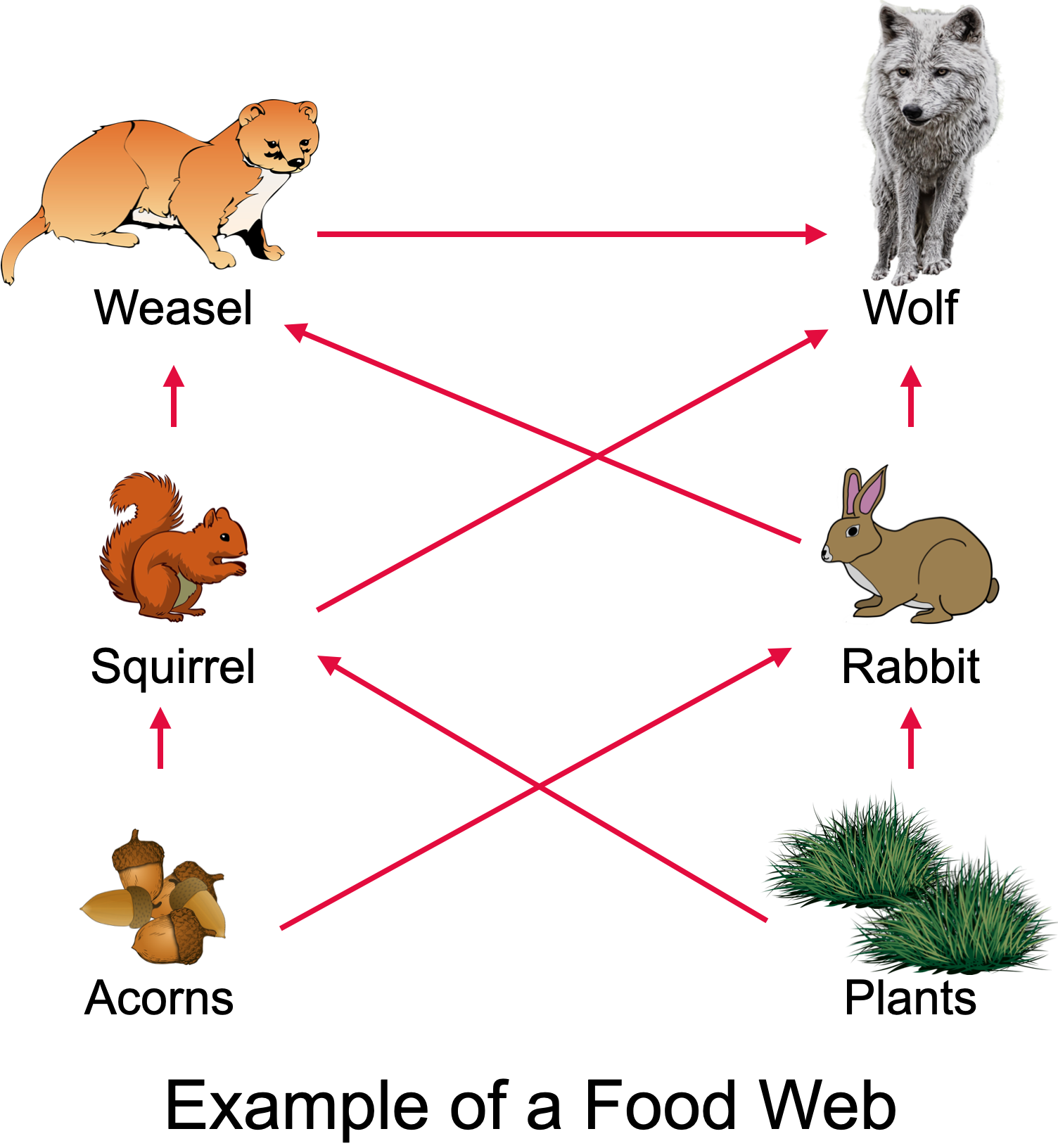
Food webs are intricately related within ecosystems. The multitude of interactions between organisms and their environment is expressed in a relationship known as interdependence. The interdependence between elements of an ecosystem results in a rippling effect of a disturbance in any one area of the system to the system as a whole. The study of the complex interdependencies and interrelationships between organisms and the environment is known as Ecology. Therefore, Ecology is a very important science, for it not only seeks to answer questions about the wonderful complexity of the world we live in, but it also has very practical applications to human beings, as we shall see throughout this CELL.
Exploring Ecosystems: Investigation 1-Mathematics Concepts
Prelab
• grouping/classifying
• comparing (non)measurable characteristics
• mass in grams
• addition
• place value (ones, tens, hundreds)
Lab
• mass in grams
• volume in mL
• addition
• whole numbers to the nearest tenth
• data table
• counting whole numbers
• grouping/classifying
Postlab
• grouping/classifying
• least to greatest
• data table
• data analysis
• addition
• mass in grams
• bar graph
• skip counting by 10’s
Exploring Ecosystems: Investigation 1 - Procedural Tools

Exploring Ecosystems: Investigation 1 - Cognitive Tools

Exploring Ecosystems:
Investigation 1 Quiz

