
Teacher Portal:
Exploring Ecosystems
Investigation 1 – Lab
 BE PREPARED
Supplies and Equipment:
Class Materials
- 10 100 ml beakers
- 20 plastic straws
- pinto beans
- kidney beans
Group Materials:
- 2 100 ml beakers
- 8 straw halves
- 10 yellow gram cubes
- 11 orange gram cubes
- 10 red gram cubes
- 10 brown gram cubes
- 30 green gram cubes
- 1 beaker of pinto beans
- 1 beaker of kidney beans
Individual Materials:
- 1 Student Data Record
Teacher Preparation:
1. For each group, fill a 100 ml beaker to the 75 ml mark with pinto beans.
2. For each group, fill a 100 ml beaker to the 75 ml mark with kidney beans.
3. Cut the 20 straws in half to make 40 shorter straws.
4. Place the materials each group will need at a distribution point.
5. Separate the class into five cooperative groups.
Instruction:
1. Instruct each student group to obtain the following necessary materials from the distribution point: two (2) 100 ml beakers, ten (10) small bears (4 g), eight (8) straw halves, eleven (11) orange gram cubes, ten (10) red gram cubes, ten (10) brown gram cubes, thirty (30) green gram cubes, one (1) beaker of pinto beans, and one (1) beaker of kidney beans.
Note: You may need to use both light green and dark green gram cubes to have enough for each group.

GET FOCUSED
Investigation One introduces students to the concept of biomass, food chains, and food webs.
INVESTIGATE
Trial 1
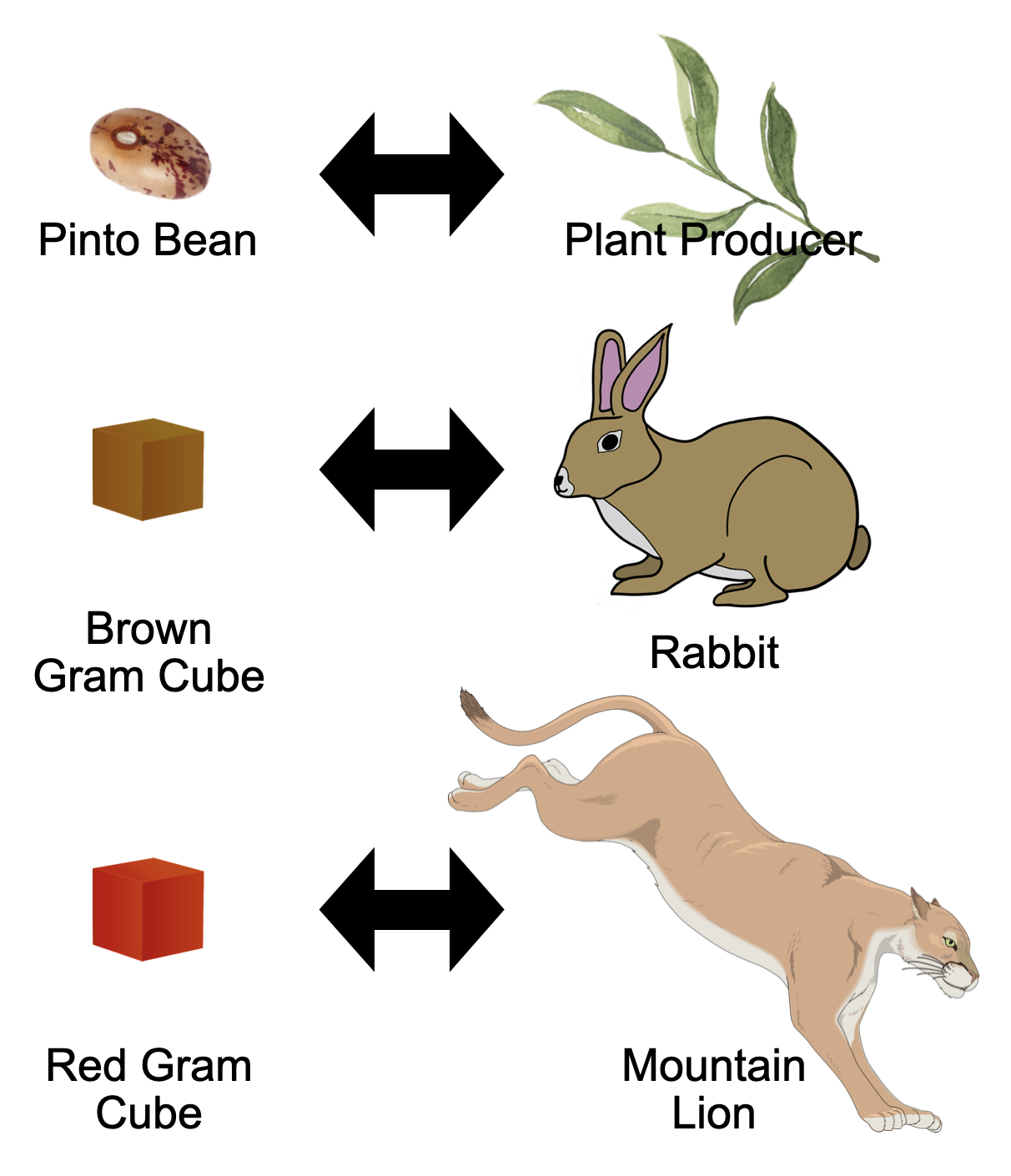 1. In Trial 1 students will model a food chain using manipulatives to represent the producers, herbivores, and carnivores. Students will determine the number of organisms that can be supported by the available biomass in the ecosystem. After building the model food chain, students will combine it with another food chain in Trial 3 to construct a food web. The passages that follow are provided to assist in directing students as they conduct their experiments.
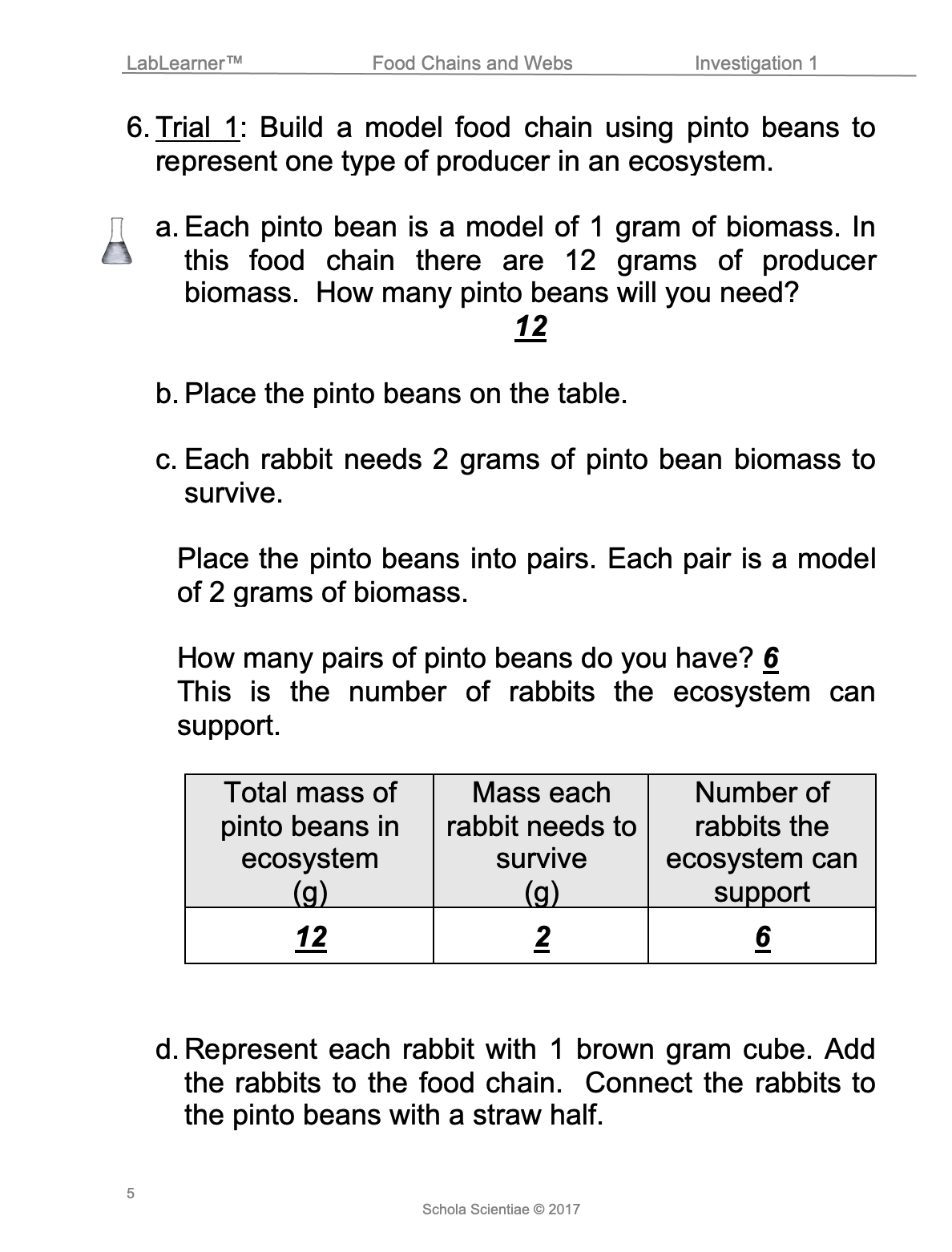
a. Direct each student group to obtain 12 pinto beans.
b. Students should place pinto beans on the bench. Tell students that the pinto beans represent one type of producer (plant) in the ecosystem. Each pinto bean represents one (1) gram of pinto bean biomass.
c. Explain to the students that they will be using gram cubes to represent the other organisms in the food chain.
- Brown gram cubes represent rabbits (herbivores). Explain to students that the number of rabbits in the food chain depends on the amount of food available. Each rabbit needs 2 grams of pinto bean biomass to survive. Students should divide the pinto beans into pairs to determine the number ofrabbits the ecosystem can support. Students should record the number of rabbits the ecosystem can support in the Table in Problem 6c.
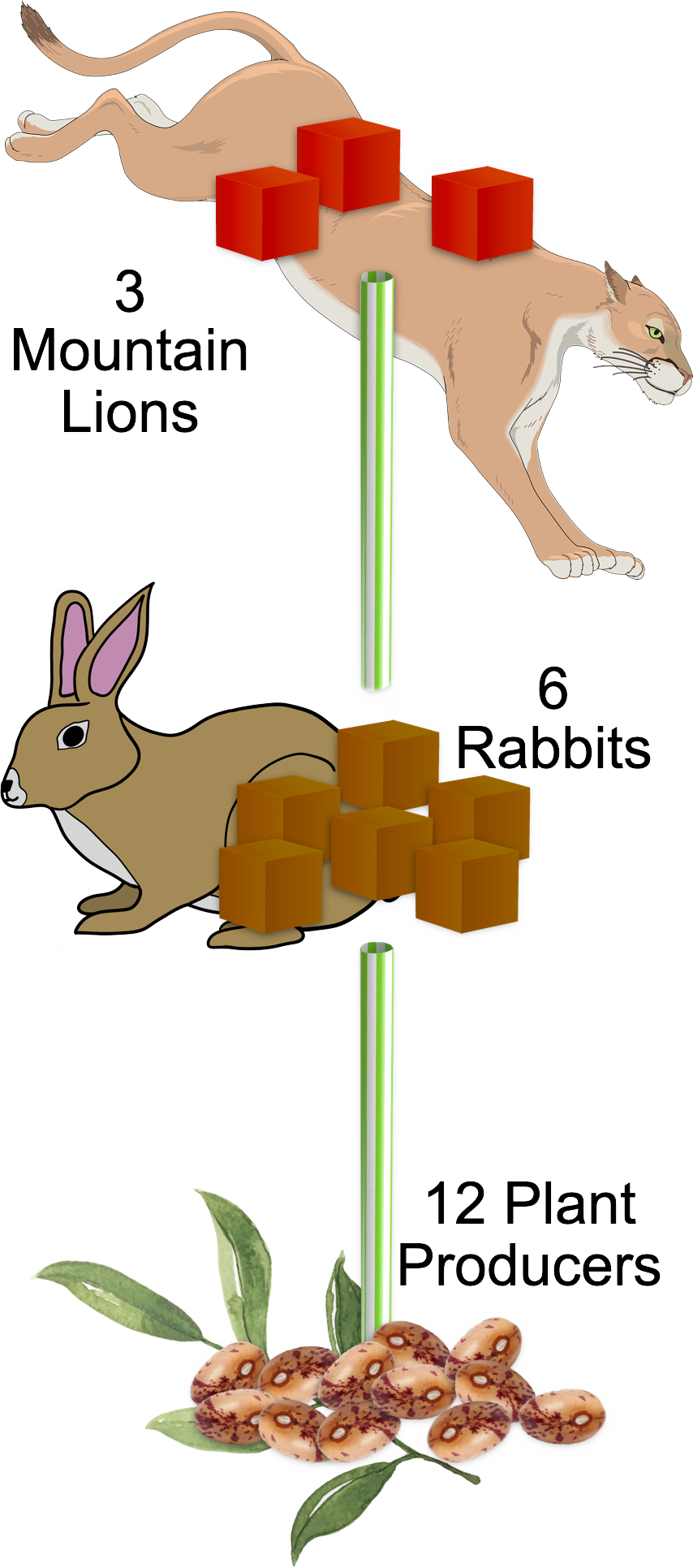
- Ask one student in each group to count out the number of brown gram cubes and place them above the pinto beans on the bench.
- A second student should place a straw half between the pinto beans and the brown gram cubes (rabbits).
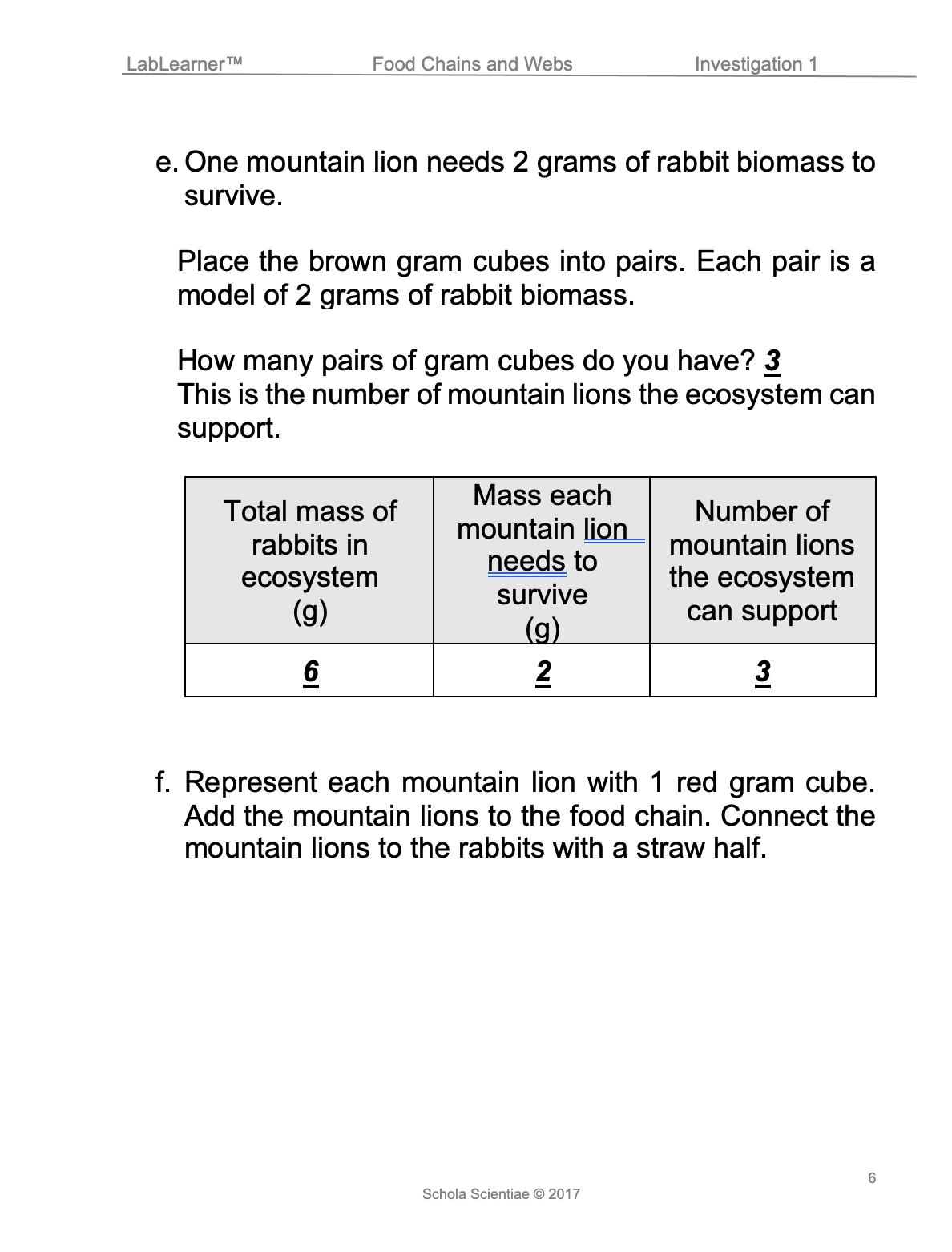
- Red gram cubes represent mountain lions (carnivores). Each mountain lion needs 2 grams of rabbit biomass to survive. Tell students that 1 gram cube equals 1 gram in this model. Students should divide the brown gram cubes (rabbits) into pairs to determine the number of mountain lions the ecosystem can support. Students should record the number of mountain lions in Problem 6e.
- Ask one student in each group to count out the number of red gram cubes and place them above the brown gram cubes.
- A second student should place a straw half between the brown and red gram cubes.
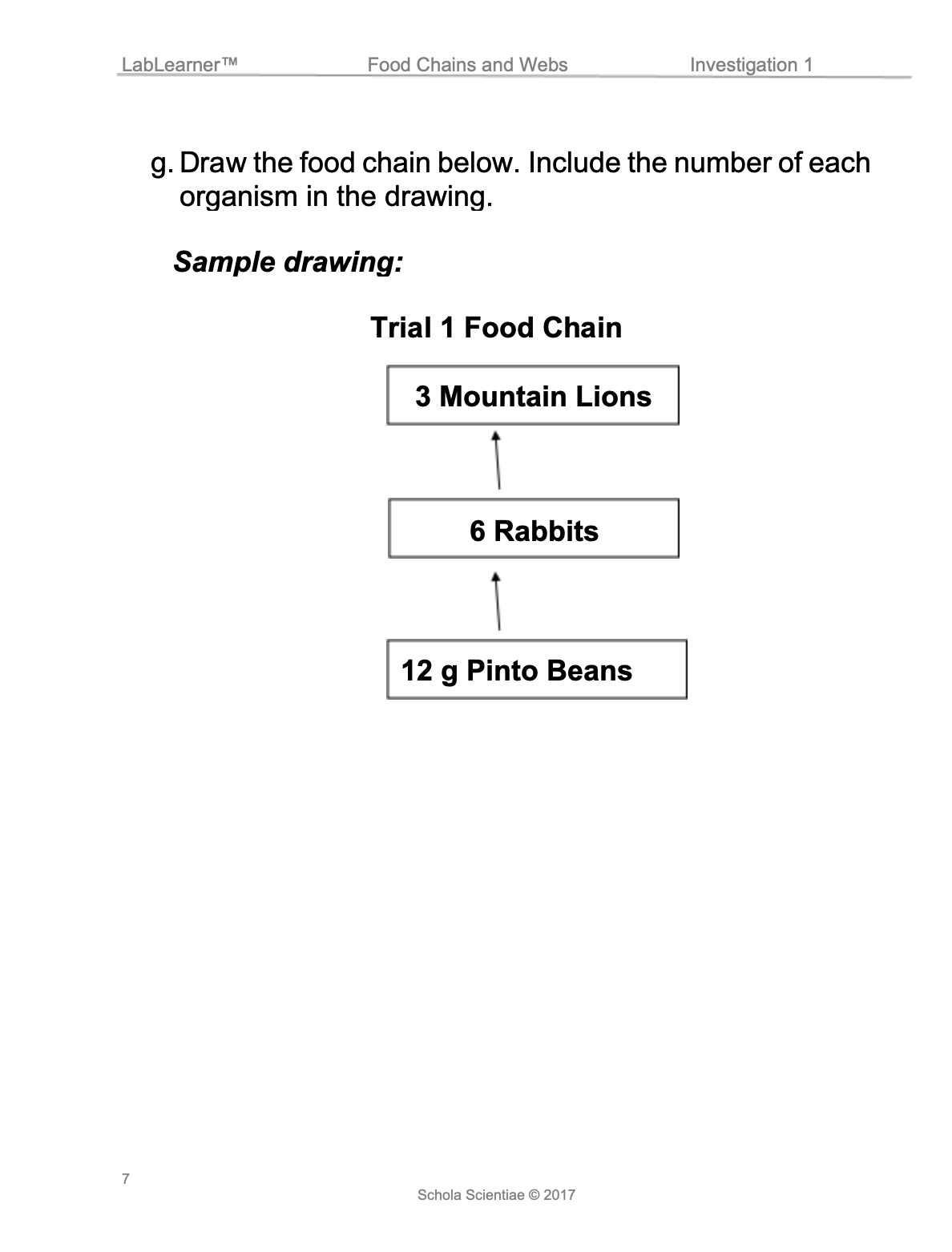
d. Direct students to make a drawing of the model food chain in Problem 6g. Students should include the name and quantity of each organism in the drawing.
Trial 2
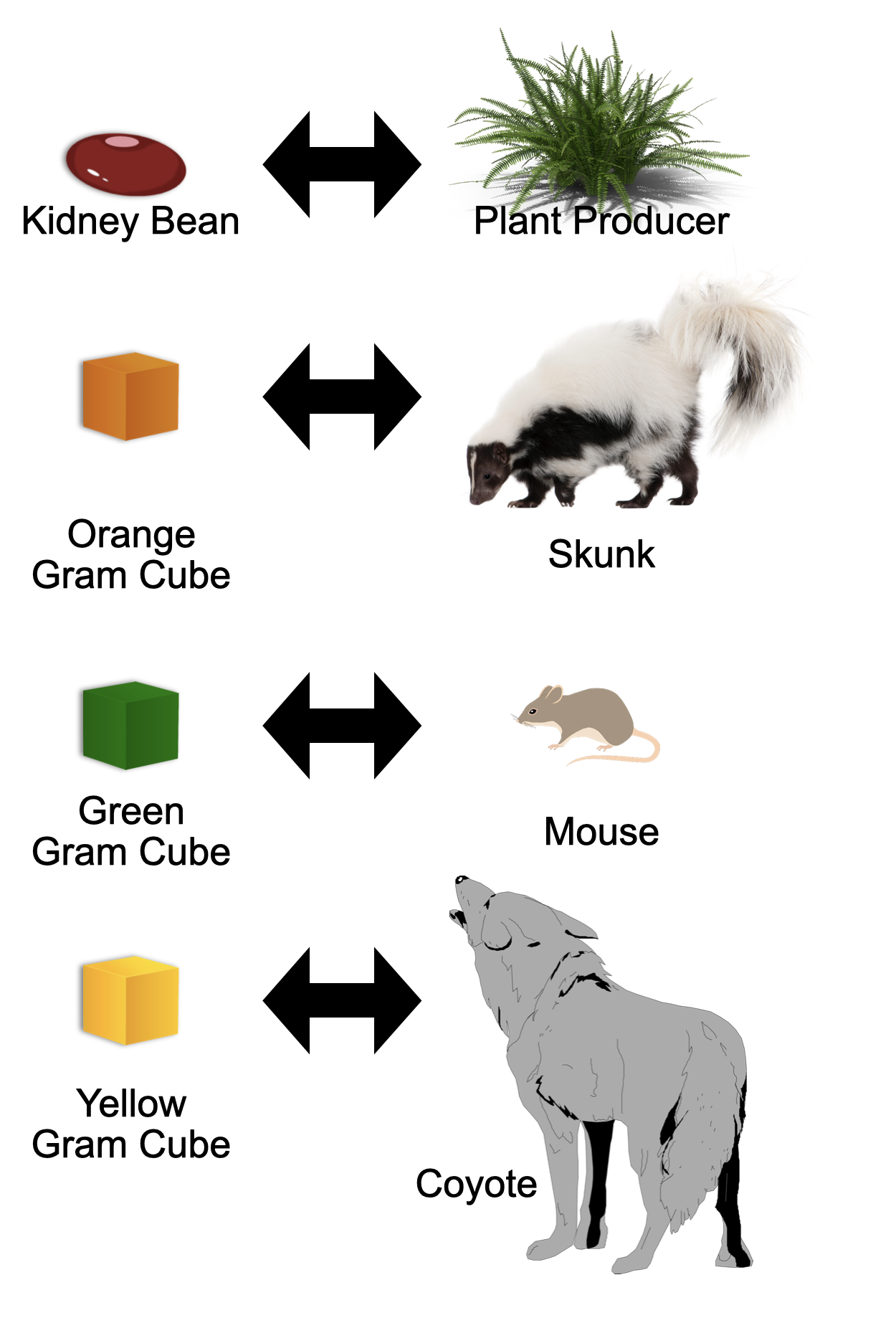 Tell students that they will be building a model of a second food chain found in the ecosystem. Explain that in this Trial, students will use kidney beans to represent a different producer (plant) in the ecosystem. If necessary, students may label each collection of cubes with the name of the animal or plant they represent.
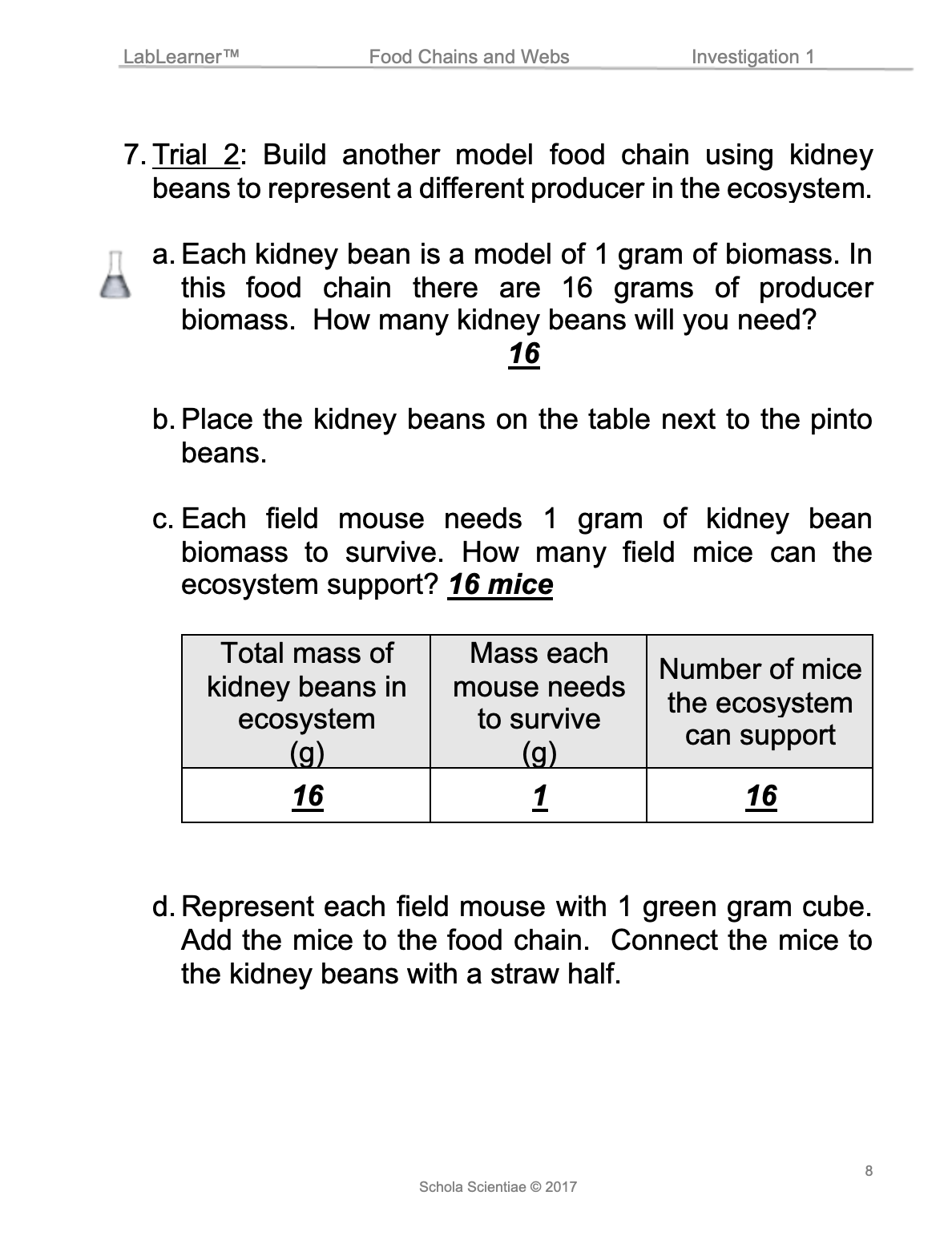
a. Direct each student group to count 16 kidney beans. Each kidney bean represents one (1) gram of kidney bean biomass.
b. Students should place the kidney beans next to the pinto beans. There should be approximately 6 cm between the two types of beans.
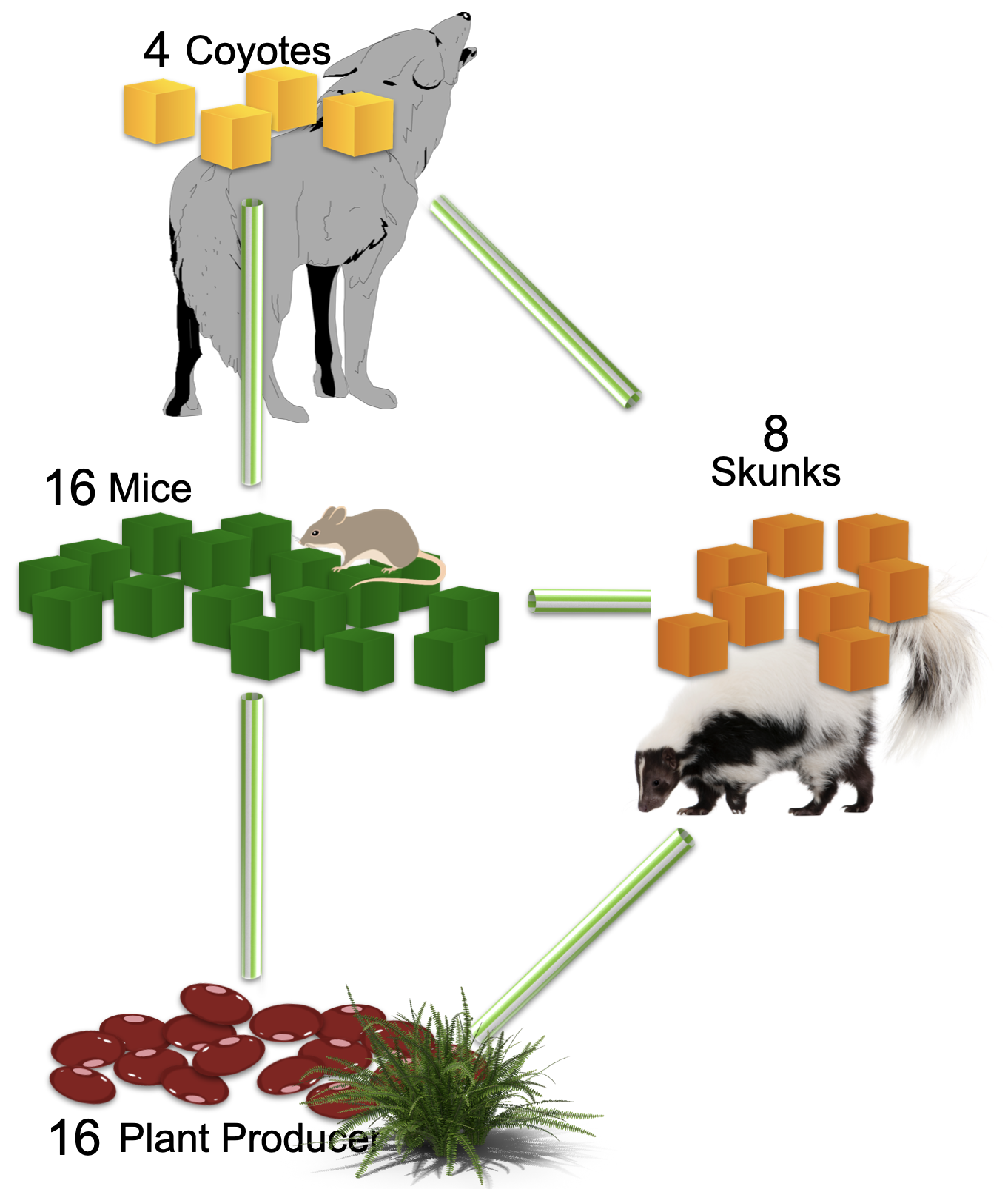
c. Students should add gram cubes to represent mice and skunks in the second food chain.
- Green gram cubes represent mice (herbivores). Each mouse needs 1 g of kidney bean biomass to survive. Students should use the table in Problem 7c to determine the number of mice the ecosystem can support.
- Ask one student in each group to count out the number of green gram cubes and place them above the kidney beans on the bench.
- A second student should place a straw half between the kidney beans and the green gram cubes.
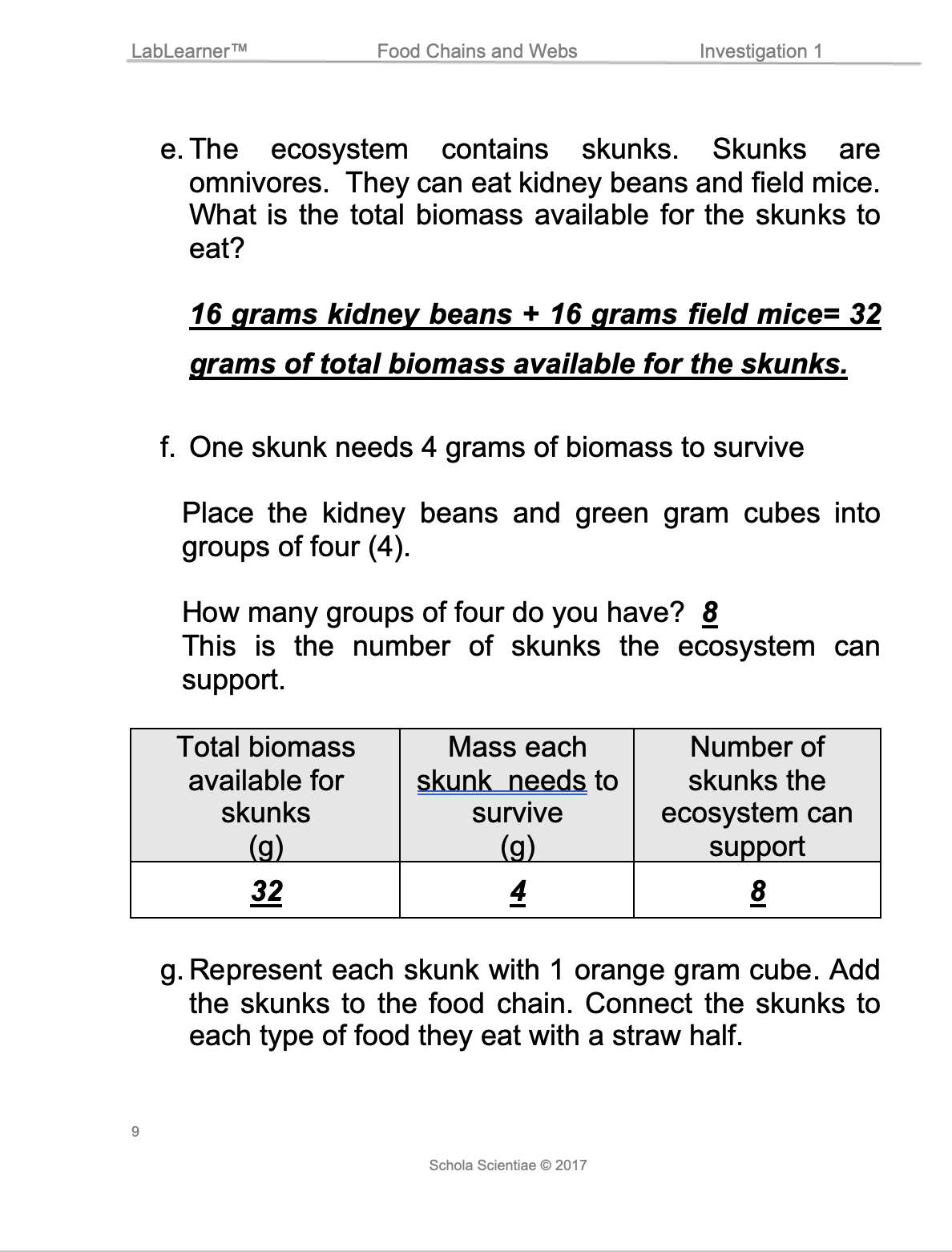
• Orange gram cubes represent skunks (omnivores). Each skunk needs 4 grams of mouse biomass to survive.
 • Review the term omnivore with the students. Ask students: What do omnivores eat? Omnivores eat plants and animals.
• Explain that in this ecosystem, skunks can eat kidney beans or mice.
• Read Problem 7e to the class or ask for a student volunteer to read the problem aloud. To determine the total amount of biomass that is available for skunks to eat, students need to add the total amount of kidney beans and mice in the ecosystem. Remind students that 1 gram cube represents 1 gram of biomass in this model. Students should show their calculations in Problem 7e in their Student Data Records.
• Students should divide the kidney beans and green gram cubes into groups of four (4) to determine the number of skunks the ecosystem can support.
• Ask one student in each group to count out the number of orange gram cubes (skunks) and place them to the side of the green gram cubes.
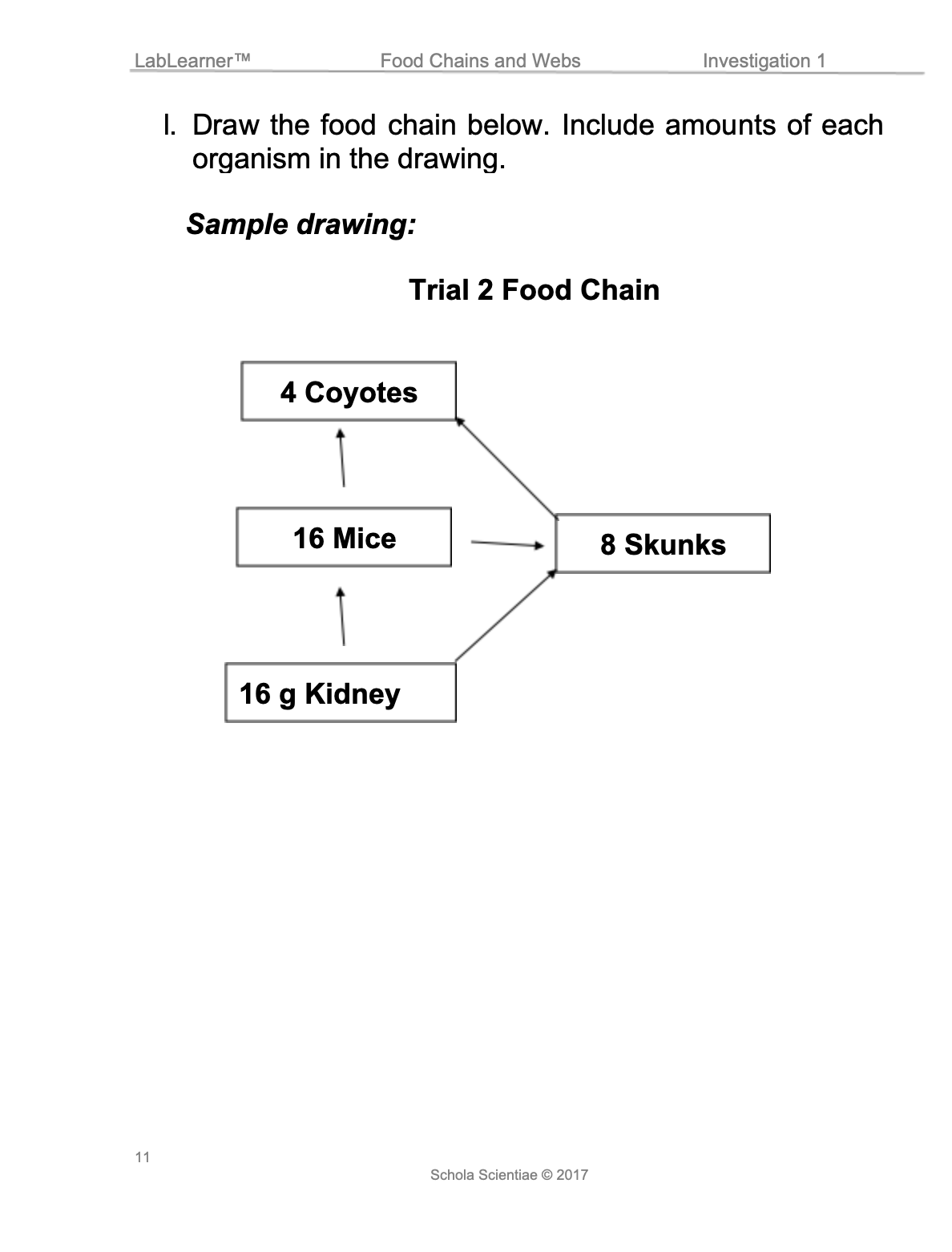
• A second student should place a straw half between the green and orange gram cubes and a straw half between the orange cubes and the kidney beans.
d. Tell students that this food chain involves a fourth organism in the ecosystem, coyotes. Coyotes are carnivores.
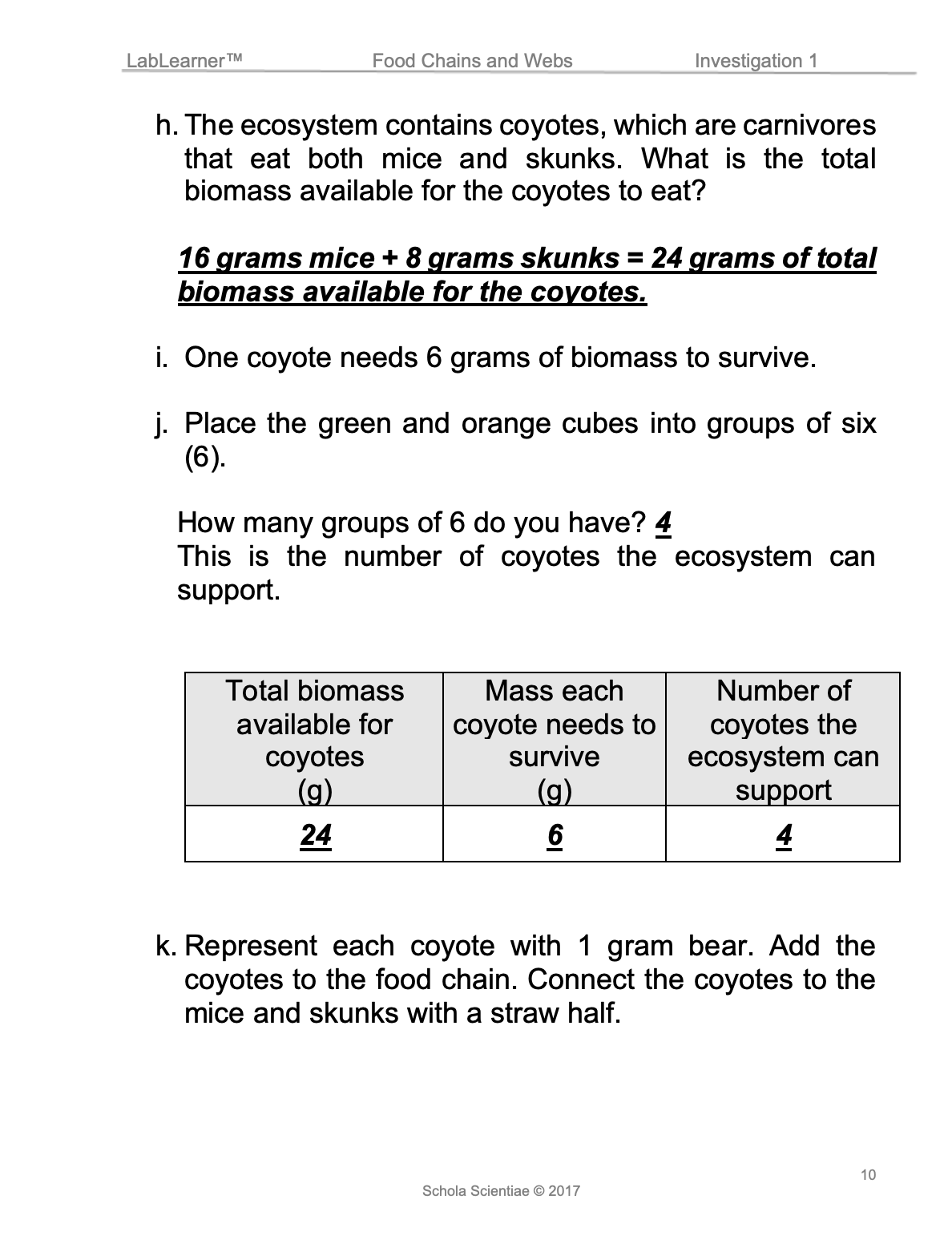
• Yellow gram cubes represent coyotes in the model. Each coyote needs 6 grams of biomass to survive. Students should divide the green and orange cubes (mice and skunks) into groups of 6 to determine the number of coyotes the ecosystem can support. Students should record the number of coyotes the ecosystems can support in the Table in Problem 7j.
• Ask one student in each group to count out the number of yellow gram cubes and place them above the green and orange cubes.
• A second student should place a straw half between the yellow cubes and orange cubes, and a straw half between the yellow cubes and green cubes.
e. Direct students to make a drawing of the model food chain in Problem 7l. Students should include the name and quantity of each organism in the drawing.
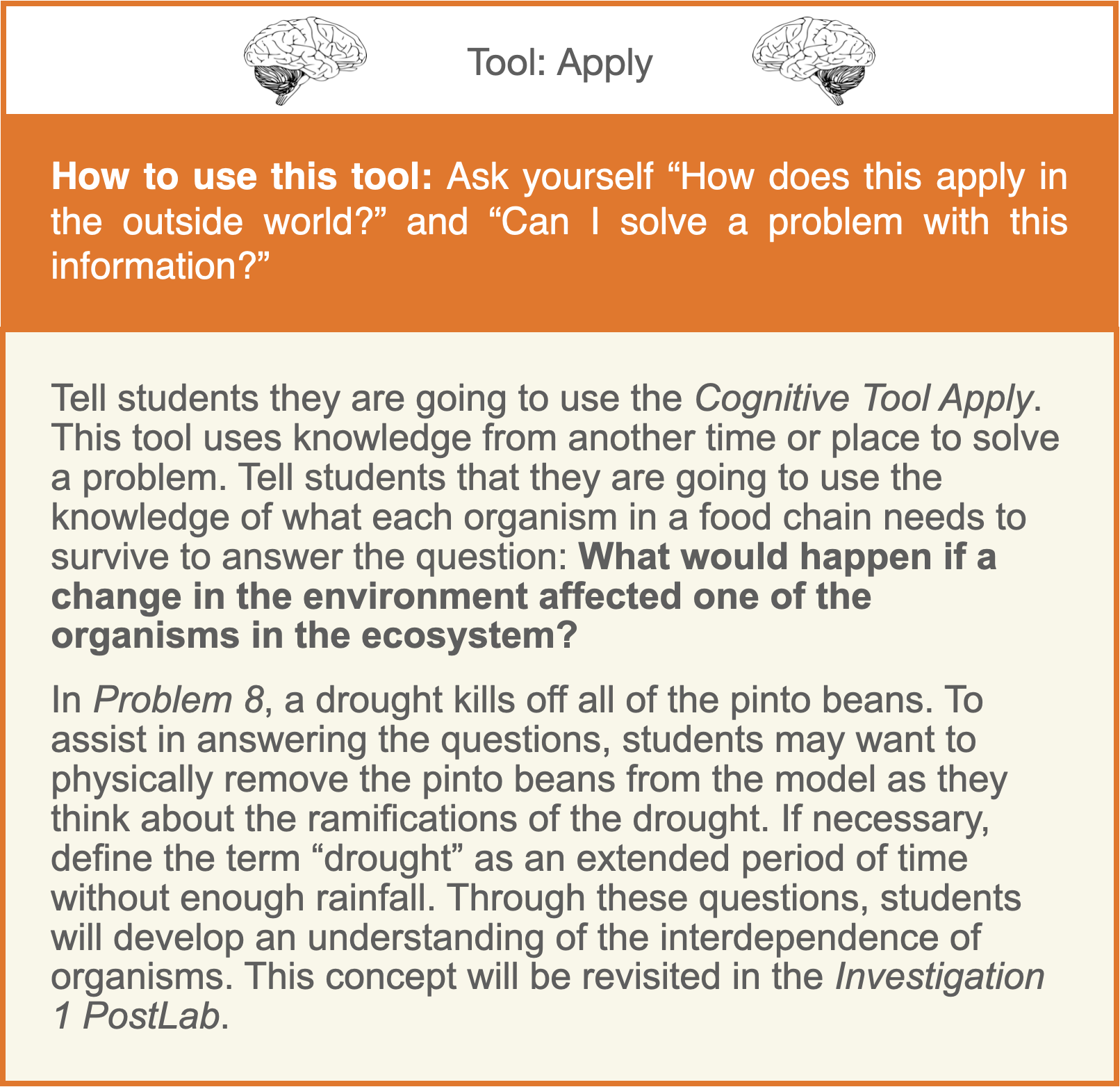
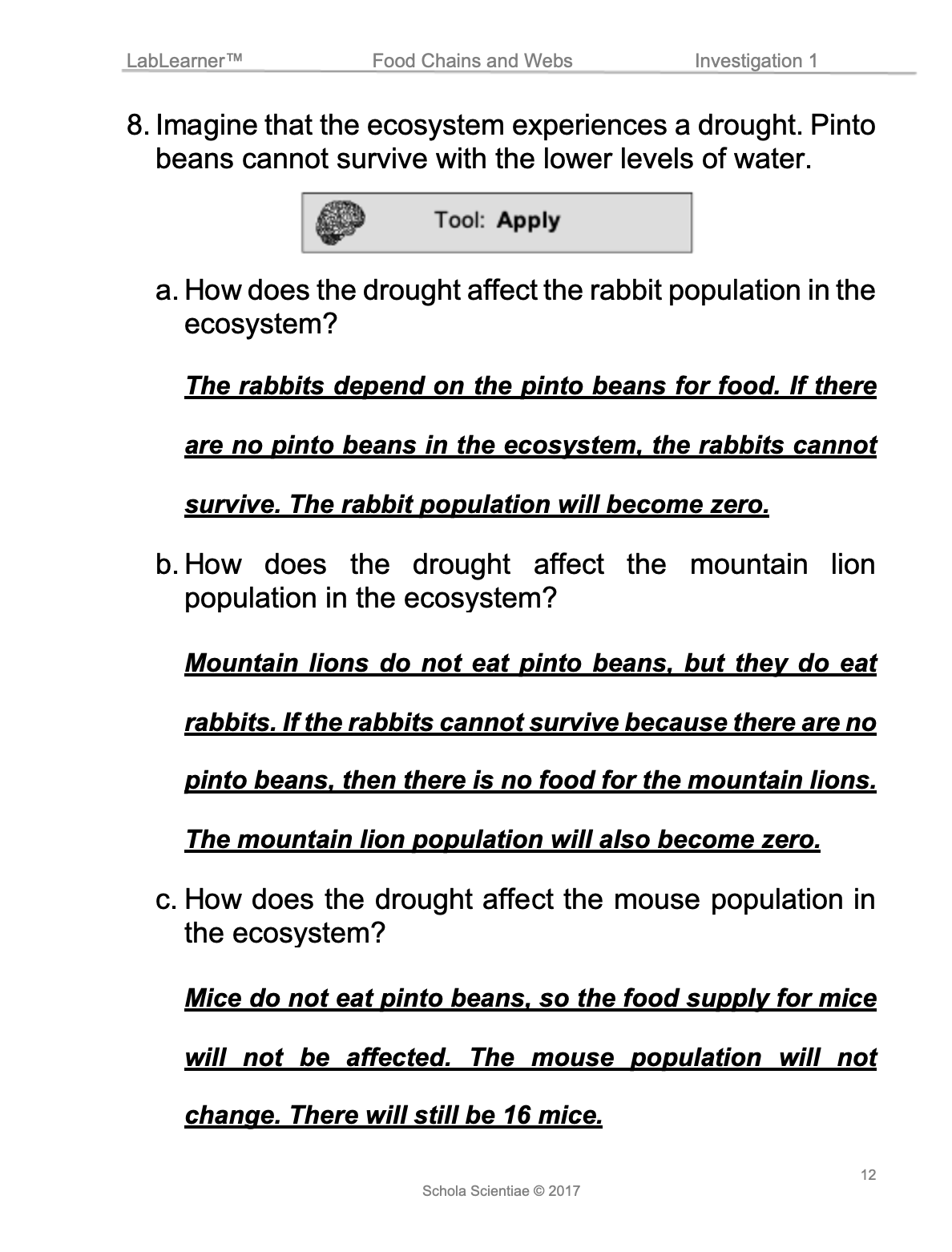
f. Ask students to look at their model food chains to help them answer Problems 8 a-c in their Student Data Records.
Trial 3
In this Trial, students will combine the two food chains to construct a food web.
a. Begin this Trial by reminding students that because organisms usually have more than one food source, food webs are more useful in describing interactions in an ecosystem than food chains.
b. Tell students that mice in the ecosystem can now eat both kidney beans and pinto beans. Ask one student from each group to add a straw half between the pinto beans and the mice, connecting the original two food chains.
c. Explain to students that because of the addition of a food source for mice, the number of mice and other organisms in the ecosystem will change. Students will change the numbers of organisms in the food web model that result from the change in the food source.
• Read Problem 9b to the class or ask for a student volunteer to read the problem aloud. To determine the total amount of biomass that is available for mice to eat, students need to add the total amount of kidney beans and pinto beans in the ecosystem. Students should show their calculations in Problem 9b of their Student Data Records. This value should also go in the “Total biomass” column of the Table in Problem 9c.
• Green gram cubes represent mice. Each mouse needs 1 gram of plant biomass (kidney beans and/or pinto beans) to survive. Students should use the Table in Problem 9c to determine the number of mice the ecosystem can now support.
• Ask one student in each group to add to the number of green gram cubes in the model so that the total equals the new number of mice.
• Orange gram cubes represent skunks. Each skunk needs 4 grams of mouse biomass to survive. Students should use the Table in Problem 9e to determine the number of skunks the ecosystem can now support. Remind students to add the number of kidney beans and mice.
• Ask one student in each group to add to the number of orange gram cubes in the model so that the total equals the new number of skunks.
• To determine the new total amount of biomass that is available for coyotes to eat, remind students to add the number of mice and skunks in the ecosystem. Students should show their calculations in Problem 9g. This value should also go in the “Total biomass” column of the Table in Problem 9h.
• Remember that each coyote requires 6 grams of food to survive. Ask one student in each group to add to the number of yellow cubes in the model so that the total equals the new number of coyotes.
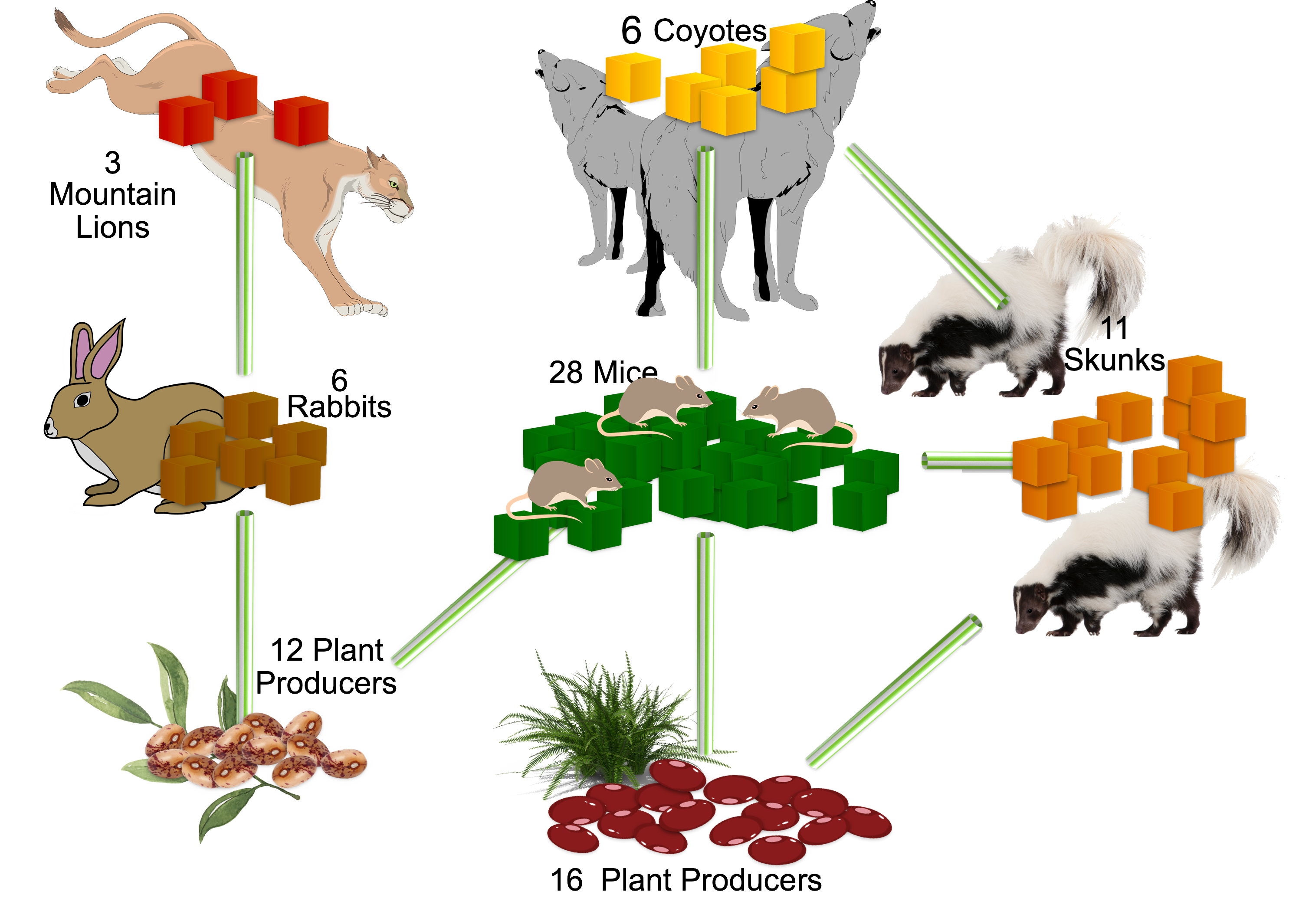
d. Direct students to make a drawing of the model food web in Problem 9j in their Student Data Records. Students should include the name and quantity of each organism in the drawing.
Accentuate to students the complexity of food webs in nature:
Can you see how much more complex a food web is than a single food chain? Imagine the complexity and interdependence of organisms in real ecosystems where there are thousands of different primary producers, herbivores, omnivores, and carnivores! This complexity is what makes the science of Ecology both fascinating and important.
KEYS


CLEAN UP
Let students know your expectations for clean-up. Ask them to clean up.