
Teacher Portal:
Microscopes and Magnification
Investigation 2
Microscopes and Magnification: Investigation 2
Investigation One introduced students to the human eye, the hand lens, and the fundamental concept of magnification. Students learned that the sense of sight requires the interaction of light, the eyes, and the brain. Students investigated the basic ability of lenses to magnify objects. Through investigation, students also demonstrated that lenses extend the ability of the naked or unassisted eye to see, helping us make observations by increasing the resolution of objects.
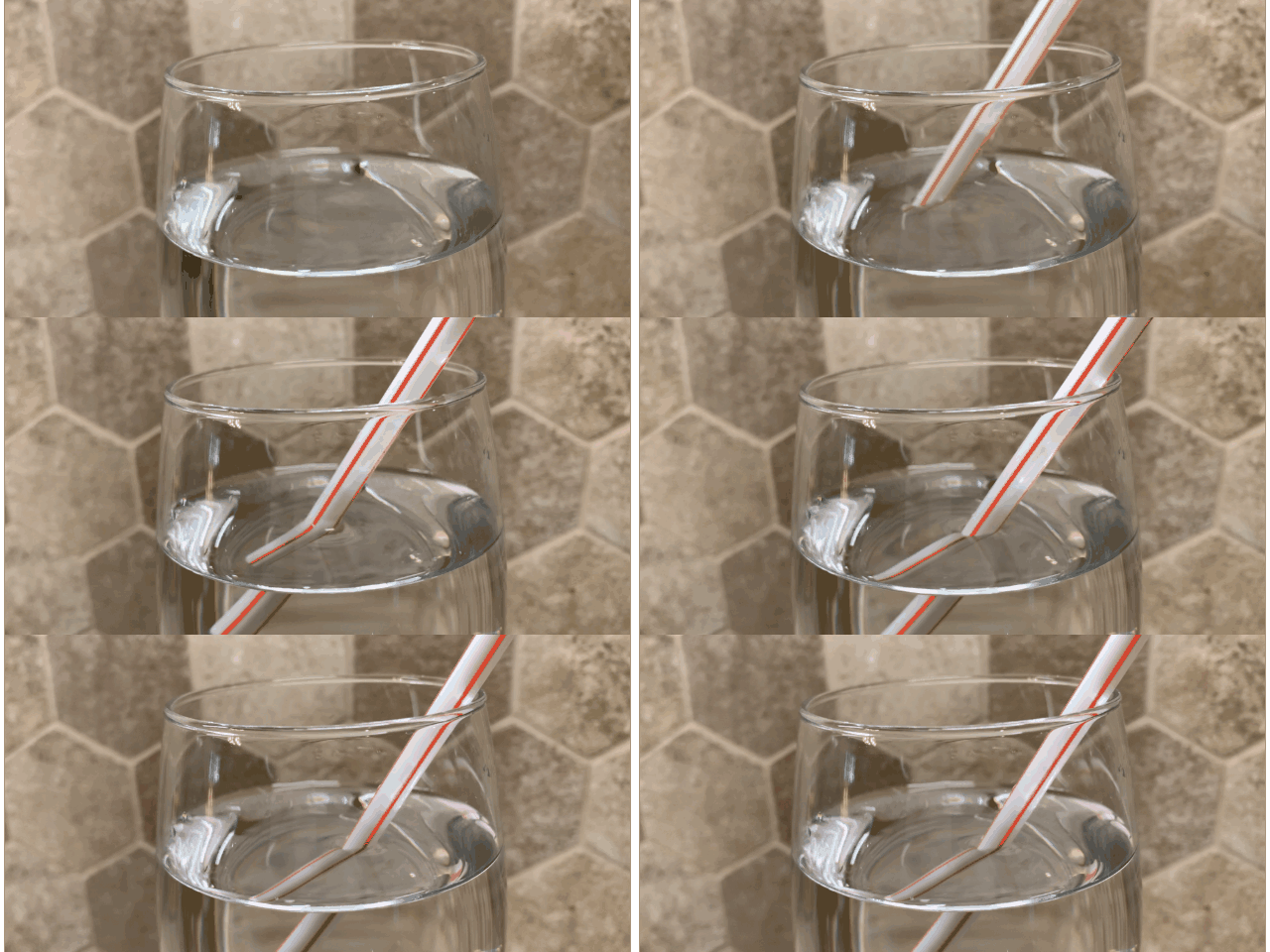 In Investigation Two, students will continue to investigate lenses and the concept of refraction. Refraction is the bending or redirecting of light rays. Refraction occurs when light rays pass from one transparent substance or medium into a different transparent substance or medium. When this occurs, the speed of the light rays changes. The change in the speed of light results in the bending of light rays. The greater the refraction, the more the human eye notices the change.
For example, since light travels more slowly in water than in air, its speed decreases as it passes from air into water. A decrease in speed occurs as light passes the boundary between air and water. The change in speed results in the refraction or bending of light rays as they enter the water. Placing a pencil in a glass half-filled with water demonstrates the refraction of light. If one looks at the pencil at the boundary between the air and water, the pencil appears to be bent.
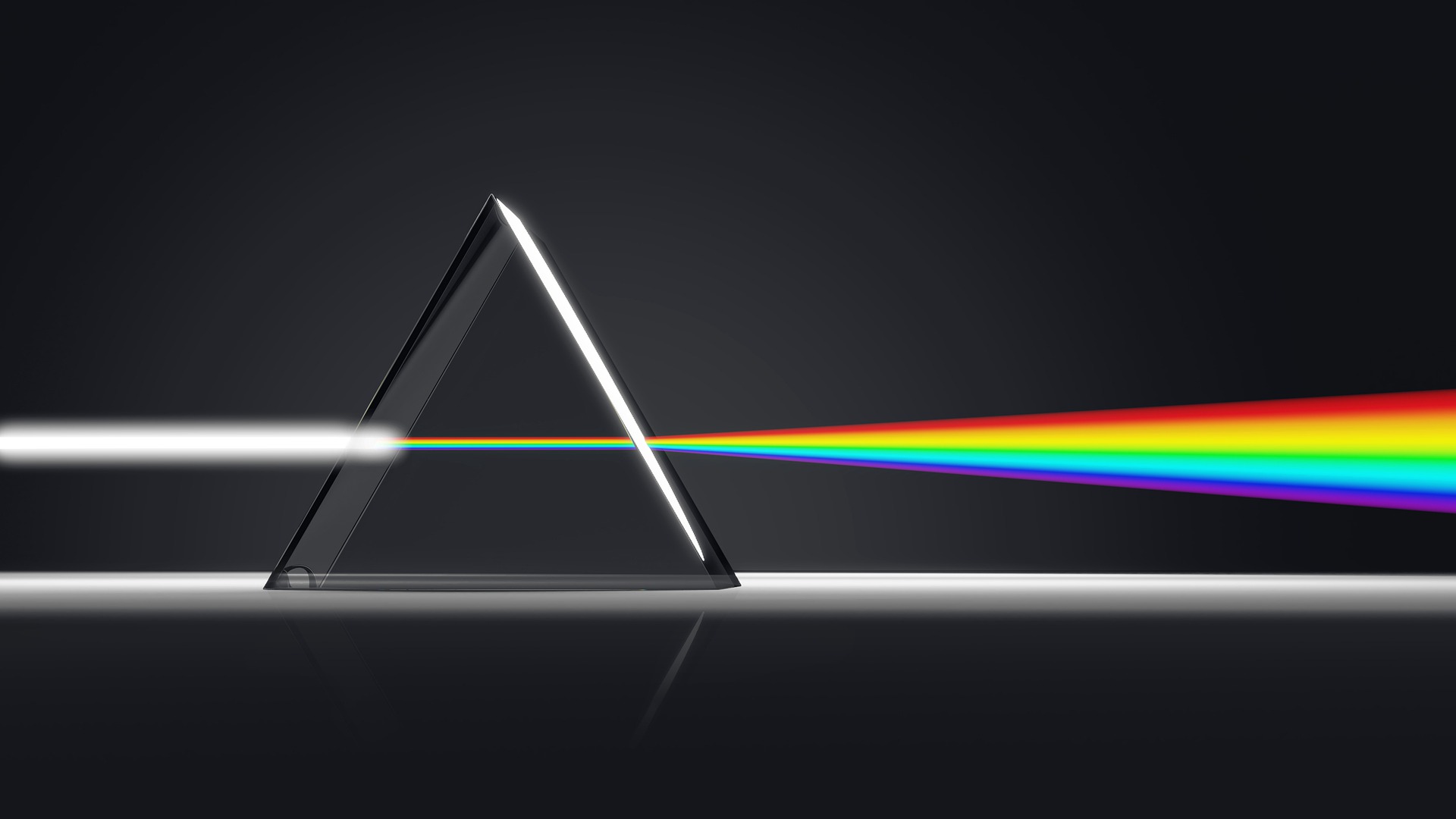 Another fascinating thing about refraction is the find, by Isaac Newton, that a glass prism refracts light and that different wavelengths of light are refracted by different amounts. This observation demonstrated that white light, the light that illuminates our world, actually is composed of a mixture of different colors of light that combine to give us white light. This separation of light waves of different colors gives us the glorious spectra of colors associated with rainbows, the surface of soap bubbles, and the brilliance of cut diamonds, just to name a few examples.

Other transparent substances, such as glass, also refract light. It is difficult to observe refraction through the flat glass of a window since the degree of refraction is slight. Refraction by curved pieces of glass called lenses is easily observed. One reason that refraction is more easily observed when using a lens is that a curved lens bends light more than a flat piece of glass. The greater the refraction, the more noticeable and easier it is for our eyes to detect. Concave lenses refract light and make objects appear smaller. Convex lenses refract light and make objects appear larger. The magnification of an object’s image by a hand lens is an example of how a convex lens refracts light and magnifies an image. Look closely at any water droplet and you will see the sheer beauty of refraction!

Microscopes and Magnification : Investigation 2 - Mathematics Concepts
Prelab
• height in cm
• rays
• angles
Lab
• comparing size, shape, form
• rays
• angles
• data table
• greater than/less than/equal to
Postlab
• comparing size, shape, form
• rays
• angles
• whole numbers
• least to greatest
Microscopes and Magnification: Investigation 1 - Procedural Tools

The design of this investigation does not include a focus on student work with tools from the Procedural Toolbox.
Microscopes and Magnification: Investigation 2 - Cognitive Tools

Microscopes and Magnification:
Investigation 2 Quiz

