
Teacher Portal:
Exploring Electricity
Investigation 1
Investigation One: Discovering Static Electricity
Electricity is an integral part of modern life. It powers lights, computers, and household appliances. Even vehicles like cars, trucks, tractors, and so on have electrical systems and completely electric cars and trucks are becoming widely used.
Having just completed the LabLearner CELL Properties of Matter, it is important upfront to know that electricity, is not made of matter. Instead, scientists refer to electricity as an event. Electricity occurs as a result of the movement of charged particles called electrons through or between different materials. Thus, while electricity is NOT matter, it IS the movement of matter. This CELL is designed to give students the opportunity to explore different types of electricity and allow them to experiment with conductors, insulators, and circuits.
Charged Particles: Electrons and Ions
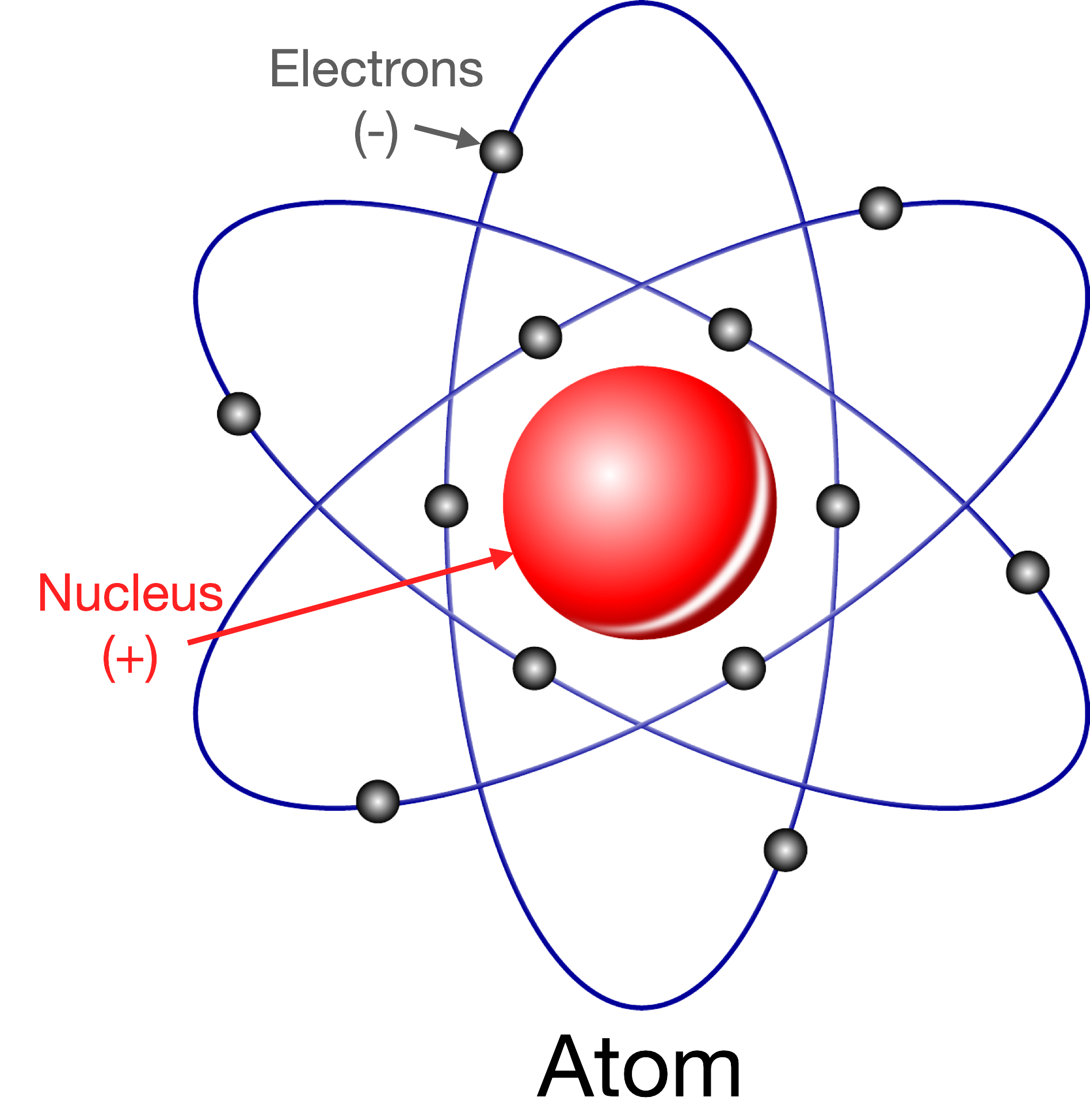 To understand electricity, it is important to first understand that matter is made of charged particles. The simplest form of matter is the atom. The atom is composed of a nucleus containing particles called protons and neutrons surrounded by other particles (electrons) which orbit the nucleus, much like the earth orbits around the sun. Protons are positively charged particles and electrons are negatively charged particles. Since neutrons have no charge, the nucleus has a positive charge from the protons.
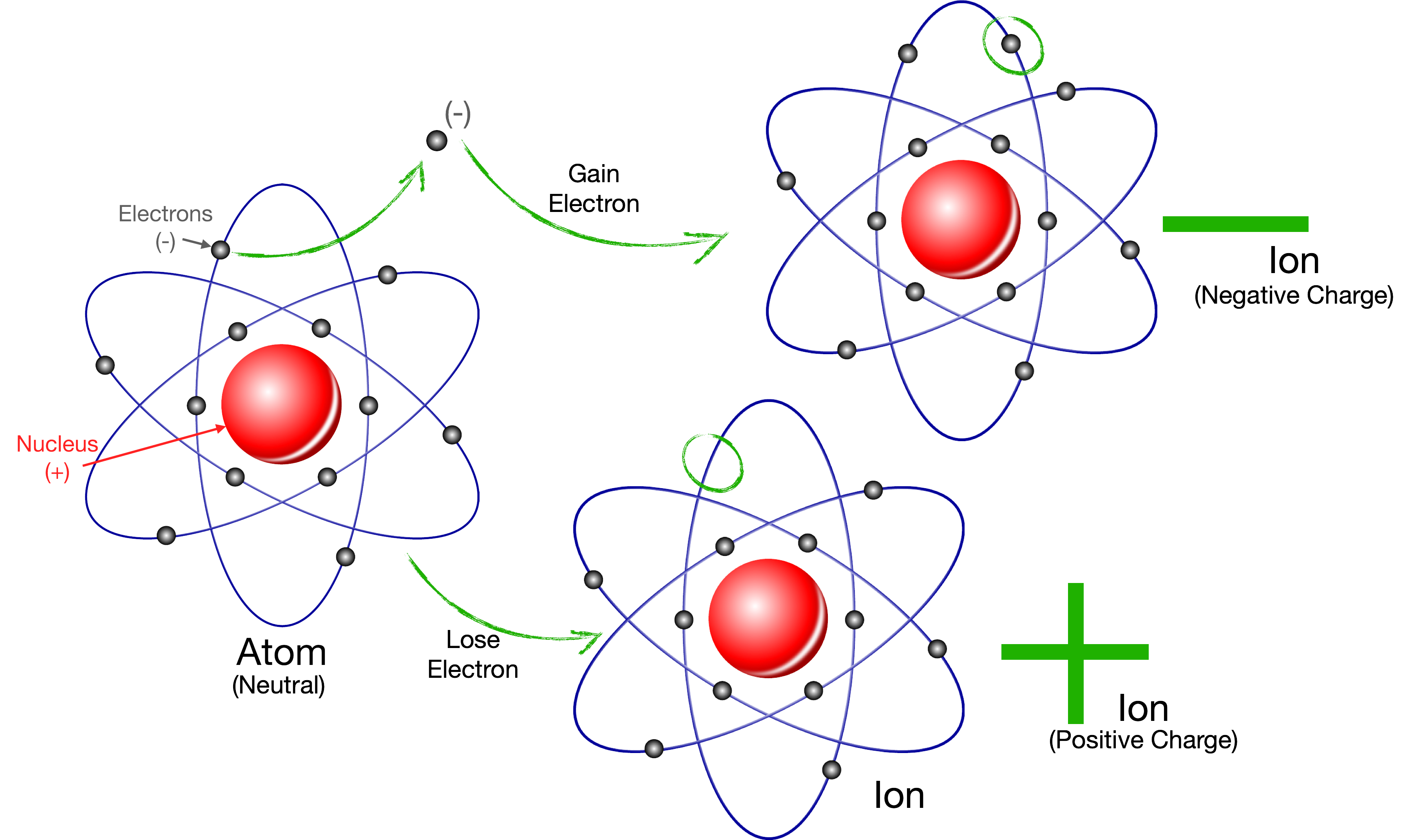
Neutral atoms have no charge, as they have equal numbers of protons and electrons, which cancel out each other’s charges. When an atom loses an electron, however, it becomes positively charged because it has more protons than it does electrons. Conversely, when an atom gains an electron, it becomes negatively charged because it has more electrons than protons. The electrical charge of a sample of matter is determined by the charge of its atoms. If all the atoms in an object are uncharged or if the net charge (sum of the charges of all the atoms in the object) is 0, the object is uncharged or neutral. However, if the net charge of the atoms in an object is positive, the object is positively charged. If the net charge of the atoms in the object is negative, the object is negatively charged. An atom that gains or loses one or more electrons becomes charged and is referred to as an ion. Negatively-charged ions have gained an electron and positively-charged ions have lost an electron.
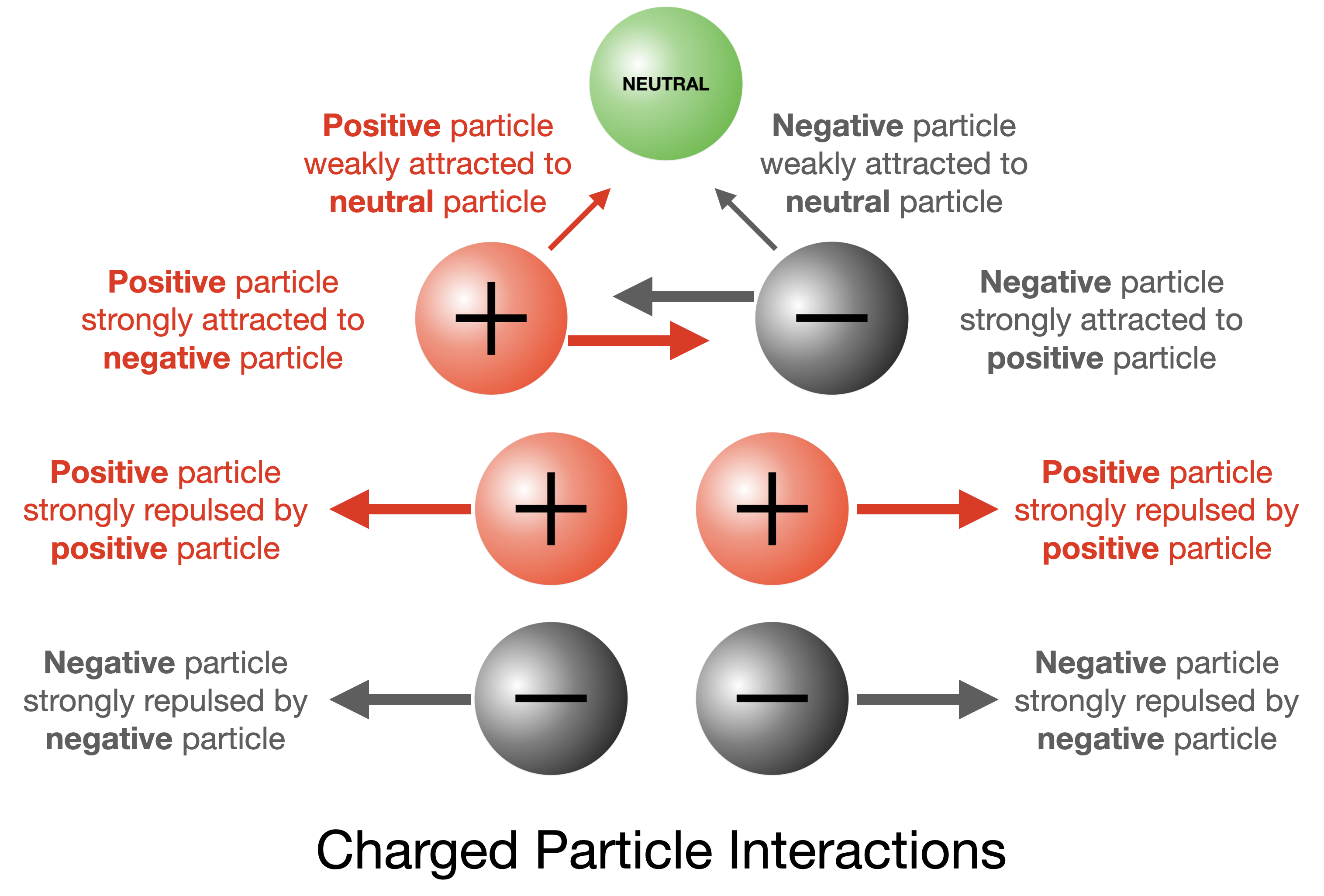
Most objects have uncharged surfaces in a normal, uncharged state. However, when two surfaces are rubbed together, electrons may be transferred from one surface to another, causing one surface to become positively charged and the other to become negatively charged. Positively charged objects want to return to an uncharged or neutral state. Therefore, they are attracted to objects that are neutral or negatively charged, because those types of objects are potential sources of electrons. Negatively charged objects also want to return to an uncharged or neutral state and are attracted to neutral or positively charged objects because those types of objects are potential electron recipients.
The potential to gain or lose electrons is a property of matter. Electrons are more effectively transferred between objects made of different materials than between objects made of the same material. In other words, very few electrons will be transferred between two swatches of wool or between two balloons, but a significant number of electrons will be transferred between a wool swatch and a balloon.
Static Electricity
The transfer of electrons produces a static electricity event. Electron transfer can occur when two uncharged objects are rubbed, when negatively charged and positively charged objects are attracted to each other, or when charged objects are attracted to uncharged objects. The amount of electrons that are transferred depends partly upon the amount of surface area in contact. More surface area in contact means there is a greater opportunity for electron transfer to occur. The number of electrons transferred is also dependent upon the materials involved. Some materials are more willing to give up electrons than others, while some materials are more willing to take up extra electrons than others.
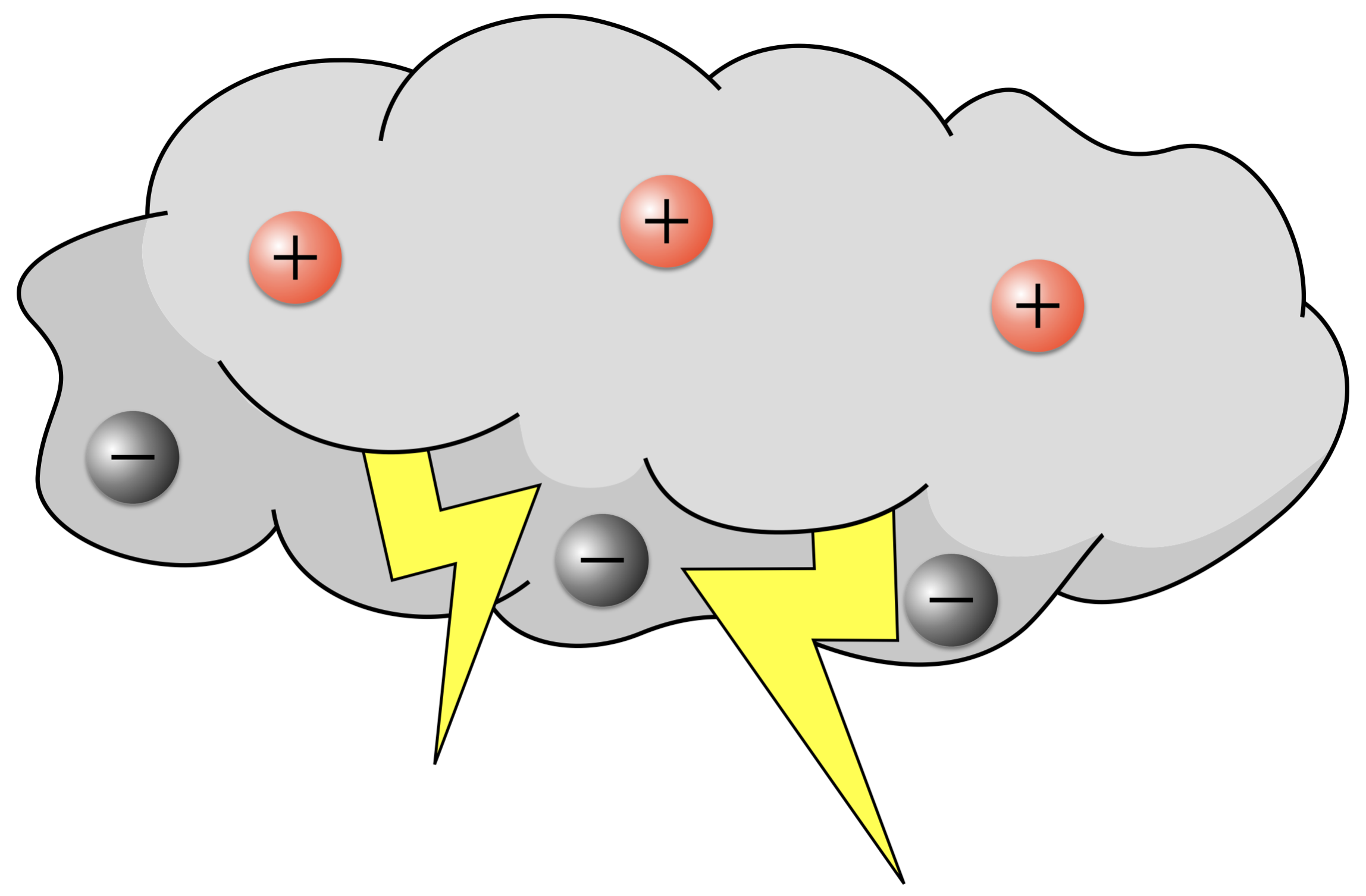 A common example of static electricity occurs in nature on a very grand scale. During a thunderstorm, the ice particles in the clouds collide. This causes the particles to break apart and develop charges, thus forming negative and positive areas within the clouds. The warm air rising and cold air falling in the storm causes the charged ice particles to collide again. This allows the negative ice particles to transfer their extra electrons to positive ice particles. Air is very resistant to the passage of electrons, resulting in a build-up of heat due to the friction between the air and the electrons. The air becomes white-hot, which is seen as lightning.

 On a much smaller scale, anyone who has failed to use fabric softener in a load of laundry has most likely experienced the effects of static cling when they retrieve their clothing from the clothes dryer. The tumbling action of the dryer’s drum causes the fabric surfaces to rub against one another, it is an ideal environment for charges to build up on surfaces because it is a dry environment and it causes fabric surfaces to rub together.
In Investigation One, students will begin their exploration of electricity by first using a role-playing exercise to introduce them to positive and negative charges. Students will then experiment with creating a charged surface by rubbing balloons with wool swatches. Students will discover that the amount of attraction between a charged balloon and a piece of paper is determined by the amount charge that is built up as a result of rubbing with the wool swatch.
Exploring Electricity: Investigation 1-Mathematics Concepts
Prelab
- + = positive/ – = negative
- counting whole numbers
- greater than/less than/equal to
- addition/subtraction
Lab
- counting whole numbers
- length in cm
- compare (non)measurable characteristics
- estimate and verify predictions/measurements
Postlab
- estimate and verify predictions/measurements
- counting whole numbers
- data table
- data analysis
- problem-solving
Exploring Electricity: Investigation 1 - Procedural Tools

Exploring Electricity: Investigation 1 - Cognitive Tools

Properties of Matter:
Investigation 1 Quiz

