
Teacher Portal:
Microscopic Explorations
Investigation 5
Microscopic Explorations: Investigation 5
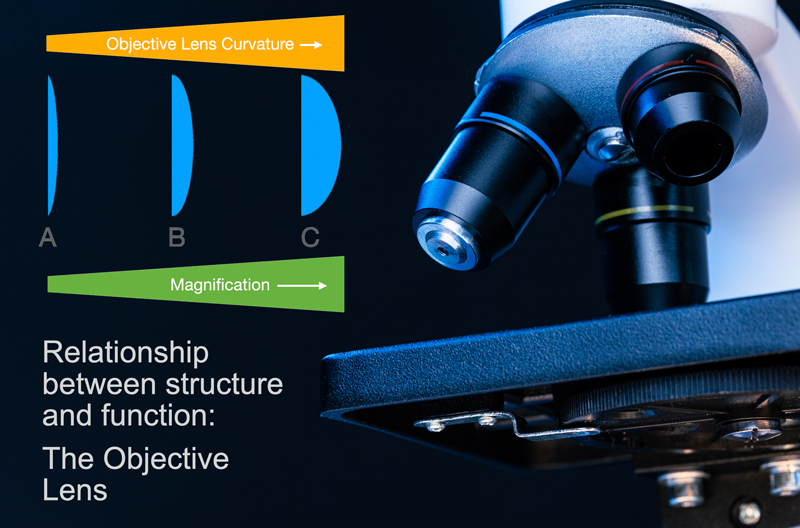 Although students may not have recognized it, much of the focus for this CELL has centered around the relationship between structure and function. Beginning with Investigation One and the exploration of hand-held convex and concave lenses and the convex lenses of the microscope, the connection between the two is evident. Although both concave and convex lenses are composed of similar materials and are curved, it is the difference in the direction of their curvature, their structure, that produces differences in function. Convex lenses are used to provide increases in magnification and resolution. Concave lenses can increase the field of view. Within the microscope, the three convex lenses in the objectives share similar compositions and directions of curvature. However, the extent of that curvature differs between the three objectives. As the curvature increases, the power of magnification of the lenses increases from 4X to 10X to 40X. Thus, the change in the structure produces a change in function.
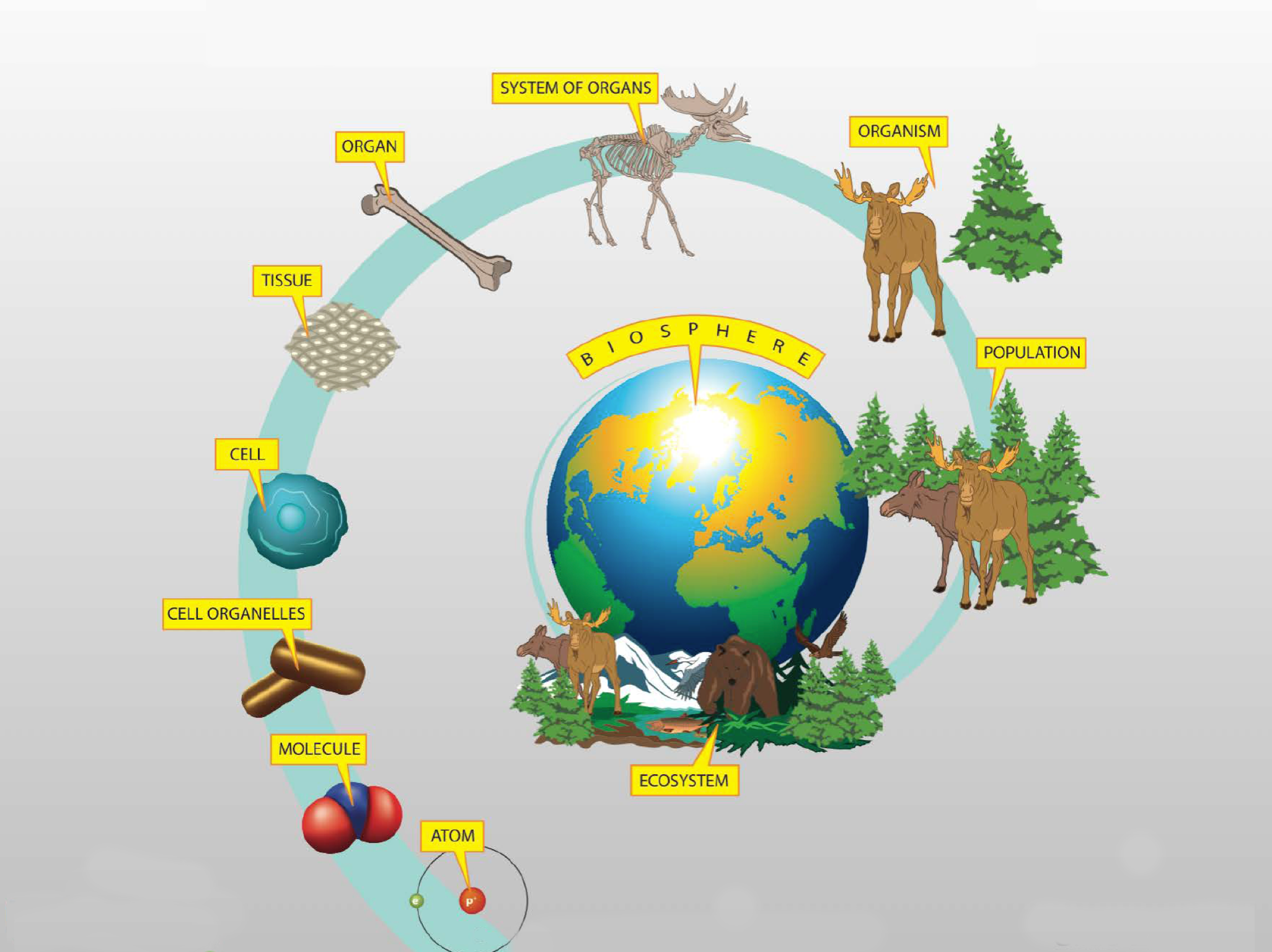 This same relationship exists for biological organisms and exists at each level of what biologists refer to as the hierarchy of structure. Hierarchical structure or organization refers to a special relationship between different levels of an organism such that each level is built upon the levels before it. In multi-cellular organisms, one of the lowest levels is that of atoms. Atoms combine to form molecules. Molecules in turn combine to form cell organelles. Organelles combine to form cells. Cell combine to form tissues. Tissues combine to form organs. Organs combine to form organ systems and the collection of organ systems combines to form a living organism. The illustration here shows that organization continues between groups of organisms, called a population. Further, different populations of animals interact with each other, plants, and a whole array of environmental physical and chemical factors, to produce an ecosystem. Finally, all of the ecosystems on Earth interact and combine to form the biosphere. The hierarchical organization also exists for single-celled organisms, with the number of levels significantly decreased.
Within each of these levels, structure relates to function. For example, the cell membrane is composed of molecules that are tightly joined together, forming a barrier that separates the inside from the outside of a cell. In Investigation Three and Four, students observed plant and animal cells and investigated how both their overall structure and the structure of their organelles related to their function. In doing so they had the opportunity to compare and contrast animal and plant cells.
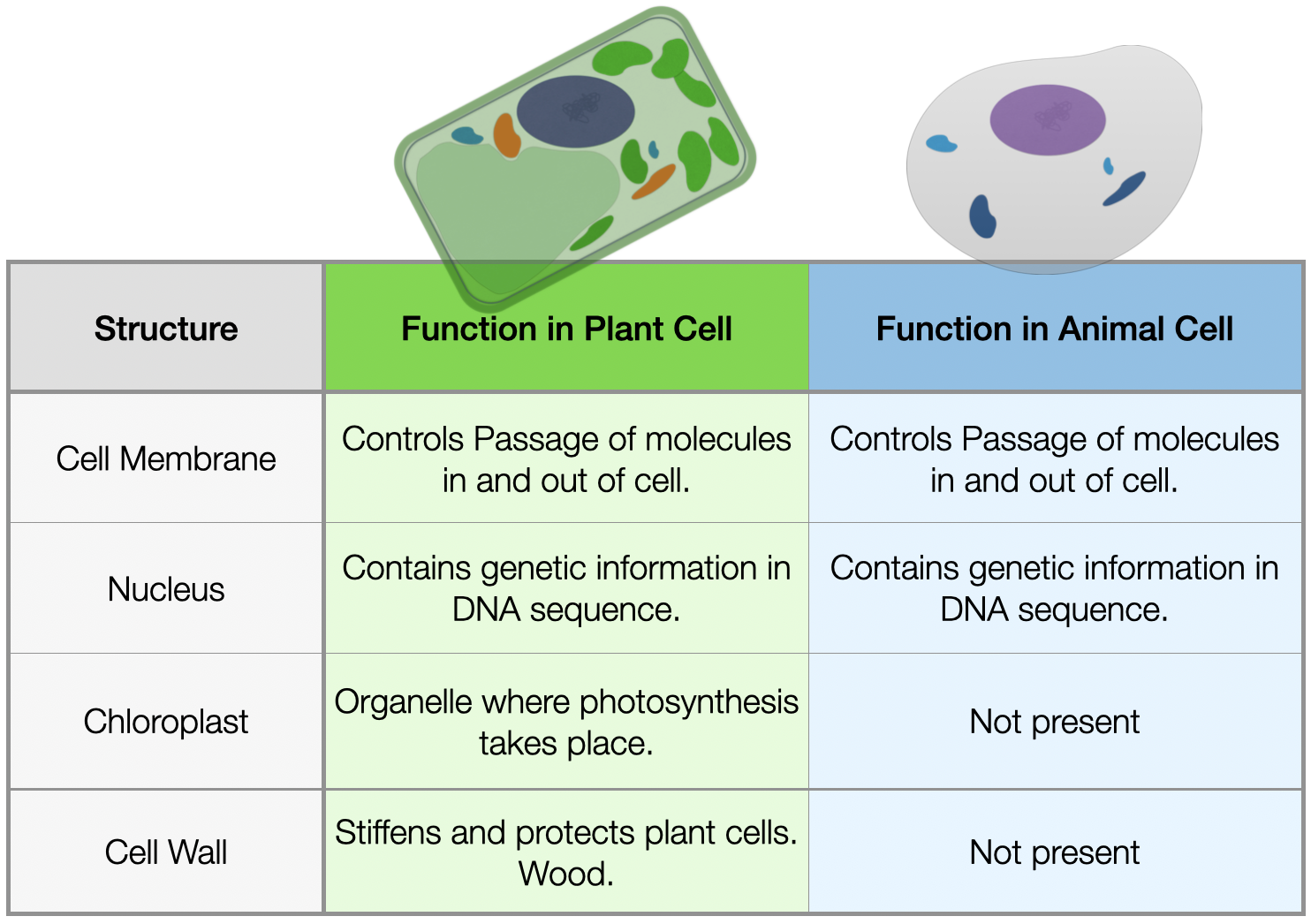
Students may have found that in some cases differences in structure led to differences in function. A good example is the inclusion of chloroplasts in plant, but not animal cells. The absence of this organelle in animal cells prevents animal cells from performing photosynthesis. However, students may have also observed that although the shape of the cell membrane differs between plant and animal cells and between different plant cells, some of its function as a barrier between the interior and exterior of the cell is the same. These two seemingly disparate observations may surprise students who assume that all differences in function are related to structural differences that are visible with the microscope. However, what students will learn in part through Investigation Five is that although the function is related to structure, much of the variation in function within an organism is the result of differences in the organization of cells in different tissues and organs.
 As students strive to understand the relationship between structure and function, they will have the opportunity in Investigation Five to observe the next levels in the hierarchical structure by observing two plant specimens and two animal specimens. Both plant specimens are from different parts of a plant: a leaf and a stem. Within each of these structures, students will discover that individual plant cells can combine with other plant cells to form larger structures that perform a function. These structures are called tissues. In other words, tissues are a collection of cells that performs a function. Different tissues perform different functions.
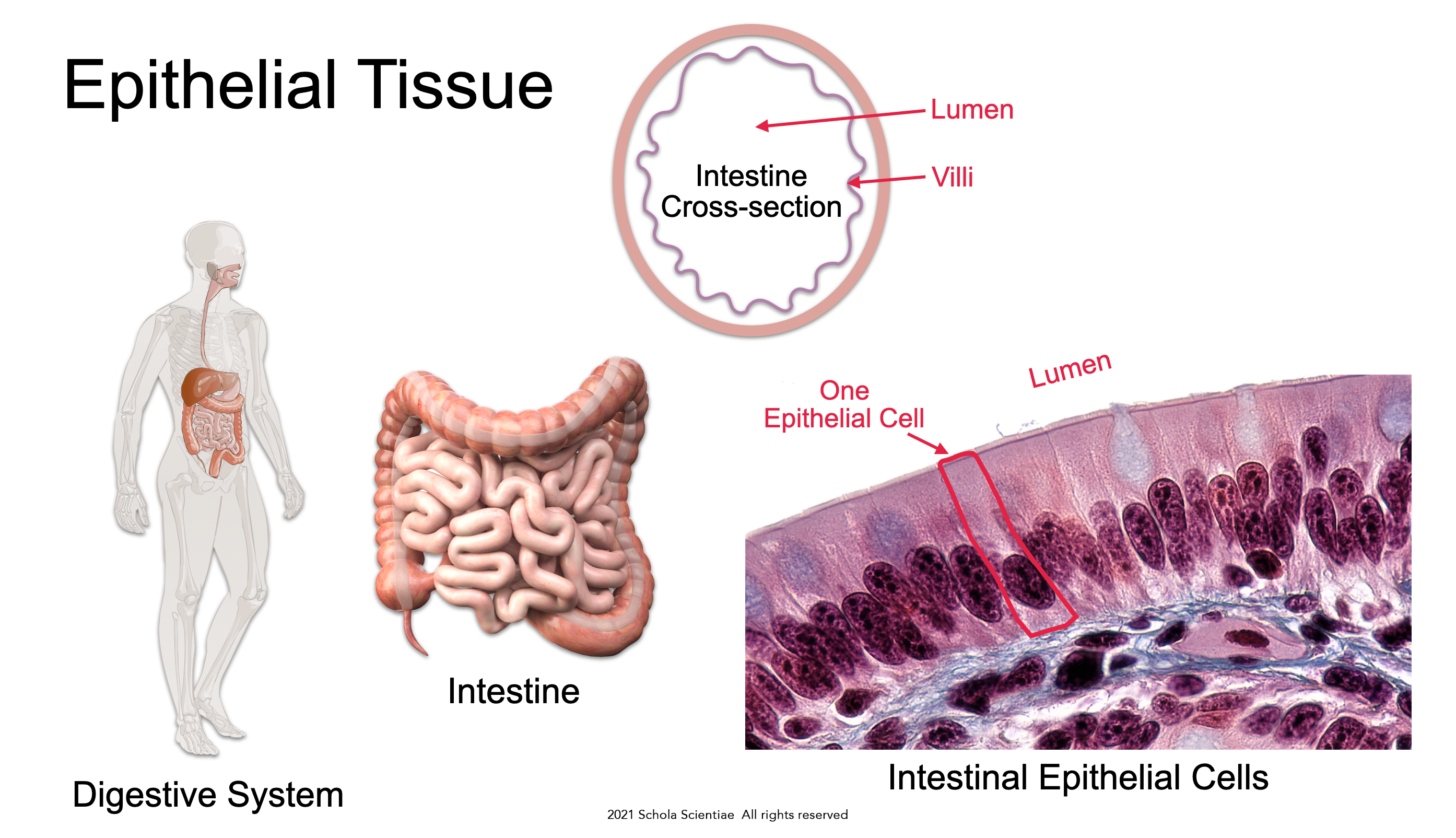 The animal specimens students will study include a human blood and colon specimen. The colon, also called the large intestine, is one of the organs of the digestive system. The ability of blood to flow through the body, delivering oxygen and nutrients to the cells and removing waste and carbon dioxide from the cells is directly dependent on its structure – red and white blood cells floating in a liquid. If the structure of blood were different and, for instance, resembled the organization of cells in the plant leaf, stem, or in the colon, blood would lose its fluidity and with it, its function.
 As with tissues, the relationship between structure and function exists within an organ. In the hierarchical organization of an organism, an organ is the level directly above that of tissue. In the graphic showing the organization of the entire biosphere, the organ that is used as an example is a bone. The next level of organization, in this example, is the skeleton. The skeleton is a collection of many different bones that, while each performing their own specific function (the bones of the neck – the cervical vertebrae – support the head, the bones of the skull protect the brain, and so on), they all interact with each other to provide the entire body with its overall shape, structure, and a multitude of functions.
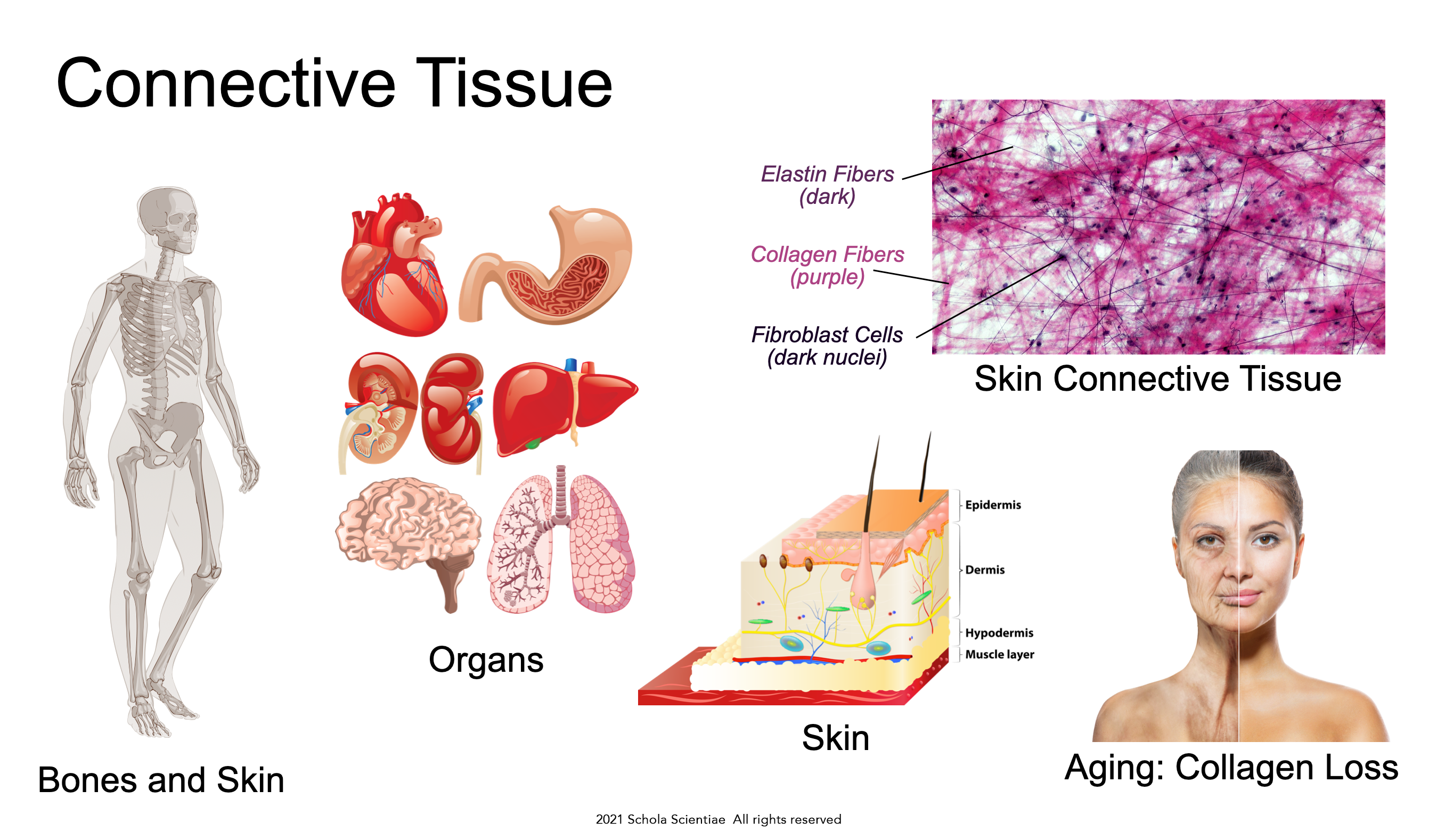
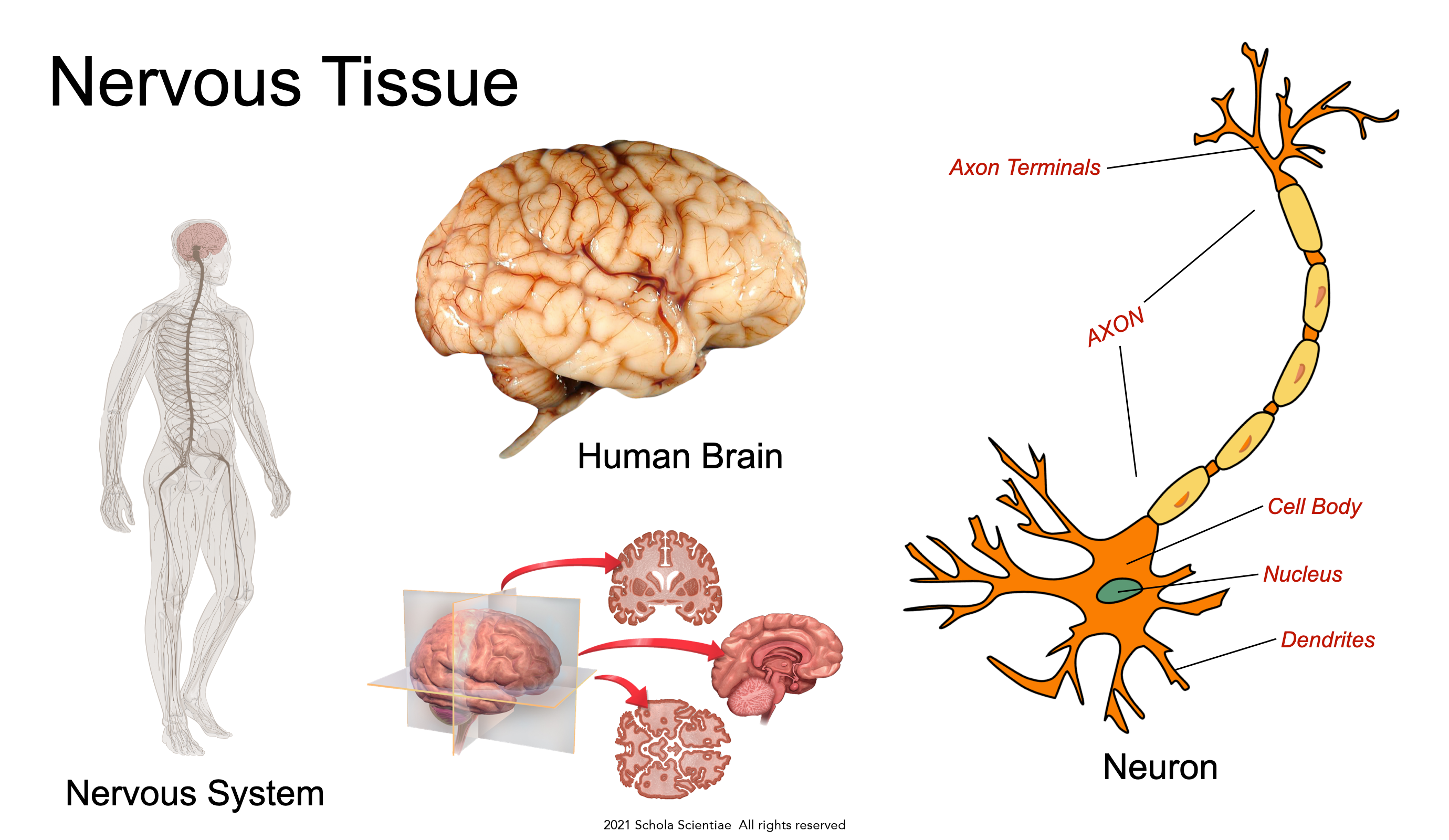
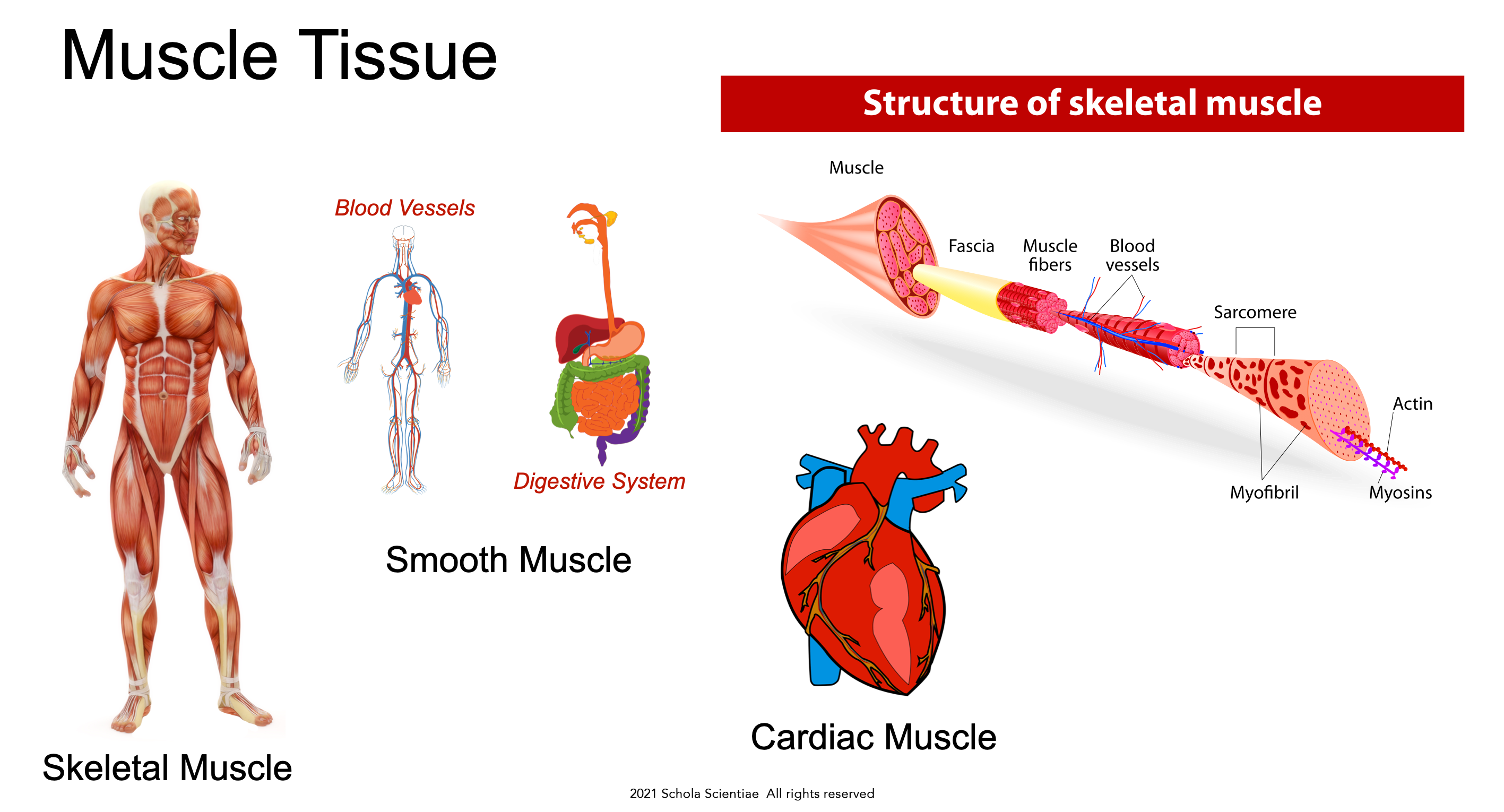 Organs are composed of a combination of different tissues. Within the human body, tissues are classified into four categories: connective tissue, epithelial tissue, nervous tissue, and muscular tissue. Bone, cartilage, ligaments, tendons, and blood are examples of connective tissue. Some of the functions of connective tissue are to fill spaces, bind different structures together, and protect other cells. Most of the layers of skin are composed of epithelial tissue. Epithelial tissue is also found as the lining of many organs. Epithelial tissue functions to move substances in and out of the body, secrete substances, and protect the interior of the body against the external environment. Nerves and the brain are examples of nervous tissue and skeletal muscle and the heart are examples of muscular tissue. Nervous tissue is involved in interpreting and transferring information within and from outside the body. The main function of muscle tissue is to generate movement.
Microscopic Explorations: Investigation 5 - Mathematics Concepts
Prelab
• parts/whole
• grouping/classifying
• geometry
• comparing (non)measurable characteristics
Lab
• comparing (non)measurable characteristics
• multiplication
• data table
• greater than/less than/equal to
• counting whole numbers
• geometry
Postlab
• grouping/classifying
• comparing (non)measurable characteristics
• Venn Diagram
Microscopic Explorations: Investigation 5 - Procedural Tools


Microscopic Explorations:
Investigation 5 Quiz

