
Teacher Portal
STEM Careers Journey
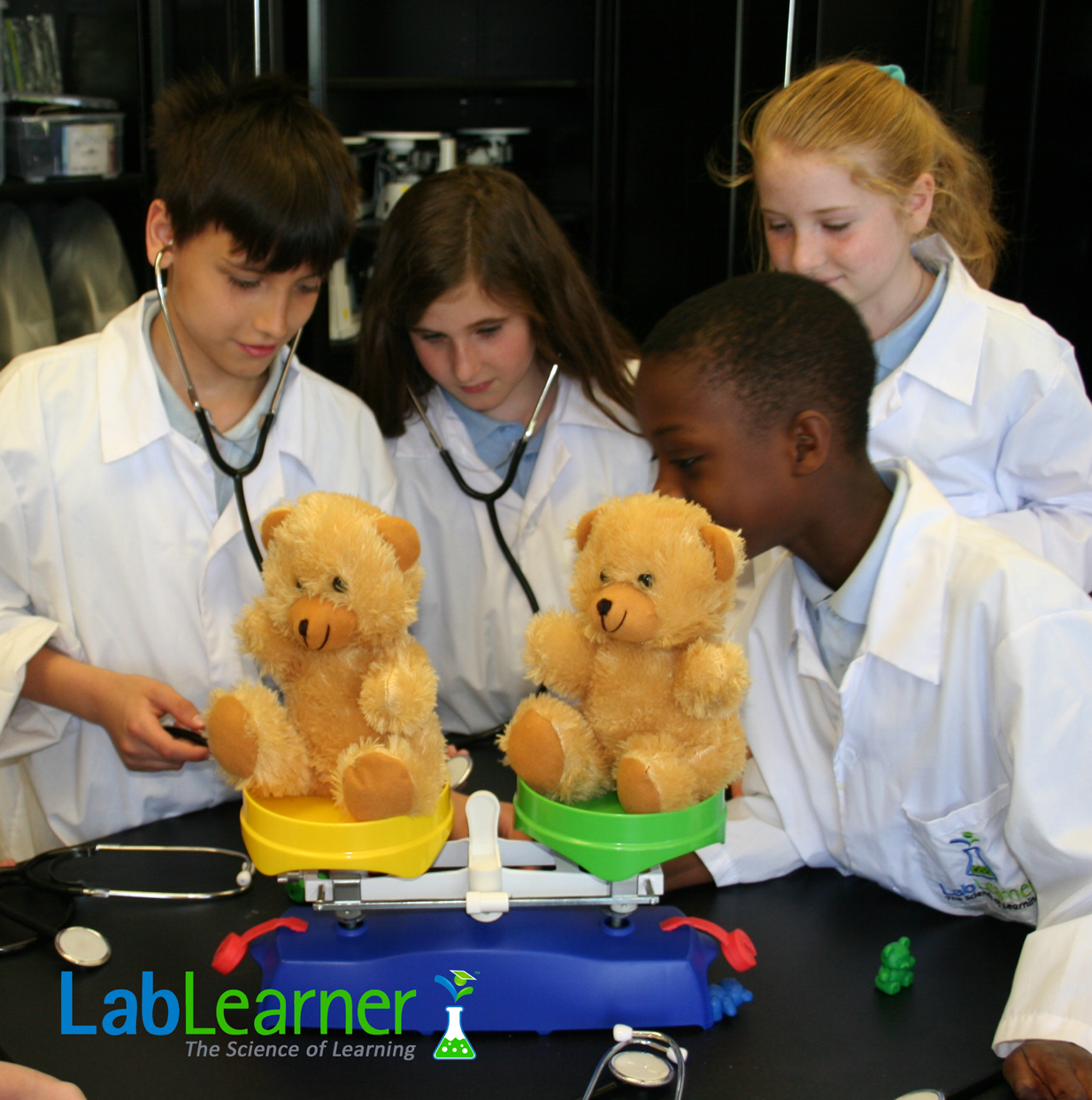 Although college and a career may seem a long way off right now, many students begin preparing for their eventual careers even when they have many years before high school graduation. Let’s say you think you might want to be a news journalist or writer as a career. You may well find being on the school newspaper both fun and a good preparation for your eventual career goal. If you want to be a musician someday, you may join the school orchestra now or even start your own rock band. If you want to be an artist, you likely already enjoy drawing or painting.
Thus, even at an early stage, you can begin preparing for your ultimate career at the very age you are right now! You can take a music class or join the choir. If you want to be an actor, you can go out for the school play or musical. If you want to be an artist, you can take art classes and enter your creations in a competition or even sell them!
But what about STEM careers? What are they and how can you prepare yourself for them? To answer these questions and begin the fascinating and rewarding path that STEM careers offer, let’s break the discussion down to the following tasks:
- Know what STEM careers are available to you to prepare for.
- Know which skills are required for the STEM careers you think you might be interested in.
- Know which pre-college classes will help prepare you for a college or university program leading to a STEM career.
This LabLearner STEM Careers Journey is designed to help you gain knowledge to make good decisions and prepare your way. So let’s begin by considering what STEM careers are available to you. There are many!
___________________________________________
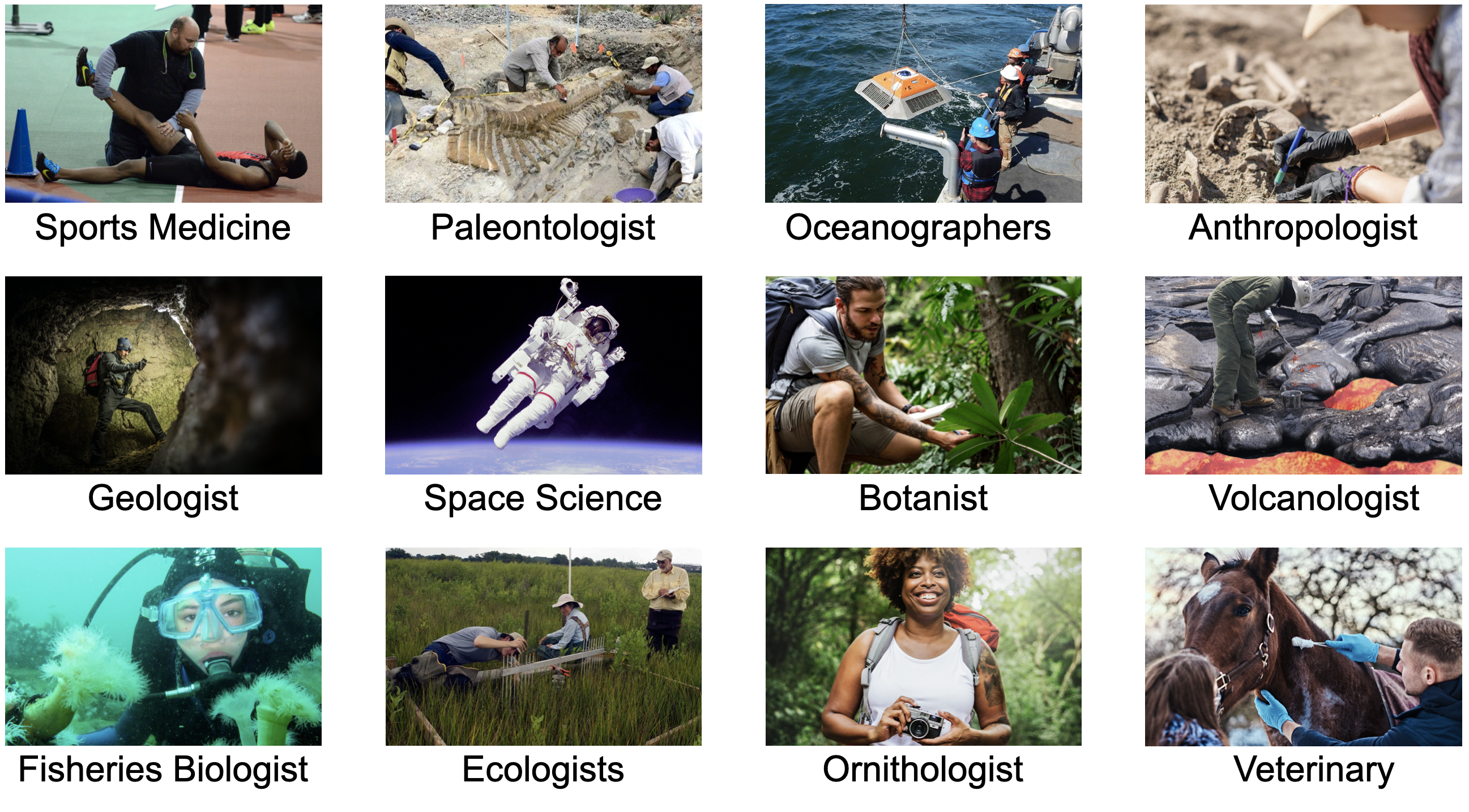
The pictures above represent only a sliver of careers that fall under the catagory of STEM careers. We will discuss others as we delve deeper into this LabLearner Journey. Brief descriptions of these STEM careers are listed below:
Sports Medicine: Sports medicine personnel work with professional and amateur athletes to prevent and treat injuries and promote optimal performance.
Paleontologist: Paleontologists study the fossil record to reconstruct the plant and animal communities that existed millions of years ago.
Oceanographer: Oceanographers study the oceans of the world. They may focus on the physical attributes of currents and temperatures and the impact that oceanic conditions have on biological communities.
Anthropologist: Anthropologists study ancient human populations by examining bones and artifacts like tools and weapons.
Geologist: Geologists study rock and soil formations in an attempt to understand how they formed and the processes responsible for the location of the continents both in the present and distant past.
Space Science: Space science includes a range of careers and professions that jointly function in designing, building, and testing spacecraft and sustaining human life during space travel.
Botanist: The study of plants is called Botany, and botanists, therefore, study plants. This includes not only familiarity with the hundreds of thousands of plant species but also their physiology (how plants grow and reproduce) and ecology (how plants interact with their environment’s physical and biological components).
Volcanologist: As the name implies, volcanologists study volcanos. This includes understanding how and where volcanos occur now and in the past, as well as predicting when and where future volcanic events may take place.
Fisheries Biologist: Fisheries biologists study the biological and physical aspects of aquatic ecosystems. This includes understanding the distribution of fish populations, their size, and their health. They also examine the impact of various forms of pollution on fish populations.
Ecologist: Ecologists study plants, animals, and the physical aspects of their environment. They study how plants and animals survive and adapt. They also may study and report on how development plans may impact the plant and animal communities they study.
Ornithologist: Ornithologists study bird populations. They chart the distribution and migration patterns of thousands of bird species. In addition, they can assess the potential impact of developing areas where birds live and breed.
Veterinary: Veterinarians are dedicated to the health of animals of all kinds. The animals they treat range from household pets to farm animals and animals held in zoos. Veterinarians are doctors who treat animals instead of humans.
STEM Careers Journey
The LabLearner STEM Careers Journey, can be used at many points in the LabLearner curriculum matrix (see below). This Journey draws on conceptual understanding of material students have digested in previous CELLs and Journeys.
Virtually every CELL in the LabLearner curriculum presents concepts and information obtained from scientific research. Some of the material in each CELL comes from research done perhaps many years ago, while other material comes from much more recent, current, and ongoing research. Thus, each and every CELL is related to one or more fields of science, technology, engineering, and mathematics. Therefore, each CELL also permits students to observe the many STEM careers that are available to them.
This Journey is meant to introduce many (but far from all) of the STEM fields and careers so that students can begin to think about their futures or, at a minimum, know what their options are and how to prepare for a potential career in STEM.
IMPORTANT: If this Journey is broken up, the sessions should nonetheless be presented and discussed in the numbered order suggested here.