
Teacher Portal:
Examining Nutrition
Investigation 4
Investigation Four: Exploring Fats
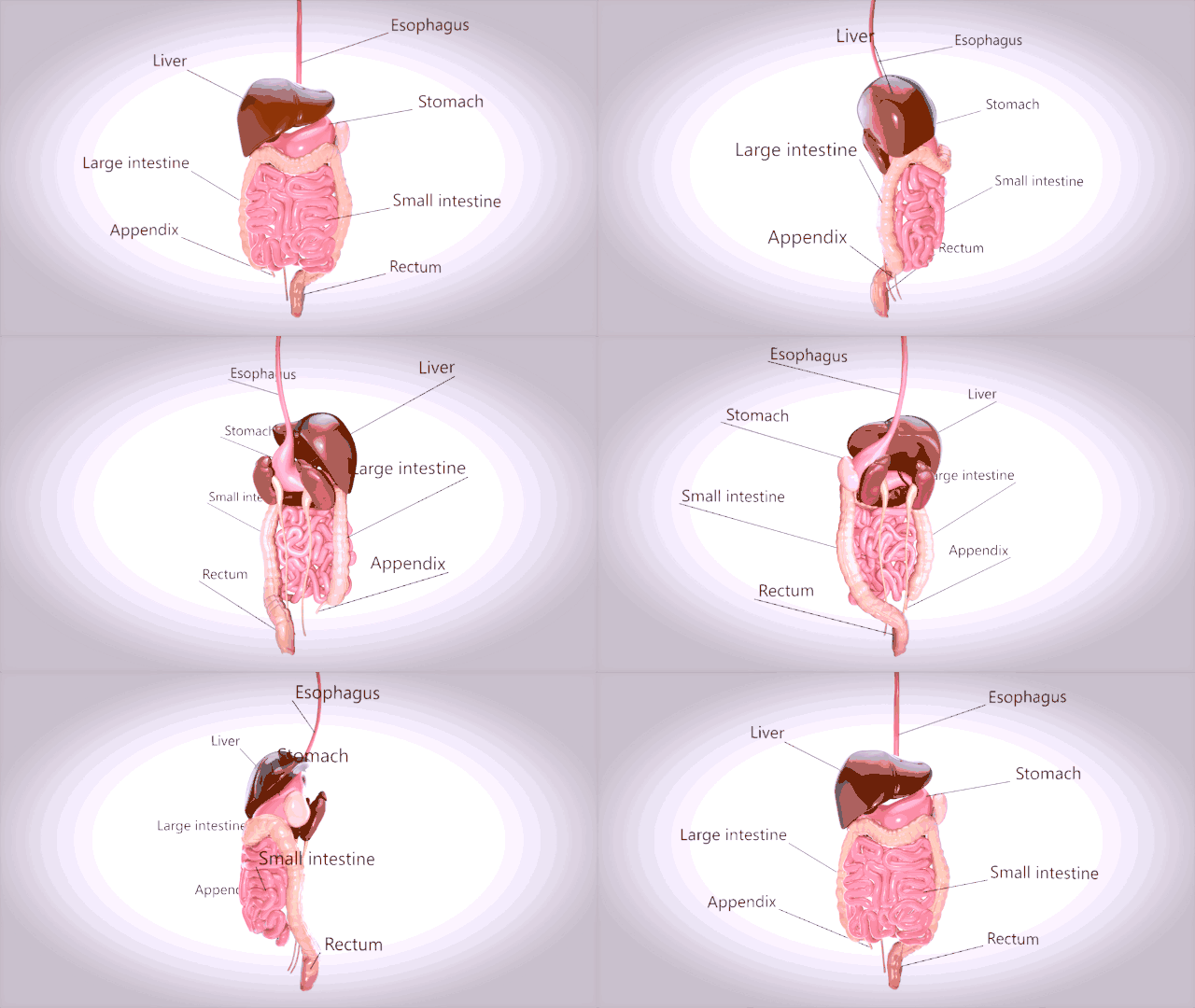 Thus far in this CELL, students have examined the role of the digestive system in absorbing nutrients and have learned how to read nutrition labels. Students discovered that their bodies have specific requirements for chemicals called nutrients and that these requirements can be met by following nutrition labels and the MyPlate graphic. Students were introduced to the class of nutrients called carbohydrates and were provided with an opportunity to visualize the amount of total carbohydrates and sugar in various foods. During Lab, they used a triple beam balance to measure out sugar to equal the mass of total carbohydrates or sugars listed on the food labels. In Investigation Four, students will explore the role of lipids in human nutrition.
Lipids are one of the six classes of nutrients. Lipids are the most energy-dense of all nutrients, containing 2.25 times the amount of energy as carbohydrates by mass. As with carbohydrates, there are several types of lipids. However, in this Investigation students will focus primarily on one type of lipid called fats. Fats are made of chemical building blocks called fatty acids, which are attached to a backbone chemical called glycerol. Glycerol can carry up to three fatty acids. Glycerol which has three fatty acids attached to it is called a triglyceride. Doctors use blood triglycerides to monitor health.
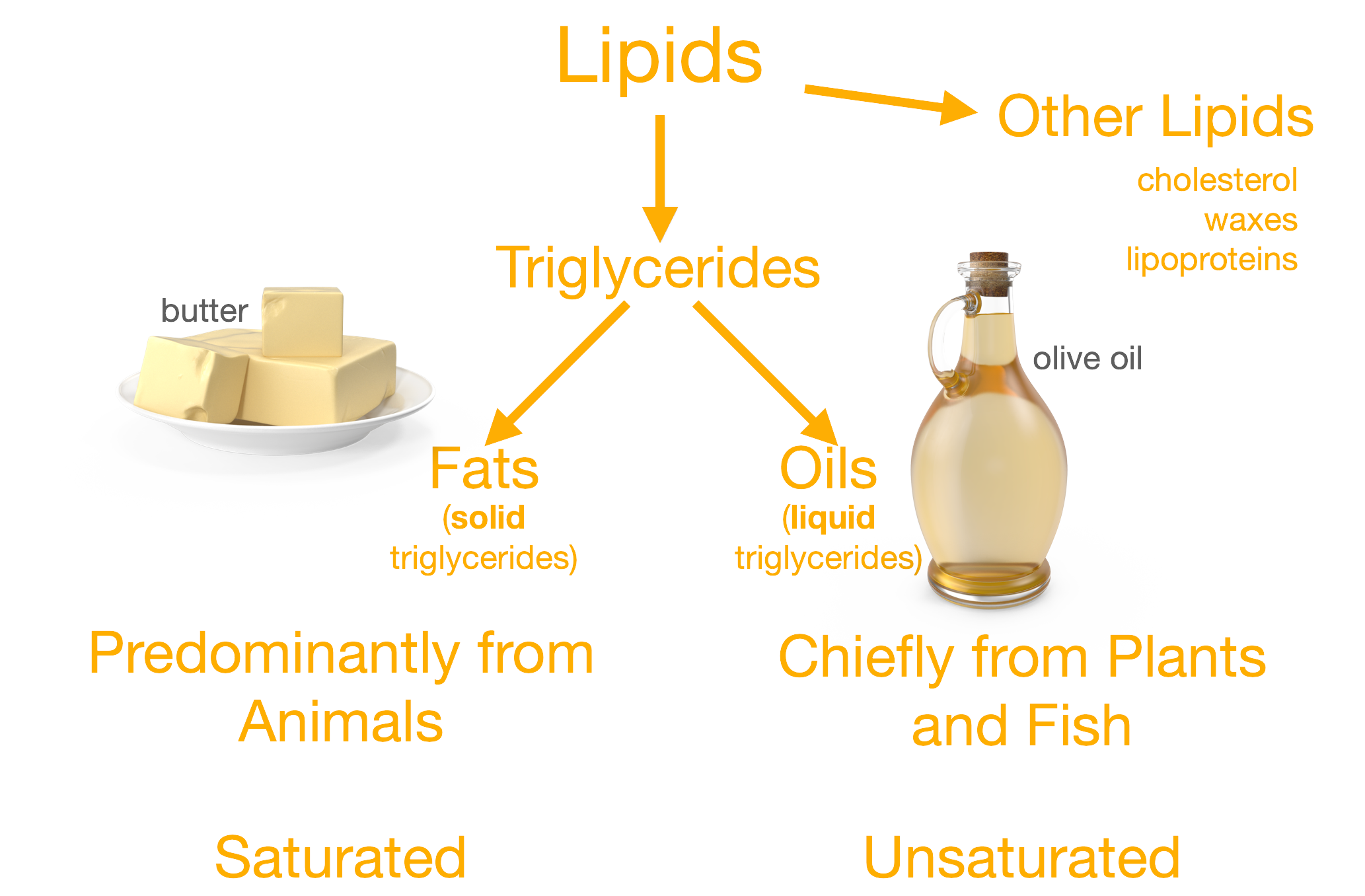
What is sometimes confusing is that scientists and consumers often think of and use the terms fat and triglyceride differently. Scientifically, the term lipid is used to describe one of the six classes of nutrients, along with carbohydrates, water, protein, vitamins, and minerals. Fats are considered one type of lipid. Fats are triglycerides that are solids at room temperature, where as triglycerides that are liquids at room temperature are called oils. Thus, when a scientist uses the term triglyceride, he or she may be referring to a fat or an oil. The figure below illustrates the scientific classification of these substances as well as other types of lipids.
However, consumers often use the term fat non-specifically to refer not only to triglycerides that are solids but also to oils and other types of lipids that are found in foods. Thus, where scientists would describe one of the six classes of nutrients as lipids, consumers would refer to this class as fat. Fats serve many purposes in the body.
Cholesterol and Waxes
Fats are stored in adipose cells (also called fat cells) and can be found in a layer under the skin as well as in areas around body organs. Fats can also be stored in between bundles of muscle fibers in the skeletal muscle. When broken down, the fatty acid portion of fats can be used to make other substances, such as cholesterol and waxes.
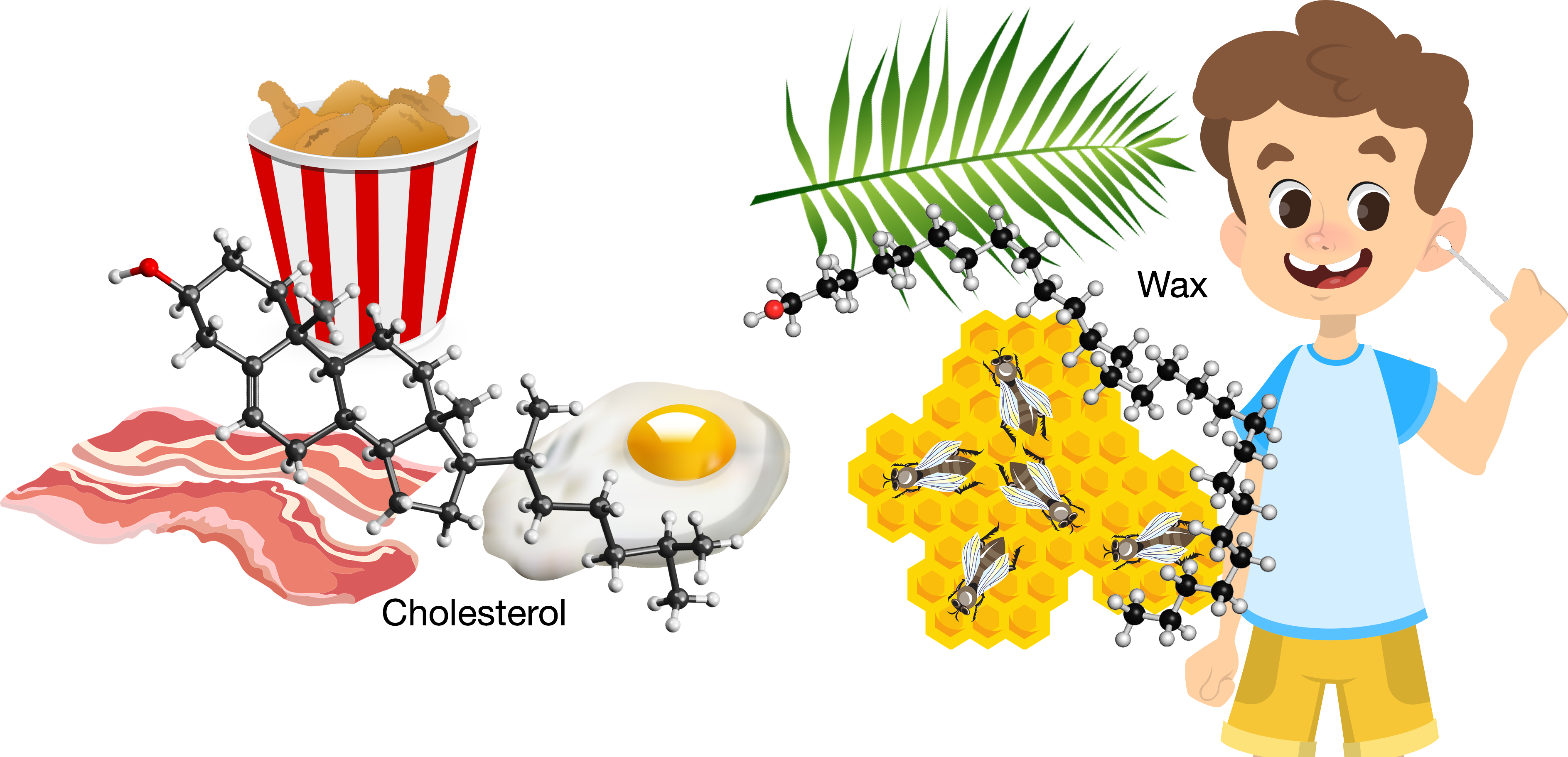
Cholesterol and waxes are both considered other types of lipids. Cholesterol has earned a bad reputation because of its role in coronary artery disease. However, it is an important chemical in the body. It is a component of bile (stored in the gall bladder) and is the starting point for the production of all the steroid hormones such as estrogen, testosterone, and cortisol in the body. Cholesterol is an animal product and is not found in foods of plant origin. Waxes are found in animals in the form of ear wax, beeswax produced by bees to make their honeycombs, and in plant waxes used as waterproofing material on leaves and stems.
Fats are essential in cooking, but should be used wisely to minimize the amount consumed on a daily basis. Cooking oils, butter, and margarine (oleo) are all fats. These ingredients are popular because fat carries a significant amount of flavor. Fats are found in all of the food groups and categories in the MyPlate graphic. They are obvious in some foods, such as the dairy and protein groups. However, fats also occur in fruits, vegetables, and breads. Avocados, for example, have a high fat content. Certain cereal grains and seeds contain a significant amount of fat as well.
Saturated and Unsaturated Fats
Much has been made of saturated, monounsaturated, polyunsaturated, and trans fat in health and science reports in the media. These four categories all may appear as categories on food labels. Again, here the media and even nutrition labels use the term fat to refer to what scientists would technically call fatty acids. Recall that fats and oils are made of two different substances – glycerol and fatty acids.
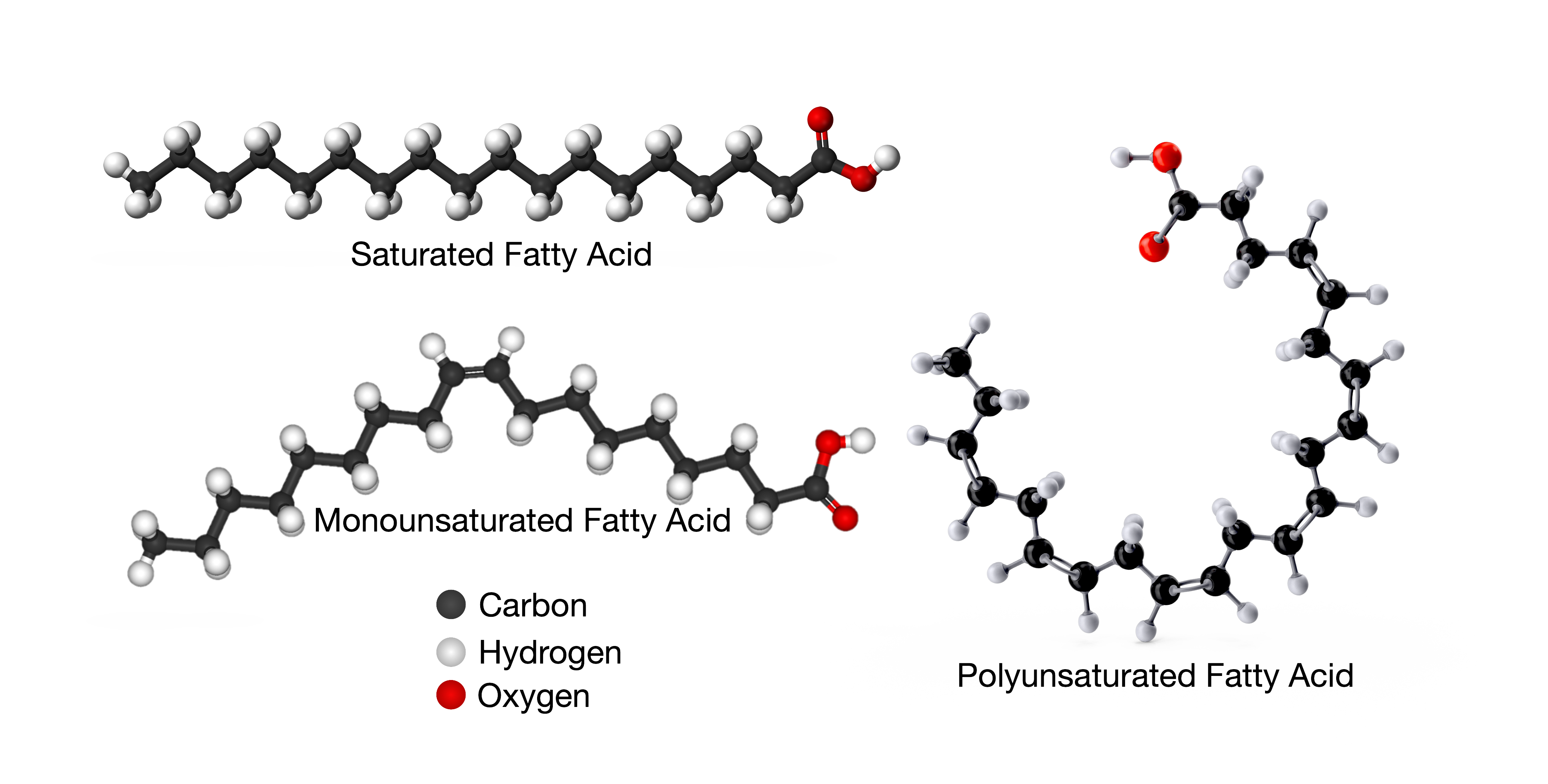
Fatty acids have long chains of carbon atoms with hydrogen atoms attached to each carbon. The number of attached hydrogens on a fatty acid determines whether it is saturated, monounsaturated, or polyunsaturated. As the names imply, saturated fatty acids have the maximum number of hydrogens allowed, monounsaturated fatty acids are missing one hydrogen atom, and polyunsaturated fatty acids are missing two or more hydrogens. The more unsaturated a fatty acid is, the more liquid it is.
 Oils are triglycerides that tend to be high in unsaturated fatty acids, and therefore are liquid at room temperature. Two exceptions to this rule are palm oil and coconut oil, which are liquids but tend to be fairly high in saturated fatty acids. Fats from animal sources are triglycerides that tend to have more saturated fatty acids and, therefore, are solids at room temperature. Plants generally contain triglycerides that have more monounsaturated and polyunsaturated fatty acids.
Many of the distinctions between the different types of lipids and fats described in this background section are complex, especially for students in the elementary grades. For this reason, the Examining Nutrition CELL presents only the basic level of classification to students through its activities and experiments. During the course of this Investigation, students will simply learn that lipids are one of the six classes of nutrients and that fats are one type of lipid. In addition, students will learn the importance of monitoring the fat content of their diets. Students will also examine the fat content of different foods by using the triple beam balance to measure shortening in amounts equivalent to the fat content of the foods in question, allowing students to visualize the amount of fat listed on the labels.
Examining Nutrition: Investigation 4 - Mathematics Concepts
Prelab
- parts/whole
- grouping/classifying
- problem-solving
Lab
- data table
- percentages
- mass/volume in grams, ounces, cups, teaspoons
- grouping/classifying
- place value (tenths, ones, tens, hundreds)
- addition
- fractions
- parts/whole
Postlab
- parts/whole
- greater than/less than/equal to
- grouping/classifying
- bar graph
- skip counting by 2’s
- least to greatest
- data analysis
- continuum scale
- comparing size, shape, form
- addition
Examining Nutrition: Investigation 4 - Procedural Tools

Examining Nutrition: Investigation 4 - Cognitive Tools

Examining Nutrition:
Investigation 4 Quiz

