
Teacher Portal:
Exploring Electricity
Investigation 2
Investigation Two: Observing Electrical Charge
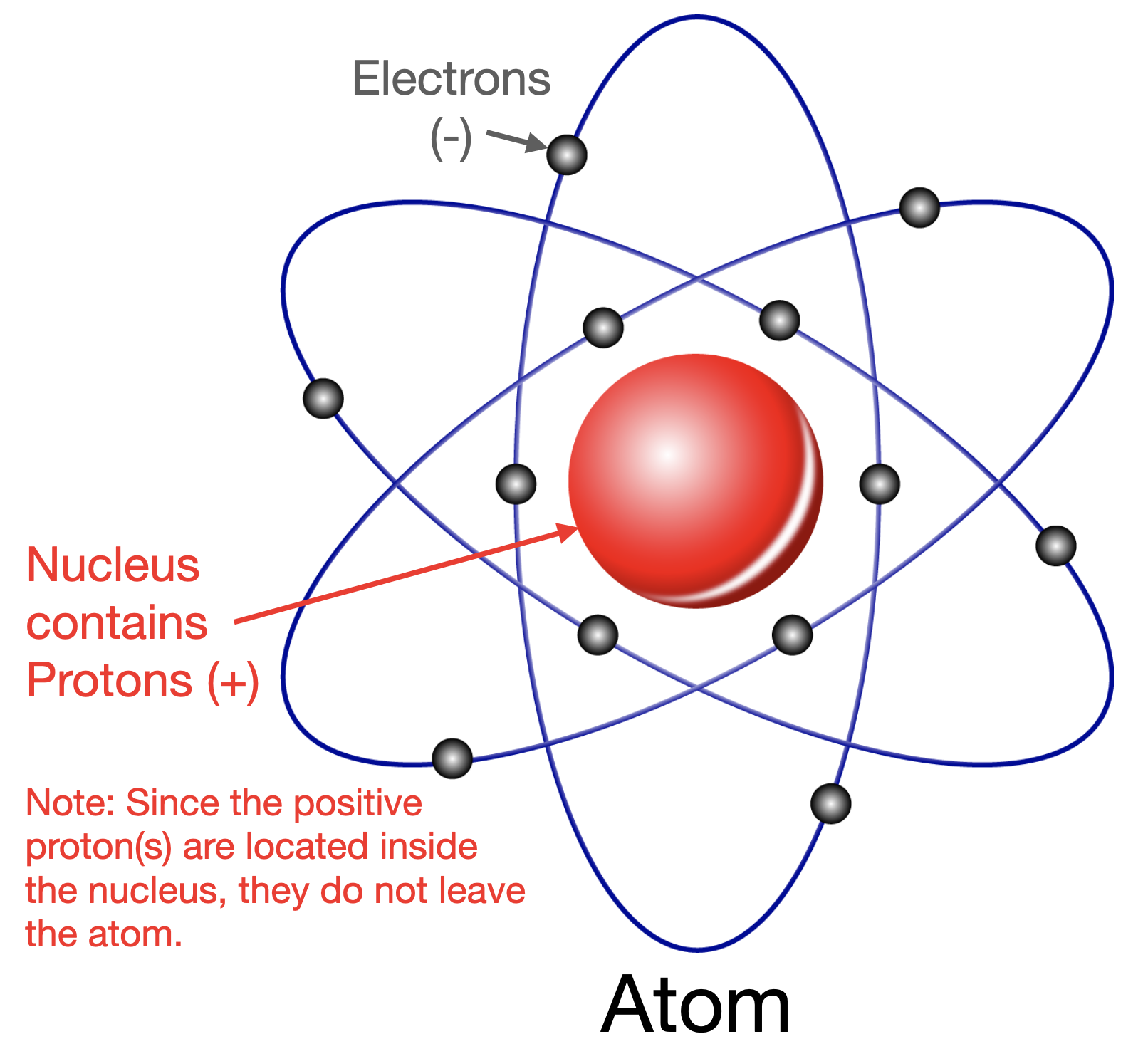 Investigation One introduced students to static electricity as an event that occurs when electrons move between objects or materials. Students explored this concept by playing the role of charged atoms in a PreLab activity and learned through experimentation that as the amount of charge on a surface increases, its attraction for surfaces that are neutral or oppositely charged increases. Investigation Two is designed to reinforce the concepts of positive charge, negative charge, and attraction between charged and neutral objects. Students will also be introduced to the concept that like charges repel each other.
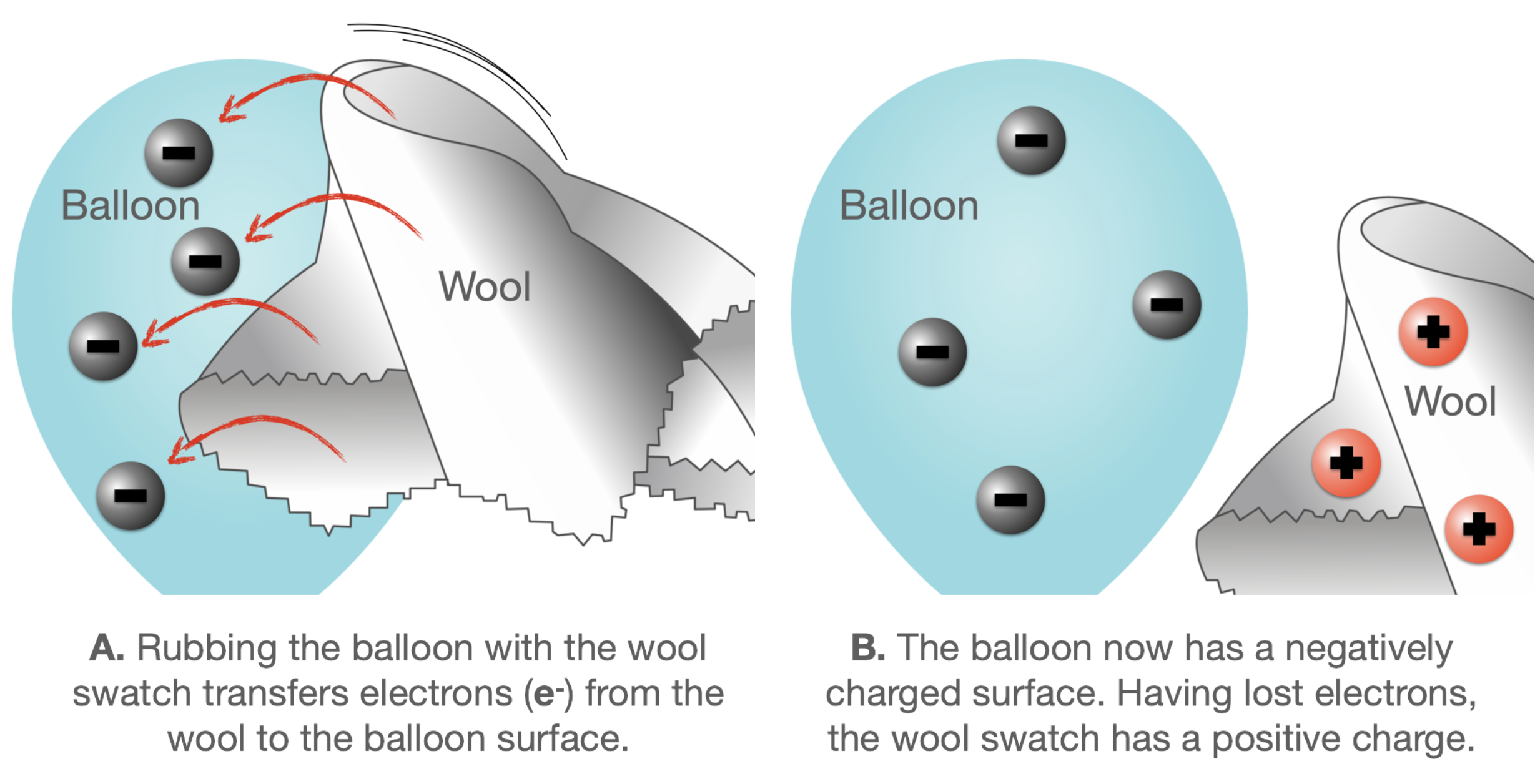
Static electricity results when normally uncharged surfaces develop a charge. Surfaces develop positive charges when they lose electrons, leaving behind a greater number of protons than electrons. When a normally uncharged surface accepts additional electrons, it develops a negative charge due to a greater number of electrons on the surface than positively charged protons. Protons never move between surfaces, as they cannot leave the atomic nucleus. Thus, the development of a positive charge on an object’s surface is the result of electron loss, rather than proton gain.
Electron Transfer
Electron transfer occurs when two surfaces are rubbed together. The amount of electrons that are transferred depends partly upon the amount of surface area in contact. More surface area in contact means there is a greater opportunity for electron transfer to occur. The number of electrons transferred is also dependent upon the materials involved. Some materials are more willing to give up electrons than others, while some materials are more willing to take up extra electrons than others. As students found in Investigation One, wool is very willing to give up electrons. Balloons are willing to accept electrons.
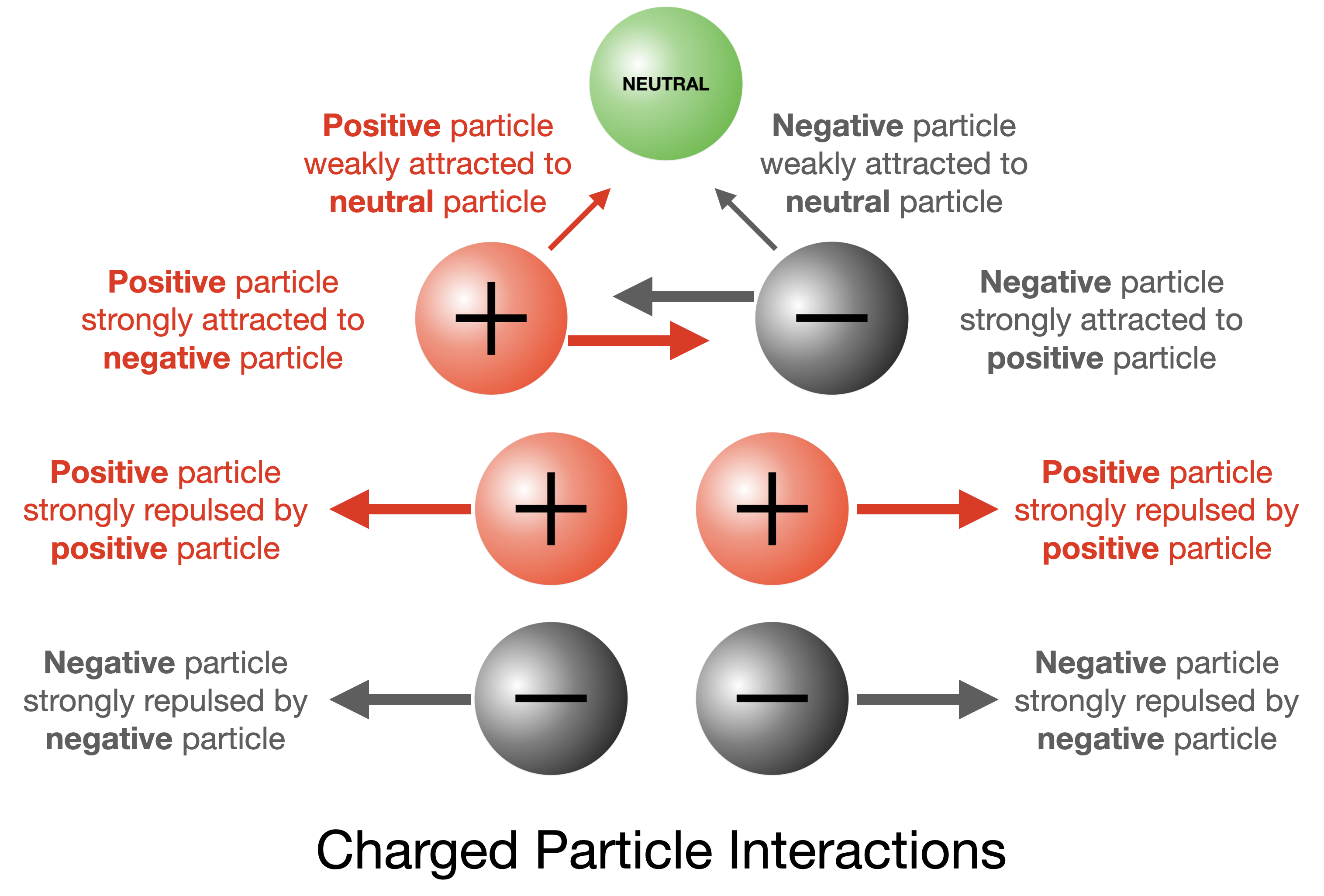
Positively charged surfaces have a strong desire to replace their missing electrons and restore their uncharged state. As a result, they are strongly attracted to negatively charged or neutral surfaces. In contrast, no attraction exists between surfaces with like charges, and in fact, these surfaces will push away from each other. These phenomena can be stated as follows:
Charged objects attract or are attracted to uncharged objects.
Opposite charges attract one another.
Like charges repel one another.
Investigation Two Lab
Students will perform experiments to test these phenomena as they continue to observe electrical charges in Investigation Two. Students will compare the response of salt and pepper to uncharged and charged wool swatches and balloons. Students will also discover that the human body is affected by static electricity by holding charged and uncharged wool swatches and balloons near their arms. Finally, students will determine that like charges repel by holding a charged balloon near another charged balloon that is suspended from a string and observing the response of the suspended balloon.
Exploring Electricity: Investigation 2 - Mathematics Concepts
Prelab
• comparison
• addition/subtraction
• positive/negative
• counting whole numbers
• problem-solving
Lab
• counting whole numbers
• length in cm
• estimate and verify predictions/measurements
Postlab
• comparison
• addition
• positive/negative
Exploring Electricity: Investigation 2 - Procedural Tools

Exploring Electricity: Investigation 2 - Cognitive Tools

Exploring Electricity:
Investigation 2 Quiz

