Teacher Portal:
Using and Making Models
Using and Making Models
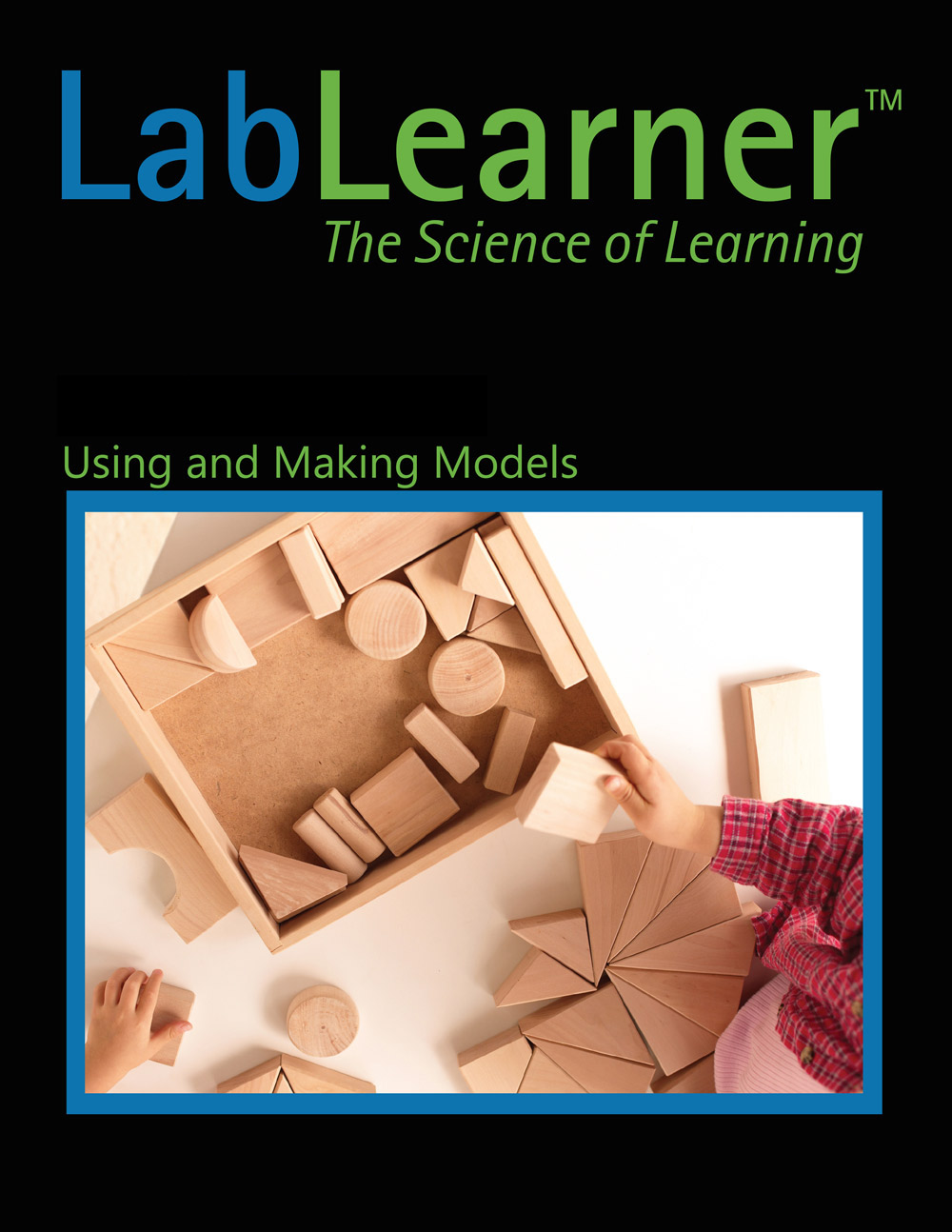 During this CELL, students will perform activities and conduct experiments that will introduce them to the concepts of using and making models and using symbols in the lab. Through their explorations, students will come to a better understanding that different types of models are used to help scientists observe and study objects that they can not easily see with their naked eye, results that are found in locations far from the lab, and objects that are too large to bring into the lab. In addition, they will have an opportunity to utilize scientific equipment as they perform their experiments.
Students begin their investigation by viewing a model of a skeleton. Students are encouraged to observe the model and relate the location of the bones on the skeleton to the location of the bones inside of their body. In addition, students are asked to create and test two models of an arm: one without bones and one with bones. As a result of their experiments, students learn that the bones that make up a skeleton are needed to provide strength and support for the human body.
As a part of their investigations, students will also build a model of a pond that includes gravel, water, a duck, and fish. Students will test different materials to decide whether they are best suited to model a duck or a fish. Through this experiment, students will discern that models are made up of various parts and the material chosen to represent each part should ideally represent the properties of the part being modeled.
Students end their investigations by exploring the concept of symbols and their connections to models. As a part of their experiments, they will view a picture of a model and then either build or locate that model in the lab. Students will then test four models and record their results and observations with the use of symbols. Through their experiments, students should discern that symbols can be used to represent a variety of information and concepts, including direction, distance, and properties of objects. In addition, students may begin to comprehend that symbols can serve as a type of model or be used in combination with models.
As students complete this CELL, their experiments, observations, and participation in class discussion will aid them in better understanding that their natural curiosity and declaration and recording of observations provide them with the procedures they need to conduct investigations of the biological and physical world and to share the findings of these experiments. In addition, this CELL will promote students’ awareness of the use of models and symbols in the lab as well as in their daily life, building continuity between laboratory investigations and real-world applications and encouraging independent investigation.
___________________________________________________________________
Investigation 1: Using Models
Investigation One introduces students to the idea of using models to study and make observations of things that may not be easily seen or obtained for study. Through observation of a skeleton model, students will discover that they have a skeleton inside of their body even though it is difficult for them to see without the aid of scientific equipment. In addition, they will construct a model to help them begin to understand that bones provide structure and support for the human body.
Investigation 1: Teacher’s Video (6:11)
Investigation 1: Student’s Video (12:30)
___________________________________________________________________
Investigation 2: Making Models
In Investigation Two, students will add to their experience by constructing a model of a pond from start to finish. Students will then test whether a falcon tube cap, acrylic cylinder, and cotton ball will float or sink in the pond. Students will evaluate their results and assign each of the three objects a role in the pond model based upon their ability to float or sink: either a duck that floats on the surface of the pond or a fish that lives under the water of the pond. Their observations will enable them to realize that models are made up of parts and that each part should be represented in the final and complete model. In addition, students should begin to understand that materials used in a model should ideally be chosen because they represent or illustrate properties of the object or part of the object being modeled.
Investigation 2: Teacher’s Video (6:11)
Investigation 2: Student’s Video (9:53)
Click on the image below to open Investigation 2 CAP
___________________________________________________________________
Investigation 3: Videos in Revision
Click on the image below to open Investigation 3 CAP