
Teacher Portal:
Microscopes and Magnification
Microscopes and Magnification
 During this CELL, students will conduct several Investigations that deal with how light is refracted by lenses and reflected by mirrors. As a point of reference, students begin by learning the parts and functions of the human eye, including its lens. The hand lens, a viewing device that contains a convex lens, is used to study the external structures of the human eye, providing an example of how convex lenses can be used to magnify the image of an object.
Students’ investigation of lenses and refraction then moves to the use of convex, concave, and straight-sided lenses which all refract light differently. The convex lens magnifies the image, the concave lens reduces the image size and the straight-sided lens refracts but does not alter the image size.
A second viewing device, the compound microscope, is then introduced. The compound microscope contains four different convex lenses, one in each of the three objectives and one in the eyepiece. Students explore the different powers of magnification of each of the three objectives and how the differing powers of magnification affect the field of view of the specimen. Simple slides are viewed using the microscope, affording students the opportunity to investigate how refraction by the lenses of the microscope affects their view of the image. The ability of the microscope and the hand lens to magnify an image is compared and contrasted.
The compound microscope uses lenses to refract light from the specimen to form a viewable image. Students combine hand lenses to model how the microscope functions to form a viewable image.
During the Performance Assessment, students apply their newly acquired microscopy skills to solve a novel problem. This Core Experience Learning Lab, therefore, introduces students to the science of Microscopy in an effort to increase their understanding of the world around them.
___________________________________________________________________
Investigation 1: Exploring Lenses
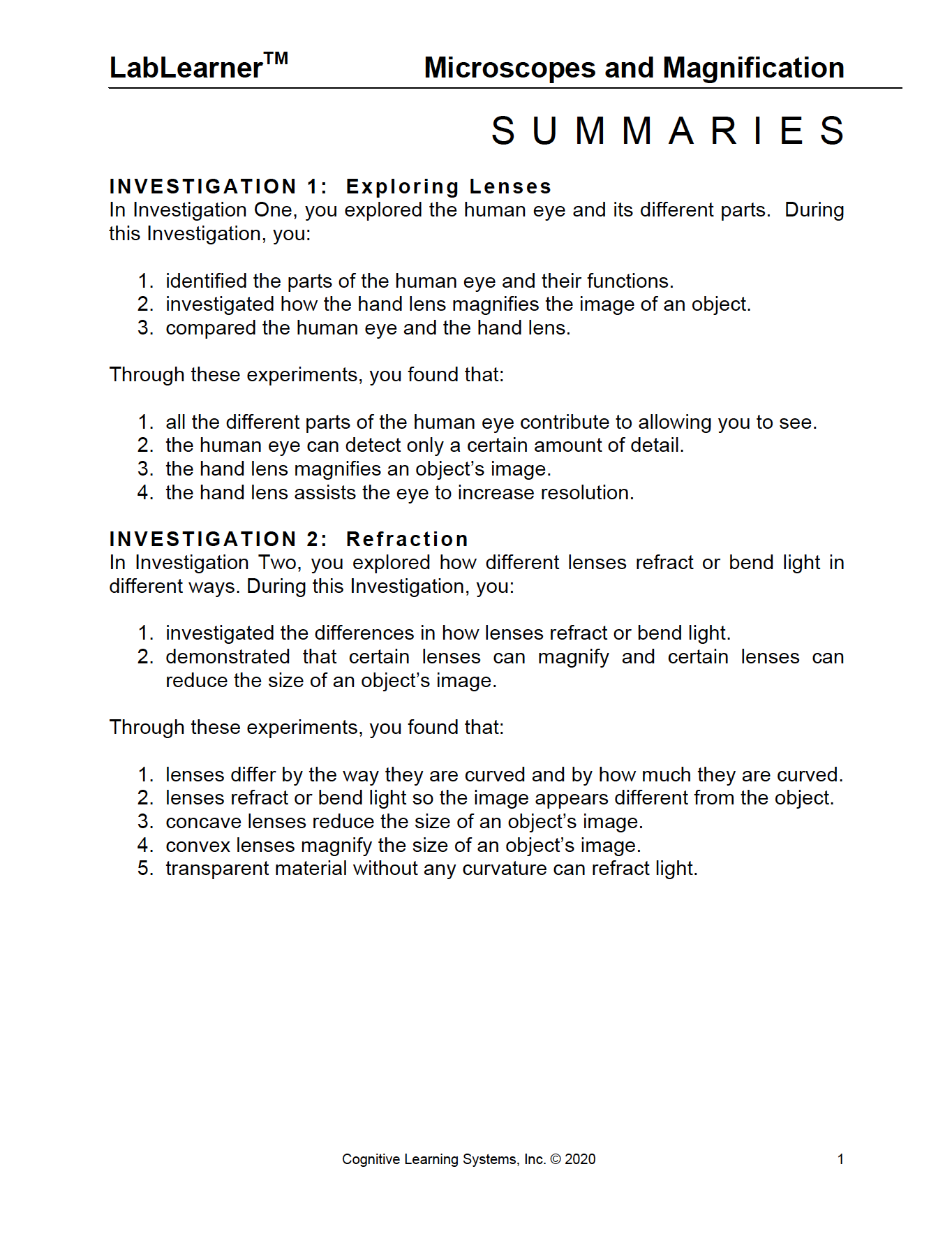
Investigation One introduces students to the structures and functions of the human eye. Students explore sight and the resolution of detail through experiments and discussion. The hand lens is introduced as an aid to the naked eye. The hand lens is used by students to observe parts of the human eye not clearly resolved without the aid of magnification.
Investigation 1: Teacher’s Video (6:27)
Investigation 1: Student’s Video (4:58)
___________________________________________________________________
Investigation 2: Refraction
In Investigation Two, students investigate the properties of convex and concave lenses by viewing several objects. Students will investigate how each of the two lenses refracts light to either magnify or reduce the size of an object’s image. Using lenses, students will compare the abilities of the naked eye and the assisted eye to resolve the detail of an object.
Investigation 2: Teacher’s Video (5:08)
Investigation 2: Student’s Video (8:20)
___________________________________________________________________
Investigation 3: Learning About the Microscope
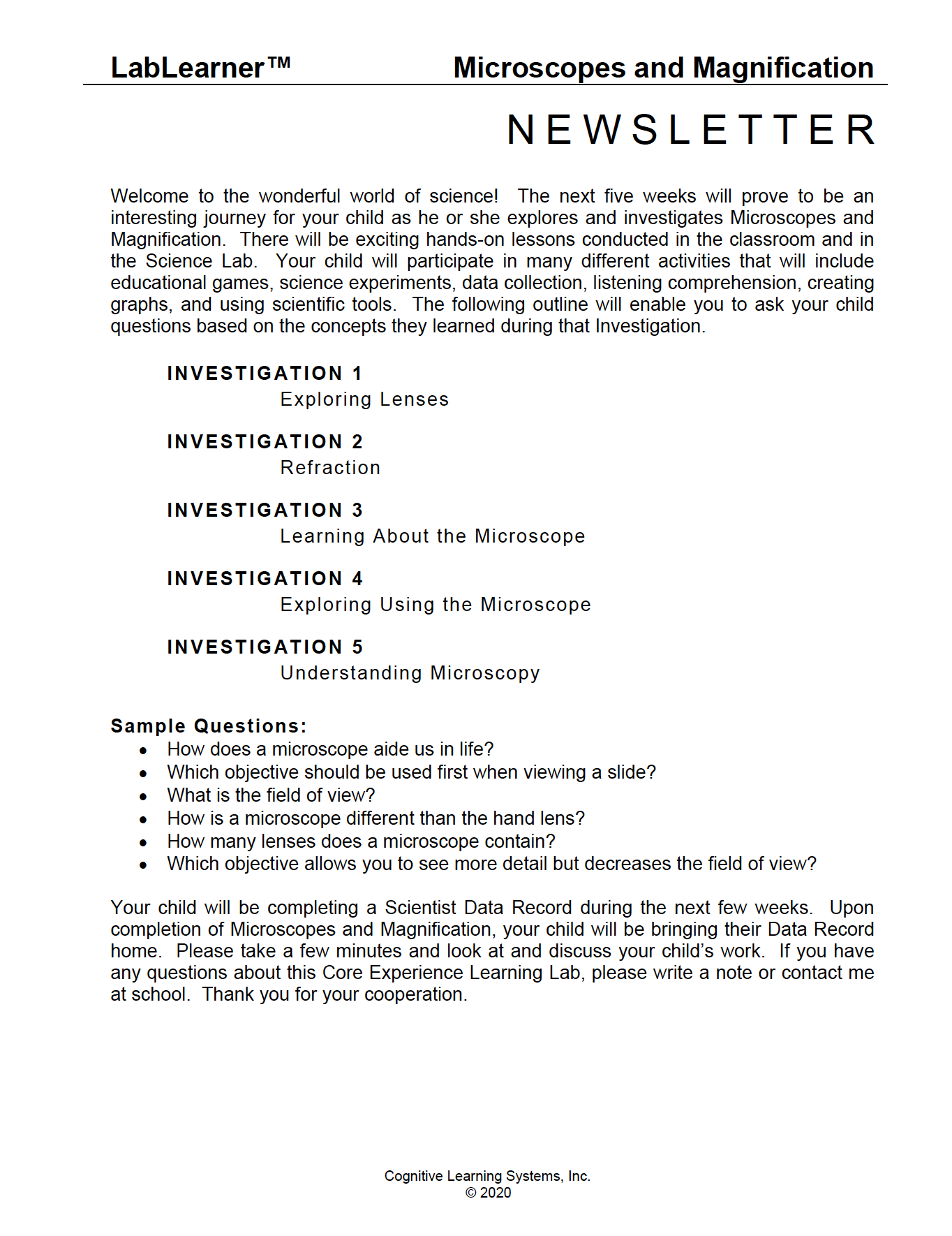
Investigation Three introduces the ability of the compound microscope to magnify microscopic specimens. After learning the microscope’s parts, students practice the proper use and operation of the microscope by viewing two different slides.
Investigation 3: Teacher’s Video (5:22)
Investigation 3: Student’s Video (9:38)
___________________________________________________________________
Investigation 4: Exploring Using the Microscope
Investigation Four gives students the opportunity to explore magnification by constructing a model lens from a drop of water. Students then use the three objectives of the compound microscope to view a slide. Students make observations of how much detail is visible and how the field of view is affected by the different powers of magnification of the three objectives. Students then calculate the total magnification of each of the three objectives and the hand lens.
Investigation 4: Teacher’s Video (6:58)
Investigation 4: Student’s Video (10:52)
___________________________________________________________________
Investigation 5: Understanding Microscopy
In Investigation Five, students conduct further investigations to enhance their understanding of how a microscope functions. Students will construct a model of a microscope that incorporates a series of lenses to illustrate how the microscope refracts light and produces a magnified image.
Investigation 5: Teacher’s Video (4:15)
Investigation 5: Student’s Video (9:13)
___________________________________________________________________
Investigation 6: Performance Assessment
Investigation Six consists of a performance assessment designed to evaluate students’ understanding of the science concepts addressed in the first five Investigations of the Core Experience. During this exploration, students will use the knowledge they have gained about the use and operation of the compound microscope to identify a microscopic specimen.
Investigation 6: Performance Assessment – Teachers Only (5:03)


Pre-Tests and Post-Tests
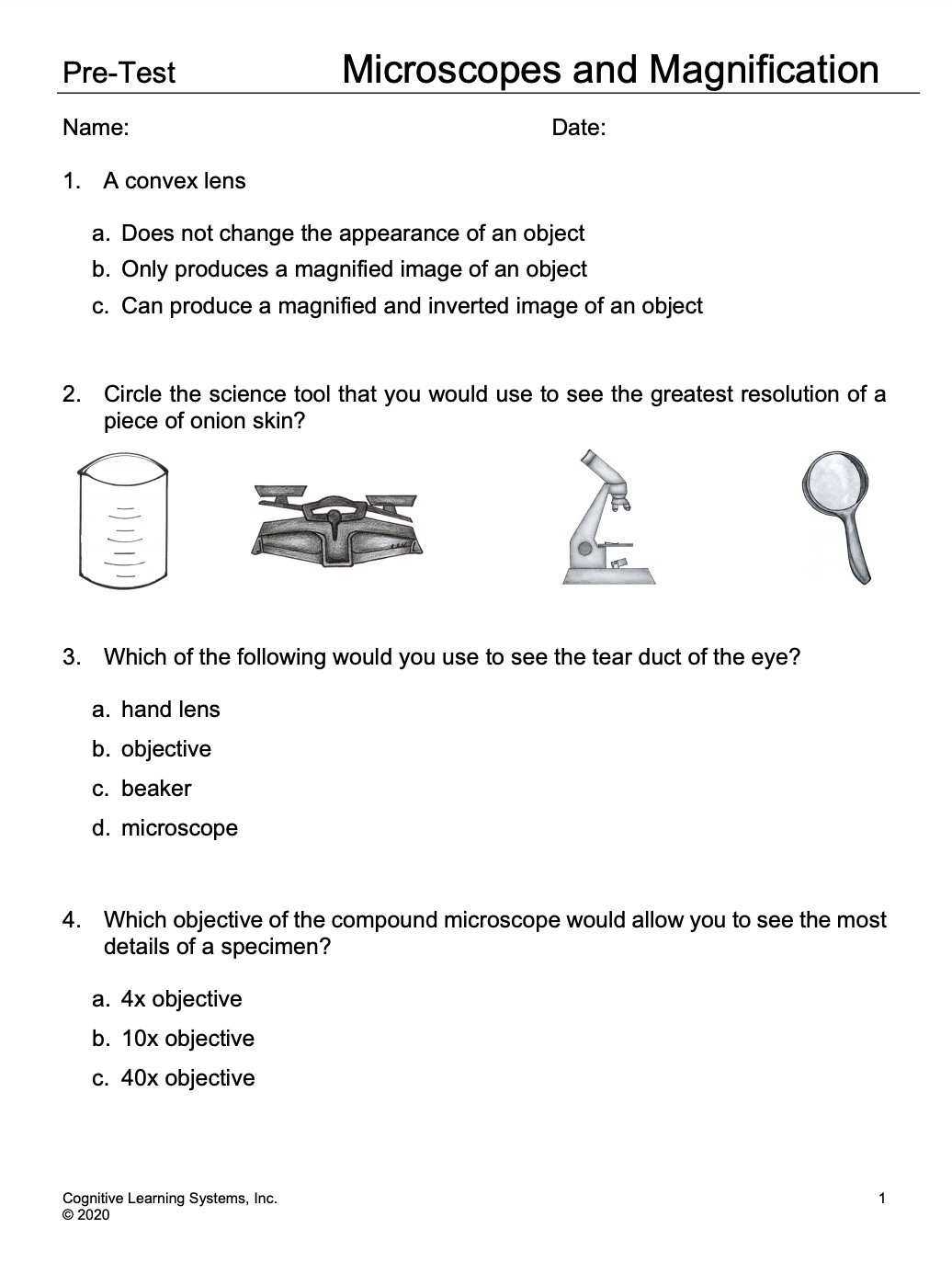
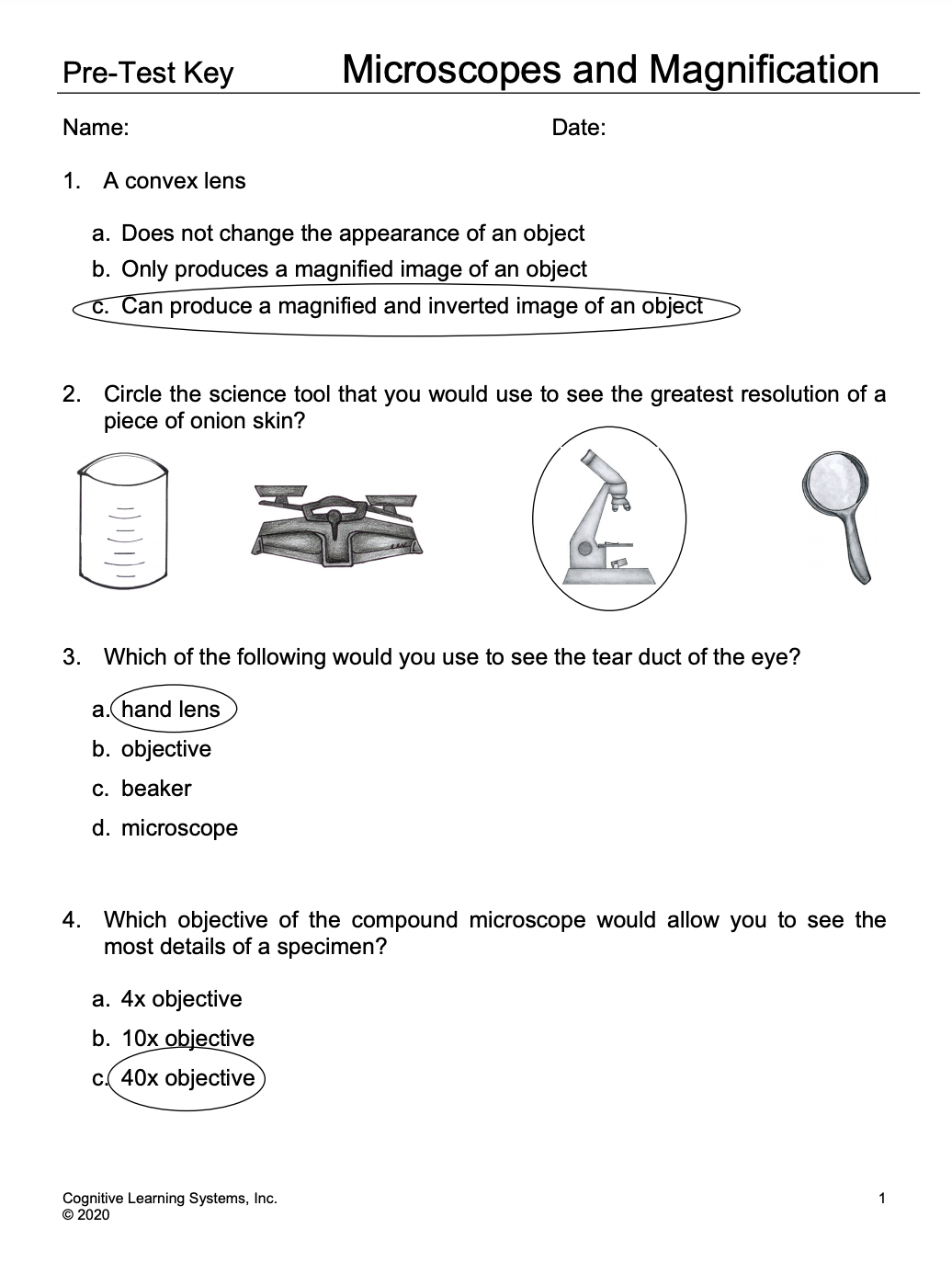
Pre-Test Key
Includes NGSS correlations
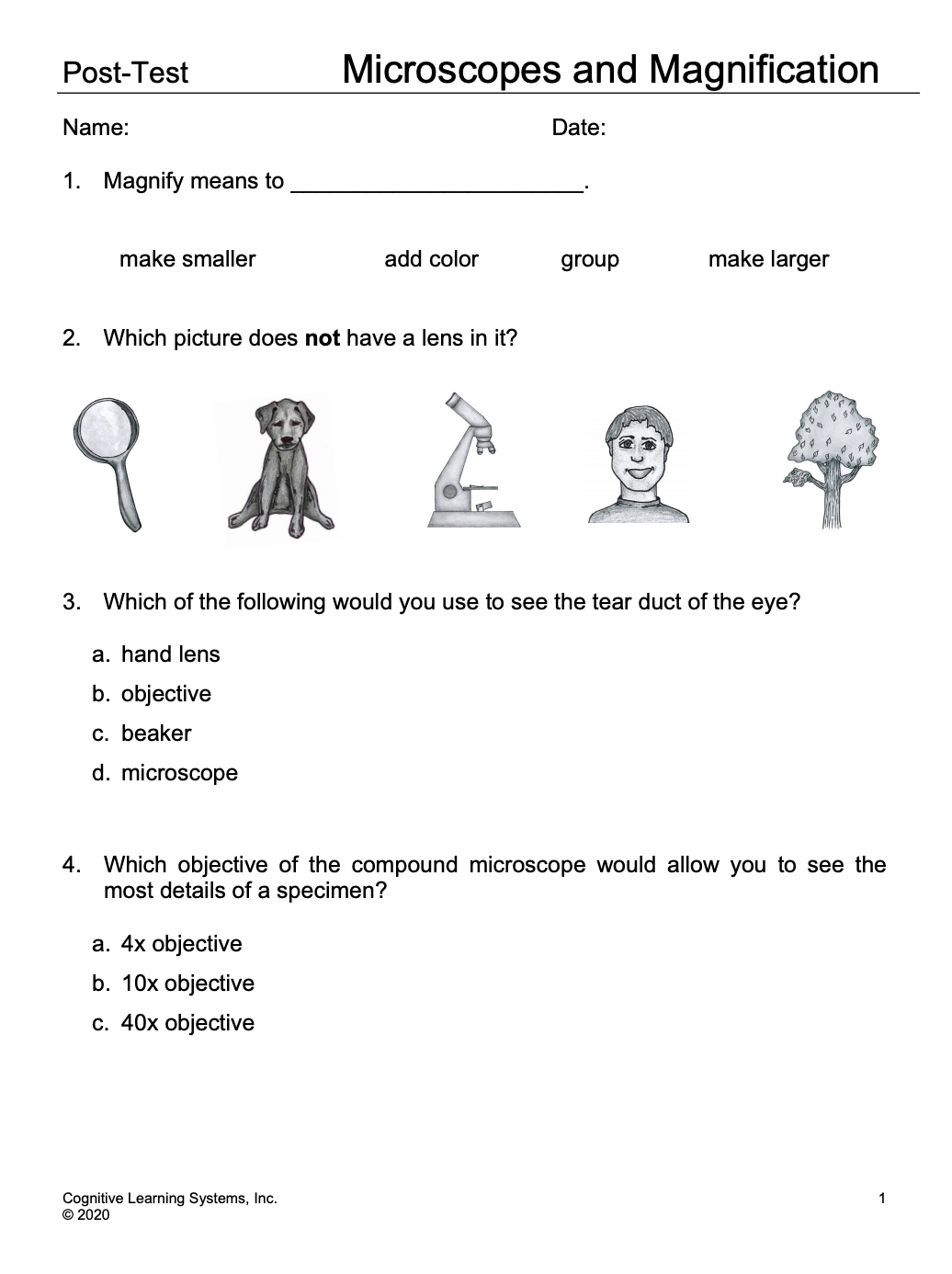
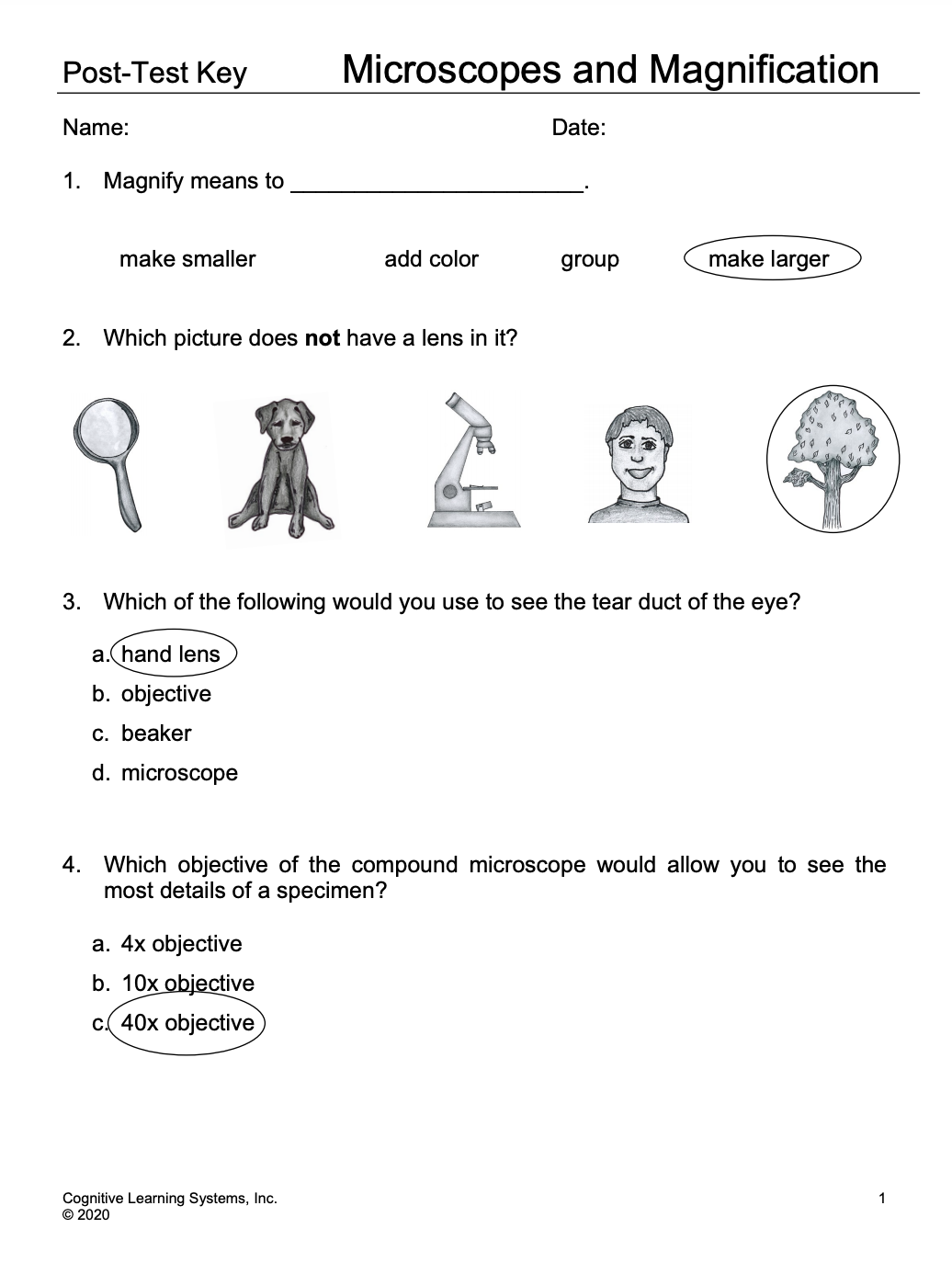
Post-Test Key
Includes NGSS correlations