Teacher Portal:
The Human Body
 The Human Body
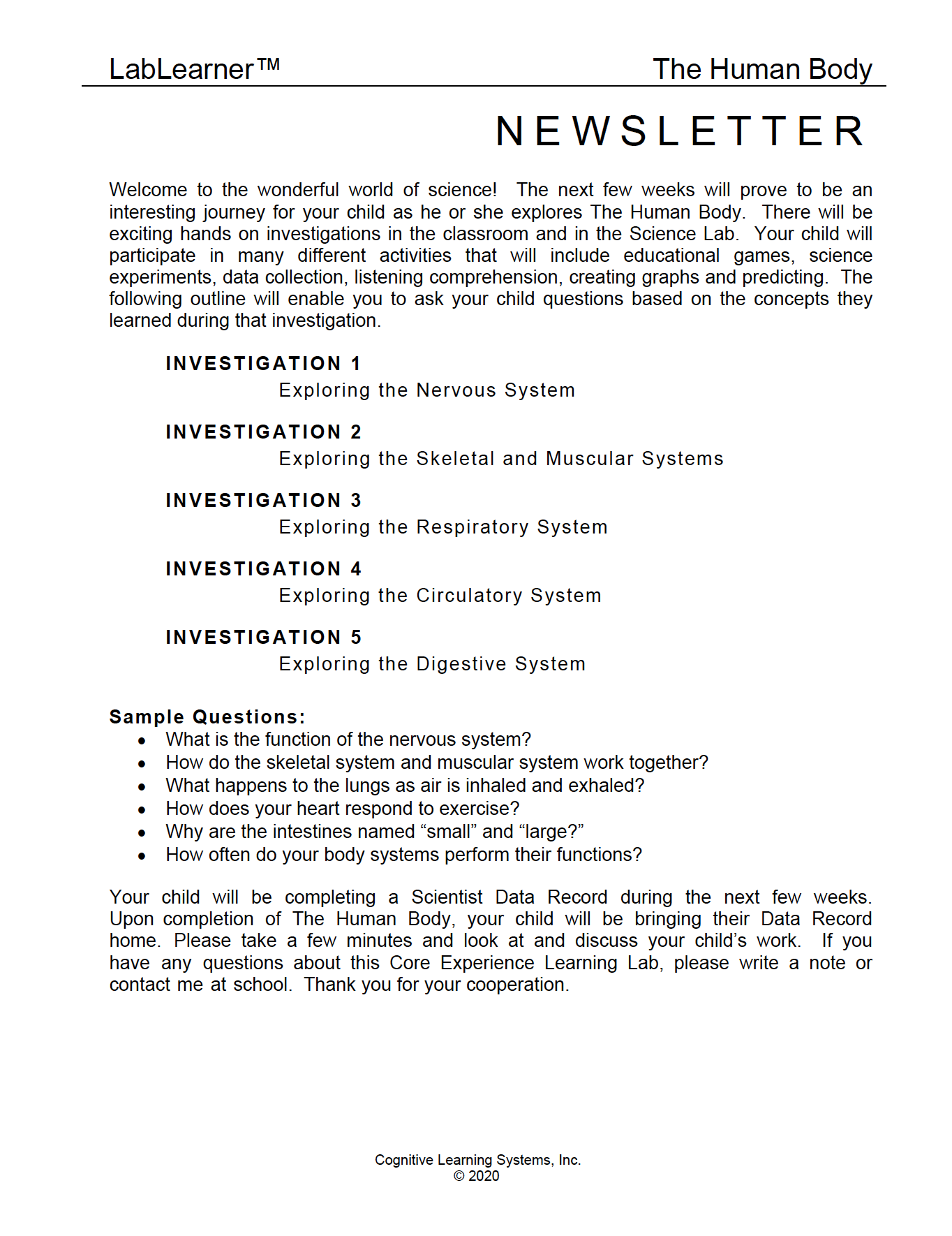
During this CELL, students will conduct several investigations focused on six systems of the human body: nervous, skeletal, muscular, respiratory, circulatory, and digestive. By conducting experiments and investigating different variables, students will begin to draw conclusions concerning the relationship between each system and its parts, as well as, the interrelationship between all systems of the human body.
Students will observe some of the functions of the nervous system by conducting experiments to test their reaction time, perception, and memory. Students will also examine the structures and functions of the skeletal and muscular systems and will determine that by working together, the bones and muscles provide the body with structure and movement. As students perform experiments, they will come to a better understanding that the respiratory system is responsible for bringing oxygen into the body and that the blood from the circulatory system picks up the oxygen in the lungs and distributes it to the rest of the body. Students will also discover that exercise affects these systems and produces both an increase in heart and respiratory rate. By observing models of the digestive system, students will discover that food and nutrients are broken down in this long tract and that some organs within this system are folded in order to fit into the body cavity. Students will then have the opportunity to apply their knowledge from this CELL in a Performance Assessment by evaluating the injured body systems of a person who was involved in a bicycle accident. At the conclusion of this CELL, students should come to understand that the human body is organized into systems that are made up of many parts and that these systems each perform both individual and complementary functions that occur at the same time in the body.
Through performing experiments, observations, and participating in class discussions, students will begin to comprehend that their bodies are composed of these six systems. This CELL will promote students’ awareness that the systems are working continuously and simultaneously as they move through their daily lives and will also encourage students’ independent investigation of these systems. In doing so, this CELL will help build continuity between students’ laboratory investigations and real-world experiences.
___________________________________________________________________
Investigation 1: Exploring the Nervous System
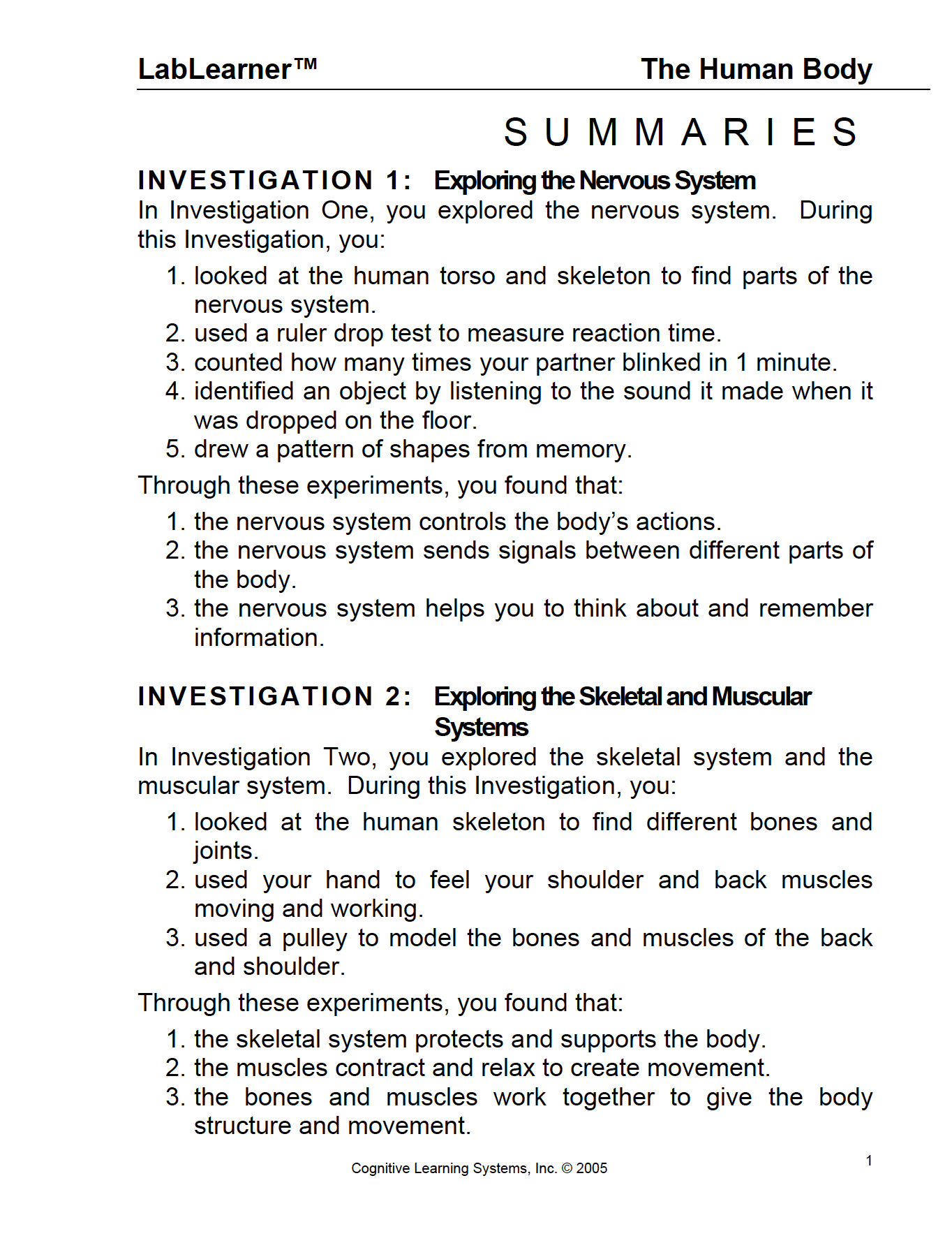
Investigation One introduces students to the parts and functions of the nervous system. Through a simple ruler drop test and observations of eye blinks, students will discover that the nervous system functions to control voluntary and involuntary movements. In addition, students will perform two cognitive experiments that will show that the nervous system also functions to control thinking and memory.
Investigation 1: Teacher’s Video (8:48)
Investigation 1: Student’s Video (8:55)
Click on the image below to open Investigation 1 CAP
___________________________________________________________________
Investigation 2: Exploring the Skeletal and Muscular Systems
In Investigation Two, students will study the parts and functions of the skeletal system and muscular system. Students will observe the bones and several muscles of the human body using the human skeleton model and the human torso model. Students will also manipulate a working model of the bones and muscles. Their observations will enable them to realize that the muscles are connected to the bones and that the muscles and bones work together to create movement.
Investigation 2: Teacher’s Video (13:42)
Investigation 2: Student’s Video (9:41)
___________________________________________________________________
Investigation 3: Exploring the Respiratory System
During Investigation Three, students will begin their exploration of the respiratory system. Students will calculate their respiratory rate before and after exercise discovering that respiratory rate increases as the amount of exercise performed increases. In addition, students will create a working model of the lung to observe what occurs during inhalation and exhalation, and they will calculate the amount of air that can be exhaled in one breath after they inhale deeply.
Investigation 3: Teacher’s Video (10:19)
Investigation 3: Student’s Video (15:14)
___________________________________________________________________
Investigation 4: Exploring the Circulatory System
Investigation Four introduces students to the parts and functions of the circulatory system. By using a stethoscope to count their heartbeats, students will calculate their heart rate before and after exercise. Through the use of models, students will imitate the “lub-dub” sound of the heart. They will also use a model to visualize what occurs in the heart when it is beating.
Investigation 4: Teacher’s Video (12:23)
Investigation 4: Student’s Video (13:15)
___________________________________________________________________
Investigation 5: Exploring the Digestive System
In Investigation Five, students will have an opportunity to investigate the parts and functions of the digestive system. Through the use of a hand lens, students will observe the mouth, teeth, and tongue. In addition, students will measure the length of the digestive system from mouth to large intestine using a model. Through this activity, students will discern that the digestive system is folded in order to fit inside the human body.
Investigation 5: Teacher’s Video (7:02)
Investigation 5: Student’s Video (13:46)
Click on the image below to open Investigation 5 CAP
___________________________________________________________________
Investigation 6: Performance Assessment
Investigation Six consists of a Performance Assessment designed to evaluate students’ understanding of the science concepts addressed in the first five investigations of the CELL. During this hands-on laboratory exploration, students will be presented with a person whose body systems may have been injured in a bicycle accident. In order to apply their understanding of the structures and functions of the human body, they will test and evaluate models of several systems of the human body and will determine the effect the injuries have on each system that is modeled.
Investigation 6: Performance Assessment – Teachers Only (10:03)

Pre-Tests and Post-Tests
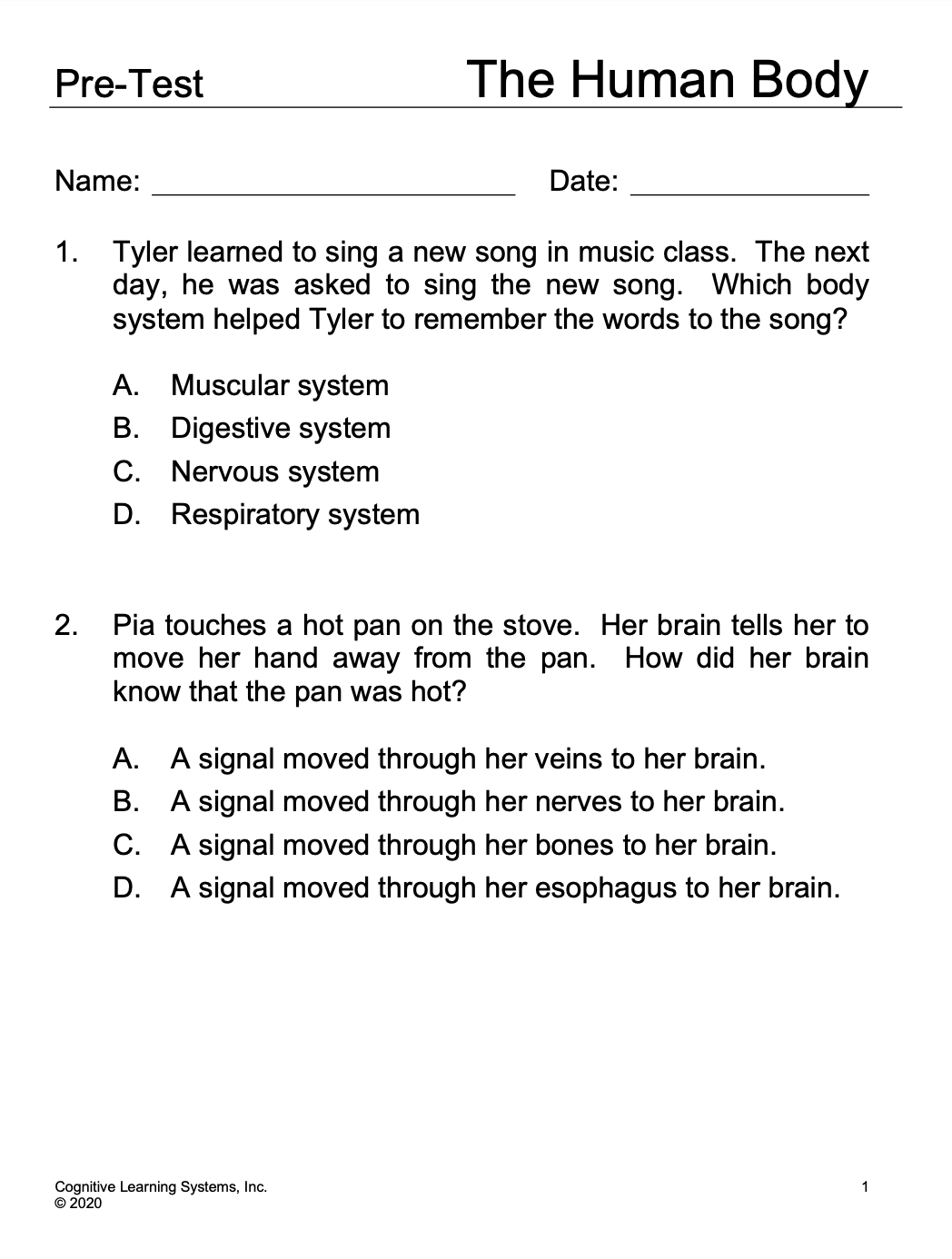
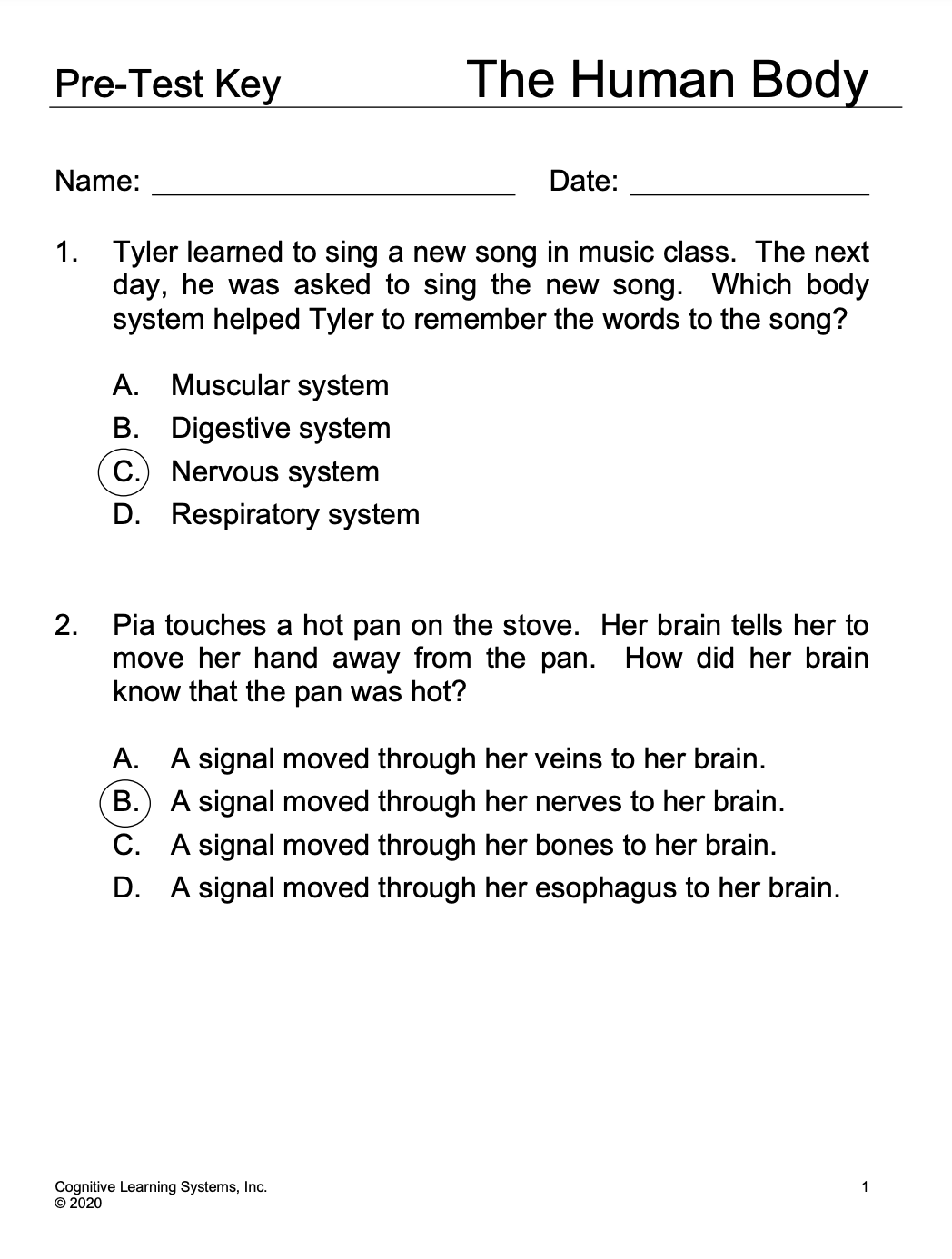
Pre-Test Key
Includes NGSS correlations
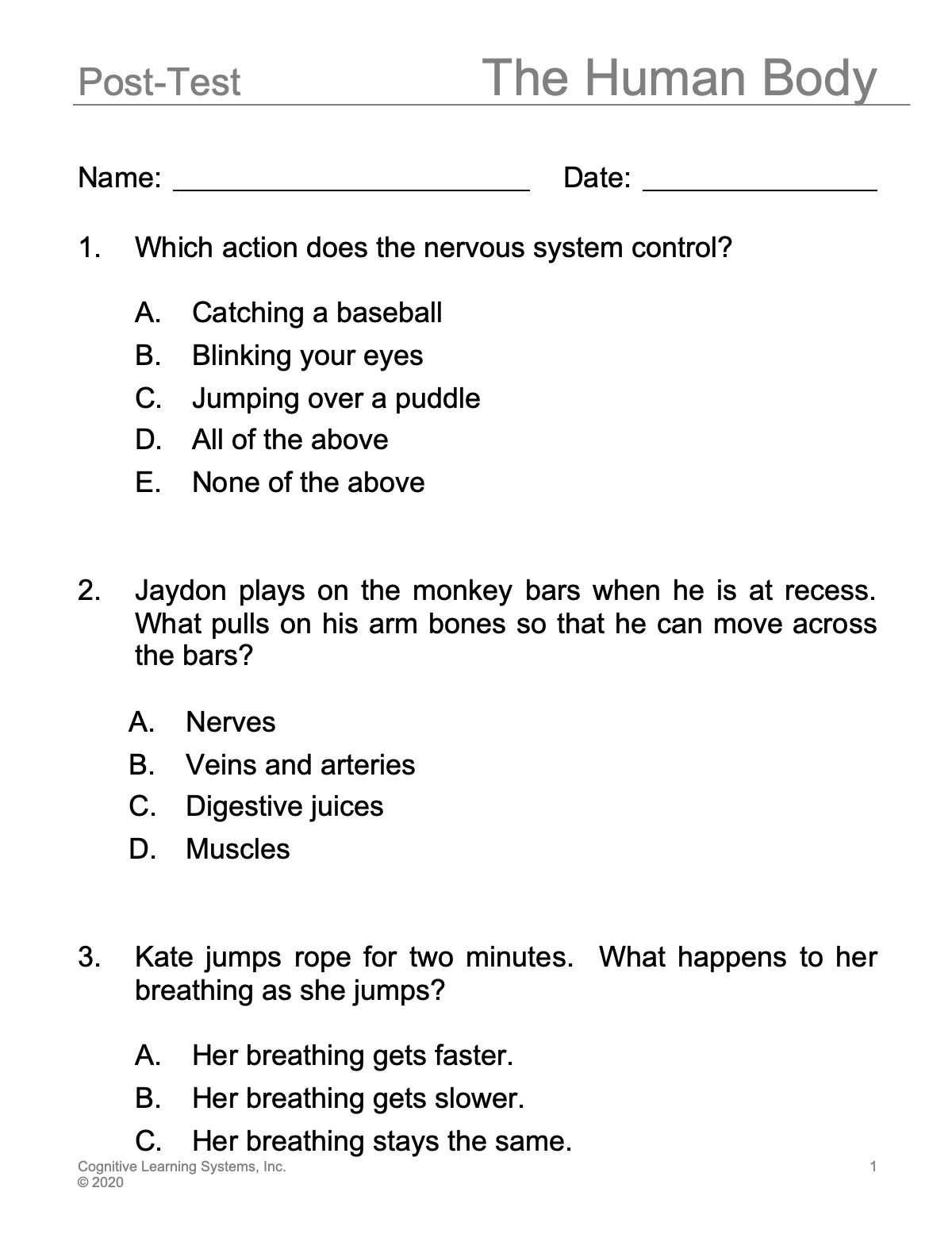
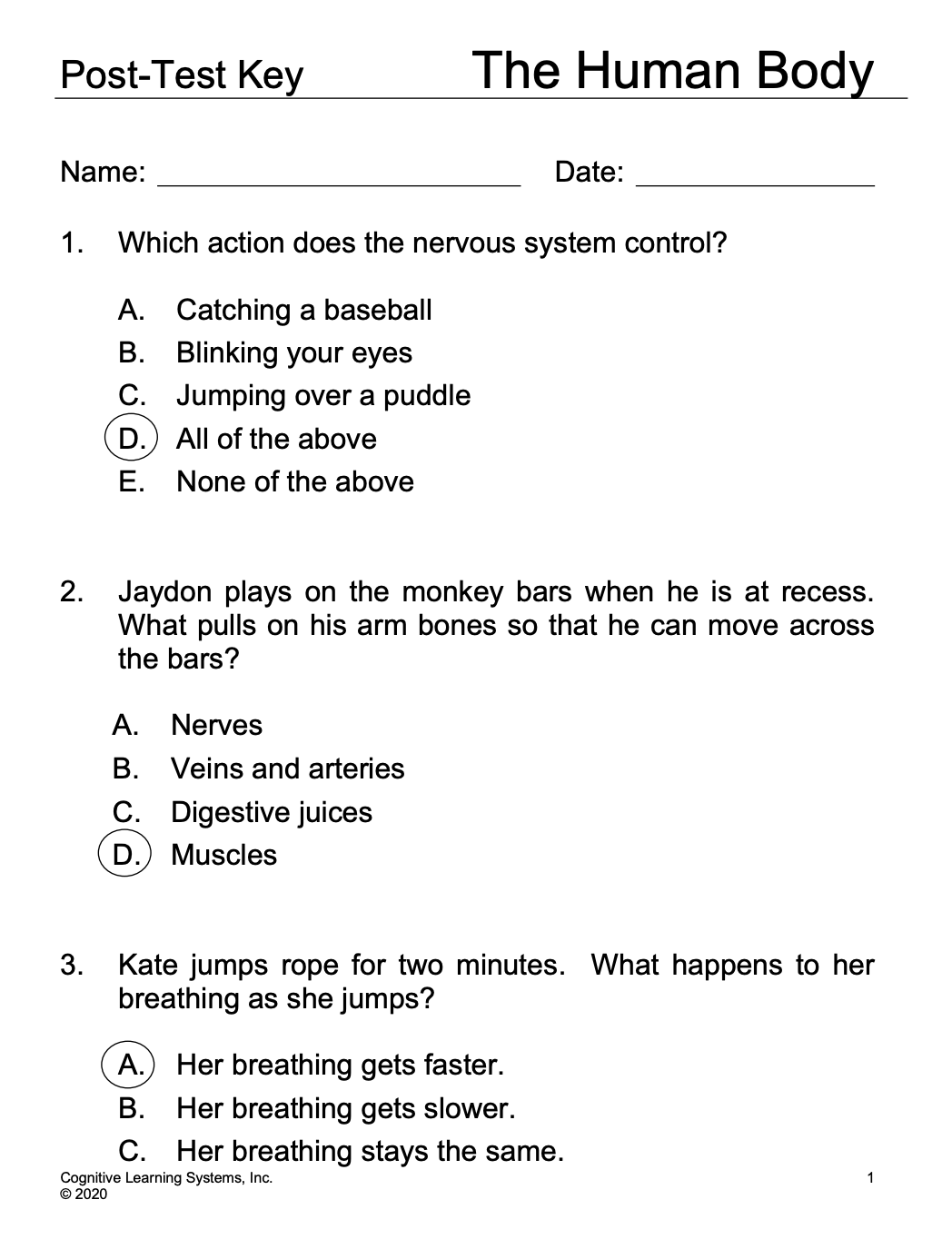
Post-Test Key
Includes NGSS correlations