
Teacher Portal:
Our Solar System
Investigation 1
Investigation One: The Eight Planets Around the Sun
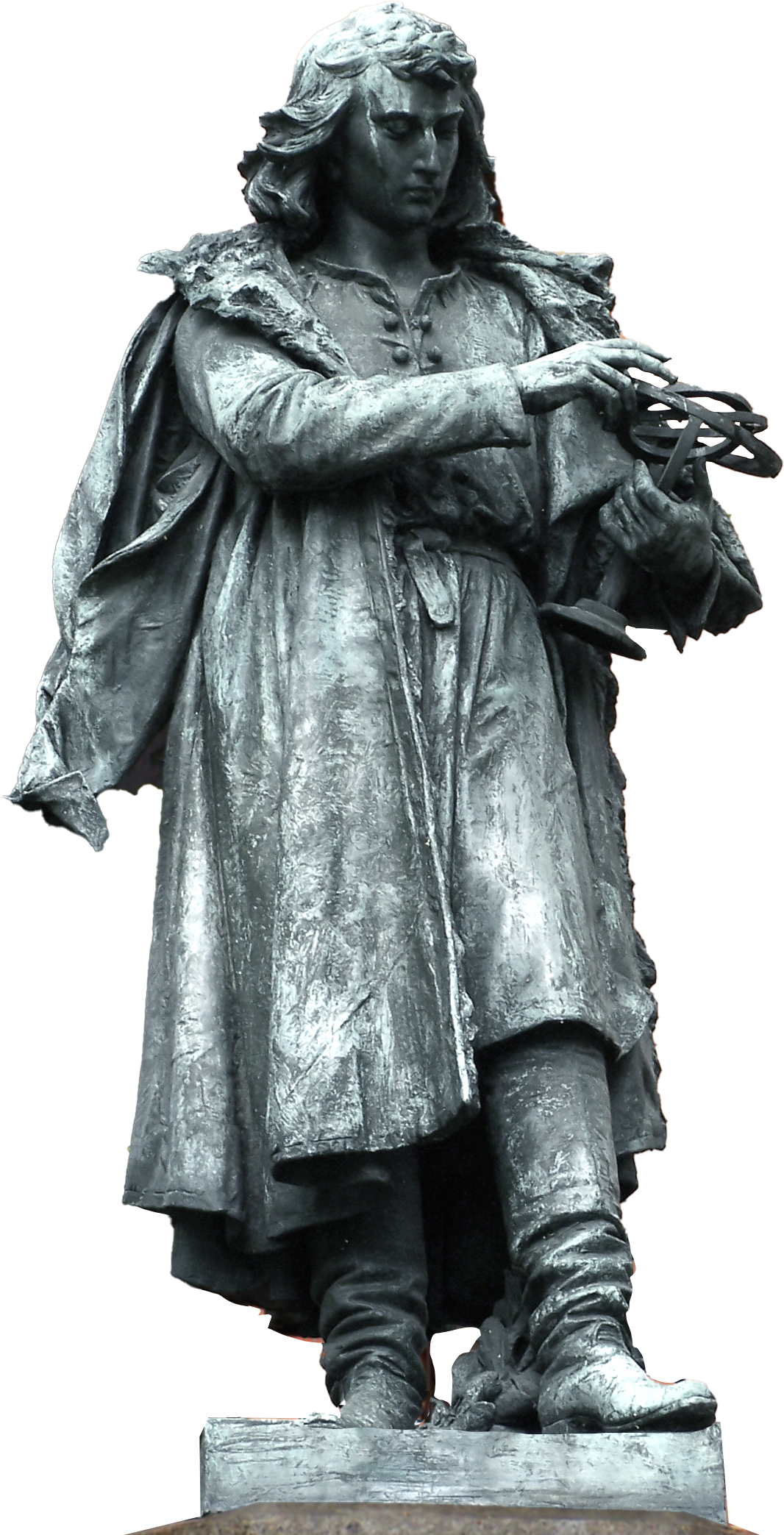 Our understanding of the Solar System has evolved over time. Until relatively recently during human history, our human-centric view of the Universe was that everything revolved around the Earth (e.g. Ptolemy). Instead, Copernicus (pictured to the right) recognized that the planets revolve around the Sun. As astronomers and others continue to study the Universe, our understanding of the Solar System continues to expand.
The present definition of the Solar System includes the Sun, planets and their moons, asteroids, comets, and other debris. Currently, we know and acknowledge eight planets including Mercury, Venus, Earth, Mars, Jupiter, Saturn, Uranus, and Neptune, in order of closest to farthest from the Sun. However, even this number may continue to change as methods of observing and identifying planets become more refined.
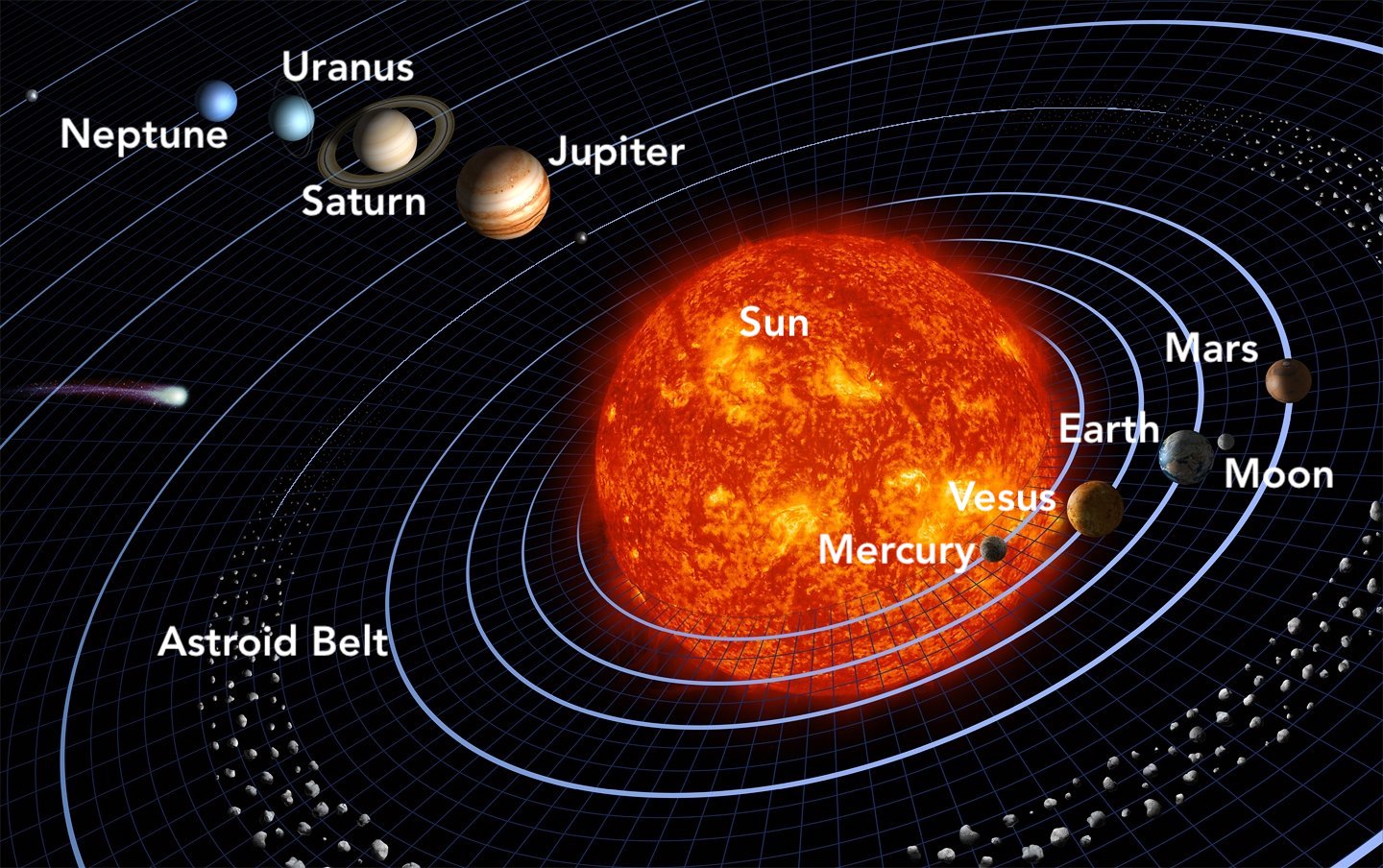
The eight major planets currently identified consist of four inner planets, or those closest to the Sun, and five outer planets, or those farthest from the Sun. All eight of these planets are similar in their spherical shape and the slightly elliptical nature of their orbits around the Sun. However, the composition of the planets varies. The inner planets, including Mercury, Venus, Earth, and Mars, consist of dense, rocky material. Their proximity to the Sun does not allow gases to accumulate. Further from the Sun, however, gases are able to cool and condense into a liquid. The outer planets, then, consist largely of gases such as hydrogen, helium, and methane.
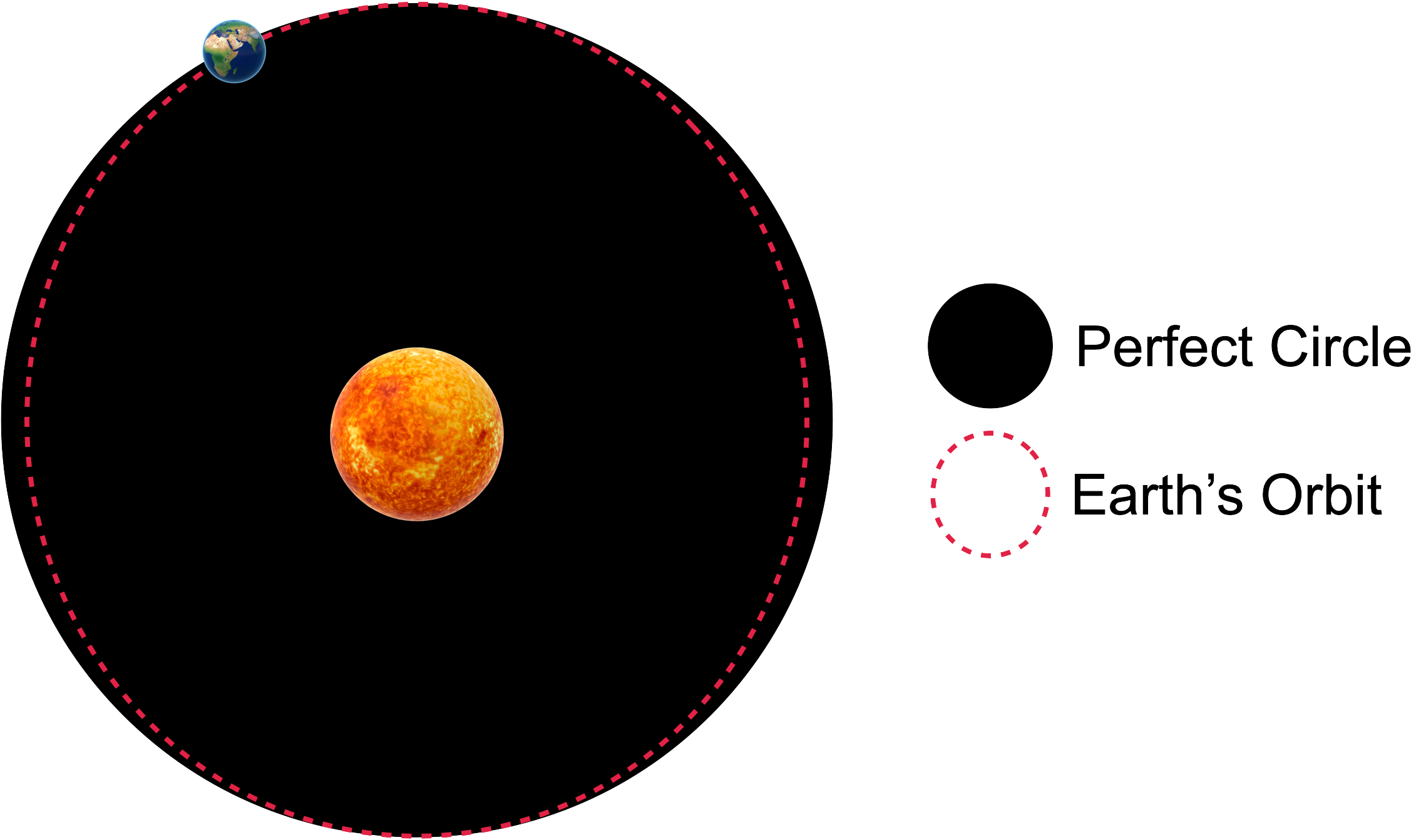
Although all planets revolve around the Sun in an elliptical path, the exact shape of their orbits varies between planets. Some orbits are more elliptical, while others are nearly perfect circles. The Earth’s orbit, for example, is nearly that of a circle (above).
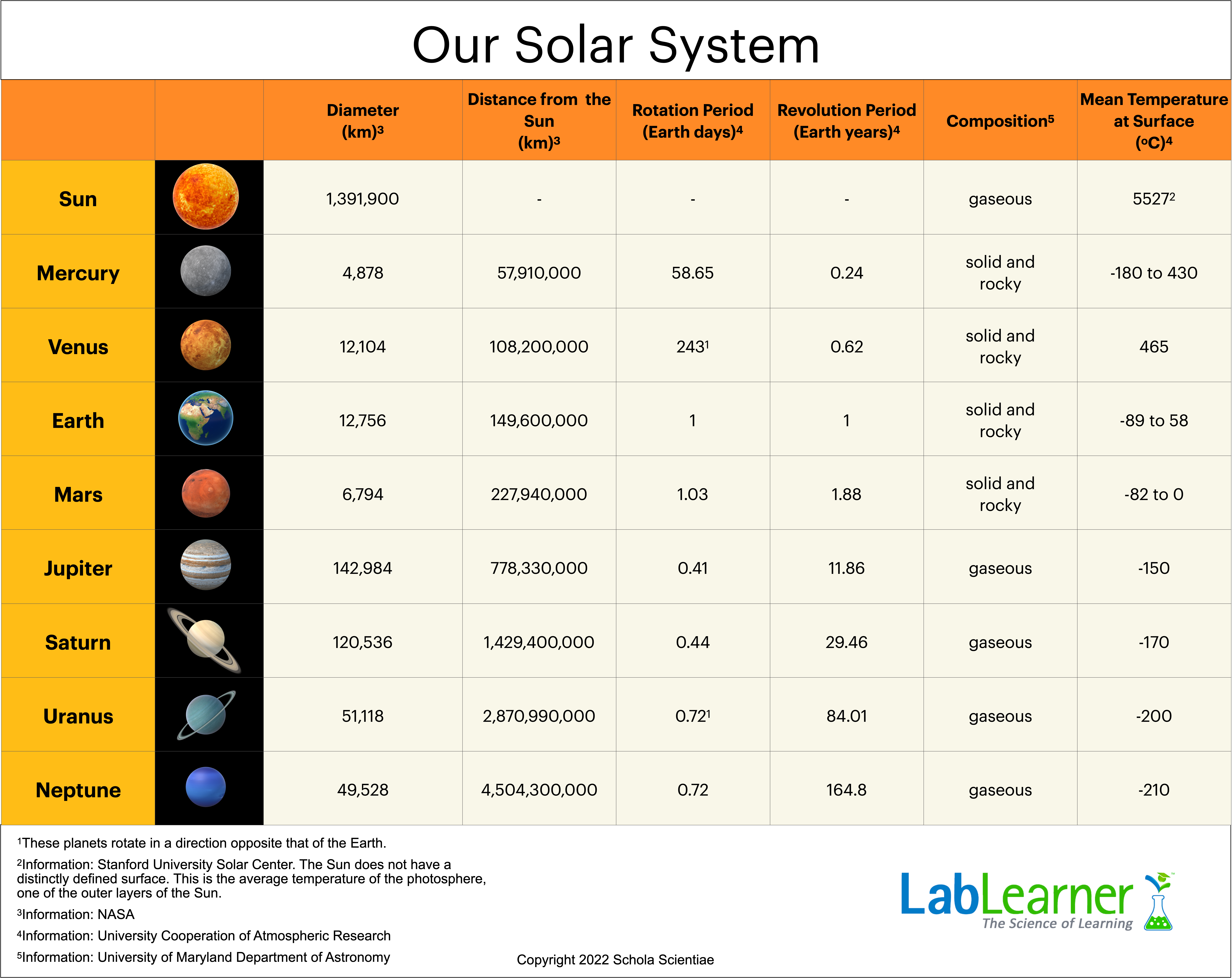
For reference, detailed information about the Sun and planets is presented below. Click on the chart to enlarge it.
Investigation One of this CELL introduces students to the Solar System. It emphasizes the relationships between its parts, including the Sun and the planets. Students create models to help them understand that the Sun is at the center of the Solar System and that all planets revolve around it. In addition, students begin to more fully understand each planet’s movement around the Sun.
As previously mentioned, each planet revolves around the Sun. The Earth completes one revolution around the Sun in just over 365 days. Thus, our calendar year is 365 days in length, with an additional day added every four years. In addition to revolving, each planet rotates, or spins, on its axis. The Earth rotates once in 24 hours, creating a 24-hour day consisting of approximately 12 hours facing the Sun and 12 hours facing away from the Sun for many locations on the Earth.
By involving their bodies in representations that illustrate the dual nature of planetary motion, students will begin to create a more accurate mental model of the Solar System. One potentially difficult part of such mental models, however, is the immense vastness of the Solar System. The Sun, larger than any of the eight planets, is approximately 1,390,000 km in diameter. The largest planet, Jupiter, is also a large object at approximately 143,000 km in diameter. In addition to the large size of the planets, students may have difficulty grasping the vast amount of space in the Solar System. Mercury’s orbit is closest to the Sun. Even so, its orbit is approximately 58 million km from the Sun.
Although it may be difficult to create a model to illustrate such a scale in a classroom, students will begin to make observations about the position of the planets and the Sun in relation to one another. These observations will help them as they continue to add to their understanding of the Solar System in which they live.
Our Solar System: Investigation 1-Mathematics Concepts
Prelab
- geometry
- comparison of size, shape
- counting whole numbers
- sequential order
- grouping
- ordinal numbers
- time (seconds, minutes, hours, days, months, years)
- temperature
Lab
- counting whole numbers
- time (seconds, minutes, hours, days, months, years)
- temperature in Celsius
- place value (ones, tens)
- data table
- least to greatest
- greater than/less than/equal to
Postlab
- data table
- time (seconds, minutes, hours, days, months, years)
- counting whole numbers
- sequential order
- ordinal numbers
- continuum scale
- bar graph
- skip counting by 5’s
- data analysis
Our Solar System: Investigation 1 - Procedural Tools


Our Solar System:
Investigation 1 Quiz

