
Teacher Portal:
Properties of Matter
Investigation 2 – Lab
 BE PREPARED
Supplies and Equipment:
Group Materials:
- 1 100 ml beaker
- 1 100 ml graduated cylinder
- 1 1000 ml graduated cylinder
- 1 500 ml flask
- 1 test tube
- 1 50 ml centrifuge (falcon) tube
- 1 liter pitcher
- 1 funnel
- 12 gram cubes
- 1 metal cube
- paper towels
Individual Materials:
- 1 Student Data Record
- colored pencils or crayons
Teacher Preparation:
1. Fill a liter pitcher full of water for each group.
2. Divide the class into five cooperative groups.
Instruction:
1. Direct each student group to obtain the following necessary materials from the distribution point: one (1) 100 ml beaker, one (1) 100 ml graduated cylinder, one (1) 1000 ml graduated cylinder, one (1) 500 ml flask, one (1) test tube, one (1) falcon tube, one (1) liter pitcher, one (1) funnel, twelve (12) gram cubes, one (1) metal cube, and paper towels.
2. Treat materials distribution as a review of Volumetric Equipment. If necessary, remind students of the steps for Volumetric Equipment Use and Operation in their Procedural Toolbox. Encourage students to obtain readings of the levels of volume with the equipment placed on a flat surface.

GET FOCUSED
Investigation Two introduces students to the volumetric measurement of liquid volume.
INVESTIGATE
Trial 1
To begin their Investigation, instruct students that they will be using water to compare volumes. The question students will investigate in this trial is:
Can containers of different shapes hold the same volume of water?
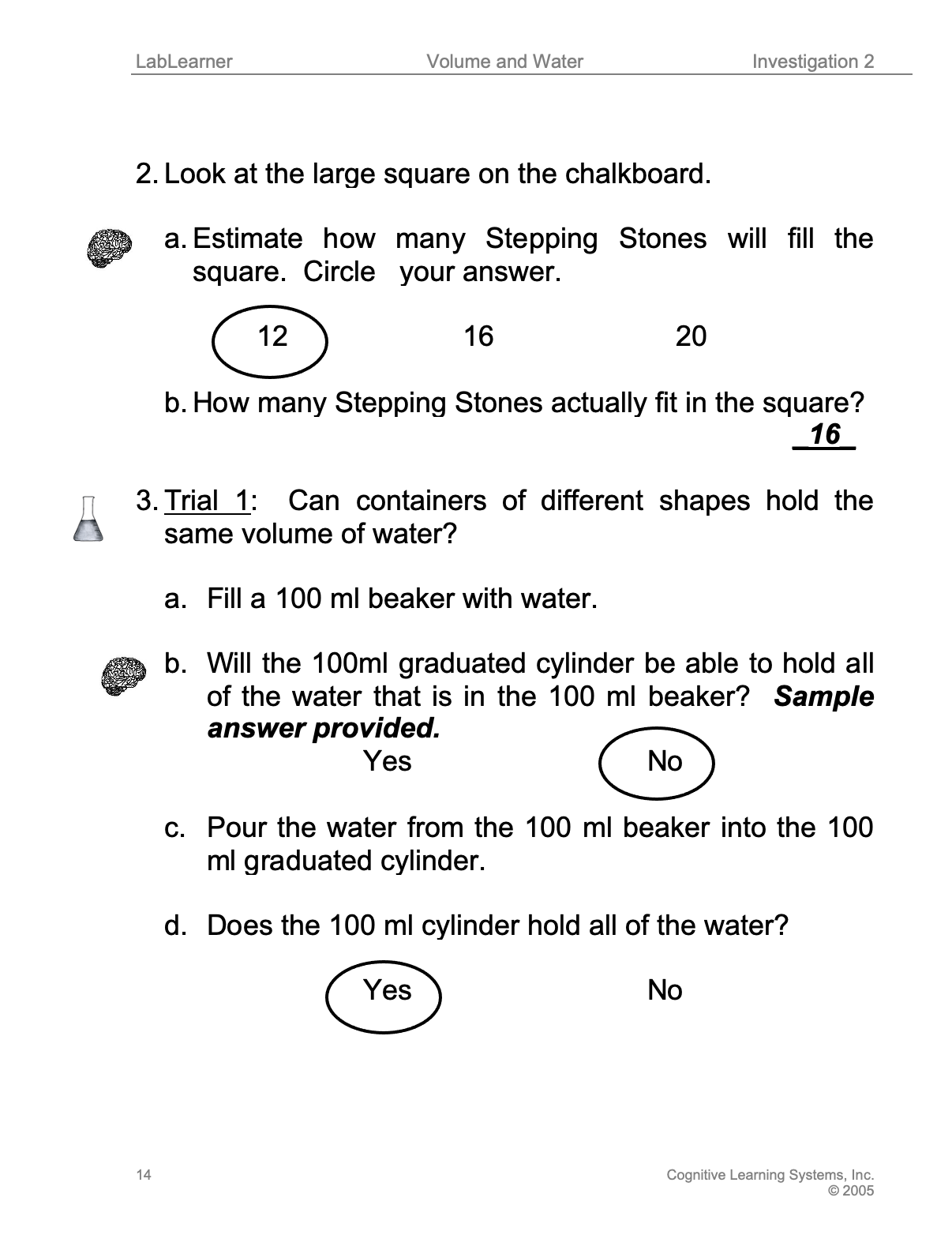
a. Tell students to fill the 100 ml beaker to the top line with water. (Students may use the funnel at
any time to fill containers.)
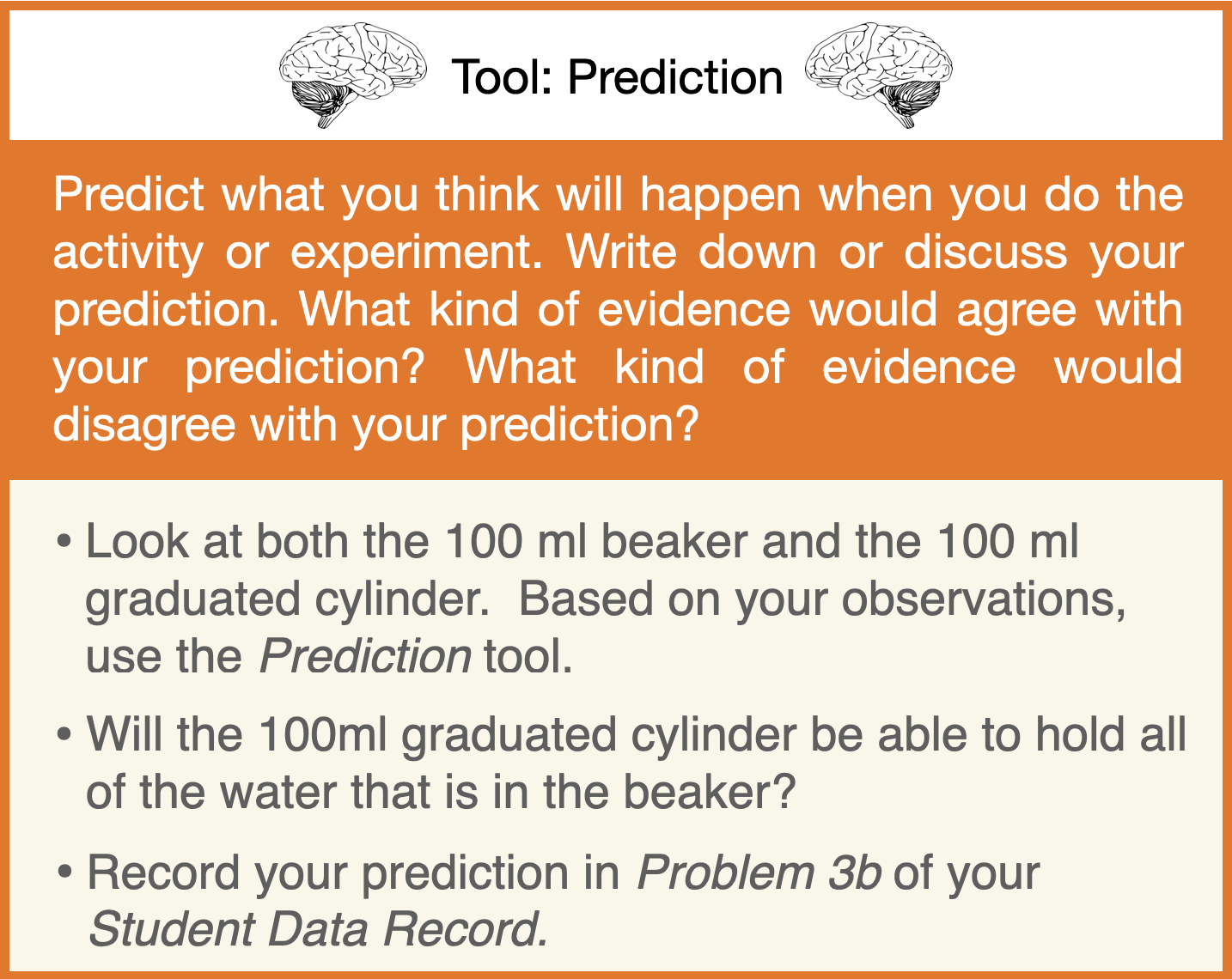
b. Direct students to pour the small beaker into the small graduated cylinder.
c. Ask students: Does the 100 ml cylinder hold all of the water? Direct students to record their answers in Problem 3d of their Student Data Record.
d. Instruct students to return all of the water to the liter pitcher.
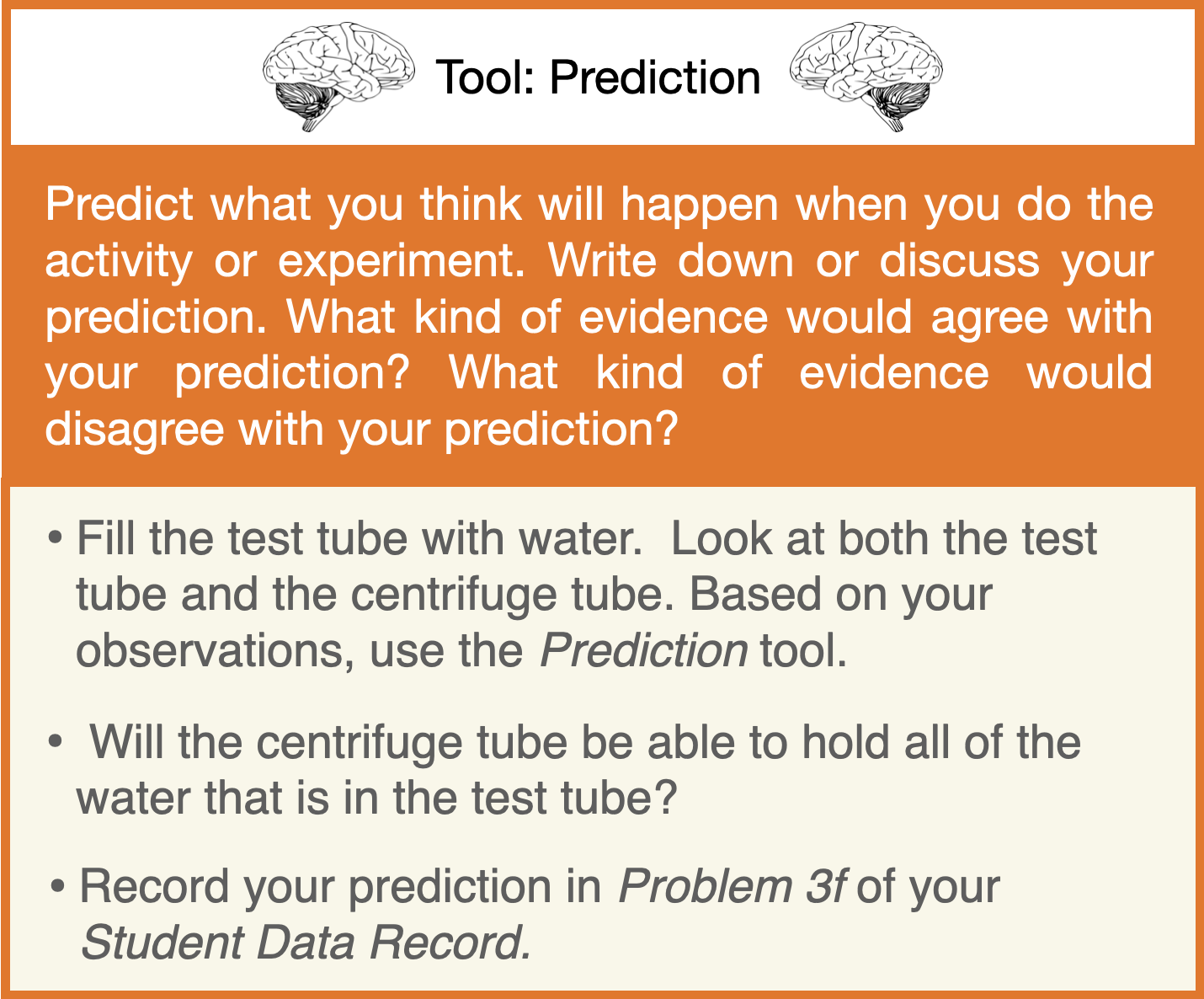
e. Direct students to pour the test tube into the centrifuge (falcon) tube.
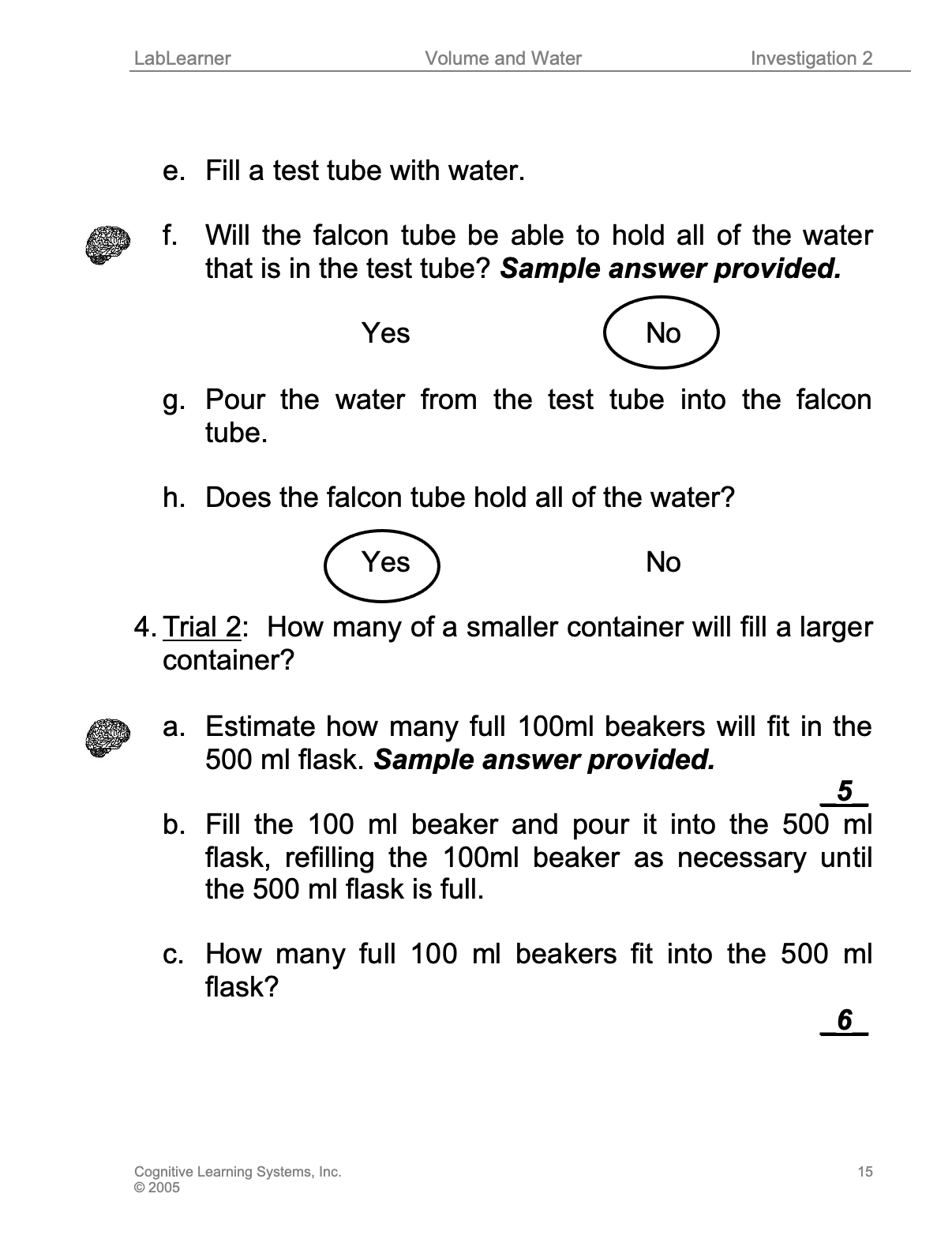
f. Ask students: Does the falcon tube hold all of the water? Direct students to record their answers in Problem 3h of their Student Data Record.
g. Instruct students to return all of the water to the liter pitcher.
Trial 2
In this part of the investigation, students will estimate the volume of a container and use water to test their estimations. The question students will investigate is:
How many of a smaller container will fill a larger container?
Note to Teacher: Emphasize that students should not overfill the flask. Students should only count whole numbers of beakers. For example, stop filling at 6 beakers even if there is a small space in the flask. If students misjudge and pour part of a 7th beaker in to fill the flask completely, they will have to pour all of the water out and refill the flask with only 6 beakers. It is important for them to obtain a measurement for how many ml are in 6 full beakers to use in post-lab calculations. The total volume and quantity of beakers may vary depending on the graduations on your 100 ml beaker.
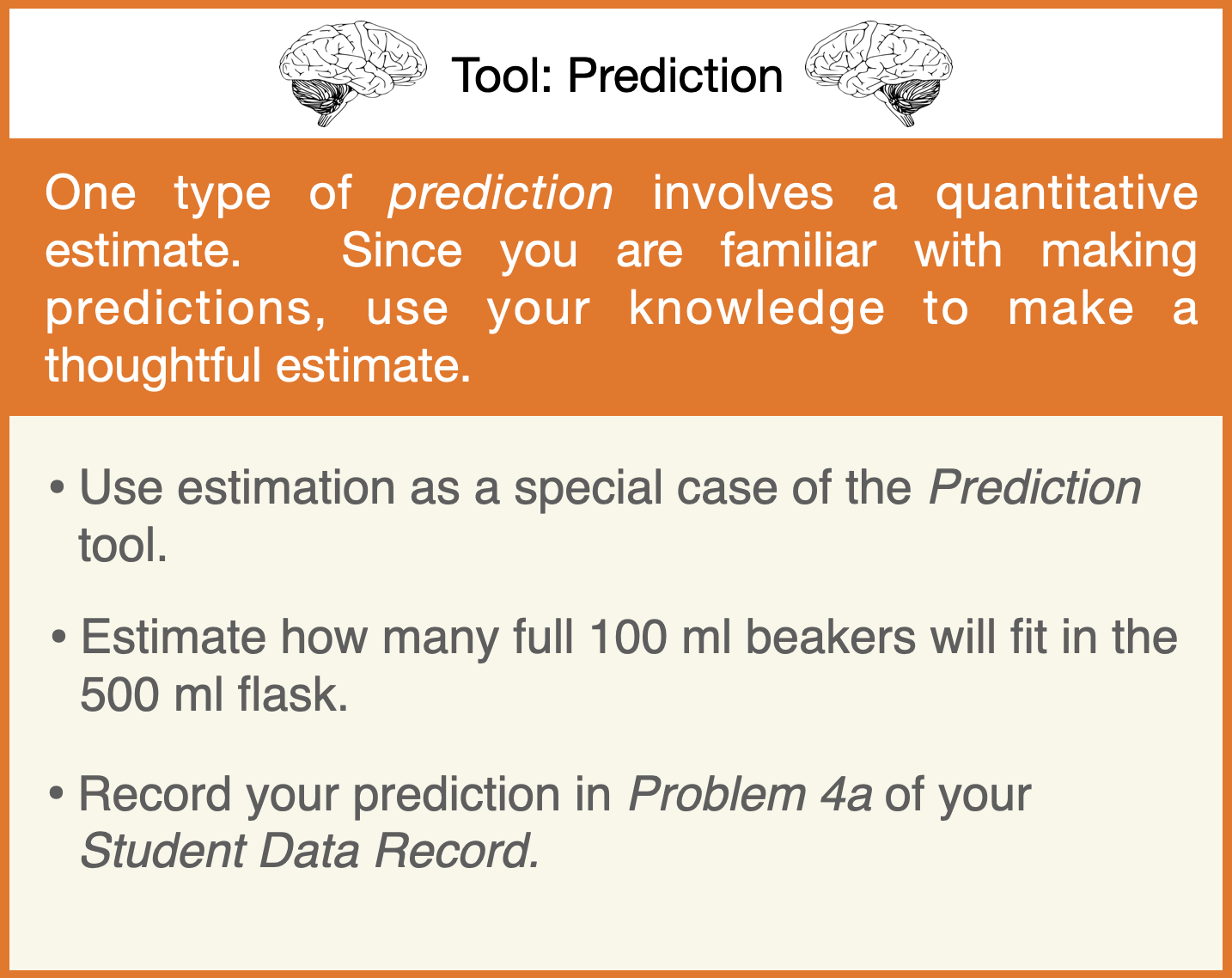
a. Direct students to fill the 100 ml beaker up to the last graduation and pour it into the 500 ml flask, refilling the 100 ml beaker as necessary until the 500 ml flask is full up to the last graduation. Instruct students only to count if a full beaker fits into the flask.
b. Ask students: How many of the 100 ml beakers fit into the 500 ml flask? Instruct students to record their answers in their Student Data Record.
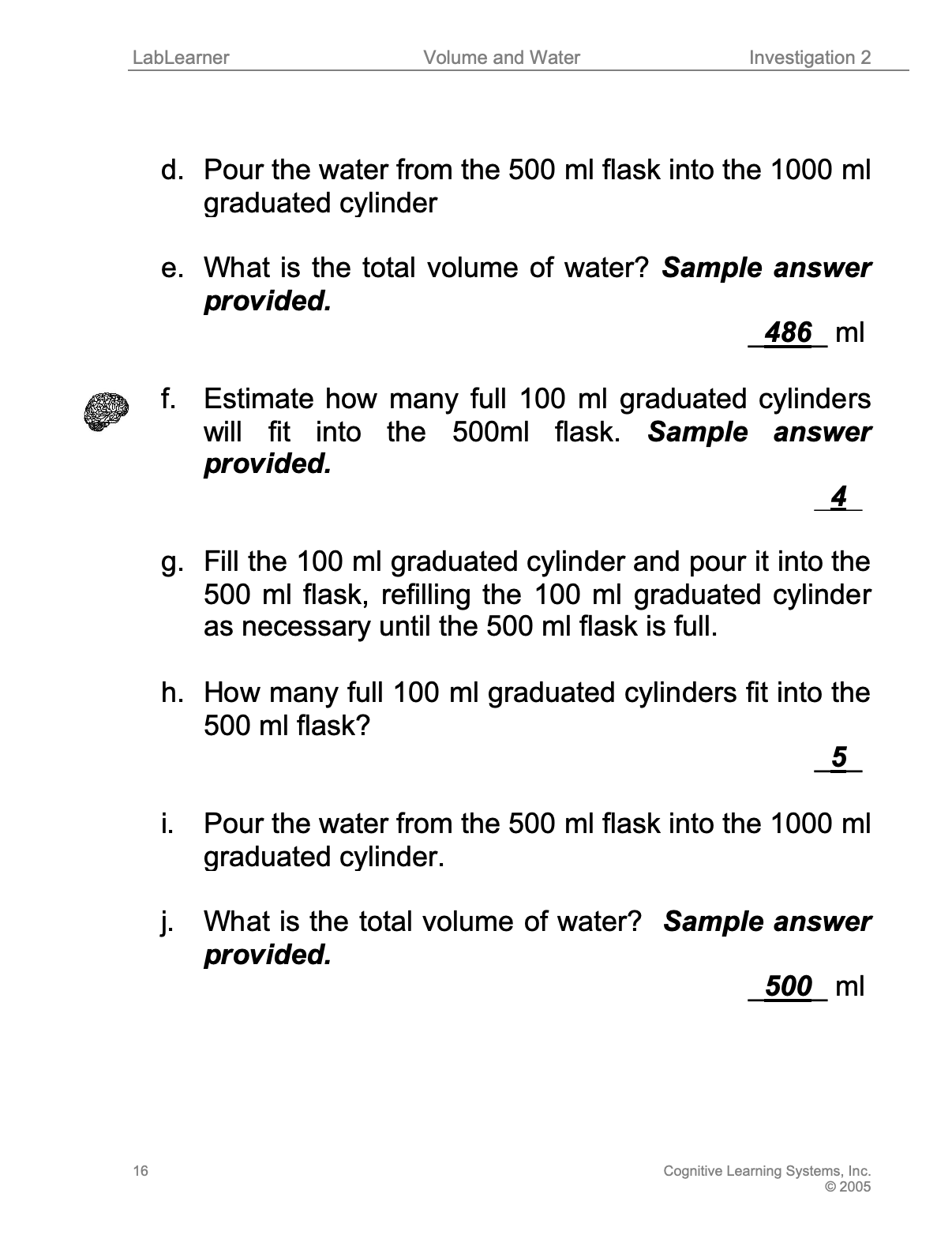
c. Instruct students to pour the water from the 500 ml flask into the 1000 ml graduated cylinder and record their measurement in Problem 4e in their Student Data Record. This is the information that will be used in the PostLab to calculate how much water was in one 100 ml beaker.
d. Direct students to return all of the water to the liter pitcher.
e. Direct students to fill the 100 ml graduated cylinder and pour it into the 500 ml flask, refilling the 100 ml graduated cylinder as necessary until the 500 ml flask is full.
f. Ask students: How many of the 100 ml graduated cylinders fit into the 500 ml flask? Instruct students to record their answers in Problem 4h of their Student Data Record.
g. Instruct students to pour the water from the 500 ml flask into the 1000 ml graduated cylinder and record their measurement in Problem 4h of their Student Data Record.
h. Direct students to return all of the water to the liter pitcher.
Trial 3
In this Trial, students will estimate with solids. The question students will investigate in this Trial is:
Can you estimate accurately with a solid?
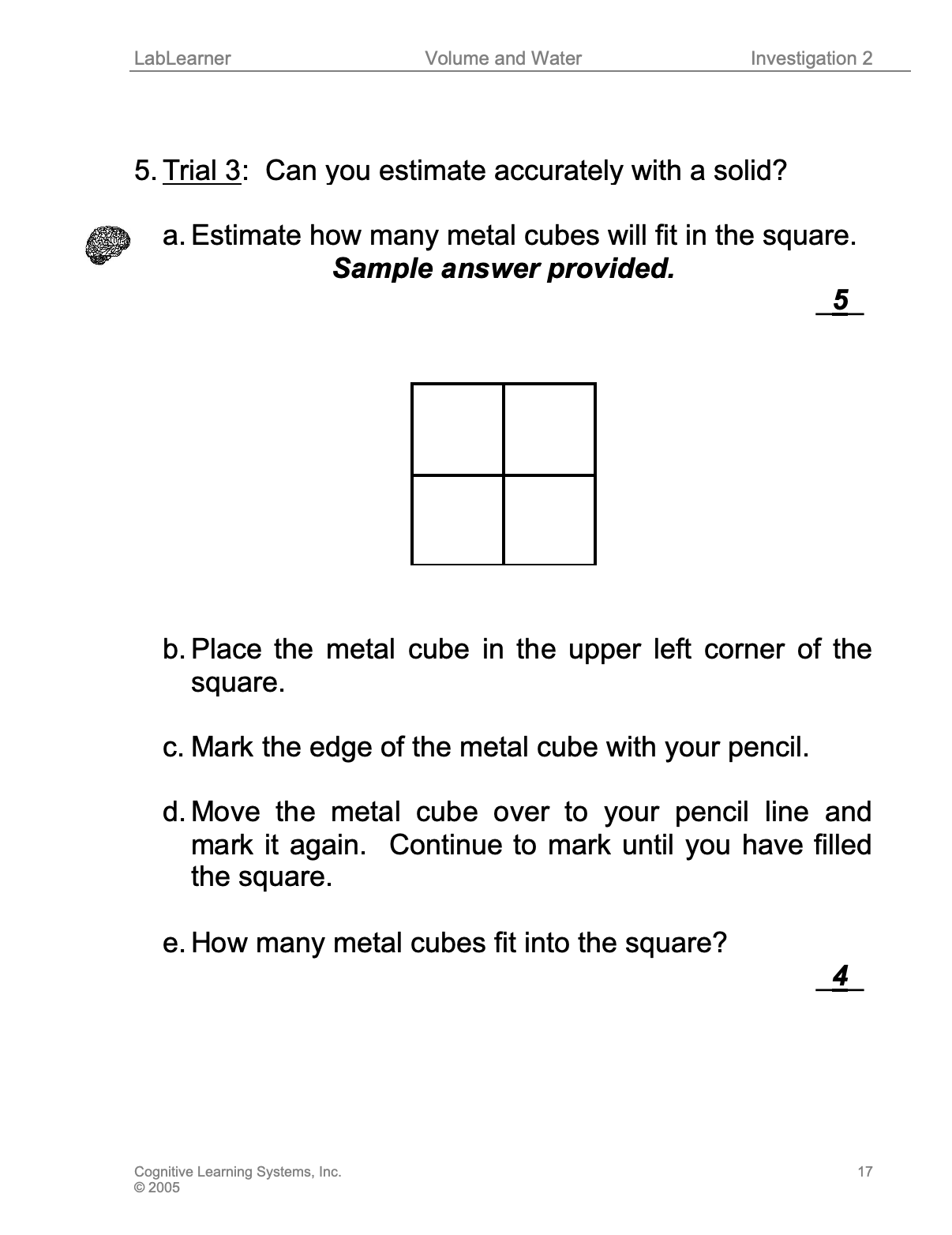
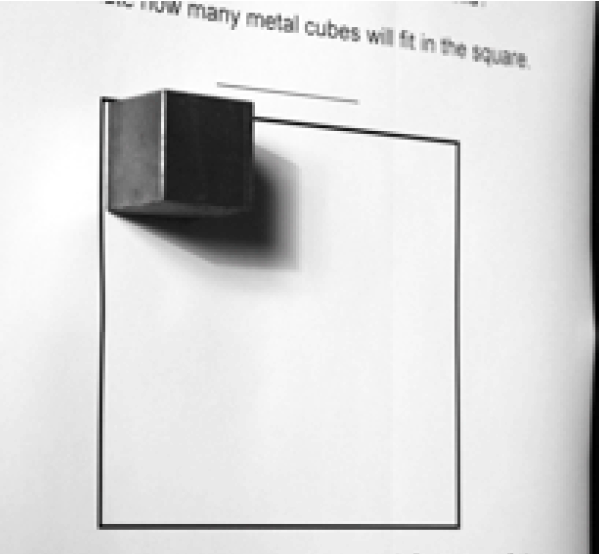 a. Direct students to place the metal cube in the upper left corner of the square in Problem 5a of their Student Data Record.
b. Tell students: Mark the edges of the cube with your pencil.
c. Students should move the block over so that the left side of the block is on the line they drew. Have them continue these steps until the square is filled.
d. Ask students: How many metal cubes fit into the square? Direct students to record their answers in Problem 5e of their Student Data Record.
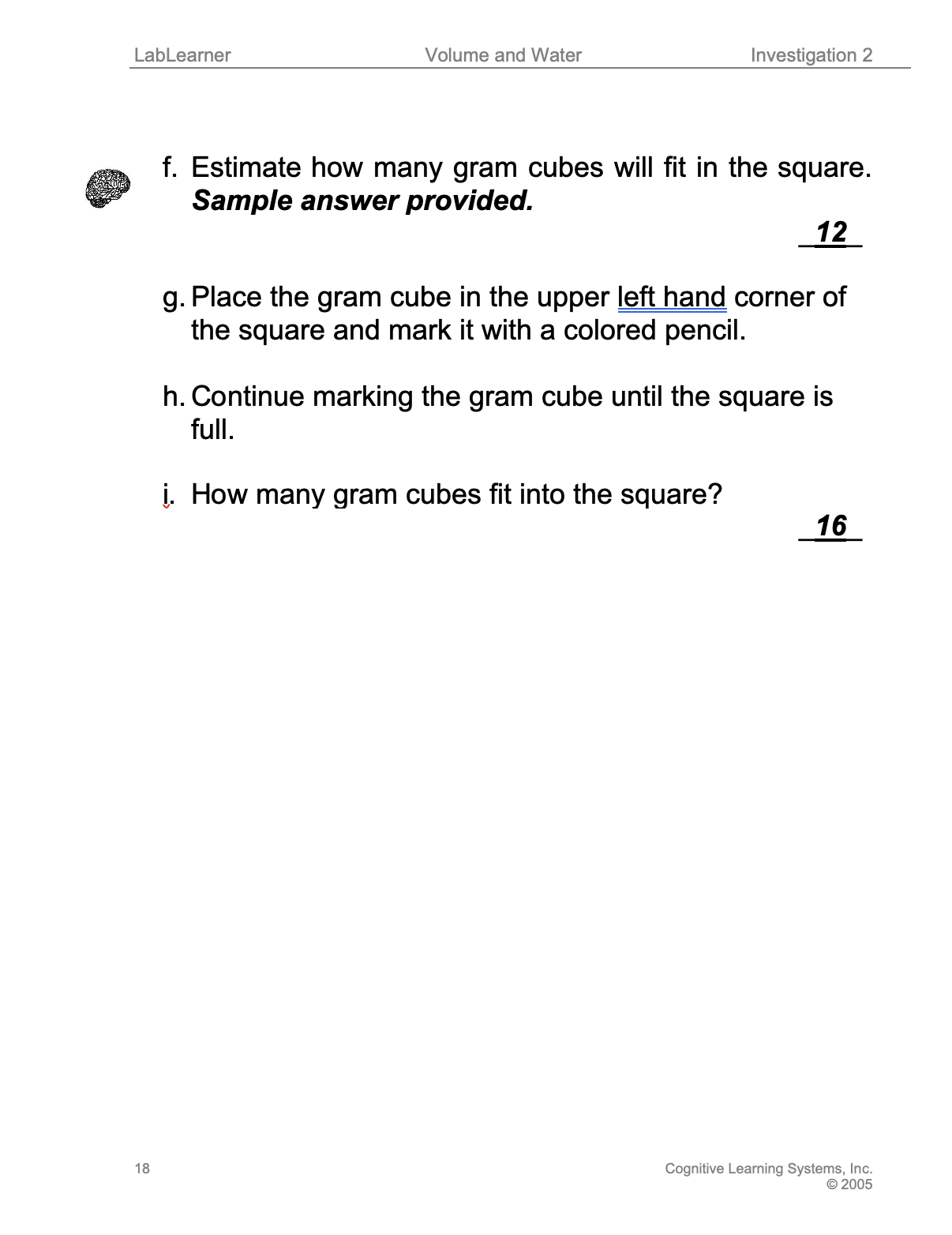
e. Instruct students to repeat the process with the gram cube, marking the squares with a different colored pencil.
f. Ask students: How many gram cubes fit into the square? Direct students to record their answer in their Student Data Record.
g. Ask students: If we dropped these objects into water, what would happen? Instruct students that they will explore this in Trial 4.
Trial 4
For this part of the investigation, students will explore how placing an object in water will affect the total volume in the container. The question students will investigate is:
How does an object affect the volume of water in a container?
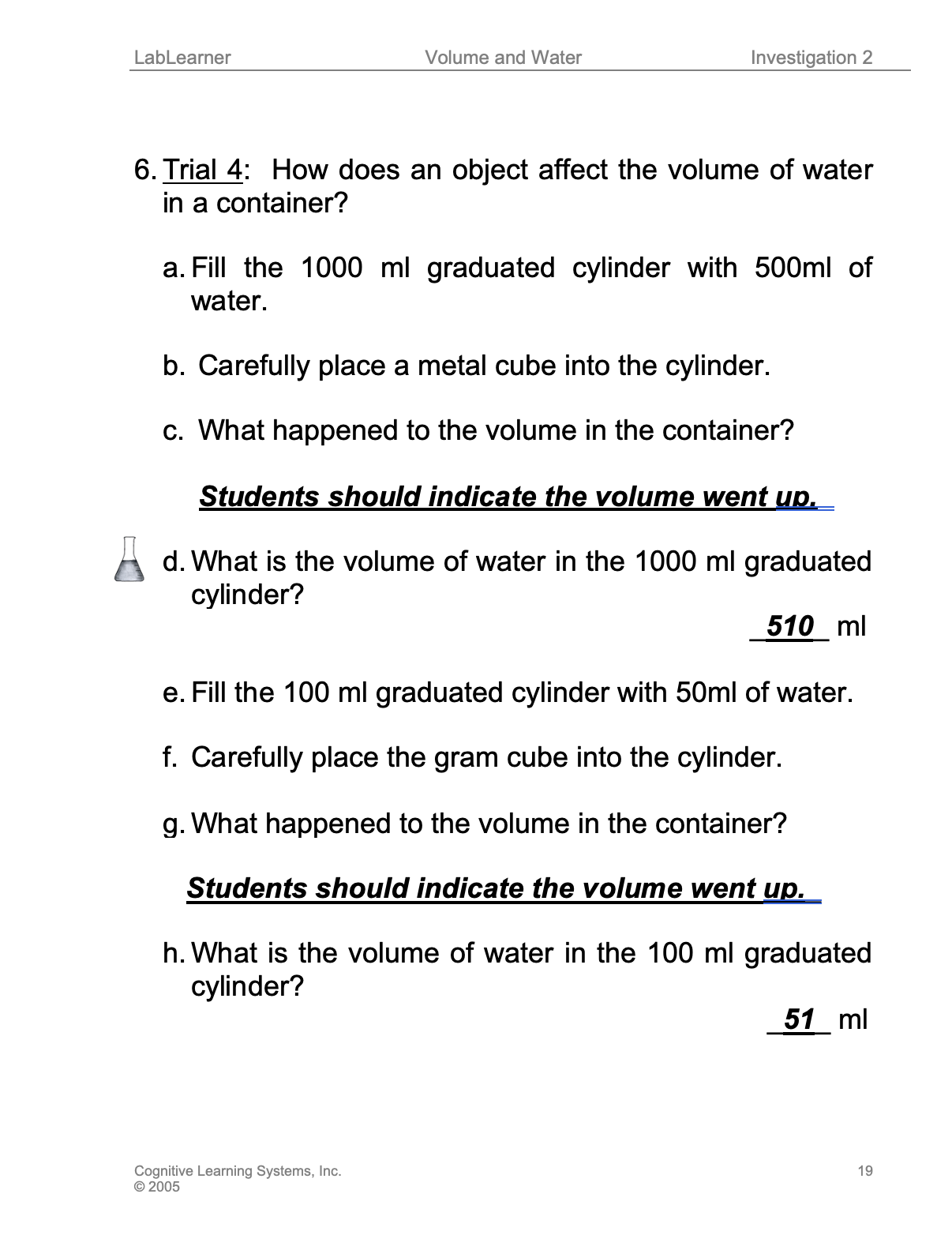
a. Instruct students to fill the 1000 ml graduated cylinder with 500 ml of water.
b. Instruct students to place a metal cube into the cylinder.
c. Ask students: What happened to the volume in the container? Direct students to record their answers in Problem 6c of their Student Data Record.
d. Direct students to record the volume of water in ml in Problem 6d of their Student Data Record.
e. Instruct students to return the water to the pitcher and remove the metal cube.
f. Instruct students to fill the 100 ml graduated cylinder with 50 ml of water.
g. Instruct students to place the gram cube into the cylinder.
h. Ask students: What happened to the volume in the container? Direct students to record their answer in Problem 6g of their Student Data Record. Students should indicate that the volume increased.
i. Direct students to record the volume of water in ml in Problem 6h of their Student Data Record.
j. Instruct students to return the water to the pitcher and remove the gram cube.
Trial 5
Students will predict and test what happens to the volume when the shape of the object is altered. The question students will investigate is:
Does changing the shape of an object change the amount of water it displaces?
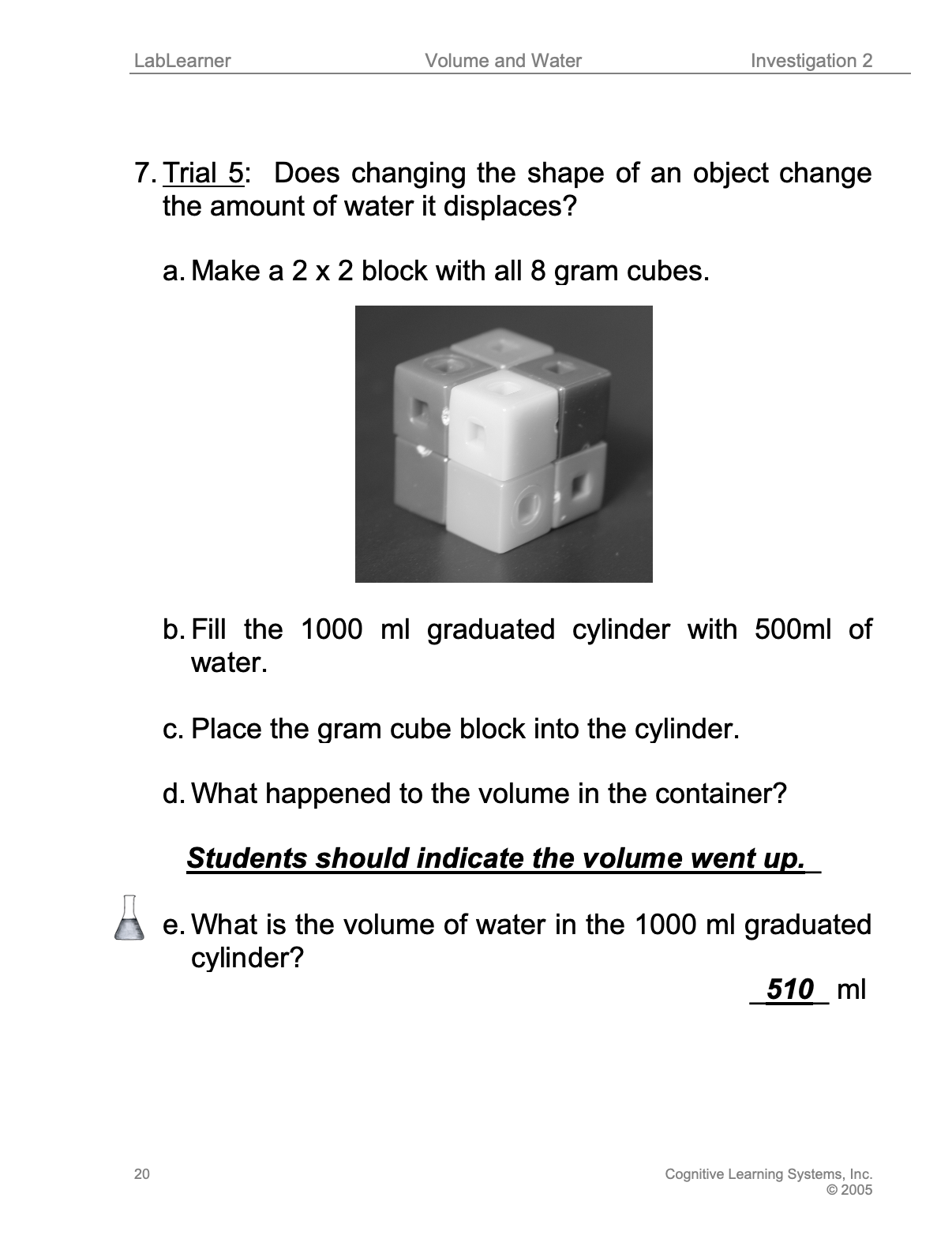
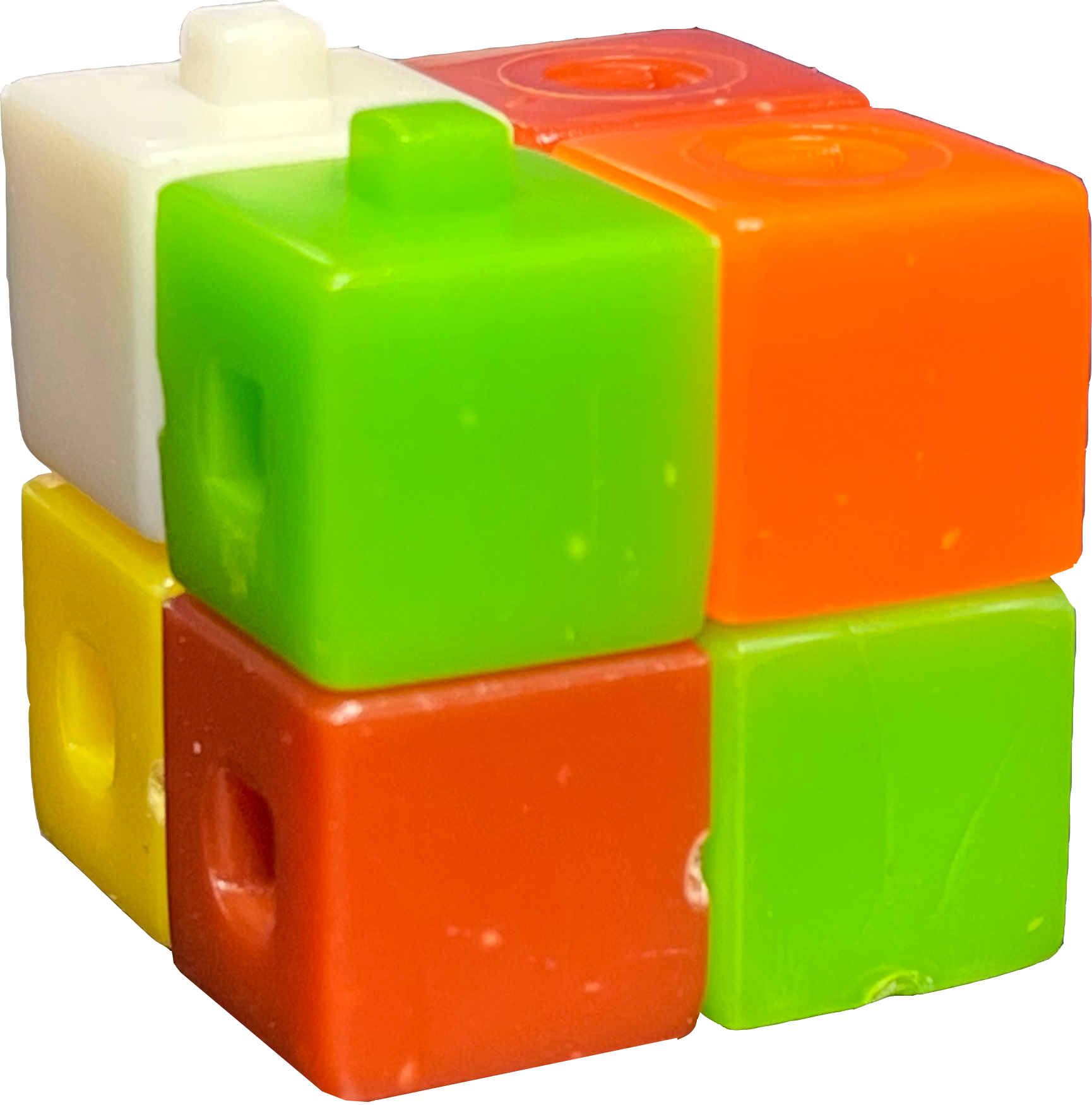 a. Instruct students to make a 2×2 block with 8 gram cubes.
b. Instruct students to fill the 1000 ml graduated cylinder with 500 ml of water.
c. Instruct students to place the gram cube block into the cylinder.
d. Ask students: What happened to the volume in the container? Direct students to record their answers in Problem 7e of their Student Data Record.
e. Direct students to record the volume of water in Problem 7f of their Student Data Record.
f. Instruct students to return the water to the pitcher and remove the gram cube block.
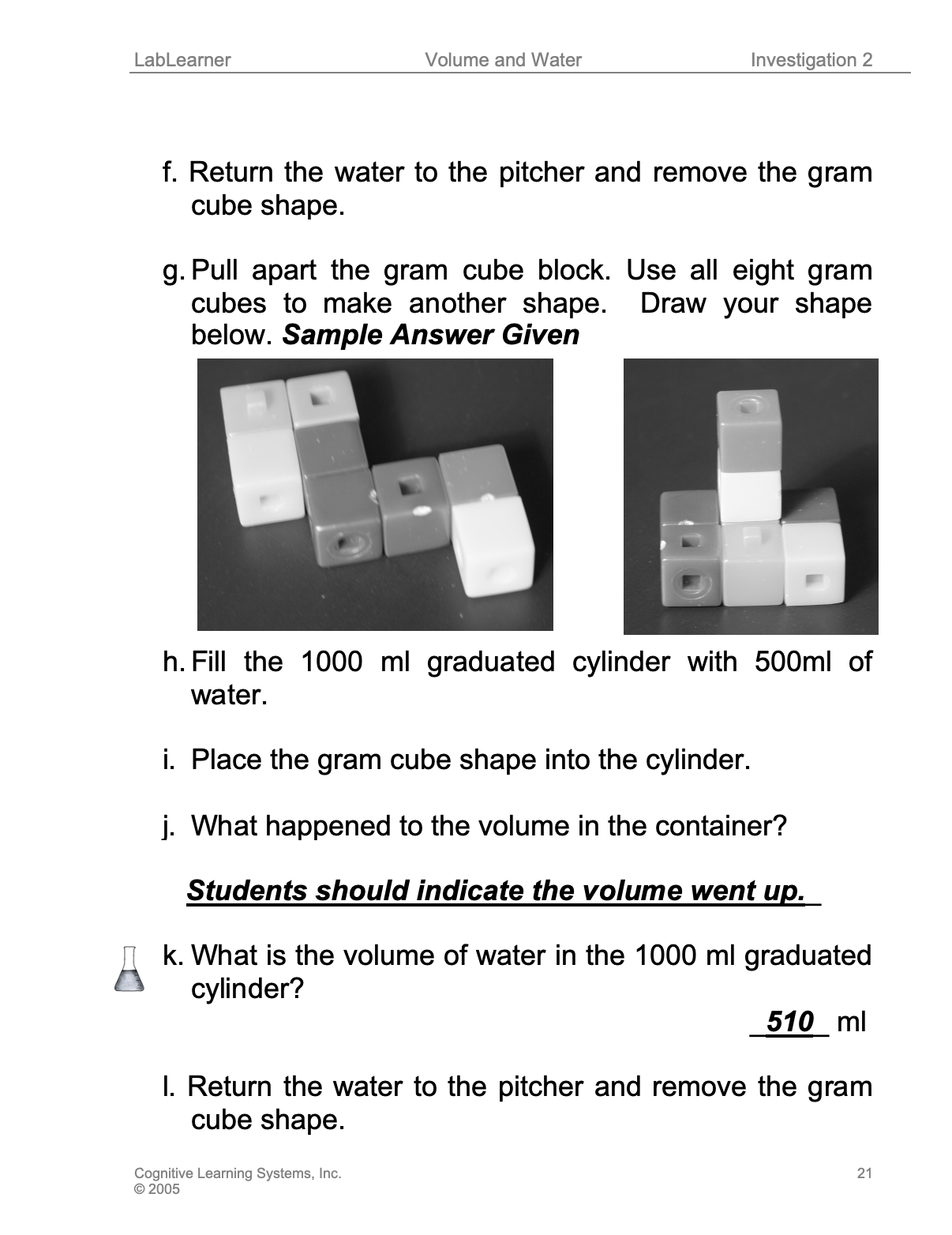
g. Tell students: Pull apart the gram cube block and use all eight gram cubes to make another shape. Direct students to record their shape in their Scientist Data Record. NOTE: The shape the students make must fit into the 1000 ml graduated cylinder.
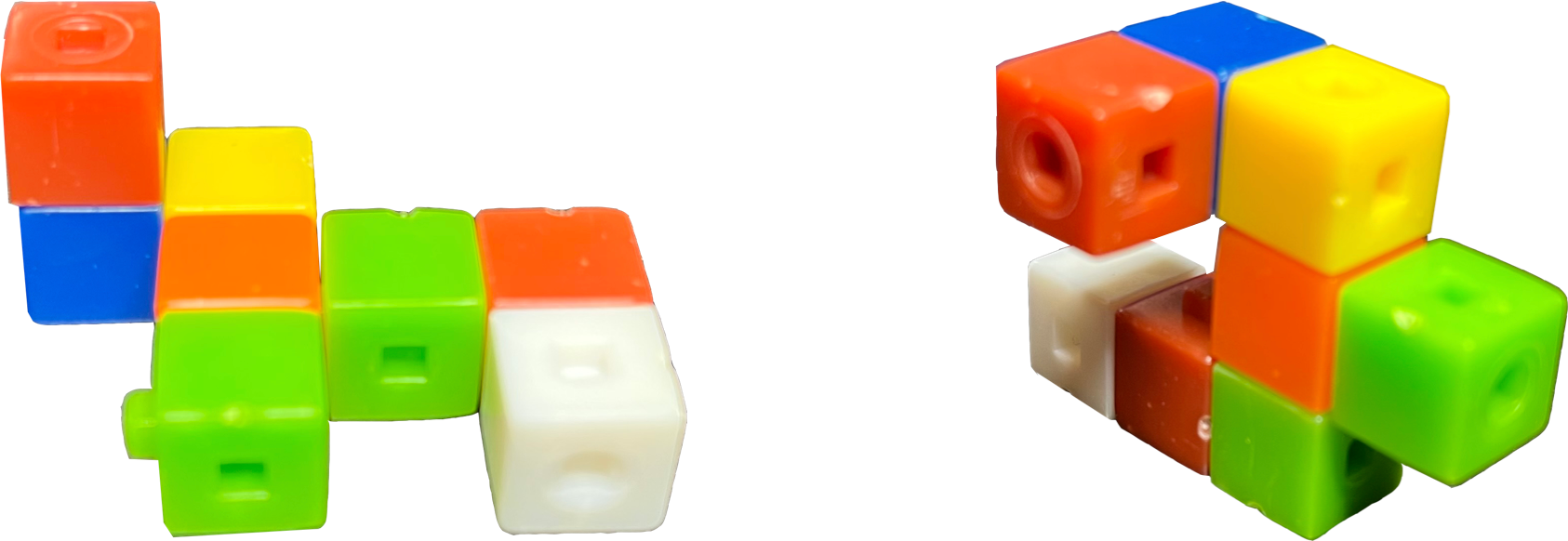
h. Instruct students to fill the 1000 ml graduated cylinder with 500 ml of water. Direct students to record their starting volume of water in their Student Data Record.
i. Instruct students to place the gram cube shape into the cylinder.
j. Ask students: What happened to the volume in the container? Direct students to record their answers in Problem 7j of their Student Data Record.
k. Direct students to record the volume of water in Problem 7k of their Student Data Record.
l. Instruct students to return the water to the pitcher and remove the gram cube shape.
KEYS

CLEAN UP
Let students know your expectations for clean-up. Ask them to clean up.