Teacher Portal:
Examining Nutrition
Performance Assessment – Lab
 BE PREPARED
Materials
Class materials:
- 2 lab scoops
- 1 food scoop
- 58 g sugar
- 4.5 g shortening
- 15 g pinto beans
- 1 roll masking tape
- 1 marker
- 7 rubber bands
- 5 400 ml beakers
Group materials
- 1 triple beam balance 5 weigh dishes
- 1 lab scoop
- 3 calculators
Individual materials
- 1 Scientist Data Record
TEACHER PREPARATION
1. Make five copies of Investigation Six Supplement Pages 1 and 2. Cut apart the nutrition labels.
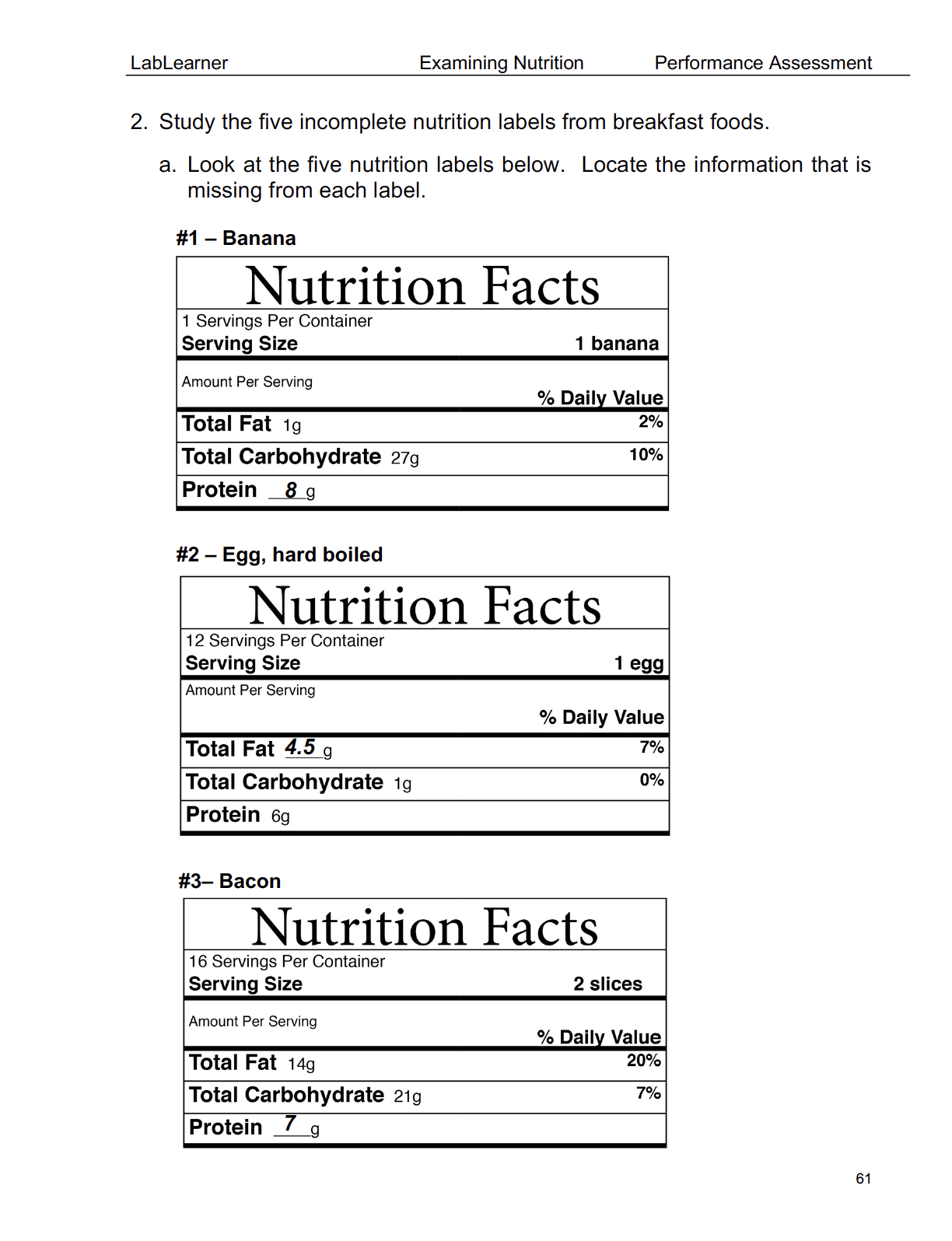
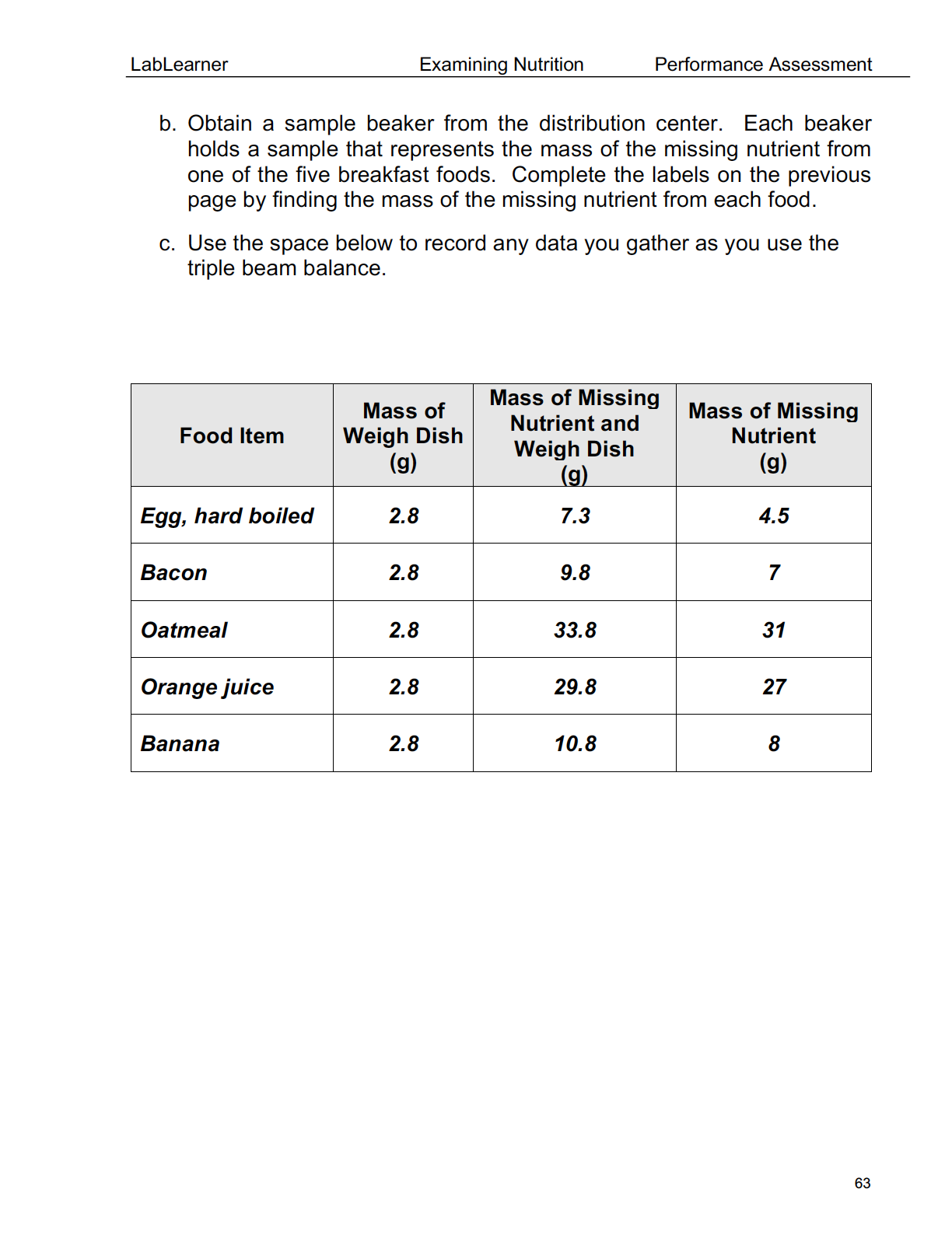
2. Use a rubber band to attach the nutrition label “egg, hardboiled” to a 400 ml beaker. Fill the beaker with 4.5 g of shortening. (This beaker may be lined with a plastic bag for easier cleanup.)
3. Use a rubber band to attach the nutrition label “bacon” to a 400 ml beaker. Fill the beaker with 7 g of pinto beans.
4. Use a rubber band to attach the nutrition label “banana” to a 400 ml beaker. Fill the beaker with 8 g of pinto beans.
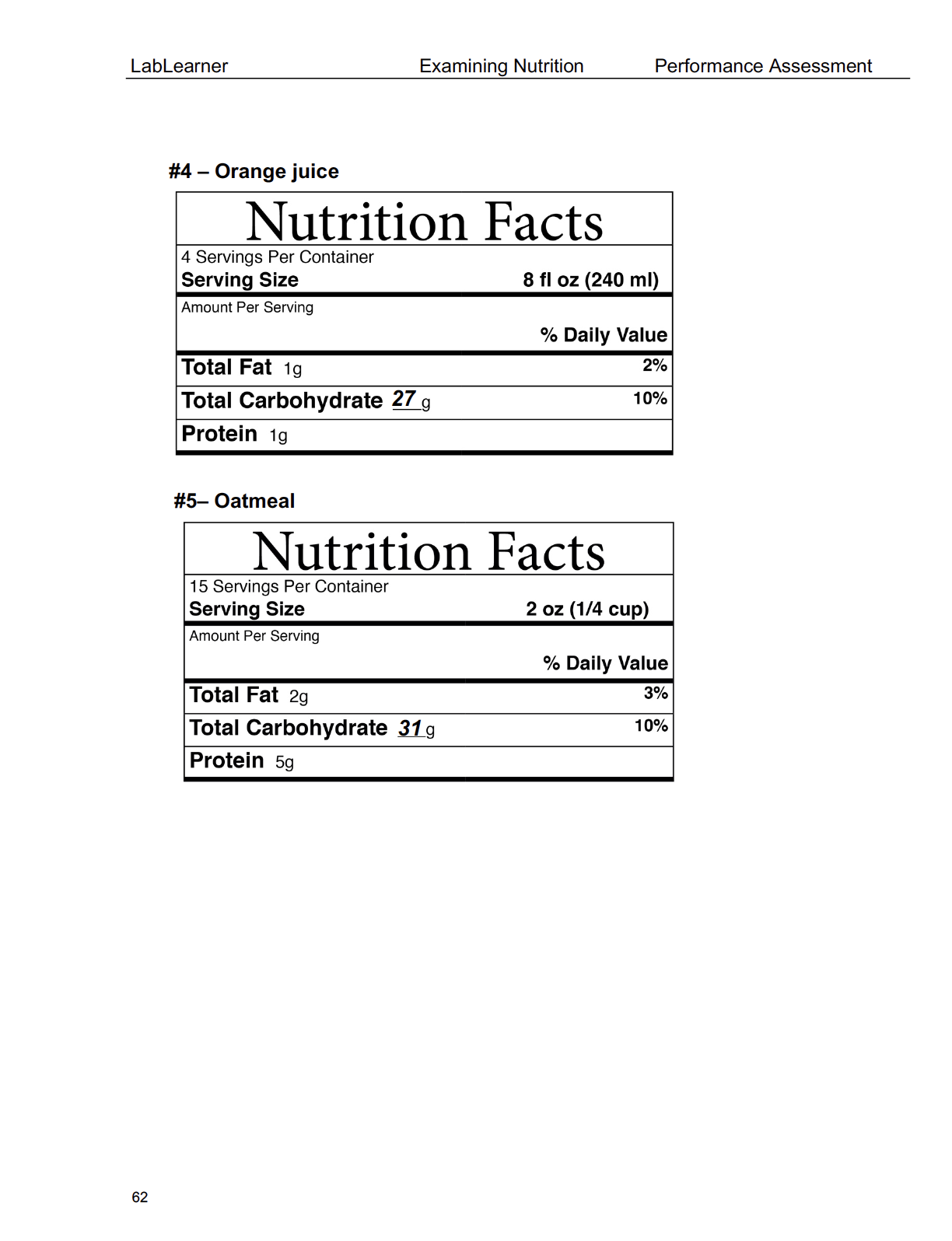
5. Use a rubber band to attach the nutrition label “oatmeal” to a 400 ml beaker. Fill the beaker with 31 g of sugar.
6. Use a rubber band to attach the nutrition label “orange juice” to a 400 ml beaker. Fill the beaker with 27 g of sugar.
7. Place the materials, including the five labeled beakers, at a distribution point.
8. Separate the class into five cooperative groups.
INSTRUCTION
1. Instruct each student group to obtain the following necessary materials from the distribution point: one (1) triple beam balance, five (5) weigh dishes, and two (2) lab scoops.
PROCEDURE
1. Begin the Performance Assessment by either reading the opening paragraph from the Student Data Record aloud or encouraging students to read the paragraph independently. Briefly review the contents of the paragraph and outline the goals of this project to the class.
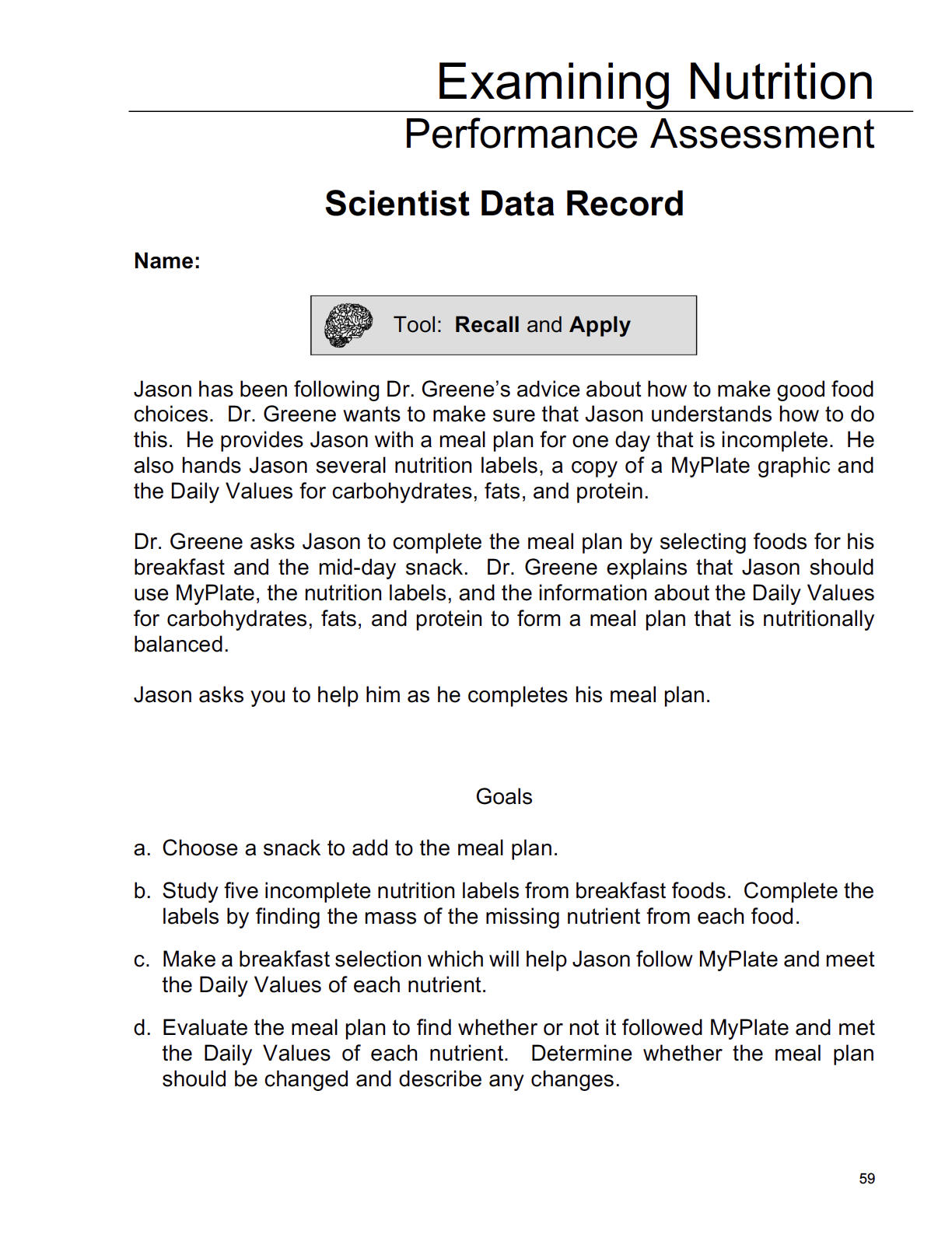
- Jason has been following Dr. Greene’s advice about how to make good food choices. Dr. Greene wants to make sure that Jason understands how to do this. He provides Jason with a meal plan for one day that is incomplete. He also hands Jason several nutrition labels, a copy of a MyPlate graphic, and the Daily Values for carbohydrates, fats, and protein.
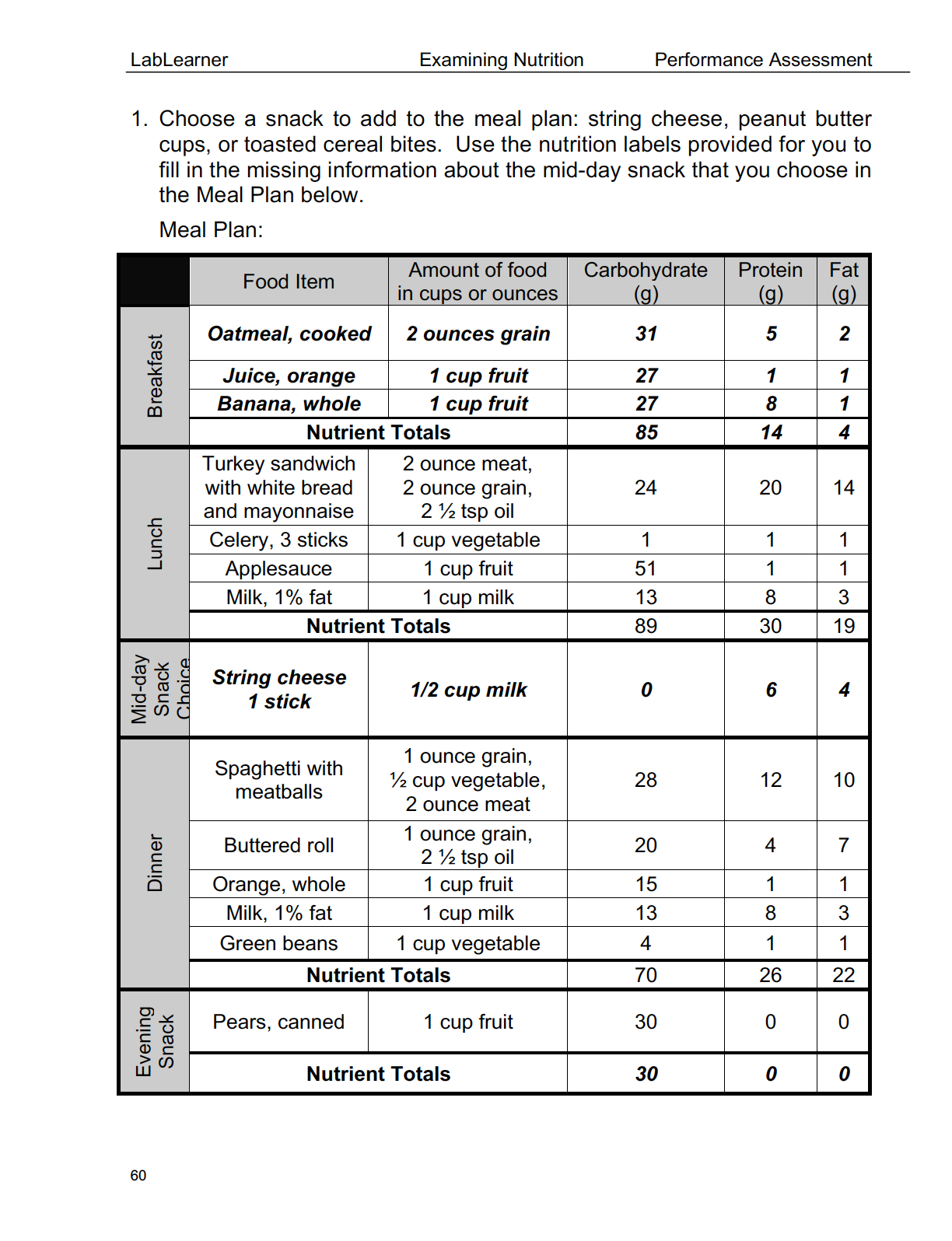
- Dr. Greene asks Jason to complete the meal plan by selecting foods for his breakfast and the mid-day snack. Dr. Greene explains that Jason should use MyPlate, the nutrition labels, and the information about the Daily Values for carbohydrates, fats, and protein to form a meal plan that is nutritionally balanced.
- Jason asks you to help him as he completes his meal plan.
Read aloud the goals from the list on the Student Data Record:
a. Choose a snack to add to the meal plan.
b. Study five incomplete nutrition labels from breakfast foods. Complete the labels by finding the mass of the missing nutrient from each food.
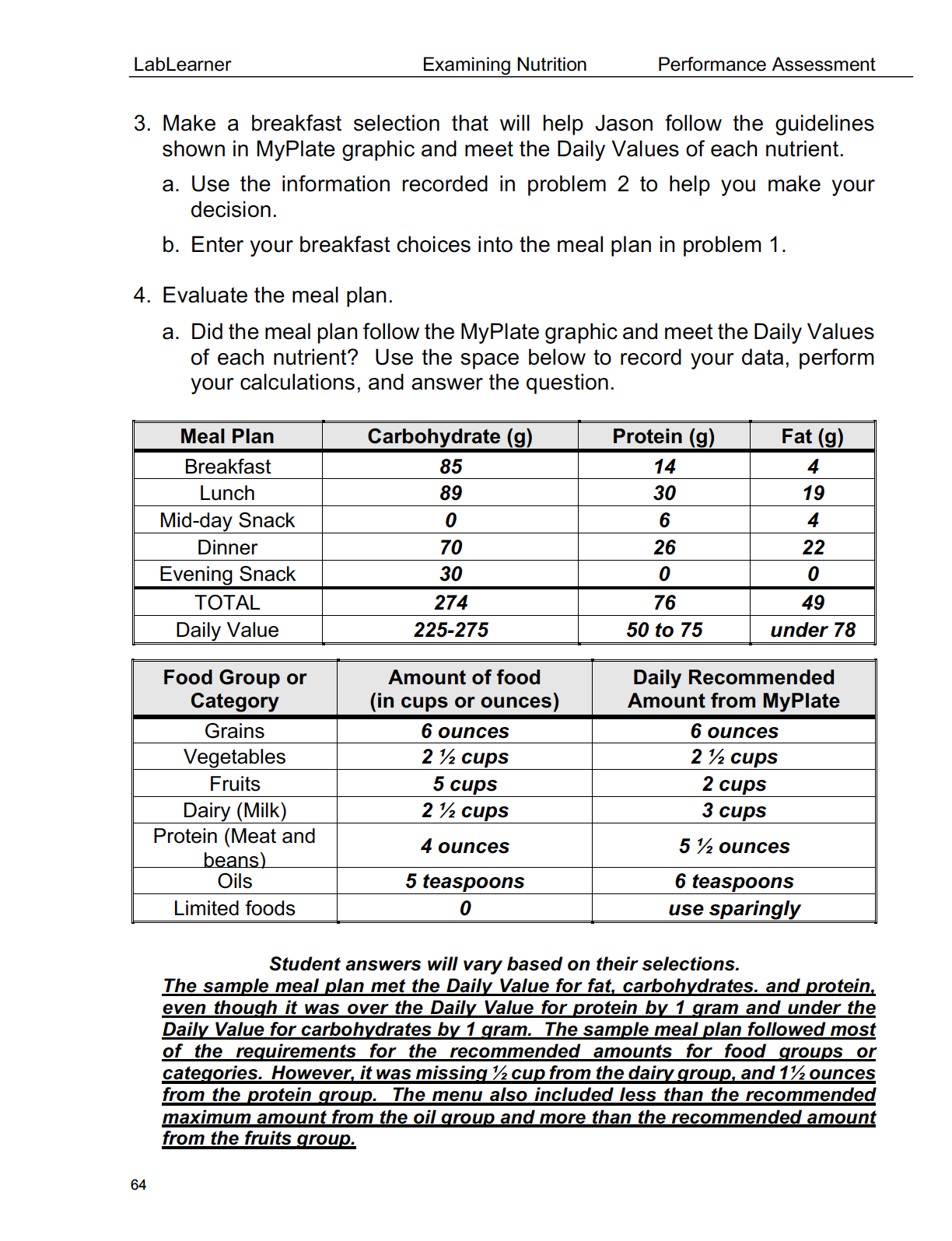
c. Make a breakfast selection that will help Jason follow MyPlate and meet the Daily Values of each nutrient.
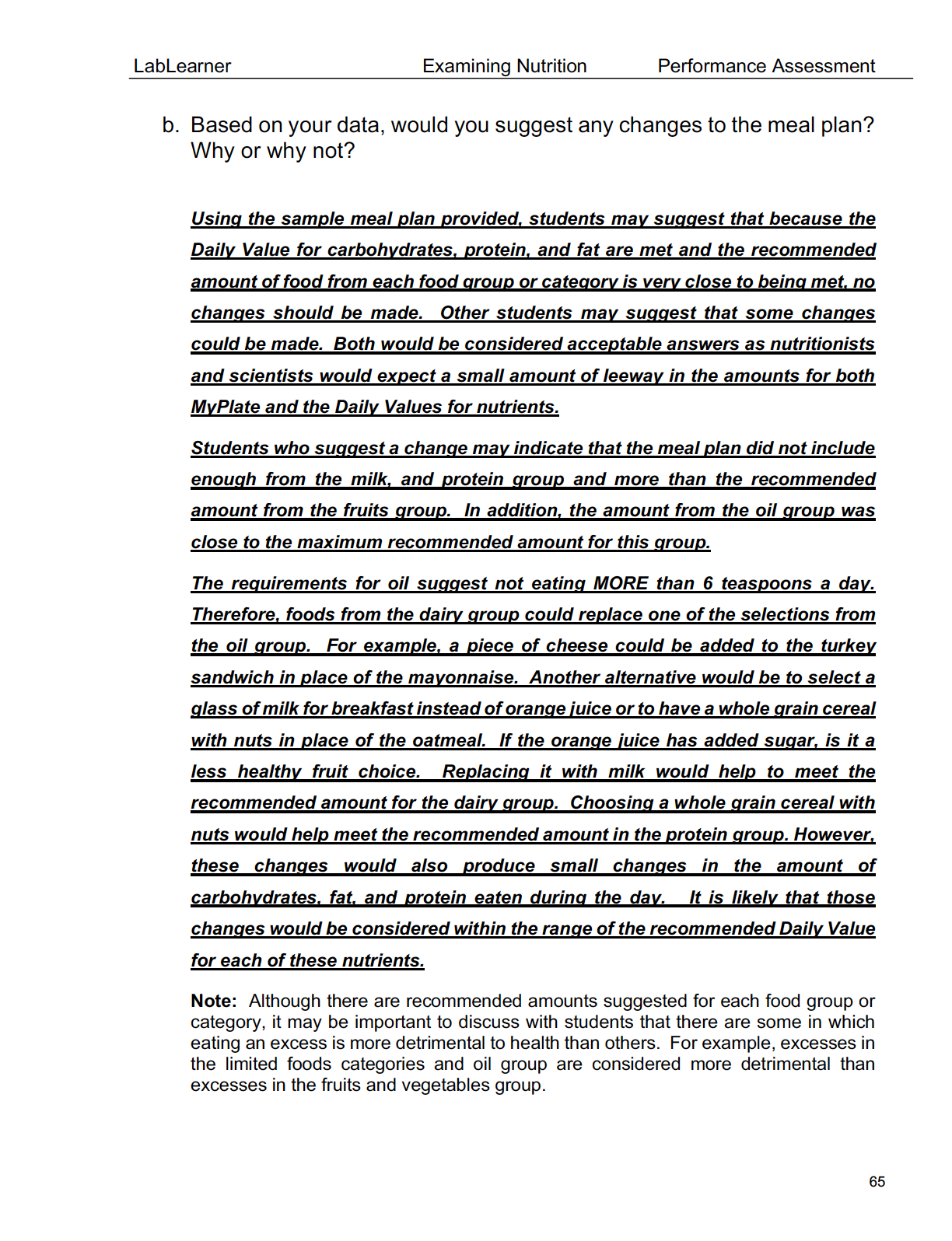
d. Evaluate the meal plan to find whether or not it followed MyPlate and met the Daily Values of each nutrient. Determine whether the meal plan should be changed and describe any changes.
2. Distribute one copy of the nutrition labels “#1 – Toasted cereal bites,” “#2 – Peanut butter cups,” and “#3 – String cheese” to each student group.
3. Before students begin the Investigation, walk through each step in the project. Encourage 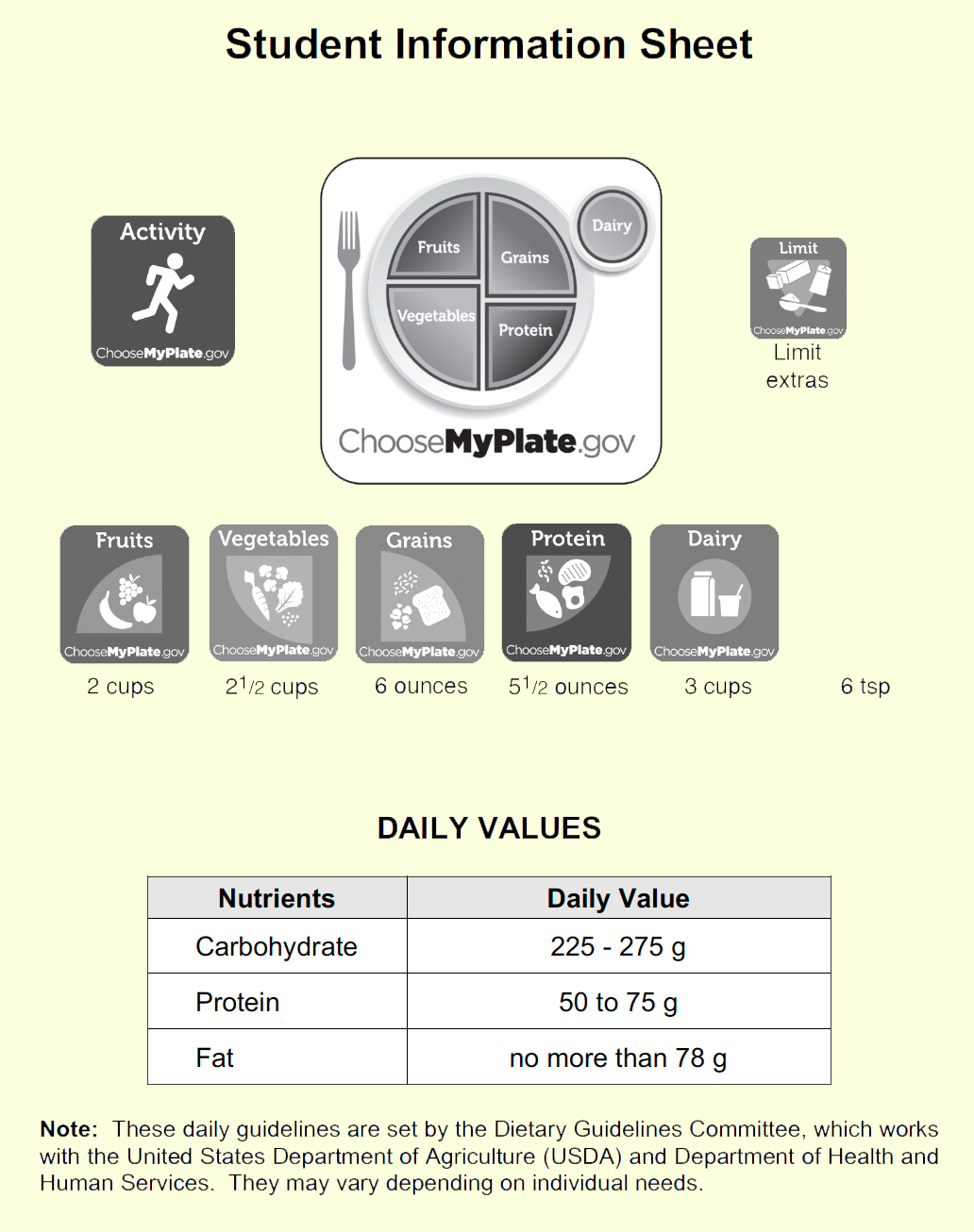 students to be creative and draw on their understanding of MyPlate and nutrition labels as they work to complete this project.
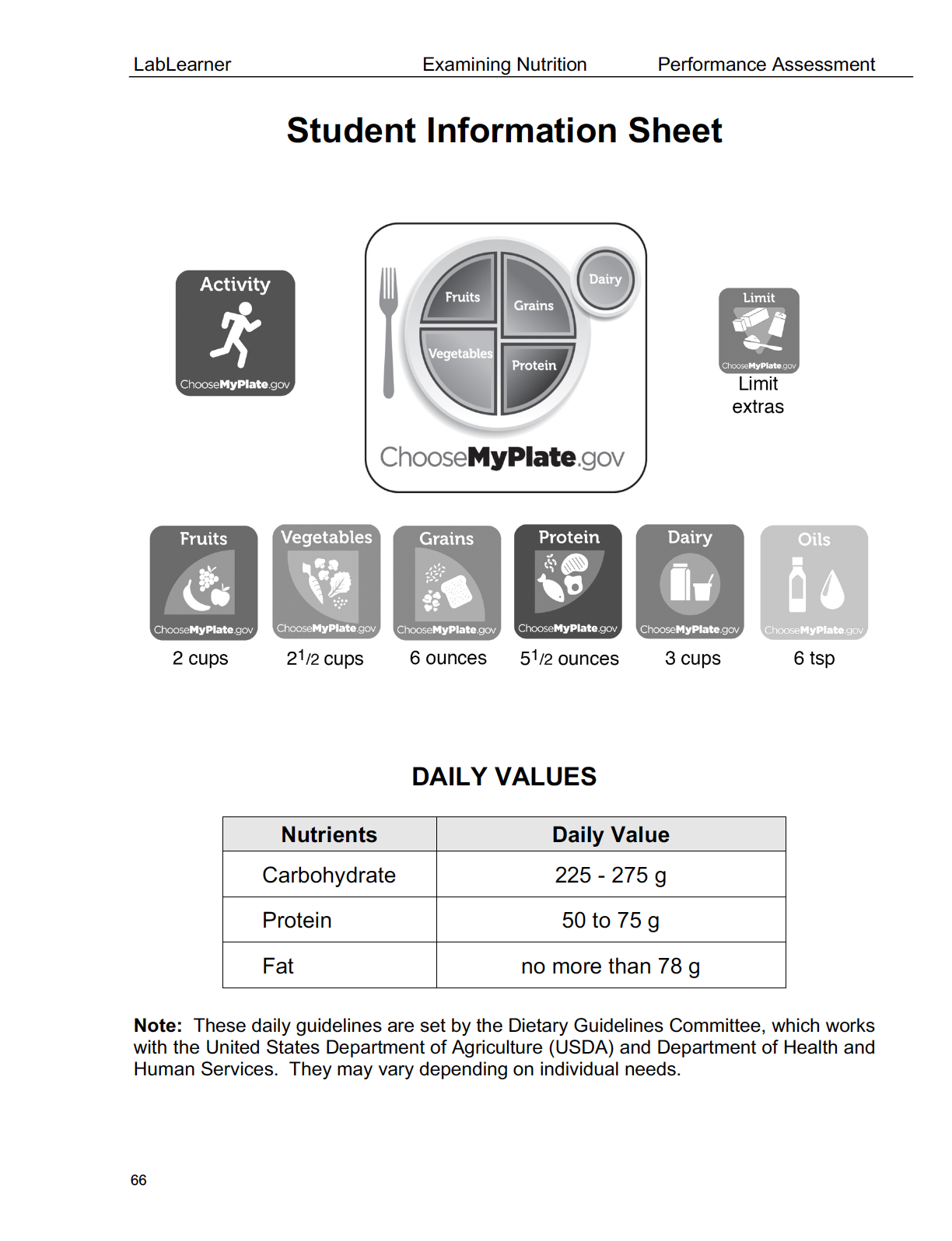
4. Direct students’ attention to the Student Information Sheet at the end of their Scientist Data Record. Explain that they will use the information in MyPlate and the table for Daily Values to complete this project. Point out to students that throughout this CELL, they have used % Daily Values to aid them in evaluating food choices. These percentages are calculated using a range of values (in grams) that have been determined as appropriate for each nutrient. This range is recorded in the Daily Values table on the last page of their Scientist Data Record. During this experiment, students will use the mass of each nutrient and will determine whether it falls within the appropriate range, thus meeting the Daily Values.
5. Explain to students that each of them will decide which snack they will use and enter that information into the Meal Plan in Problem 1 of their Student Data Record. Students will work together as a group to complete Problem 2, but each student should record the information separately. For the remainder of the Performance Assessment, students will work independently.
Note to Teacher: The nutrition values listed in the meal plan and nutrition labels were obtained from actual product values, which may vary slightly between name brands.
6. Allow students to complete their Performance Assessments. You may wish to informally or formally evaluate students as they work on their Performance Assessments.
Note to Teacher: This exercise will help to show students that balancing both the recommended amount of nutrients and the recommended amounts from food groups and categories to obtain the requirements their bodies need to maintain health each day involves carefully considering food choices. In addition, although there are recommended amounts suggested for each food group or category, there are some in which eating an excess is more detrimental to health than others. For example, excesses in the sometimes foods and oil categories are considered more detrimental than excesses in the fruits and vegetables group.
After students complete the assessment, it may be advantageous to discuss that this process may be more difficult than students anticipated. In addition, instructors may choose to explain to students that both MyPlate and the Recommended Daily Values are good resources to help students make healthy food and physical activity choices, but that even nutritionists and scientists expect that there will be some days in which it may be difficult to meet the exact requirements of both resources. However, by using both resources, students will likely choose food choices that come very close to meeting all of the requirements of nutrients that their bodies need.
CLEAN UP
Let students know your expectations and instruct them to clean up their lab bench after the Performance Assessment.
KEYS: PERFORMANCE ASSESSMENT