
Teacher Portal:
Examining Nutrition
Investigation 3
Investigation Three:
Exploring Carbohydrates
Students began their exploration of nutrition in Investigation One with a tour of the structure and function of the digestive system. Students learned that there are two types of digestion: mechanical and chemical and that both types occur throughout the digestive system. Investigation Two introduced students to the MyPlate graphic as a useful tool for being sure that they consume enough of the right kind of foods on a daily basis to meet their nutritional needs. Students also learned how to use nutrition labels to evaluate the appropriateness of different foods for meeting their bodies’ daily requirements. Students will continue their exploration of nutrition in Investigation Three by taking an in-depth look at carbohydrates, one of the six groups of nutrients.
The name carbohydrate is derived from the chemical composition of this group of nutrients. Each carbohydrate is composed of multiple carbon atoms, each with the equivalent of one water molecule attached to it. Thus, the carbon atoms are said to be hydrated.
Carbohydrates can be simple or complex in structure. Simple carbohydrates are called sugars. Sugars are characterized by their sweet taste and are the building blocks of the more complex carbohydrates. The sugars that are most familiar are glucose, sucrose, lactose, and fructose.
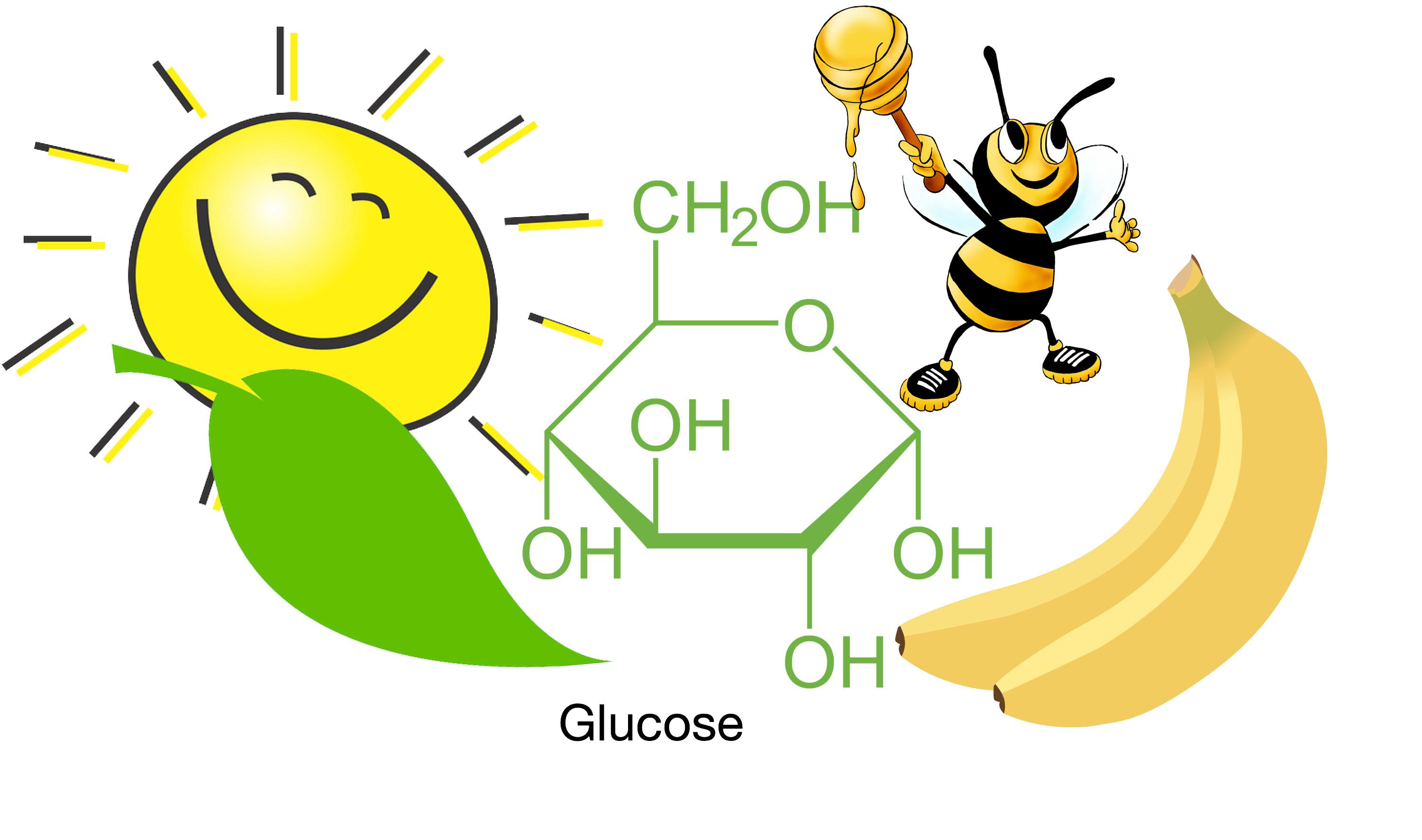
Glucose
Glucose is made by plants during a process called photosynthesis. Plants use light energy from the sun to convert carbon dioxide and water into glucose. Animals and humans can absorb the glucose they consume from plants and other foods through their intestines. Thus a dietary supply of carbohydrates is necessary for the normal function of the body. Glucose is a particularly important nutrient as the human brain uses 20% of the body’s daily requirement for glucose.
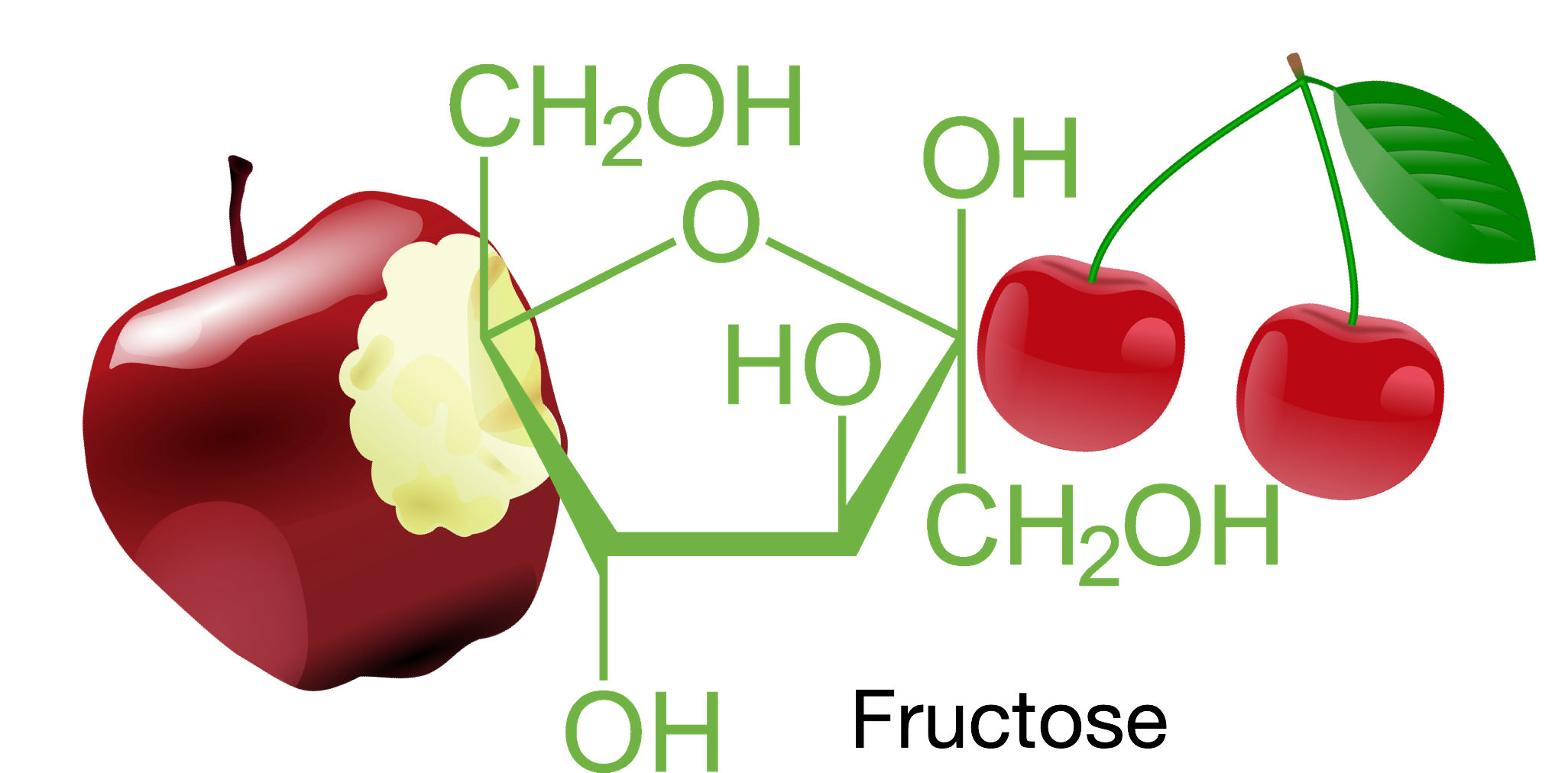
Fructose
Fructose is the sweetest of the sugars and is frequently used as a sweetener in the food industry. Fructose is also known as fruit sugar and is found in honey, tree and vine fruits like apples and grapes, flowers, berries, and some vegetables. Like glucose, fructose is called a simple sugar.
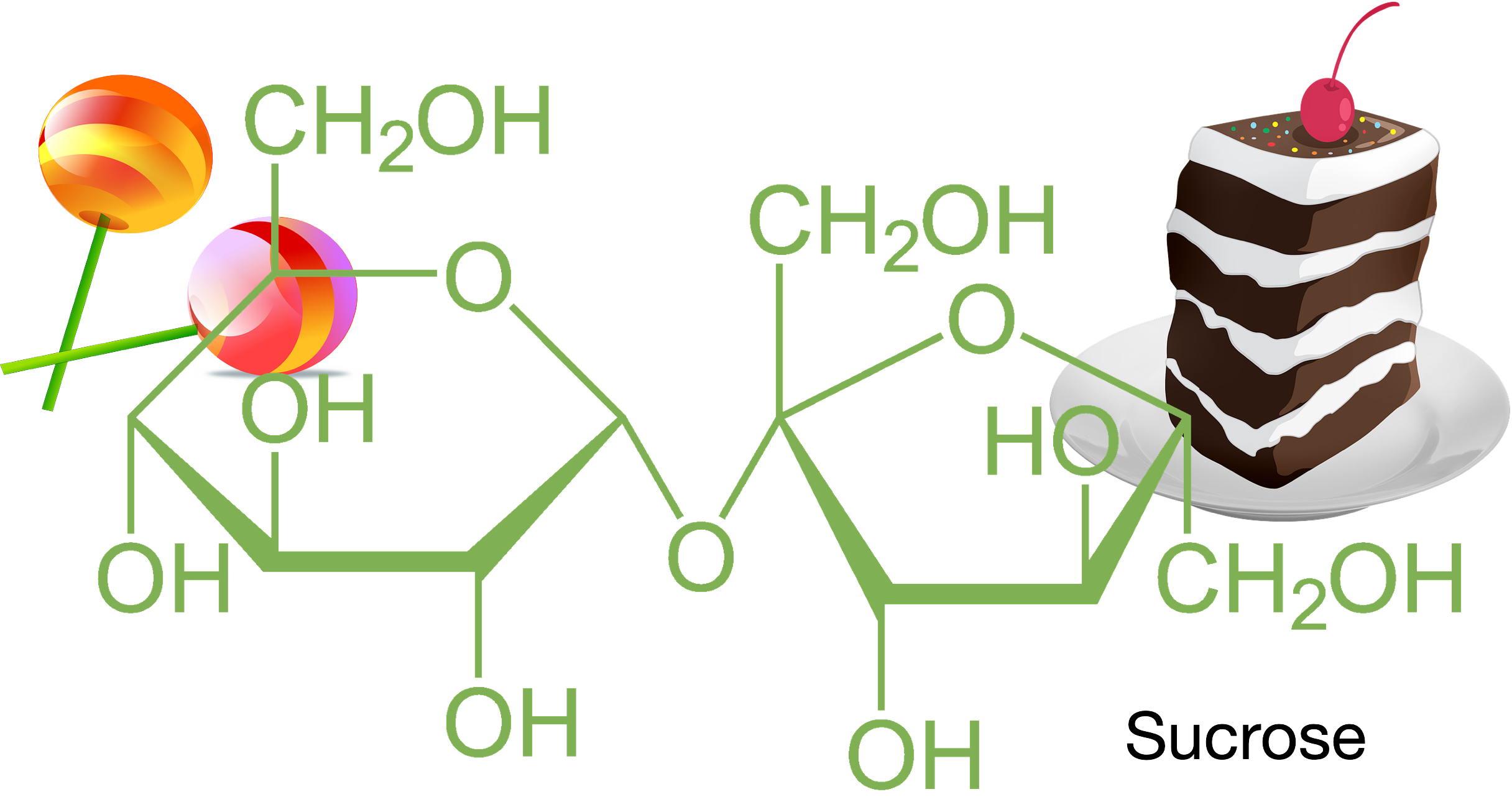
Sucrose
Sucrose is better known as table sugar or granulated sugar. Sucrose is made by extracting the juice of sugar cane and sugar beets and removing the moisture in a process called refining. While glucose and fructose are called monosaccharides (mono- meaning one), sucrose is made up of one molecule of glucose and one molecule of fructose joined together. Sucrose is therefore referred to as a disaccharide (di- meaning two).
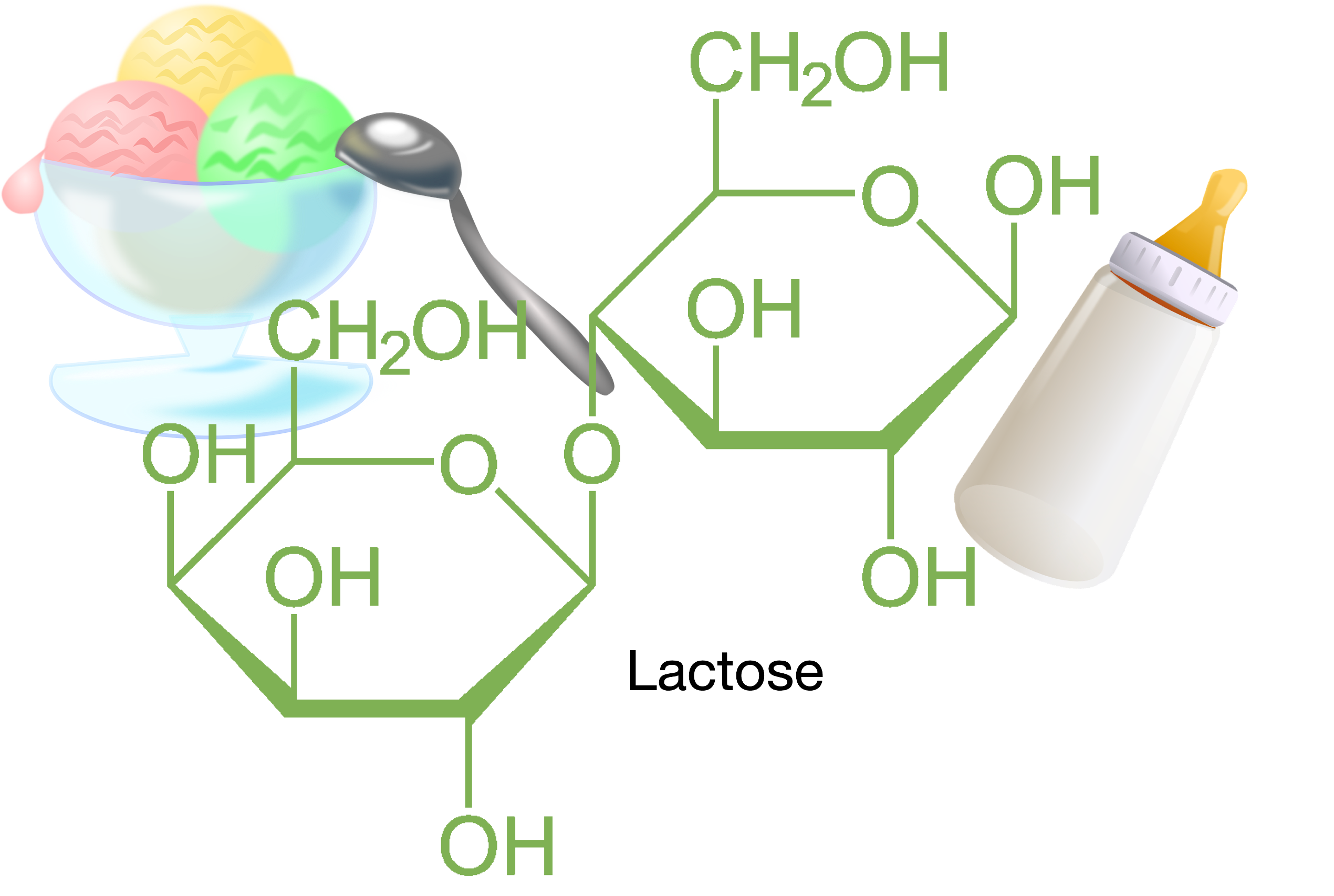
Lactose
Lactose is milk sugar and is found in milk and milk products. Like sucrose, lactose is a disaccharide and is composed of one molecule of glucose (like sucrose) and one molecule of another simple sugar called galactose. Lactose has an interesting medical aspect. Some people are unable to properly use lactose and eating large amounts of it can make them sick. This is referred to as lactose intolerance. As high as 65% of the human population have a reduced ability to digest lactose after infancy.
A special sugar, ribose, is found in DNA, where it serves as an important part of the structure of DNA molecules. When consumed, all of the sugars mentioned above can be broken down and rearranged as needed to make different structures in the cells of the body. They also can be used for energy.
Complex Carbohydrates
Complex carbohydrates consist of starches and fibers. Starches serve as sugar storage in the body and in plants. In animals, starch is called glycogen and is made in the liver and muscle from any excess glucose consumed in the diet.
Starch
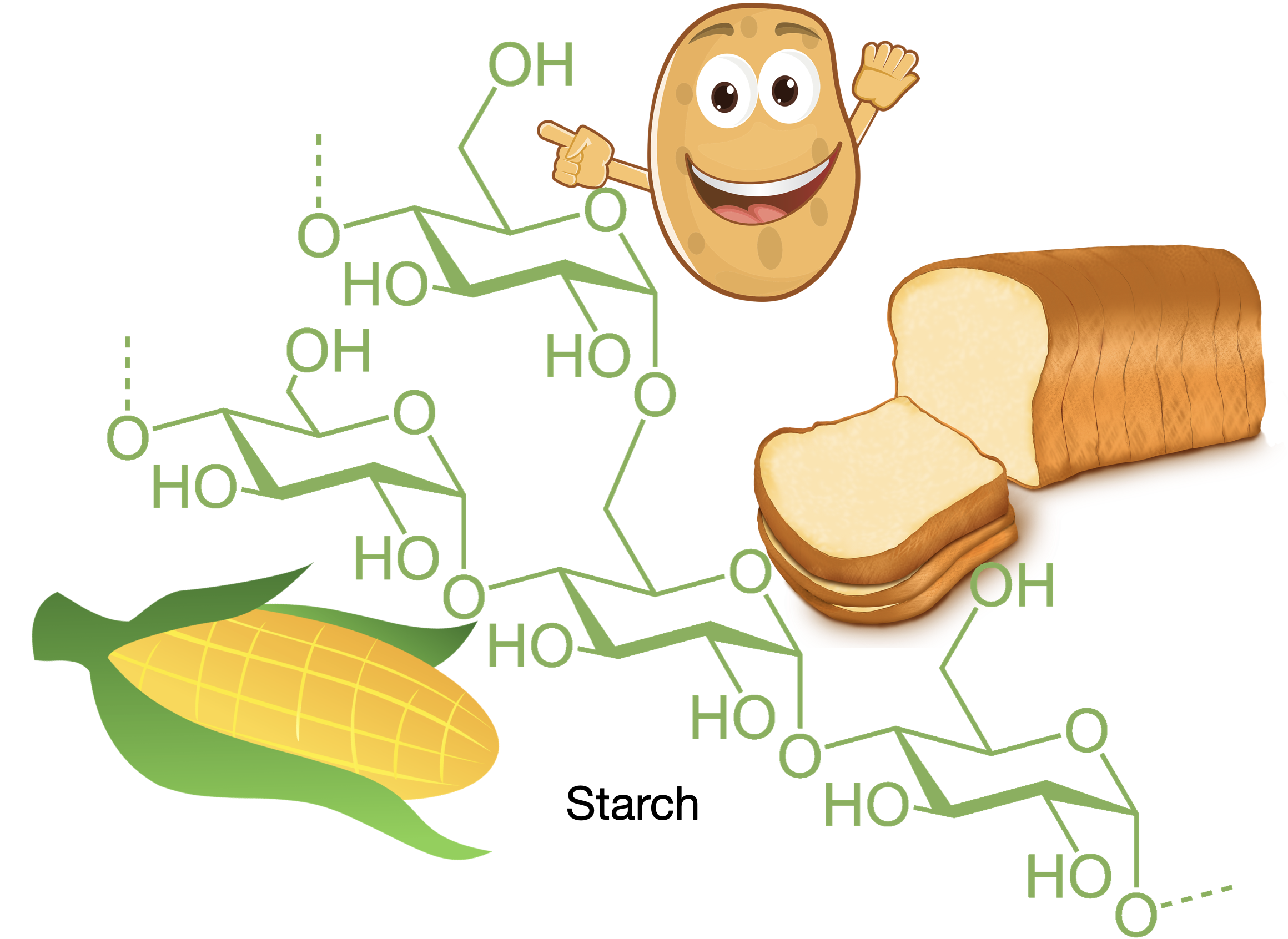
Plant starch is typically just called starch. There are times during photosynthesis when plants produce extra glucose. This extra glucose is converted to starch and is typically stored in leaves or in special root structures called tubers. Plants also put a significant amount of starch in their seeds to help nourish the new plants when they sprout. Potatoes and sweet potatoes are storage sites for starch, as are cereal grains, beans, and nuts. Starches are made from long chains of glucose that can be easily broken down by enzymes in the small intestine. Like sugars, starches are highly digestible.
Starch molecules can be enormous. They are made of chains of other sugars and, as just mentioned, serve as storage molecules. When the plant needs sugar, it can break down large starch molecules to make usable, simple sugars. The starch molecule shown below is only a small part of a much larger molecule. The dotted lines in the model show where the molecule continues. You can see that starch is such a great way to store simple sugars for when they are needed.
Fiber
Fiber is the structural component of plants. Scientists classify fiber on the basis of its ability to absorb water. Soluble fiber absorbs water while insoluble fiber does not absorb water. Soluble fiber is found in such foods as beans, oats, and fruits. One well-known soluble fiber is pectin. Pectin is the compound that gives jams, jellies, and preserves their jellied consistency.
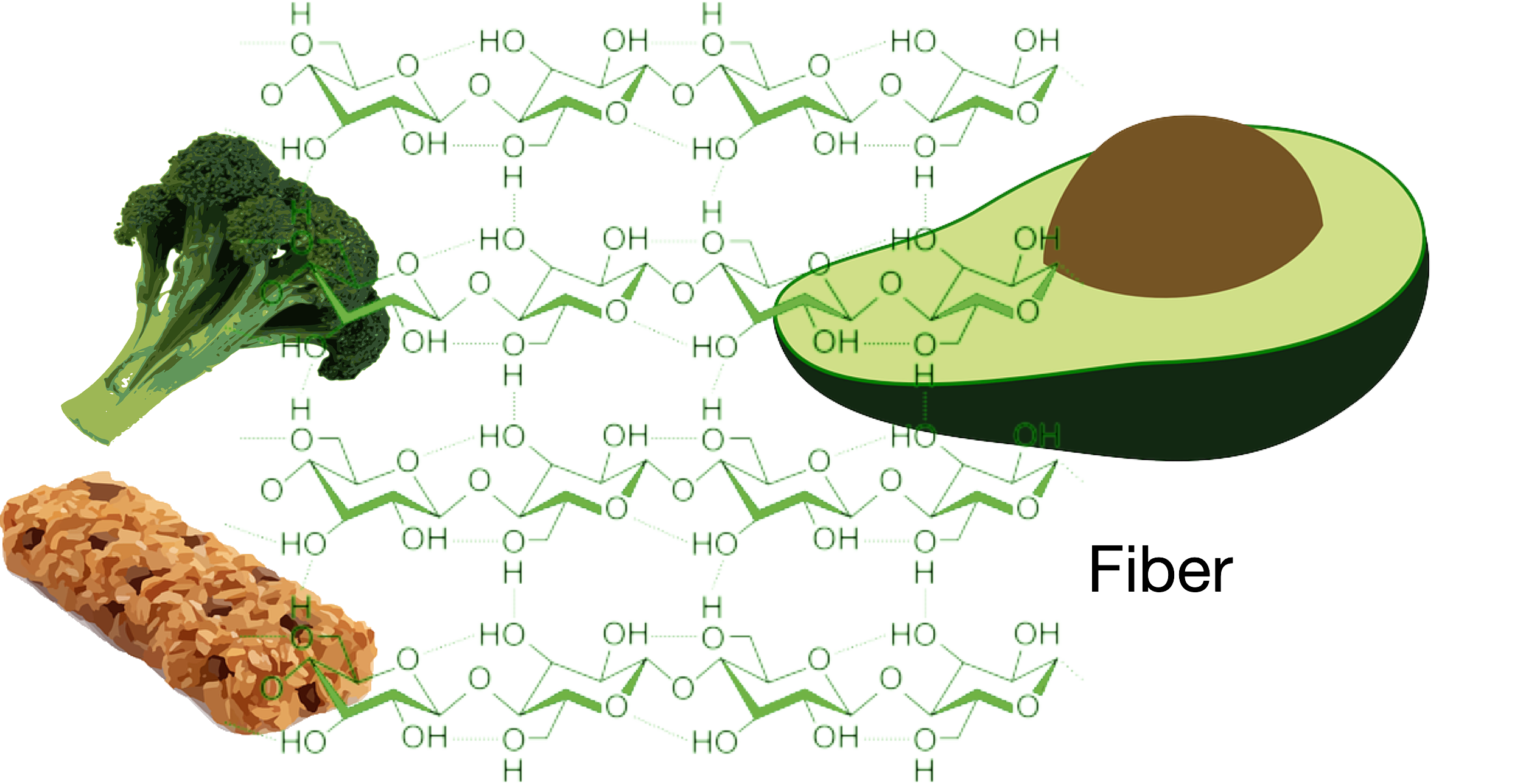
Insoluble fiber does not absorb water. Insoluble fiber includes cellulose, hemicellulose, and lignin, which are the compounds that give plant cell walls in leaves and stems their rigid structure. Neither soluble nor insoluble fiber is digestible by humans, but both are important components in the human diet. Soluble fiber is important for its cholesterol-lowering abilities, as well as its ability to slow the absorption of glucose from the small intestine. This is beneficial for people whose bodies do not regulate blood glucose levels well, such as diabetics. Insoluble fiber is necessary to give bulk to the diet and keep food moving through the digestive system.
As you can see from looking at the gigantic molecule below, fiber is a complex molecule with many atoms and bonds holding them together. We cannot digest fiber as it is such a complex molecule. Nonetheless, diety fiber is an important part of being healthy. This is the reason we say that both fiber and starch are complex carbohydrates.
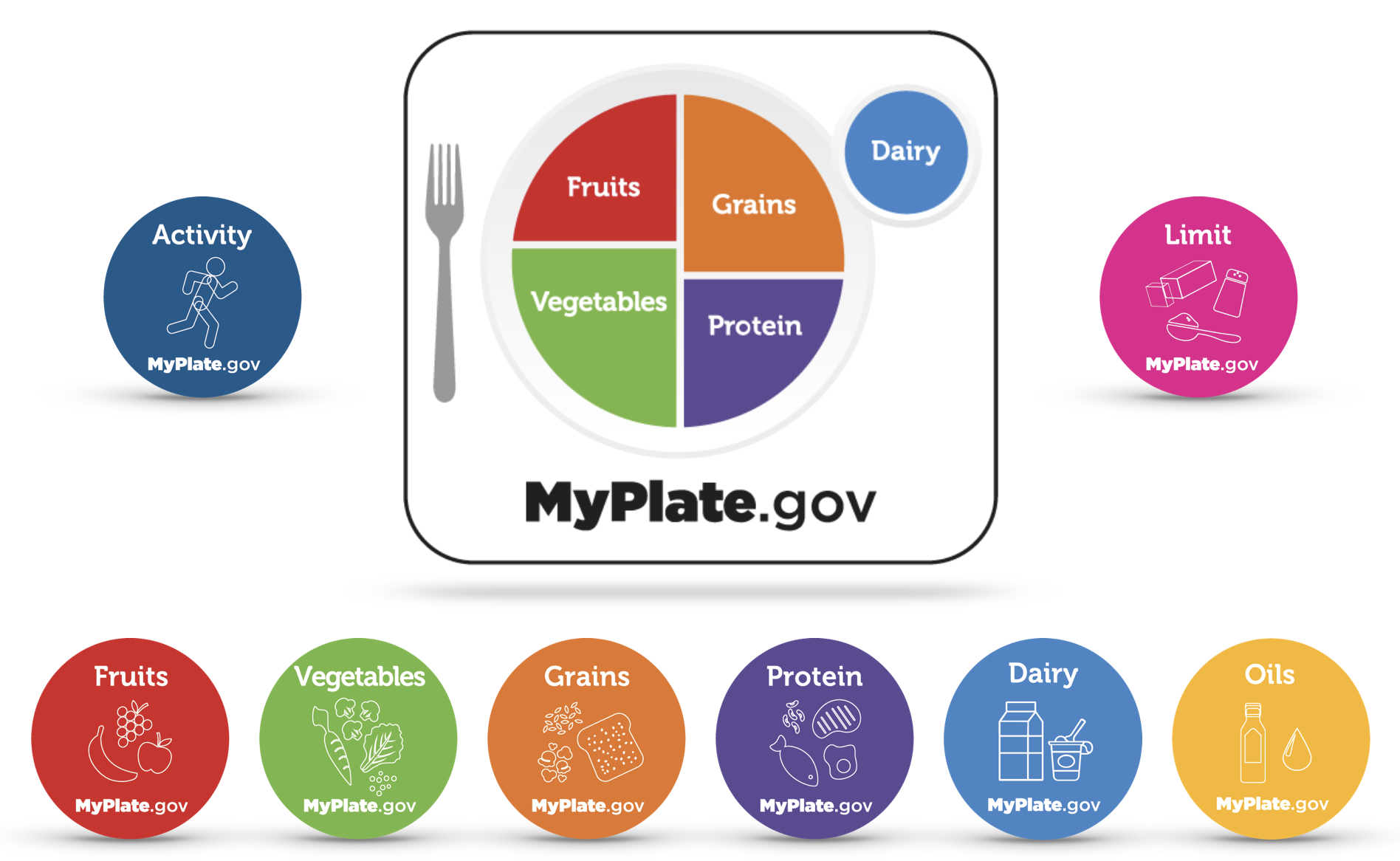
Carbohydrates are an important part of the daily diet. The body requires carbohydrates for energy and for cellular structure. The body uses what it needs and either stores the rest as glycogen, which can be stored in limited amounts, or converts them to fat for storage. Thus, it is important to balance carbohydrate intake with activity to prevent large amounts of carbohydrates from being converted to fat. Although all of the food groups contain foods that possess carbohydrates, high-carbohydrate foods are found in the grains group of the MyPlate graphic. This food group suggests an intake of about 6 ounces on a daily basis.
Investigation Three introduces students to the importance of carbohydrates in their daily diet and demonstrates the varying levels of carbohydrates and sugar found in common foods. Students will use the triple beam balance to visualize the total carbohydrate and sugar content of different foods based on nutrition label values. Students will discover that both the total carbohydrate and the sugars content differ between foods within specific food groups and categories as well as between different food groups and food categories.
Examining Nutrition: Investigation 3 - Mathematics Concepts
Prelab
- parts/whole
- problem-solving
Lab
- data table
- mass/volume in ounces, cups, grams
- percentages
- grouping/classifying
- whole numbers
- place value (tenths, ones, tens, hundreds)
- least to greatest
Postlab
- greater than/less than/equal to
- continuum scale
- skip counting by 10’s
- least to greatest
- mass in grams
- data table
- mass/volume in ounces, cups, teaspoons, grams
- data analysis
- addition
- greater than/less than/equal to
- problem-solving
- percentages
Examining Nutrition: Investigation 3 - Procedural Tools

Examining Nutrition: Investigation 3 - Cognitive Tools

Examining Nutrition:
Investigation 3 Quiz

