Teacher Portal:
Investigating Heat
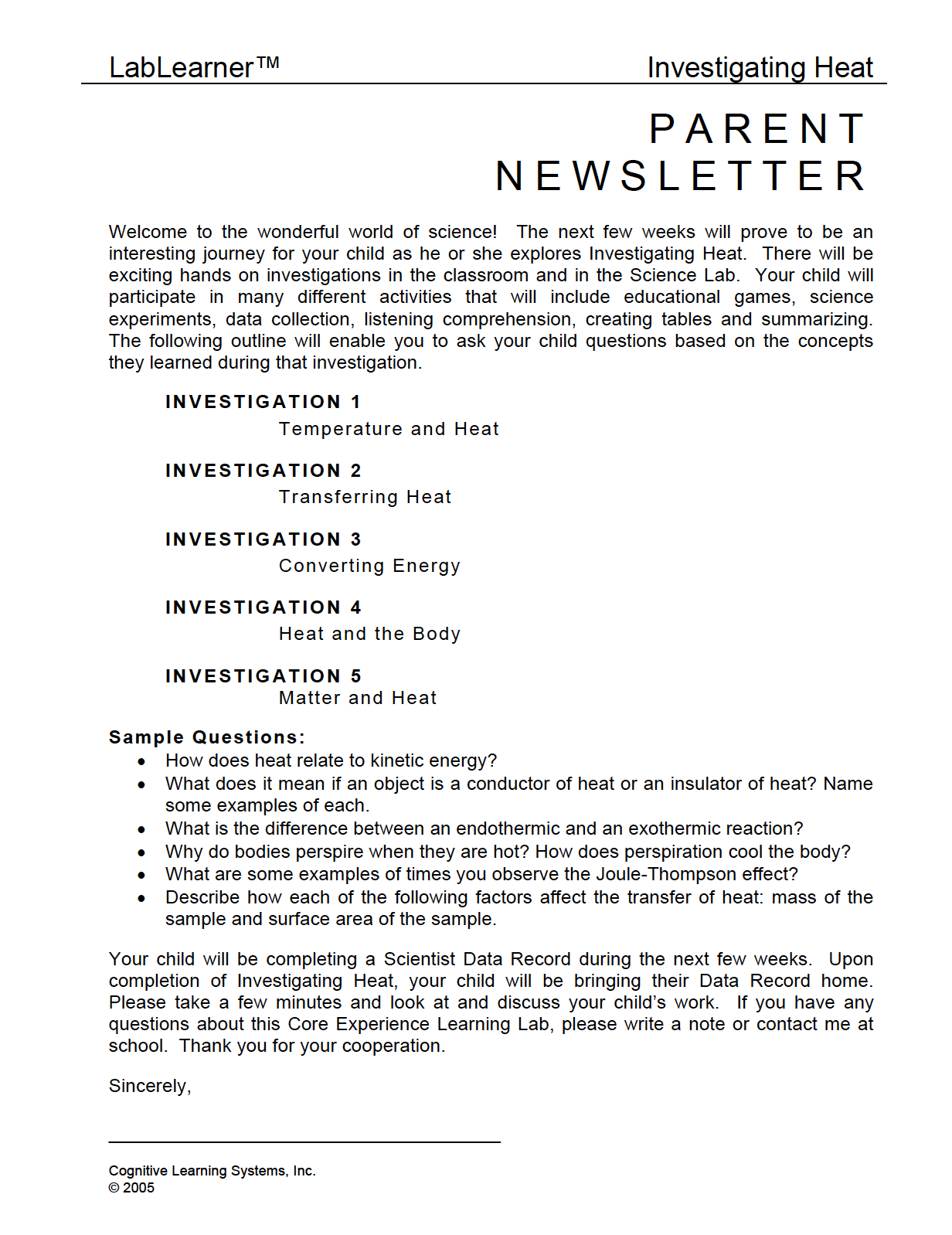
Investigating Heat: Investigation 1 - Temperature and Heat
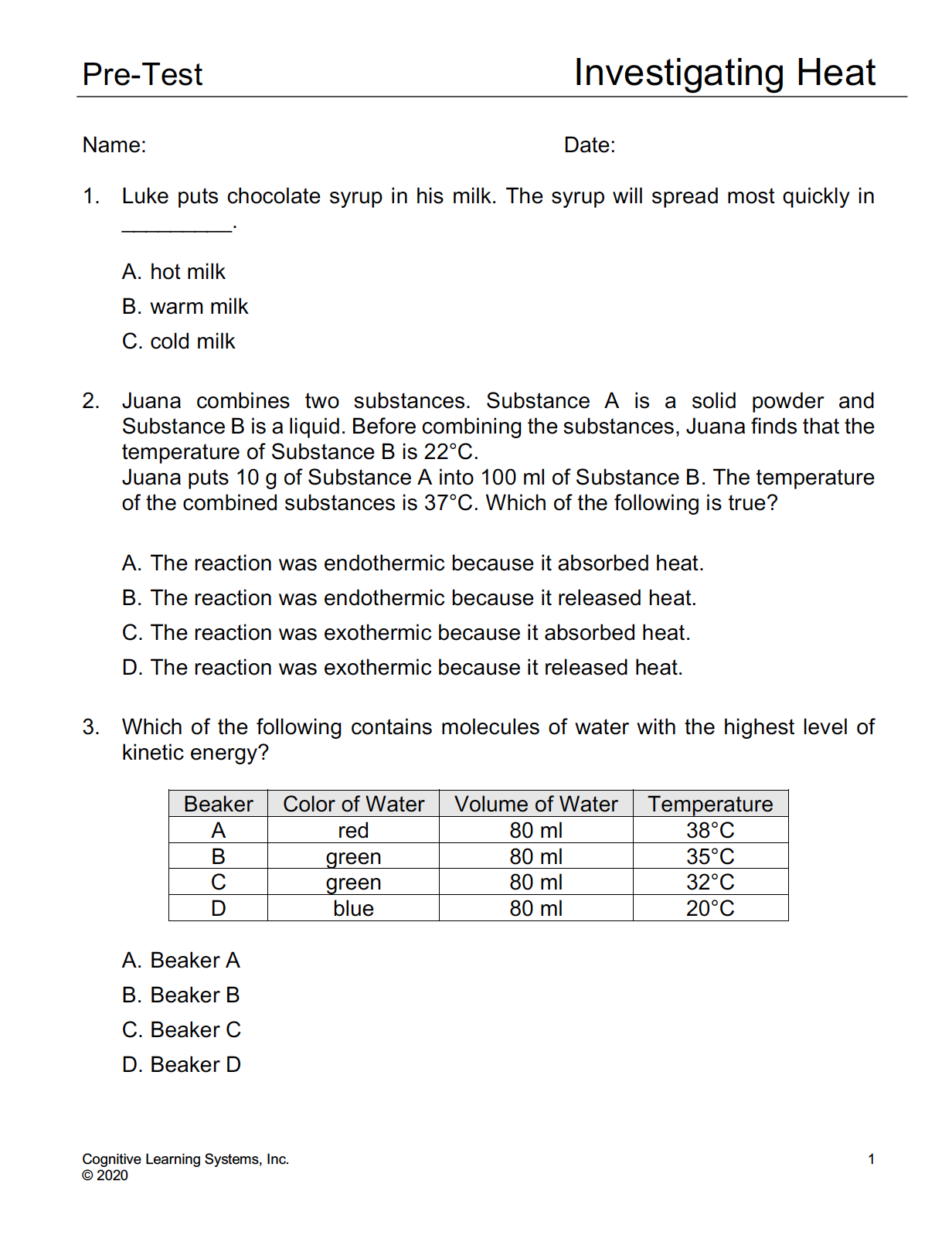
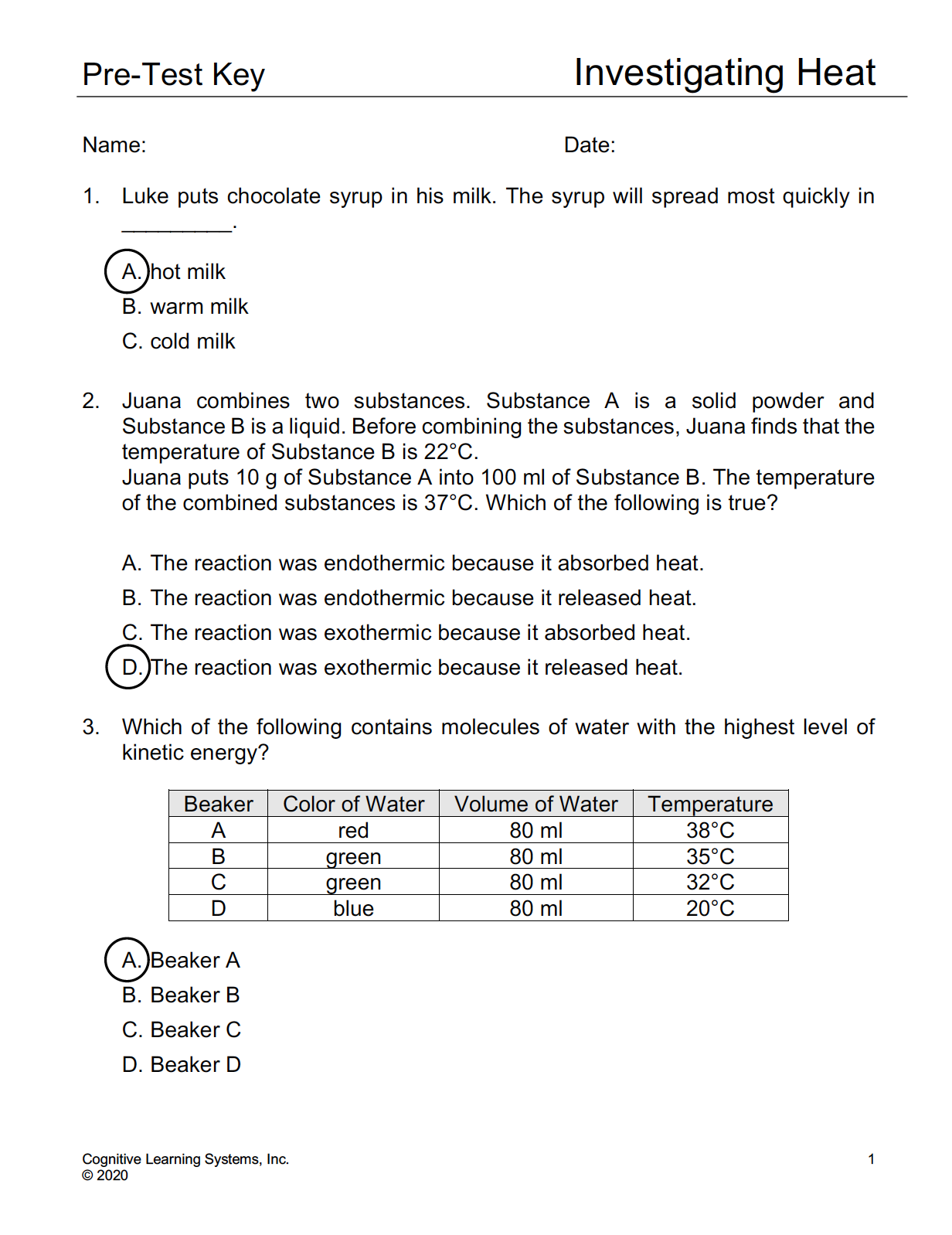
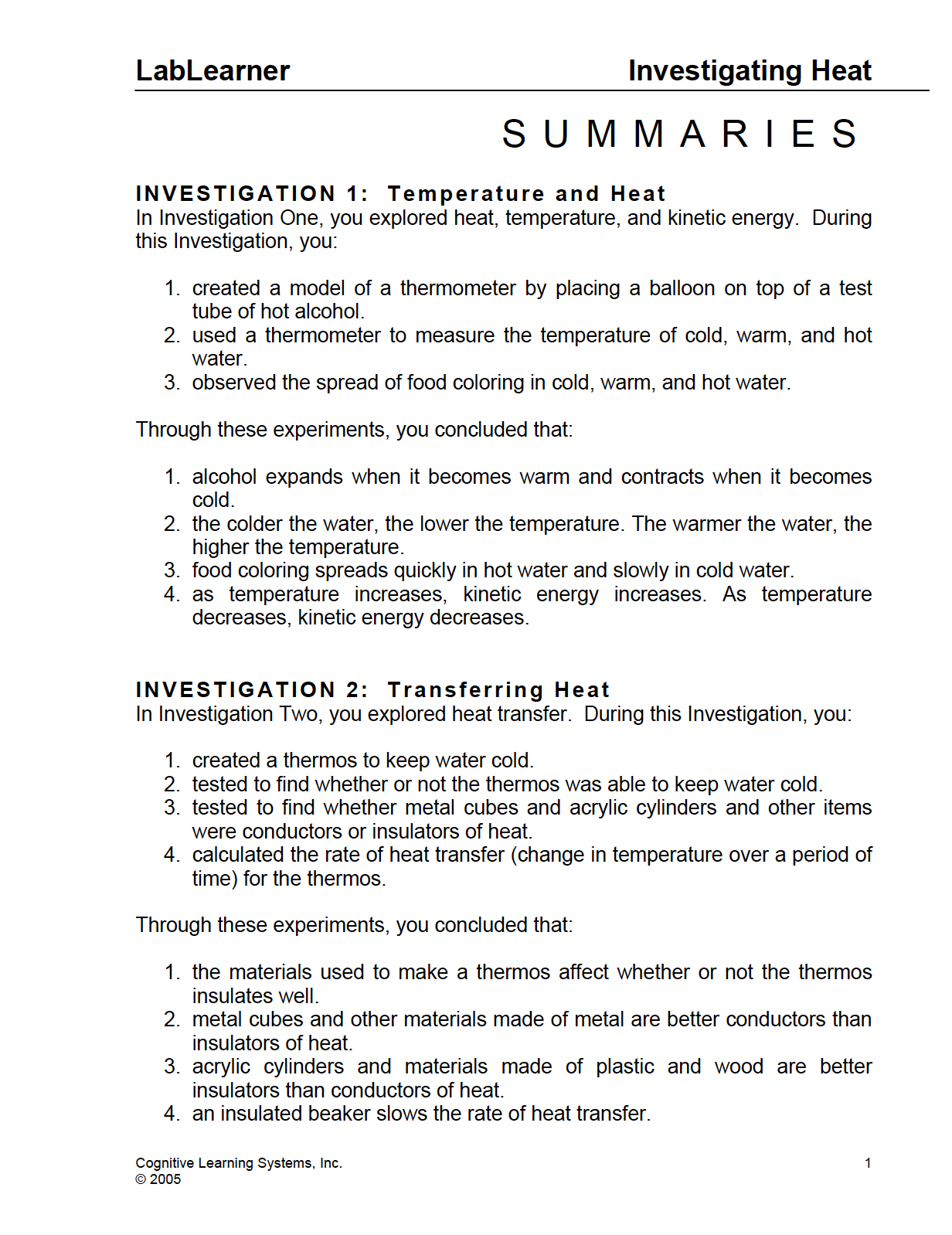
Investigation One introduces students to the concept that heat is the transfer of energy. Through observation and experimentation, students will learn that a thermometer measures temperature through the transfer of kinetic energy to or from the substance in contact with its bulb. By adding food coloring to different temperatures of water, students will discover the relationship between temperature and kinetic energy.
Investigating Heat: Investigation 2 - Transferring Heat
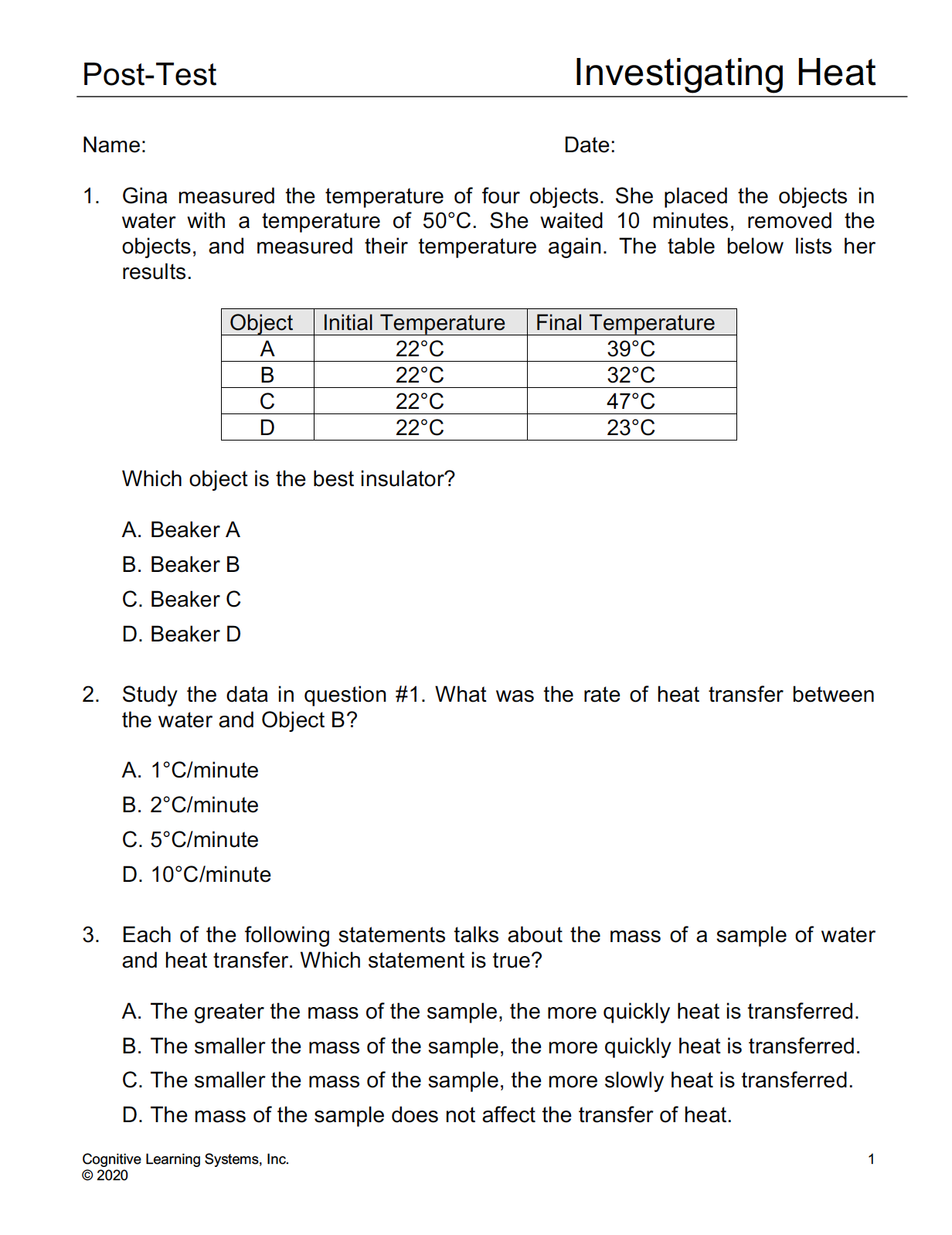
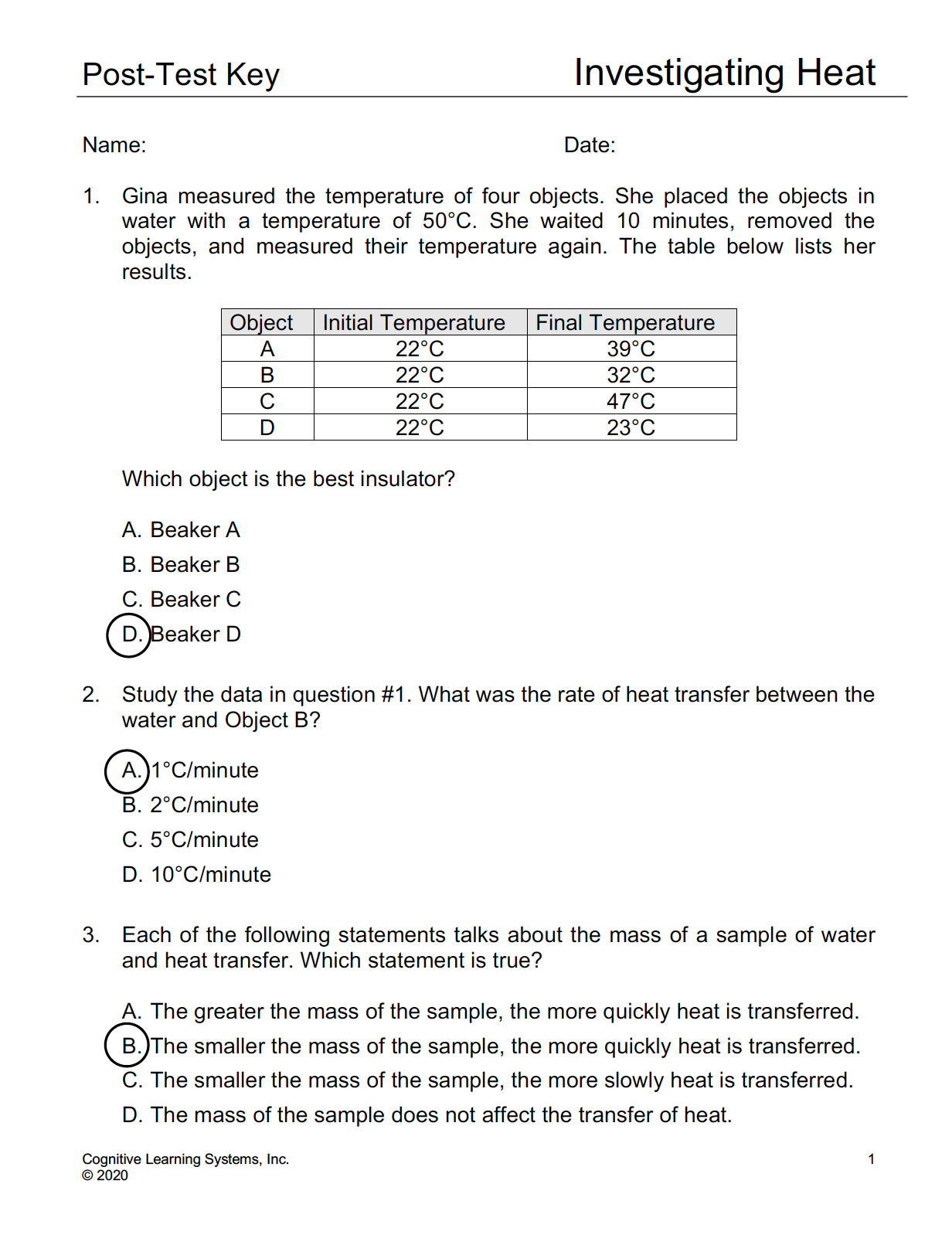
In Investigation Two, students continue their study of heat. Students will learn that heat is transferred through the processes of conduction, radiation, and convection, and that the ability of matter to conduct heat is a property of matter. Students will explore these concepts through experimentation to determine the heat conduction abilities of items made of different types of matter. Students will then apply what they learned by constructing a thermos from a beaker of water using various insulating materials. Students will evaluate the insulating abilities of their thermos by calculating and comparing its average rate of heat transfer with that of an uninsulated beaker of water.
Investigating Heat: Investigation 3 - Converting Heat
Investigation Three introduces students to the Law of Conservation of Energy. Students will explore the Law of Conservation of Energy by performing experiments that demonstrate the difference between endothermic and exothermic reactions. Students will learn that both endothermic and exothermic chemical reactions are often accompanied by changes in temperature as well as other signs of chemical change.
Investigating Heat: Investigation 4 - Heat and the Body
Investigation Four provides students an opportunity to expand their understanding of heat as energy by exploring how the body regulates temperature through the evaporation of sweat. Students will learn that evaporative cooling is an ongoing process in the body even when perspiration is not visibly present on the skin. Students will also be provided with an opportunity to explore the Joule-Thompson effect in gases through experimentation with their own respiration, observing that gases that are compressed and then allowed to expand experience changes in temperature.
Investigating Heat: Investigation 5 - Matter and Heat
Investigation Five is designed to demonstrate that the property of heat conduction in liquids is affected by other physical properties such as mass and surface area. Students will explore the effect of mass on the average rate of heat transfer of water by changing mass while holding the surface area in contact with water constant. Students will then hold mass constant while changing surface area. Students will discover that as mass increases, the rate of heat transfer decreases, and that increasing surface area increases the rate of heat transfer.
Investigating Heat: Performance Assessment
Investigation Six consists of a performance assessment designed to evaluate students’ understanding of the science concepts addressed in the first five Investigations of the CELL. During this exploration, students will use the knowledge gained about heat, heat transfer, temperature, and endothermic and exothermic reactions to design and test an energy-efficient fish tank against a prototype.