Teacher Portal:
Forms of Energy
Performance Assessment – Lab
 BE PREPARED
Materials
Group materials
- 500 cm string
- 90 g non-chlorine powdered bleach
- 7.0 g pepper
- 5 L water
- 1 roll of masking tape
- 1 funnel
- 3 tuning forks
- 3 rubber stoppers, size 07
Group materials
- 1 liter pitcher
- 2 100 ml beakers
- 1 tuning fork
- 1 rubber stopper
- 2 white buckets
- 2 thermometers
- 4 falcon tubes
- 2 glass stirring rods
- 2 pieces of paper
- 2 batteries
- 2 battery holders
- 2 light bulbs
- 2 light bulb holders
- 2 ping-pong balls
- 2 50 cm pieces of string
- 2 5 cm pieces of masking tape
Individual materials
- Student Data Record
TEACHER PREPARATION
1. Fill five (5) liter pitchers with 1000 ml of water and place one on each table.
2. Cut ten (10) pieces of masking tape 5 cm long.
3. Cut ten (10) pieces of string 50 cm long.
4. Label five (5) falcon tubes “Pepper” and fill with 0.7 g of pepper. This can be accomplished by filling each falcon tube to the 1 ml mark.
5. Label five (5) falcon tubes “Bleach” and use the funnel to fill with 8.8 g of non-chlorine powdered bleach. This can be accomplished by filling each tube to the 15 ml mark.
6. Place one (1) tuning fork and one (1) rubber stopper on each table. Place remaining three (3) tuning forks and stoppers at the central distribution point. These can be used if two groups at a single table need tuning forks at the same time.
7. Separate the class into groups of three.
INSTRUCTION
Direct each student group to obtain the following necessary materials from the distribution point: one (1) thermometer, one (1) falcon tube of pepper, one (1) falcon tube of bleach, one (1) piece of string, one (1) ping-pong ball, one (1) piece of tape, one (1) glass stirring rod, one (1) battery, one (1) battery holder, one (1) light bulb, one (1) light bulb holder, one (1) white bucket and one (1) empty 100 ml beaker.
PROCEDURE
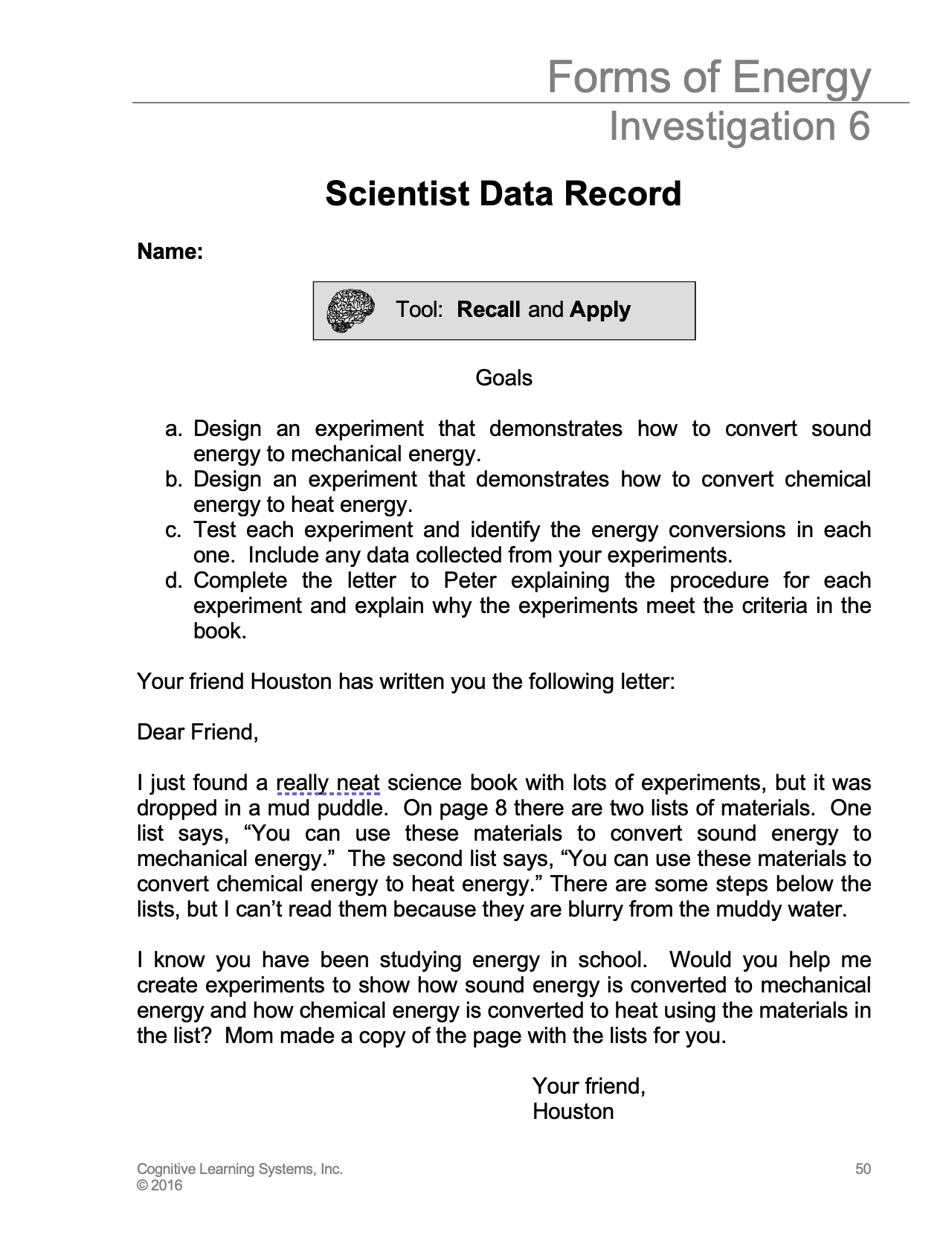
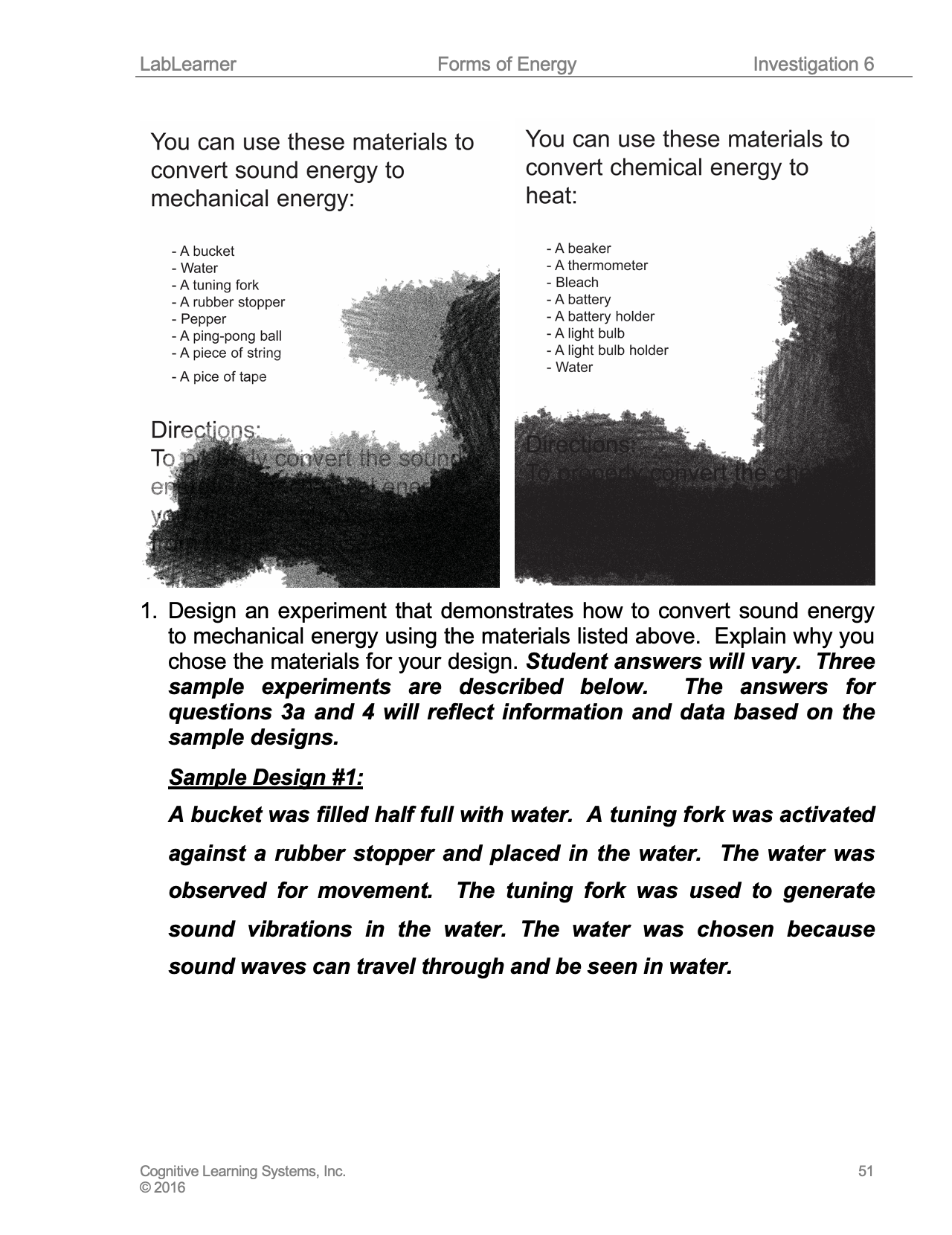
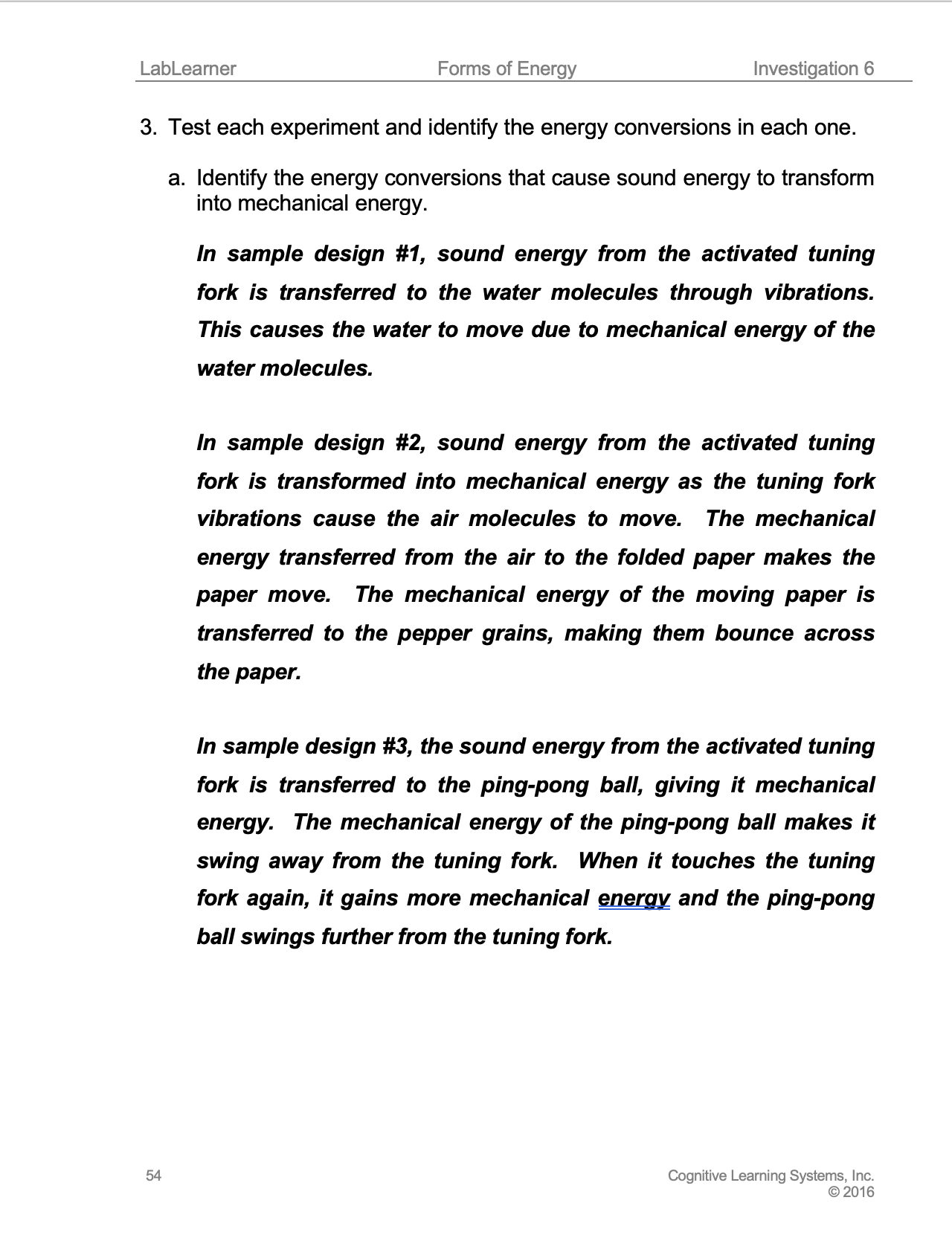
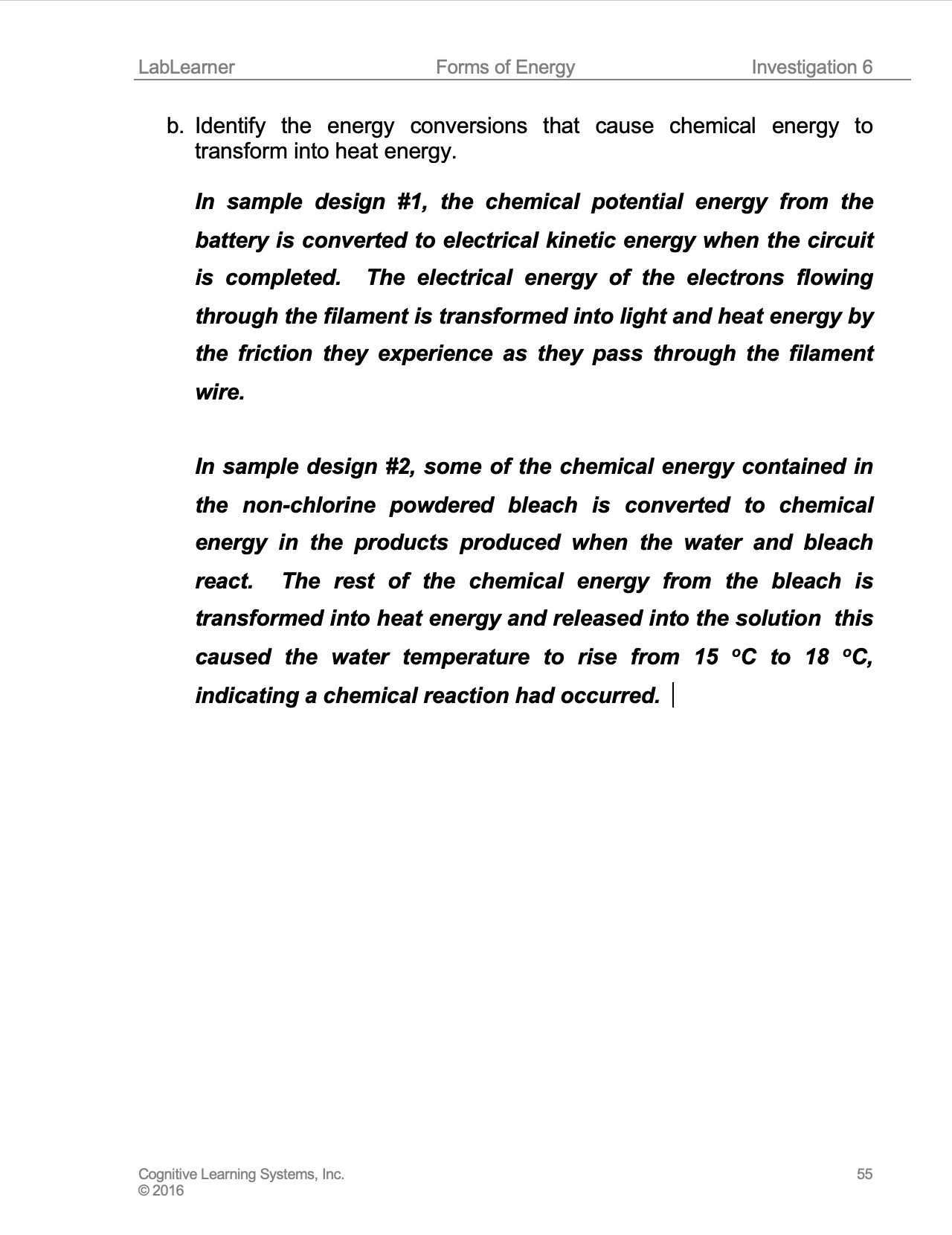
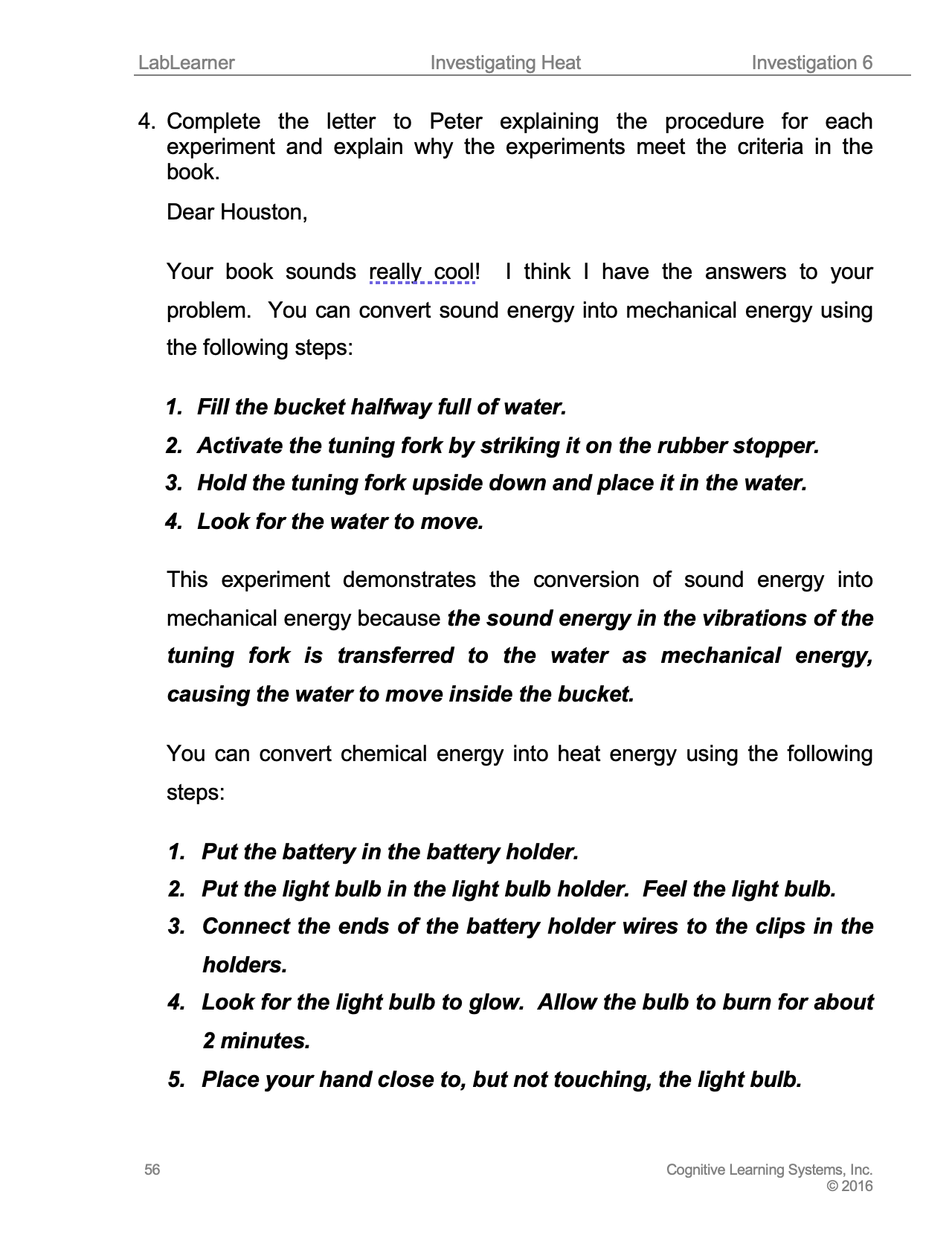
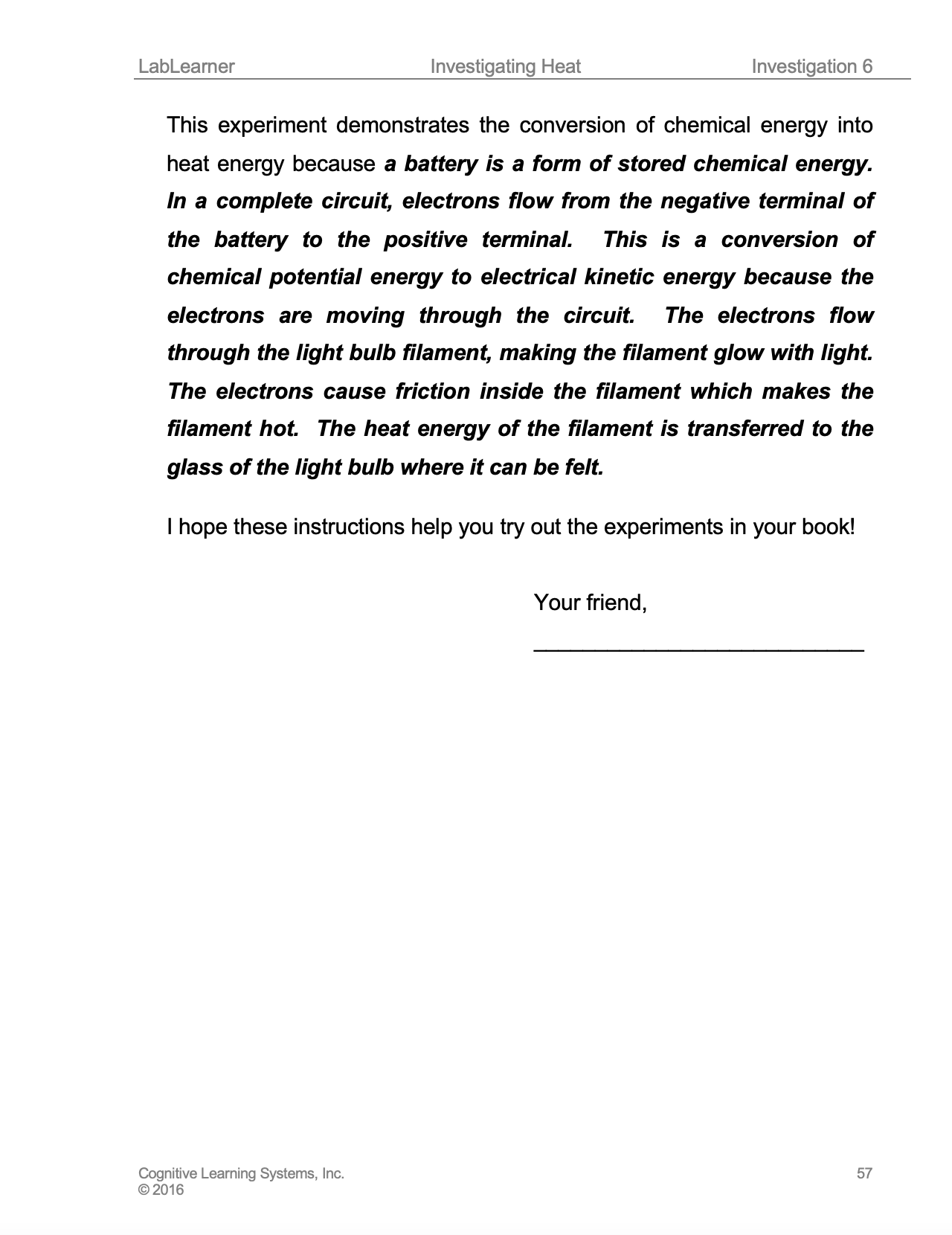
1. Tell students that they have a friend named Houston, who really enjoys science experiments. Houston was walking home from his cousin’s house one day when he found a book of science experiments lying in a mud puddle. As he looks through the book he finds some experiments on energy and remembers that the students have been studying forms of energy in school. Houston wants to conduct the experiments. He finds two lists of materials for energy experiments but discovers that the ink in the text of the procedures ran when it got wet. Now there is nothing but a big splotch of faded ink and a mud stain on the page where the procedures used to be. Houston has written the students a letter asking for their help in figuring out how to convert sound energy to mechanical energy and chemical energy to heat energy using the materials in the lists from the book.
2. Briefly outline the specific goals of this project to the class. Read aloud the goals from the list on the Scientist Data Record.
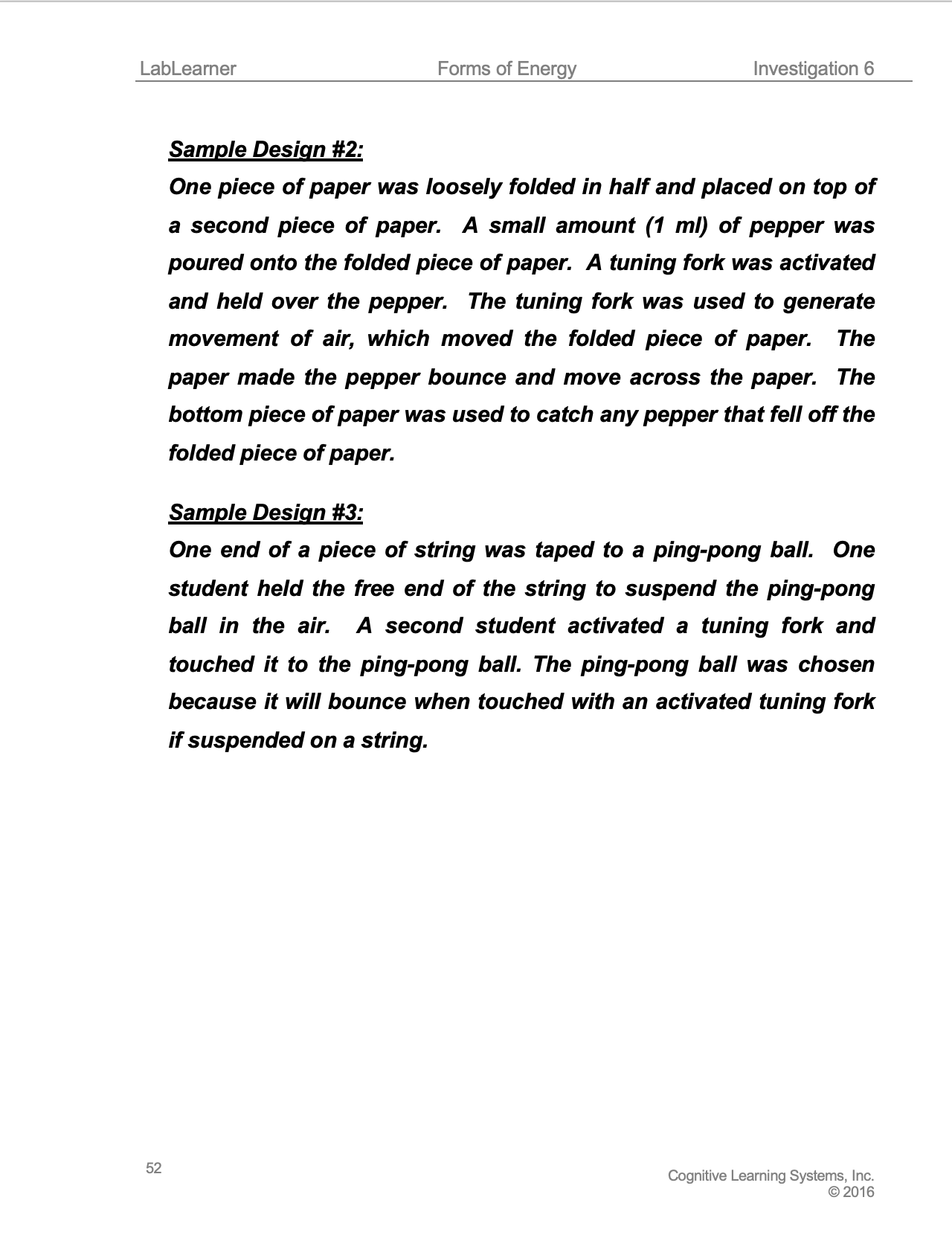
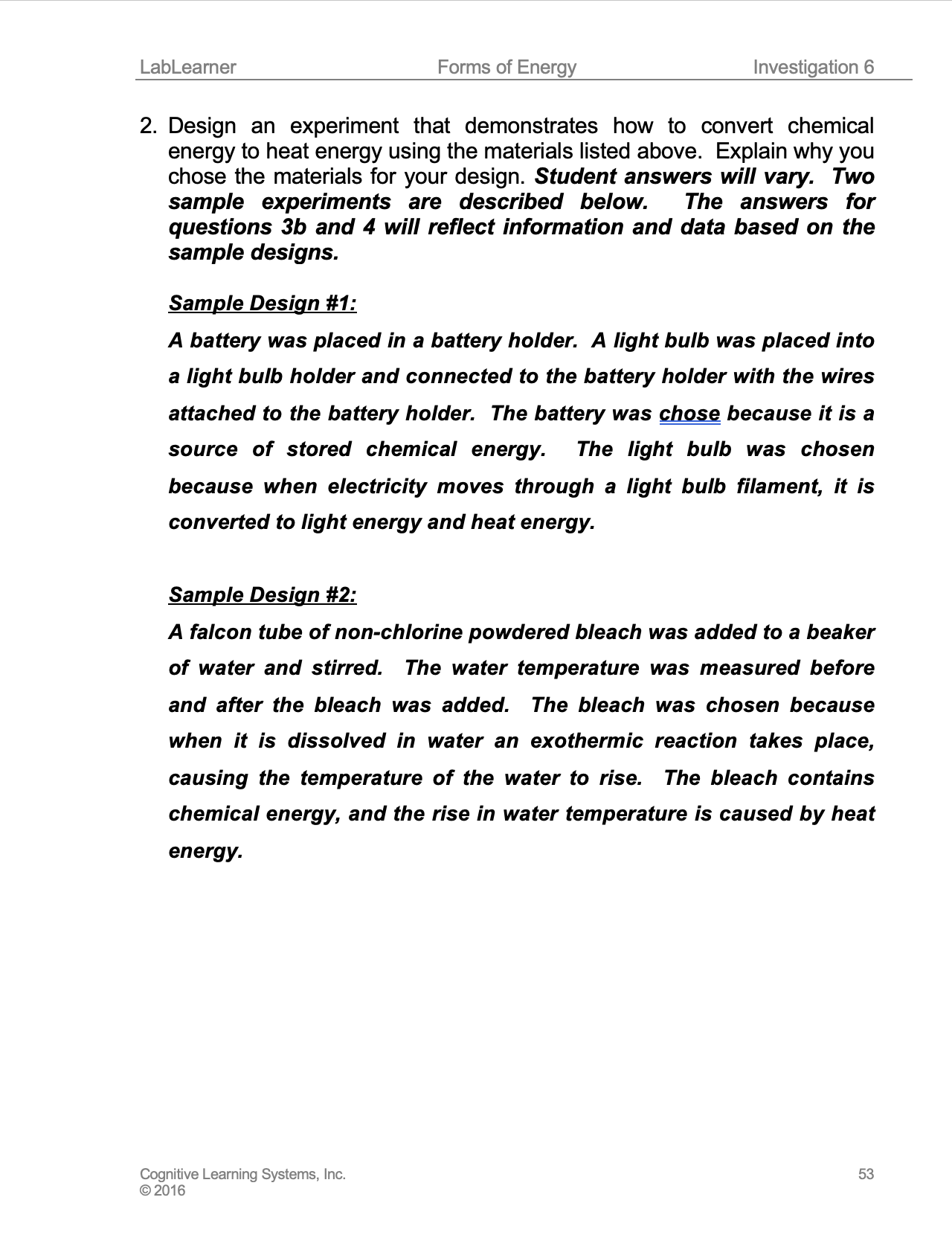
3. With the students, go through the four steps in the performance assessment. Encourage students to draw on their understanding of energy conversions and forms from the first five Investigations.
4. Explain to students that they may use any of the materials on their desks to design and test their experiments. Explain that the tuning forks must be shared between the two groups at each table.
NOTE: If necessary, the three extra tuning forks may be used to reduce time lost to waiting. Although each tuning fork has a different pitch, the forks are used only to generate sound energy to be converted into mechanical energy. Thus the frequency of the fork each group uses is irrelevant within the scope of this performance assessment.
5. Allow students to complete their performance assessments. You may wish to informally or formally evaluate students as they work on their performance assessments. An evaluation rubric for the performance assessment has been provided to aid in the evaluation process.
6. Upon completion of the project, permit enough time to clean up the lab and return the materials and equipment to their assigned location.
CLEAN UP
Let students know your expectations and instruct them to clean up their lab bench after the Performance Assessment.
KEYS