
Teacher Portal:
Examining Exercise
Investigation 5
Investigation Five:
Improving Performance
In Investigations One through Four, students examined the roles of the cardiovascular, respiratory, musculoskeletal, and digestive systems in physical fitness and explored their dependence on one another. However, physical fitness is also influenced by performance. In Investigation Five, students will test how practice and the principles of physics affect a person’s ability to perform physical activity.
Practice, Repetition, and Muscle Memory
When a person learns a new skill, he or she is frequently awkward or hesitant during its performance. He or she might find it necessary to think their way through the different steps of the skill. As the skill is 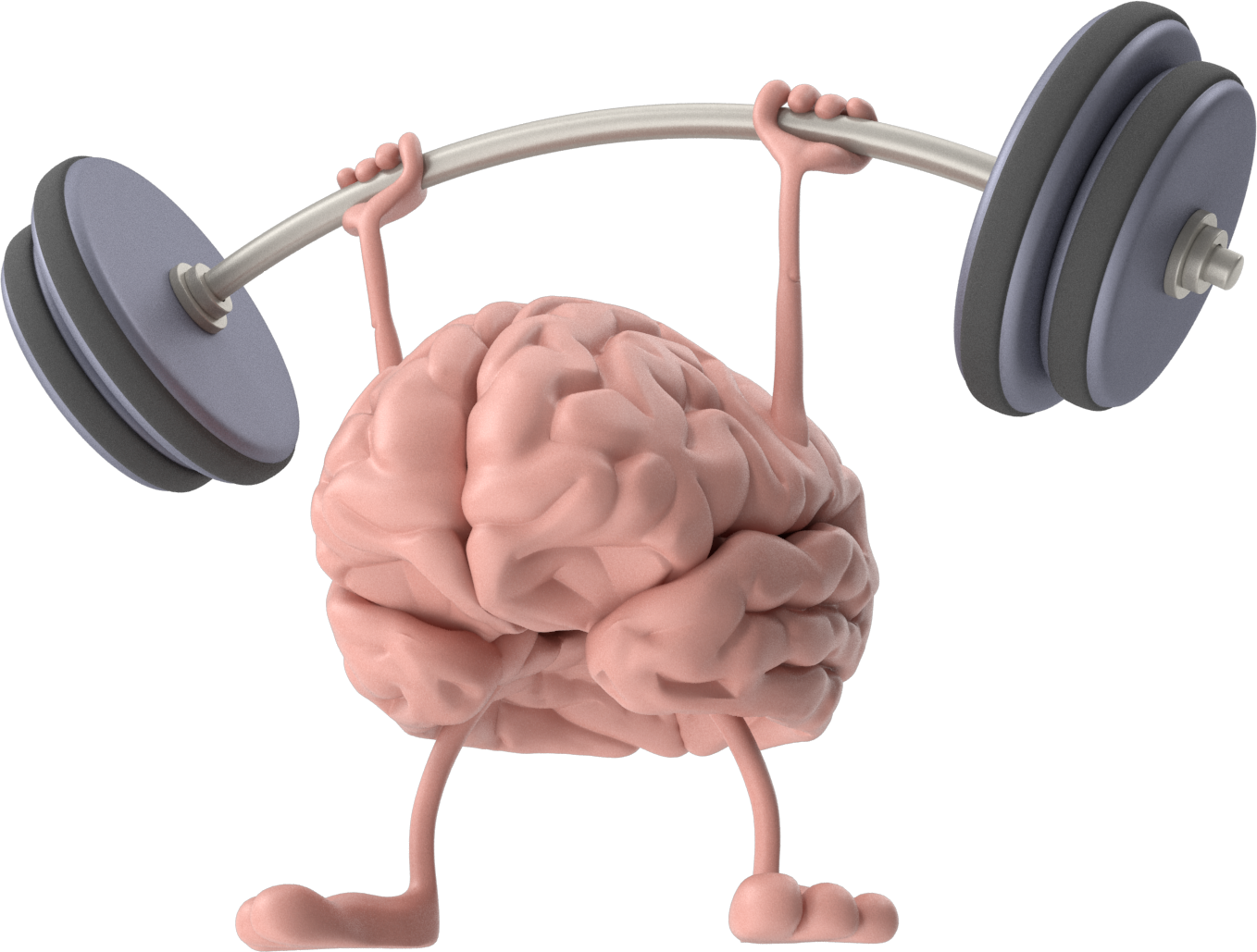 repeated, performance becomes easier, and the person begins to perform the different steps in the skill automatically. This is the result of the development of muscle “memory”.
The muscle itself does not “remember” the sequence of contractions and relaxations it performs. Instead, the brain stores the nerve impulse sequence in a special area where it can be recalled the next time the person performs the same or a similar task. Practice, or repetition, of a skill, establishes that memory in the brain and modifies it as performance improves. This is the reason why someone who has not ridden a bicycle in years can still get on one and ride it automatically. The brain has stored all the different nerve sequences necessary for all the steps involved in balance, pedaling, steering, and stopping in long-term memory.

Practice also improves performance by improving the endurance of the muscles involved. Endurance improves because the muscle cells develop more energy storage and increased numbers of mitochondria. Mitochondria are the muscle cell’s power plants. They use oxygen and other nutrients to supply chemical energy for muscle contraction. Increasing energy storage and production allows the muscle to contract and relax over longer periods of time without tiring.
The principles of physics can be used to evaluate and improve physical performance. Chemical energy is a form of potential energy. Thus the energy produced by mitochondria is also potential energy. When a muscle contracts, this energy becomes kinetic energy because it is being used for movement. Skeletal muscle is similar to a rubber band: the amount of kinetic energy a muscle has is relative to how much it contracts; thus, the greater the contraction, the more kinetic energy.
One way in which muscles increase their contractile force is by increasing the distance over which a contraction occurs. Like a stretched rubber band, the greater the length of the muscle prior to contraction the greater the kinetic energy as it contracts. This is referred to as the length-tension  relationship. An example of how this principle can be applied to athletics is a comparison of the distance jumped during a standing broad jump. When initiating the jump from a standing position with knees straight as compared to beginning the jump in a crouched position with the knees bent, the jump begun with bent knees will propel the jumper a longer distance than the jump initiated with straight knees. This occurs because in the crouched position the quadriceps muscles are stretched or lengthened to a greater degree than in the standing position. As the quadriceps muscles contract over a longer distance, they contract with greater force and more kinetic energy. The animation below shows the contraction and relaxation of the quadriceps muscles during leg lifts, suggesting the alternation between kinetic energy with contraction and potential energy with relaxation.
Technique
Performance is also affected by technique. The choice of technique for an activity influences both the ease of performance and the outcome. Physics principles can be applied to technique, and are especially helpful in improving the performance of sports activities. Coaches and athletes use the principles of kinetic energy and torque to increase running speed and the force applied to balls and other sports  equipment. Torque is the force due to rotation, and increases the kinetic energy applied through such activities as swinging a golf club, baseball bat, or tennis racket. Torque is also involved in such track and field activities as discus and javelin (shown here). The energy provided by the contraction of muscles involved in twisting and rotating various parts of the body helps increase the distance traveled by balls or track equipment by adding to the energy provided by the arm muscles, thus increasing the force applied to the sports objects. This is why a drive from the tee travels faster and farther than a putt.
The physics principles that apply to the location of mass also can influence technique. Movement is associated with direction and force has direction. A change in the position of body mass will affect an athlete’s ability to move quickly and efficiently in the desired direction. It is easier to move in the desired direction if the body’s mass is already moving in that direction.
In Investigation Five students will explore the effects of practice, kinetic energy, torque, and location of mass on performance by conducting experiments that test the application of these principles to physical activity.
Examining Exercise: Investigation 5 - Mathematics Concepts
Prelab
- Calculate rate
- Counting
- Time in seconds and minutes
- Multiplication
- Data table
Lab
- Counting
- Time in seconds and minutes
- Compare (non)measurable characteristics
- Greater than, Less than, Equal to
- Length in cm
Postlab
- Calculate rate
- Counting
- Time in seconds and minutes
- Multiplication
- Data table
- Compare (non)measurable characteristics
- Greater than, Less than, Equal to
- (In)direct relationships
- Bar graph
Examining Exercise: Investigation 5 - Procedural Tools

Examining Exercise: Investigation 5 - Cognitive Tools

Examining Exercise:
Investigation 5 Quiz

