
Teacher Portal:
Examining Exercise
Investigation 1
Investigation One:
Our Heart and Lungs
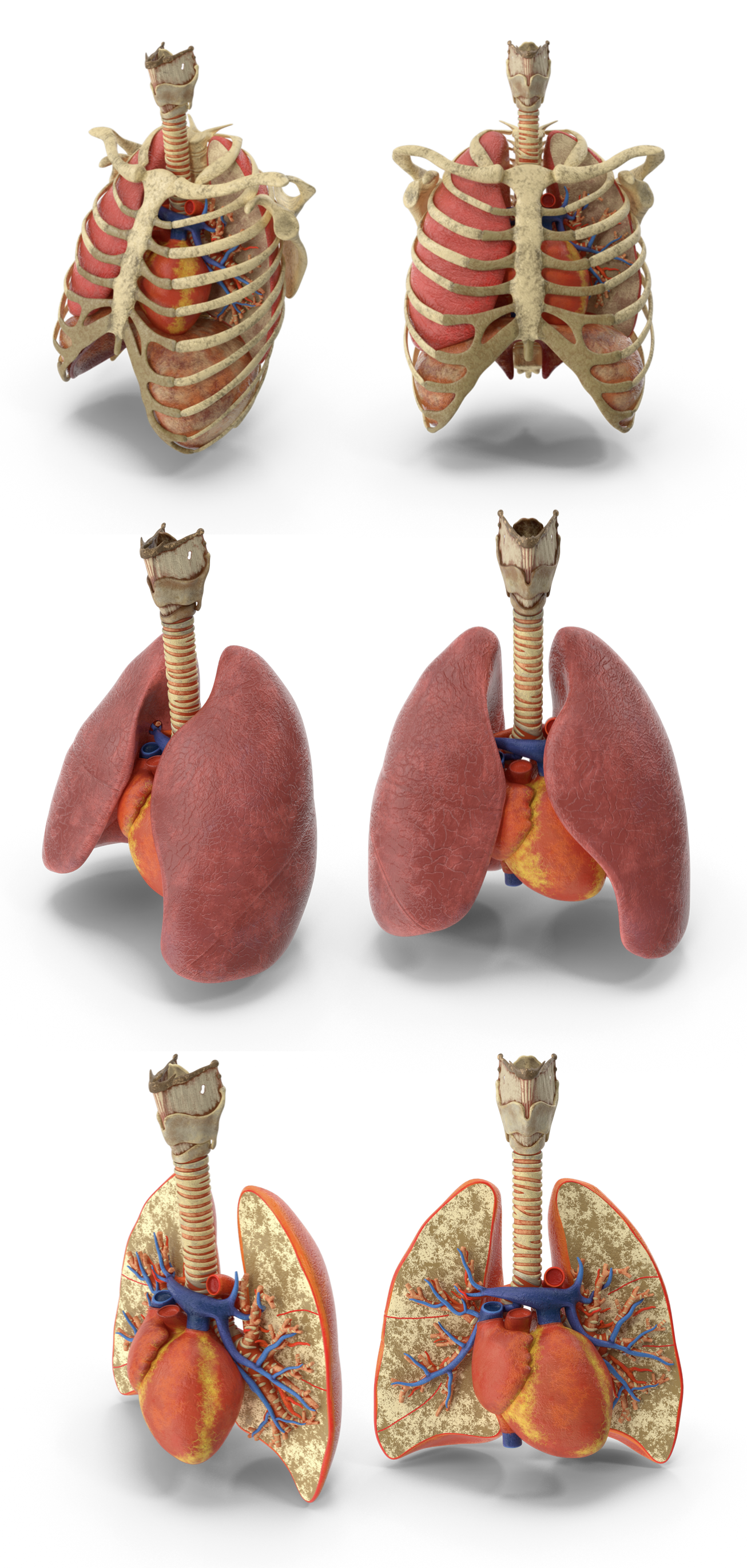 Physical fitness is important for a person’s health and well-being. It encompasses the overall health of the cardiovascular, respiratory, and muscular-skeletal systems as well as the nutritional status of the body. People who are physically fit have more endurance, a lower resting heart rate, greater lung efficiency, more flexibility and strength, and a lower body fat content. In addition, physically fit individuals are better able to withstand stress and disease and tend to have a greater sense of mental and emotional well-being. This CELL is designed to introduce students to the concept of physical fitness and the importance of exercise and nutrition in achieving a physically fit body.
Investigation One introduces students to the structure and function of the cardiovascular and respiratory systems. These two systems work in tandem to provide the body’s tissues with oxygen (O2) and clear the body of carbon dioxide (CO2). Oxygen is essential for many of the body’s chemical reactions, and CO2 is a waste product of those reactions.
The cardiovascular system
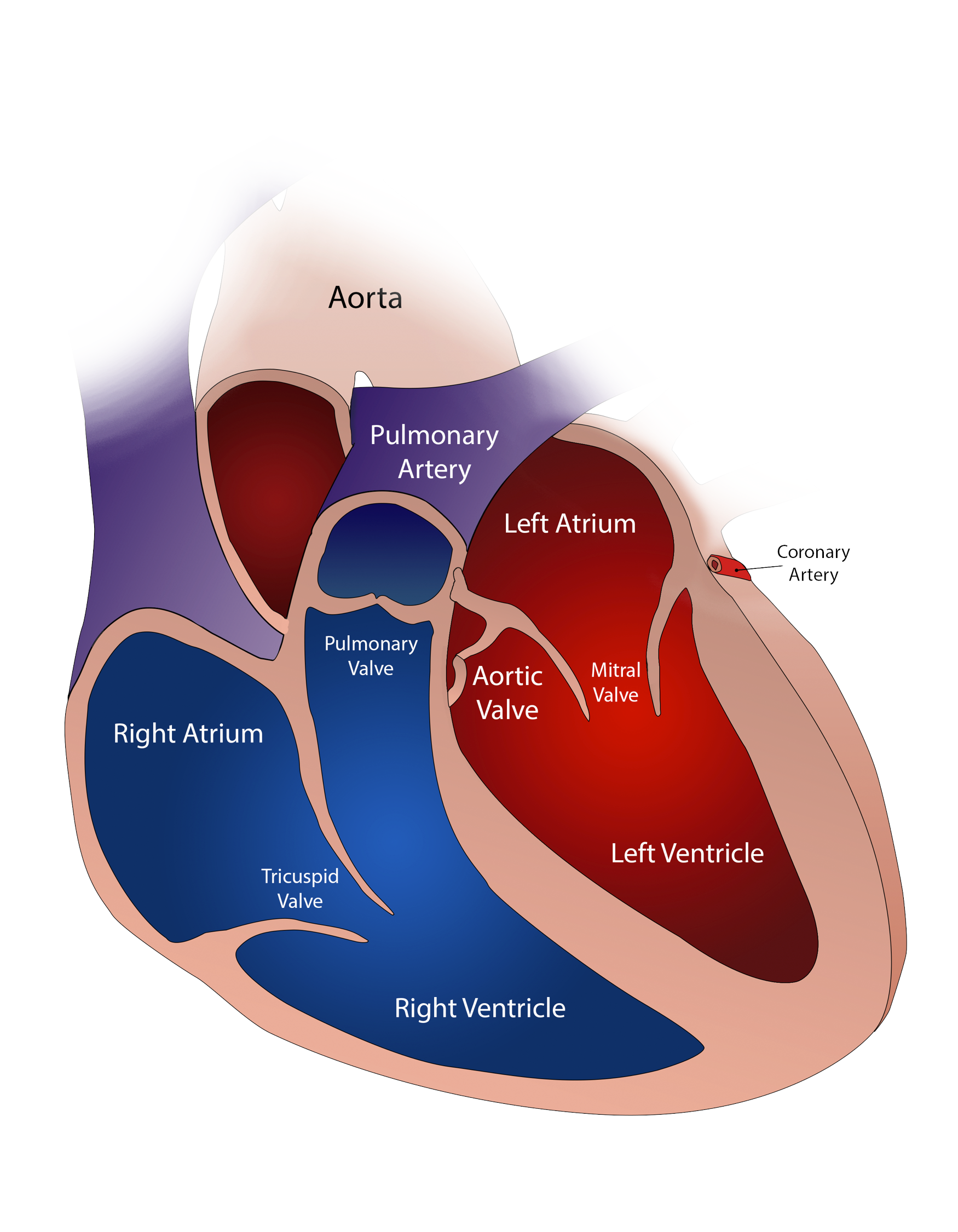
The cardiovascular system is made up of the heart, arteries, veins, capillaries, and blood. The heart is a muscular organ about the size of a fist, with four chambers that contract rhythmically to move blood through the body in a continuous circuit. The two upper chambers are called atria (singular = atrium) and the two lower chambers are called ventricles. One-way valves separate the atria from the ventricles to prevent backflow. The atria serve as the receiving chambers for the blood, and the ventricles serve as the distribution chambers as follows:
1. Deoxygenated blood from all over the body enters the right atrium through the inferior and superior vena cavae (major veins).
2. The right atrium contracts to move the blood into the right ventricle.
3. The right ventricle contracts to move blood into the lungs through the left and right pulmonary arteries.
4. Oxygenated blood from the lungs returns to the left atrium via the left and right pulmonary veins.
5. The left atrium contracts and moves the blood into the left ventricle.
6. The contraction of the left ventricle sends the oxygen-rich blood out to the rest of the body through the aorta (a major artery).
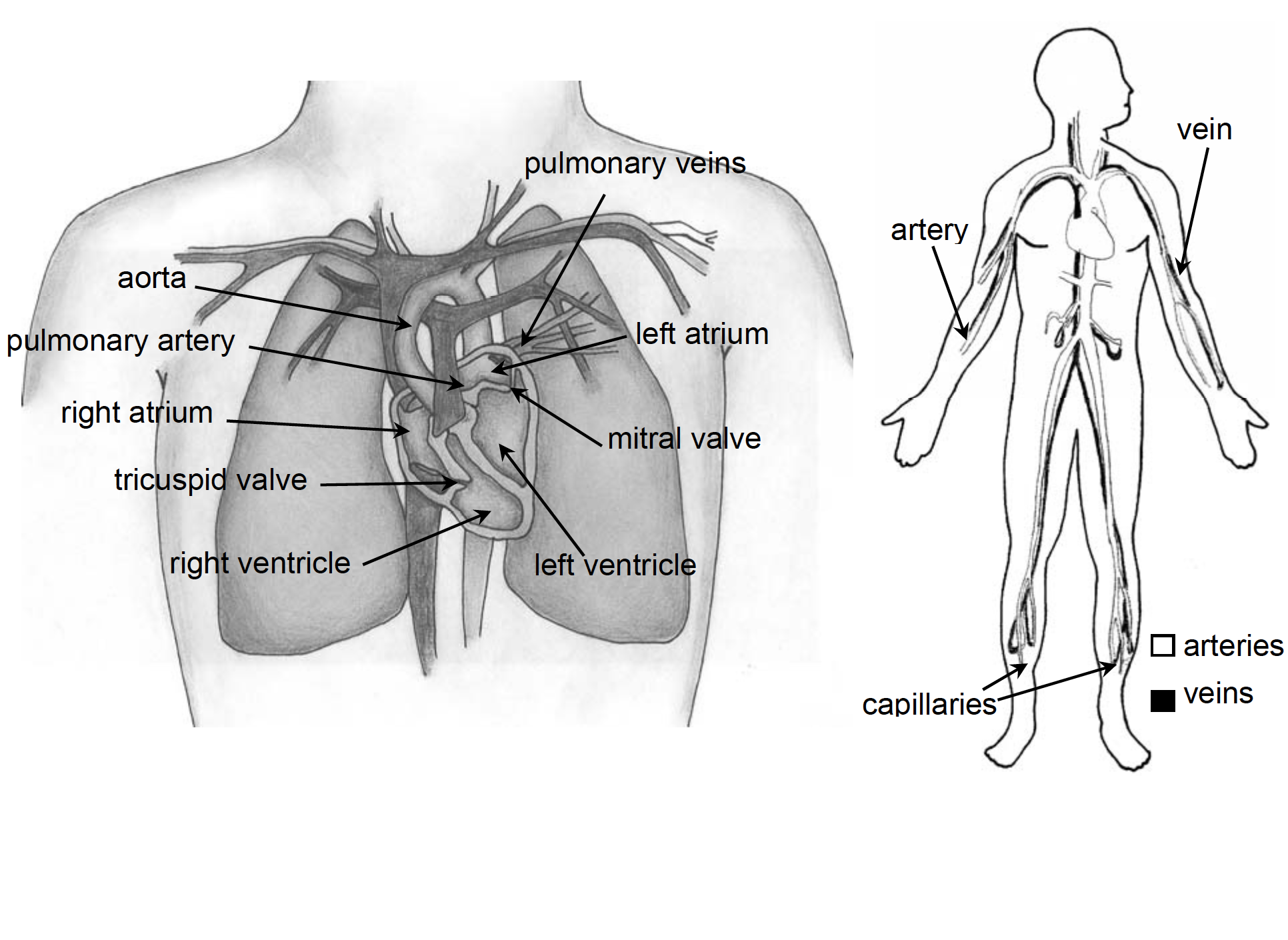 Once in the body, blood travels through a series of arteries into smaller vessels called arterioles and then to still smaller vessels called capillaries. In the capillaries, different components such as nutrients and
  oxygen move into the tissues as needed in exchange for waste products such as carbon dioxide. Thus, it is at the level of the capillaries that oxygen leaves the blood and carbon dioxide enters the blood. The deoxygenated blood then flows from the network of capillaries into a series of veins before returning to the heart. It is a common misconception that all arteries carry oxygenated blood and all veins carry deoxygenated blood. As can be seen from the steps above, however, the pulmonary artery and vein prove this to be untrue. Instead, it is more accurate to say that arteries carry blood away from the heart, and veins carry blood toward the heart.
The respiratory system
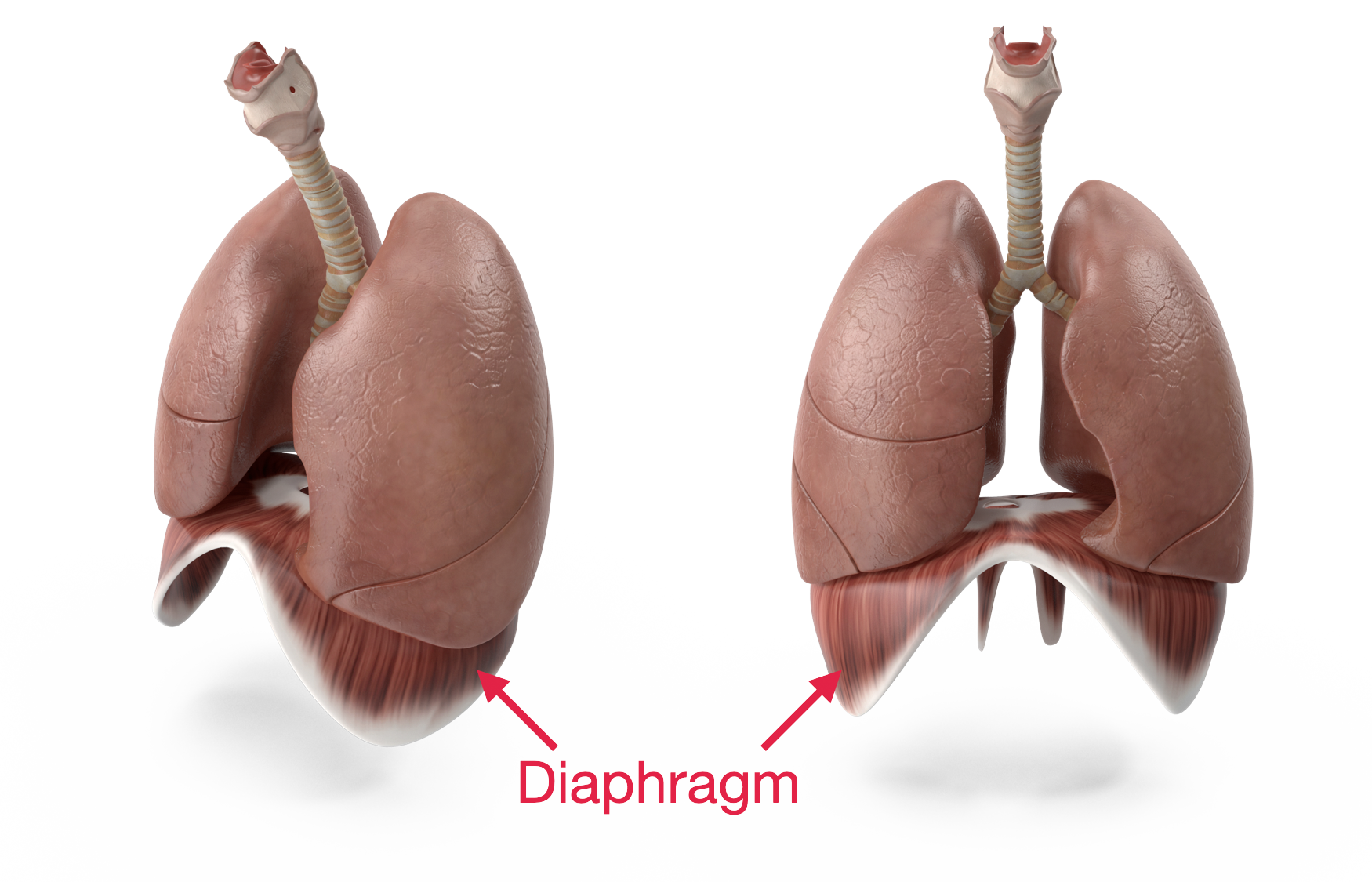
The respiratory system is responsible for supplying O2 to the blood and removing CO2. It consists of the nasal passages, throat, trachea, bronchi, bronchioles, alveoli (singular = alveolus), and diaphragm. When a person inhales, the diaphragm contracts and the chest expands, causing the lungs to expand and draw in air. As air passes through the nose and nasal passages, any particulate matter is filtered out and the air is warmed and humidified. The air then passes through the throat into the trachea, where it is delivered into the lungs through the bronchi tubes. After passing through a series of bronchi to bronchioles, tubes of smaller diameter, it finally enters the alveoli, or air sacs.
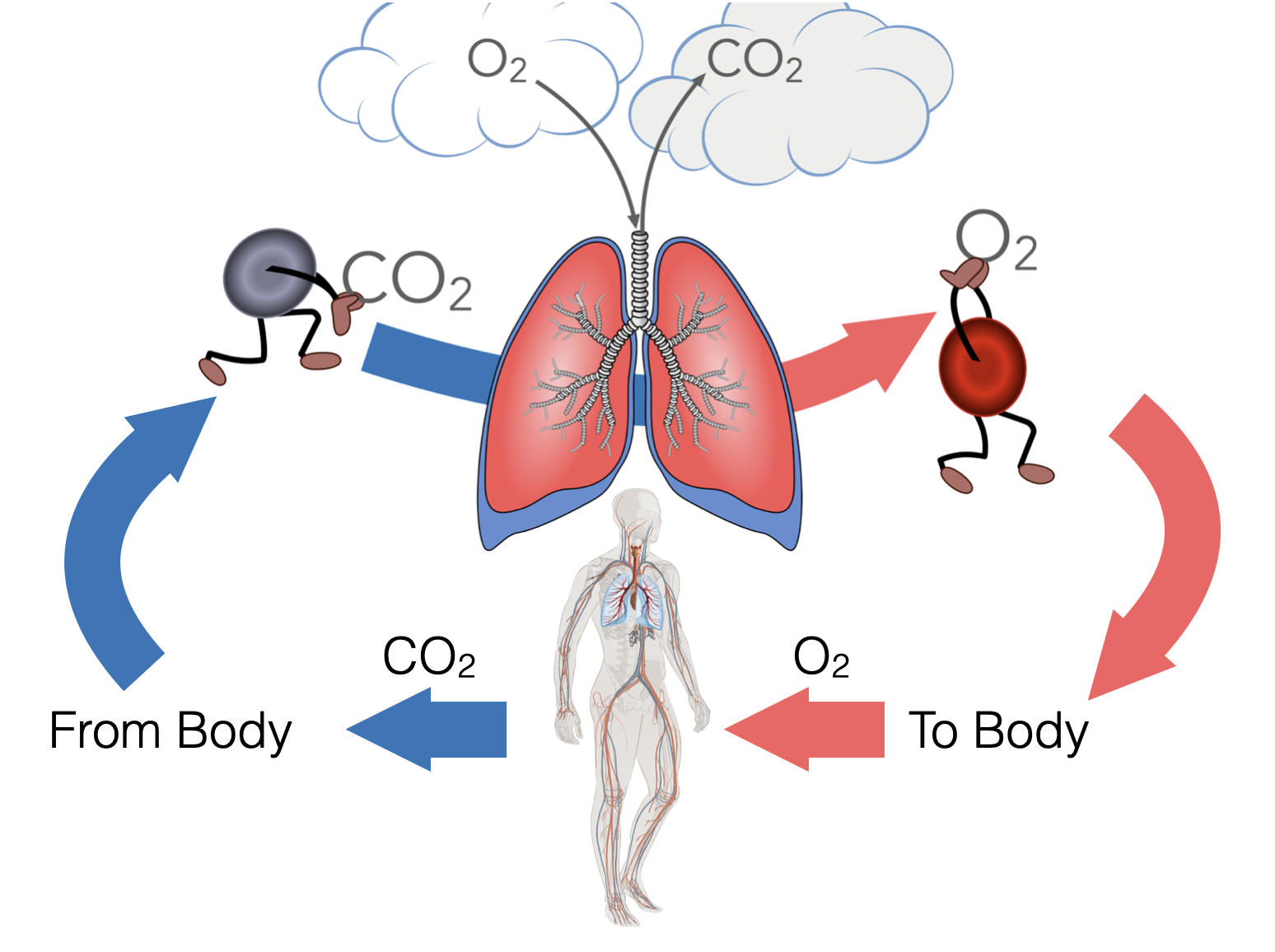
The alveoli are surrounded by networks of capillaries, which bring blood in close contact with the alveoli so that CO2 can be exchanged for O2. The diaphragm and chest then relax and the lungs recoil due to natural elasticity. As the lungs recoil, they force the CO2-laden air out of the lungs, resulting in the exhalation of air. This process of inhalation, oxygen/carbon dioxide exchange, and exhalation is called respiration. In Investigation One, students will begin their examination of exercise and physical fitness by exploring the cardiovascular and respiratory systems and how their interdependence is important for physical fitness.
Examining Exercise: Investigation 1 - Mathematics Concepts
Prelab
- Counting
- Time in seconds and minutes
- Multiplication
- Calculate rate
Lab
- Sequential order
- Calculate rate
- Counting
- Time in seconds and minutes
- Multiplication
- Data table
Postlab
- Data table
- Counting
- Time in seconds and minutes
- Patterns/Trends
- Multiplication
- Compare (non)measurable characteristics
- Greater than, Less than, Equal to
Examining Exercise: Investigation 1 - Procedural Tools

Examining Exercise: Investigation 1 - Cognitive Tools

Examining Exercise:
Investigation 1 Quiz

