
Teacher Portal:
Exploring Electricity
Investigation 5 – Lab
 BE PREPARED
Supplies and Equipment:
Class Materials:
- 1 roll of masking tape
- electrical wire
Pair Materials:
- 1 D cell battery holder
- 1 D cell battery
- 2 small light bulb holders
- 2 small light bulbs
- 2 pieces of electrical wire, 20 cm in length
- 4 pieces of masking tape, 1-2 cm in length
Individual Materials:
- 1 Student Data Record
Teacher Preparation:
- Cut enough wire pieces to distribute to each pair. Strip approximately 2 cm of insulation from both ends of the wire. Wire pieces cut for previous investigations can be reused for this investigation.
- Place the materials each pair will need at a central distribution point.
- Separate the class into cooperative pairs.
Instruction:
Direct each student group to obtain the following necessary materials from the distribution point: one (1) D cell battery holder, one (1) D cell battery, two (2) small light bulb holders, two (2) small light bulbs, and two (2) 20 cm lengths of electrical wire. Students should cut four (4) pieces of masking tape from the roll.
GET FOCUSED
Investigation Five turns students’ focus on two different types of electrical circuits – series circuits and parallel circuits.
INVESTIGATE
Trial 1
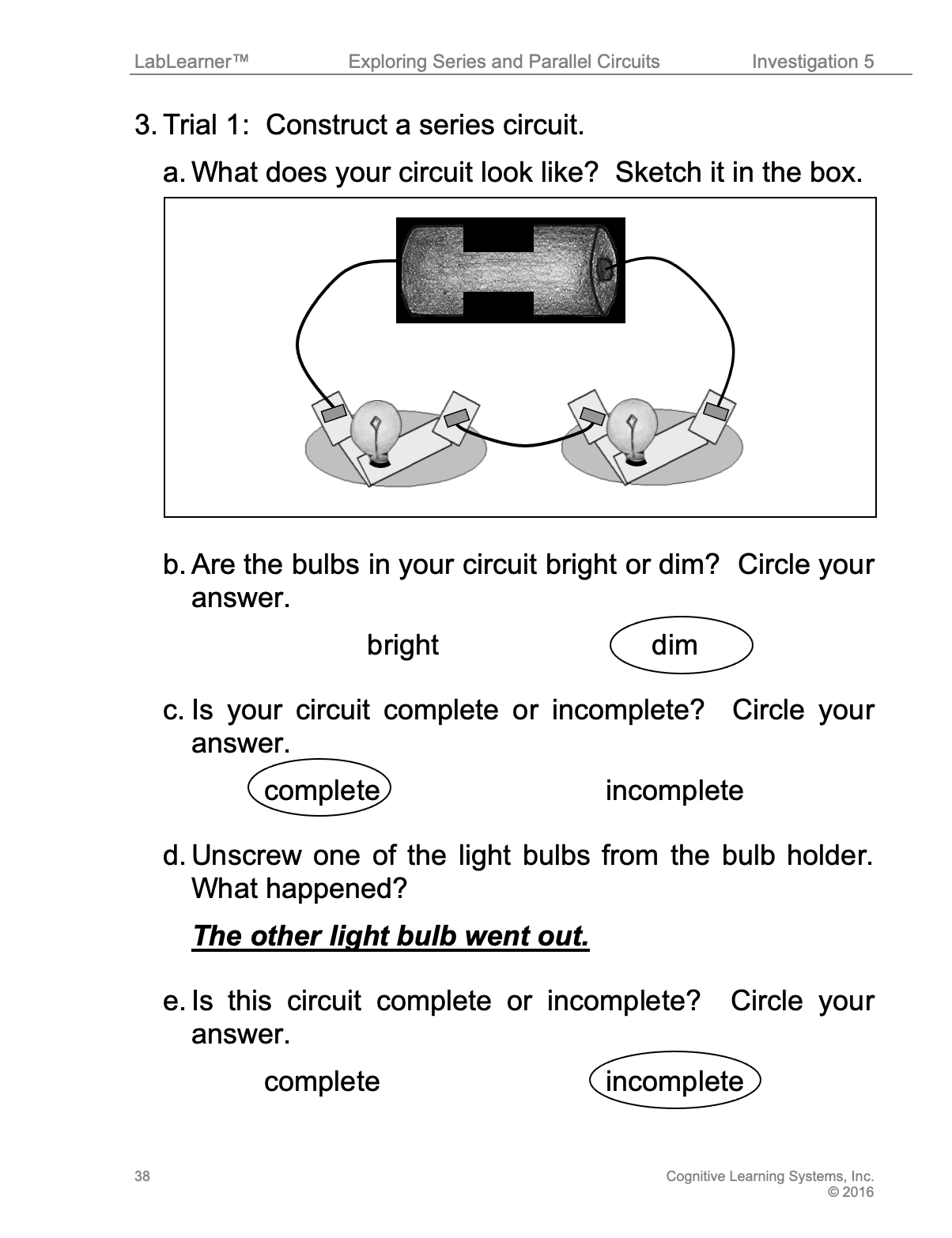
1. Students will begin the Investigation by constructing a series circuit. They will test how it functions by unscrewing the light bulbs and observing how this affects the rest of the circuit. Students should observe that the bulbs are connected in series with only one path for electrical current. Therefore, any interruption in the path, including the removal of a light bulb, interferes with current flow and results in an incomplete circuit. Students will answer several questions that are the main focus of this experiment.
What is the path electrons follow in a series circuit?
What happens to a series circuit when one of the light bulbs is removed?
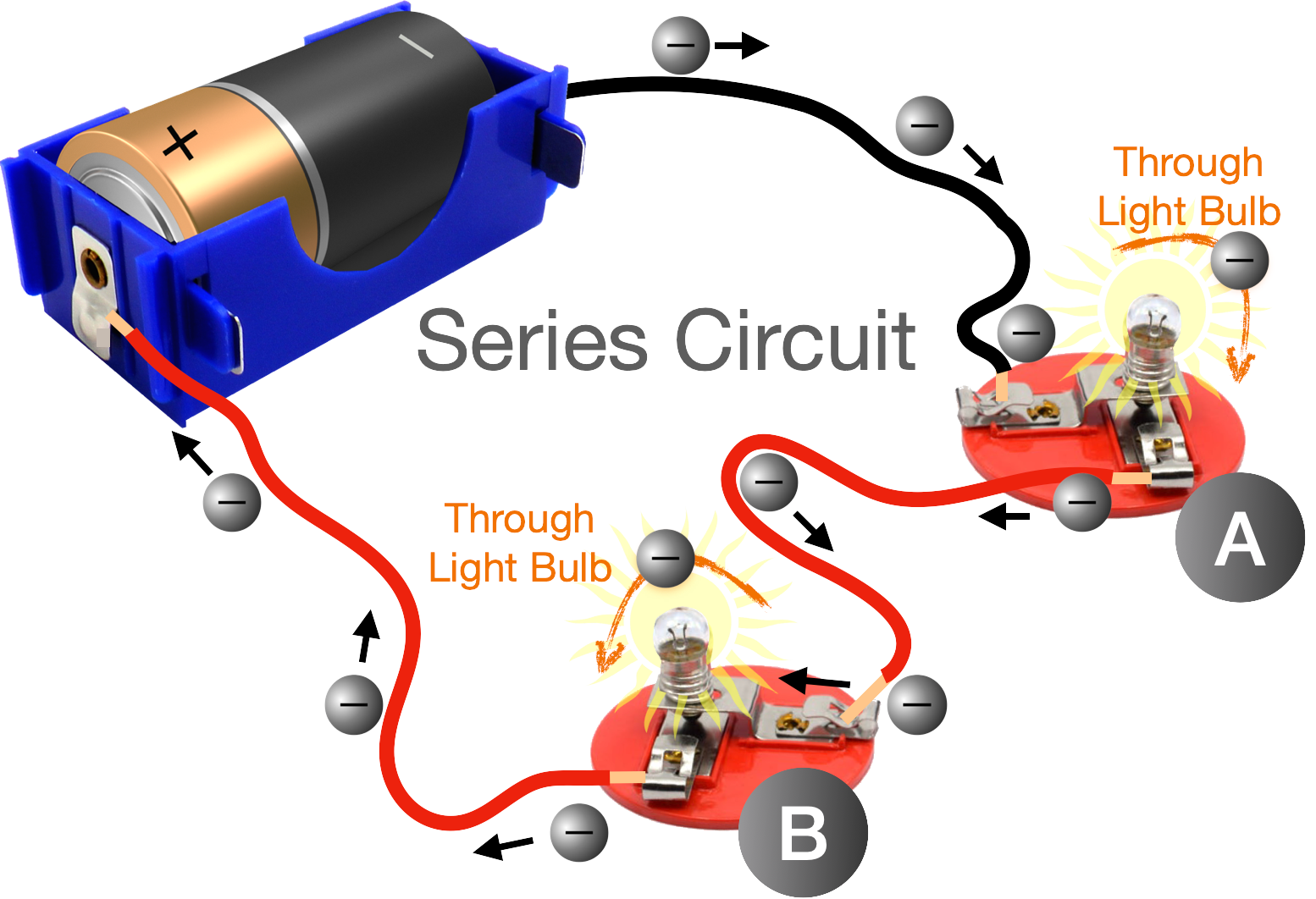
Use the following directions to guide student pairs through the construction of their series circuit.
a. Using the masking tape, label one bulb holder “A” and the second bulb holder “B.”
b. Label one of the free wires “1” and the other “2.”
c. Insert the battery into the battery holder, matching up the positive (+) and negative (-) ends of the battery to the positive and negative signs on the holder.
d. Connect the red wire attached to the battery holder to the clip on the bulb holder “A.”
e. Connect wire “1” to the clip of bulb holder “A.”
f. Connect the other end of wire “1” to the clip on bulb holder “B.”
g. Connect the black wire of the battery holder to the clip on bulb holder “B.”
h. Screw both light bulbs into the bulb holders.
i. Ask students: What does your circuit look like? Is this a series or parallel circuit? Student answers will vary.
j. After students have drawn their sketches, pose the following two questions:
- Ask students: Are the bulbs in your circuit bright or dim? Tell students to record their answers in Problem 3b of their Student Data Record.
- Is this a complete or incomplete circuit? Tell students to record their answers in Problem 3c.
k. Instruct students to unscrew one of the light bulbs from its holder. Ask them:
- Ask students: What happened? Tell them to record their answer in Problem 3d.
- Ask students: Is this a complete or incomplete circuit? Tell students to record their answers in Problem 3e.
l. Before students perform the next part of the Investigation, direct them to unscrew the two light bulbs and disconnect the wires. They should keep the battery in the battery holder.
Trial 2
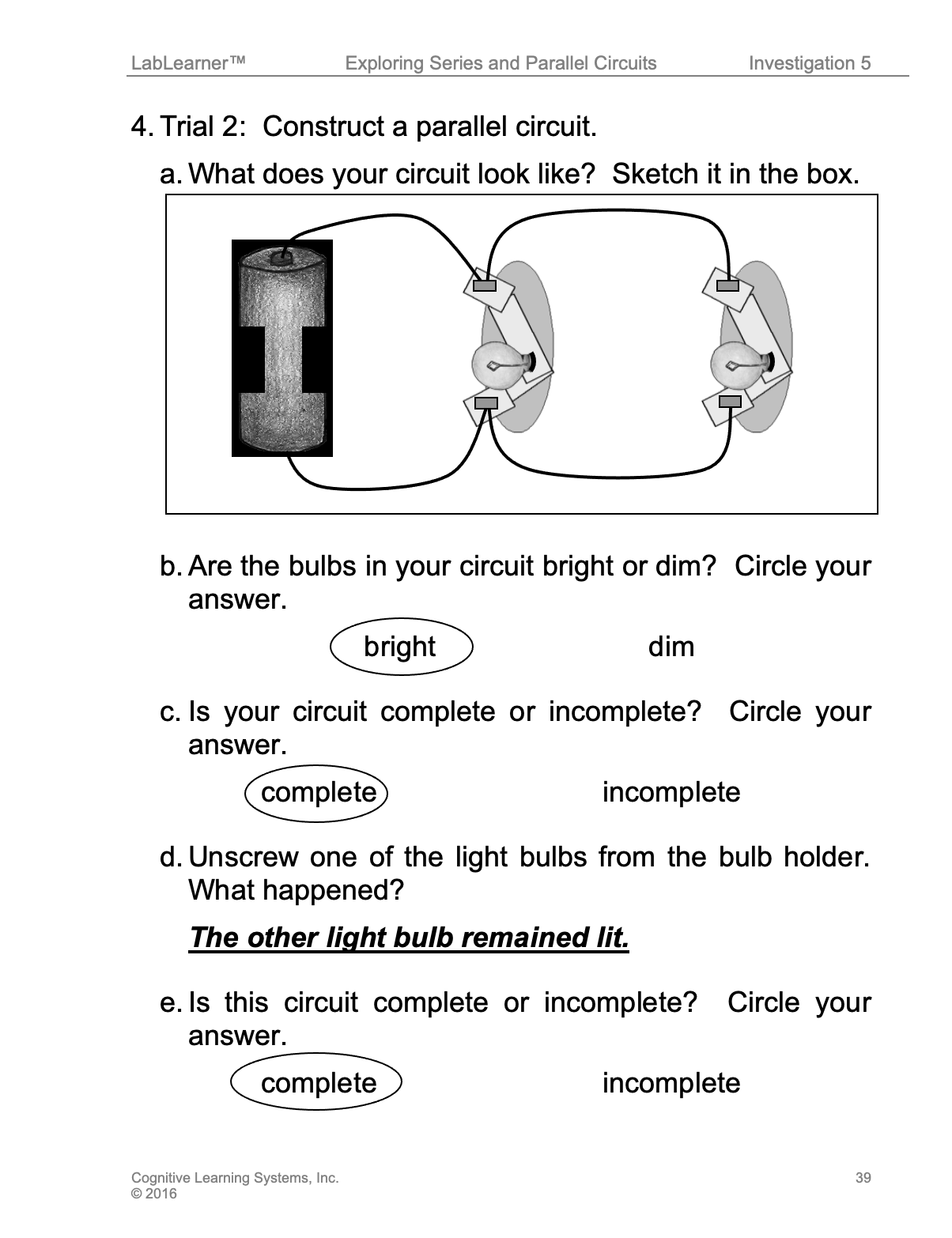
2. During this Trial, students will construct a parallel circuit. They will test how it functions by unscrewing the light bulbs and observing how this affects the rest of the circuit. Students should observe that, because the bulbs are connected in parallel, there is more than one path for electrical current. As a result, if one path 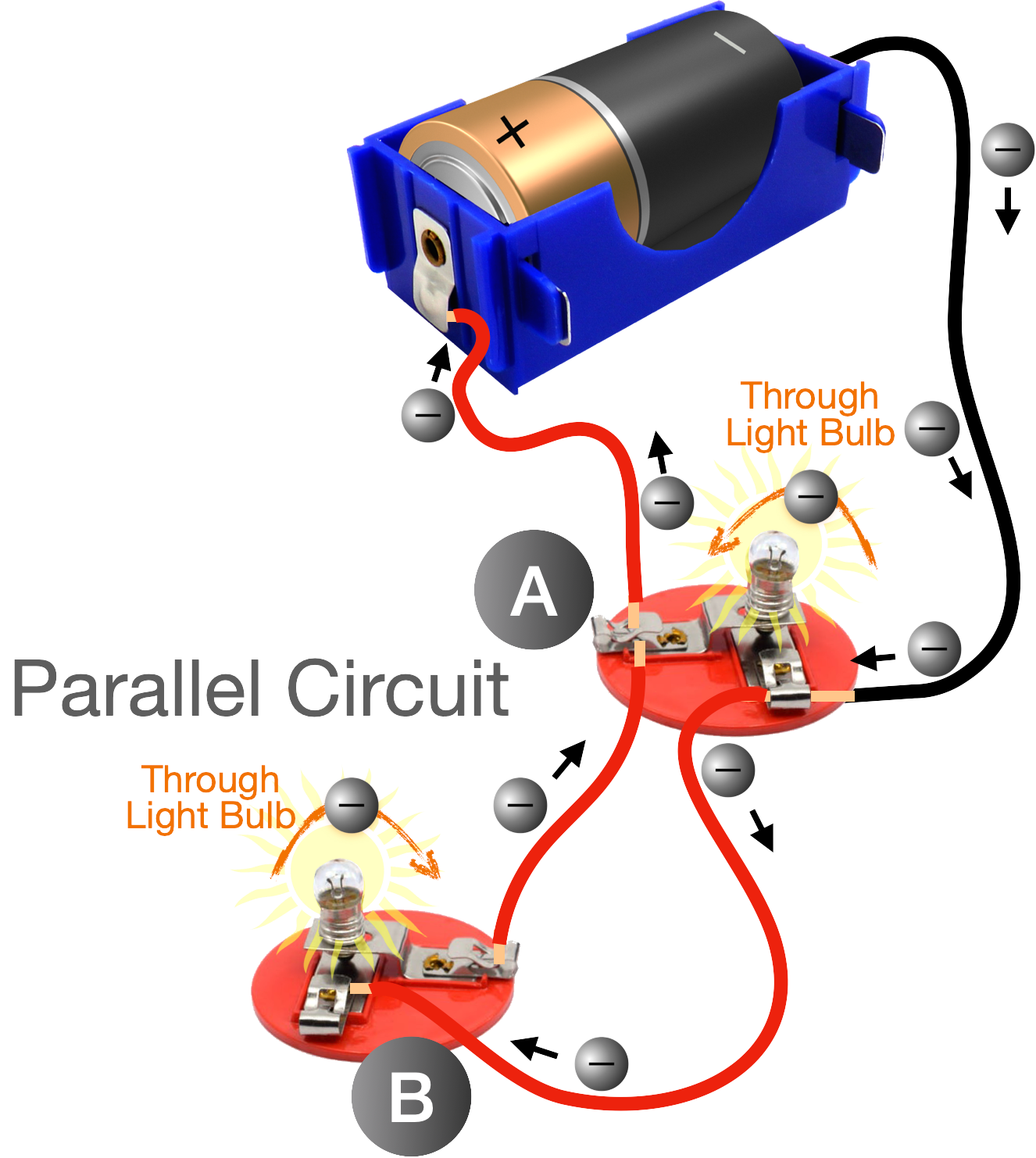 is interrupted, an electrical current can continue to flow through another path. Therefore if one bulb is removed, the other bulbs continue to be part of a complete circuit and remain lit. Students will answer questions that are the main focus of this experiment.
What is the path electrons follow in a parallel circuit?
What happens to a parallel circuit when one of the light bulbs is removed?
Use the following directions to guide student pairs through the construction of their parallel circuit.
a. Connect both wires of the battery holder to bulb holder “A.”
b. Use wires “1” and “2” to connect the bulb holder “B” to bulb holder “A.”
c. Screw both light bulbs into the bulb holders.
d. Ask students: What does your circuit look like? Is it a series or parallel circuit? Student answers may vary.
e. After students have recorded and labeled their sketches, pose the following questions:
- Are the bulbs in your circuit bright or dim? Tell students to record their answers in problem 4b of their Scientist Data Record.
- Is this a complete or incomplete circuit? Tell students to record their answers in problem 4c.
f. Instruct students to unscrew one of the light bulbs from its holder. Ask them:
- What happened? Tell them to record their answer in problem 4d.
- Is this a complete or incomplete circuit? Tell students to record their answers in problem 4e.
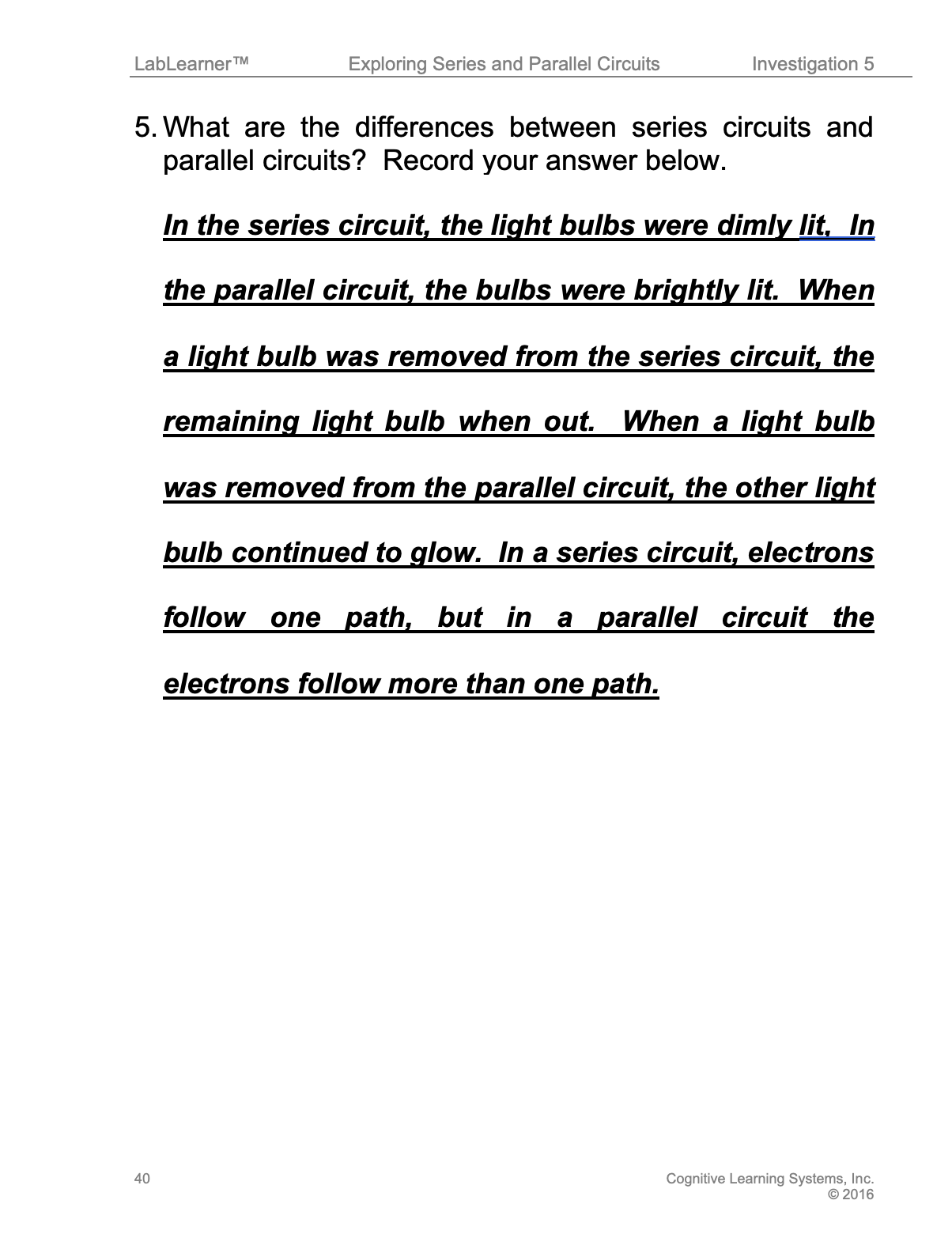
3. Students will compare the series and parallel circuits and determine the differences between the two types of simple circuits. They will use the observations they recorded after constructing each circuit in Trials 1 and 2 and will have the opportunity to construct and test each of the circuits again.
Pose the following question to students and allow time for students to formulate and record their answers. Assist students as necessary in constructing the series and parallel circuit for additional testing.
What are the differences between series circuits and parallel circuits?
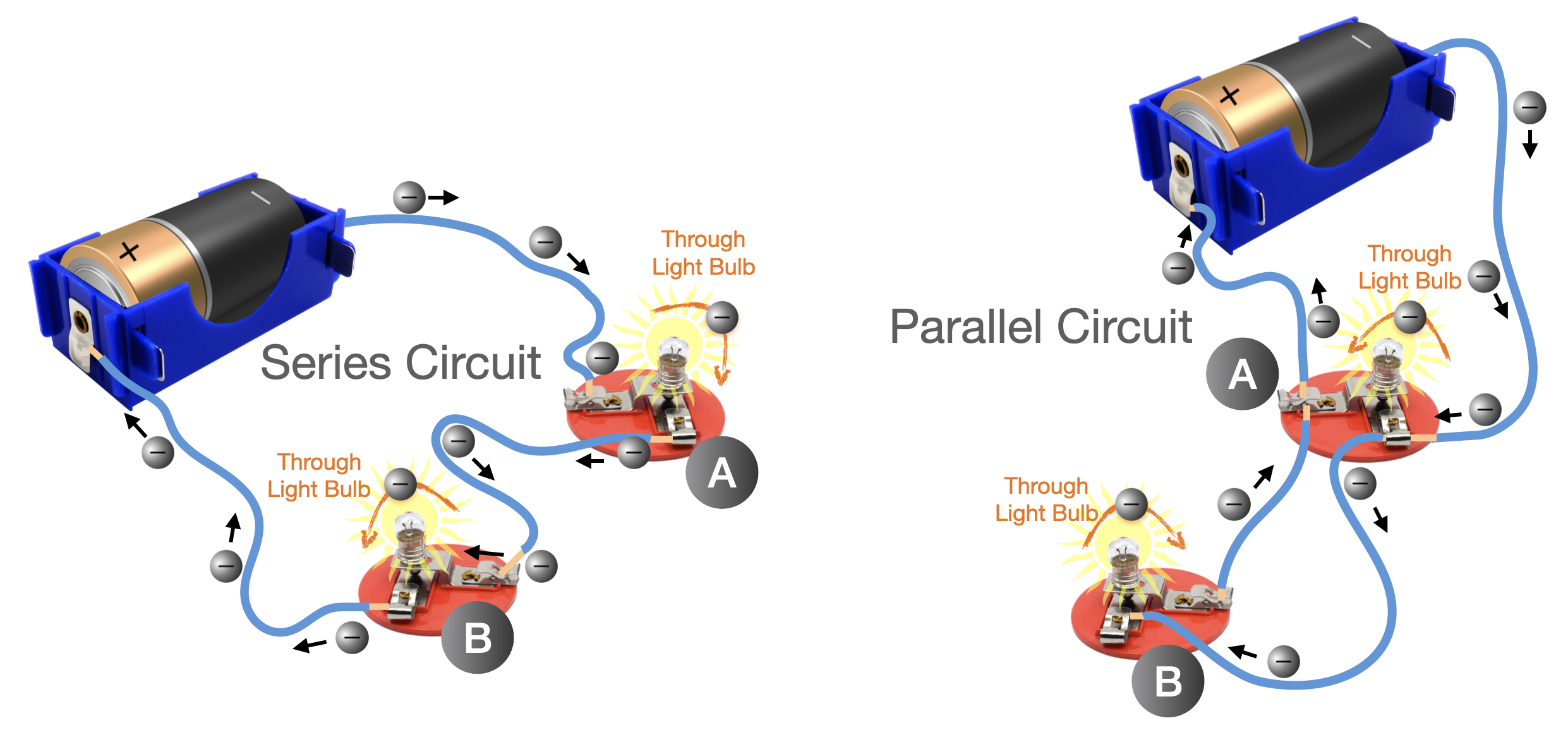
4. Optional Extension: If time permits, students may combine with another pair to further explore constructing larger series and parallel circuits.
KEYS

CLEAN UP
Let students know your expectations for clean-up. Ask them to clean up.