
Teacher Portal:
Exploring Electricity
Investigation 4 – Lab
 BE PREPARED
Supplies and Equipment:
Pair Materials:
- 1 piece of wire, 20 cm in length
- 1 D cell battery
- 1 D cell battery holder
- 1 light bulb, mini, 1.5 volt
- 1 small light bulb holder
- 1 metal cube
- 1 woodblock
- 1 small (4g) bear
- 1 pencil, sharpened
- 1 paper clip
- 1 cotton ball
- 1 glass stir rod
- 1 lab scoop
- 1 moon ball
Individual Materials:
- 1 Student Data Record
Teacher Preparation:
- Place the materials each pair will need at a central distribution point.
- Separate the class into cooperative pairs.
Instruction:
1. Direct each student pair to obtain the following necessary materials from the distribution point: one (1) 20 cm piece of wire, one (1) D cell battery, one (1) D cell battery holder, one (1) mini light bulb, one (1) small light bulb holder, one (1) moon ball, one (1) metal cube, one (1) small (4 g) bear, one (1) pencil, one (1) paper clip, one (1) cotton ball, one (1) glass stir rod, one (1) woodblock, and one (1) lab scoop.
2. Before starting their experiments, students will assemble a simple circuit that will be used to test whether a material is a conductor or an insulator of electricity.
Explain to students that they will use a battery holder and a bulb holder as part of their construction of a simple circuit to make testing their materials easier. Use the following instructions to guide students as they assemble their circuit:
a. Place a D cell battery in the battery holder. The positive (+) and negative (-) ends of the battery should match the “+” and “-” signs in the holder.
b. Screw the light bulb into the light bulb holder.
c. Connect one of the wires leading from the battery holder to the light bulb holder by using the directions that follow.
-
-
- Press down on one of the metal tabs on the light bulb holder (Figure A, below).
- Thread the wire through the opening that is visible above the metal tab (Figure B).
- Release the metal tab to hold the wire firmly in place (Figure C).
-
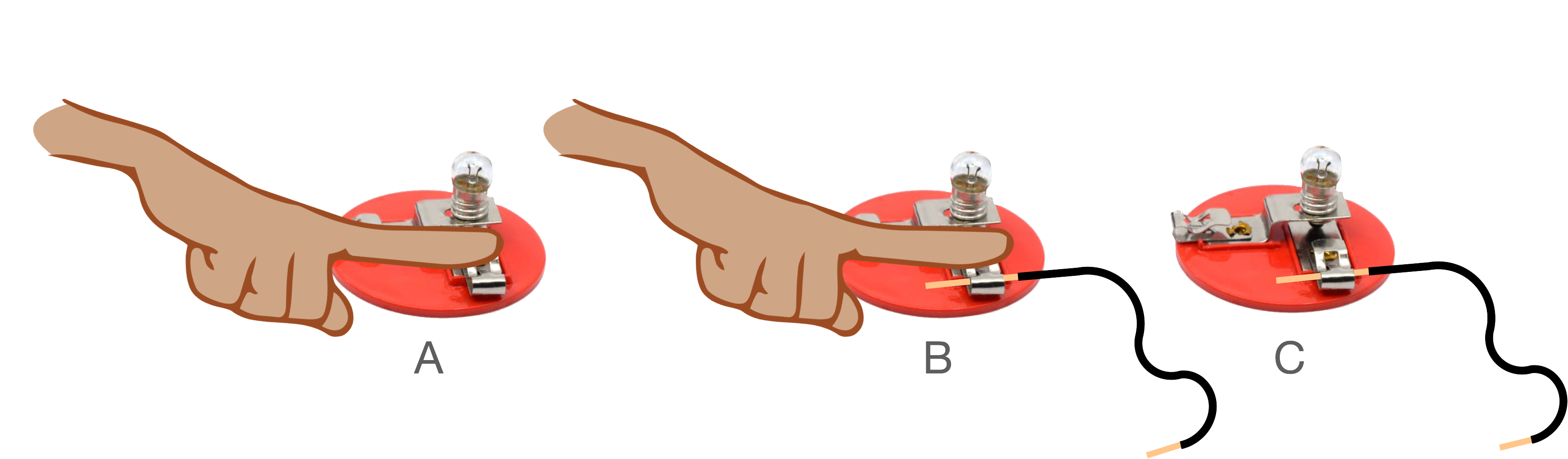
d. Connect the other wire leading from the battery holder to the light bulb holder using the same process shown above.
e. Ask students: Is the simple circuit properly constructed? Did the light bulb light up Students should indicate that the bulb did illuminate, therefore the circuit is complete.
f. Unscrew the light bulb from the holder.
g. Disconnect one of the wires running between the battery holder and the light bulb holder.
h. Connect one end of the third wire to the light bulb holder (Figure D, below).
i. Screw the light bulb into the holder (Figure E).
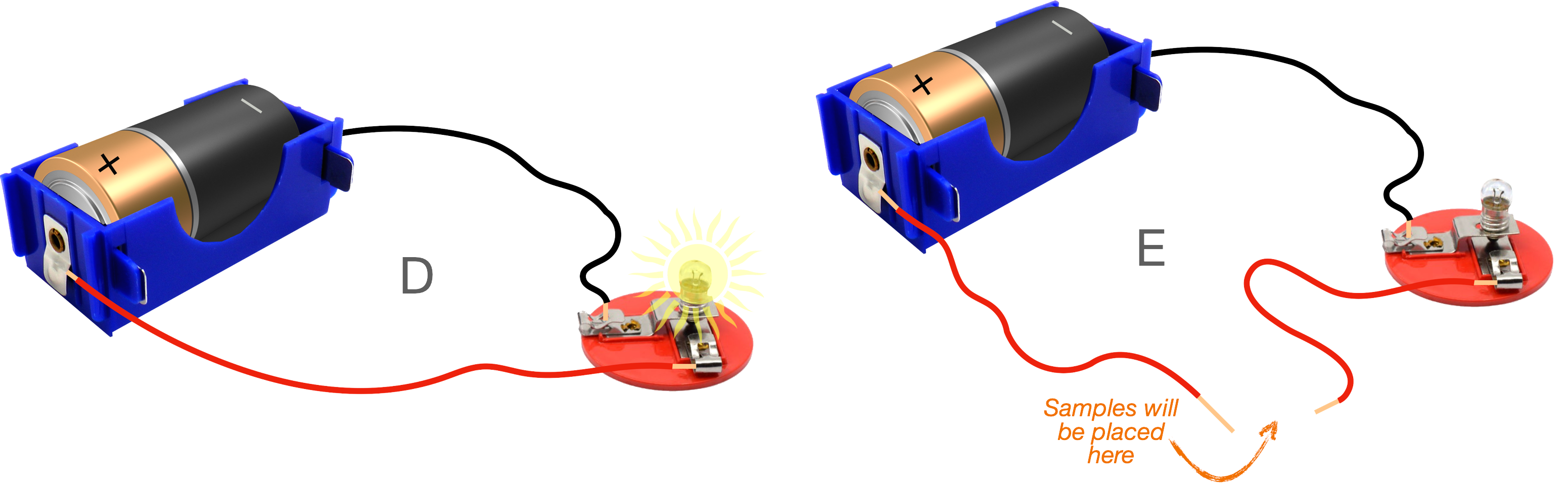
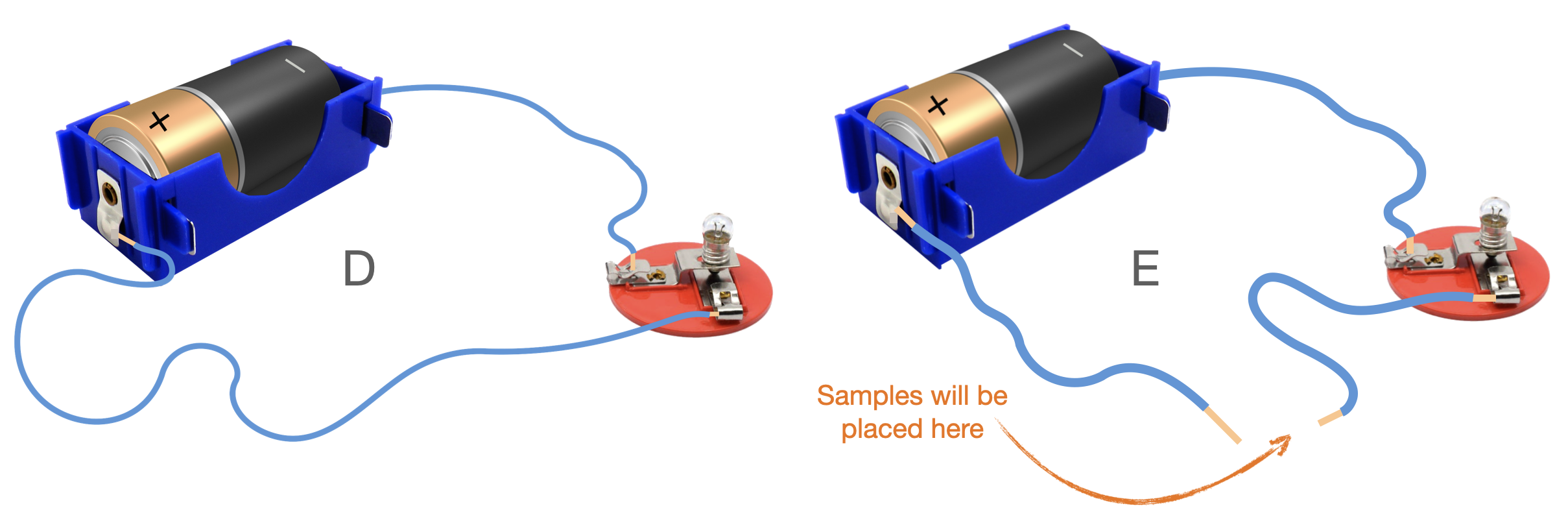
j. Explain to students that in Trial 1 they will complete the circuit by placing the materials they will test between the two wires.
GET FOCUSED
Investigation Three turns student focus to conductors and insulators of electrical current.
INVESTIGATE
Trial 1
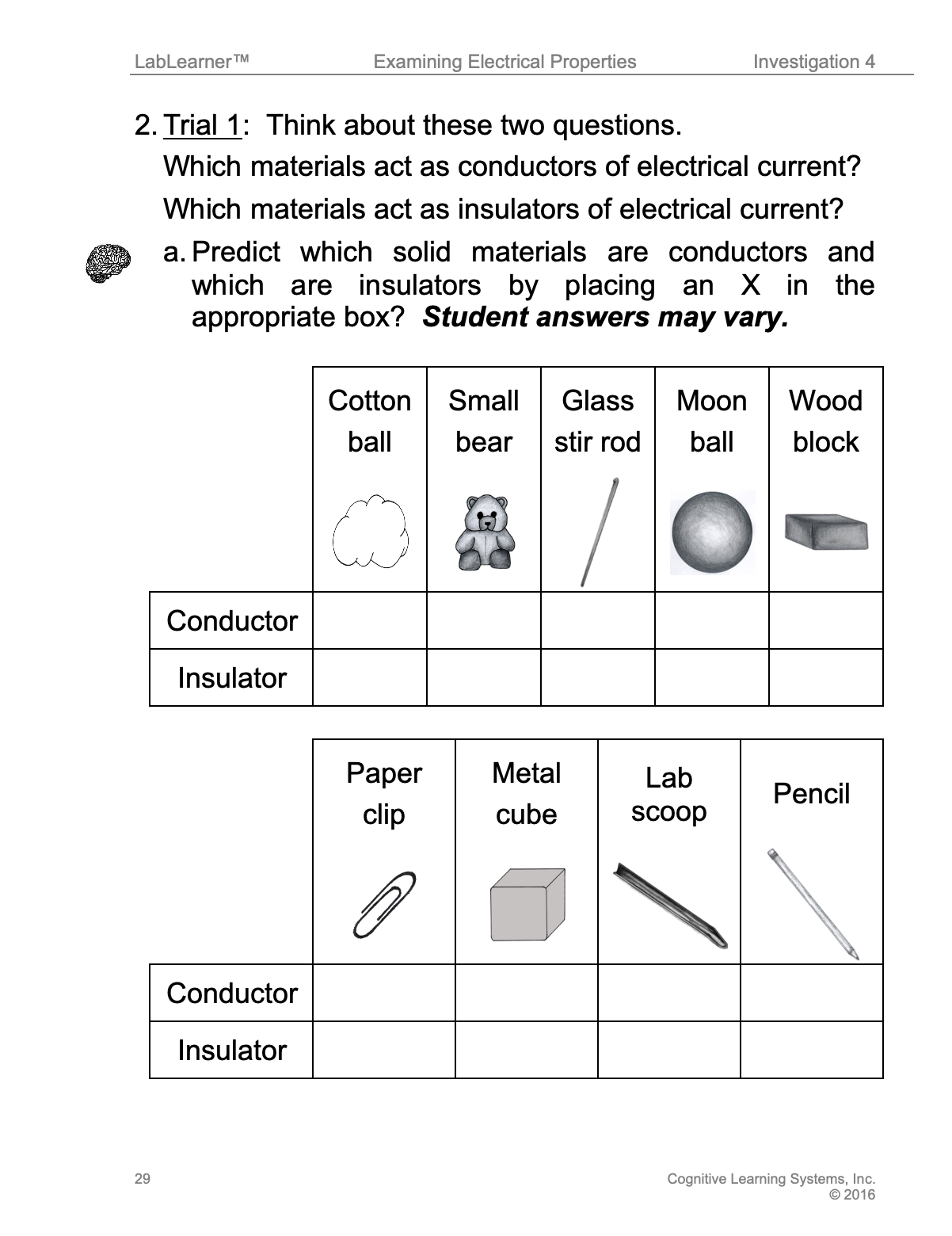
1. During this part of the investigation, students will test several different types of solid materials to observe whether they are conductors or insulators of electricity. Before they conduct the tests, they will predict whether each material is a conductor or an insulator. They will also predict how to use the simple circuit they constructed in order to conduct the testing of the materials. Students will answer several questions that focus their attention on the main concepts in this investigation.
Which materials act as conductors of electrical current?
Which materials act as insulators of electrical current?
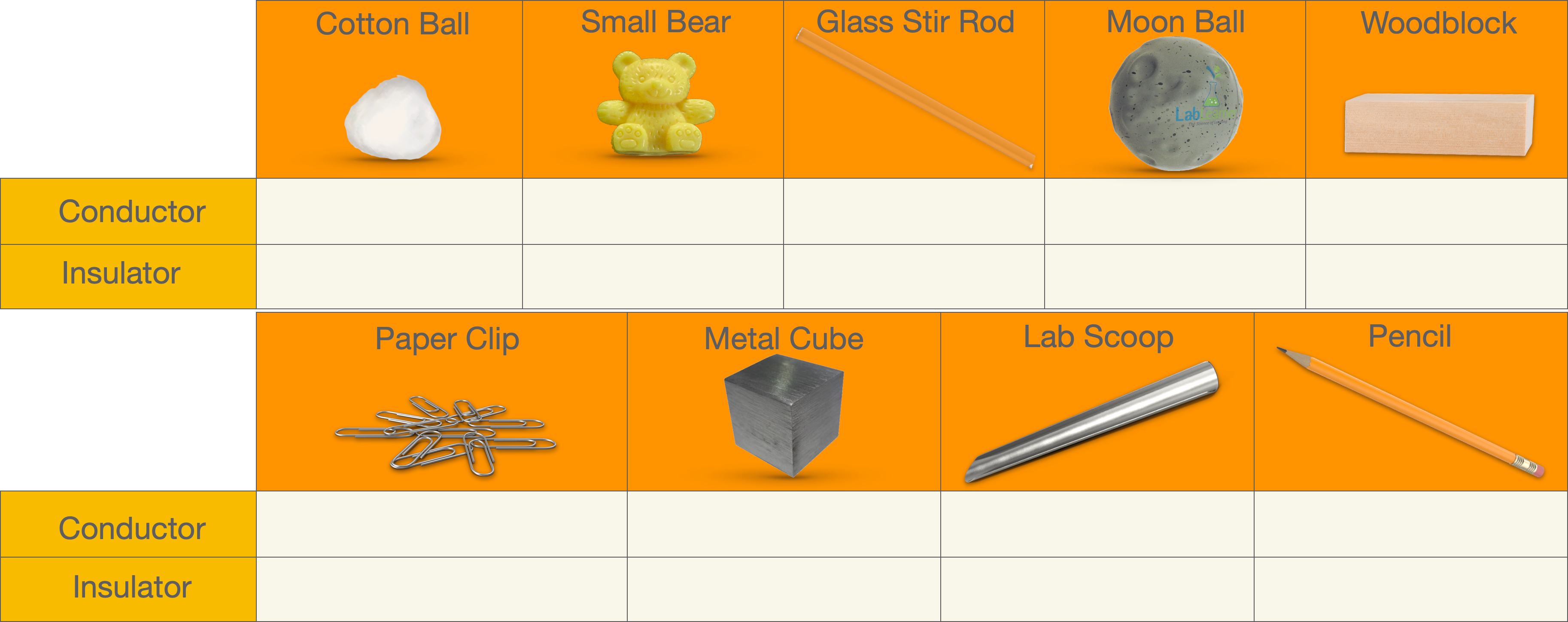
a. Explain to students that they will use the circuit they have constructed to test each of the following nine materials: cotton ball, small bear, glass stir rod, moon ball, woodblock, metal cube, lab scoop, paper clip, and pencil.
b. Ask students: How will you know whether a material is a conductor or an insulator of electrical current?
-
-
-
-
- Direct students to study their circuits and think about how they can be used to test the materials.
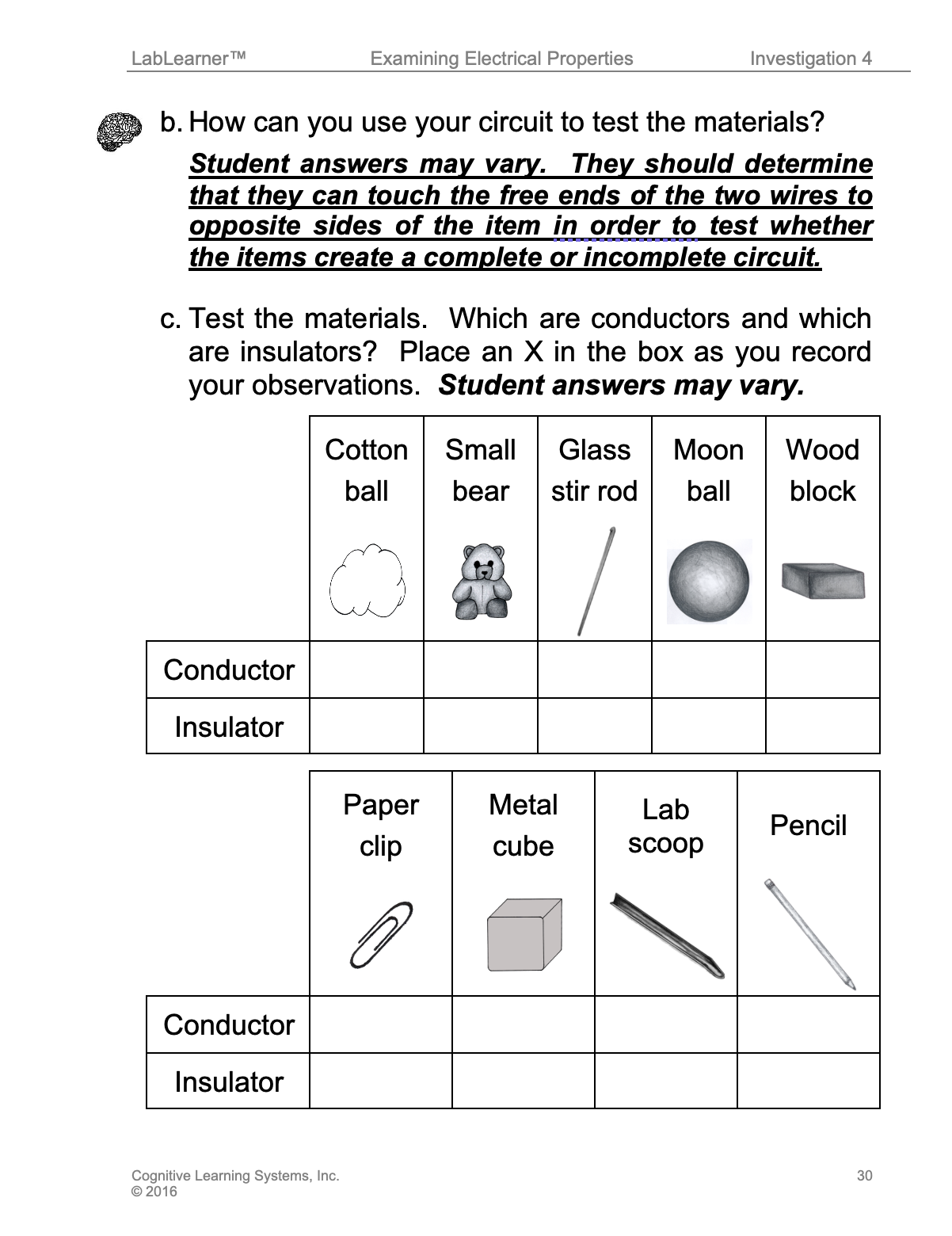
- Ask students: How can you use your circuit to test the materials? Students should indicate that when an object is placed between the two unconnected wires, the light bulb will light up if a material is a conductor but will not light up if the material is an insulator.
- Tell students to record the process they will use in problem 2b of their Student Data Record.
-
-
-
c. Before permitting students to begin, model the process students will use to test each material.
-
-
-
-
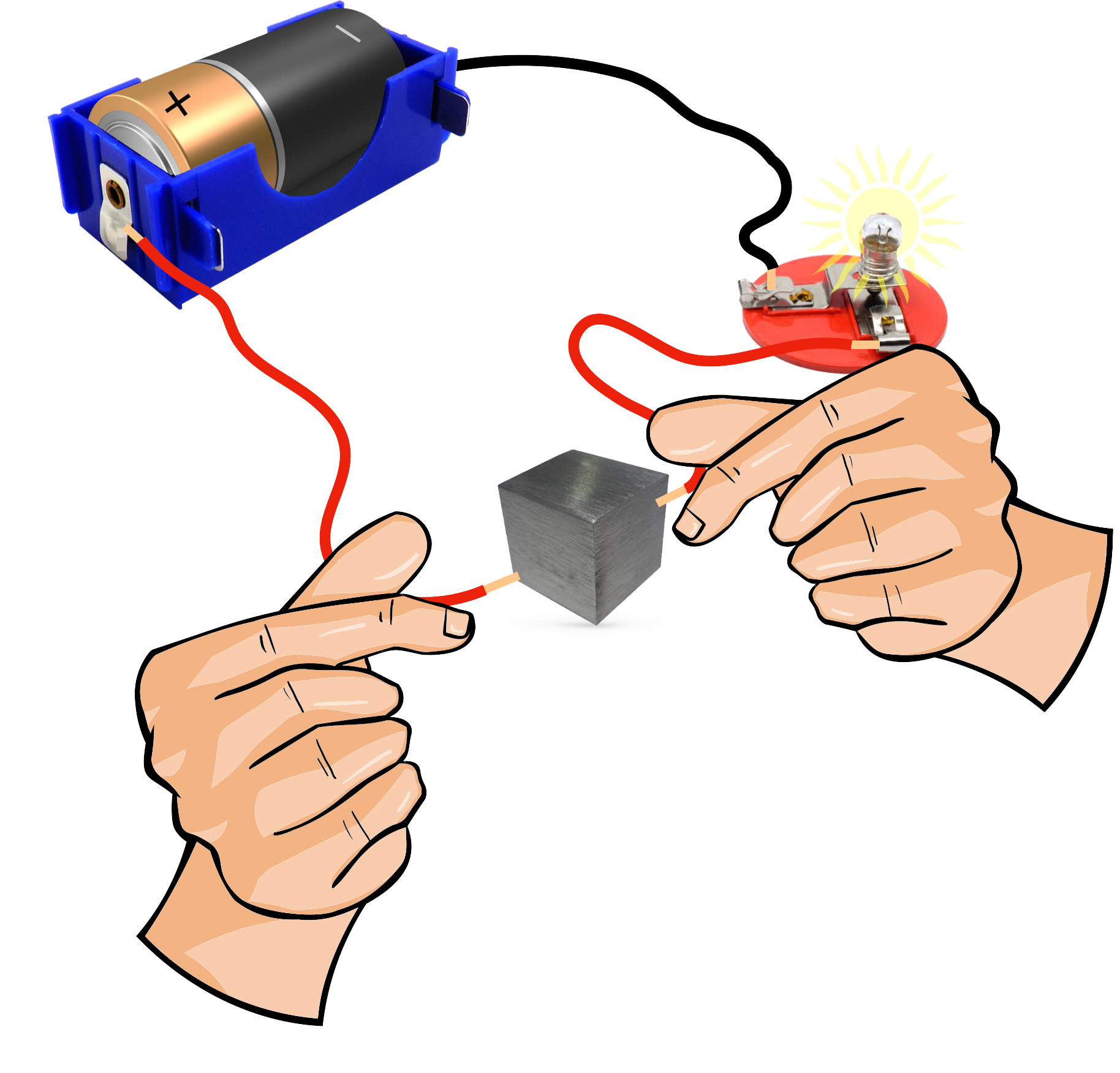
- Select the woodblock and place it between the free end of the wire from the battery holder and the free end of the wire from the light bulb holder. Encourage students to do the same with their circuits.
- Instruct students to touch both of the exposed wire ends to opposite sides of the item they are testing, as shown below
- Ask students: Did the light bulb light up? Was the material a conductor or insulator of electrical current?
- Explain that the woodblock acted as an insulator of electrical current. It did not allow electrical current to pass from one wire to the next. As a result, electrons did not flow through the circuit and the bulb did not illuminate.
- Direct students to record their answers in the Tables in Problem 2c in their Student Data Records by placing a checkmark in the appropriate box.
- Direct students to test the remaining eight materials using the same process. They should record their observations in the tables in Problem 2c.
-
-
-
Trial 2
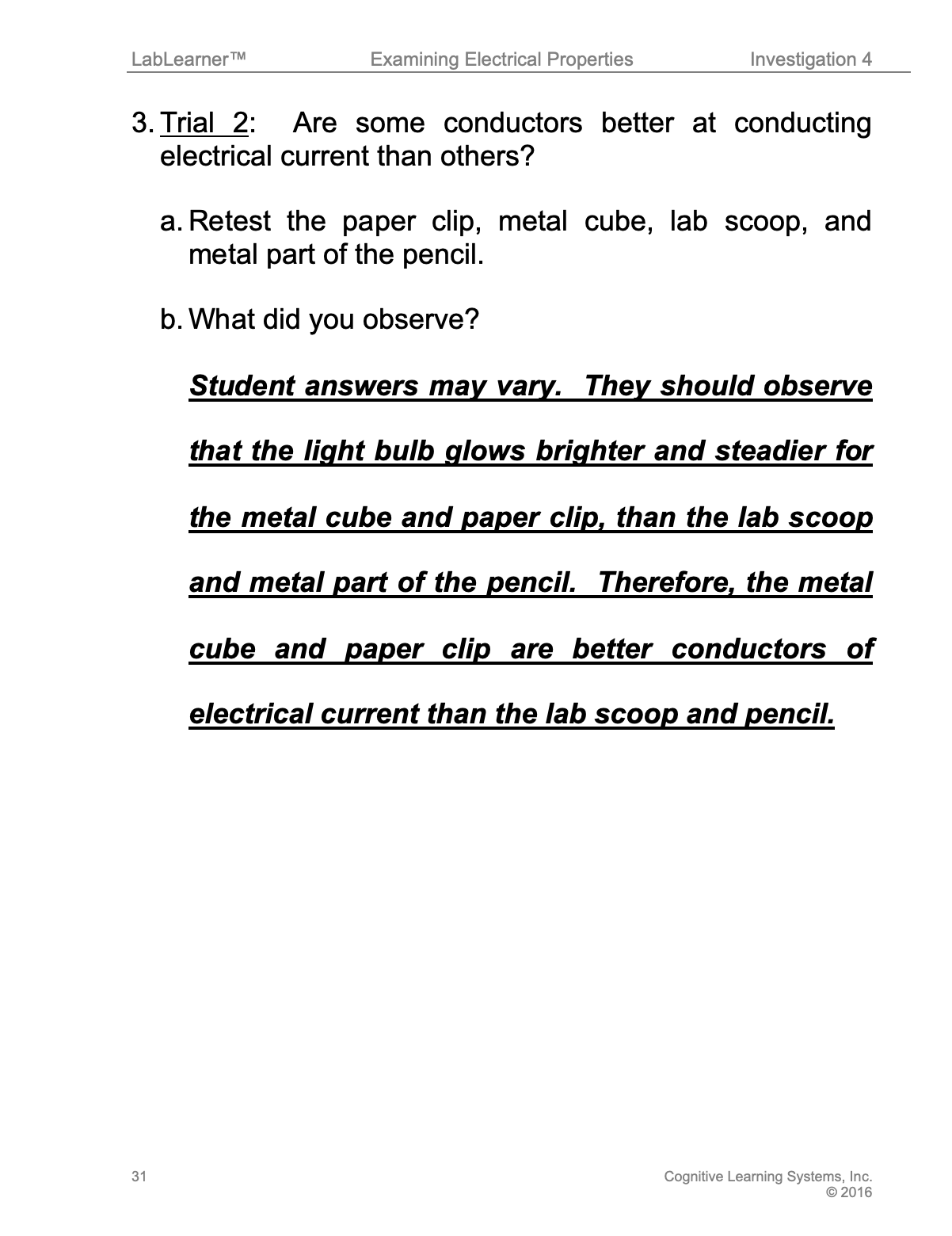
2. Trial 2 is designed as an opportunity for students to compare differences in objects that conduct electrical current. Students will repeat testing the objects they identified as conductors of electrical current in Trial 1: the paper clip, metal cube, lab scoop, and pencil. As they conduct their tests, they should closely observe the brightness and steadiness of the bulb’s illumination.
Conductors allow electrons to flow through them at different rates, depending upon the molecular structure of the material. The better the conductor, the faster electrons will flow through the material and the brighter and steadier the light bulb will glow. The electrons in a poor conductor will flow at a slower rate through the material, and the light bulb’s glow will be affected accordingly. Students will answer the following question as they complete this trial.
Are some conductors better than others in conducting electrical current?
a. Tell students to repeat the testing process using the conductors they identified during Trial 1: the paper clip, metal cube, lab scoop, and pencil.
b. Instruct students to closely observe the glow of the light bulb as they test each item in order to determine whether some of the conductors are better than others in conducting electrical current. As students observe each test they should look for differences in the glow of the bulb. A brighter glow indicates a better conductor of electrical current.
c. Ask students to record their observations in Problem 3b of their Student Data Record.
Trial 3
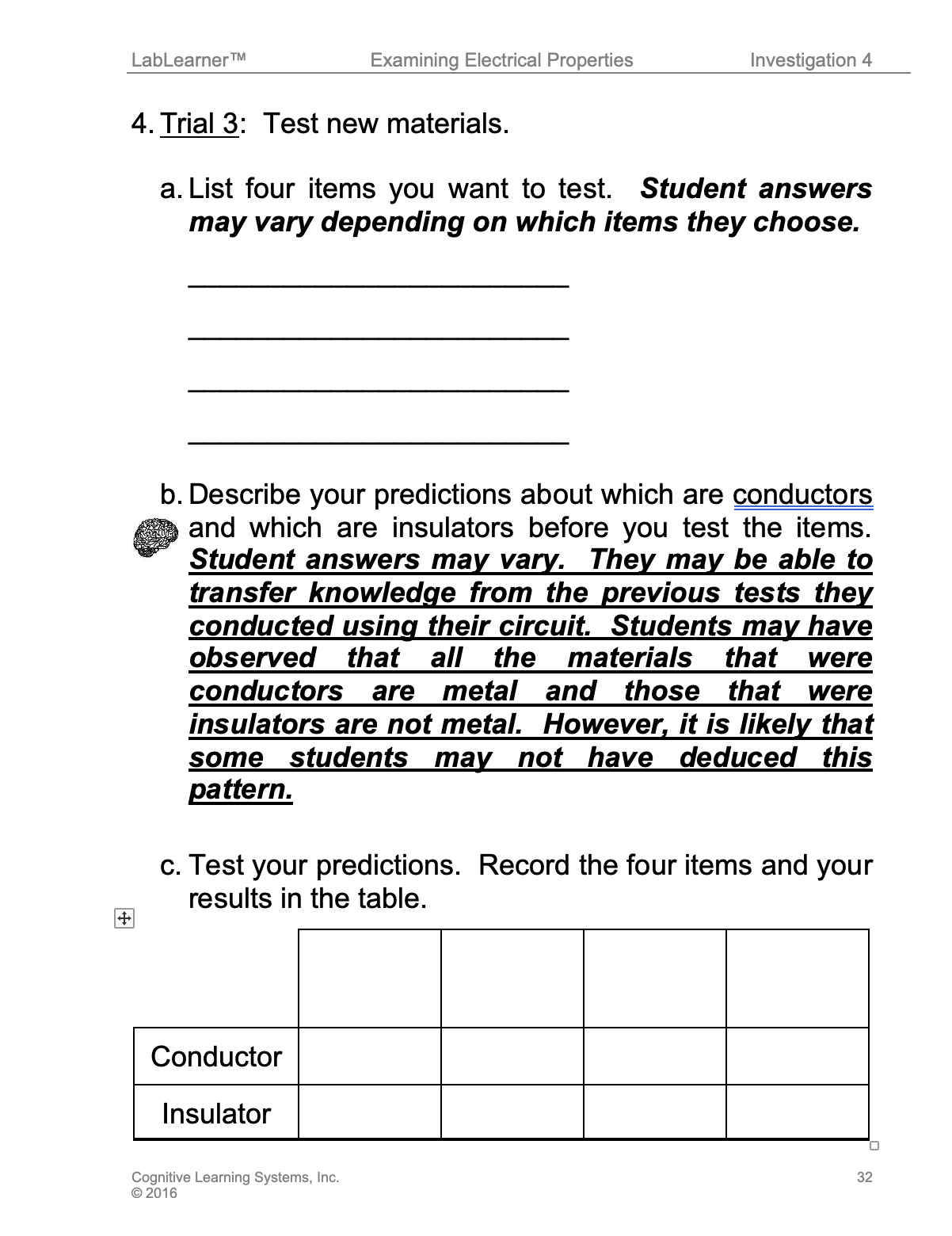
3. In this part of the Investigation, students will select four new items from the distribution point they wish to test and predict whether they are insulators or conductors. As students conduct their experiments they will be asked the following question:
Can you predict whether a material is a conductor or insulator?
Teacher Note: This Trial has been designed as a way for students to expand and possibly apply their understanding of conductors and insulators of electrical current. During Trials 1 and 2, some students may have observed a pattern to the objects that conducted electrical current – all were composed of metal.
Teacher Note: For those students, the opportunity to select four new items and predict and test their conducting properties will likely confirm the pattern they deduced from Trials 1 and 2. For those students who did not realize the relationship between electrical current conduction and metallic objects, this trial will provide additional data that they can use when drawing conclusions about insulators and conductors.
Teacher Note: It is important for this trial, that the instructor not indicate the relationship between metallic objects and electricity conduction, but instead allow student-directed inquiry. Students will have an opportunity to analyze their data and draw conclusions during the Post-Lab analysis.
a. Instruct students to select four items at the distribution point that they would like to test. They should list those items in Problem 4a of their Student Data Record.
b. Direct students to test the items using their circuit and record their results in Problem 4c.
4. Upon completion of the experiment, permit enough time to clean up the lab and return the materials and equipment to their assigned location.
KEYS

CLEAN UP
Let students know your expectations for clean-up. Ask them to clean up.