Teacher Portal:
Exploring Ecosystems
Investigation 3 – PostLab
 PRINT IT
Use your browser to download a printable PDF as help during the slide presentation and to make additional notes. In your browser, go to File > Print and then choose to save as PDF.
NAVIGATE IT
Once the slide presentation is launched
- use your left and right arrows to advance or go back in the slide presentation, and
- hover your mouse over the left edge of the presentation to get a view of the thumbnails for all the slides so that you can quickly move anywhere in the presentation.
- Click HERE to launch the slide presentation for the CELL.
SHARE IT
SLIDE VECOSYS2-post-1
This was the third Investigation of the LabLearner CELL Exploring Ecosystems. In it, students learned about extinctions and the fossil record.
______________________________________________
SLIDE VECOSYS2-post-2
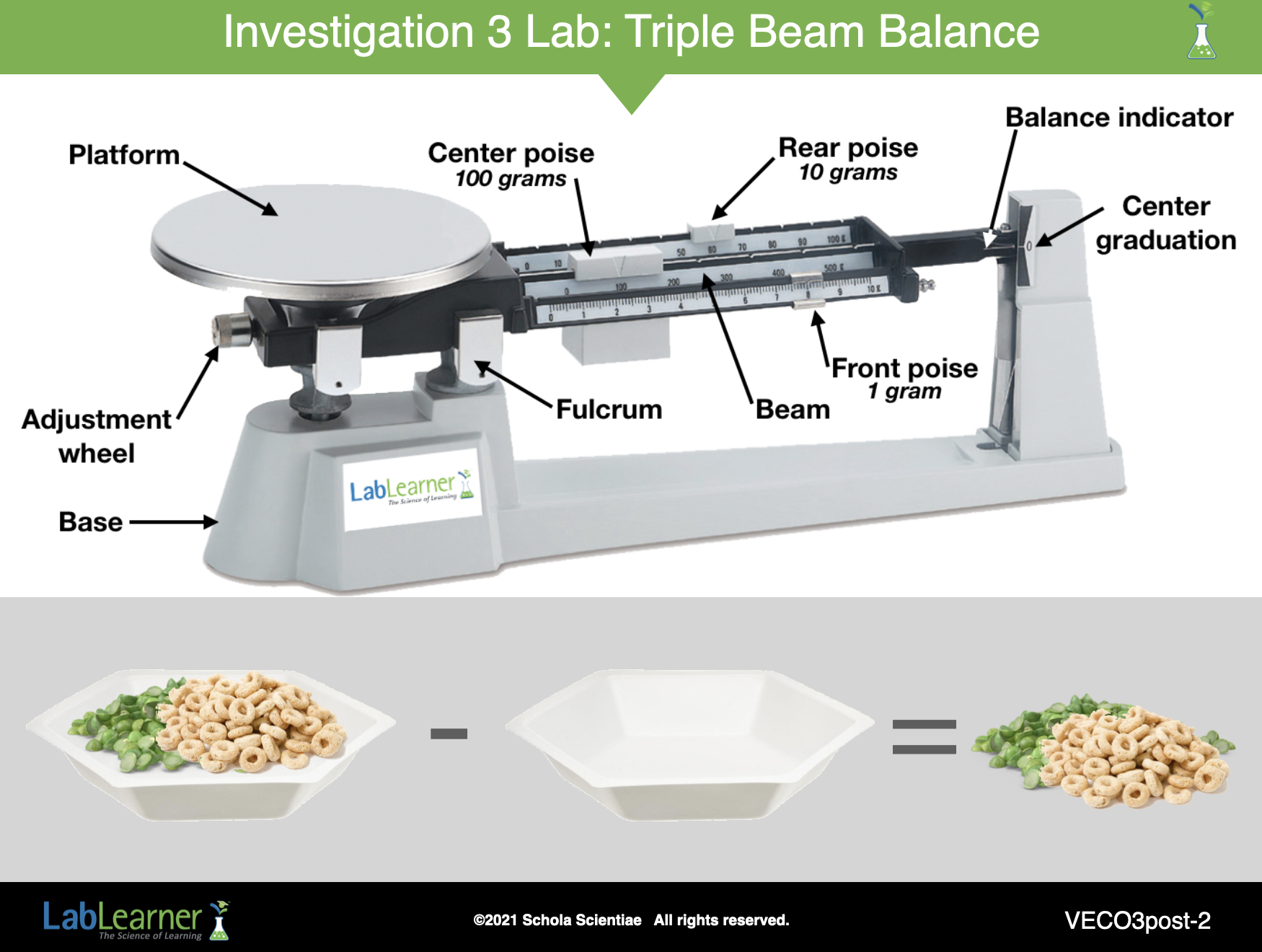
A. Refer back to the laboratory experience. Review the experiment with the class and discuss the following questions:
1. Ask students: Why was it necessary to subtract the weight of the empty weighing dish each time we weighed consumed food items in determining total biomass? This was necessary because each time the food was weighed in the dish, the dish was weighed too. Since we only want to know how much food was consumed, we had to subtract the weight of the empty weighing dish.
______________________________________________
SLIDE VECOSYS2-post-3
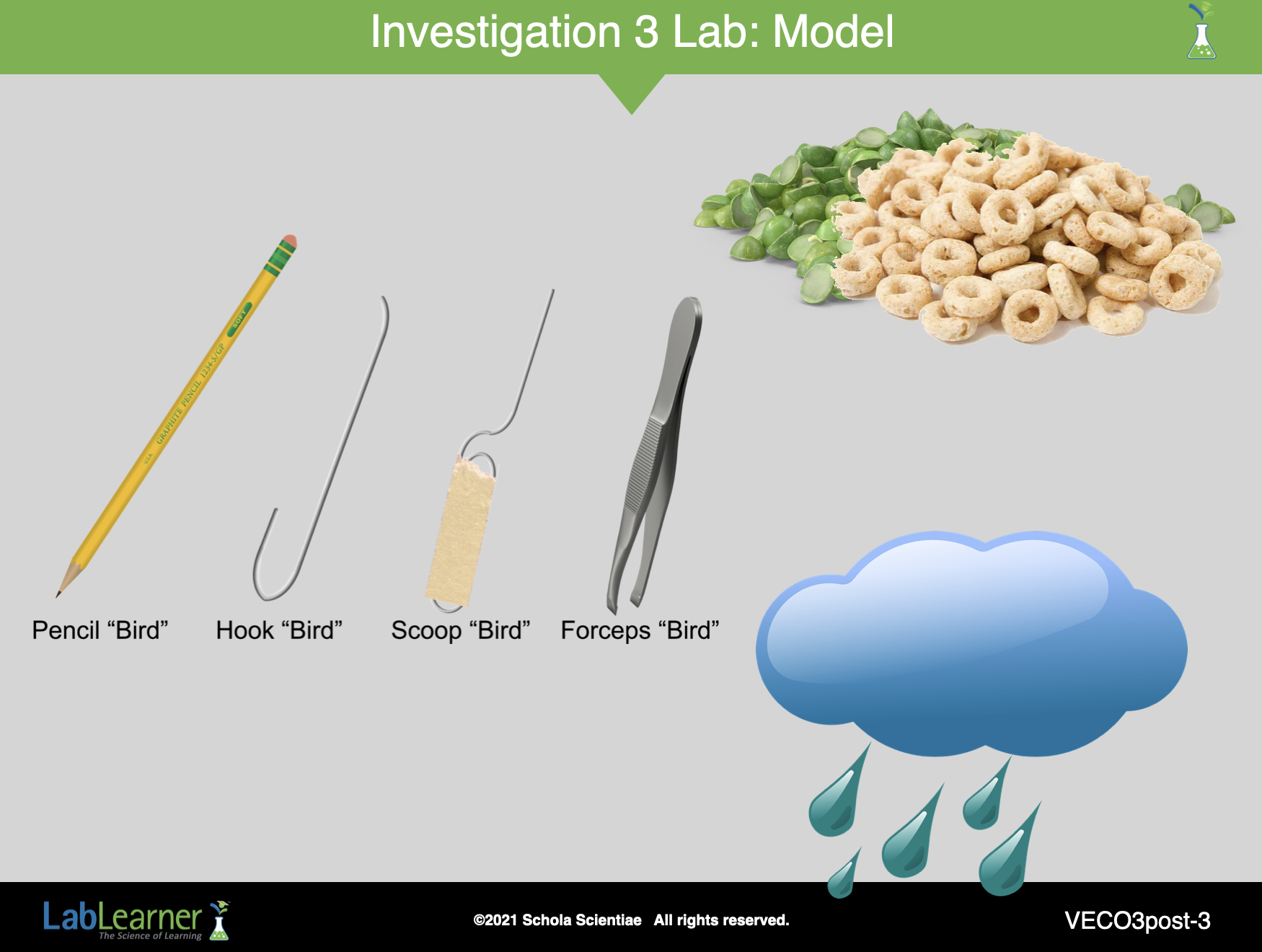
2. Ask students: What adaptations of the different types of birds did the paper clips, pencil, and forceps represent? They represented different types of feeding structures (beaks) of different species of birds. The experiment showed how different beaks might be better suited for eating certain kinds of food better than others.
3. Ask students: In our model, what did the oat cereal and split peas represent? They represented the kinds of food that were available for the different types of birds to eat.
4. Ask students: In our model, what was the important change that occurred over time in the environment? Over millions of years, the amount of annual rainfall continued to decrease. One result of this decrease in precipitation was the gradual changes in the two food sources, the peas and oat cereal. With time, the oat cereal decreased and finally disappeared (became extinct) while the peas became more and more abundant. One might suspect that the oat cereal required more rainfall than the peas to flourish in the environment.
______________________________________________
SLIDE VECOSYS2-post-4
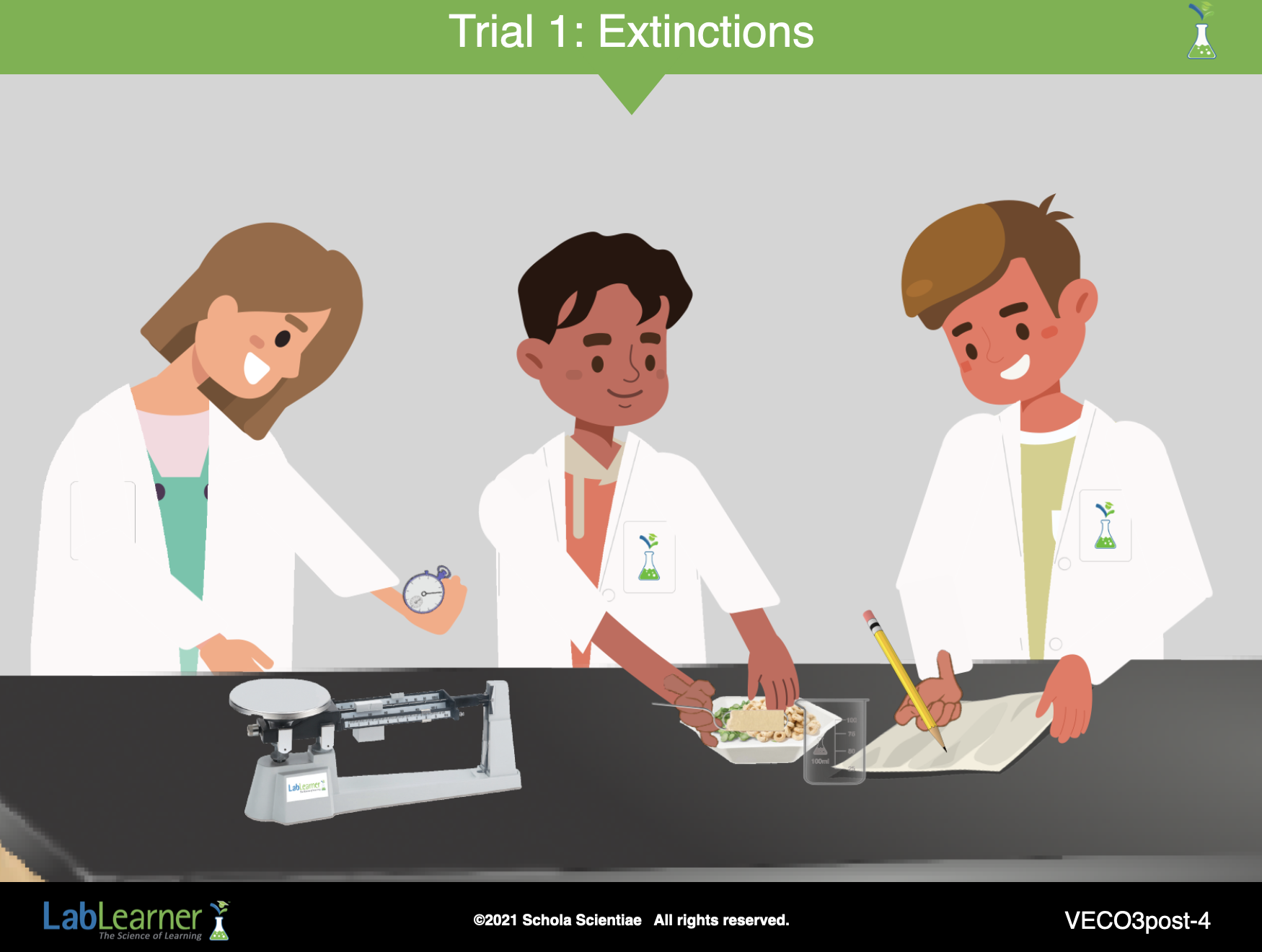
B. Begin the analysis of each Trial of the experiment.
1. Ask students: How would you describe the type of food available during Trial 1? Students should describe food in which peas were the majority food source. If necessary, refer students to Problem 5 in their Student Data Record.
2. Ask students: Which two bird types became extinct first? Student results may vary, but typically the Pencil bird becomes extinct first, followed by the Hook bird.
3. Ask students: Were these birds well adapted for their environment? Why or why not? Student answers may vary. As the environment changed, there was progressively less and less oat cereal compared to peas, which became more abundant. This was a problem for the Pencil bird and the Hook bird because neither of them could “eat” the peas, and the Pencil bird was not even very fast at eating the oat cereal.
4. Ask students: How did the food source change during Trials 2 and 3? Students should recall a decrease in cereal and an increase in peas.
5. Ask students: Which bird survived the most environmental changes and was still alive at the end of the experiment? Why do you think this occurred? The Scoop bird survived. This is probably because the shape of its beak was able to eat either type of food (oat cereal and peas). As the oat cereal became rarer and then finally disappeared, the Scoop bird ate more and more peas.
______________________________________________
SLIDE VECOSYS2-post-5
C. Continue to analyze the results of the experiment by dividing students into the same collaborative groups with whom they worked in Lab.
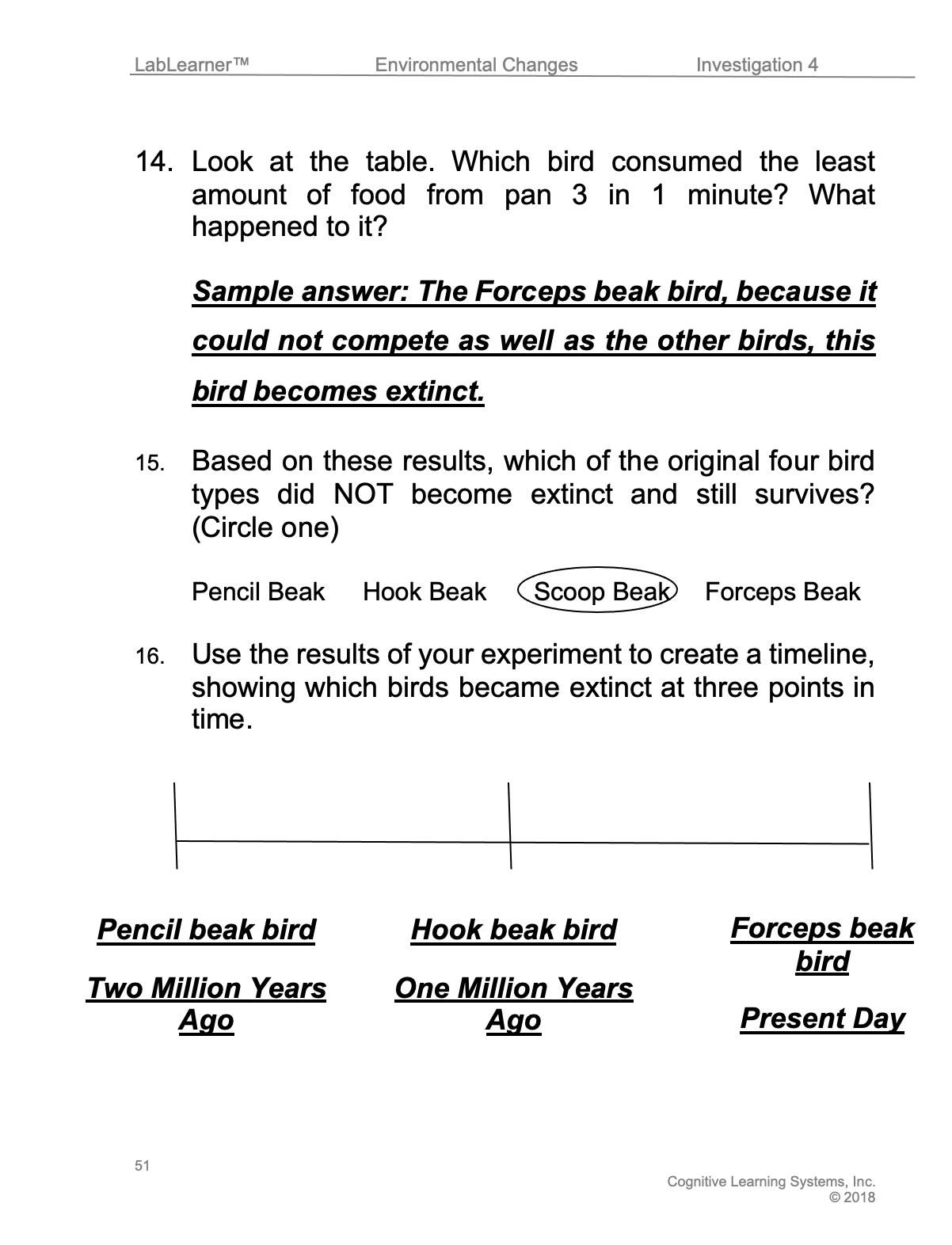
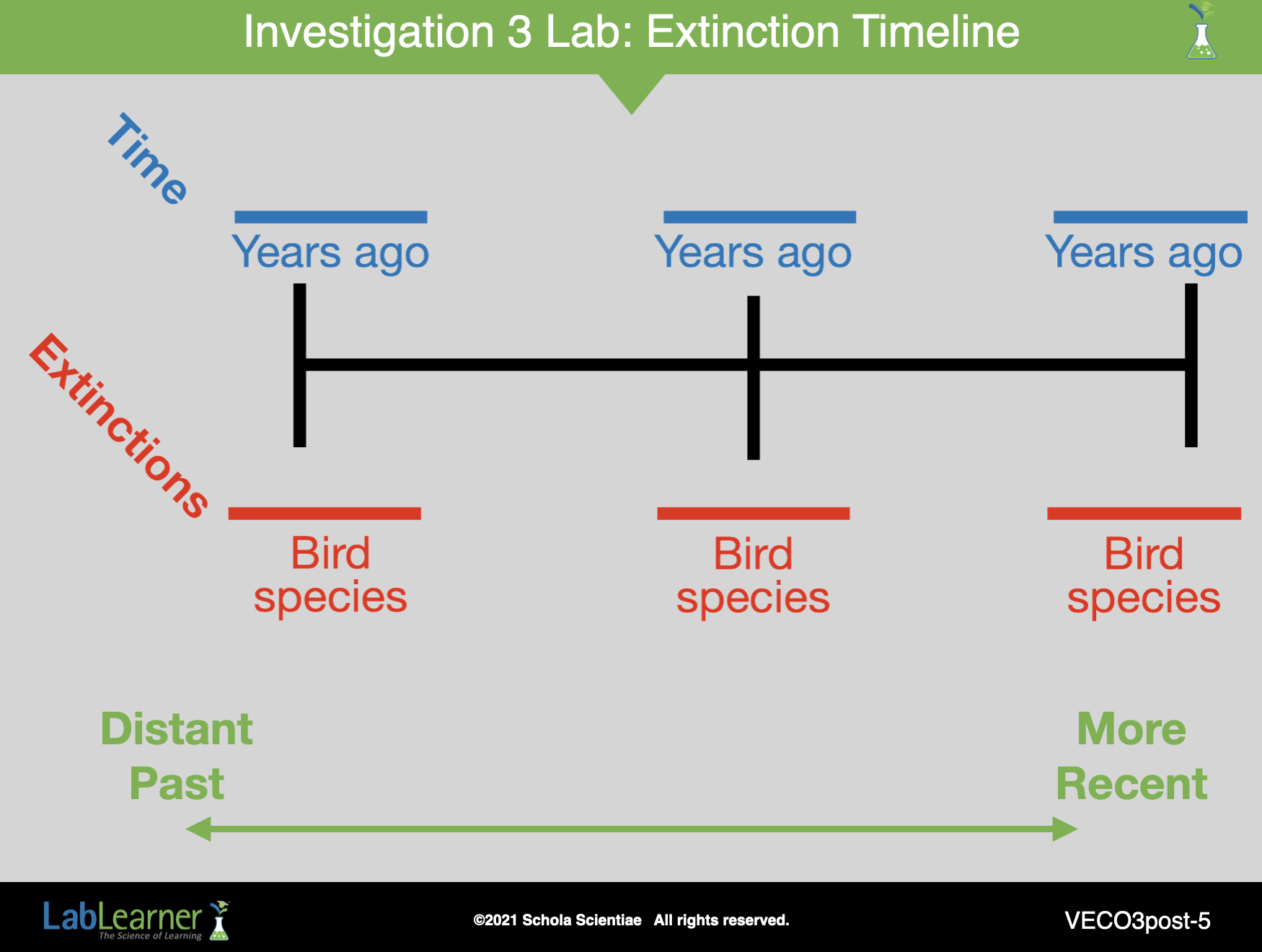
1. Refer students to Problem 16 in their Student Data Record. Draw the same blank timeline on the board if you wish.
a. Explain to students that they have a timeline in Problem 16. The timeline goes from left to right, with the most distant past on the left-hand side and the most recent past on the right-hand side.
b. Ask students: If each time span between the pans in our model was one million years, and the last trials’ results represent today’s environment, how many million years ago was the end of Trial 1? Students should indicate that the end of Trial 1 was “two million years ago” on the left side of the timeline. Encourage students to write their answers in Problem 16.
c. Move to the half-way point along the timeline. Tell students that this point represents the end of Trial 2. Ask students: What should be written here, if this is where we will record the results of Trial 2? Guide students to write “one million years ago” and do the same on the board.
d. Move to the right-hand point in the timeline. Tell students that this point represents the end of Trial 3. Ask students: What should be written here to indicate the results for trial 3? Student answers may vary. Accept: present day,” “today,” or the year, and record this at the right-hand point of the timeline.
e. Ask students to review the data gathered by their group. Tell students that they should place a mark and label the birds that became extinct after each trial in the appropriate location on the timeline. Allow students 5-10 minutes to complete their timelines.
f. Review the group’s results as a class. Select one group’s data to record on the timeline or the board.
______________________________________________
SLIDE VECOSYS2-post-6
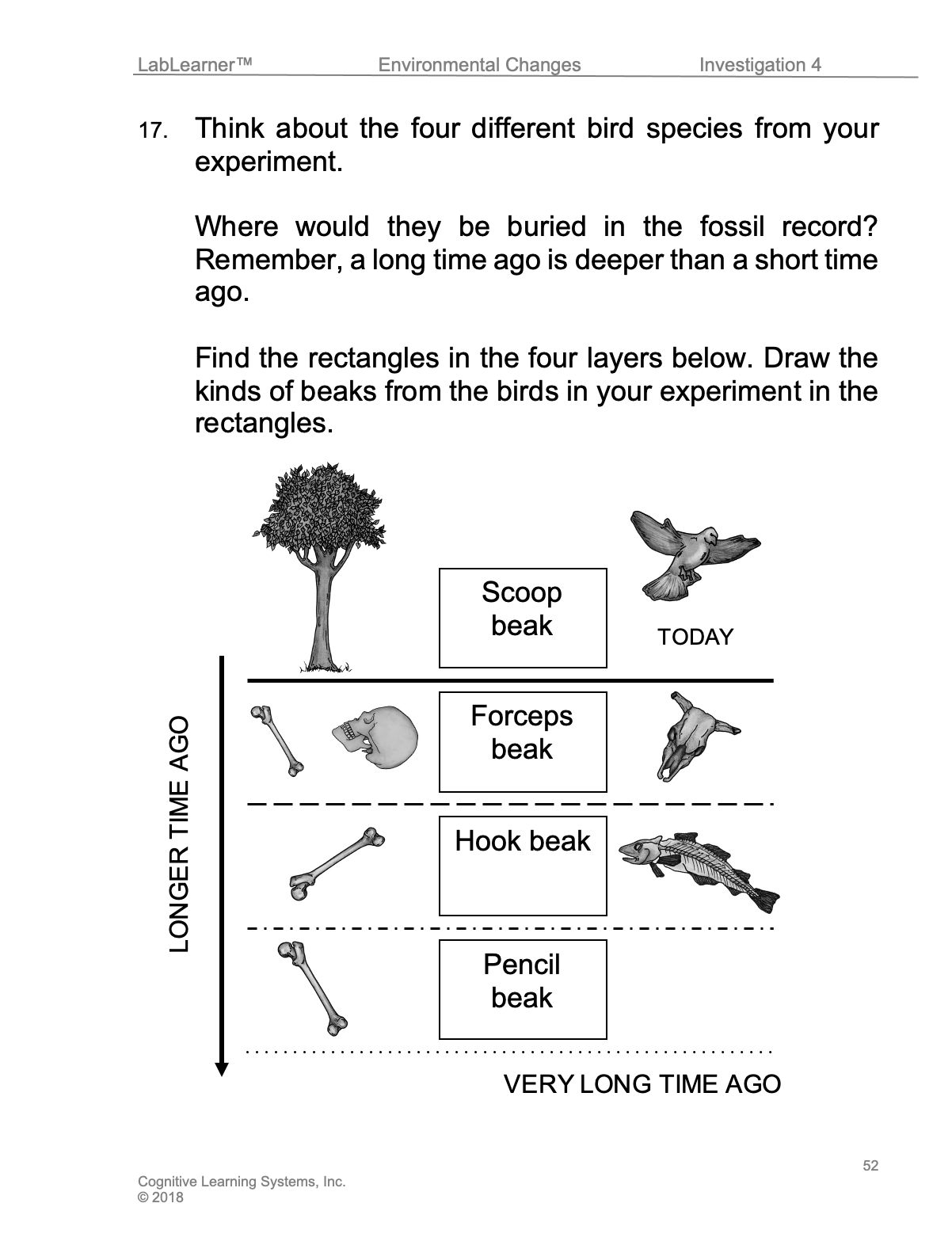
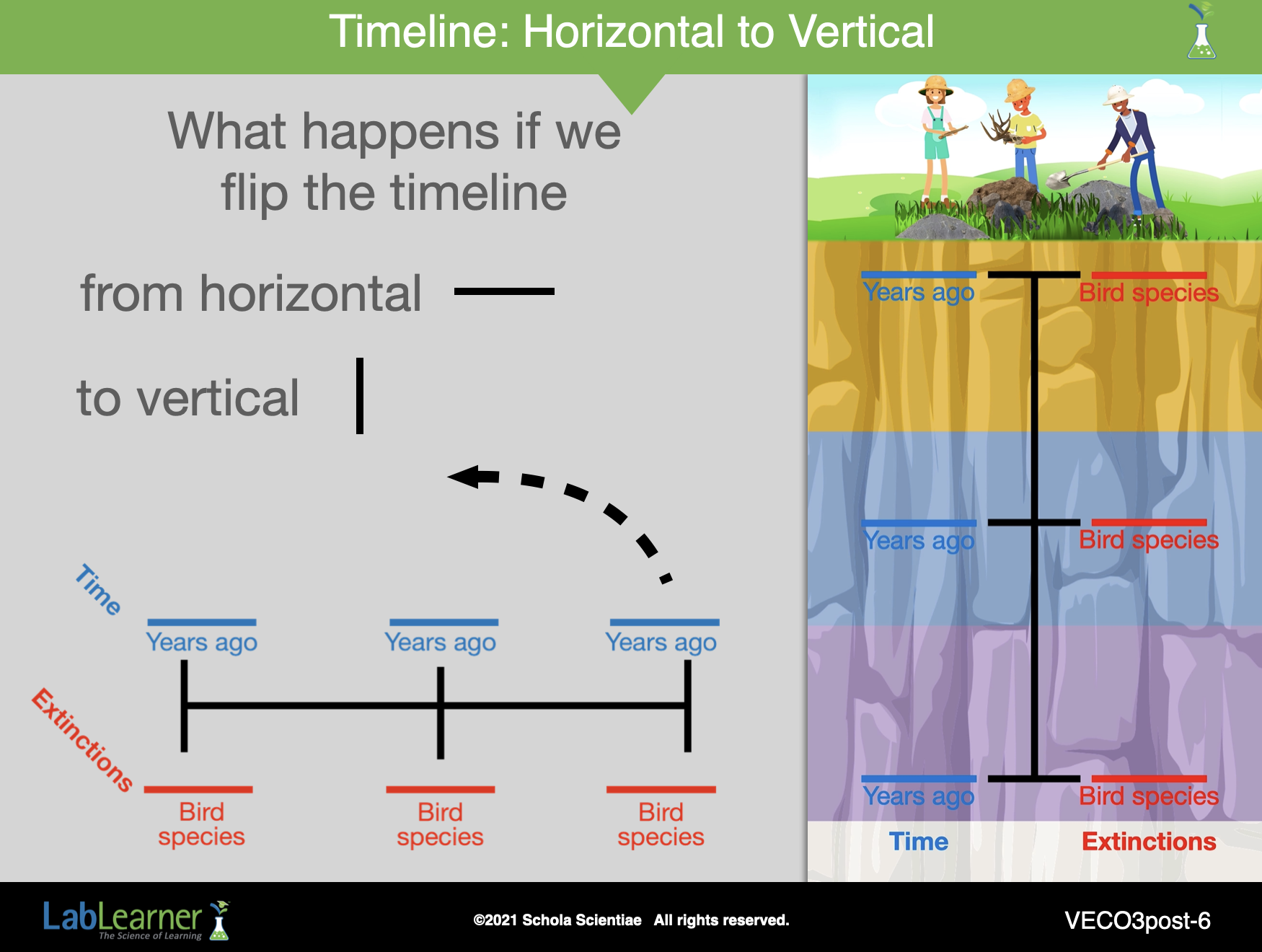
2. Discuss the relationship between a timeline and what would be found in the corresponding fossil record.
a. Ask students to discuss in their group, what the fossil record would look like if the model were to represent what a paleontologist would find (flipped from a horizontal to vertical representation, see slide).
b. Direct students to complete Problem 17 by drawing and labeling what would be found, according to their experimental results and timeline. If necessary, review Problem 3 from the Investigation 3 PreLab, whereby students created a model fossil record showing that organisms that had become extinct first were located in the lower levels of the fossil record, with organisms that underwent extinction more recently located in the upper levels of the fossil record.
c. Guide students to connect the first extinction to the deepest layer in the fossil layer diagram, etc. Review the results as a class.
______________________________________________
SLIDE VECOSYS2-post-7
D. Conclude the lesson by discussing how the results pertain to the concept of natural selection.
1. Ask students: In this experiment, did the change in the environment (decrease in annual rainfall) occur all at once? Did the extinction of the different types of birds occur all at once? The amount of rainfall decreased only over a period of millions of years, very slowly. The extinction of the various bird types also occurred over millions of years and was related to the slow decrease in rainfall that affected the abundance of oat cereal and split peas.
2. Ask students: How might a plant species become extinct? There are many reasons why a plant species might become extinct. In the model experiment performed here, we saw that the amount of rainfall might cause a plant to become extinct. In addition to the amount of rainfall, other factors such as temperature, grazing by herbivores, disease, and environmental pollutants can all cause the extinction of plants.
3. Ask students: Can you think of some other possible reasons that an animal species might become extinct? All of the environmental factors listed above that can cause plant extinctions can also indirectly cause the extinction of a herbivore who depends exclusively on those plants that become extinct to survive. This was the case with the Hook bird in our experiment. Furthermore, a carnivore that depends solely on a herbivore that becomes extinct due to a changing environment is also subject to extinction since it will not find those herbivores to eat.
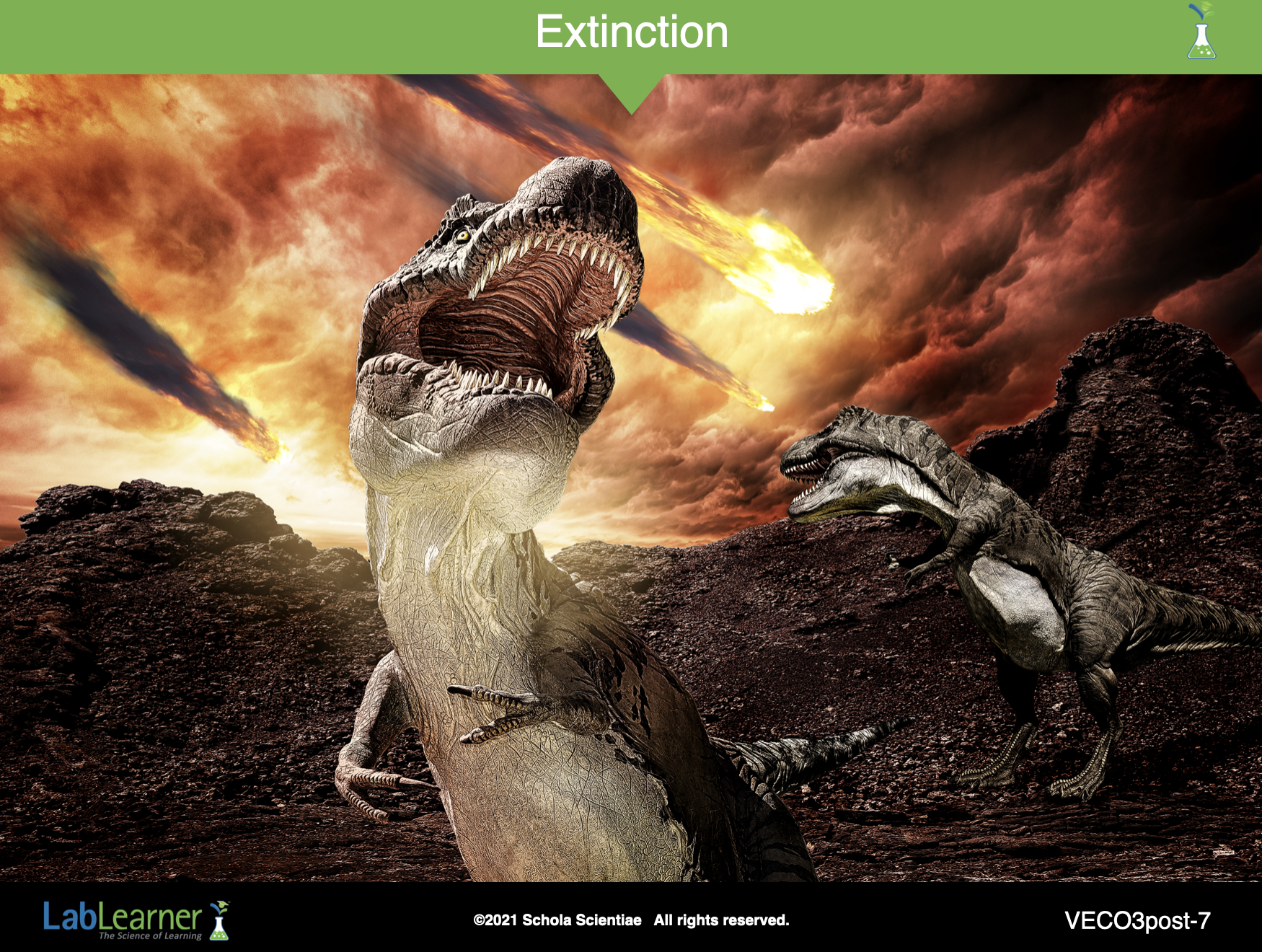
4. Based on this Investigation, would you conclude that extinctions always occur over a long period of time? Usually, but not always. Volcanic eruptions, for example, can cause the extinction of species located near the volcano. On the other hand, a large asteroid impact could set off many, many volcanic eruptions and start worldwide fires that could cause the widespread extinction of many species. Many scientists believe that it was just such an event that caused the rapid extinction of the dinosaurs about 65 million years ago. In addition to such “natural” catastrophes, many extinctions have undoubtedly been caused by the rapid environmental changes caused by man. Such changes include the addition of toxic pollutants to land and water and heavy deforestation. Both these and other types of manmade environmental changes, similar to natural catastrophes, result in too rapid of a change in the environment for living organisms to adapt, so they become extinct. Other plants and animals that are able to survive in the new environment often experience a rapid increase in their numbers following catastrophes. For example, mammals became very abundant following the extinction of the dinosaurs.
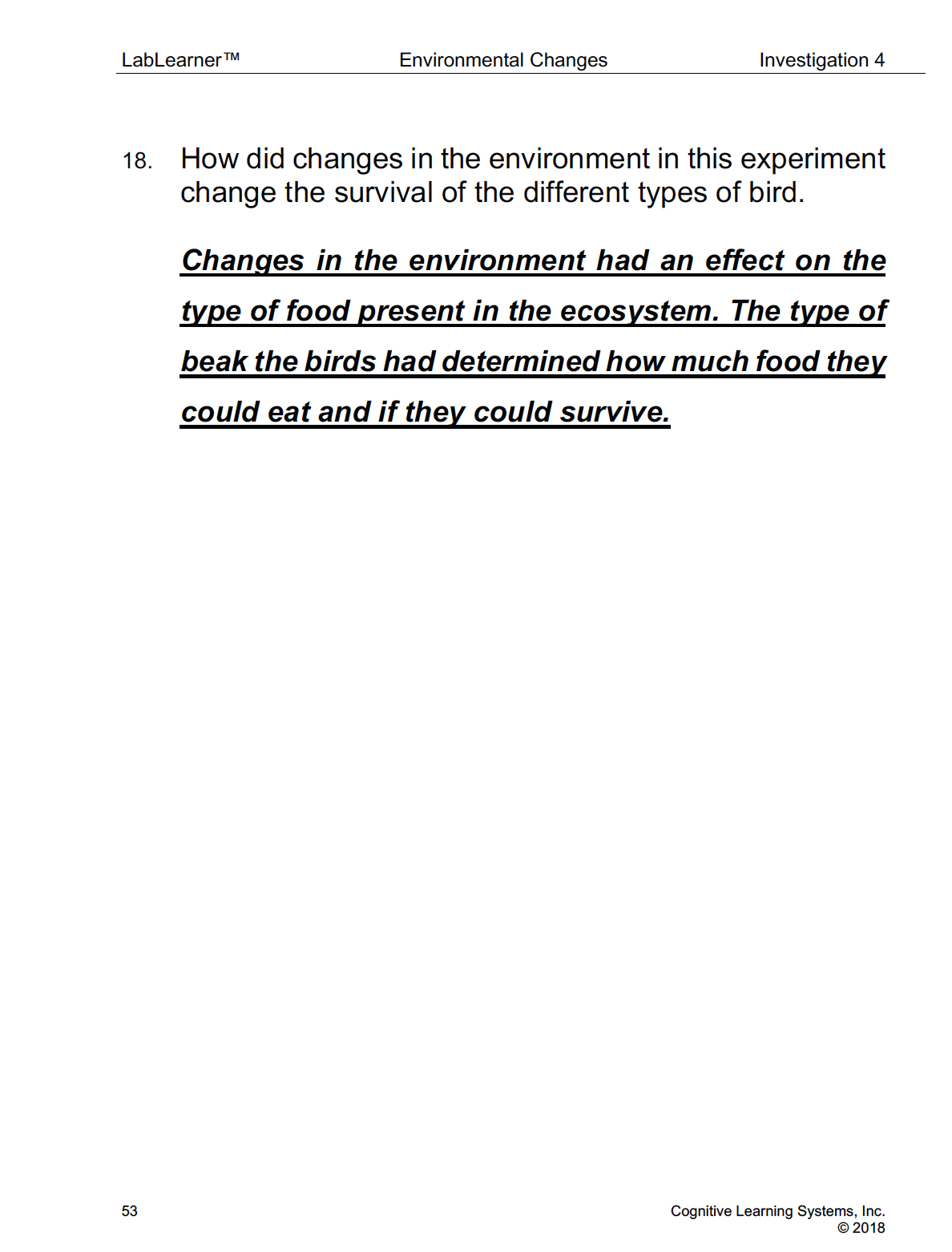
5. Direct students to answer Problem 18 in their Student Data Record.
KEYS: POSTLAB