
Teacher Portal:
Exploring Ecosystems
Investigation 3 – Lab
 BE PREPARED
Supplies and Equipment:
Class Materials
- 2 400 ml beakers filled with split peas
- 2 400 ml beakers filled with oat cereal
Group Materials:
- 1 triple beam balance
- 2 weigh dishes
- 3 balance pans (from primary balance) or weigh dishes 1
- pair of forceps
- 2 paper clips
- 1 sharpened pencil
- 1 100 ml beaker
- 1 20 cm piece of masking tape
- 1 stopwatch
- 3 5 cm pieces of masking tape
Individual Materials:
- 1 Student Data Record
Teacher Preparation:
1. Leave the 400ml beakers of split peas and oat cereal at the distribution center. Students may return to the distribution center during the experiment if they require more split peas and oat cereal.
2. Divide the class into five cooperative groups.
Instruction:
1. Direct each student group to obtain the following necessary materials from the distribution point: one (1) triple beam balance, two (2) weigh dishes, three (3) balance pans, one (1) pair of forceps, two (2) paper clips, one (1) sharpened pencil, one (1) 100 ml beaker, one (1) 20 cm piece of masking tape, one (1) stopwatch and three (3) 5 cm pieces of masking tape.

GET FOCUSED
Investigation Two introduces students to the concept of adaptation and structure/function relationships.
INVESTIGATE
The Triple Beam Balance
Explain to students that they will use the triple beam balance to determine the exact mass or exact amount of matter present in a sample. They will use this instrument very often in LabLearner grades 4 through 8 and in high school science as well!
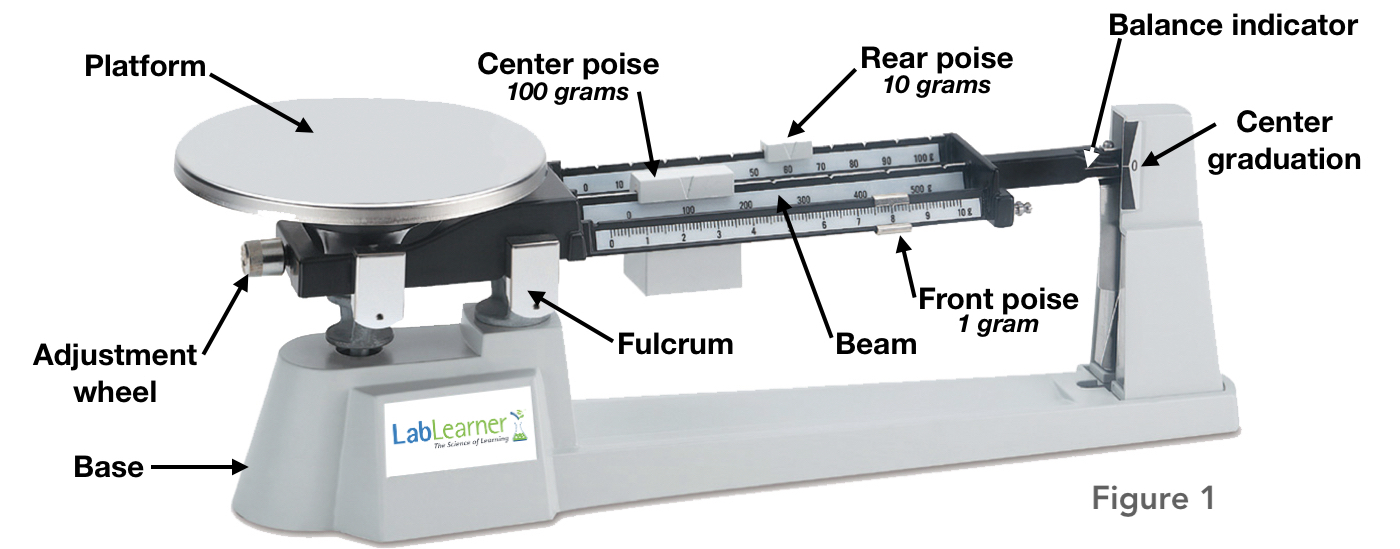
a. Introduce the triple beam balance as a scientific tool that can be used to measure and quantify mass.
-
 Tell student groups to examine their triple beam balance.
- Explain that this tool is called a balance because the mass on the right side is adjusted until it balances the mass of the object or material placed on the platform on the left side.
- Ask students to observe that the balance has three beams with different increments of grams. Grams are the metric units used to describe mass.
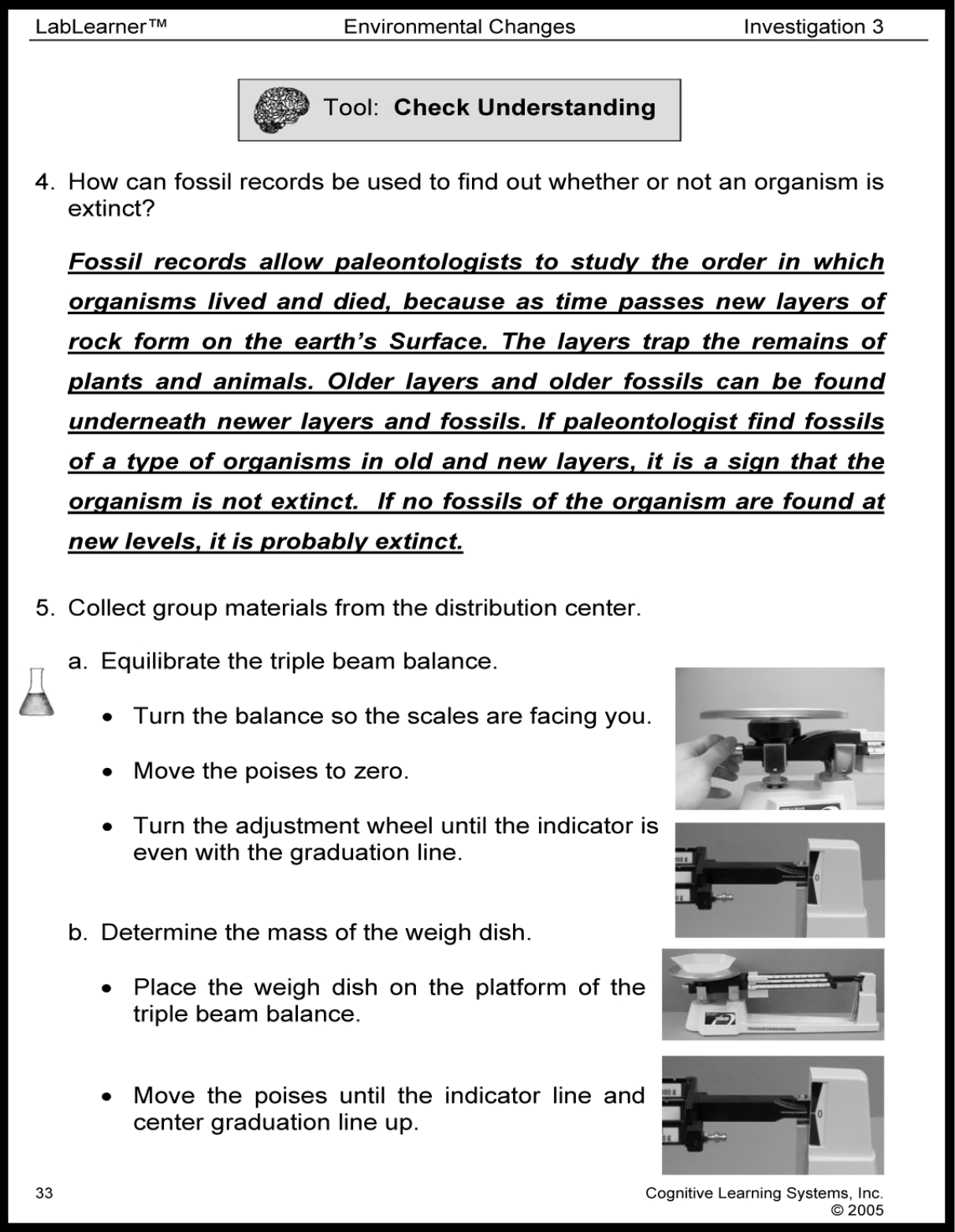
b. Explain to students that before using the triple beam balance, it should be equilibrated or calibrated to be sure that the beam is perfectly level. Encourage students to complete the following steps to equilibrate the triple beam balance:
-
- Turn the balance so the platform is on the left and the scales on the beams are clearly visible.
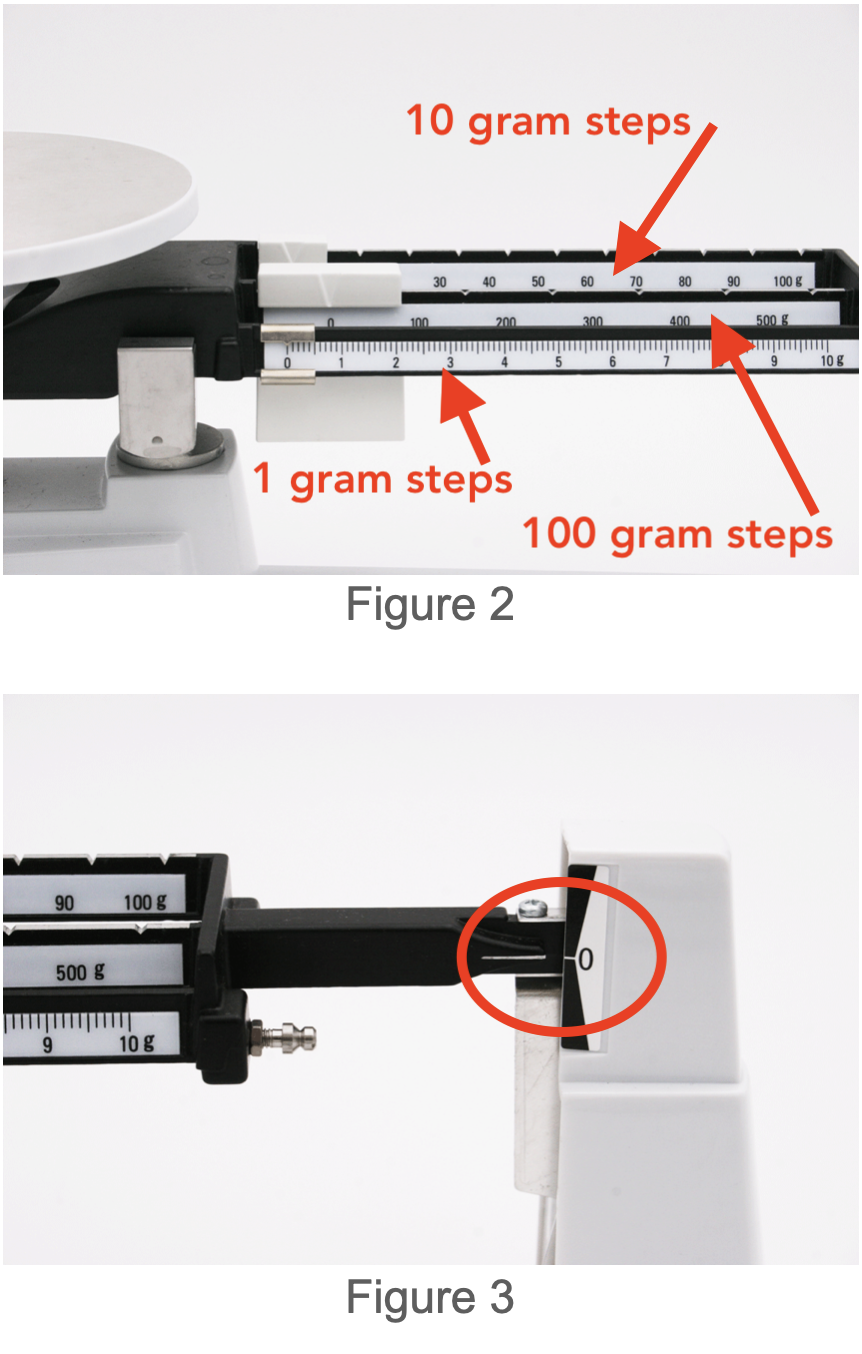
- Be sure all the poises are set to “0” and the platform is free of any objects or substances (Figure 2).
- The balance is equilibrated or calibrated when the balance indicator is aligned with the center graduation (Figure 3).
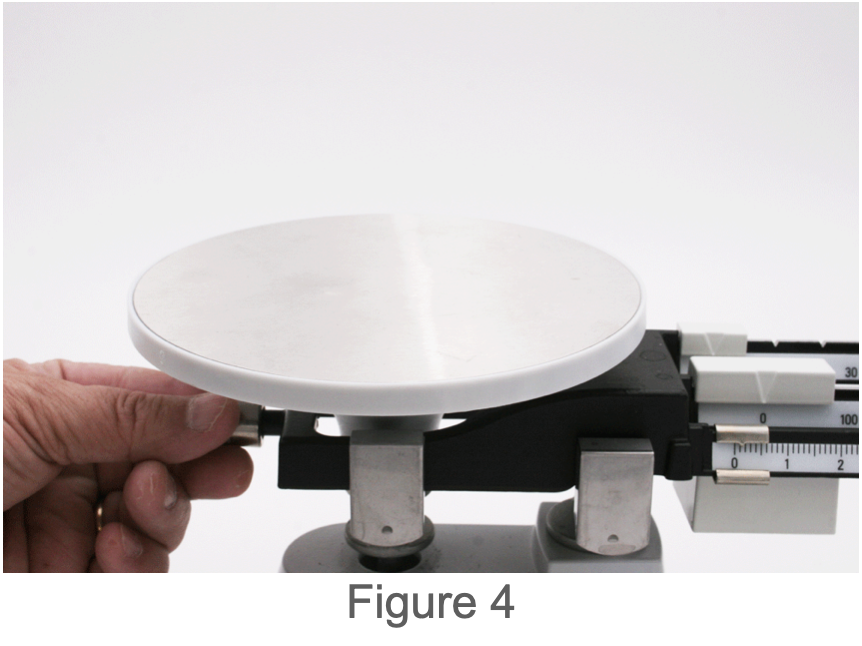
- If the indicator line is below the center graduation, rotate the adjustment wheel under the platform toward the rear of the balance to move the indicator up (Figure 4).
- If the indicator is above the center graduation, rotate the adjustment wheel toward the front of the balance to move the indicator down.
Note: To assist students in remembering which direction to rotate the adjustment wheel during equilibration of the balance, explain to them that they may use the mnemonic “up, up and away” to remember that turning the adjustment wheel away from themselves moves the indicator up.
c. Guide students through the steps of using the triple beam balance by determining the mass of the large gram bear.
-
 Remind students to be sure their balances are equilibrated before starting.
- Remind students to be sure the platform is clean and empty.
- Direct students to move all poises to the “0” position.
- Direct students to place the gram bear on the platform.
- Explain to students that the rear and middle poises should be lifted slightly before moving.
- Explain to students that when moving the front poise, it should be nudged gently with a finger to slide it along the beam.
- Direct students to adjust the poises one at a time until the indicator and graduation marks align.
- Assist students if necessary by demonstrating movement of the poises on a per-group basis.
Trials 1-3
1. Begin by directing students to weigh the empty weigh dish and record this number in Problem 5 of their Student Data Record. This number will need to be subtracted from all subsequent weight determinations using this dish. If necessary, remind students of the Procedural Toolbox tools, Triple Beam Balance Equilibration and Triple Beam Balance Use and Operation.
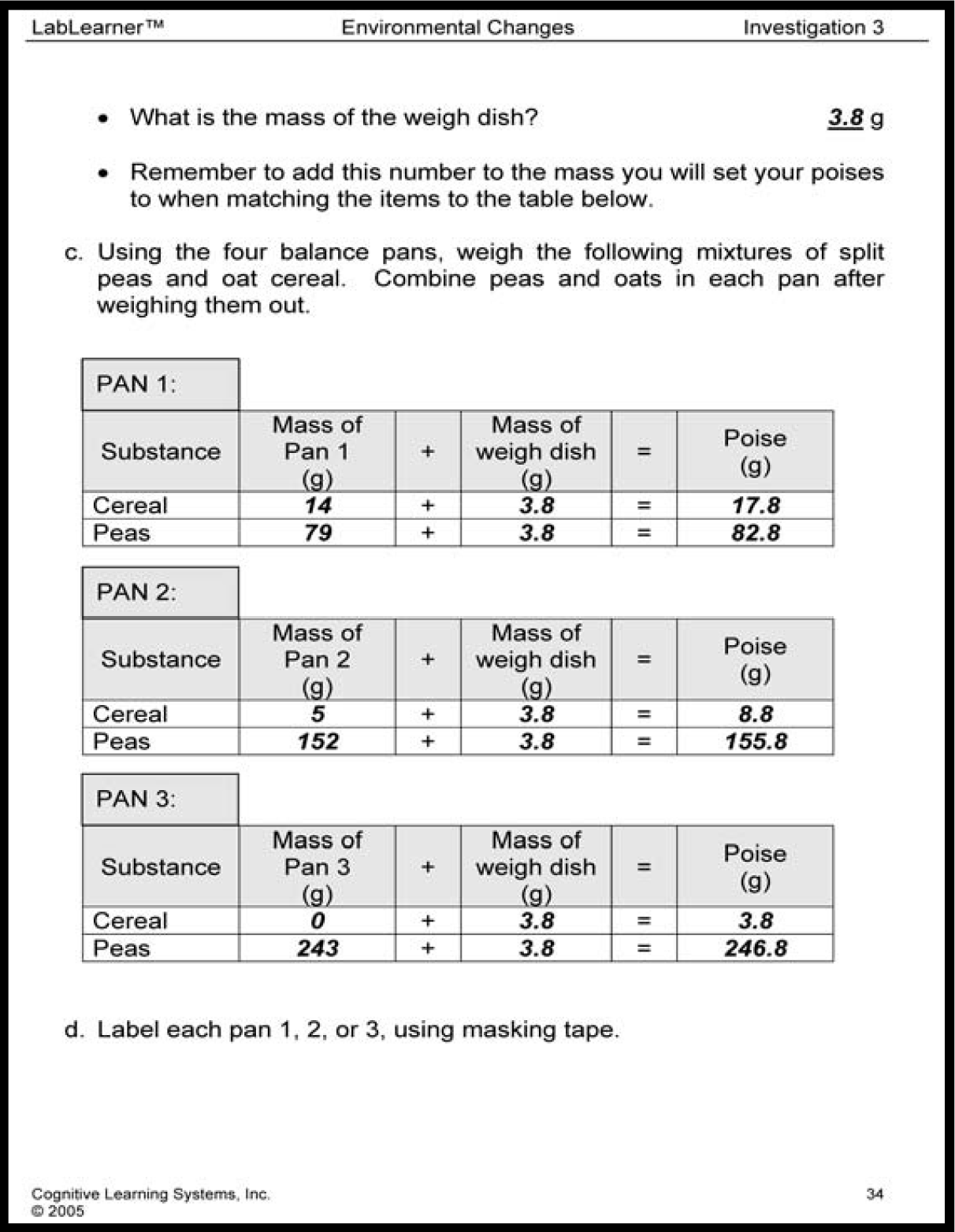
2. Using the three balance pans, each group will weigh out varying mixtures of split peas and oat cereal as indicated in their Student Data Record.
3. Remind students to label their pans correctly using masking tape.
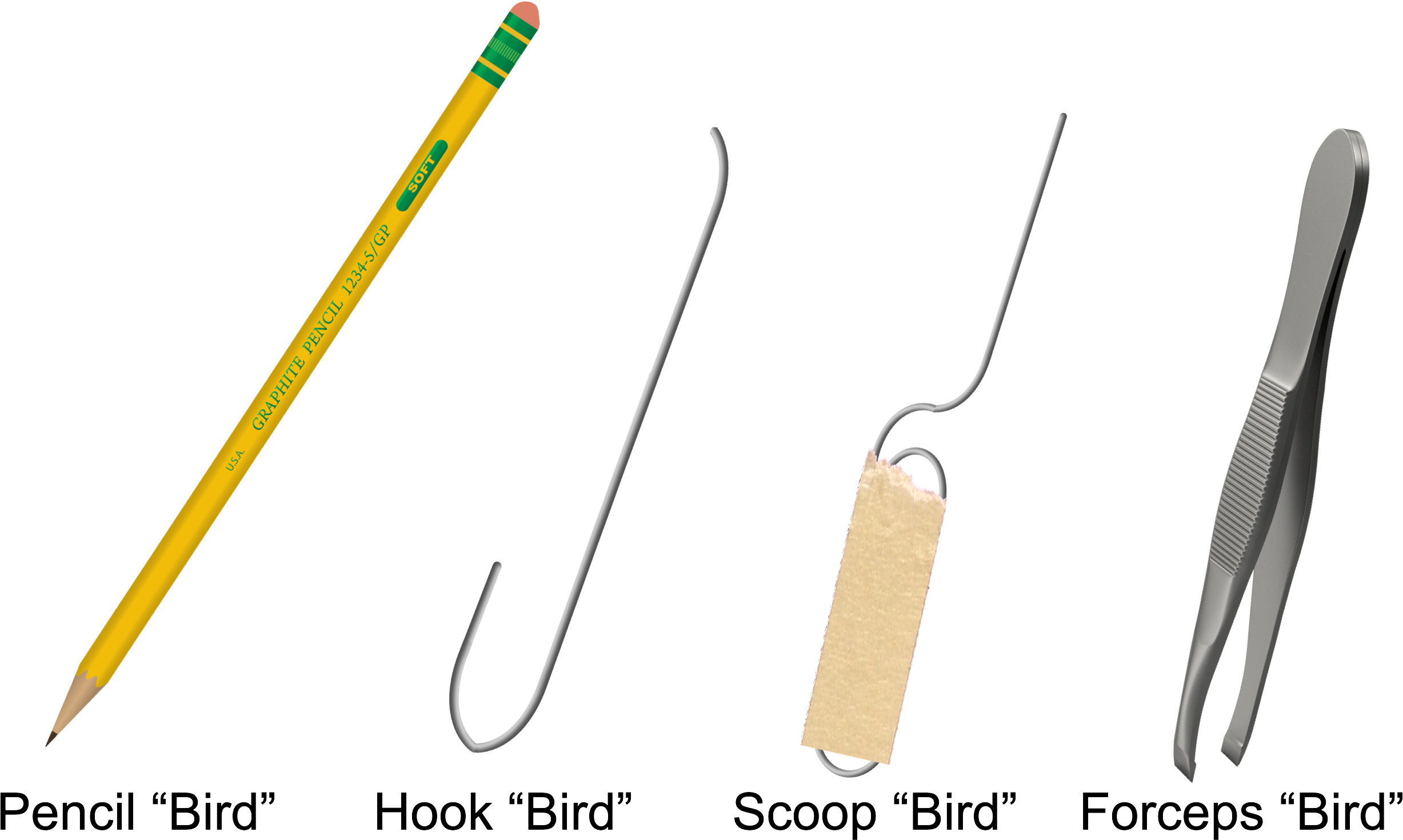
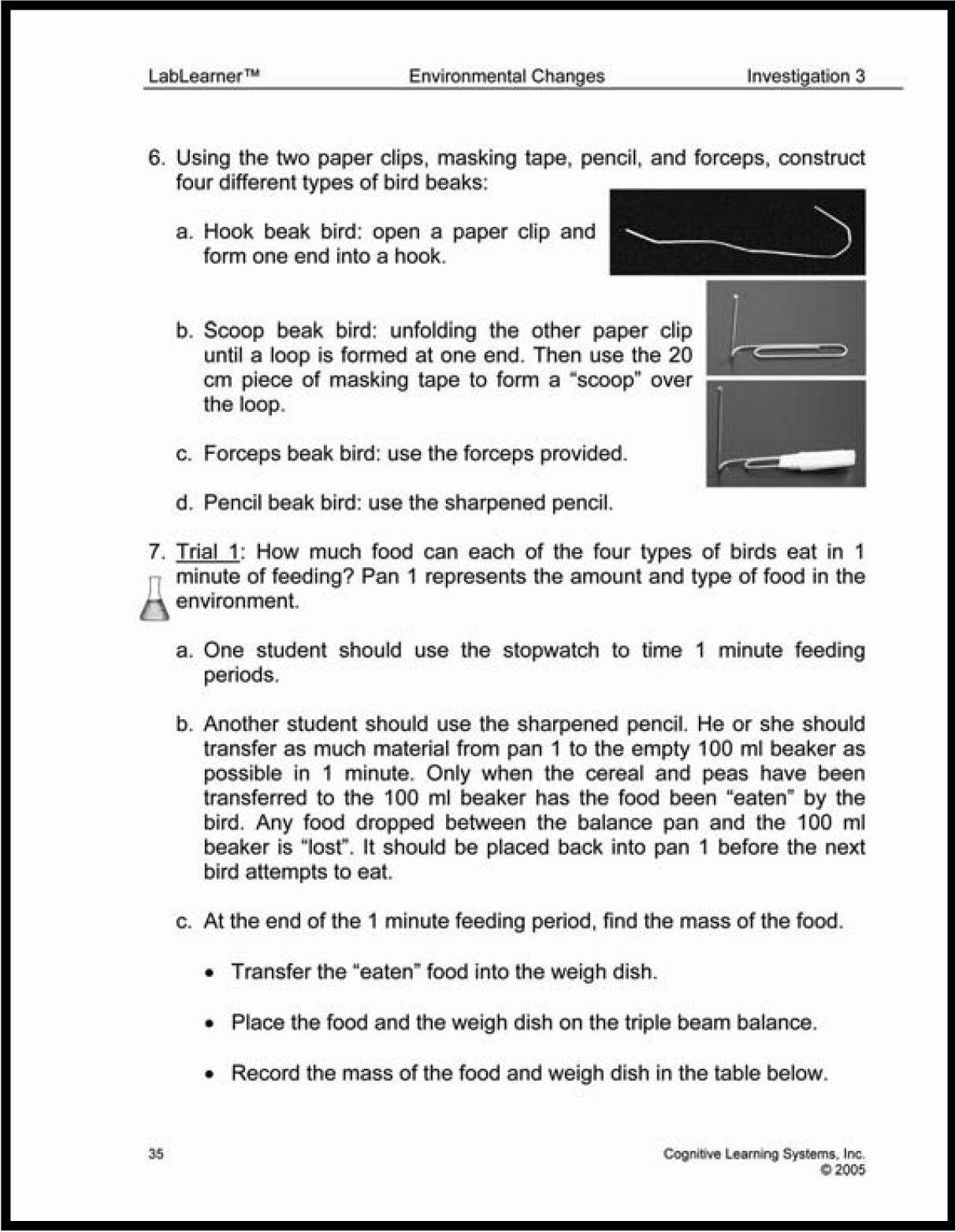
4. Refer students to Problem 6 in their Student Data Record, where they will find instructions on how to make four different types of bird beaks.
Trial 1
In Trial 1, students will determine how much food each of the four types of birds can consume in 1 minute of feeding. Students will use pan 1 as a food source. At the end of Trial 1, the bird that has consumed the least amount of food will become extinct and will be removed from the following Trial. In Trials 2 and 3 this process is repeated until only one type of bird survives. The following steps are relevant for each Trial.
a. Assign one student to operate the stopwatch to time 1-minute feeding periods.
b. A second student should use the sharpened pencil. He or she should attempt to transfer as much material from pan 1 to the empty 100 ml beaker as possible in 1 minute.
NOTE: Only when the material has been transferred to the 100 ml beaker has it been “eaten” by the bird. Any food material that is dropped between the balance pan and the 100 ml beaker is “lost” and considered “not eaten” – it should be placed back into pan 1 before the next bird attempts to eat.
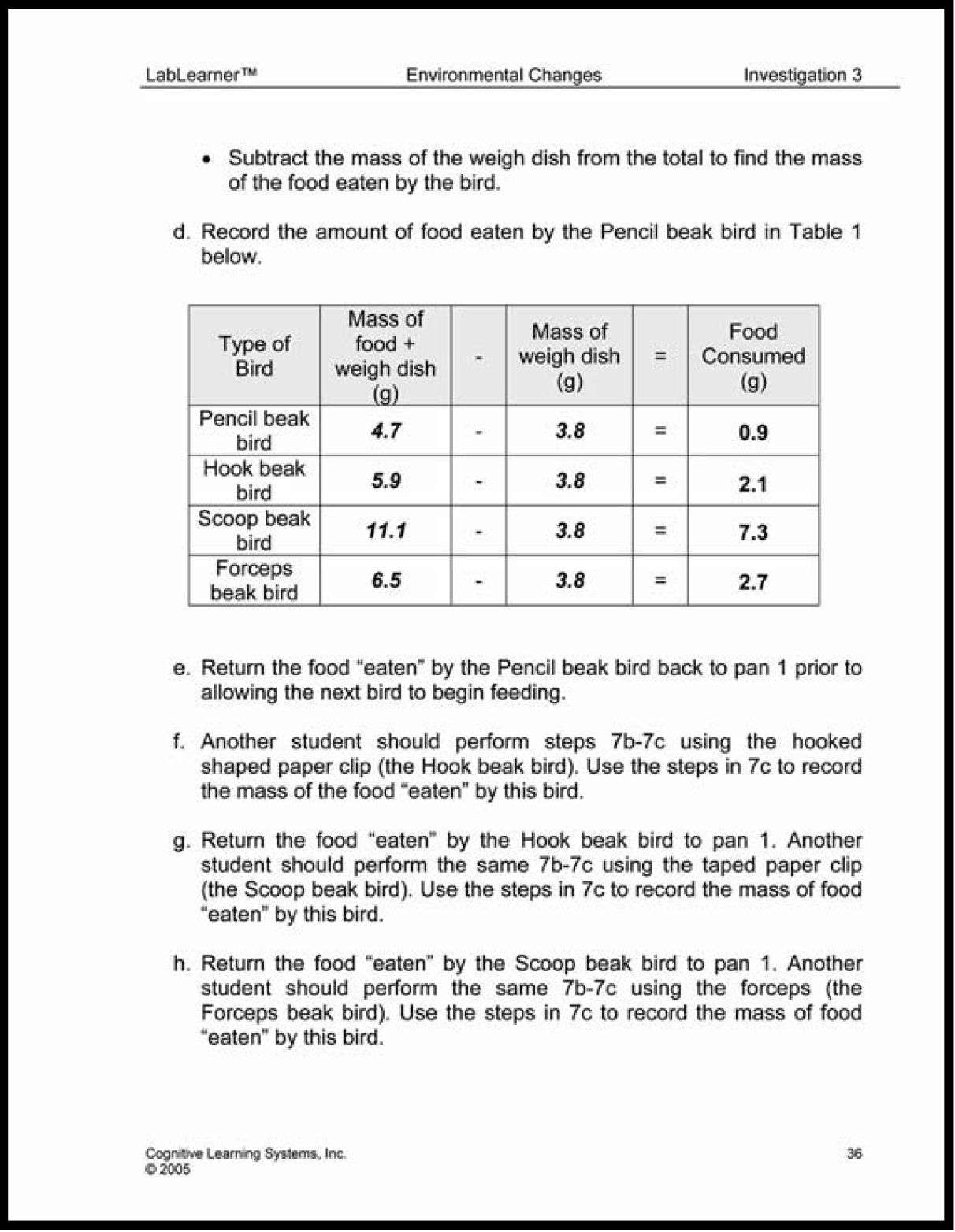
c. At the end of the 1-minute feeding period, a student should transfer the “eaten” food from the 100 ml beaker to the weigh dish and determine the amount of food (biomass) consumed by the Pencil beak bird. Remind students to subtract the mass of the weigh dish prior to determining the amount of food consumed. If necessary, refer students to the Procedural Toolbox Tool, Triple Beam Balance Use and Operation.
d. After weighing, return the food “eaten” by the Pencil beak bird back to pan 1 prior to allowing the next bird to begin feeding.
e. Each student in the group should record the amount of biomass consumed by the Pencil beak bird in 1 minute of feeding in Table 1 of their Student Data Record.
f. A third student should now be instructed to perform the same steps above but this time using the hooked-shaped paper clip (the Hook beak bird). Each student should record the biomass of food consumed in the 1-minute feeding period in their Student Data Record. Remember to return the weighed food material and dropped food material back to pan 1 before the next bird gets a chance to feed.
g. A fourth student should now be instructed to perform the same steps above but this time using the taped paper clip (the Scoop beak bird). Each student should record the biomass of food consumed in the 1-minute feeding period in their Student Data Record. Remember to return the weighed food material and dropped food material back to pan 1 before the next bird gets a chance to feed.
h. Another student should now be instructed to perform the same steps above but this time using the forceps (the Forceps beak bird). Each student should record the biomass of food consumed in the 1-minute feeding period in their Student Data Record.
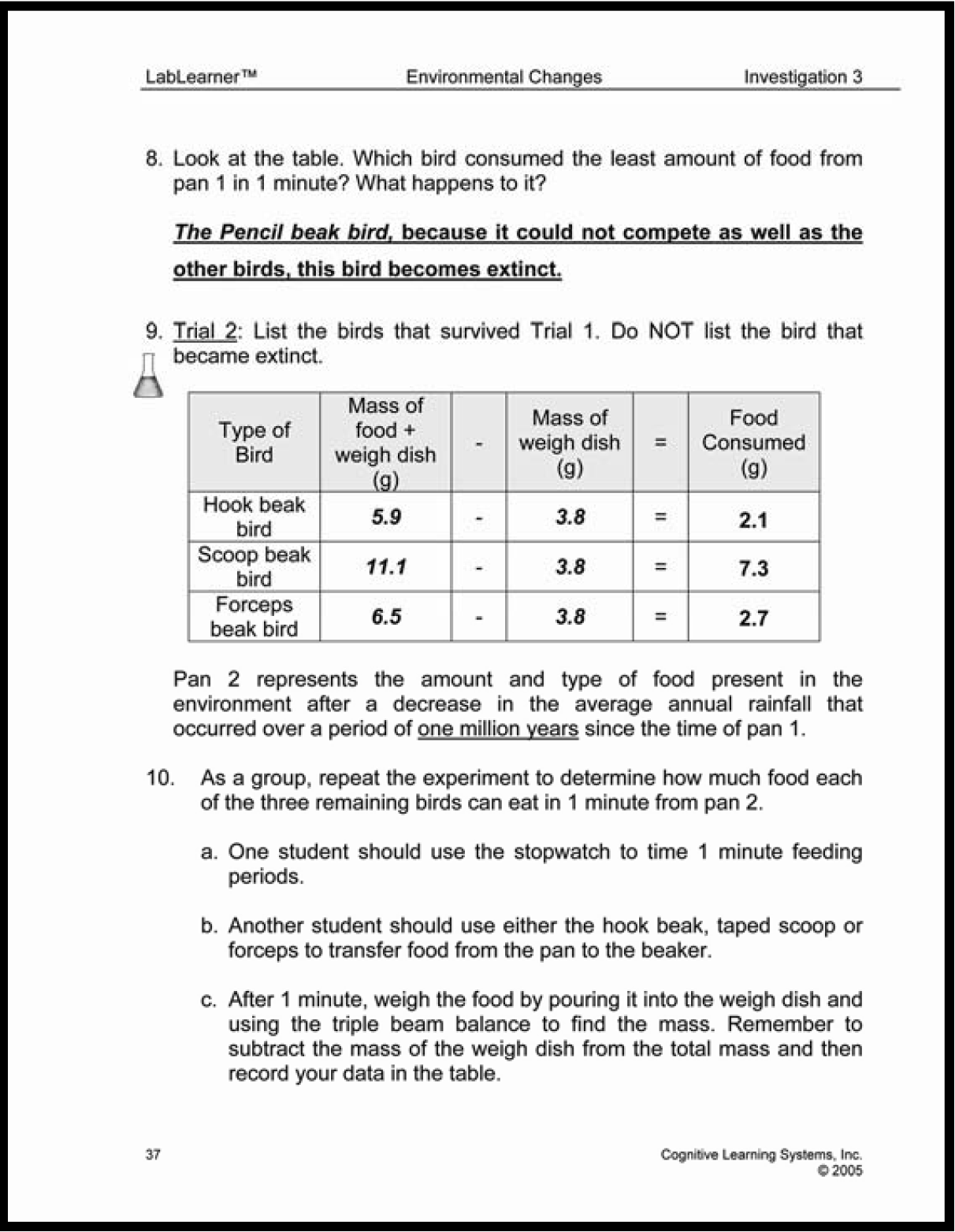
6. After students have completed Trial 1, explain that the bird that was able to consume the least amount of food in the steps above could not compete with the other birds and has become extinct!
a. Ensure students have recorded the name of the bird in Problem 8 of their Student Data Record.
b. Tell students that they have just witnessed an important process called natural selection, in which changing environmental conditions caused the extinction of the least “fit” species. Since this bird is extinct, it can be set aside and will not be used again…ever.
Trial 2
7. Continue with the completion of Trial 2, explain that pan 2 represents the amount and type of food present in the environment after a decrease in the average annual rainfall that occurred over a period of one million years since pan 1. Ask students to repeat the steps they performed above for pan 1 to determine how much food each of the three remaining birds can consume in 1 minute from pan 2. Make sure that each of the three bird types is tested and the amount of food consumed is entered in Table 2 of the students’ Scientist Data Record.
8. On completion of Trial 2, explain to students that because of the changing environment (a further decrease in rainfall) and resultant effect on food items in pan 2, the bird type that consumed the least amount of food from pan 2 was not able to survive and became extinct.
a. Guide students to determine which bird type this is. Students should answer Problem 11 in their
Student Data Record.
b. Tell students that they have again witnessed natural selection. Since this bird is extinct, it can be set aside and will not be used again.
Trial 3
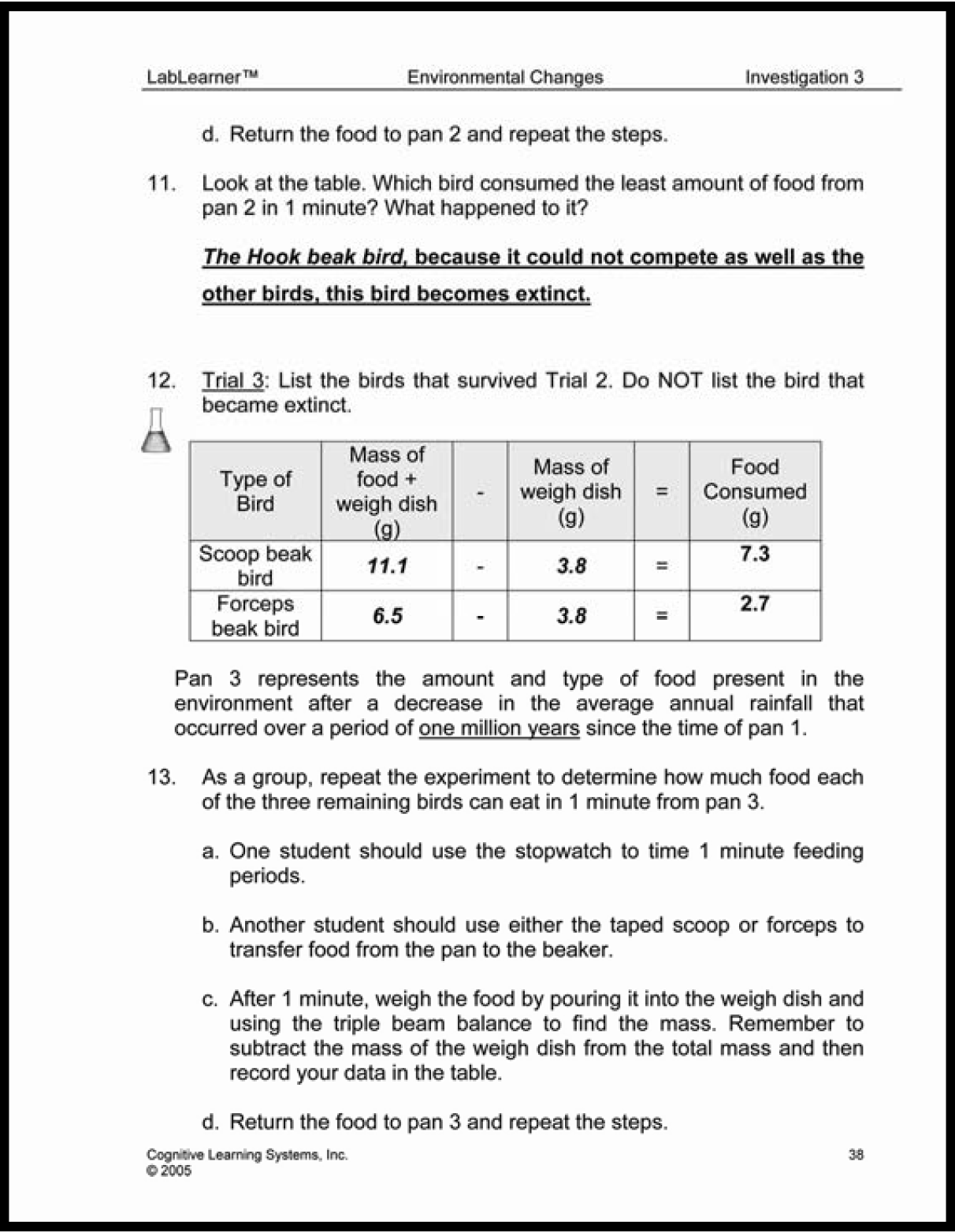
9. Prepare for Trial 3. Tell students that rainfall in the environment continued to decrease over the next one million years and the type of food available to the birds is now represented in pan 3. Ask the students to determine how much food each of the three remaining birds can consume in 1 minute from pan 3. Make sure that both remaining bird type is tested and the amount of food consumed is entered in Table 3 in the students’ Student Data Record.
10. Ask students to review their results in order to determine which of the remaining two bird types consumed the least amount of food. Tell the students that this bird was not able to survive under these new conditions (represented by pan 3) and became extinct. Students should note which bird became extinct in Problem 14 in their Student Data Record.
11. Based on their results, direct students to determine which bird type survived all of the environmental changes (pans 1 – 3, 2 million years of evolution) and still exists today. Ask students to use this information to answer Problems 15 and 16 in their Student Data Record.
Ask students: Based on your results, which bird survived all of the environmental changes? Which bird still exists today? The Forceps beak bird. Direct students to answer Problem 15 in their Student Data Record.
KEYS

CLEAN UP
Let students know your expectations for clean-up. Ask them to clean up.