Teacher Portal:
Exploring Ecosystems
Investigation 2 – PreLab
 PRINT IT
Use your browser to download a printable PDF as help during the slide presentation and to make additional notes. In your browser, go to File > Print and then choose to save as PDF.
MINDSET
This Investigation is designed to:
- introduce students to key features of forest and wetland ecosystems.
- explain how organisms have adaptations that allow them to live in specific environments.
- introduce students to the concepts of structure and function as they relate to adaptations possessed by organisms.
- increase understanding of the interactions of organisms with their environment.
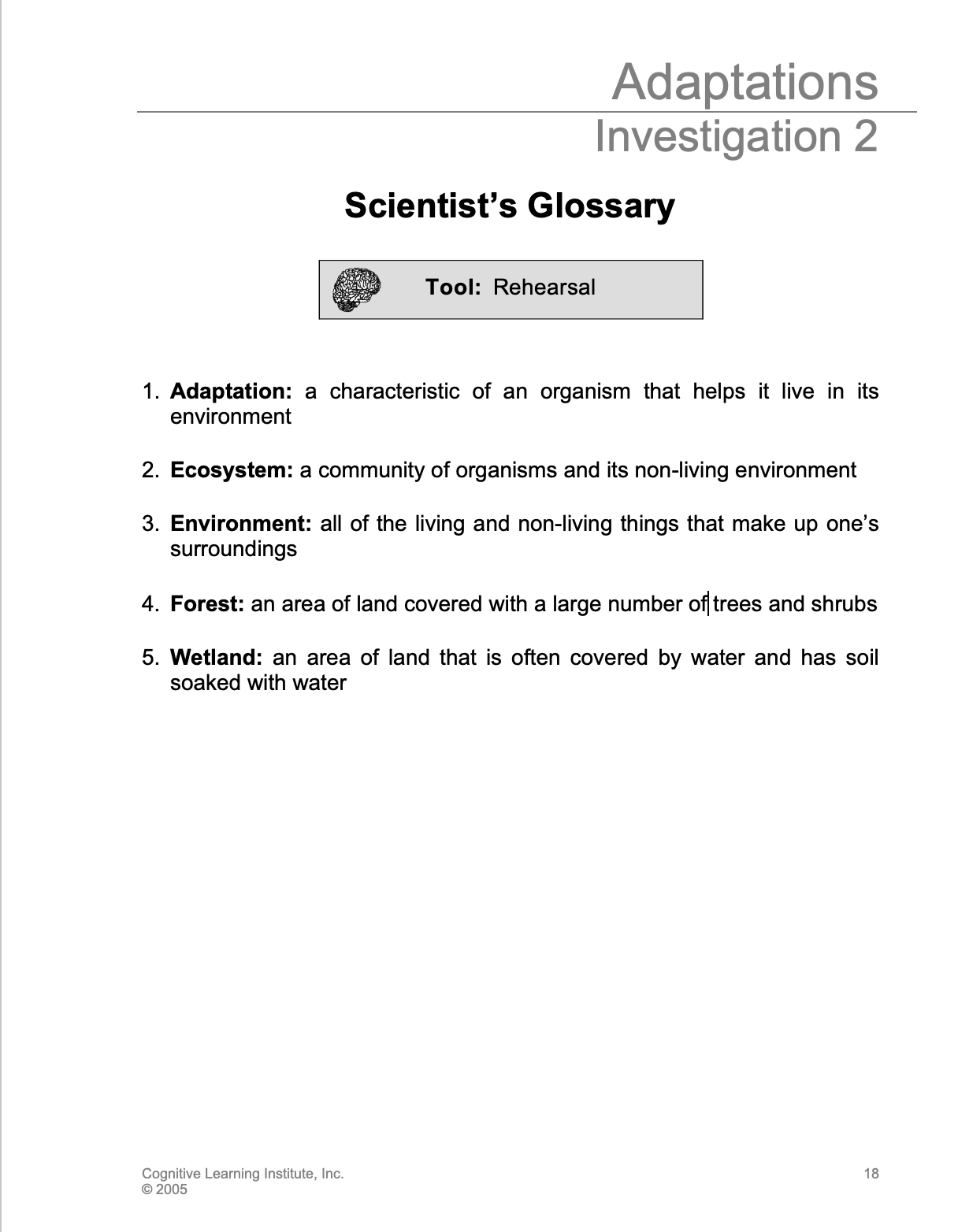
SCIENTIST’S GLOSSARY
1. Adaptation: a characteristic of an organism that allows it to survive more effectively in a particular environment.
2. Ecosystem: a community of organisms and its non-living environment.
3. Environment: all of the factors, both living and nonliving, that surround and affect an individual organism or biological community.
4. Forest: an area of land covered with a dense growth of trees and woody plants.
5. Organism: a living thing.
6. Wetland: an area of land that is periodically covered by water and contains soil with a great deal of moisture.
BE PREPARED
Watch the Investigation 2 Teacher Video and Student Video below to prepare for the PreLab.
SET FOR SUCCESS
- Tell students that they are about to begin the Exploring Ecosystems CELL.
- Ask students to share the kinds of things they might learn in these Investigations.
Begin the PreLab Concept Slides to start students on their learning journey. Then watch the Pre-Lab Student Video afterward as a class.
NAVIGATE IT
Once the slide presentation is launched
- use your left and right arrows to advance or go back in the slide presentation, and
- hover your mouse over the left edge of the presentation to get a view of the thumbnails for all the slides so that you can quickly move anywhere in the presentation.
- Click HERE to launch the slide presentation for the CELL.
SHARE IT
SLIDE VECO2-pre-1
This is the second Investigation of the LabLearner CELL Exploring Ecosystems. In it, students will investigate adaptations by studying forests and wetlands organisms.
______________________________________________
SLIDE VECO2-pre-2
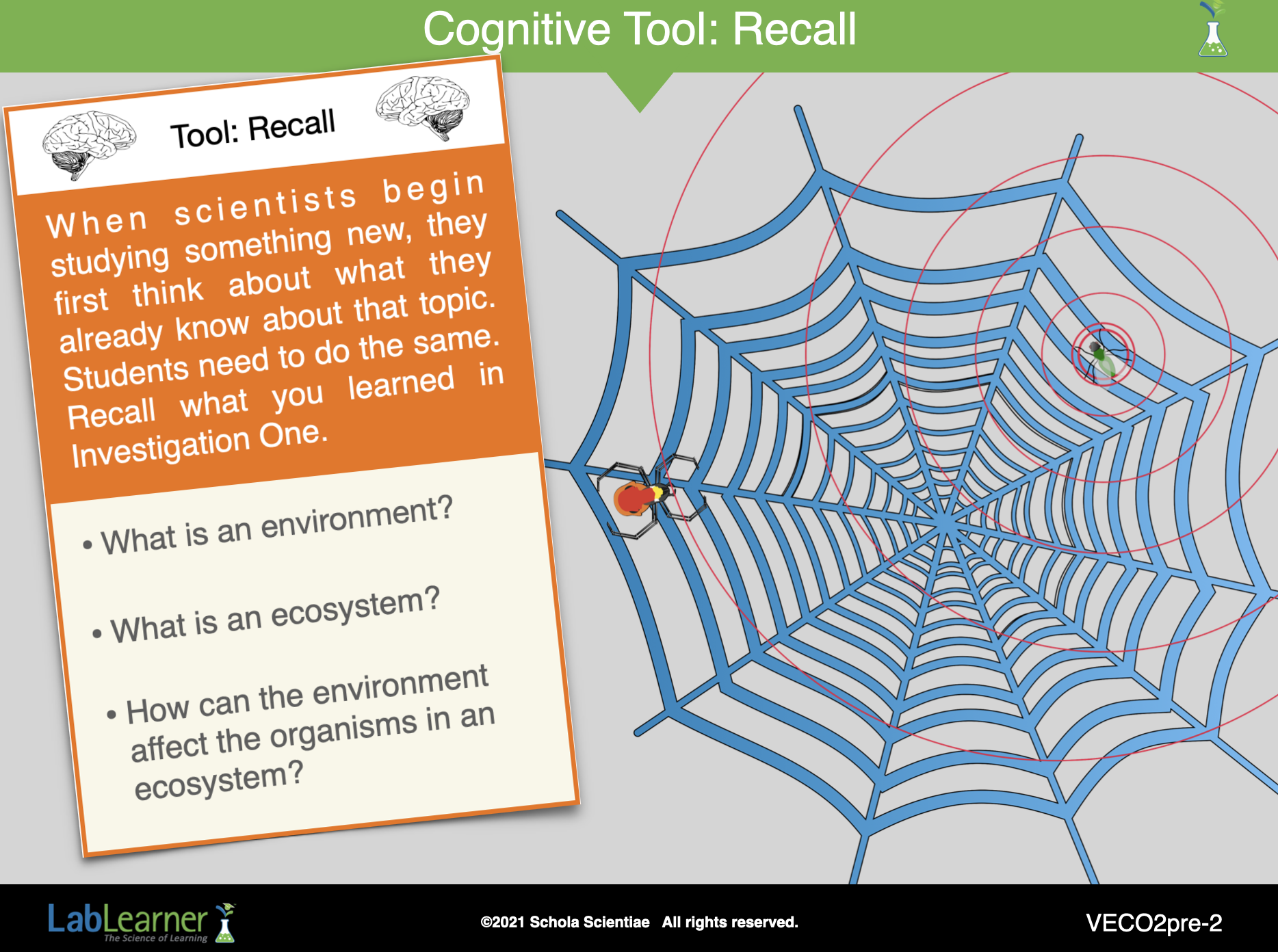
A. Begin the Investigation by reviewing ecosystems and the effects of the environment on organisms in an ecosystem.
Ask students to Recall the experiments that they performed in Investigation One. Use the following questions as a guide:
Ask students: What is an environment? Students should recall that an organism’s environment is made up of all the living and non-living things that surround the organism. An environment contains non-living things such as air, light, soil, lakes, mountains, and weather. An environment can also contain living things like trees and insects.
Ask students: What is an ecosystem? Students should recall that an ecosystem is a community of organisms and its non-living environment. In the previous investigation, the ecosystem contained a community of organisms including plants, deer, rabbits, wolves, mountain lions, and grizzly bears.
Ask students: How can the environment affect the organisms in an ecosystem? Student answers may vary. Students may recall the effects of drought and plant disease on the ecosystem in Investigation One. The loss of plants in both cases caused a decrease in population size for the organisms that depended on the plants for food or on animals that ate the plants for food. Guide students to discuss other ways the environment could affect organisms.
______________________________________________
SLIDE VECO2-pre-3
B. Explain that in this Investigation students will learn how organisms have unique structures and functions that mean they are well suited to exist in their environment.
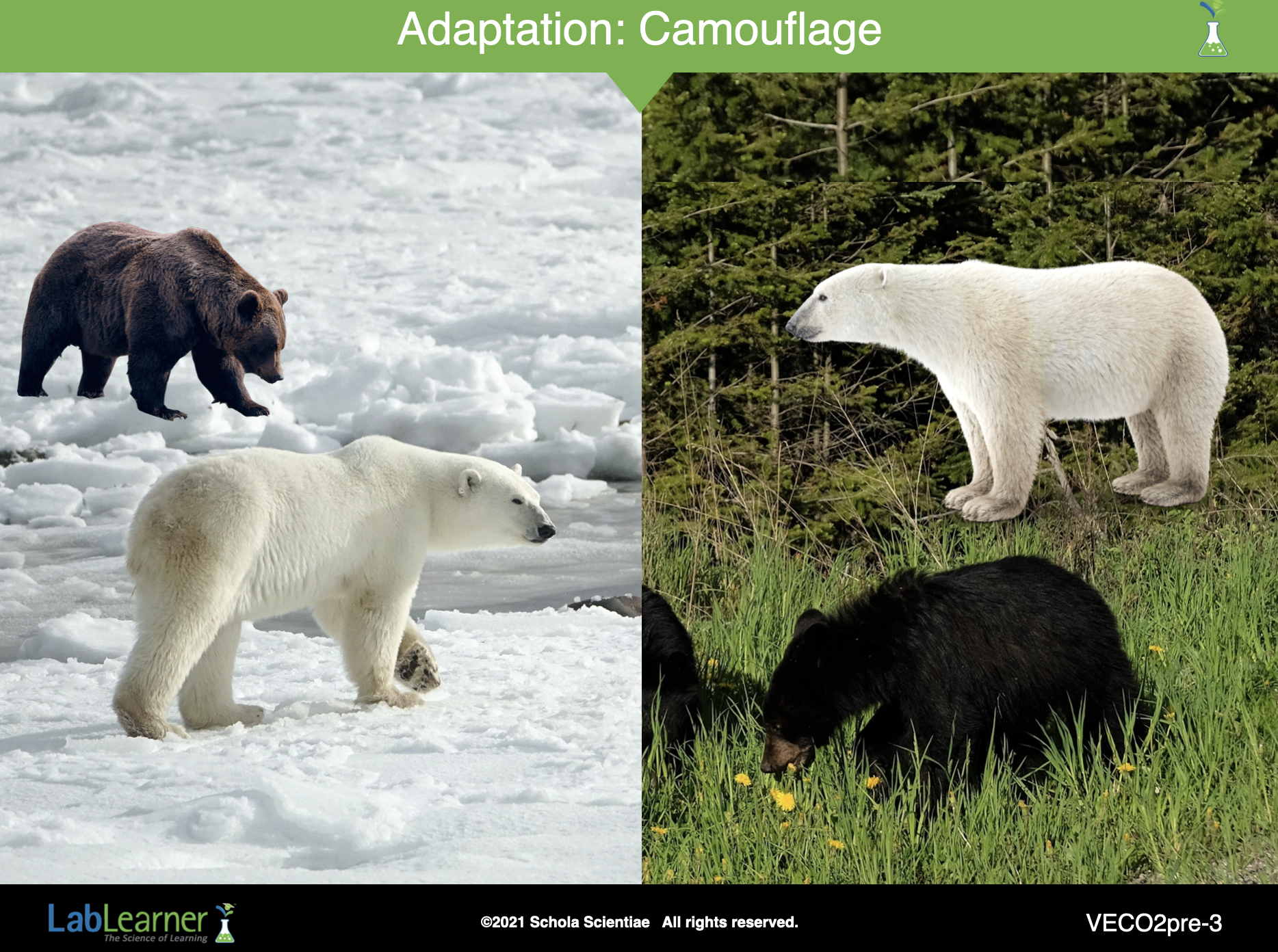
NOTE: This slide (left side) shows a picture of a polar bear in the Antarctic. The brown bear above it was superimposed into the scene to point out the adaptation in color that selects for light-colored bears in this particular environment. (Right) This is a picture of black bears in a temperate forest. In this case, a polar bear is superimposed into the scene.
1. Direct students to locate their Scientist’s Glossary. Introduce students to the term adaptation with the following steps:
a. Read the definition of adaptation as a class, or ask for a student volunteer to read the definition. Explain to students that an adaptation is any characteristic that enables an organism to survive in a particular environment.
Adaptation: a characteristic of an organism that allows it to survive more effectively in a particular environment.
b. Tell students that polar bears live in the arctic, a large region surrounding the North Pole that is extremely cold in winter and often snow-covered throughout the year.
Ask students: What adaptations do polar bears have that allow them to survive in the arctic? Student answers may vary. Guide students toward understanding that many of the characteristics of polar bears make them uniquely suited (or adapted) to the arctic environment. These adaptations include: white fur that acts as camouflage against the snow and ice, large feet that help distribute their weight over thin ice when walking, a thick layer of fat to help them keep warm, fur made of hollow hairs that trap air and help insulate them when in the icy water, slightly webbed toes and long legs that help them swim. Point out to students that these are different characteristics than those of other bears, like black bears, which are not adapted to live in the extreme arctic environment.
c. Ask students to work with a partner to think of three more animals or plants and to name one adaptation possessed by each. Discuss student answers and comment on the diversity of ideas or the similarity between ideas as appropriate.
2. Tell students that they will be looking at adaptations of organisms that allow them to survive in two different ecosystems – forests and wetlands.
NOTE: There are different kinds of forest ecosystems, including rainforests and coniferous forests. The definition of forest used in this CELL is for temperate deciduous forests. These forests are characterized by trees that lose their leaves in the fall.
______________________________________________
SLIDE VECO2-pre-4
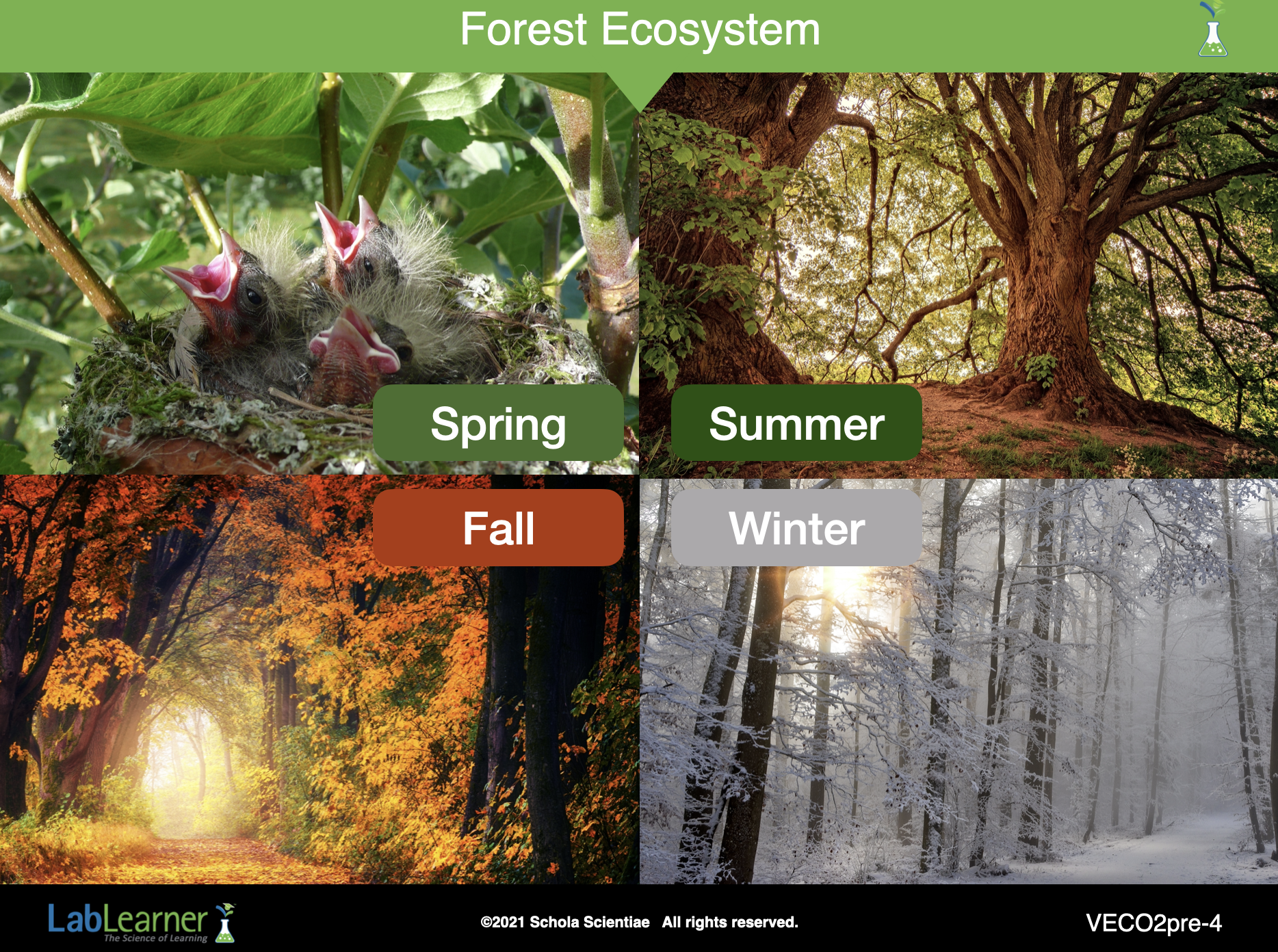
C. Introduce students to forest ecosystems.
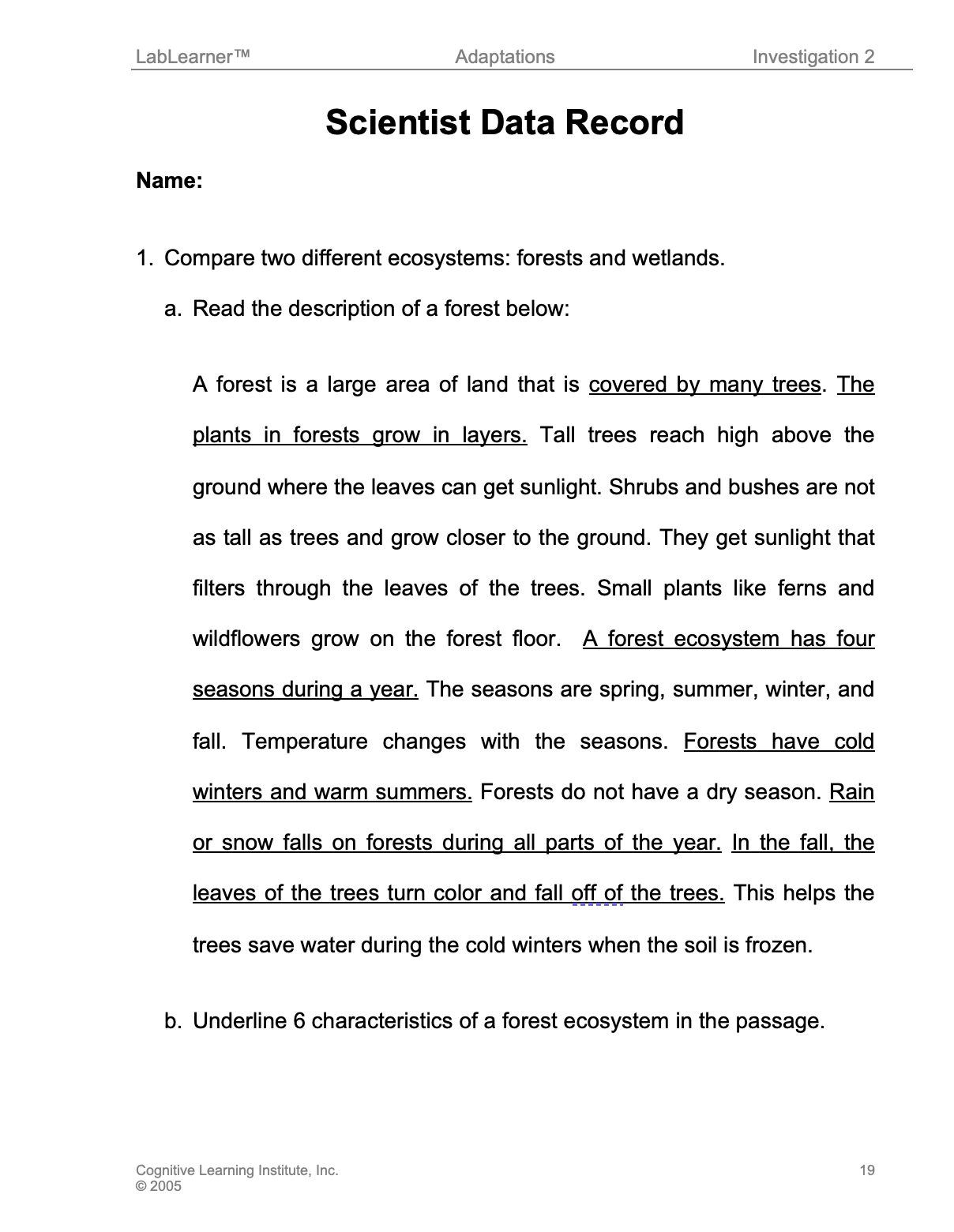
1. Ask students: What is a forest? Student answers may vary. Students may indicate that forests have large numbers of trees or give examples of animals that are found in forests. Tell students that they will be reading a passage that describes characteristics of forests.
2. Ask for a student volunteer to read aloud the passage about forest ecosystems in Problem 1a of the Student Data Record.
“A forest is a large area of land that is covered by many trees. The plants in forests grow in layers. Tall trees reach high above the ground where the leaves can get sunlight. Shrubs and bushes are not as tall as trees and grow closer to the ground. They get sunlight that filters through the leaves of the trees. Small plants like ferns and wildflowers grow on the forest floor. A forest ecosystem has four seasons during a year.
The seasons are spring, summer, winter, and fall. Temperature changes with the seasons. Forests have cold winters and warm summers. Forests do not have a dry season. Rain or snow falls on forests during all parts of the year. In the fall, the leaves of the trees turn color and fall off of the trees. This helps the trees save water during the cold winters when the soil is frozen.”
3. After students have read the passage, guide students through the reading and help them find and underline 6 characteristics of forest ecosystems.
______________________________________________
SLIDE VECO2-pre-5
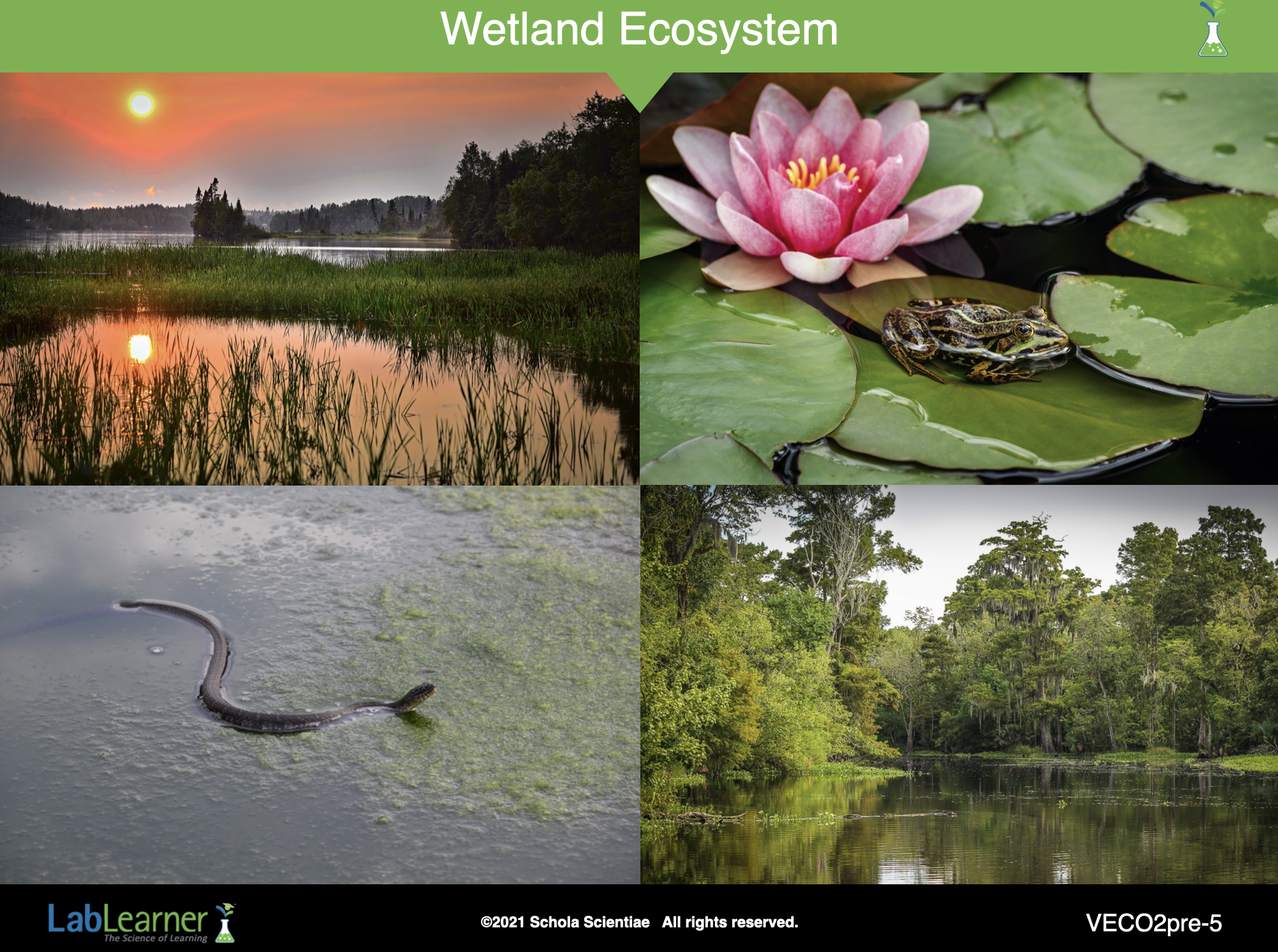
D. Introduce students to wetland ecosystems.
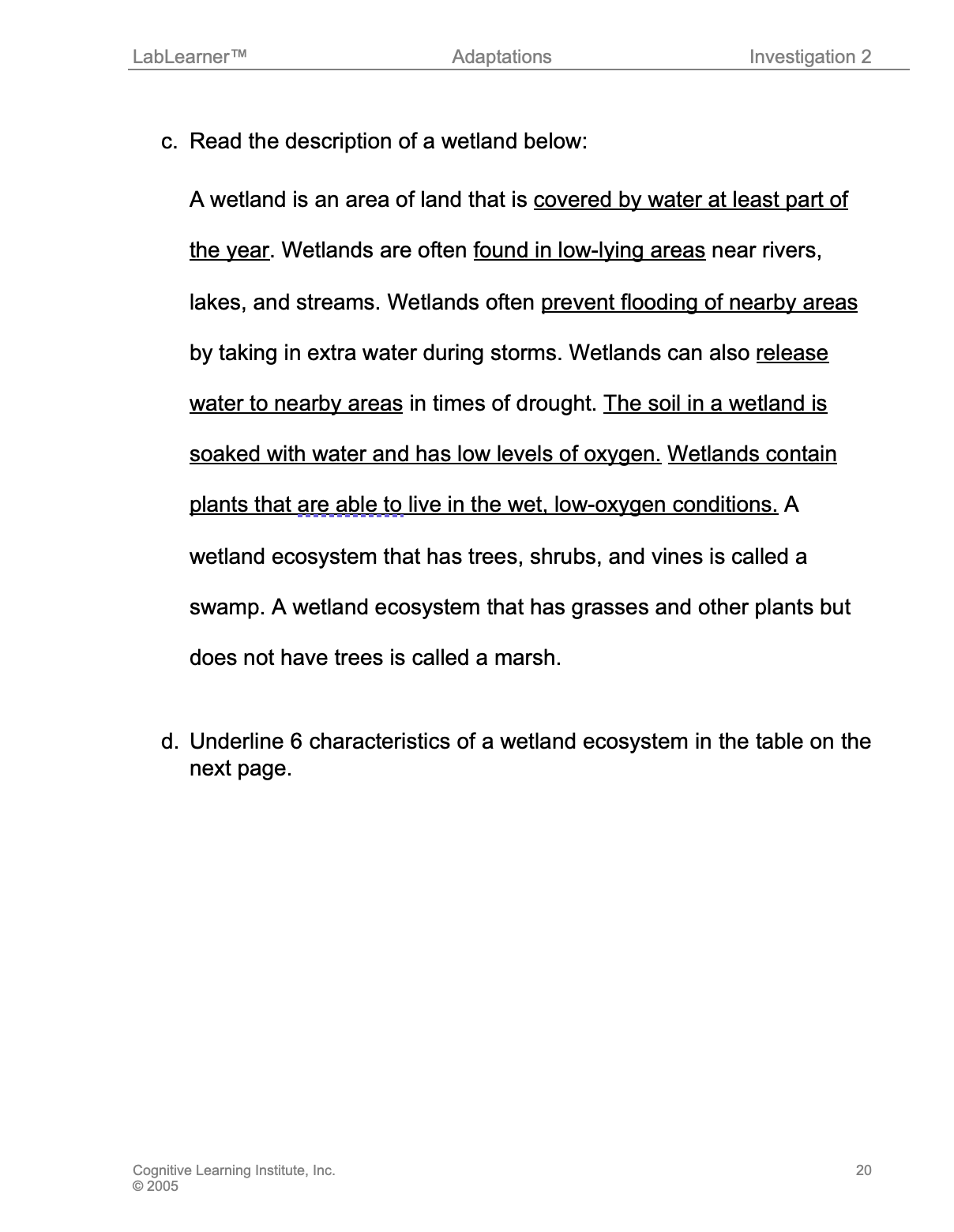
1. Ask students: What is a swamp? Student answers may vary. Students may indicate that swamps are areas filled with water and trees or give examples of animals typically found in swamps. Tell students that a swamp is an example of a type of ecosystem called a wetland. Other examples include marshes and bogs.
2. Ask for a student volunteer to read aloud the passage about wetland ecosystems in problem 1c of the Scientist Data Record.
“A wetland is an area of land that is covered by water at least part of the year. Wetlands are often found in low-lying areas near rivers, lakes, and streams. Wetlands often prevent flooding of nearby areas by taking in extra water during storms. Wetlands can also release water to nearby areas in times of drought. The soil in a wetland is soaked with water and has low levels of oxygen. Wetlands contain plants that are able to live in the wet, low-oxygen conditions. A wetland ecosystem that has trees, shrubs, and vines is called a swamp. A wetland ecosystem that has grasses and other plants but does not have trees is called a marsh.”
3. After students have read the passage, guide students through the reading and help them find and underline 6 characteristics of wetland ecosystems.
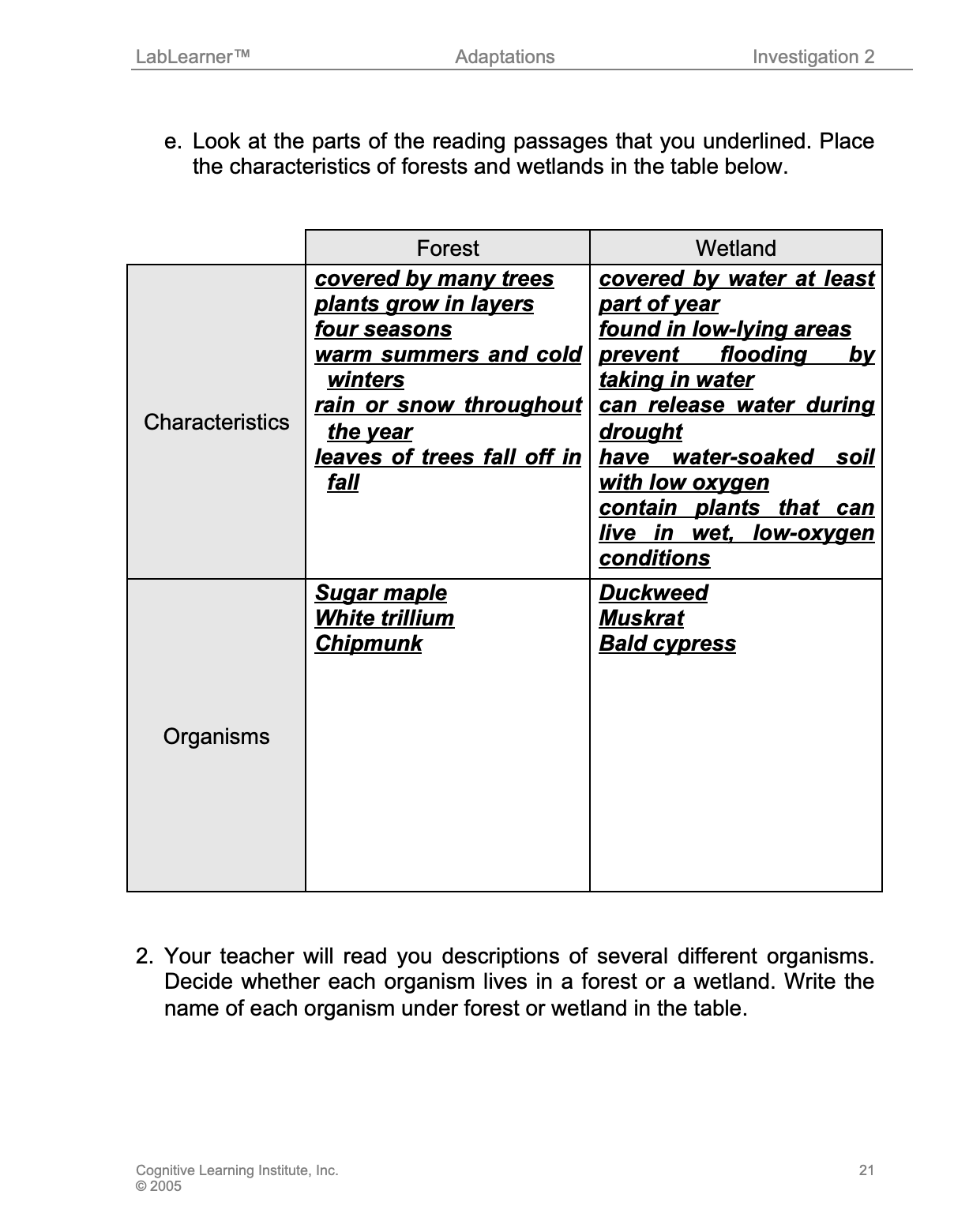
E. After students have read the passages and underlined the characteristics of both forests and wetlands, direct students to transfer the characteristics of both ecosystems to the table in Problem 1e of the Student Data Record.
______________________________________________
SLIDE VECO2-pre-6
F. Read the following descriptions of organisms to students. Help students to identify whether each one is a plant or animal. After you read each description, ask the students to write the name of the plant or animal in the table under the appropriate ecosystem. If desired, decide as a class before recording individually.
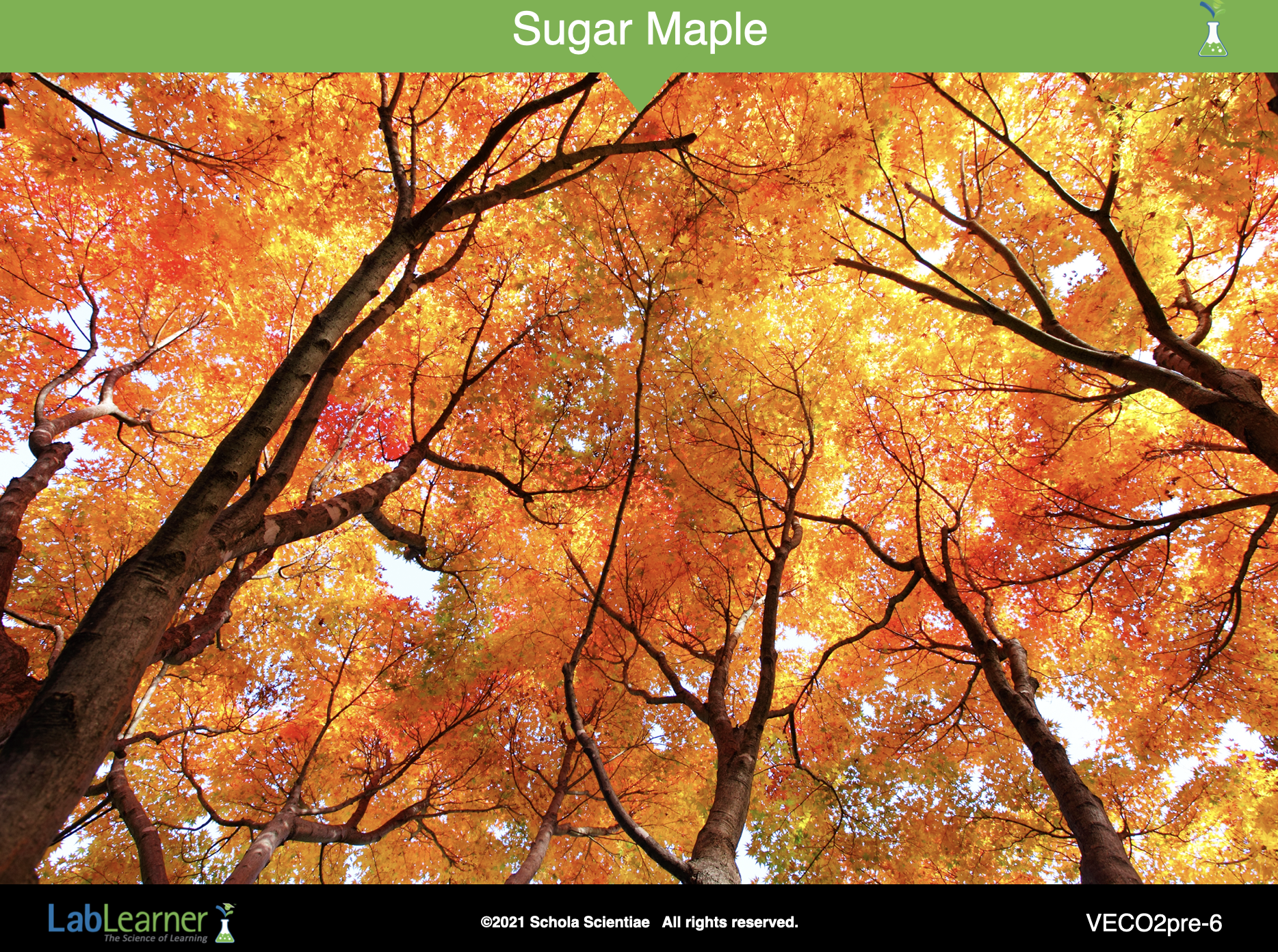
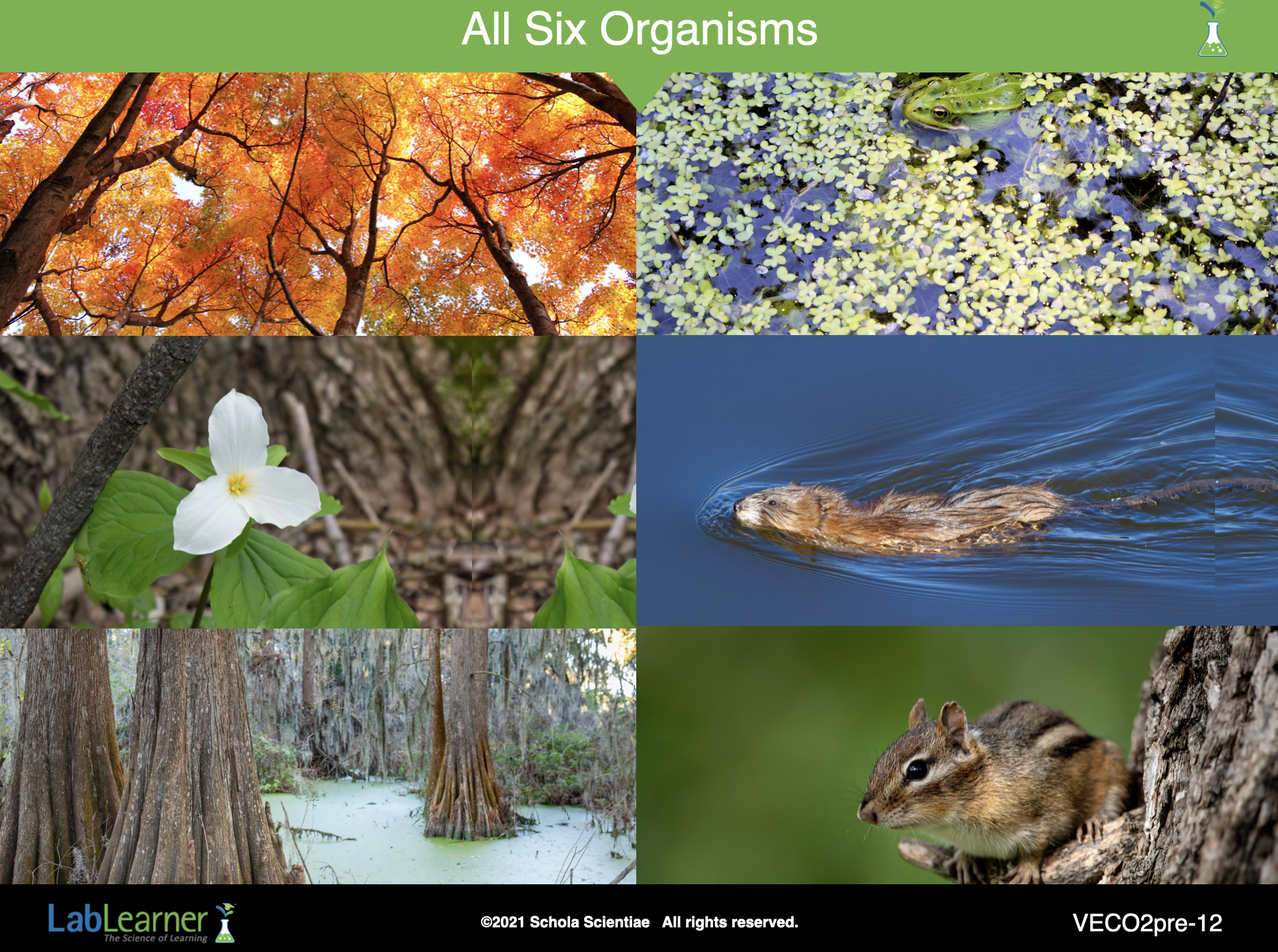
1. Sugar maple – These trees prefer soil that is moist but not too wet. They can grow in the shade of other trees. In the fall, the leaves turn yellow and then red.
______________________________________________
SLIDE VECO2-pre-7
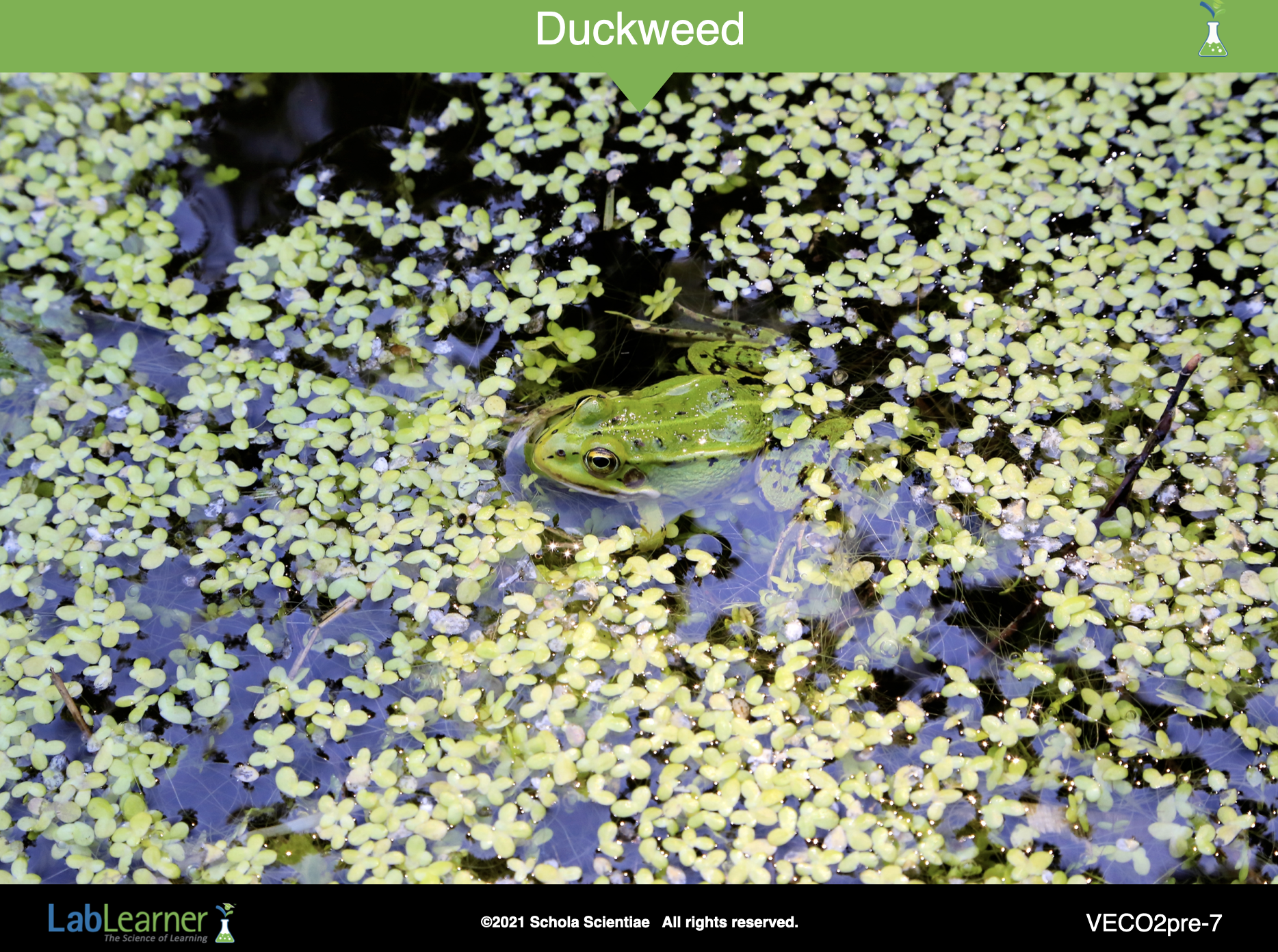
2. Duckweed – These plants have waxy leaves that protect them from constant contact with the water.
______________________________________________
SLIDE VECO2-pre-8
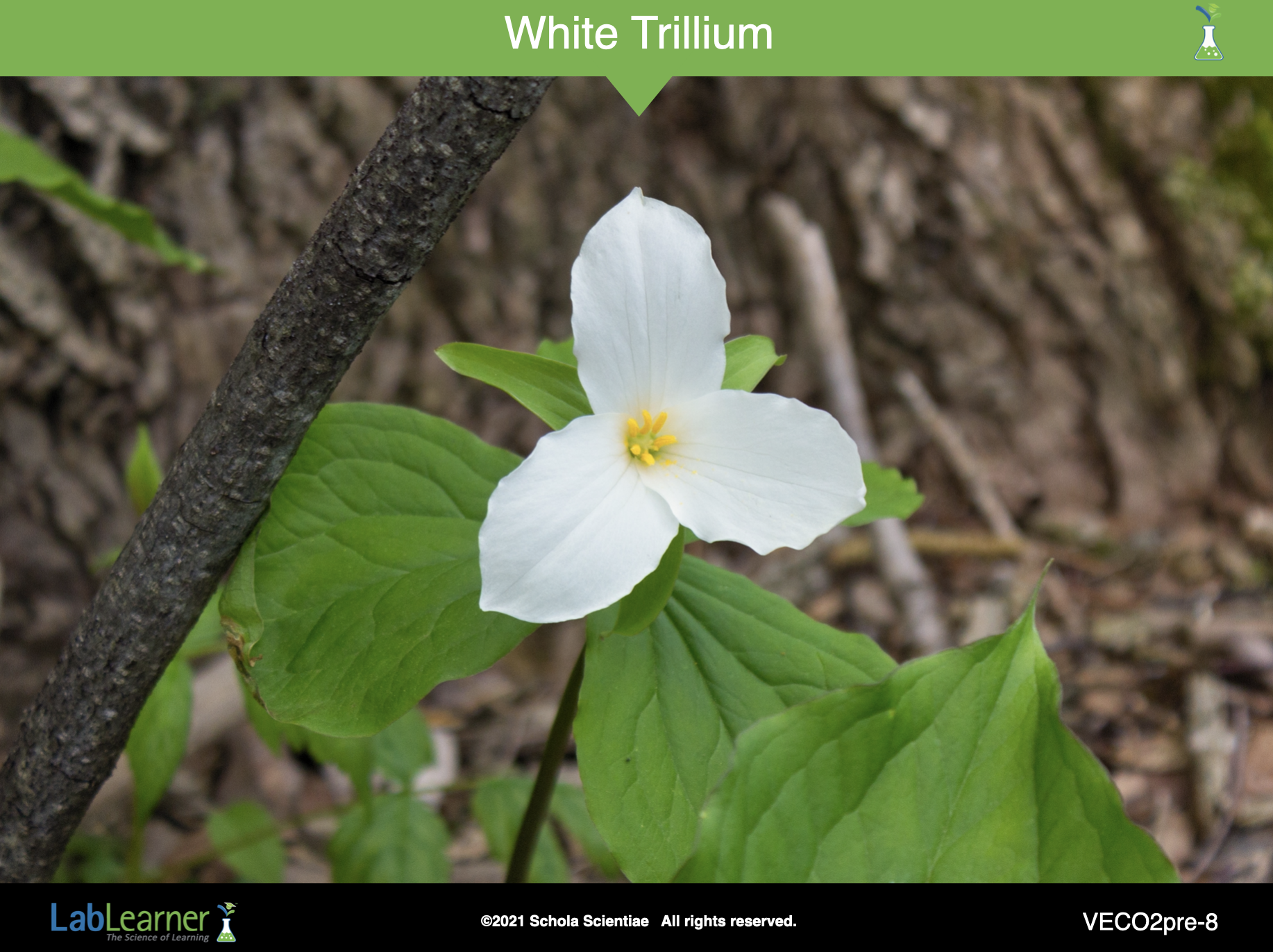
3. White Trillium – These short plants can grow in shade or partial shade. They have white flowers in the spring when there is more sunlight.
______________________________________________
SLIDE VECO2-pre-9
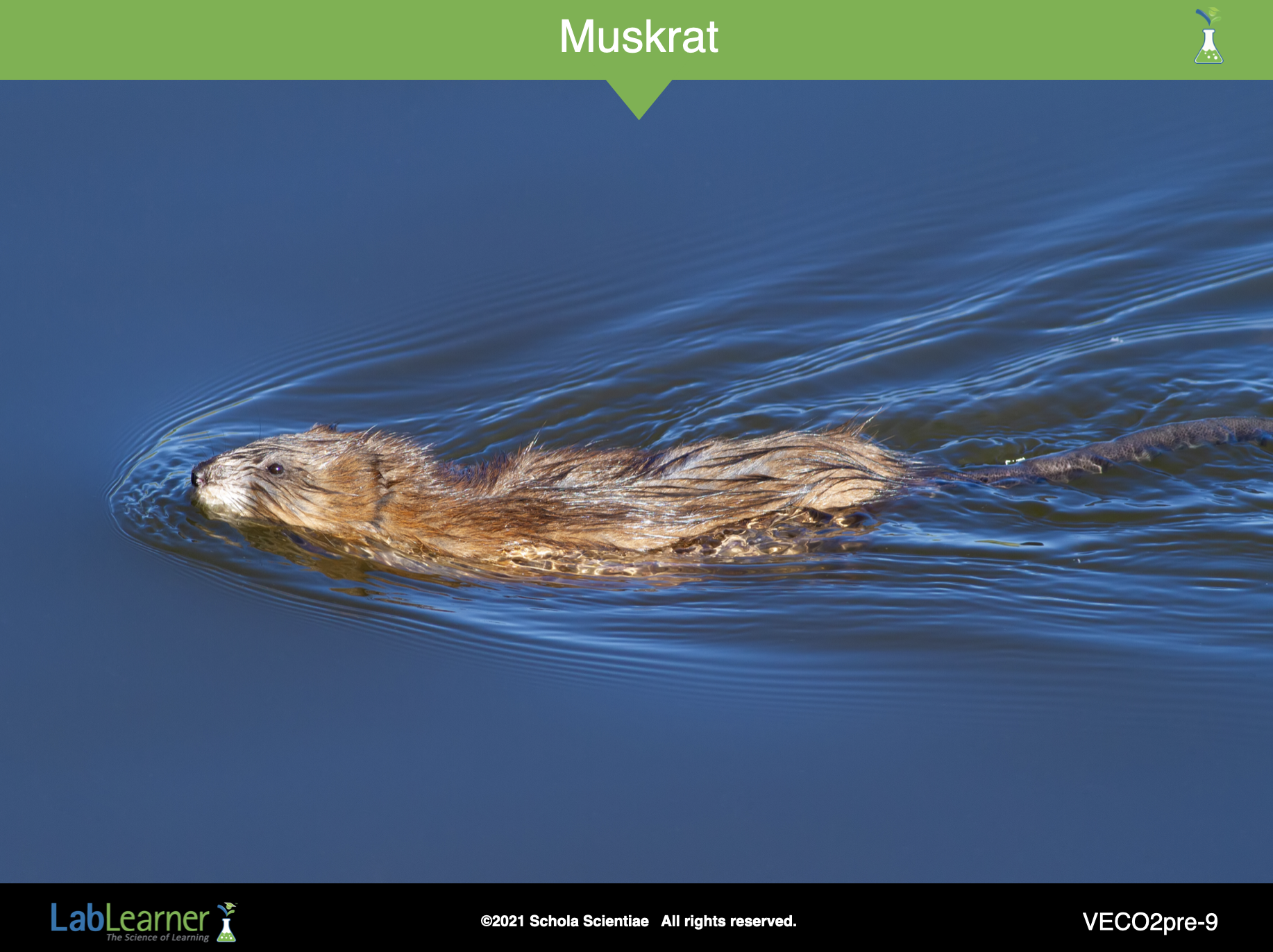
4. Muskrat – These animals have long flat tails, strong hind legs, and waterproof fur – characteristics that make them excellent swimmers.
______________________________________________
SLIDE VECO2-pre-10
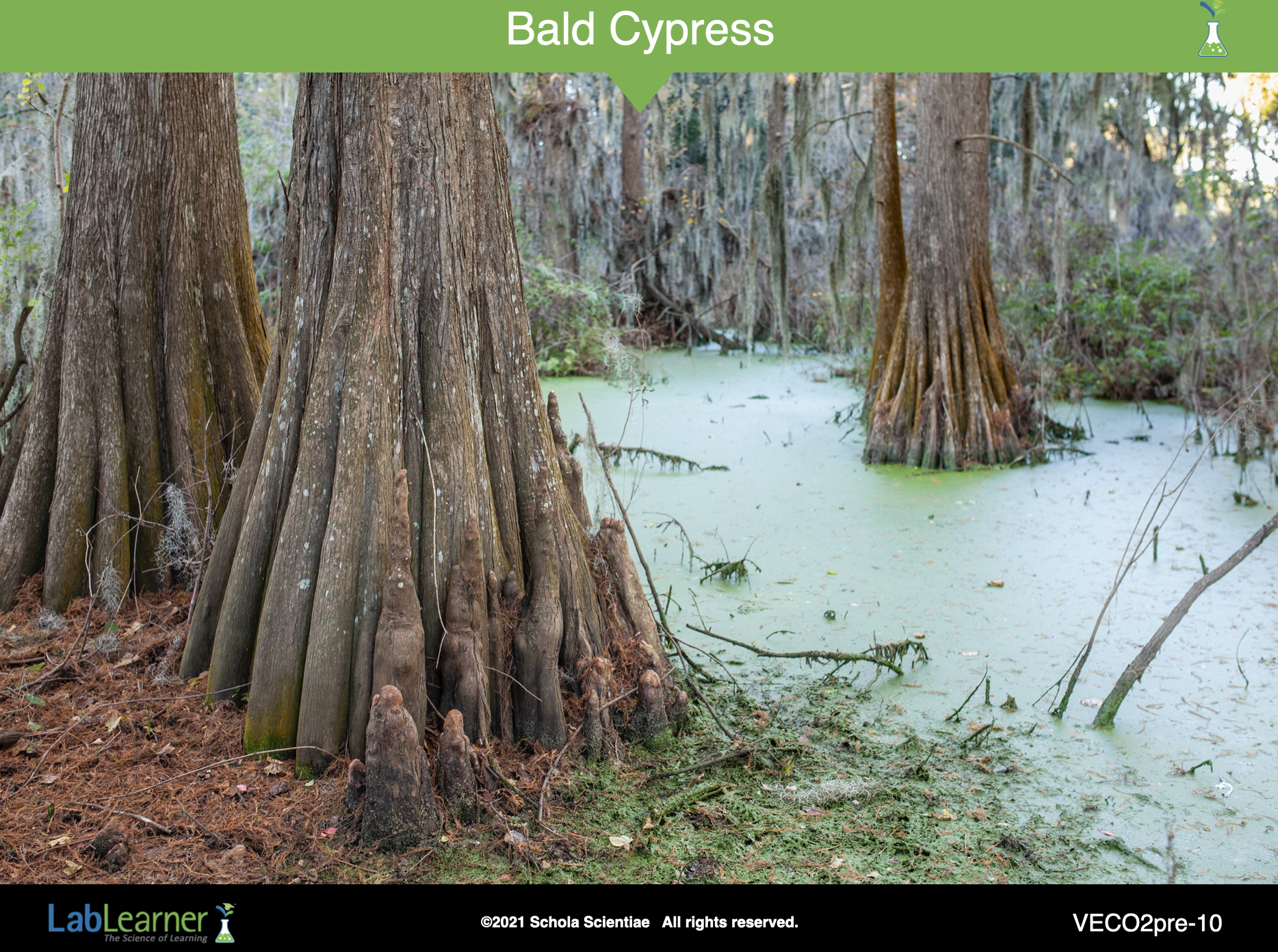
5. Bald Cypress – These trees have wide bases and roots that give support to the trees and anchors the trees in wet soil.
______________________________________________
SLIDE VECO2-pre-11
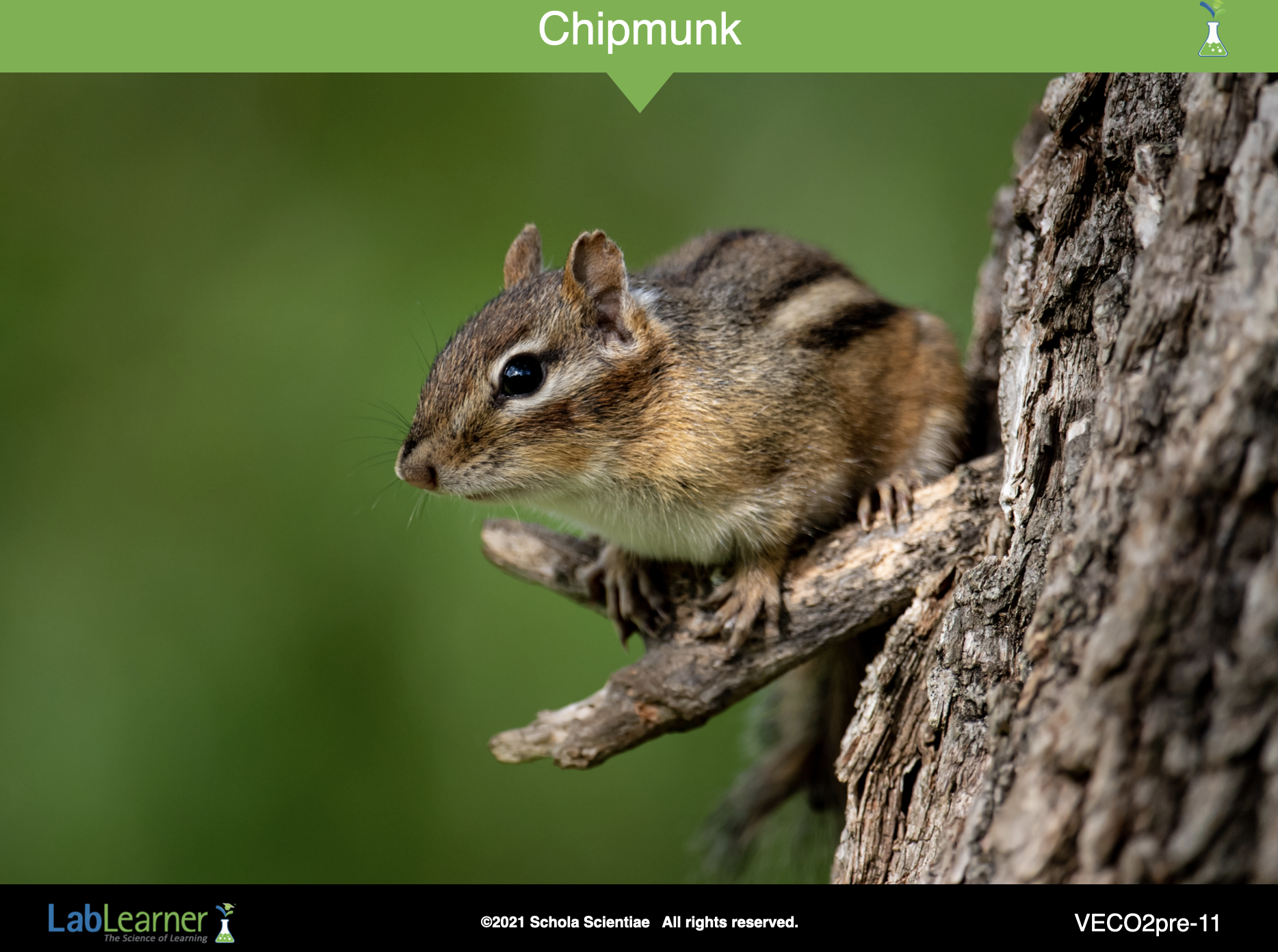
6. Chipmunk – These animals like to make their burrows in rotting logs. In winter, these animals rely on seeds and nuts stored in their burrows for food and come out of hibernation in the spring.
______________________________________________
SLIDE VECO2-pre-12
G. Lead a discussion about plant and animal adaptations with the following questions:
1. Ask students: Which organisms live in the forest ecosystem? The sugar maple, white trillium, and chipmunk live in the forest ecosystem.
2. Ask Students: How did you decide which organisms belonged in the forest ecosystem? Student answers may vary. The leaves fall off of sugar maple trees in the fall, which is a characteristic of trees in forests. Also, sugar maples do not like wet soil, which would be found in wetlands. Forests are shady. Both sugar maples and white trilliums can grow in the shade. There is more sunlight in forests in the spring before the trees get leaves, and trilliums flower in the spring when there is more sunlight. Forests would have logs for chipmunks to live in. Also, forests have four seasons, and chipmunks hibernate in the winter when it is cold.
3. Ask students: Which organisms live in the wetland ecosystem? Duckweed, muskrats, and bald cypress trees are found in wetland ecosystems.
4. Ask students: How did you decide which organisms belonged in the wetland ecosystem? Student answers may vary. Duckweed has waxy leaves that protect it from water. This would be good for wetlands but unnecessary in forests. Muskrats are good swimmers, so they would be found in wetlands. Bald cypress trees have characteristics that allow them to grow in very wet soil, which is found in wetlands.
5. Ask students: Do you think a sugar maple tree could live in a wetland? Why? No. Sugar maples are not found in wetlands because they do not grow well in soil that is very wet.
6. Ask students: Do you think a muskrat could live in a forest? Why? Student answers may vary. Muskrats are found in wetlands where water is plentiful. However, students may correctly suggest that forests that contain rivers may be home to muskrats as well. This would provide a wetland environment within a forest.
7. Guide students to understand that each organism had adaptations (special characteristics) that allowed it to live in its particular ecosystem. Although some organisms may be able to live in both ecosystems, other organisms may not have the characteristics necessary to survive in a different environment.
Ask students: What would happen to the organisms in an ecosystem if a change occurs in the environment? If a change occurs in the environment of an ecosystem, only animals with characteristics that are suited for the new environment will do well and survive.
______________________________________________
SLIDE VECO2-pre-13
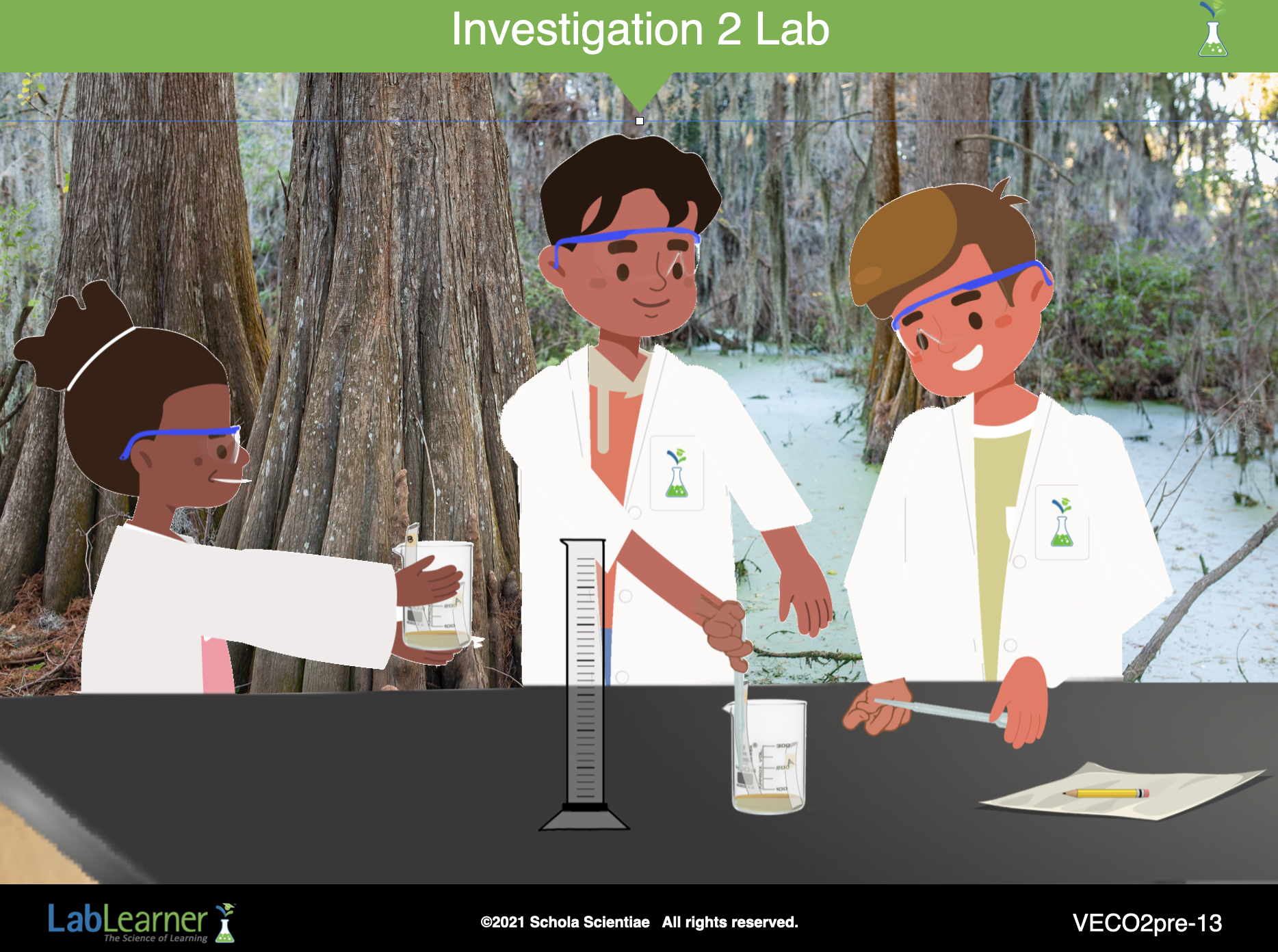
Tell students that in this Investigation they will create models of different plants to see which are best adapted to different environments.
Student Video
Watch the Investigation 2 Student Video after the Share It presentation to prepare for the PreLab.
KEYS