Teacher Portal:
Exploring Ecosystems
Investigation 2 – PostLab
 PRINT IT
Use your browser to download a printable PDF as help during the slide presentation and to make additional notes. In your browser, go to File > Print and then choose to save as PDF.
NAVIGATE IT
Once the slide presentation is launched
- use your left and right arrows to advance or go back in the slide presentation, and
- hover your mouse over the left edge of the presentation to get a view of the thumbnails for all the slides so that you can quickly move anywhere in the presentation.
- Click HERE to launch the slide presentation for the CELL.
SHARE IT

SLIDE VECOSYS2-post-1
This was the second Investigation of the LabLearner CELL Exploring Ecosystems. In it, students learned about adaptations.
______________________________________________
SLIDE VECOSYS2-post-2
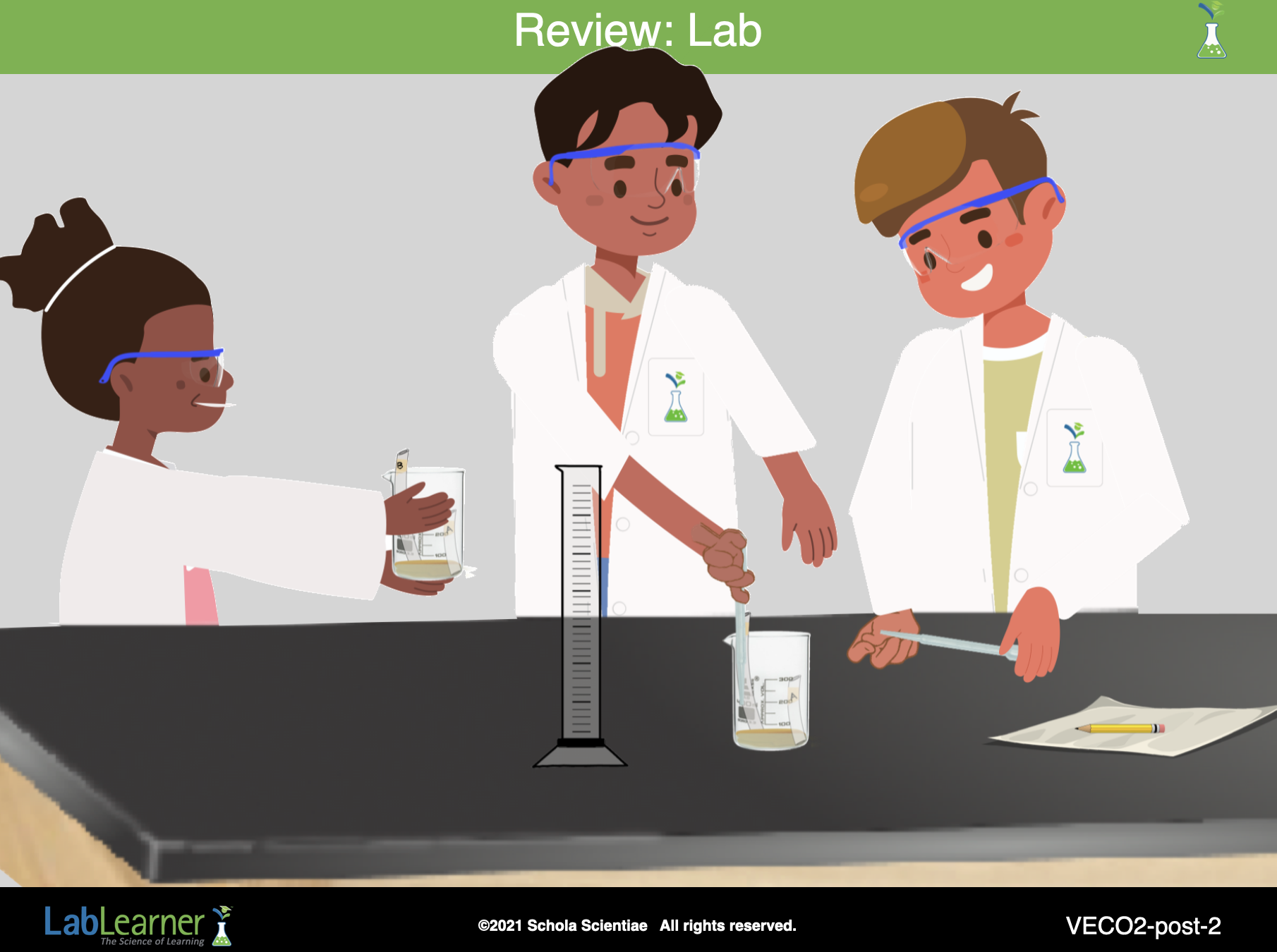
A. Begin the analysis of the Lab by helping students to remember the experiments they conducted. The following questions may be helpful in prompting student discussion:
1. Ask students: What did you investigate in the Lab? Students investigated the ability of plants to survive under different environmental conditions and in different ecosystems.
2. Ask students: Can you summarize what you did in the experiments? Students should indicate that they modeled plants in wetland and forest ecosystems. They looked at the effect of drought on the ability of plants to survive in the wetland ecosystem. They looked at the ability of a wetland plant to survive in a forest ecosystem, and they looked at the ability of plants to survive high winds in a forest ecosystem.
______________________________________________
SLIDE VECOSYS2-post-3
B. Review the models and what each represented. Use the following questions to aid in initiating student discussion. Students may wish to refer to the Scientist’s Glossary and the Student Data Record during the discussion.
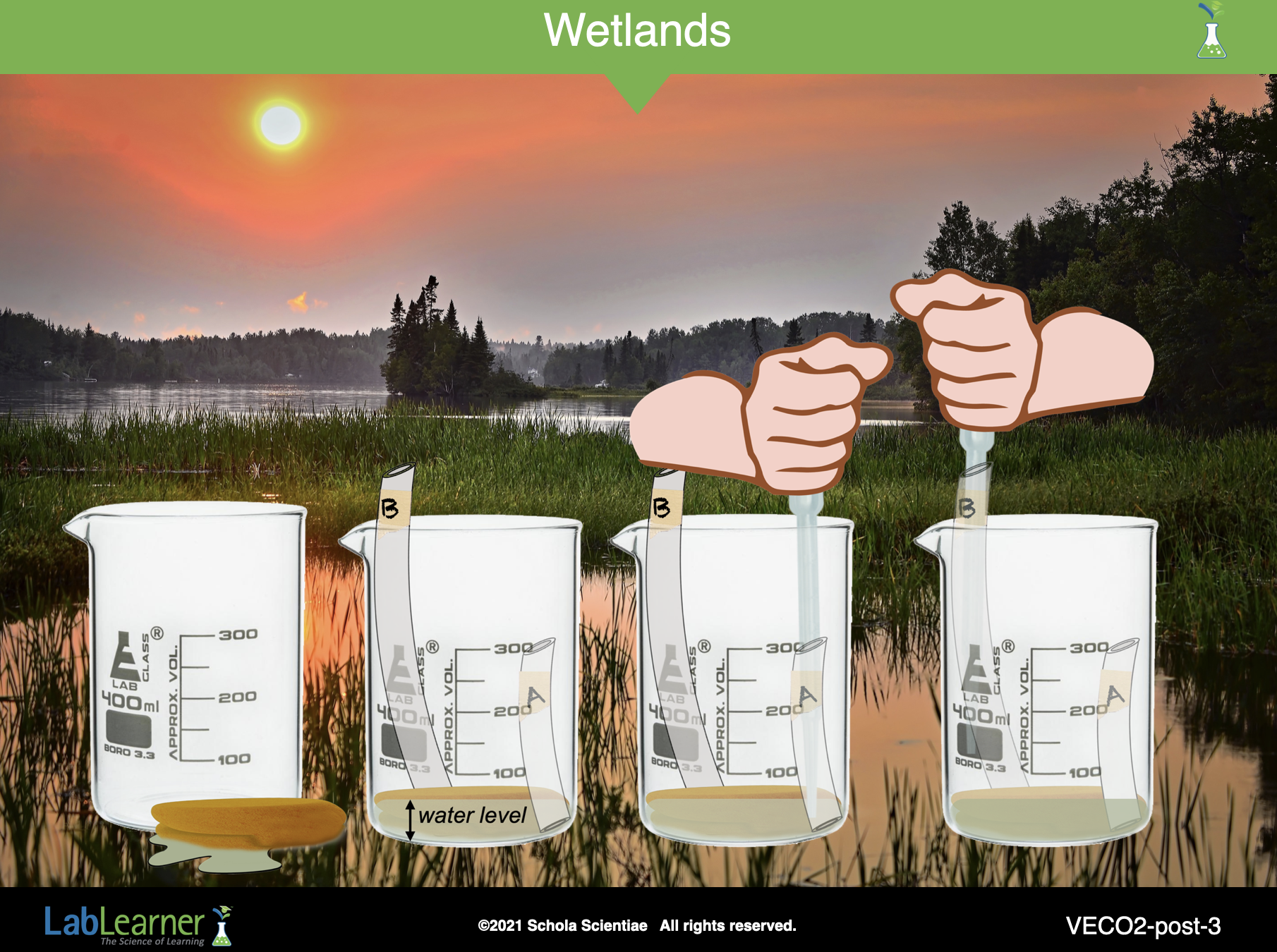
1. Ask Students: What is a wetland? How did you model a wetland? A wetland is an area of land that is often covered by water and has soil that is soaked with water. The wetland ecosystem was modeled with a beaker containing a folded sponge and 100 ml of water. Plants in the wetland were modeled by tubing.
2. Ask students: How did you model a drought in the wetland? The drought was modeled by removing some of the water (70 ml) from the wetland model.
______________________________________________
SLIDE VECOSYS2-post-4
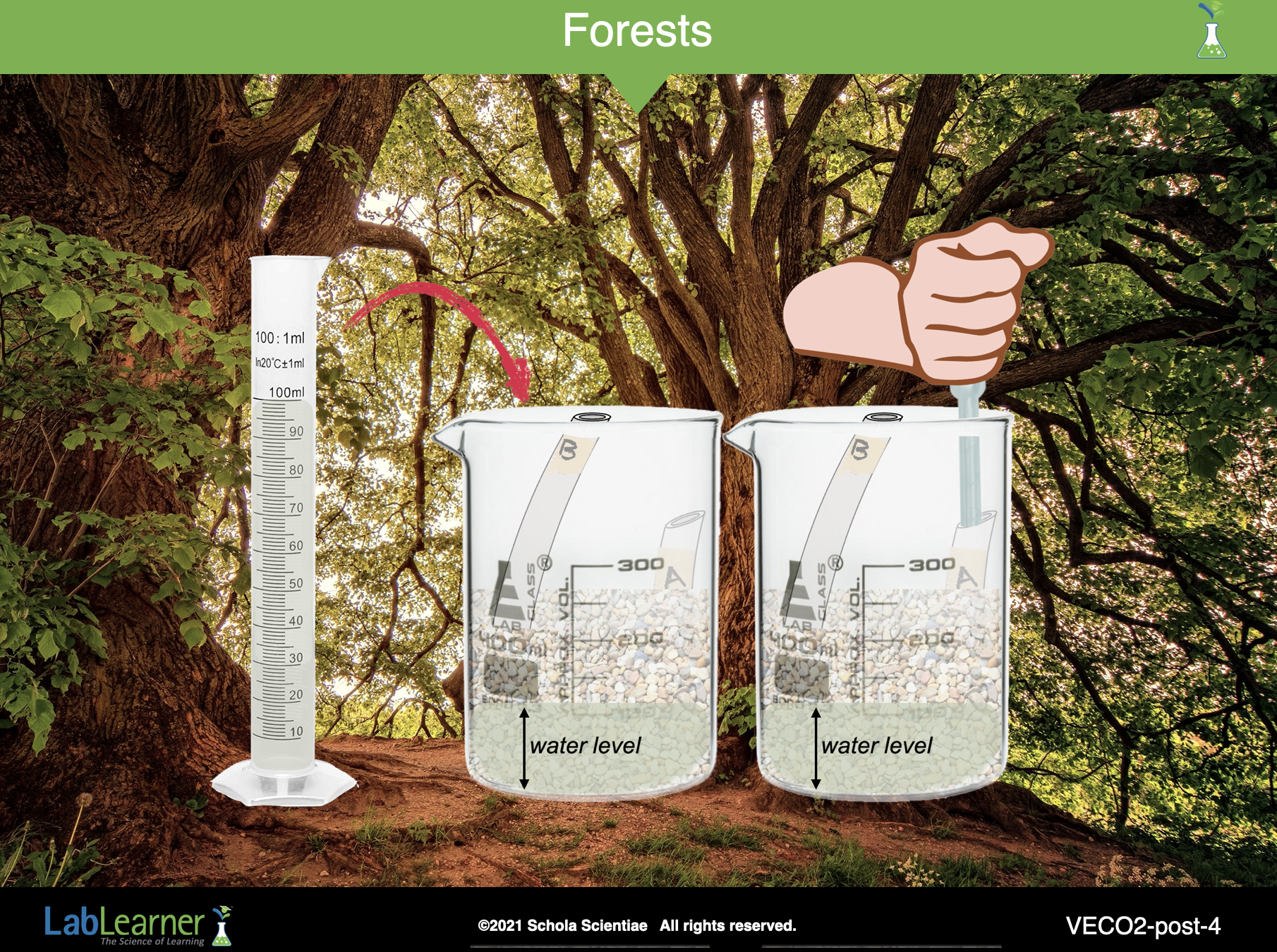
3. Ask students: What is a forest? How did you model a forest? A forest is an area of land covered with a large number of trees and shrubs. The forest ecosystem was modeled with a beaker containing gravel and 100 ml of water. Plants in the forest were modeled with straws.
4. Ask students: How did you model strong winds in the forest? Strong winds were modeled by pushing the trees with the side of a finger.
______________________________________________
SLIDE VECOSYS2-post-5
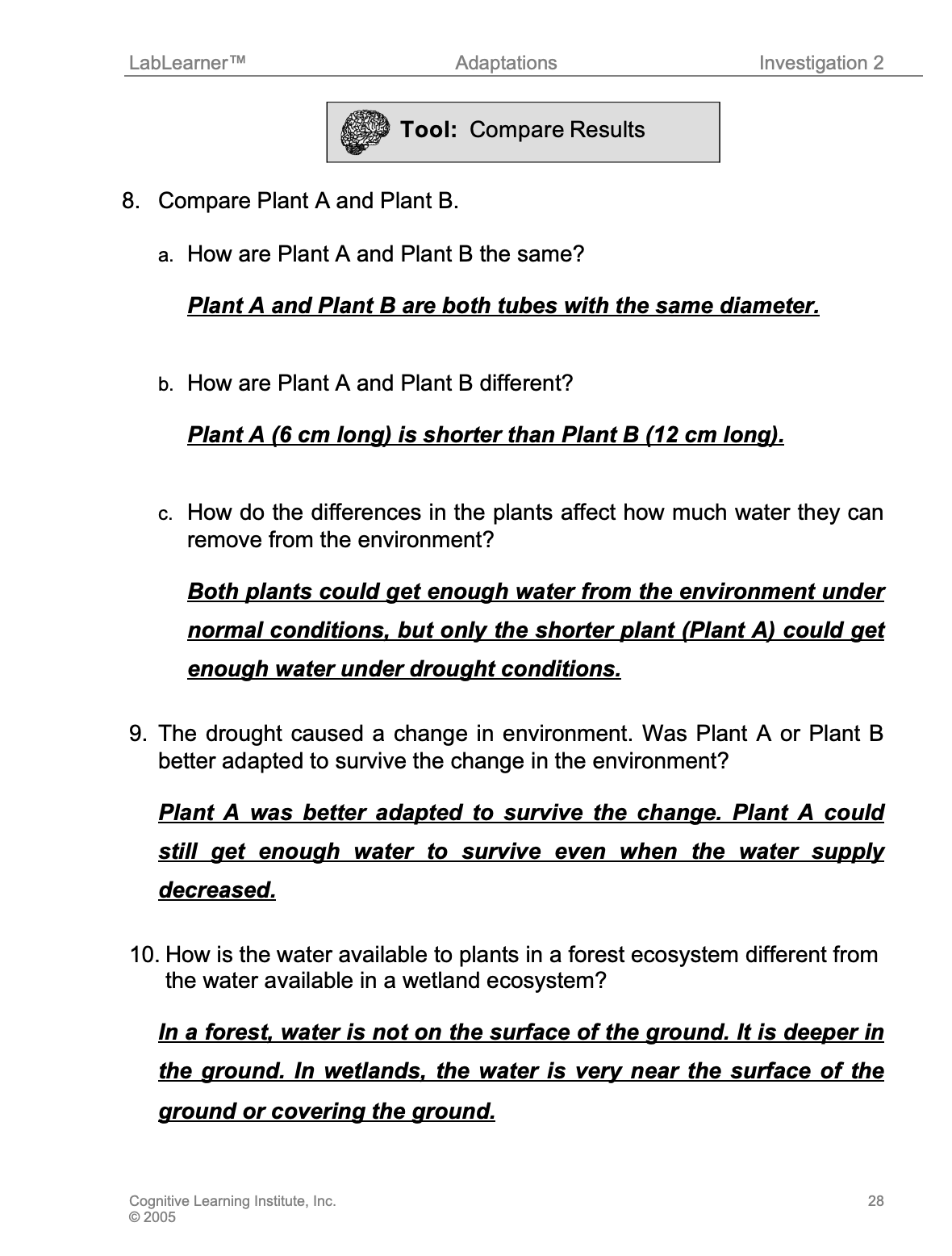
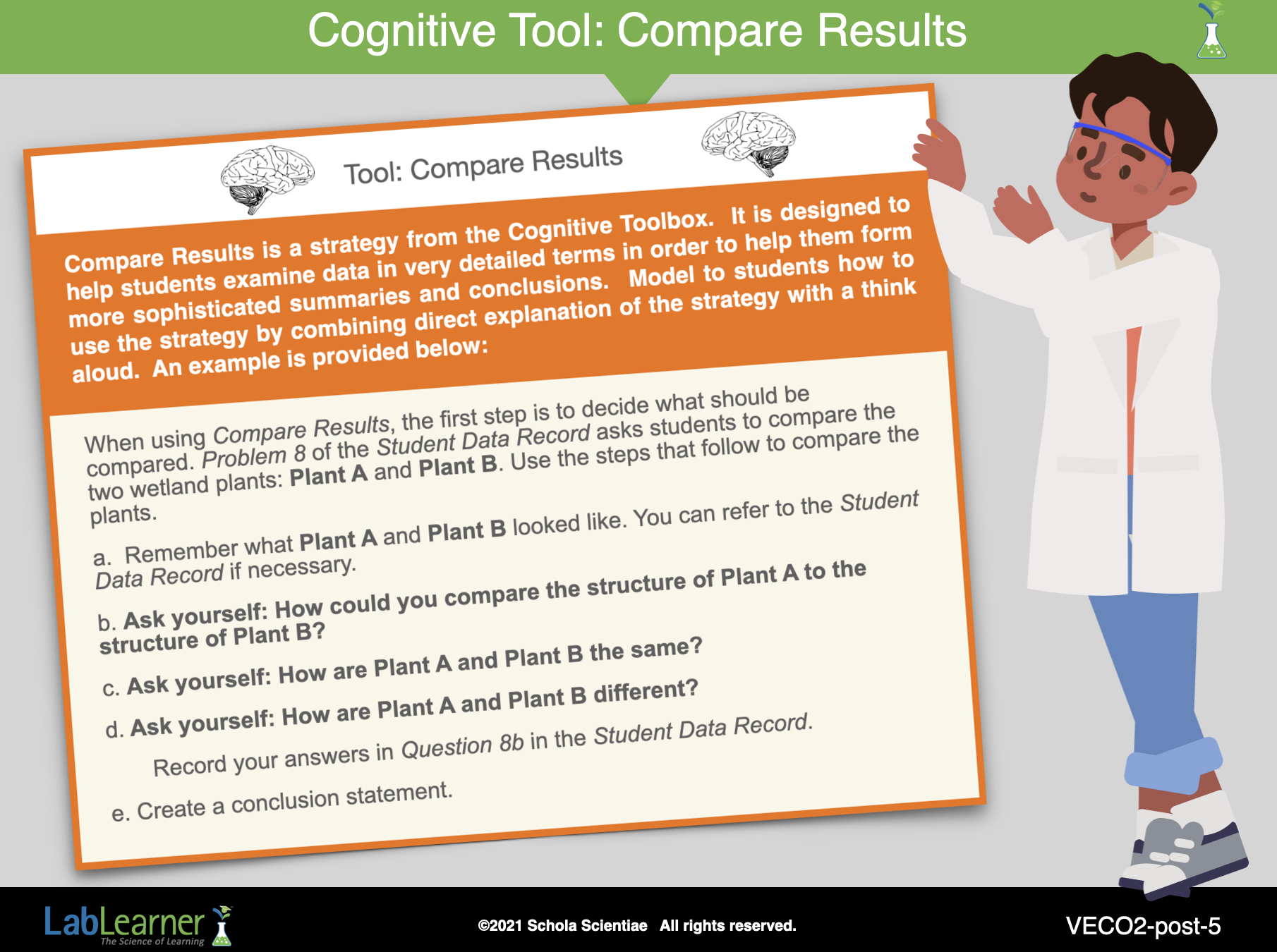
C. Read Problem 8 in the Student Data Record or ask for a student volunteer to read the question aloud.
1. Model the Cognitive Tool, Compare Results.
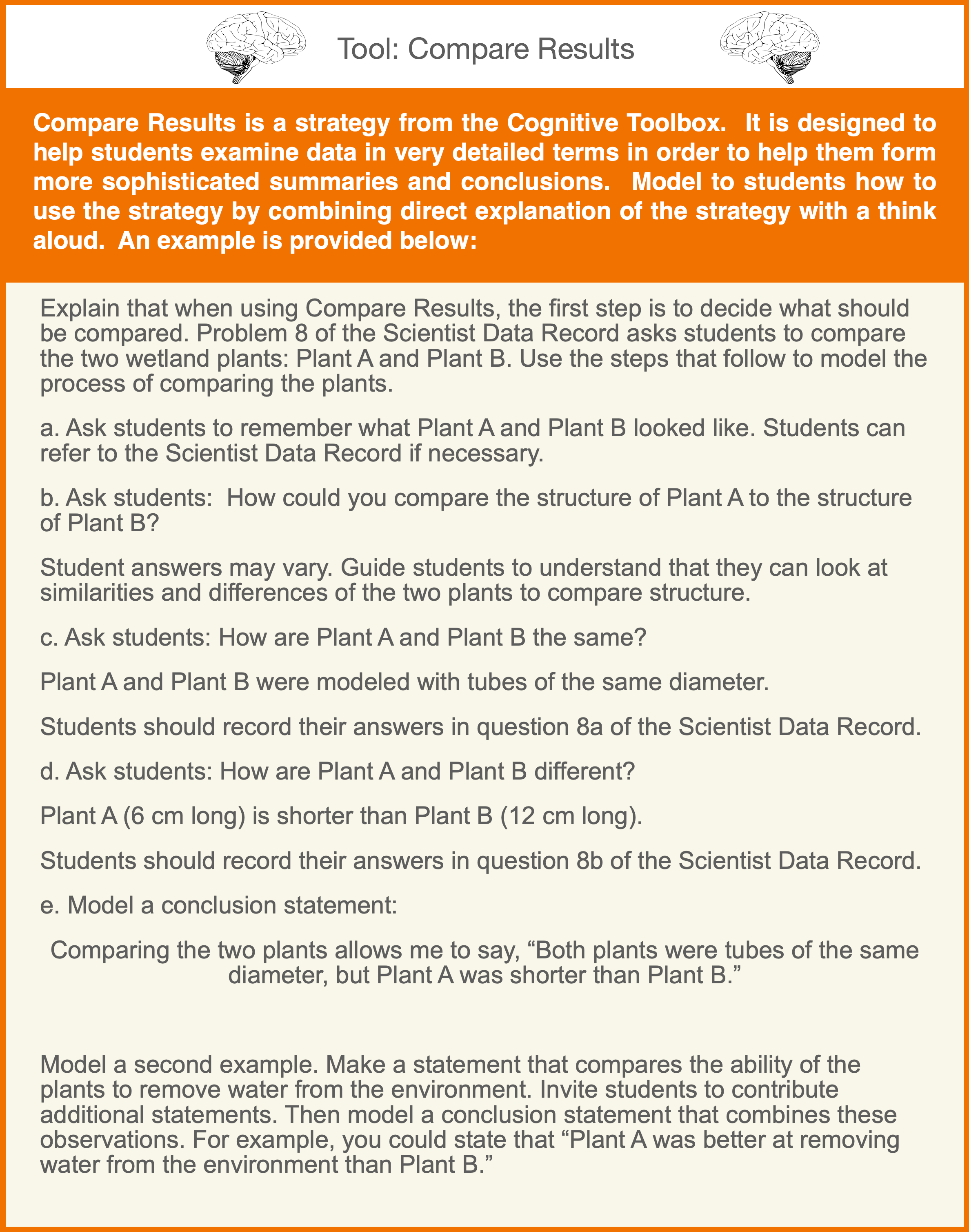
2. Students should record their answers in Problem 8c.
______________________________________________
SLIDE VECOSYS2-post-6
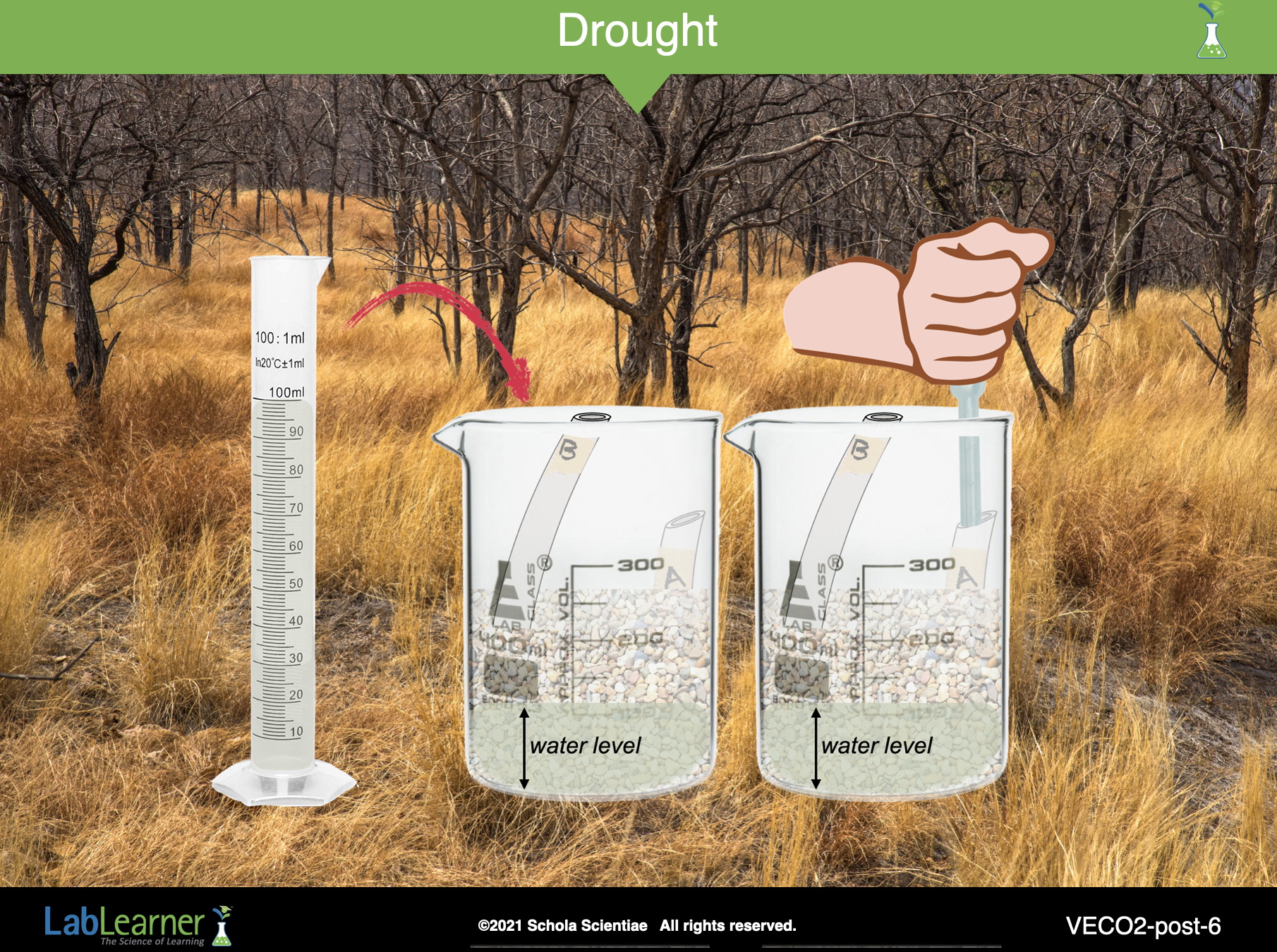
D. Review adaptations with the students. Remind students that an adaptation is a characteristic of an organism that helps it live in its environment. Tell students that in this Investigation they were looking at how different plant structures (adaptations) helped them function in different environments.
1. Direct students to answer Problems 9 – 12 in the Student Data Record:
a. The drought caused a change in the environment. Ask students: Was Plant A or Plant B better adapted to survive the change in the environment? Plant A was better adapted to survive the change. Plant A could still get enough water to survive even when the water supply decreased.
b. Ask students: How is the water available to plants in a forest ecosystem different from the water available to plants in a wetland ecosystem? In a forest, water is not on the surface of the ground. It is deeper in the ground. In wetlands, water is very near the surface of the ground or covers the ground.
c. Ask students: Was Plant A adapted to live in the forest? No, Plant A could not get enough water in the forest.
d. Ask students: What kind of adaptations would a plant need to survive in a forest? Student answers may vary. The plant would need structures to get water from deep within the ground, such as longer plant roots.
2. Ask students: How does the structure of a plant affect its ability to survive in a wetland or a forest? Both Plant A and Plant B were long tubes. This structure allowed them to get the necessary amount of water from the wetland. However, when there was a drought, the taller plant (Plant B) could not get enough water, so it could no longer survive in the wetland. Plant A could not survive in a forest because it did not have structures that could get water from deep within the ground.
______________________________________________
SLIDE VECOSYS2-post-7
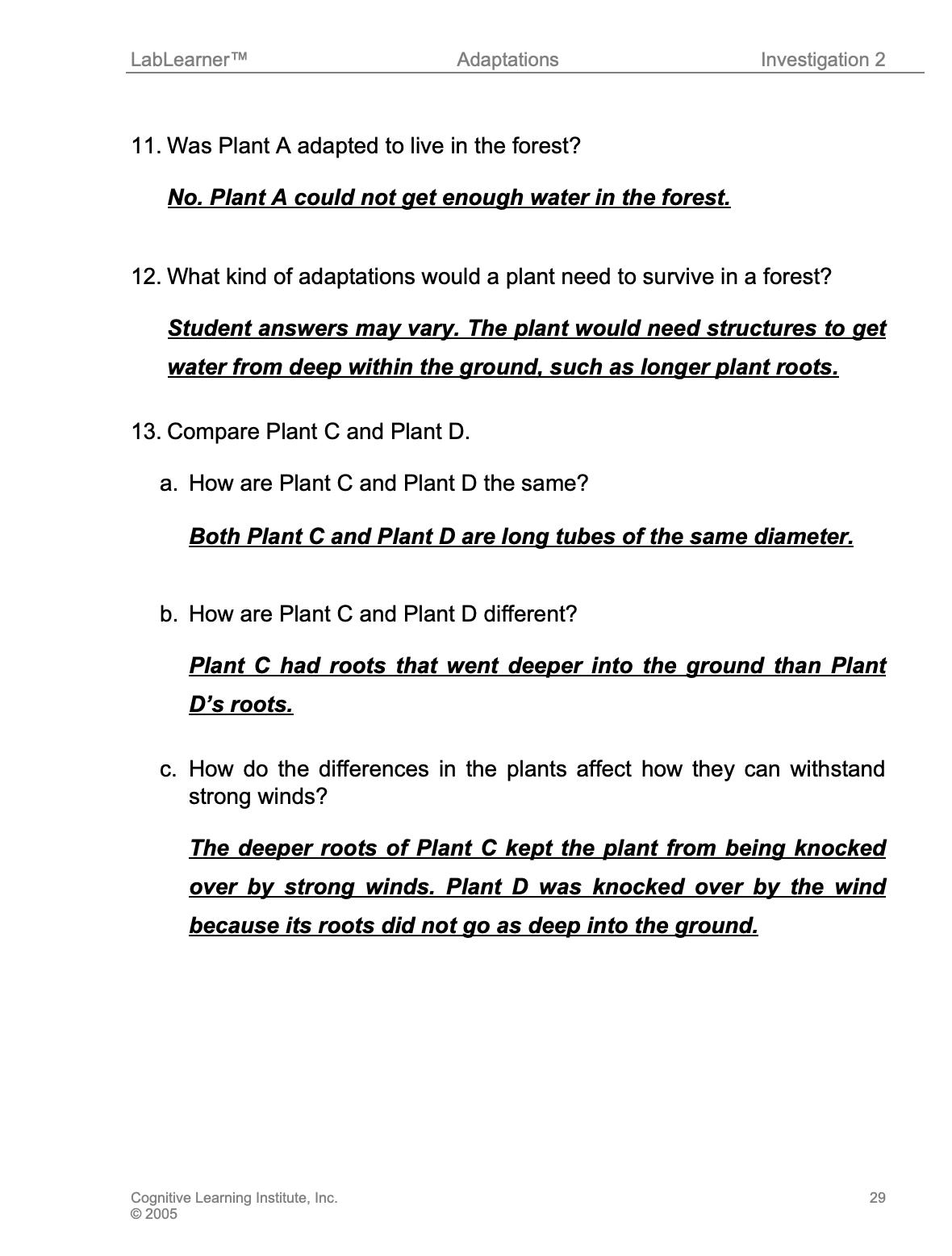
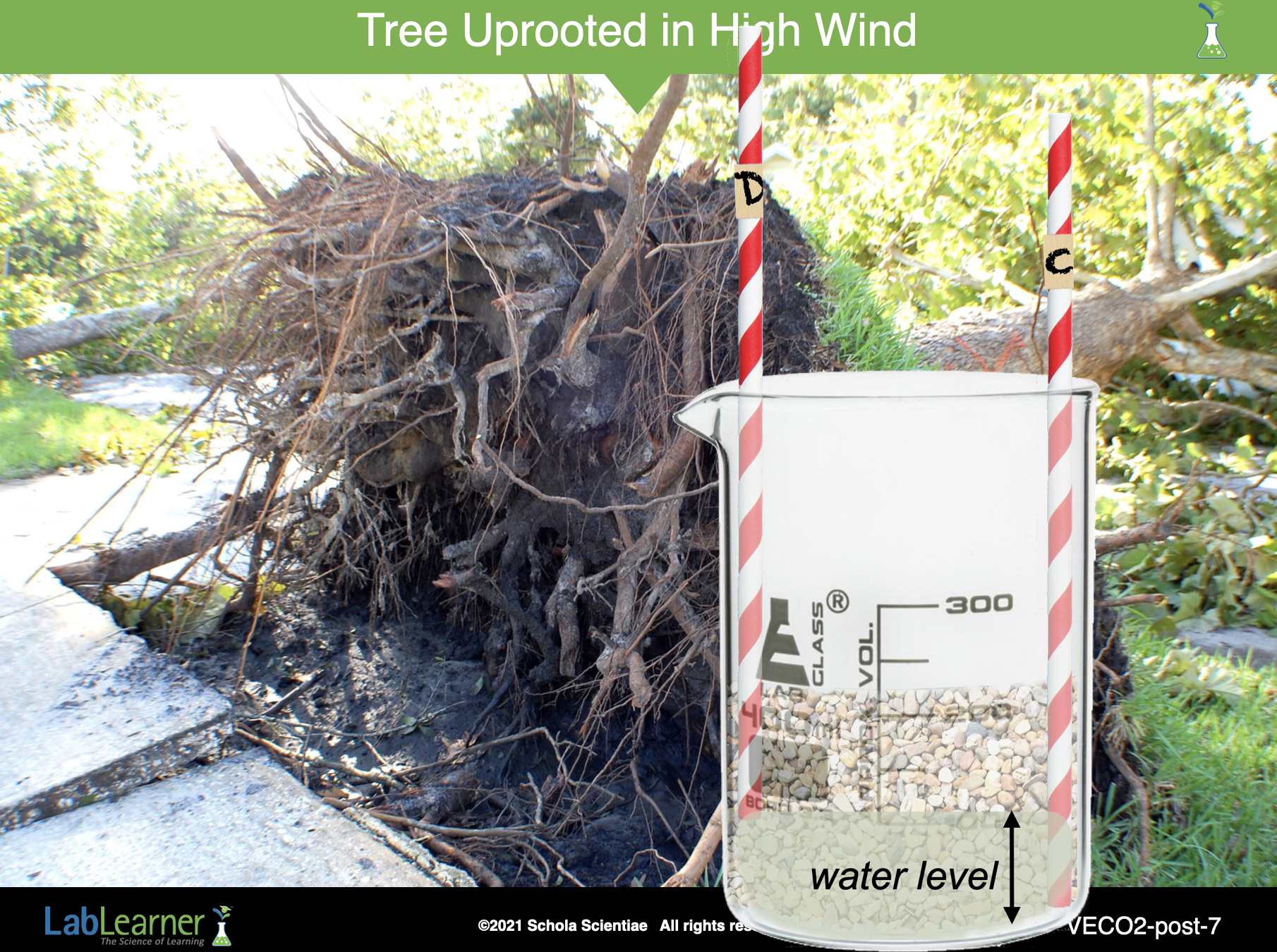
E. Ask students to compare the structure and function of Plant C and Plant D. Remind them that to compare the two plants, they should look at the similarities and differences between the two plants.
1. Direct students to answer Problems 13 a-c in the Student Data Record.
a. Ask students: How are Plant C and Plant D the same? Both Plant C and Plant D are long tubes of the same diameter.
b. Ask students: How are Plant C and Plant D different? Plant C had roots that went deeper into the ground than Plant D’s roots.
c. Ask students: How do the differences in the plants affect how they can withstand strong winds? The deeper roots of Plant C kept the plant from being knocked over by strong winds. Plant D was knocked over by the wind because its roots did not go as deep into the ground.
______________________________________________
SLIDE VECOSYS2-post-8
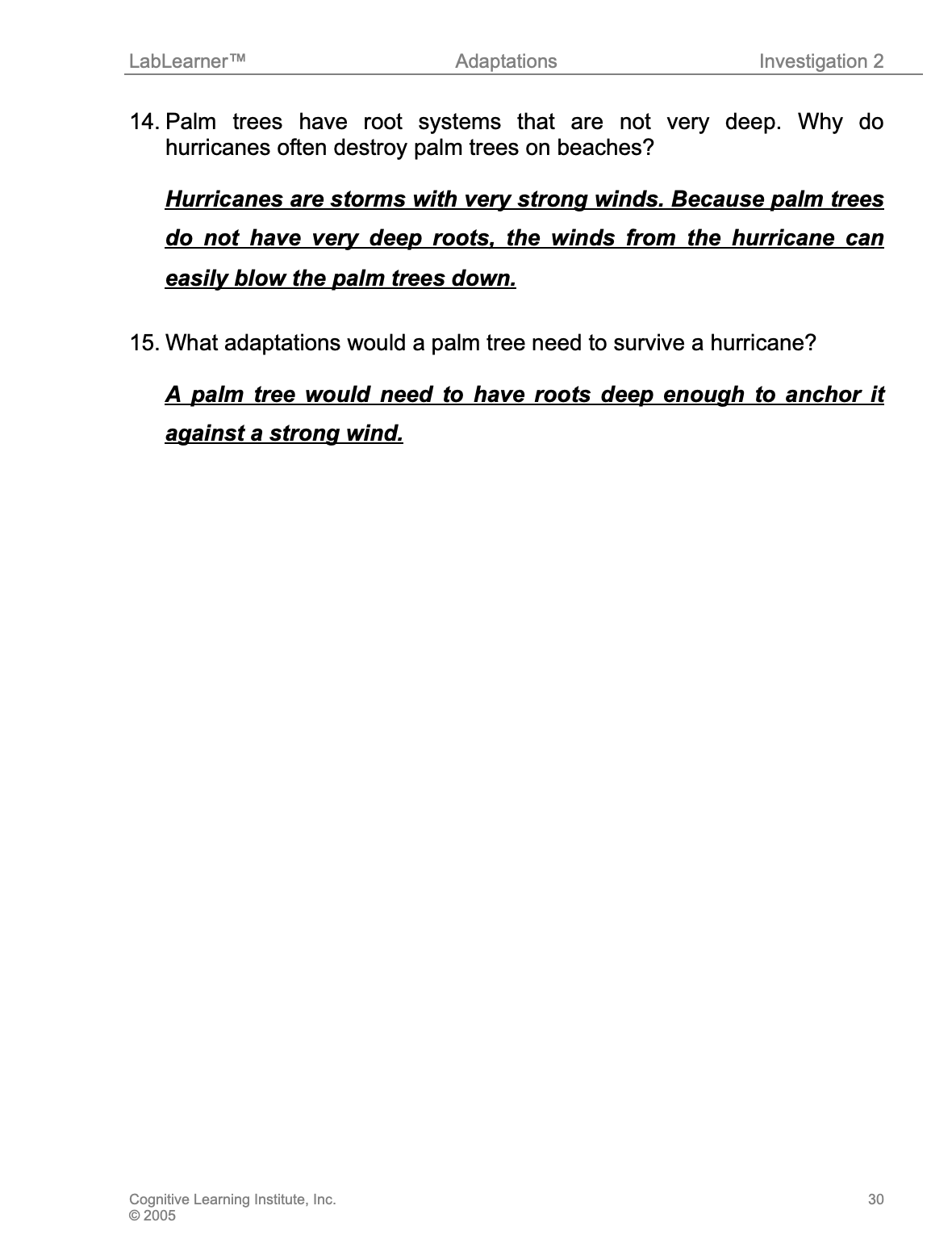
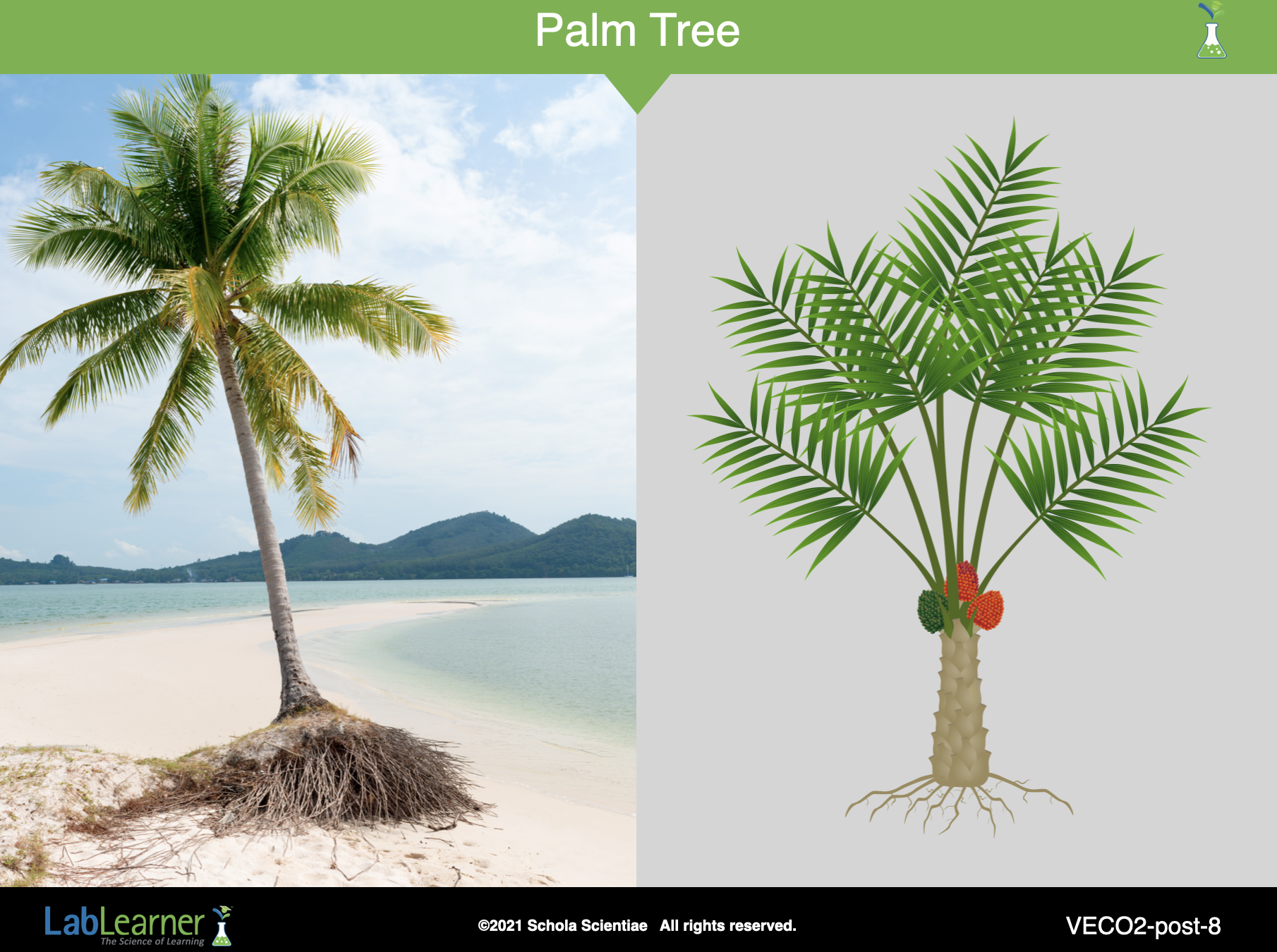
2. Ask students to apply their understanding of root structure and winds to answer Problems 14 and 15 in the Student Data Record.
a. Ask students: Palm trees have root systems that are not very deep. Why do hurricanes often destroy palm trees on beaches? Hurricanes are storms with very strong winds. Because palm trees do not have very deep roots, the winds from the hurricane can easily blow the palm trees down.
b. Ask students: What adaptations would a palm tree need to survive a hurricane? A palm tree would need to have roots deep enough to anchor it against a strong wind.
______________________________________________
SLIDE VECOSYS2-post-9
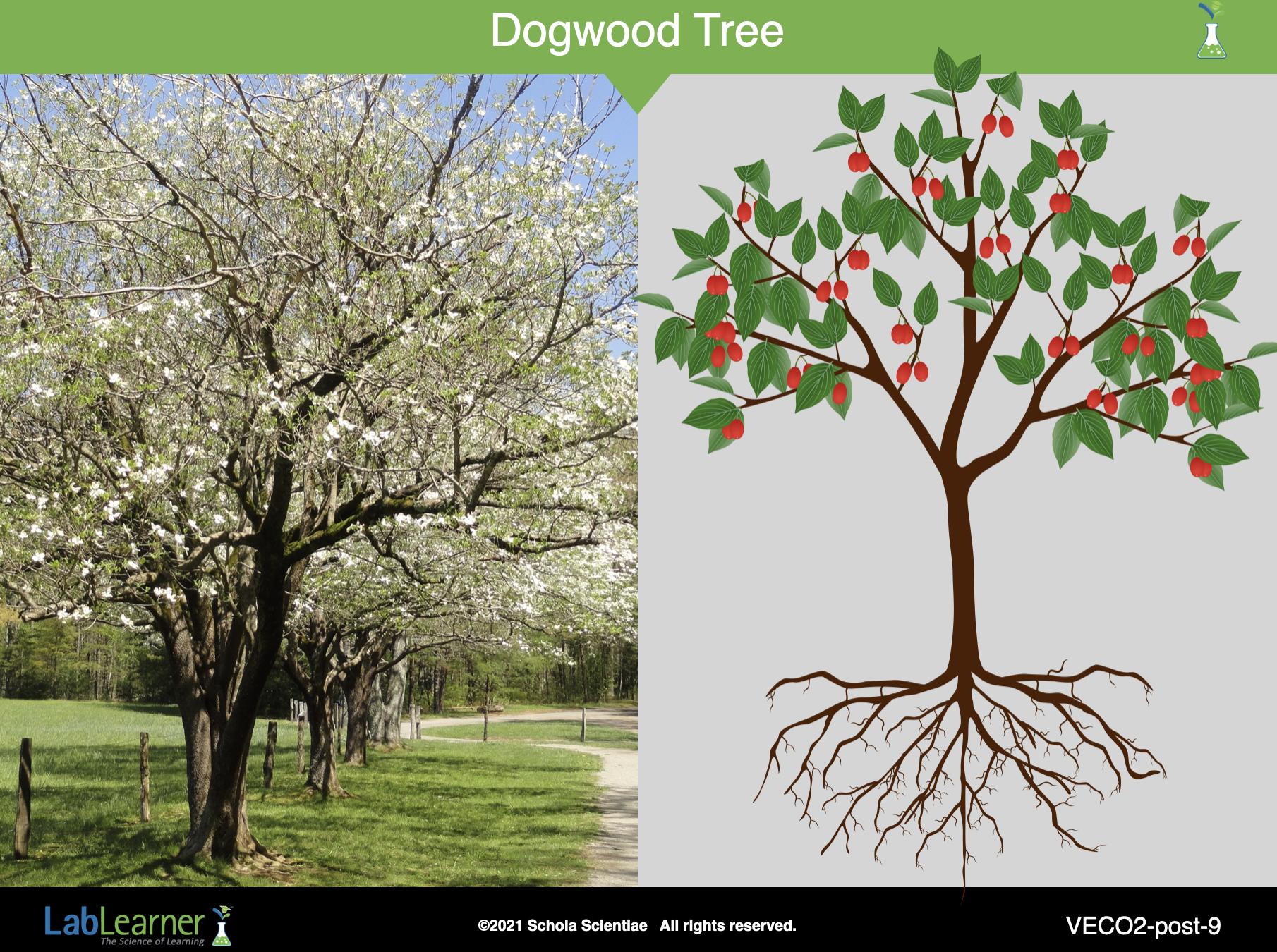
This slide shows a dogwood tree on the left and a drawing of its root system on the right. Compare this type of tree to the palm on the previous slide.
Ask students: Which tree do you think is adapted to heavy winds better, the palm tree or the dogwood tree? The dogwood tree is better adapted to withstand high winds because it has a deeper and more extensive root system. Such a root system helps keep the plant firmly attached to the ground.
______________________________________________
SLIDE VECOSYS2-post-10
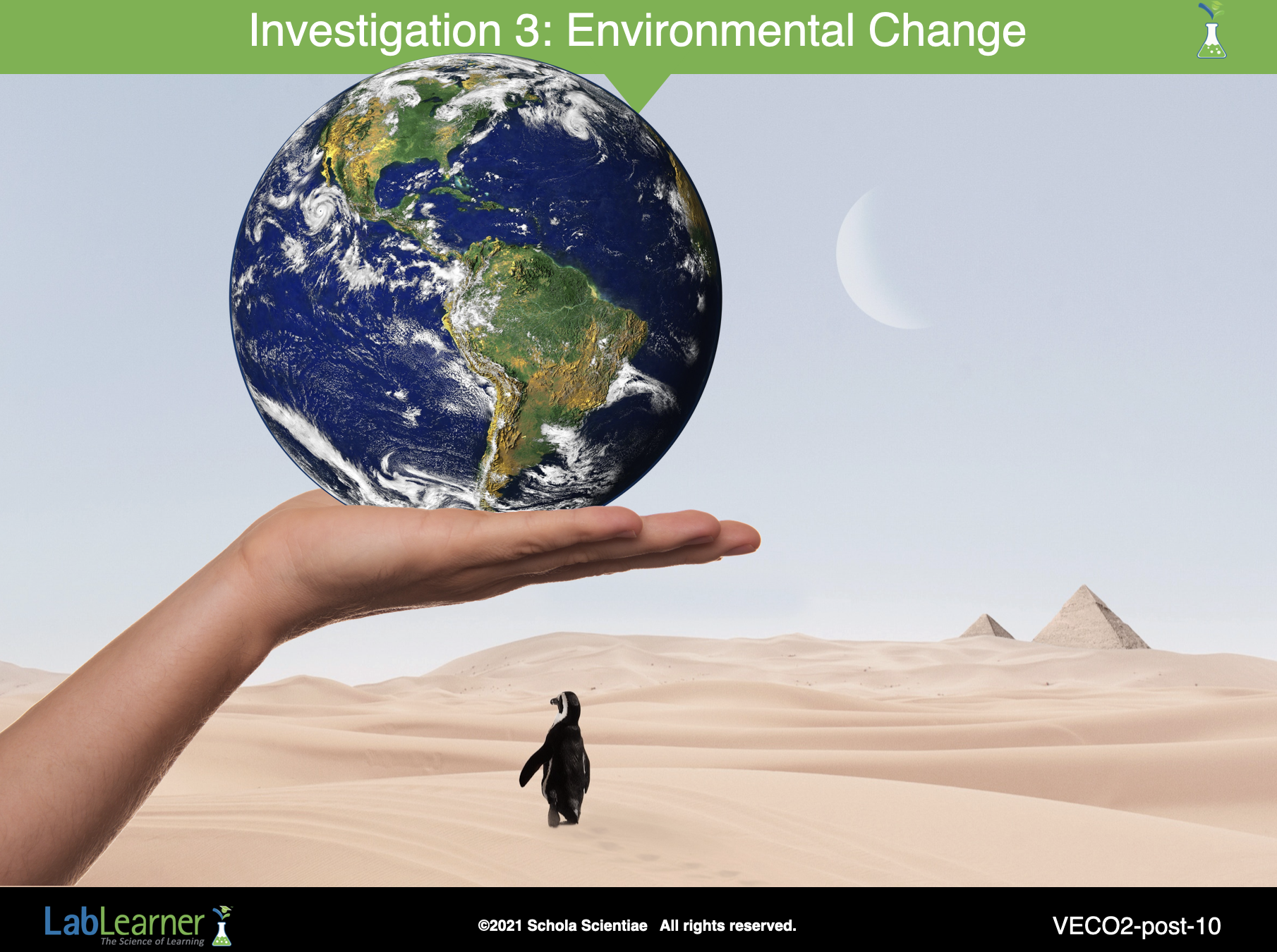
F. To complete this Investigation, tell students they will continue to study how changes in the environment affect the ability of organisms to survive in Investigation 3.
KEYS: POSTLAB