
Teacher Portal:
Exploring Ecosystems
Investigation 2 – Lab
 BE PREPARED
Supplies and Equipment:
Class Materials
- 10 400 ml beakers
- gravel
- water
- paper towels
Group Materials:
- 2 400 ml beakers
- 1 100 ml graduated cylinder
- 1 sponge
- 1 plastic dropper
- 1 6 cm length of tubing, 13 mm diameter
- 1 12 cm length of tubing, 13 mm diameter
- 4 2 cm lengths of masking tape
- 2 straws
- 1 metric ruler
Individual Materials:
- 1 Student Data Record
Teacher Preparation:
1. For each group, fill a 400 ml beaker with 350 ml of water.
2. For each group, fill a 400 ml beaker with gravel.
3. Provide paper towels for each group in case of spills.
4. Place the materials each group will need at a distribution point.
5. Separate the class into five cooperative groups.
Instruction:
1. Instruct each student group to obtain the following necessary materials from the distribution point: two (2) 400 ml beakers, one (1) 100 ml graduated cylinder, one (1) sponge, one (1) plastic dropper, one (1) 6 cm length of tubing, one (1) 12 cm length of tubing, four (4) 2 cm lengths of masking tape, two (2) straws, one (1) metric ruler, one (1) 400 ml beaker with water, and one (1) 400 ml beaker with gravel.

GET FOCUSED
Investigation Two introduces students to the concept of adaptation and structure/function relationships.
INVESTIGATE
Trial 1
1. In Trial 1, students will model a wetland ecosystem and test differences in plant structure as they relate to plant function. Students will also model a change in environment and determine which plant is best adapted to survive the change.
Students will answer the question: How does the structure of a plant affect its ability to survive in a wetland?
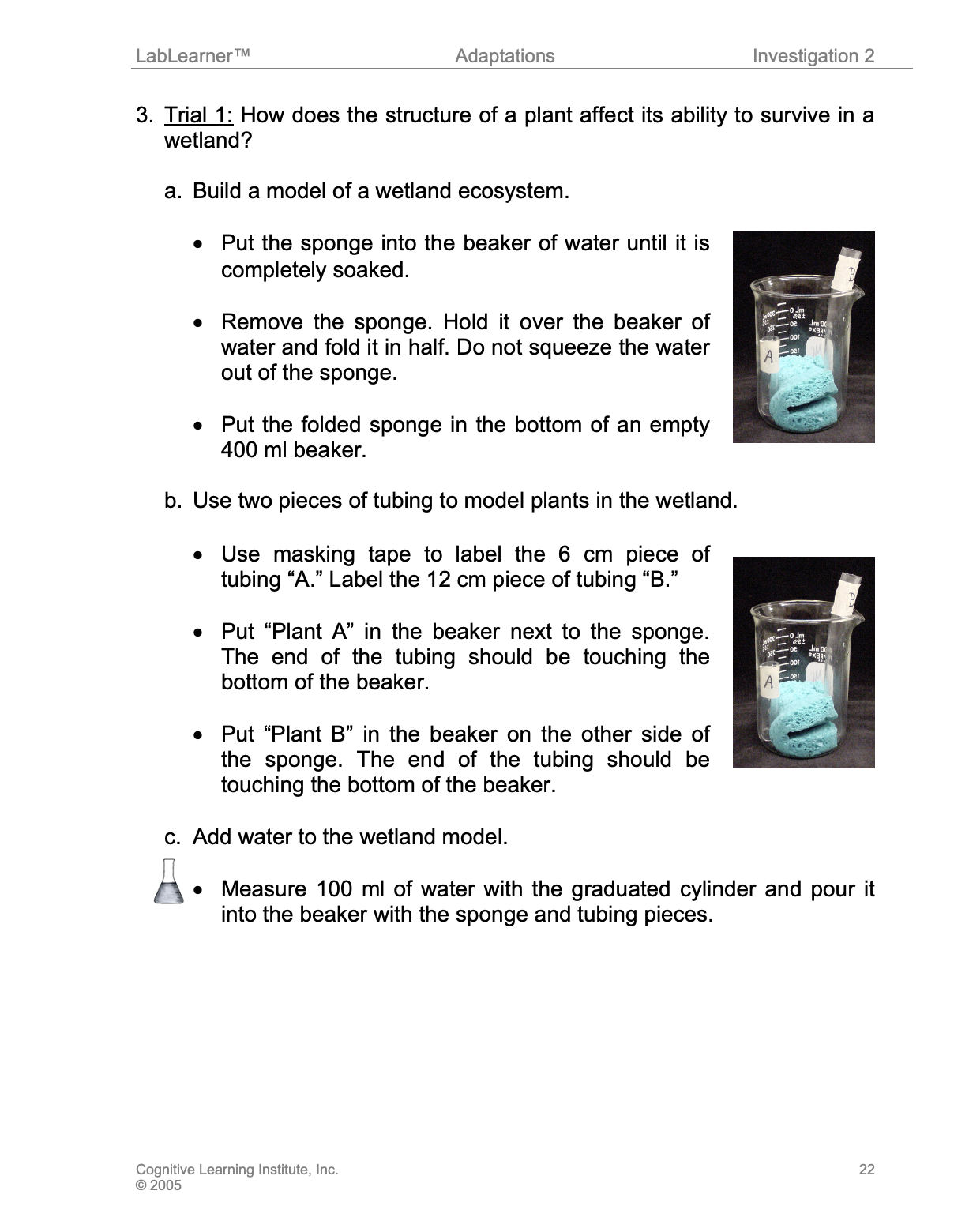
a. Explain to students that in this Trial they will use a sponge to model a wetland ecosystem.
Ask students: Why is a sponge a good model of a wetland? Wetlands are soaked with water, like sponges. They can soak up water and release water to the environment, just as sponges can soak up and release water.
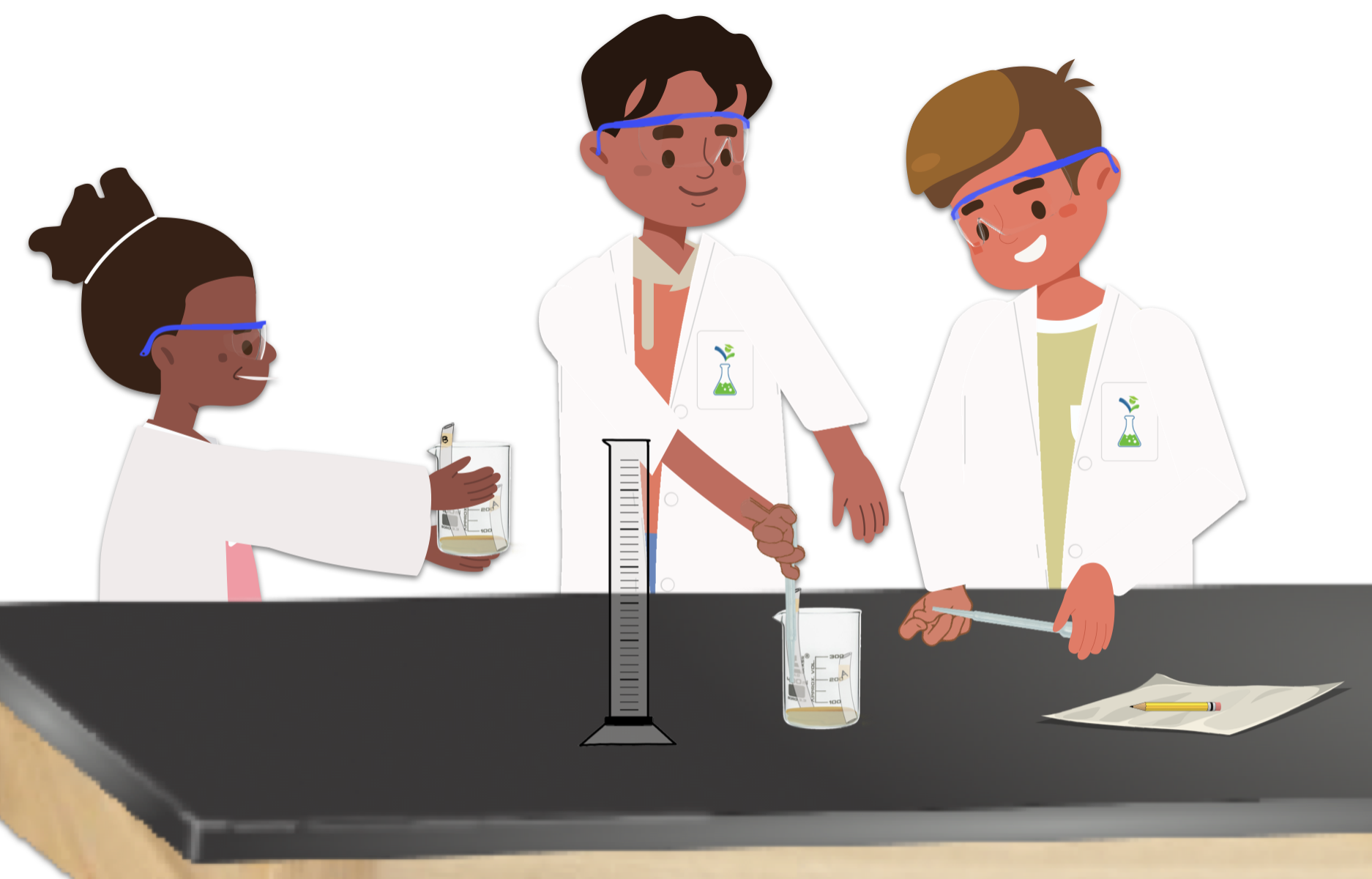
b. Direct each student group to build the model wetland ecosystem. Direct students to look at the images in the Student Data Record to help them set up their models. Observe each group’s model to be sure it is correct.
Students should add 100 ml of water to their models. If students need assistance measuring 100 ml with the graduated cylinder, review the procedure Volumetric Equipment Use and Operation in the Procedural Toolbox with them.
c. Tell students that the two pieces of tubing represent two different types of plants in the wetland. Explain that both plants need 20 ml of water per day from their environment in order to survive. In this Trial, students will explore whether the plants will survive by determining if each plant can get 20 ml of water from the wetland.
- Explain to students that plastic droppers will be used to represent the plant structure that removes water from the environment.
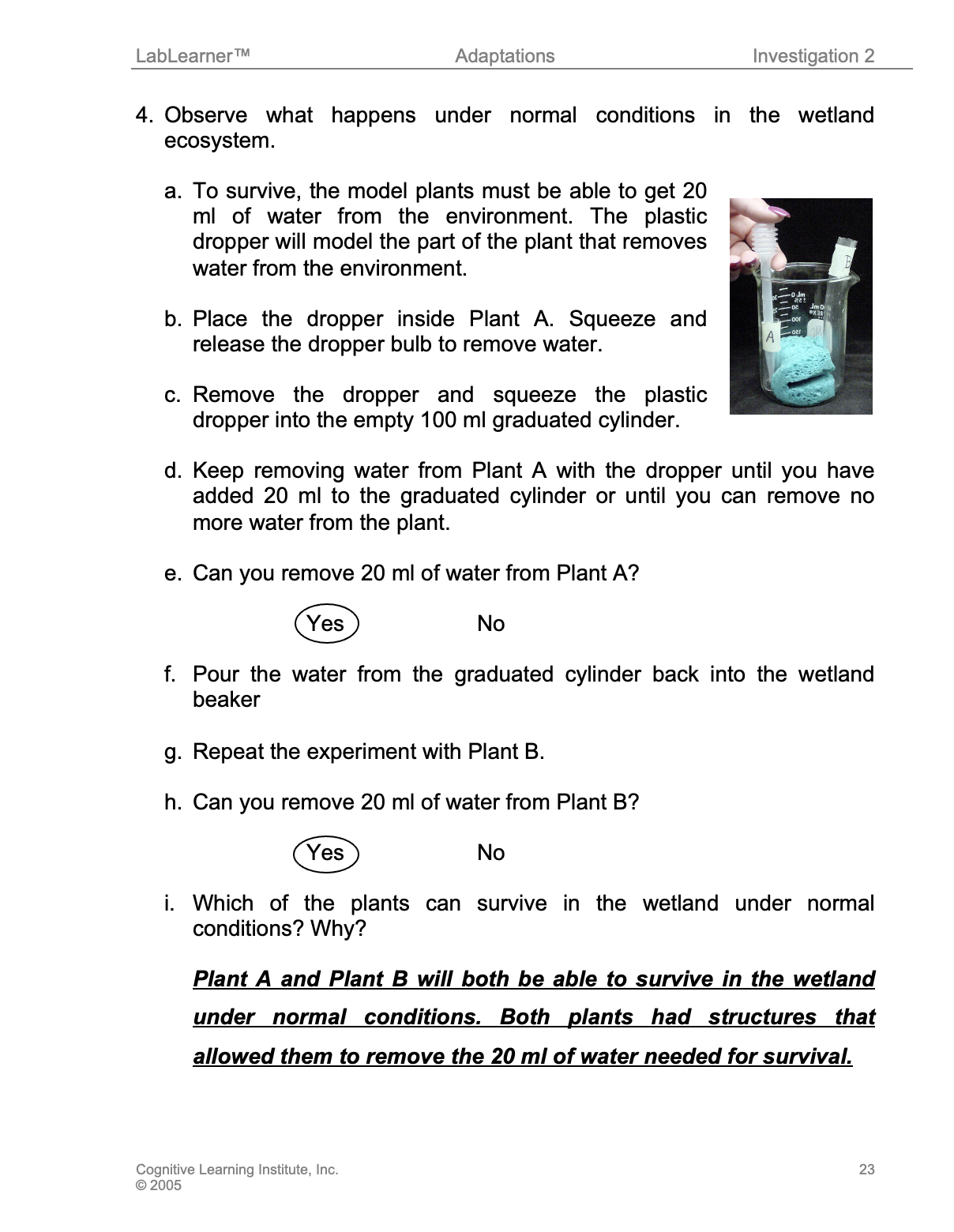
- Direct one student in each group to insert a plastic dropper into the tubing representing Plant A. The student should remove water with the dropper and squeeze it into an empty 100 ml graduated cylinder. The student should continue to remove water from Plant A until 20 ml of water is removed or until no more water can be removed from the plant, whichever comes first.
- Instruct students to answer Problem 4e in the Student Data Record.
- Students should pour all of the water from the graduated cylinder back into the model before proceeding to Problem 4g.
- Ask another student from each group to repeat the experiment for Plant B. Students should then
answer Problem 4h.
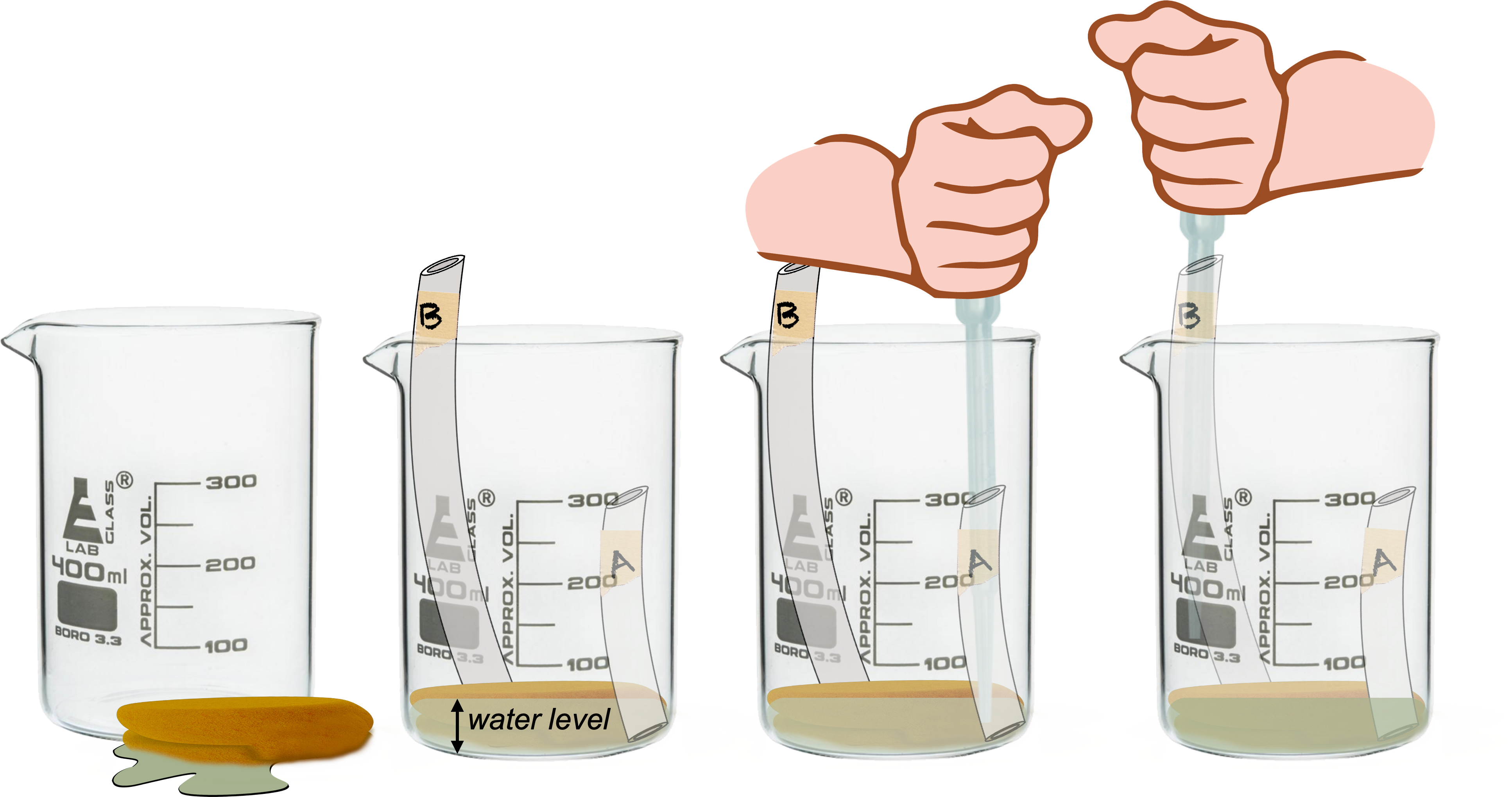
d. Lead a class discussion about which plants can survive in the wetland. Students should have discovered that both plants can remove 20 ml of water from the environment, so both plants can survive in the wetland. Instruct students to answer Problem 4i in the Student Data Record.
e. Explain to students that the previous experiment simulated normal conditions in the wetland ecosystem. Now there has been a drought, and the wetland has released a lot of its water. However, the plants still need the same amount of water every day. In this part of the experiment students will explore whether the plants can still survive in the wetland. ! Before beginning problem 5 of the experiment, students should pour all of the water from the graduated cylinder back into the wetland model.
- One student in each group should represent the drought by removing 70 ml of water from the beaker with the sponge. The students should measure 70 ml with the graduated cylinder.
- Direct students to pour the 70 ml of water into the water beaker. They should NOT put the water back into the beaker with the sponge.
- Direct one student in each group to insert a plastic dropper into the tubing representing Plant A. The student should remove water with the dropper until 20 ml of water is removed or until no more water can be removed from the plant, whichever comes first.
- Instruct students to answer Problem 5d in the Student Data Record.
- Be sure students pour all of the water from the graduated cylinder back into the wetland model before proceeding to Problem 5f.
- Ask another student from each group to repeat the experiment for Plant B. Students should then answer Problem 5g.
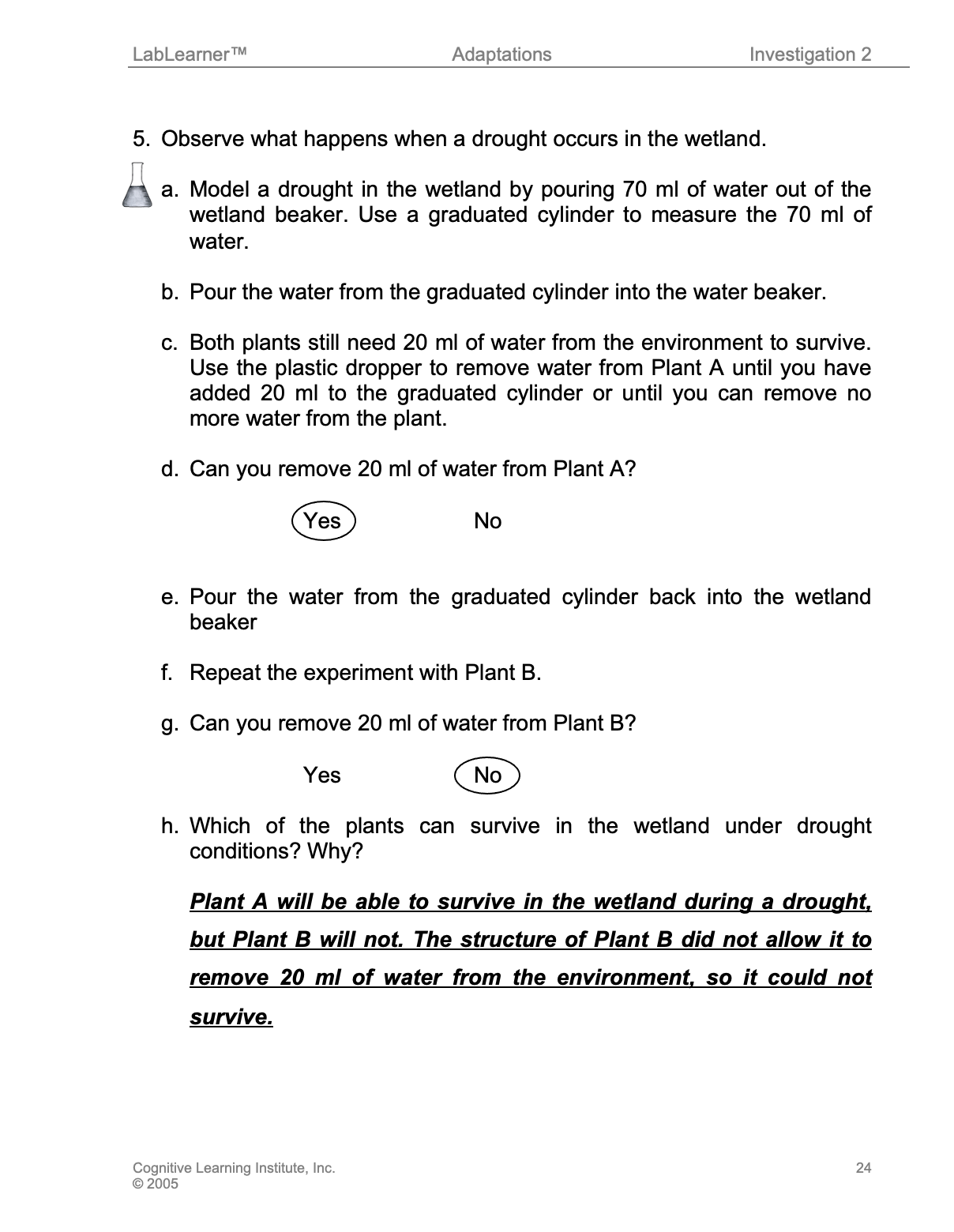
f. Lead a class discussion about which plants can survive in the wetland. Students should have discovered that only Plant A can remove 20 ml of water from the environment, so Plant A can survive the drought conditions in the wetland. Plant B cannot survive under drought conditions. Therefore, Plant A is better adapted to survive the environmental change. Instruct students to answer Problem 5h in the Student Data Record.
Trial 2
 2. In Trial 2, students will model a forest ecosystem and determine whether a plant that survives in a wetland ecosystem (Plant A) has the necessary adaptations to survive in a forest.
Students will answer the question: How does the structure of a plant affect its ability to survive in a forest?
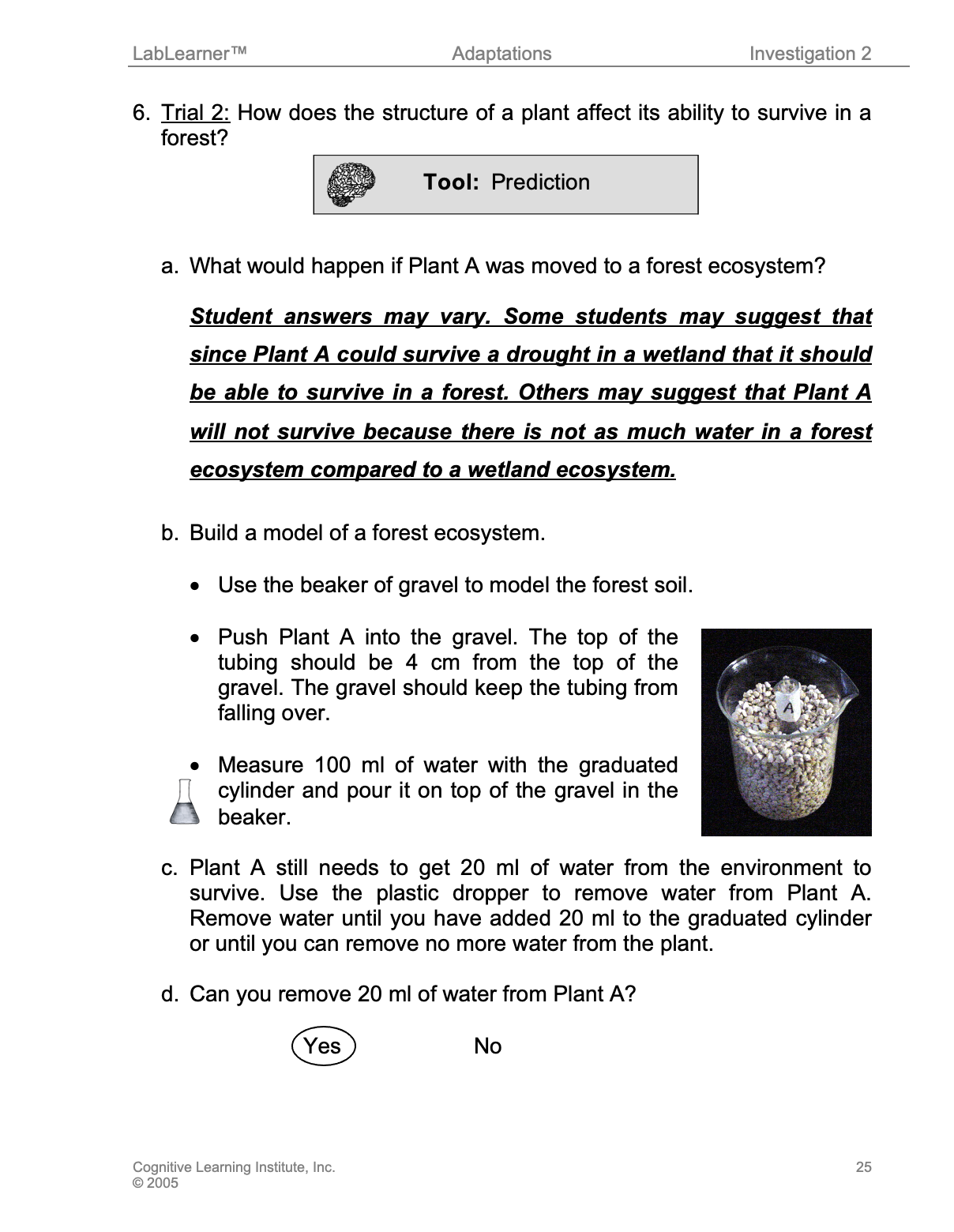
a. Tell students that they will build a model forest ecosystem to determine if Plant A can get enough water to survive in a forest.
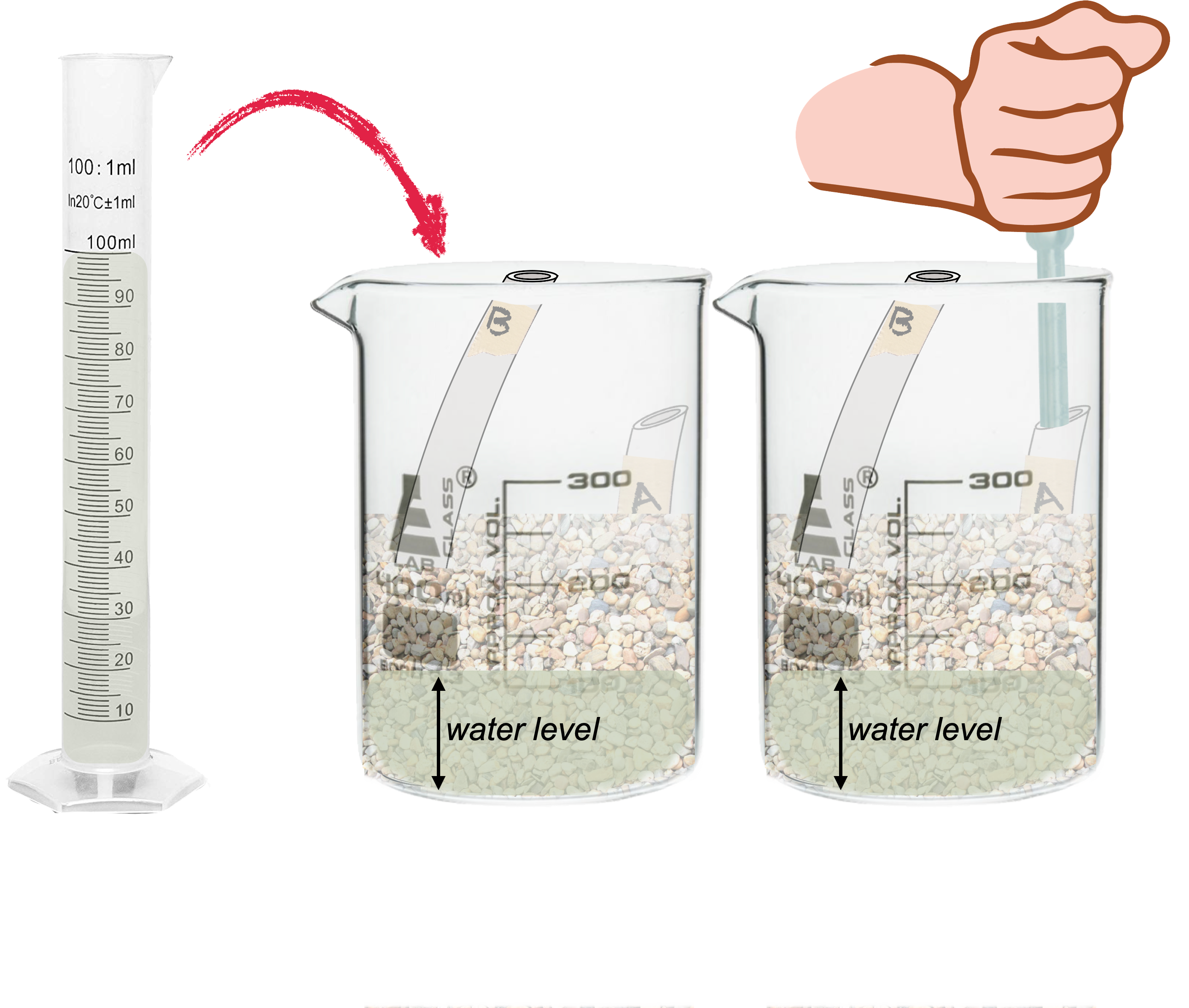
- Direct one student in each group to push Plant A (6 cm tubing) into the beaker of gravel so that the top of the tubing is 4 cm above the top of the gravel.
- A second student in each group should use a 100 ml graduated cylinder to add 100 ml of water to the model.
b. Tell students that Plant A still needs 20 ml of water a day to survive.
- Direct one student in each group to insert a plastic dropper into the tubing representing Plant A. The student should remove water with the dropper and squeeze it into an empty 100 ml graduated cylinder. The student should continue to remove water from Plant A until 20 ml of water is removed or until no more water can be removed from the plant, whichever comes first.
- Instruct students to answer Problems 6d and 6e in the Student Data Record.
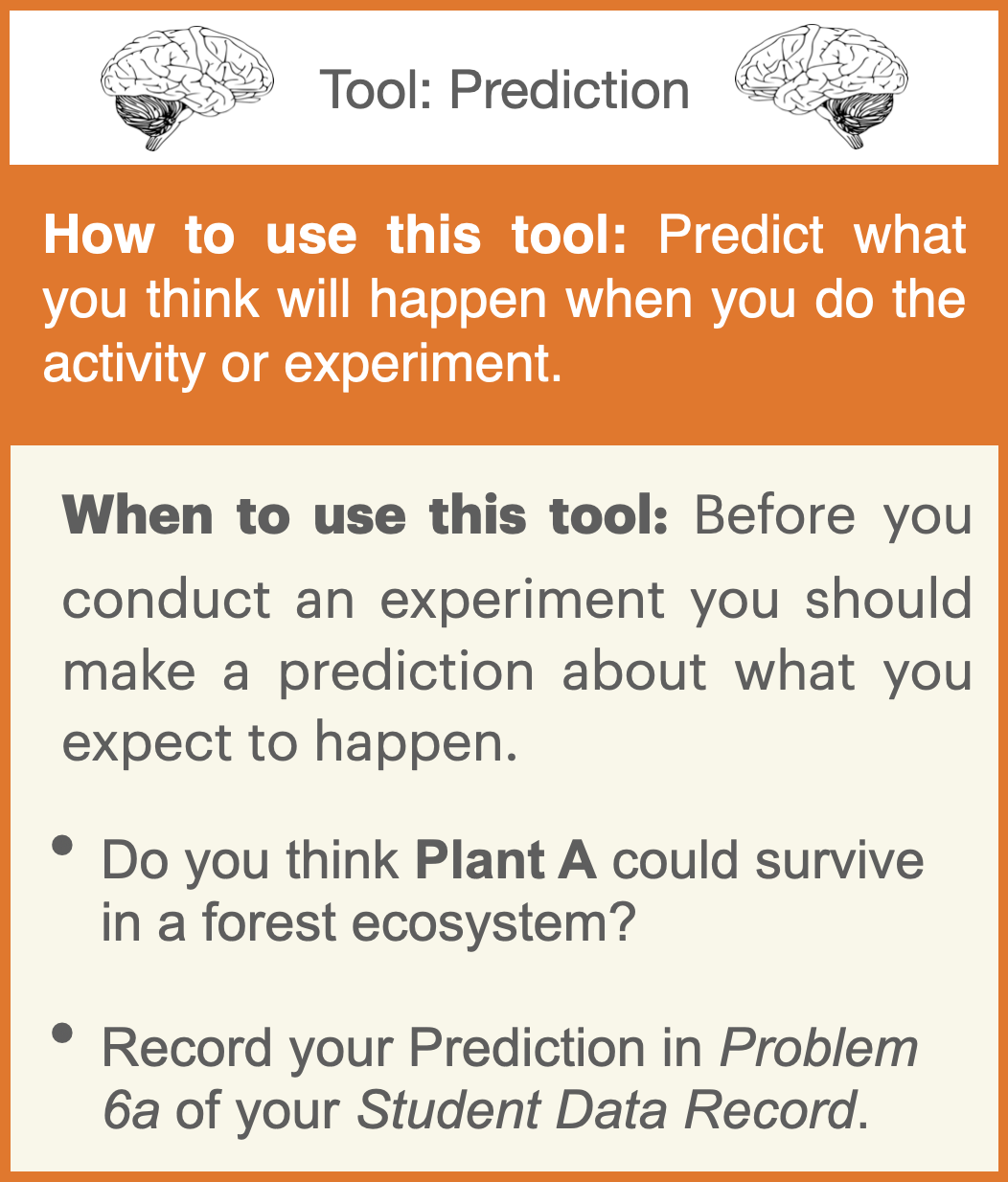
c. Ask students to record whether their predictions were correct in Problem 6c of the Student Data Record.
 Lead a class discussion about why Plant A could not survive in the forest ecosystem. Point out that the forest model had the same amount of water as the wetland model. However, in a forest, the water is much deeper in the ground than in wetlands, where water is near or on top of the surface. The structure of Plant A did not allow it to get water in the forest model, but it could easily get water in the wetland.
Trial 3
In Trial 3, students will answer the question: How does the structure of a plant affect its ability to survive high winds? Students will investigate how the root structure of a plant affects its ability to endure high winds using a forest ecosystem model.
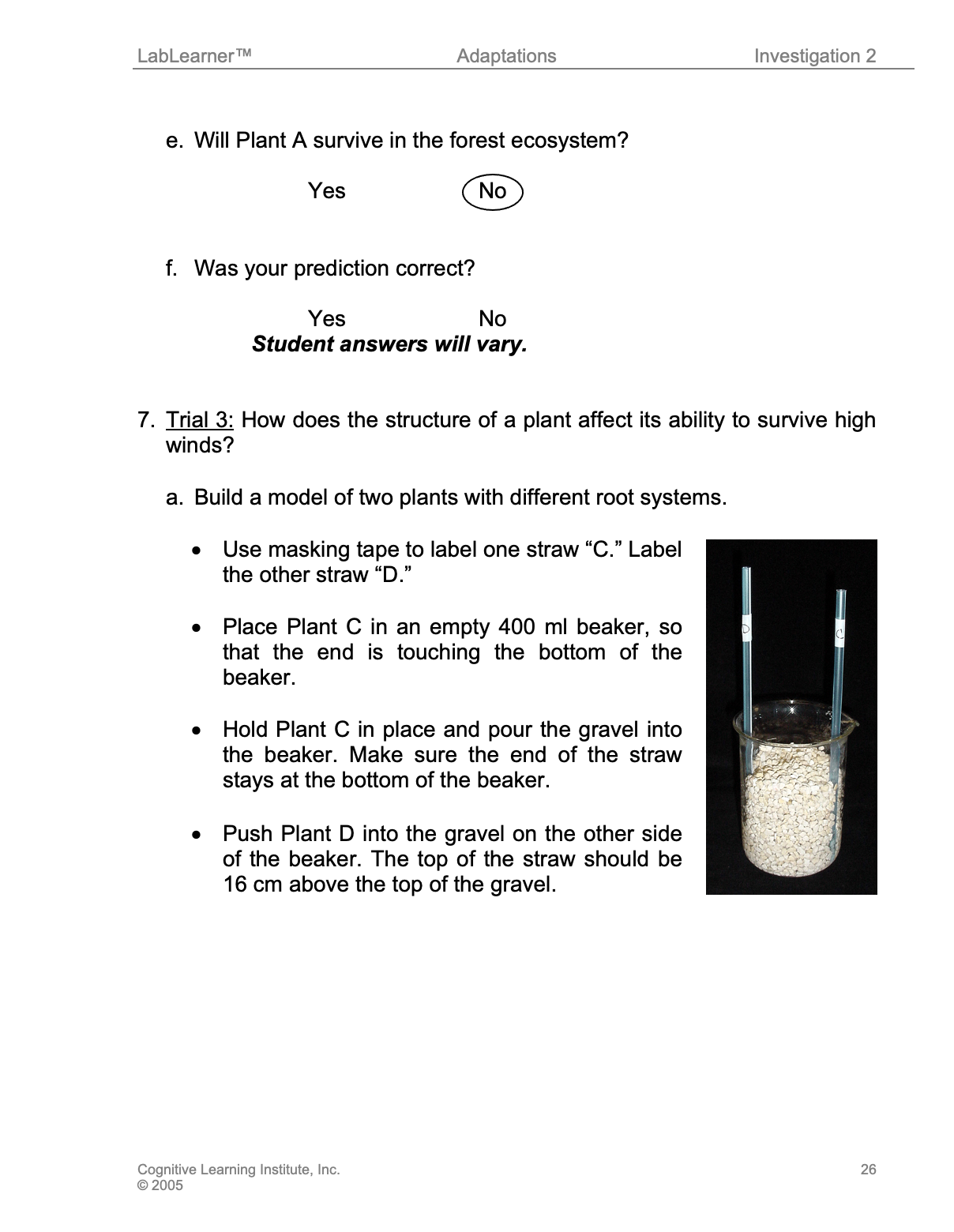
a. Tell students that they will build another forest ecosystem using straws to model trees. Each tree will have a different root structure.
Direct one student in each group to label the straws with masking tape. One straw should be labeled “C,” and one straw should be labeled “D.”
One student in each group should hold Plant C in an empty 400 ml beaker so that the bottom of the straw touches the bottom of the beaker. A second student should pour the gravel from the previous forest model into the beaker around Plant C.
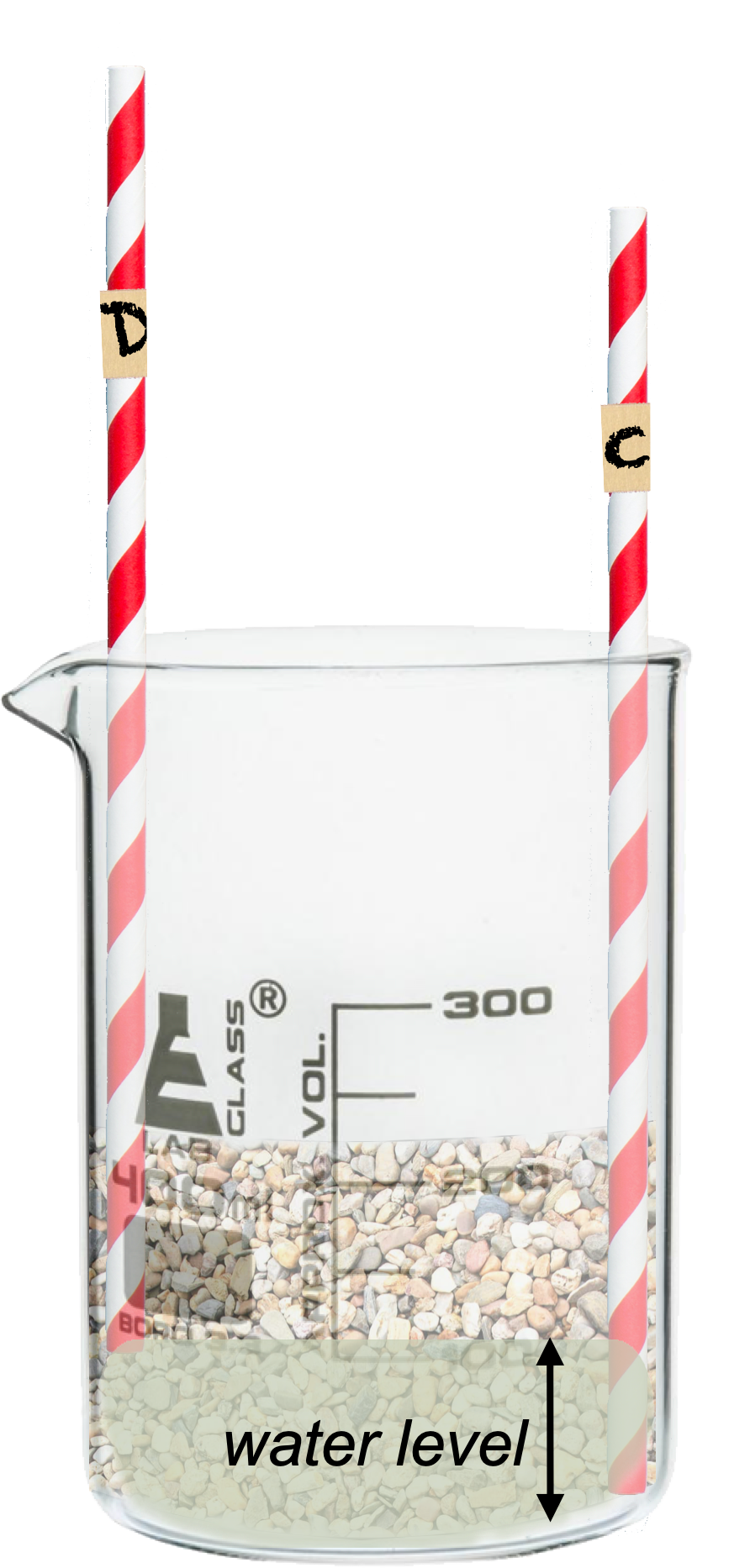 Another student should push Plant D into the gravel on the other side of the beaker. The top of the straw should be 16 cm above the top of the gravel.
Tell students to look at the image in Problem 7 of the Student Data Record to help them set up their models. Observe each group’s model to be sure it is correct.
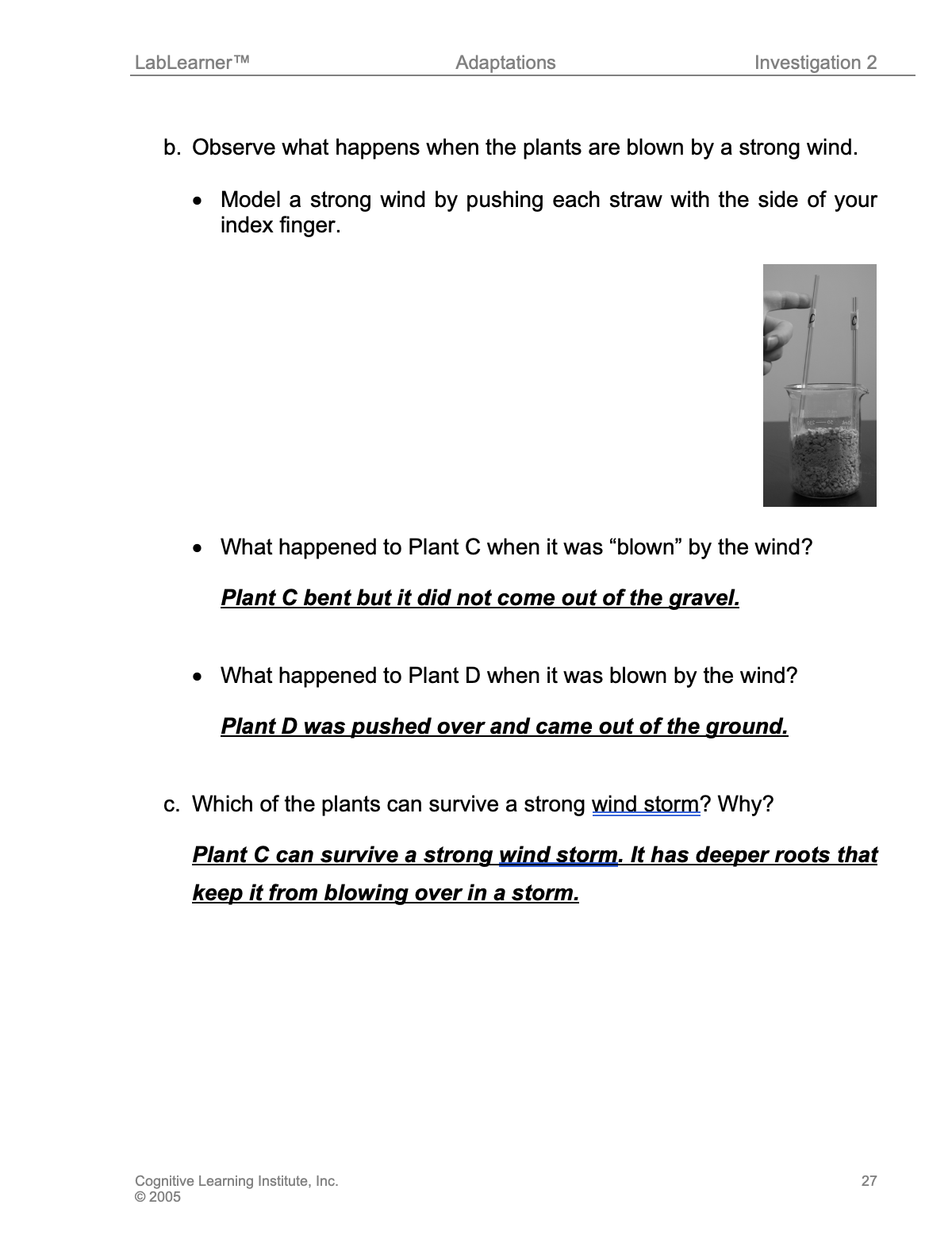
b. Explain to students that they will simulate strong winds by trying to push each straw with the side of their index fingers. Demonstrate if necessary.
- Direct one student in each group to simulate the wind.
- Ask students to answer the questions in Problem 7b of the Student Data Record.
c. Lead a class discussion about which plants can survive high winds in the forest. Students should have discovered that only Plant C can withstand high winds. The model wind could not knock it over. Plant D cannot survive under high wind conditions. Plant C had roots that were deeper in the ground than Plant D, so Plant C is better adapted to survive high winds. Instruct students to answer Problem 7c in the Student Data Record.
KEYS

CLEAN UP
Let students know your expectations for clean-up. Ask them to clean up.