Teacher Portal:
Exploring Ecosystems
Performance Assessment – Lab
 BE PREPARED
Materials
Group materials
- 1 1000 ml graduated cylinder
- 1 weigh dish
- 1 triple beam balance
- 1 kg white gravel in a 1-liter pitcher
- 1 400 ml beaker filled to the 300 ml mark with red kidney beans 1 pair
- scissors
- 1 pack small Post-It
- 1 Pencil or Marker
- 1 Lab scoop
Individual materials
- 1 Scientist Data Record
TEACHER PREPARATION
1. Fill each of the (5) 1-liter pitchers with white gravel.
2. Fill each of the (5) 400 ml beakers with kidney beans to approximately the 300 ml mark.
3. Place all group and student materials at the distribution center.
4. Form the class into 5 independent workgroups.
INSTRUCTION
1. Instruct each student group to obtain the following necessary materials from the distribution point: one (1) triple beam balance, one (1) weighing dish, one (1) lab scoop, one (1) 1000 ml graduated cylinder, one (1) kg white gravel in 1-liter pitcher, one (1) 400 ml beaker containing red kidney beans to 300 ml mark, one (1) pack of Post-It note pad, one (1) pair of scissors, and one (1) pencil or marker.
PROCEDURE
1. Begin the performance assessment by either reading the opening paragraphs from the Student Data Record aloud or encouraging students to read the paragraphs independently.
“Trilobites are small animals that lived in the oceans of the world many, many years ago. They are now extinct. There were many different kinds of trilobites but they all had common characteristics. For example:
-
-
- Their bodies were made of many different sections called segments.
- Their body segments had hard outer coverings.
- They had many legs on their undersides.
- They could crawl on the bottom of the ocean or swim.
-
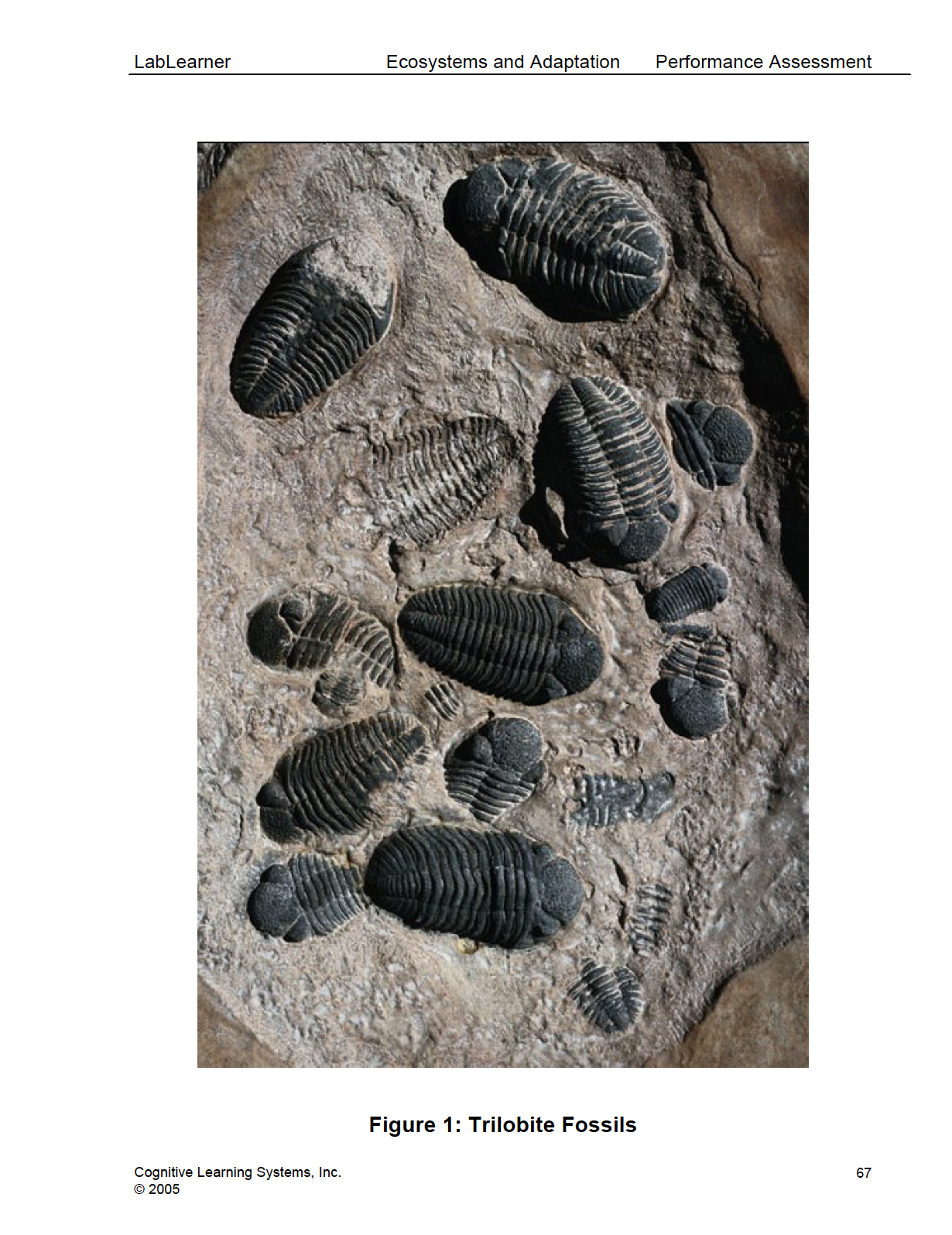
“The picture below shows what real trilobite fossils looked like. As you can see on the slide, the fossils are stuck in the rock, but you can almost imagine them crawling around in the sand and mud!
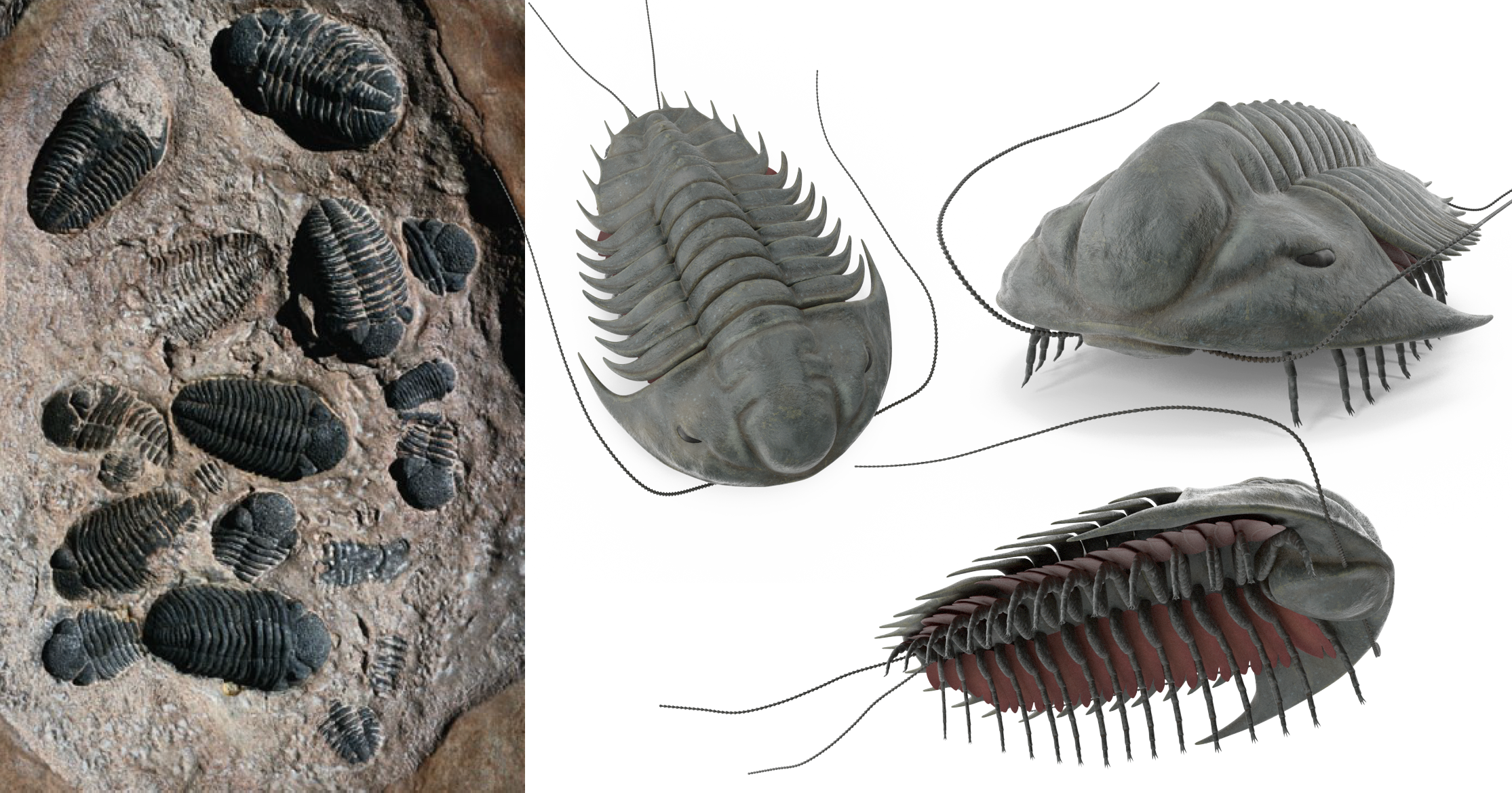
“Scientists know what trilobites looked like because they have found so many trilobite fossils. Not only do the trilobite fossils tell scientists what trilobites looked like, but they also help scientists to understand a lot about how many trilobites there were and how long ago they lived. This is because we find different numbers of trilobite fossils at different depths in the Earth’s rocks.
“When working with fossils, it is important to remember that usually the deeper a fossil is buried, the longer ago it lived. So, the deeper and deeper you dig the further and further you go back in time!
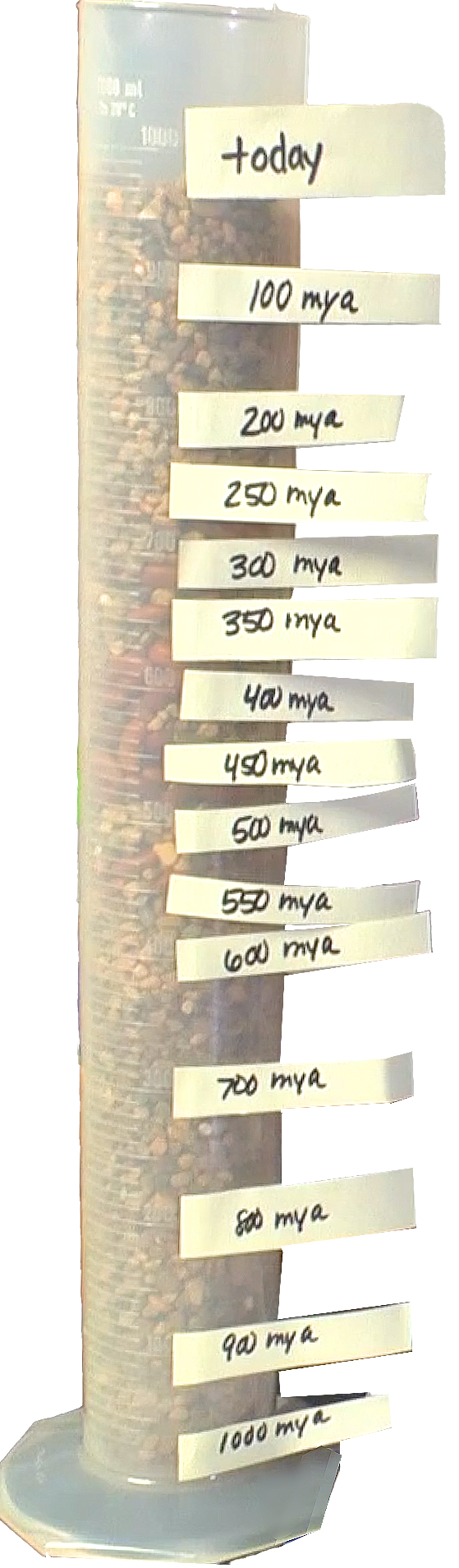
“In this Performance Assessment, you will make a model of the Earth’s depths and take a look at how deep the trilobite fossils are located. By doing this you will determine how many trilobites lived at different times in the past.“
 2. Review the goals of the Performance Assessment for the class. Read aloud the goals from the list on the Student Data Record.
-
-
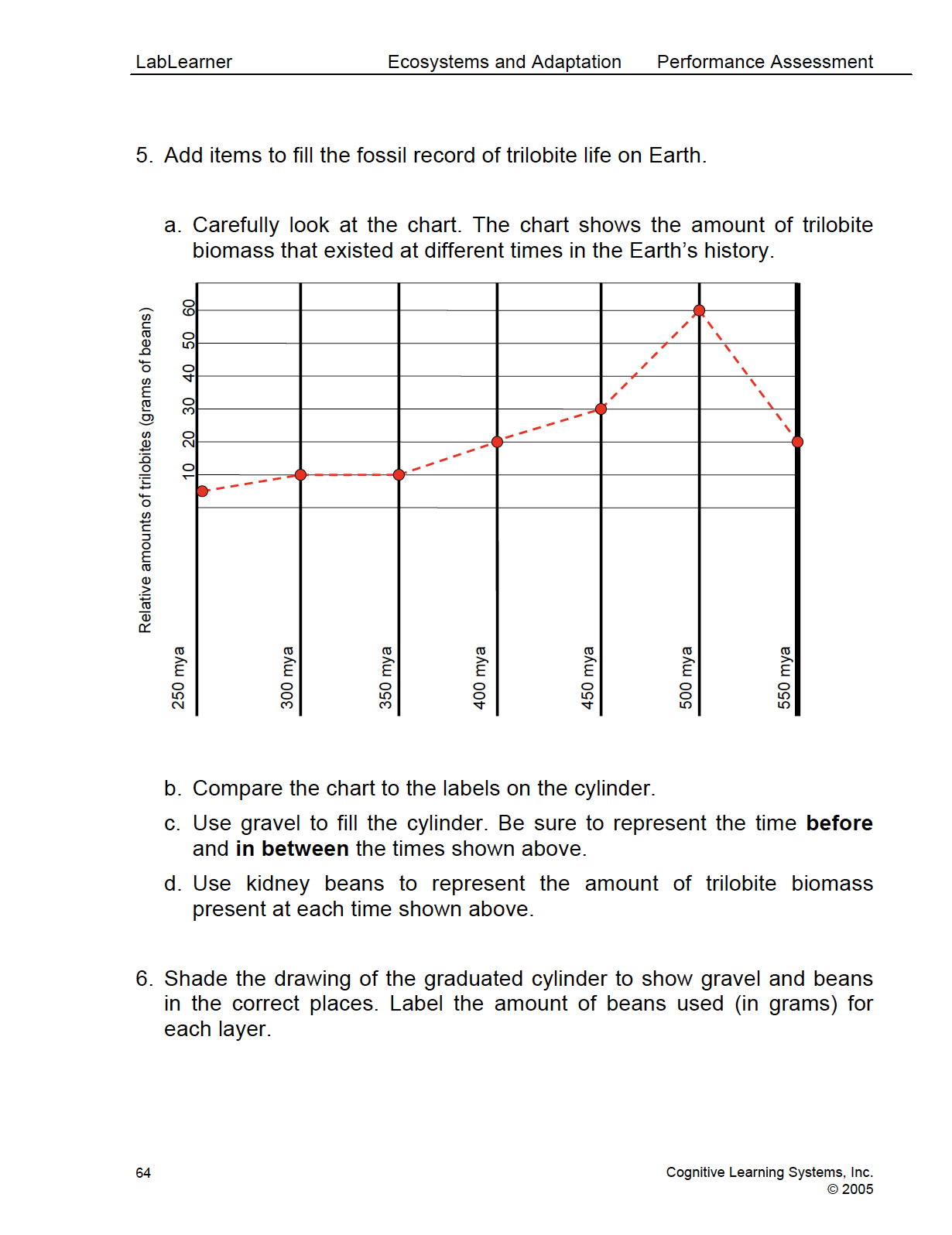
- Interpret a line graph showing changes in the number of trilobites over a long period of time.
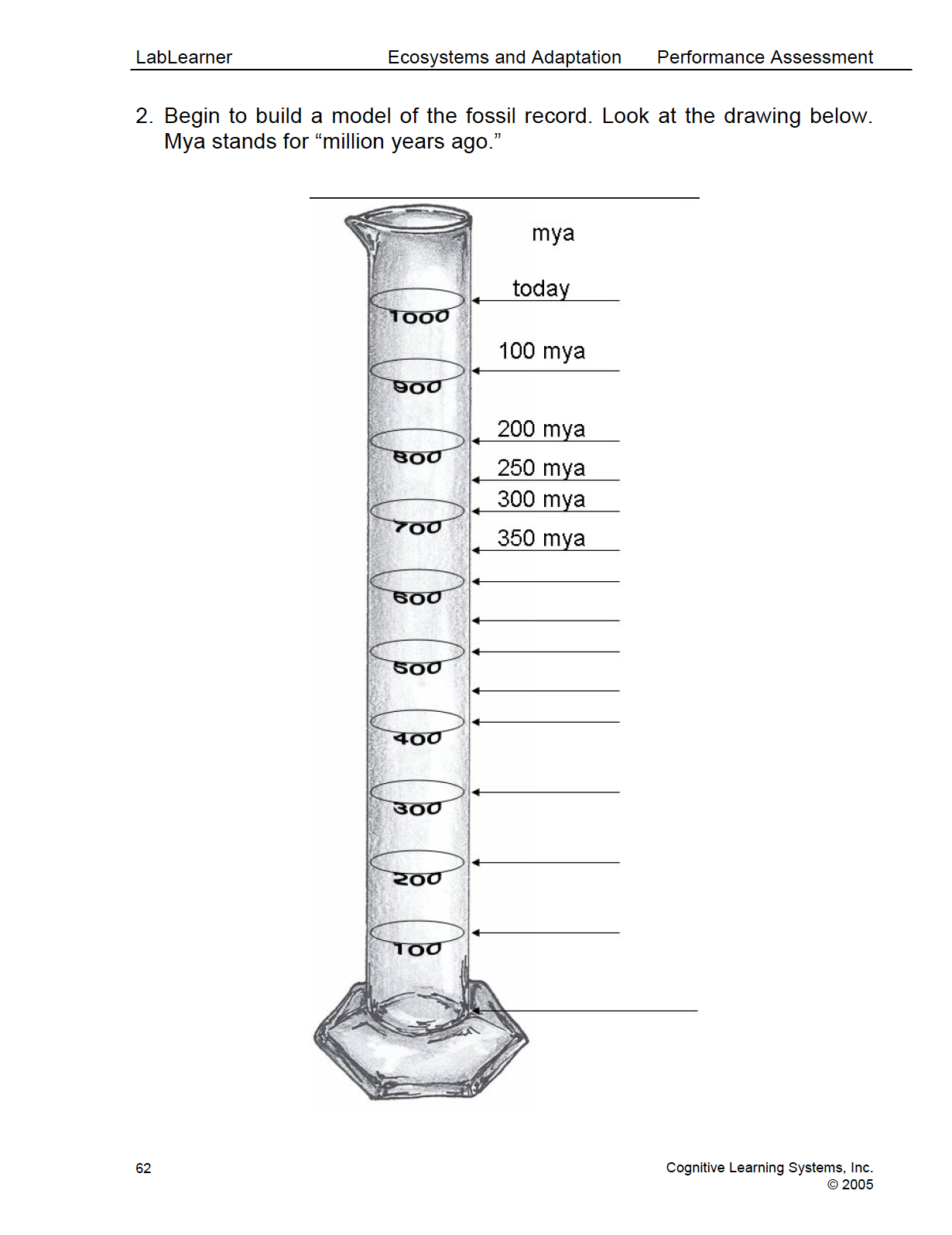
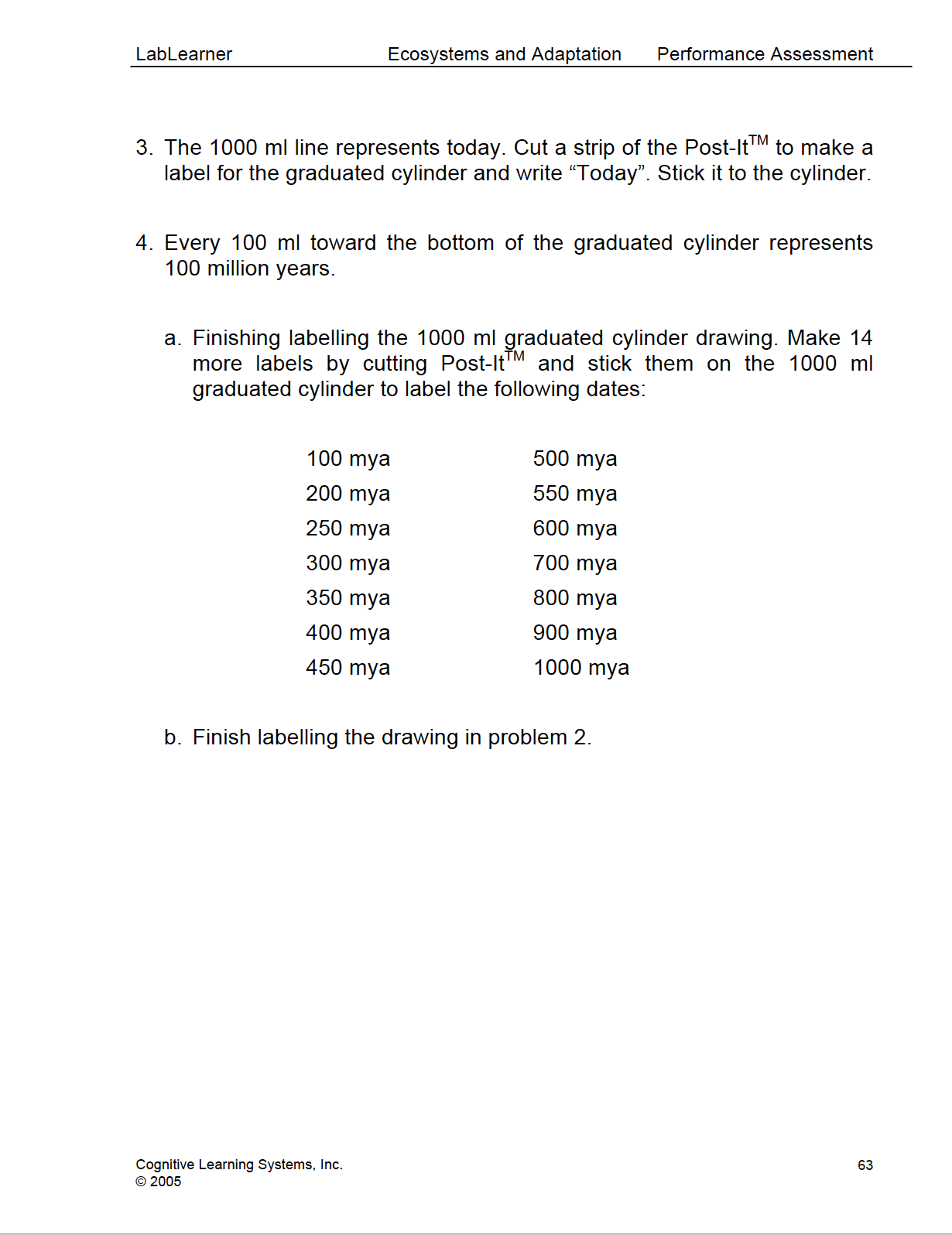
- Construct a model fossil record of the last one billion years (1000 million years) of the Earth’s history of trilobites.
- Use the model of the fossil record to determine which organisms came before and after each other.
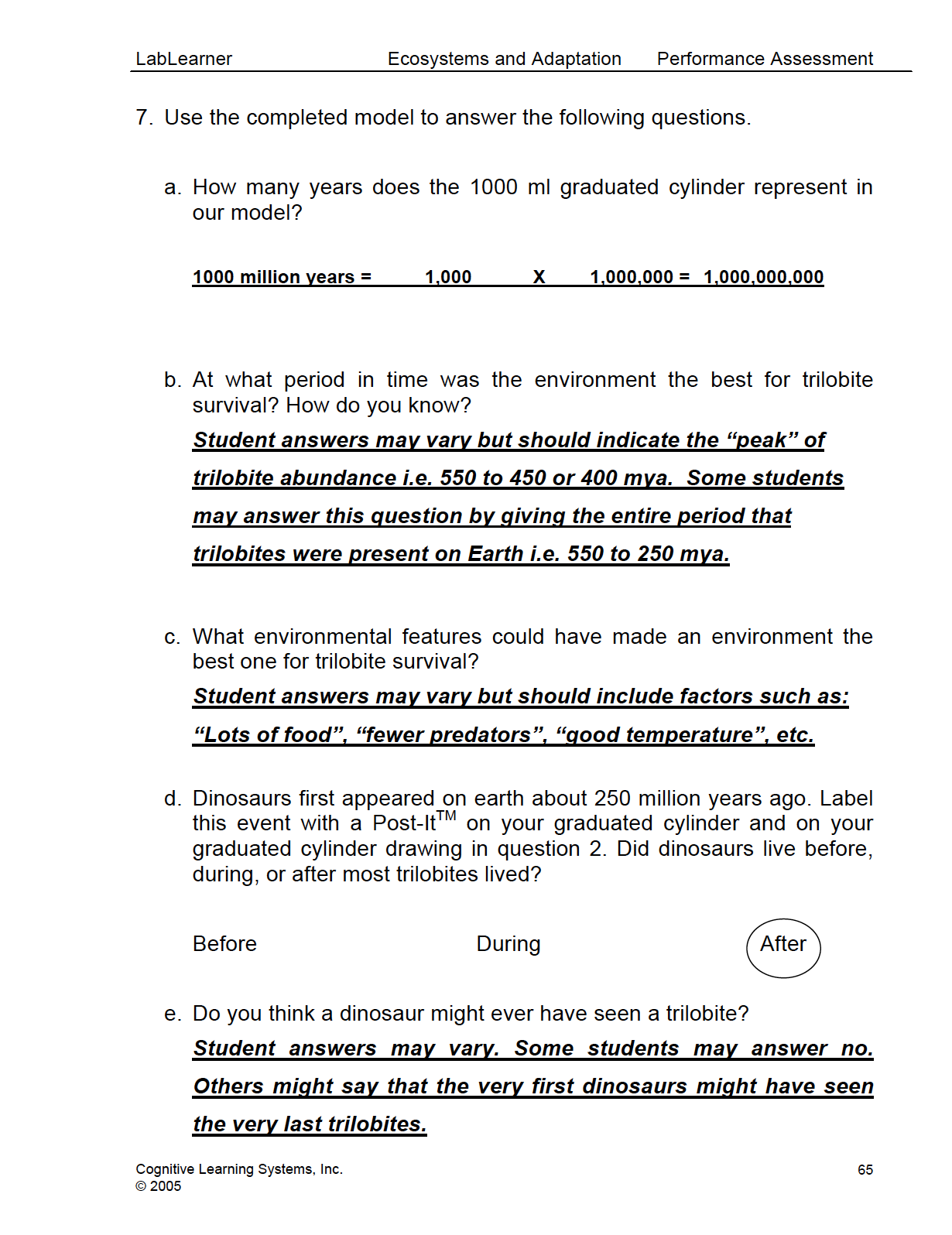
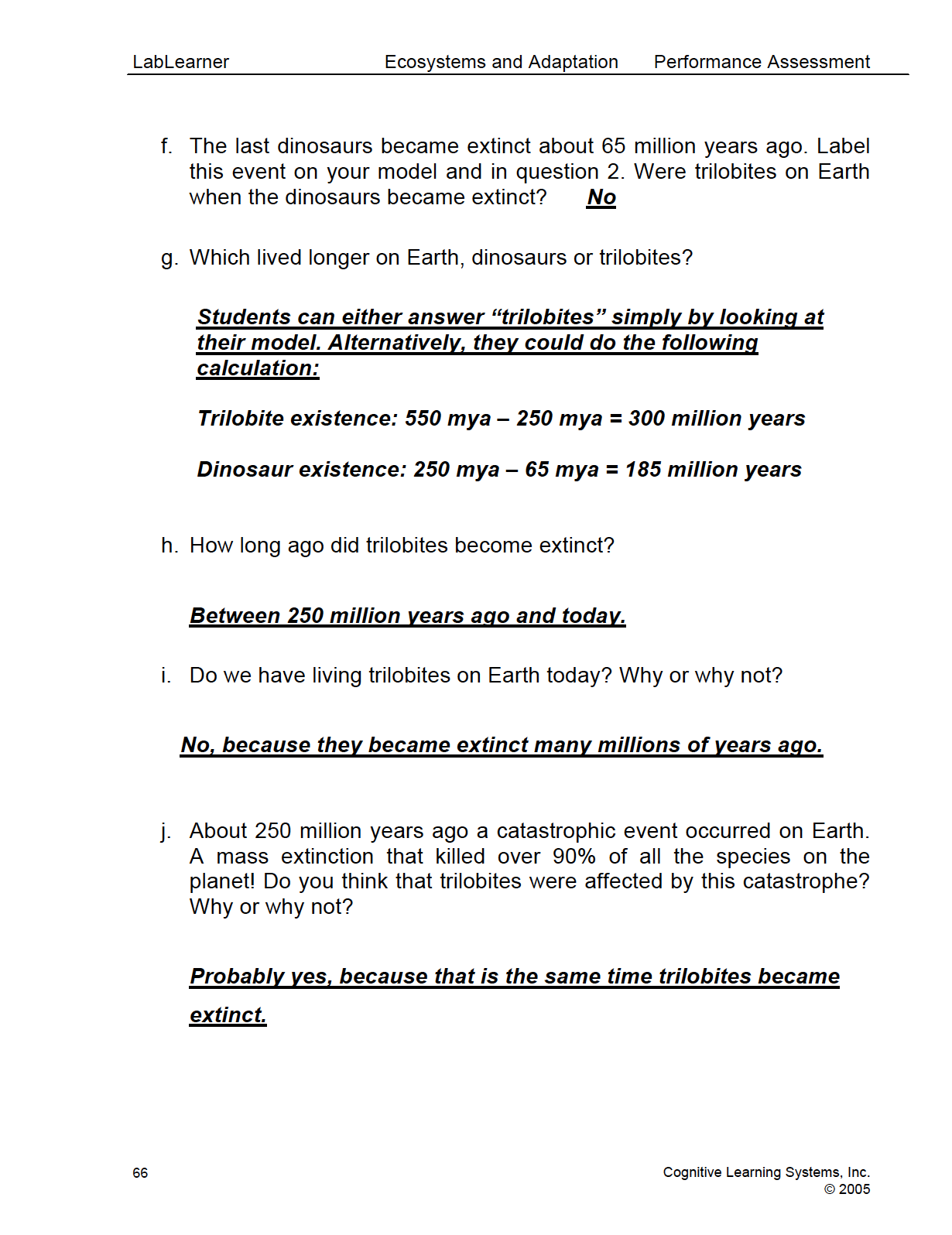
- Use the model to answer questions about extinction.
-
Ask students to review their Student Data Record and encourage them to ask any questions about it before beginning the performance assessment.
3. Allow students to complete their performance assessments. You may wish to informally or formally evaluate students as they work on their performance assessments.
a. Interpret a line graph showing changes in the number of trilobites over a long period of time.
b. Construct a model fossil record of the last one billion years (1000 million years) of the Earth’s history of trilobites.
c. Use the model of the fossil record to determine which organisms came before and after each other.
d. Use the model to answer questions about extinction.
CLEAN UP
Let students know your expectations and instruct them to clean up their lab bench after the Performance Assessment.
KEYS: PERFORMANCE ASSESSMENT