
Teacher Portal:
Exploring Density
Investigation 5
Investigation Five:
Densities of Solutions
When two different types of matter are combined, a mixture is formed. The two types of matter can be any two of the three different phases of matter, gas, liquid, or solid. Air is a mixture composed of mostly nitrogen gas and oxygen gas. Salad dressing is a mixture composed of two liquids, vegetable oil and vinegar. The metal alloy brass is a mixture of two solids, zinc and copper. A carbonated drink is a mixture of carbon dioxide gas and liquid water. Ocean water is a mixture of solid salts and liquid water.
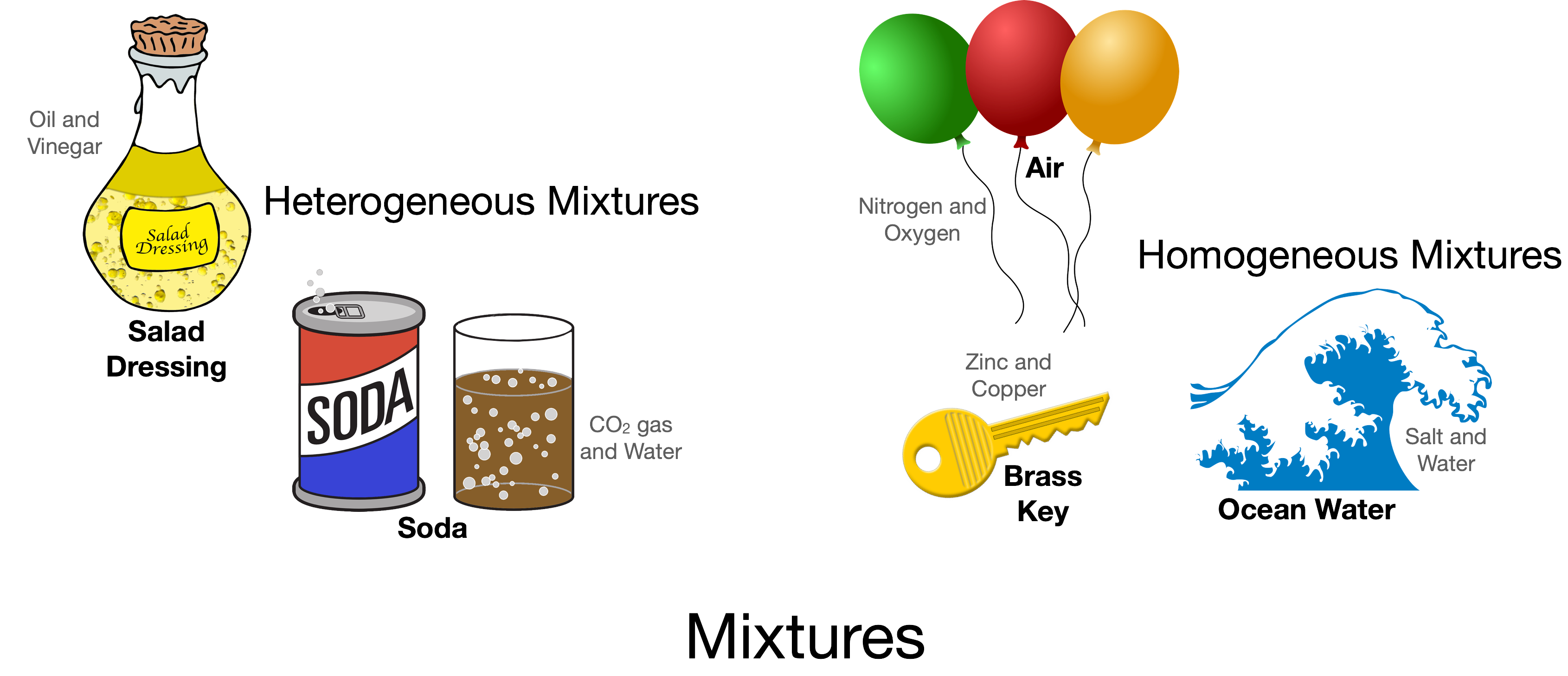
Mixtures whose components are visibly distinguishable from one another are termed heterogeneous since they are not uniform. Considering the mixtures discussed previously, those mixtures classified as heterogeneous include salad dressing since oil and water will separate and carbonated drinks since bubbles of carbon dioxide are clearly visible when the can is opened. Mixtures whose components are indistinguishable from one another are termed homogeneous or uniform. Air, brass, and ocean water are mixtures that are uniform in nature since their components are indistinguishable.


Solutions
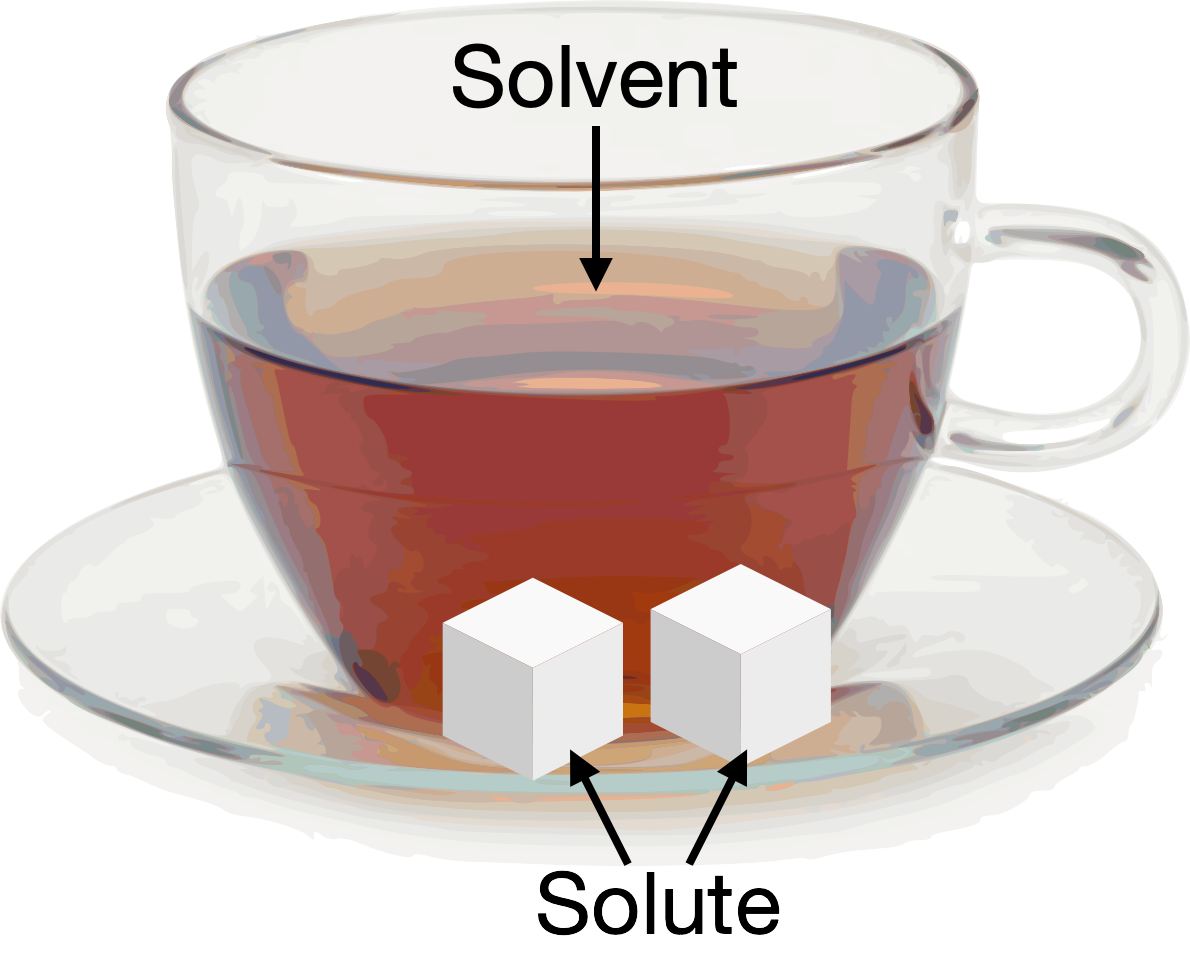 The specific term used to describe a uniform mixture is a solution. A solution consists of two components: the solute, the substance present in the lesser amount, and the solvent, the component present in the greater amount. As discussed, solutions may consist of a solute and a solvent that are any two of the three different phases of matter. However, solutions consisting of a solid solute and a liquid solvent are more common and more familiar. When a solid solute is added to a liquid solvent, the solid dissolves, and its particles disperse throughout the liquid resulting in a homogeneous mixture. The solute and the solvent never lose their chemical identity but as part of the solution, the two are indistinguishable from one another.
Density of Solutions
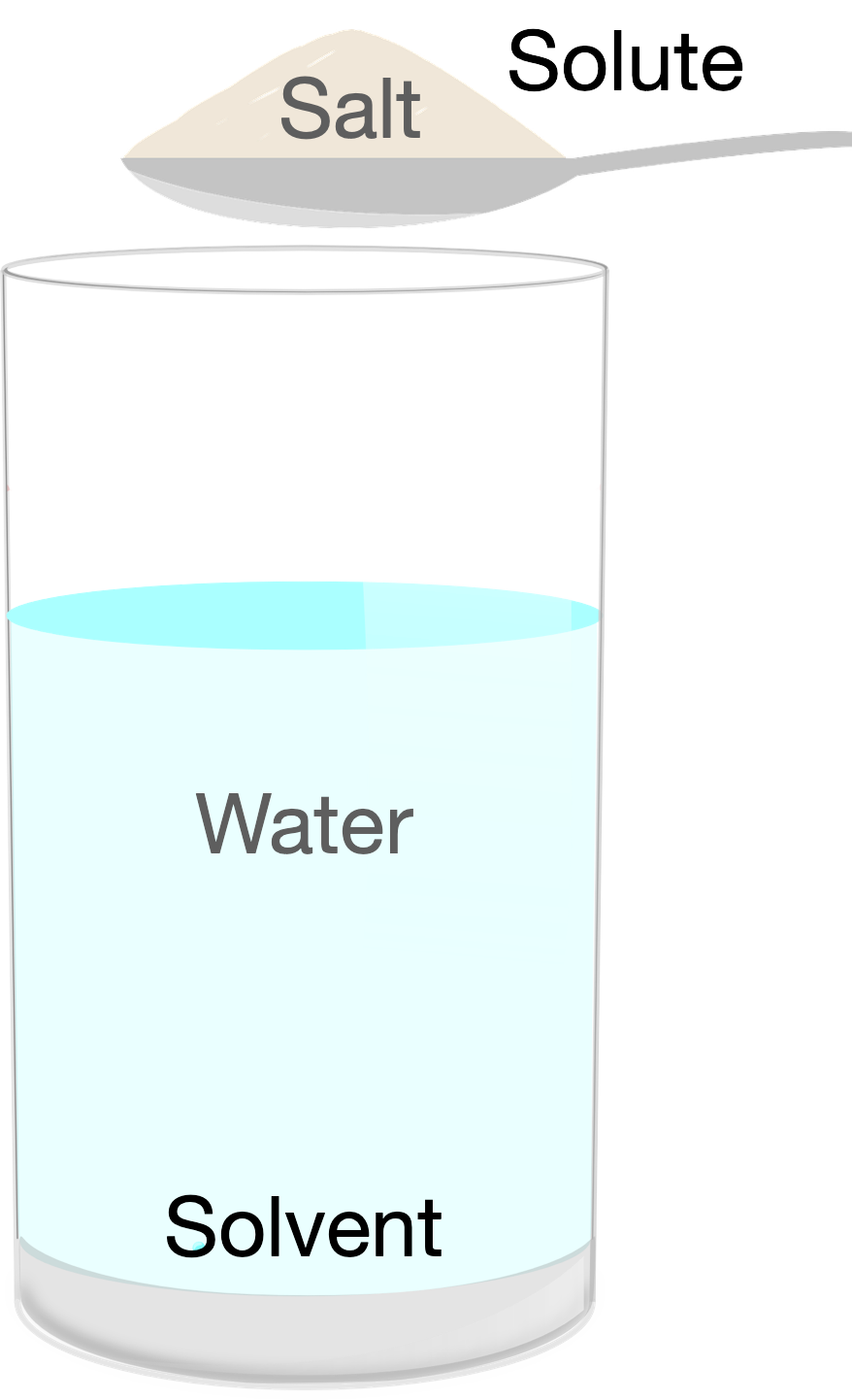 A familiar example of a solution is a saltwater solution. Saltwater consists of the solid solute, salt and the liquid solvent, water. When salt is added to water, the salt crystals dissolve and separate into the salt’s components, sodium and chloride ions. Aided by attractive forces between the ions and the water molecules, the sodium and chloride ions occupy spaces between the water molecules and disperse evenly throughout the solution.
By occupying spaces between water molecules, added solute does not significantly increase the volume of the solution when compared to the volume of the solvent before the addition of solute.
However, the mass of the solution increases significantly, since the mass of the solution is equal to the sum of the masses of the solute and the solvent. The calculated density of a solution is the ratio of the greatly increased mass to the relatively small volume that is increased only minimally. The resulting density is much greater compared to the density of the initial solvent.
To illustrate how density is affected by the addition of salt, the densities of fresh lake water, ocean water, and the water found in the Great Salt Lake in Utah can be compared. The concentration or amount of salt dissolved in each body of water is significantly different. If samples of water are analyzed, it will be found that as the salt concentration increases, the density of each type of water increases since the mass increases more than the volume increases. Fresh lake water possesses a negligible concentration of dissolved salt and possesses the lowest density. Ocean water possesses an intermediate concentration of dissolved salt and possesses an intermediate density. The water of the Great Salt Lake possesses a much greater concentration of dissolved salt and possesses the greatest density.

The density of each type of water can be directly compared by observing the buoyancy of a swimming person. The human body, just like any other solid, possesses a density that can be compared to the water found in these bodies of water. When a person swims in freshwater, much of their effort is required to keep themselves on the surface of the water and avoid sinking. The density of their body is greater than the density of freshwater. When a person swims in the ocean, less effort is required to keep themselves on the surface since the density of ocean water is greater than the density of freshwater. A person will sink in ocean water since their density is greater than the water but they are much more buoyant in ocean water than in freshwater. When a person swims in the Great Salt Lake, no effort is required to keep themselves on the surface of the water. The density of the water is greater than the density of the person’s body allowing them to float effortlessly.
Exploring Density: Investigation 5 - Mathematics Concepts
Prelab
• problem-solving
• grouping
• patterns
• least to greatest
Lab
• density in g/mL
• division
• data table
• calculating mass using a triple beam balance
• volume in mL
• mass in grams
• percentages
• decimals to the nearest hundredth
Postlab
• percentages
• greater than/less than/equal to
• division
• density in g/mL
• mass in grams
• volume in mL
• whole numbers
• decimals to the nearest hundredth
• comparing values
• addition
• fractions
• data table
• data analysis
• (in)direct relationships
• line graph
• patterns/trends
• skip counting by 0.2 and 5
• estimating values
• problem-solving
Exploring Density: Investigation 5 - Procedural Tools

- Determination of Volume Using a Mathematical Formula
- Completion of a Data Table
- Creation and Completion of Line Graph
- Measuring Mass Using a Container
- Volumetric Equipment Use
- Triple Beam Balance Equilibration
- Triple Beam Balance Use and Operation
- Use and Application of a Formula
- Calculation of Density
Exploring Density: Investigation 5 - Cognitive Tools

Exploring Density:
Investigation 5 Quiz

