Teacher Portal:
Exploring Density
Investigation 2
Investigation Two:
Calculating the Density of Water
Most properties of matter can be measured directly using some sort of measuring device or tool. Measurement using such a device quantitatively determines the amount or the extent of a particular property. For example, the measurement of volume requires a measuring device such as a graduated cylinder and the measurement of mass requires a balance such as a triple beam balance. Some properties cannot be measured directly using a measuring device and must be quantitated or determined indirectly. These properties are termed derived properties since the values for these properties are derived from properties that are measured directly.
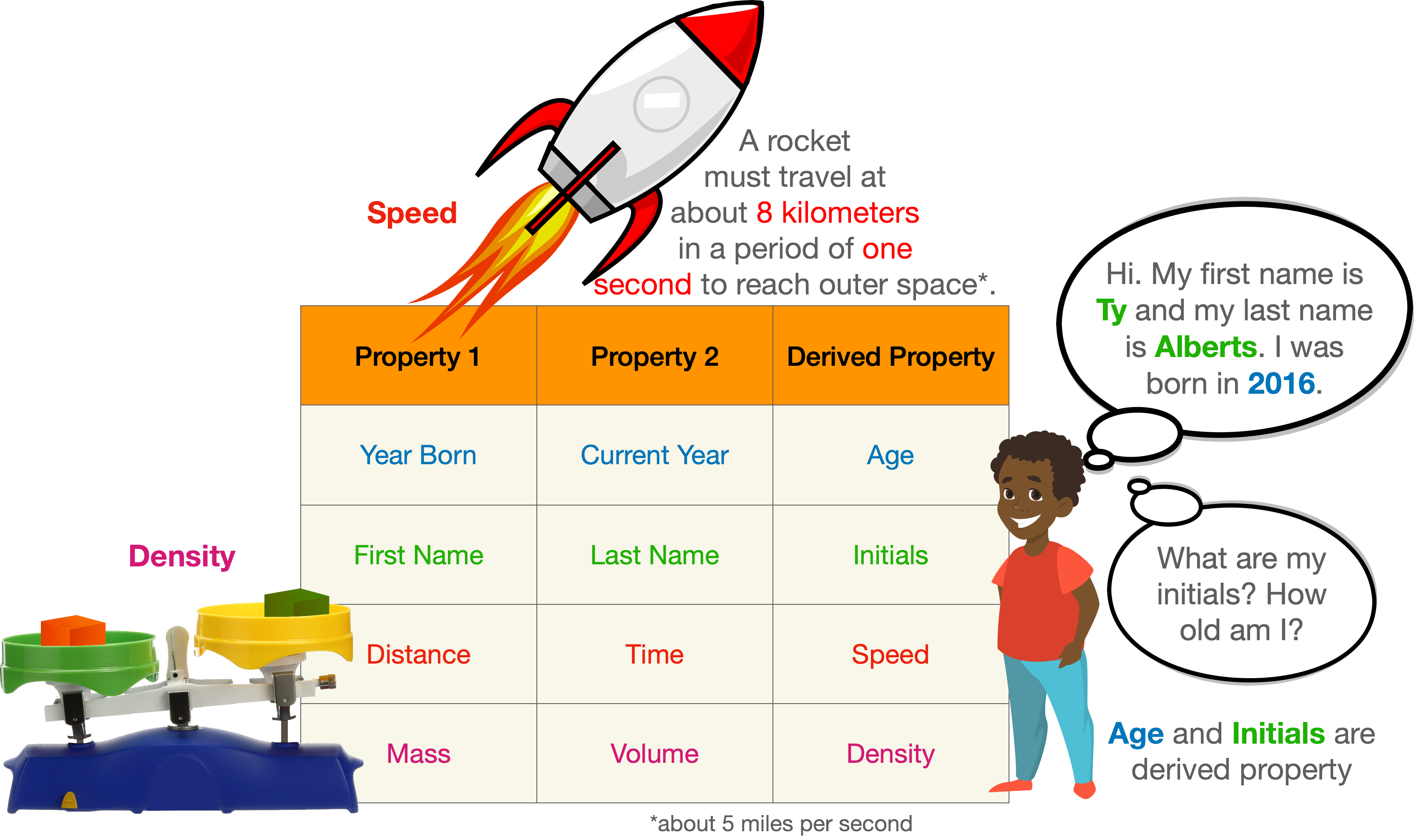
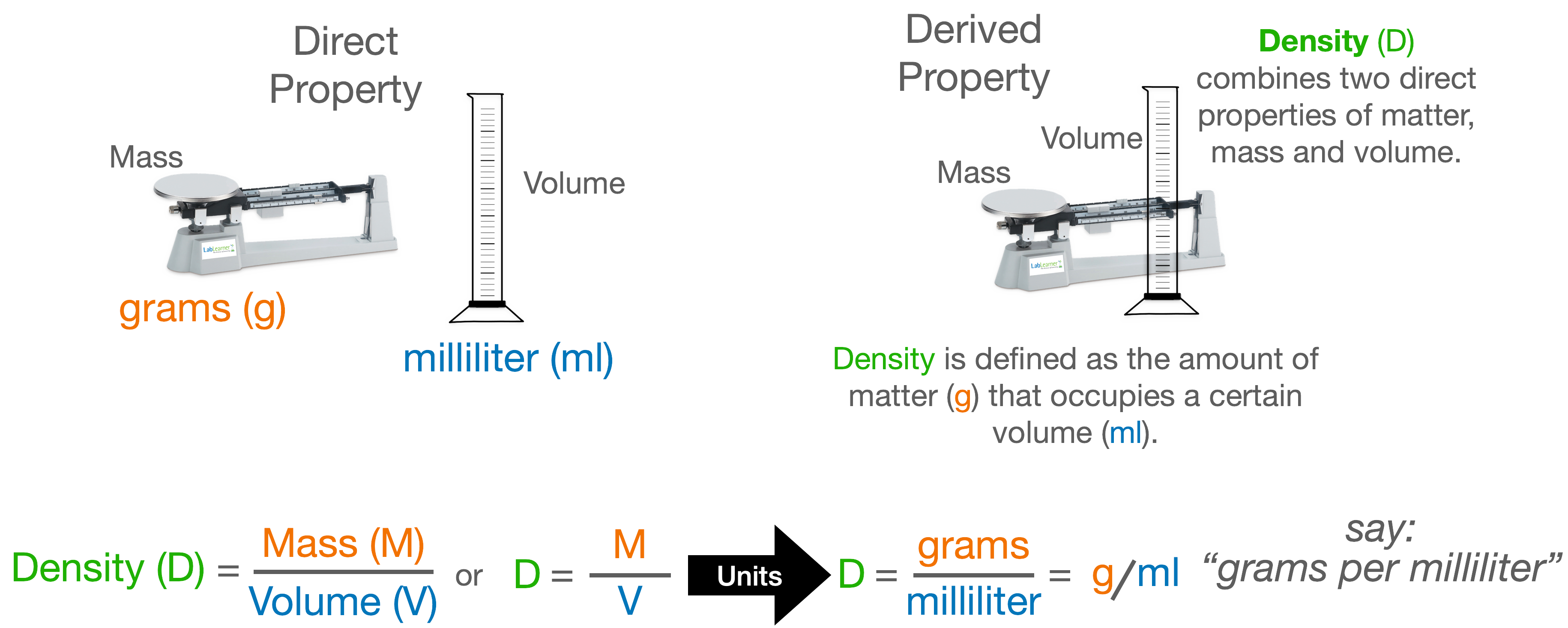
Density is an example of a derived property and is defined as the amount of matter that occupies a certain volume. Accordingly, the formula for density is defined as the ratio of the mass to the volume occupied or the mass of matter divided by the volume (g/ml or g/cm3).
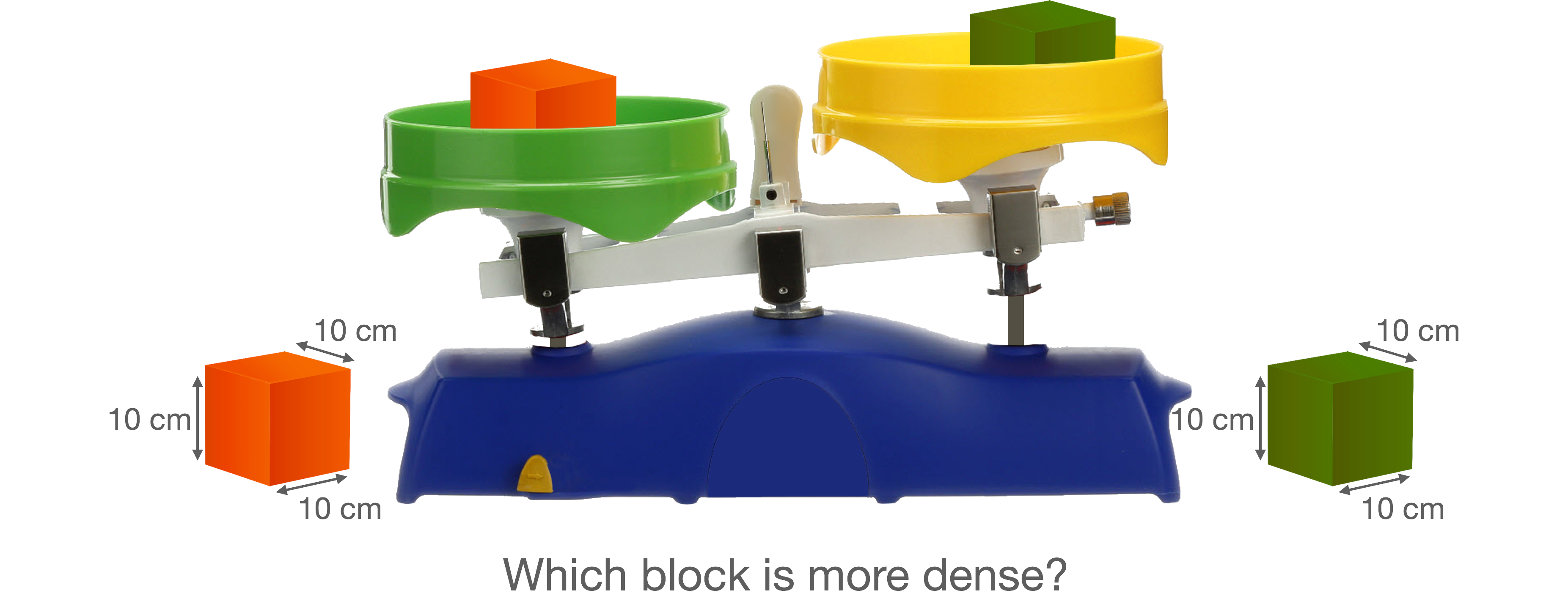
As discussed in Investigation One, phases of matter possess differing densities due to the difference in the spacing between molecules or particles. Gases usually possess the lowest densities, solids have the greatest densities, and liquids possess intermediate densities. For example, oxygen gas possesses a density of 0.00143 g/cm3, liquid water possesses a density of 0.998 g/cm3, and solid iron possesses a density of 7.87 g/cm3. An overview of mass, volume, and density, along with the proper formula for calculating density and density units are incorporated into the illustration below.
However, the density of any specific type of matter, whether a gas, liquid, or solid is a constant. The atoms or molecules composing a specific type of matter cannot be changed or the identity of the matter will be changed. The density of iron is a constant 7.87 g/cm3 since any object composed of iron is composed of the same iron atoms. Water is composed of hydrogen and oxygen atoms bonded together to form molecules that are unchanging resulting in a density of 0.998 g/cm3 that is unchanging. The atoms and molecules that compose a specific type of matter are bound together and arranged in an unchanging structure. Within this structure, the spacing between the atoms or molecules is unchanged resulting in a density that is a constant.

Since density is a ratio (density = M/V), density can be thought of as changing when the mass occupying a constant volume changes or when a constant mass occupies a different volume. It is usually easier to explain the difference in the densities of different types of matter by assuming that the mass changes and the volume remains constant. Mass is usually measured in grams and volume is usually measured in either milliliters or cm3 since one milliliter equals the same volume as one cm3.
In Investigation Two, students will determine the density of water by measuring the mass of different volumes of water. They will demonstrate that the density of water is a constant and independent of sample size since density depends on the ratio of mass to volume and not on mass or volume alone. Each sample of water is composed of the same matter, water molecules. Each water molecule possesses the same mass and the same spacing that separates them from surrounding water molecules. As the sample size increases, the number of molecules increases the mass of the sample and the volume of the sample increases accordingly. This results in the same ratio of mass to volume. The density of every individual substance, whether a gas, a liquid, or a solid is a constant since every substance is composed of the same type of matter.
Exploring Density: Investigation 2 - Mathematics Concepts
Prelab
- quantitative properties
- multiplication
- derived properties
- length
- width
- temperature
- volume in mL
- mass in grams
- density in g/mL
- decimals to the nearest tenth
Lab
- mass in grams
- volume in mL
- density in g/mL
- division
- data table
- measuring mass using a triple beam balance
Postlab
- data table
- data analysis
- derived properties
- quantitative properties
- mass in grams
- volume in mL
- density in g/mL
- comparing values
- line graph
- skip counting by 0.5 and 10
- (in)direct relationships
- patterns/trends
- least to greatest
- division
- length in meters
Exploring Density: Investigation 2 - Procedural Tools

Exploring Density: Investigation 2 - Cognitive Tools

Exploring Density:
Investigation 2 Quiz

