
Teacher Portal:
Water Cycle and Its Phases
Water Cycle and Its Phases
 During this CELL, students will conduct several investigations focused on the process of the water cycle and how that process can be polluted by contaminants. Through experimentation and observation, students will explore the four phases of the water cycle – evaporation, condensation, precipitation, and collection – and investigate how the effects of pollution relate to their entrance into the water cycle.
Through various activities and investigations, students will discover that the four phases of the water cycle are interconnected; one phase leads to the next phase, thereby producing a continuous cycle that provides water that can be used by plant and animal life on this planet. They will learn that only a small portion, about 1%, of the water on Earth is usable as drinking water.
This CELL gives students the opportunity to examine the water cycle process by creating models that will simulate each phase. They will study and compare models that will help them to understand each of these phases. Through exploration, students will observe how an increase in the temperature of water results in evaporation, causing water to become water vapor and rise into the atmosphere. Another change in temperature occurs as water vapor rises into the cooler atmosphere and condenses into clouds, the condensation phase of the water cycle. In the precipitation phase, the condensed water in clouds becomes too heavy to remain in the cloud and fall as rain, sleet, freezing rain, hail, or snow. This precipitation collects as groundwater or surface water during the collection phase.
Students will simulate how contaminants can enter the water cycle during the condensation, precipitation, and collection phases and will use models to understand how entry into the water cycle can contaminate the water supply. The models will also help students to visualize the effects pollutants have on structures, both man-made and natural, and on plant and animal life.
This CELL will broaden students’ knowledge of the water cycle and the effects of water pollution, enabling them to have a greater understanding of and appreciation for the importance of conserving this resource and preserving the water cycle process. This greater understanding will better enable students to incorporate ways to protect the quality of water resources by practicing safe disposal methods of contaminants and by better managing their water use.
___________________________________________________________________
Investigation 1: Exploring Evaporation and Condensation
In Investigation One, students will begin their study of the water cycle by exploring the phases of evaporation and condensation. They will create models to simulate these phases using mirrors and beakers of water. Each model will represent variances in temperature that can exist between a body of water and the atmosphere. By comparing the models, students will discover that a difference in temperature between water on the Earth and the atmosphere causes evaporation and condensation of water.
Investigation 1: Teacher’s Video (14:43)
Investigation 1: Student’s Video (11:53)
Click on the image below to open Investigation 1 CAP
___________________________________________________________________
Investigation 2: Exploring Condensation and Precipitation
Students will continue their exploration of the water cycle in Investigation Two. They will create a model that simulates the phases of condensation and precipitation. Observing the model will help students to understand how condensation and precipitation phases are related and the process by which precipitation is released from clouds.
Investigation 2: Teacher’s Video (7:26)
Investigation 2: Student’s Video (5:46)
Click on the image below to open Investigation 2 CAP
___________________________________________________________________
Investigation 3: Exploring Precipitation and Collection
Investigation Three introduces students to the collection phase of the water cycle. It provides them with the opportunity to create models that simulate the collection of groundwater and surface water. Students will also investigate the relationship between different types of soil and collection of water as ground or surface water. Comparing these models will help students to better understand what is meant by the terms groundwater and surface water and the reasons for the differences in the collection phase of the water cycle.
Investigation 3: Teacher’s Video (7:24)
Investigation 3: Student’s Video (4:52)
Click on the image below to open Investigation 3 CAP
___________________________________________________________________
Investigation 4: Exploring Pollution of the Water Cycle
In Investigation Four, students will build a model to observe how pollutants enter the water cycle. Students will add pollutants to a model that represents a lake and its shore. By observing the interaction that occurs between land, groundwater, and surface water when pollutants are added to the environment, students will understand that the water cycle is an interconnected system in which pollutants can be transferred from one phase of the cycle to another and from one location to another.
Investigation 4: Teacher’s Video (10:16)
Investigation 4: Student’s Video (16:18)
___________________________________________________________________
Investigation 5: Exploring the Effects of Water Pollution
Students continue their exploration of water pollution in Investigation Five. This investigation introduces students to the concept that pollutants introduced into the water cycle can have serious effects on the environment. Students will observe an experiment that simulates the effect of acid rain on non-living things, such as mountains, buildings, statues, etc. In addition, students will observe and construct several models to investigate whether pollutants affect living things, such as plants and animals. Through their investigation, students will come to realize both the direct and indirect effects of pollutants on the water cycle and surrounding ecosystems.
Investigation 5: Teacher’s Video (3:04)
Investigation 5: Teacher’s Demonstrations 1 and 2 Video (13:49)
Investigation 5: Student’s Video (10:53)



Pre-Tests and Post-Tests
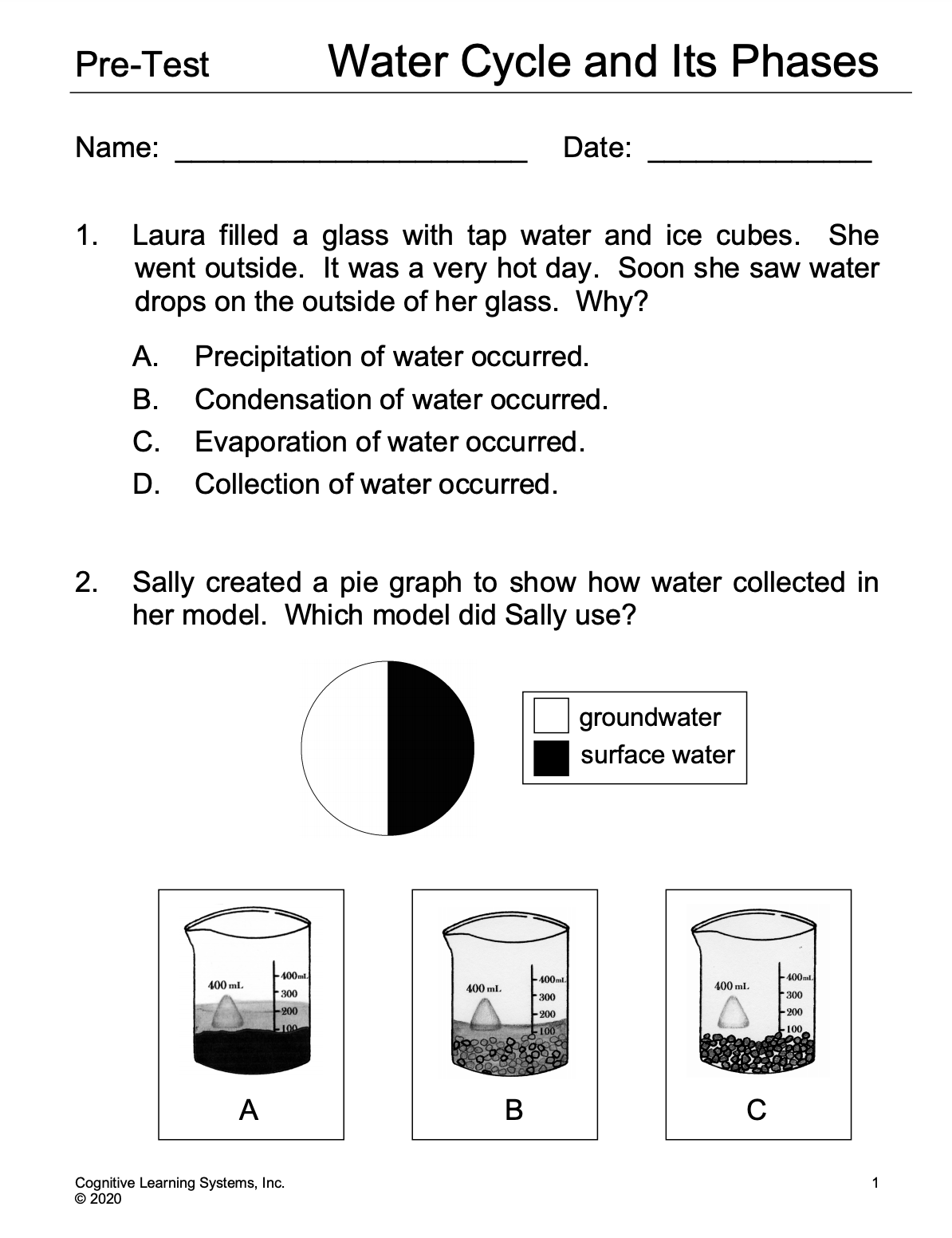
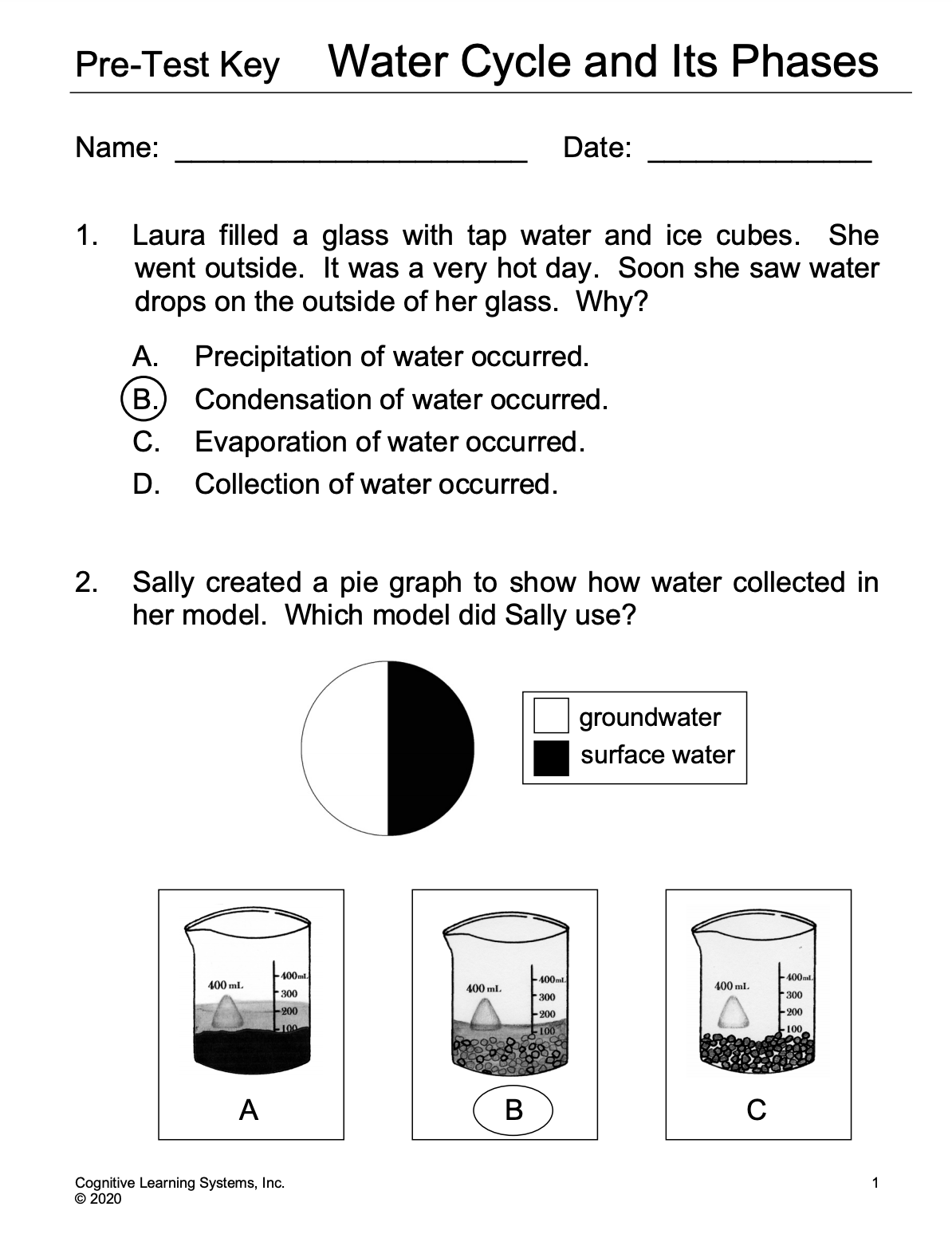
Pre-Test Key
Includes NGSS correlations
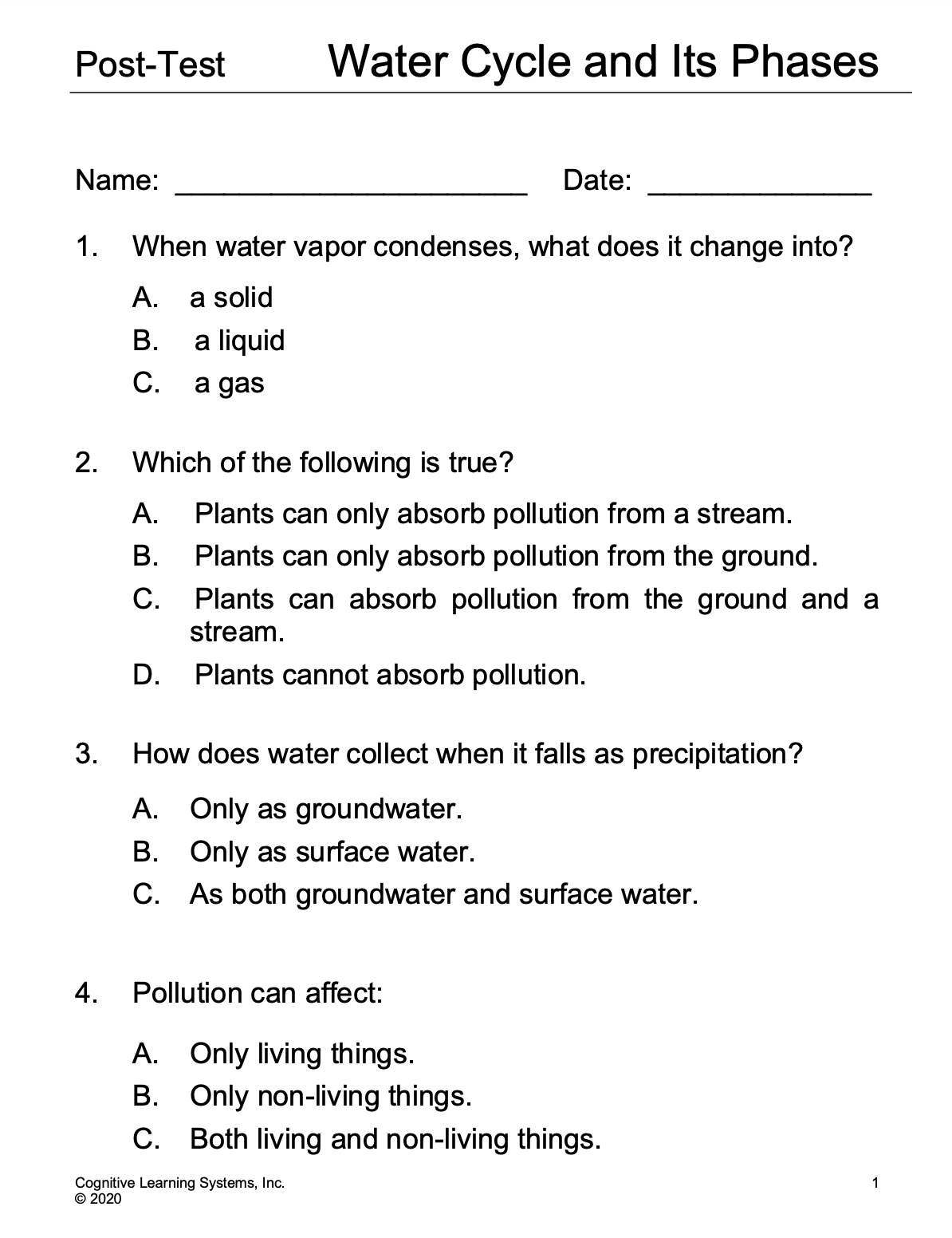
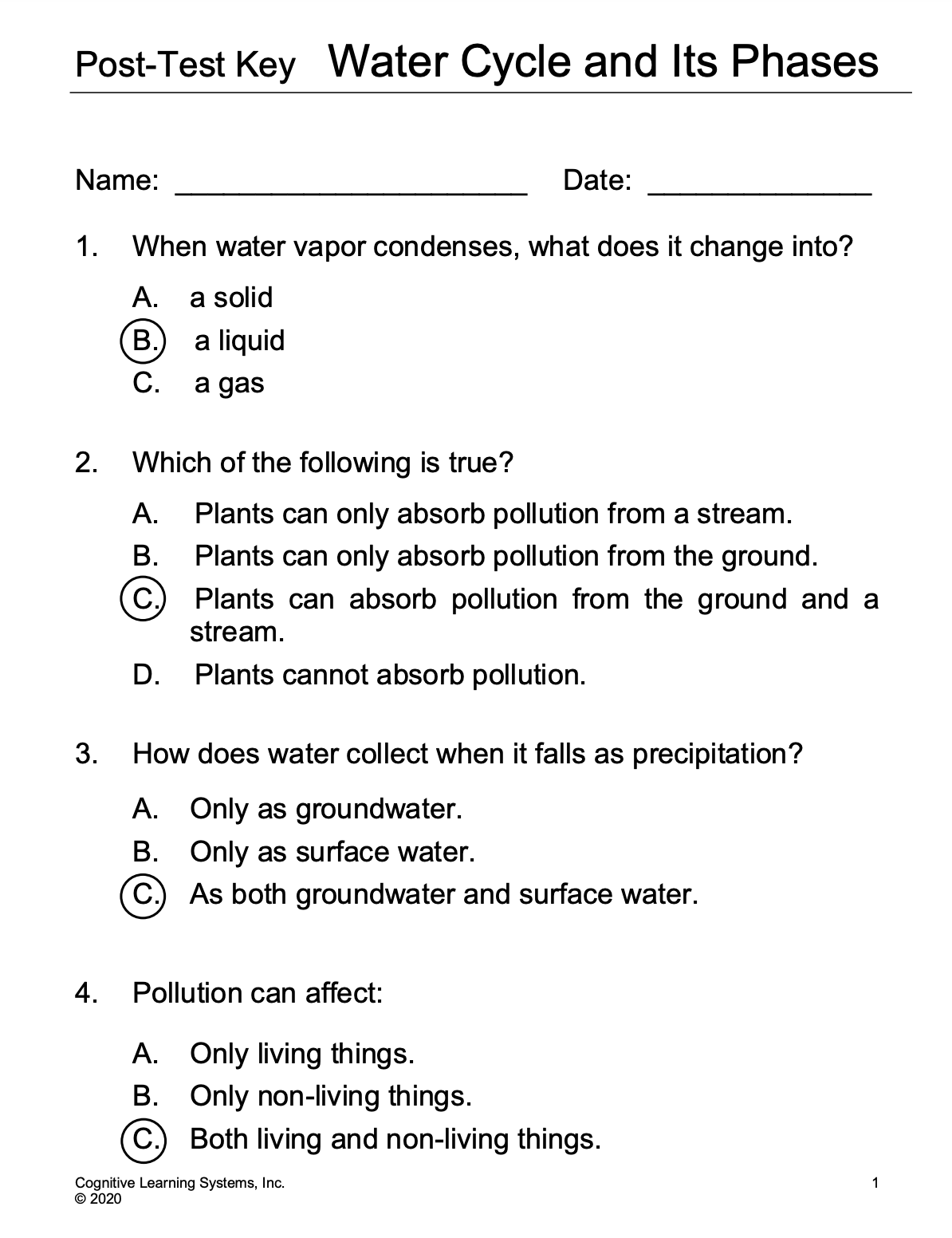
Post-Test Key
Includes NGSS correlations