
Teacher Portal:
The Earth’s Surface
The Earth’s Surface
 During this CELL, students will conduct investigations to explore the properties of rocks, gravel, soil, and sand, in order to further their understanding of the components of the Earth’s Surface.
Exploration of the Earth’s Surface begins with an investigation of two rock samples: white marble rock and black obsidian rock. Students learn that rocks are comprised of minerals, but that depending on their composition, rocks can differ in such physical properties as color, texture, size, and luster. Students continue to examine the properties in Investigation Two when rock samples are compared to other solid objects: a woodblock, an acrylic cylinder, and a metal cube. Students learn that rocks may or may not weigh more than another object.
That rocks can be broken down into smaller pieces, or weathered is a concept students will address in the third investigation. Students examine substances that result from the weathering process, including gravel, two types of soil, and sand. Students use a filter to examine the relative particle size of each substance and each sample, and draw conclusions from the amount of each substance that passes through the filter in regard to particle size, ability to withstand further weather events, and possible uses in our world.
The final two investigations further student’s understanding of the composition, absorbent properties, and ecological significance of these substances. Students determine absorbency by weighing samples before and after water is poured onto them, and by measuring the amount of runoff that percolates through the samples.
Through performing experiments and participating in class discussions, students begin to understand the relationship between rocks, minerals, soil, sand, and the life that exists and grows in and on such substances. Students’ awareness of the importance of soil in preventing flooding, and their appreciation for the effects of weathering and erosion, will further their understanding of the world around them.
___________________________________________________________________
Investigation 1: Properties of Rocks and Minerals
Investigation One introduces students to the relationship between rocks and minerals. It allows students to observe the physical properties of rock samples. Students learn that rocks have specific physical properties, but that rocks can appear different in appearance and in composition. Students will observe a collection of rocks and minerals and will observe the many different types of minerals that give rise to different rocks.
Investigation 1: Teacher’s Video (6:29)
Investigation 1: Student’s Video (10:26)
___________________________________________________________________
Investigation 2: Comparing Rocks to Other Solids
In Investigation Two, students observe the physical properties of rock samples in comparison to other solids: wood, plastic, and metal. Through these observations, students discover that the relative weight and appearance of the samples do not necessarily depend on the composition of materials alone. That is, only by considering the combination of properties, can students correctly identify a substance.
Investigation 2: Teacher’s Video (3:30)
Investigation 2: Student’s Video (11:03)
___________________________________________________________________
Investigation 3: Rocks, Soil, and Sand
During Investigation Three, students observe and compare the particle size and appearance of rocks, sand, and soil. Students learn that the process of weathering can result in smaller rock pieces such as pebbles, gravel, sand, and soil. Students learn that organic matter such as twigs, leaves, and the remains of animals, contributes to the composition of the soil.
Investigation 3: Teacher’s Video (6:59)
Investigation 3: Student’s Video (10:02)
Click the image below to open Investigation 3 CAP
___________________________________________________________________
Investigation 4: Rainwater, Rocks, and Soil
Investigation Four allows students to discover differences between rocks, soil, and sand in terms of their ability to absorb water. Through the creation of models and through conducting experiments, students quantify the absorbent properties of each sample.
Investigation 4: Teacher’s Video (7:40)
Investigation 4: Student’s Video (14:43)
___________________________________________________________________
Investigation 5: Percolation and Runoff
During Investigation Five, students will examine percolation and runoff by creating a model of two types of ground surfaces. By measuring the weight of the samples before and after water is added, and by measuring the resultant runoff, students may conclude that soil has important absorbent properties but that should these be exceeded, a runoff will occur.
Investigation 5: Teacher’s Video (11:14)
Investigation 5: Student’s Video (11:11)


Pre-Tests and Post-Tests
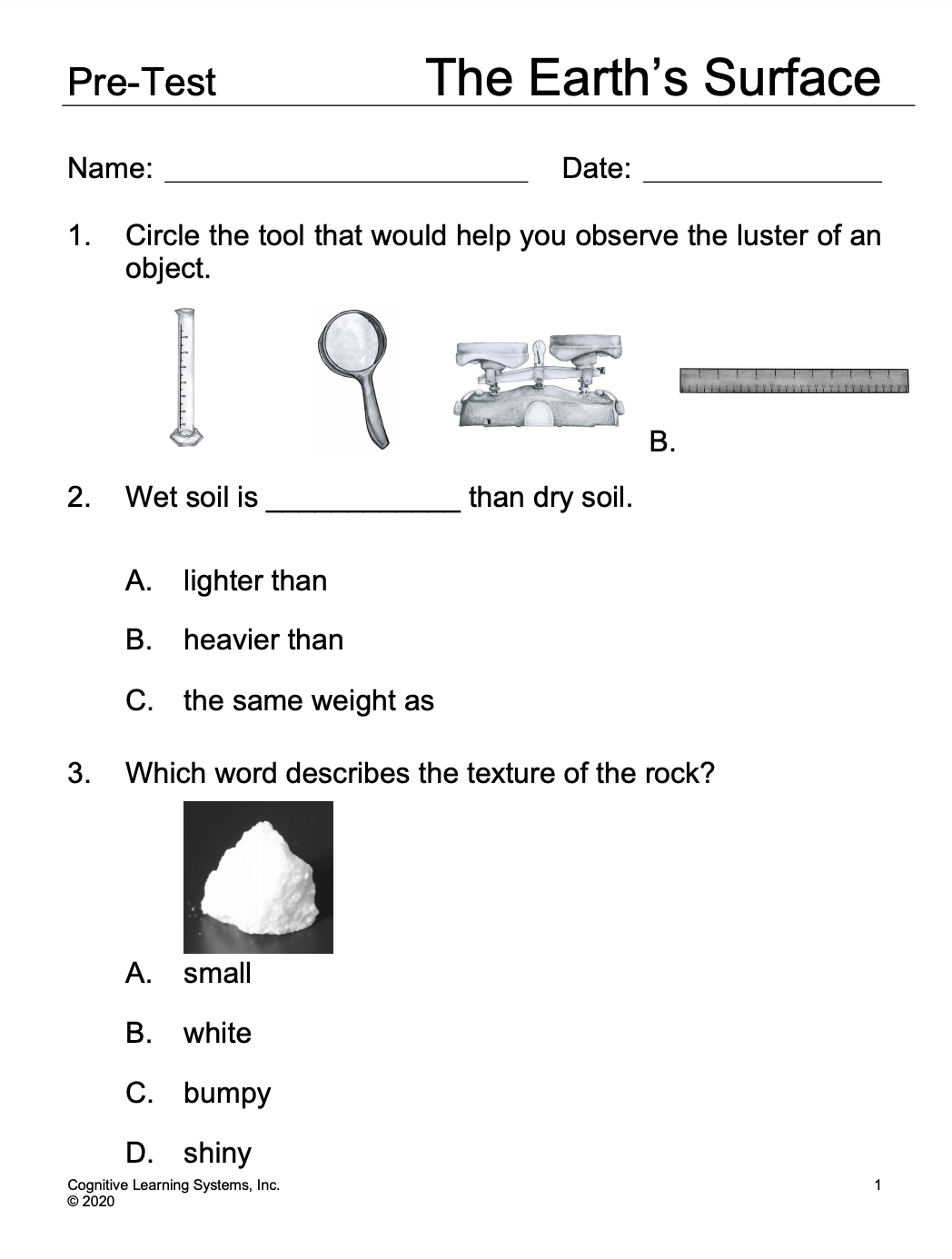
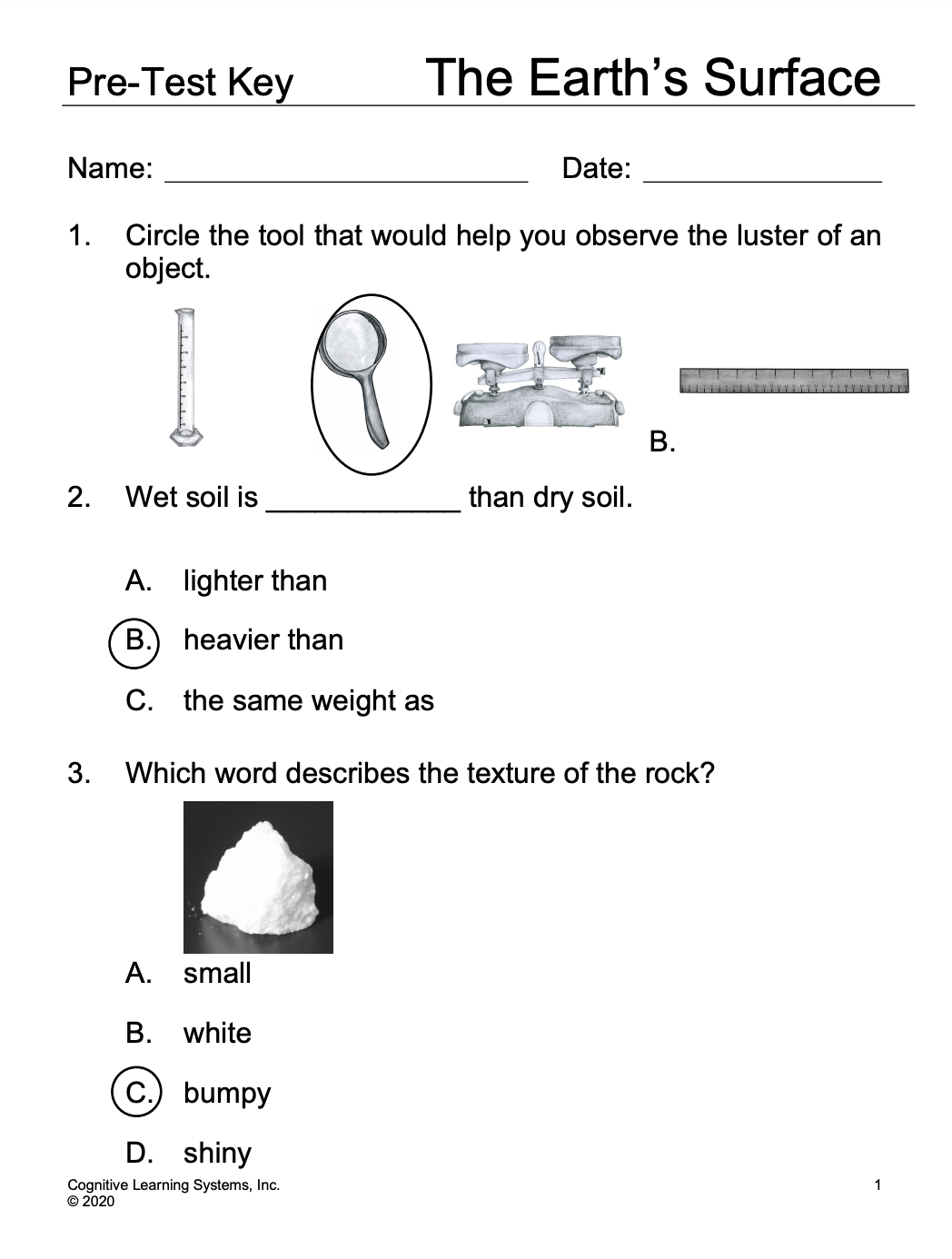
Pre-Test Key
Includes NGSS correlations
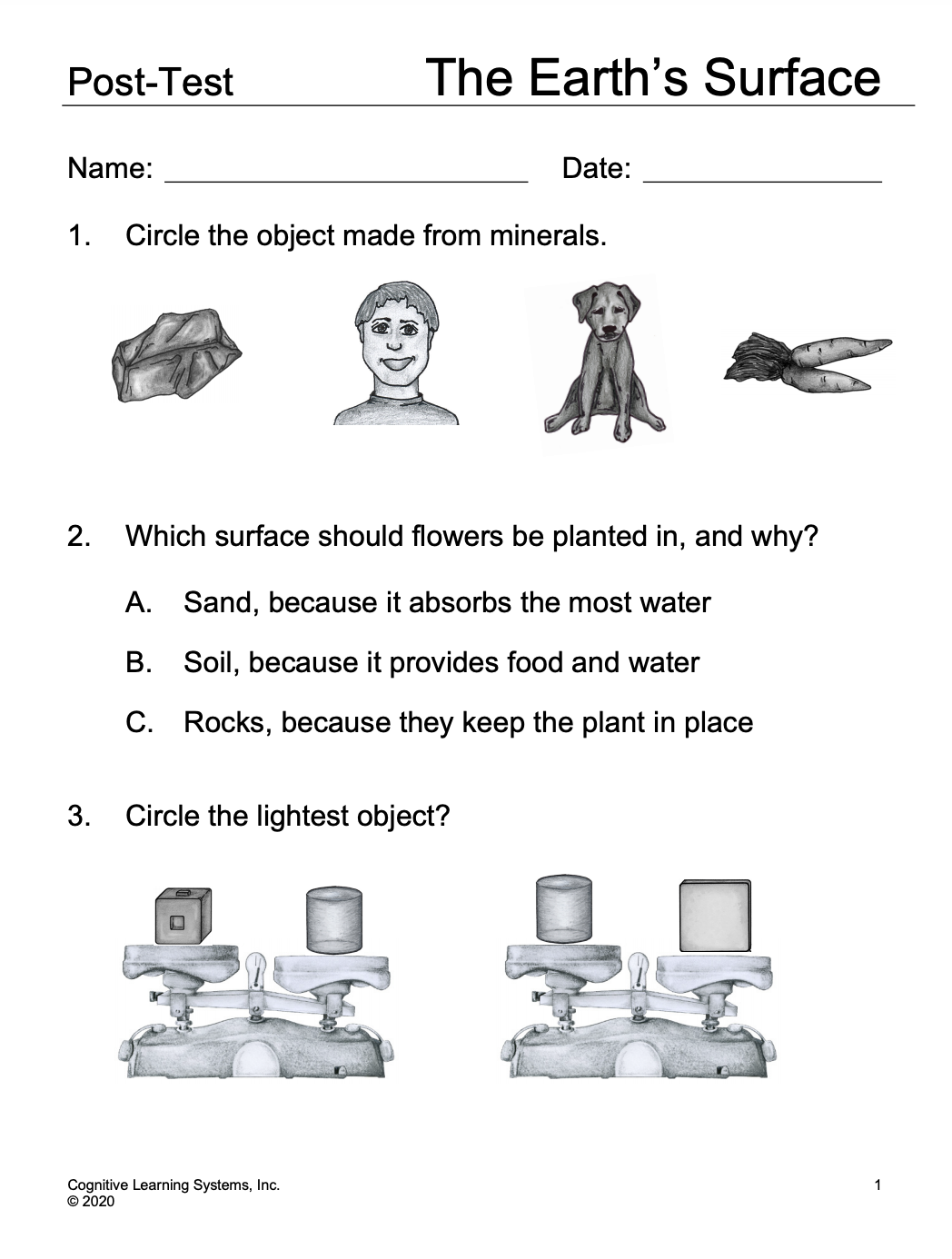
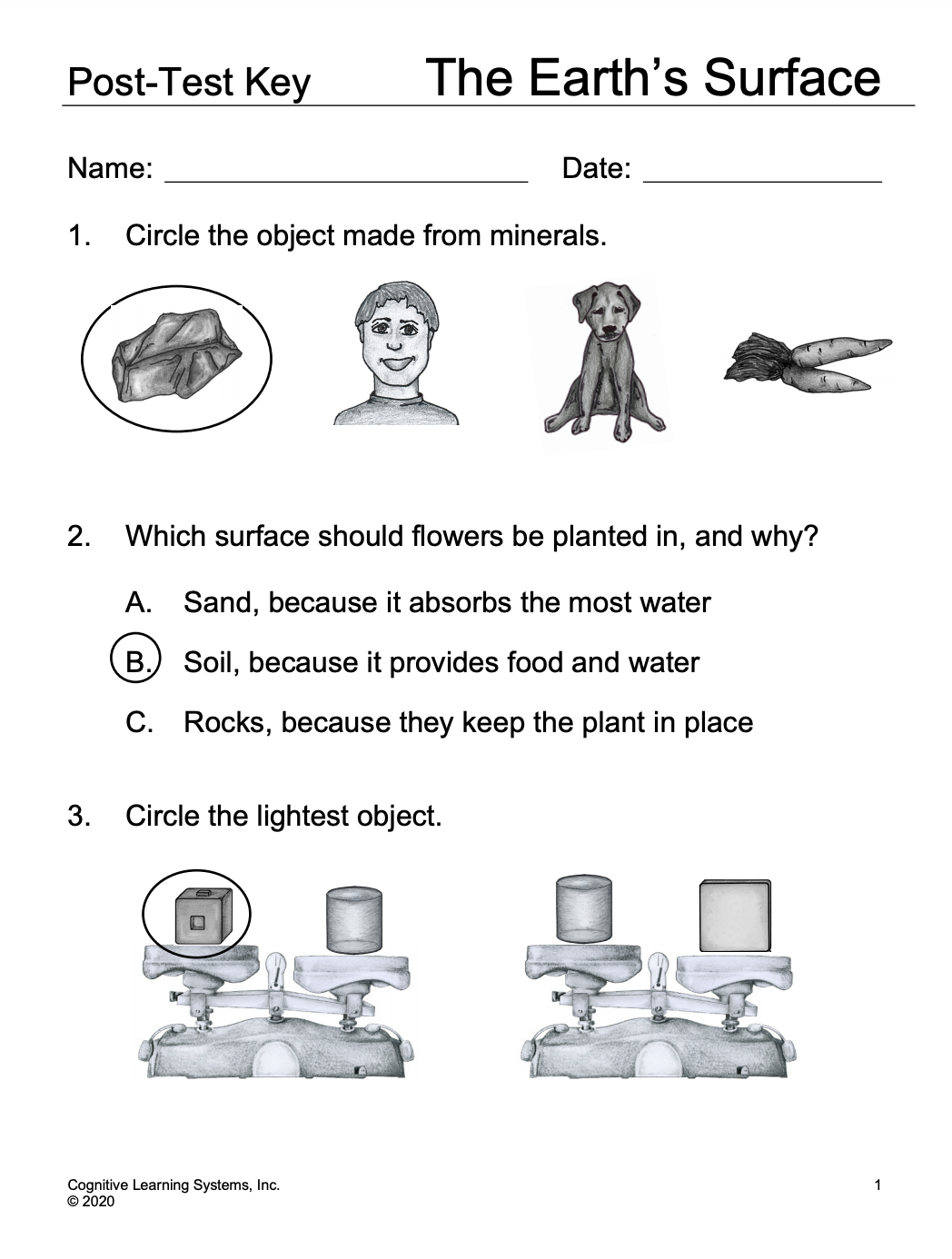
Post-Test Key
Includes NGSS correlations