
Teacher Portal:
Our Solar System
Investigation 2
Investigation Two: The Sun and the Earth
In Investigation One, students began to understand the relationships between the parts of the Solar System. Students gained a more complete understanding of the movement of planets as they rotate and revolve around the Sun. Investigation Two guides students toward a more complete understanding of the Sun and its role in supporting life on Earth.
Light Energy Comes From the Sun
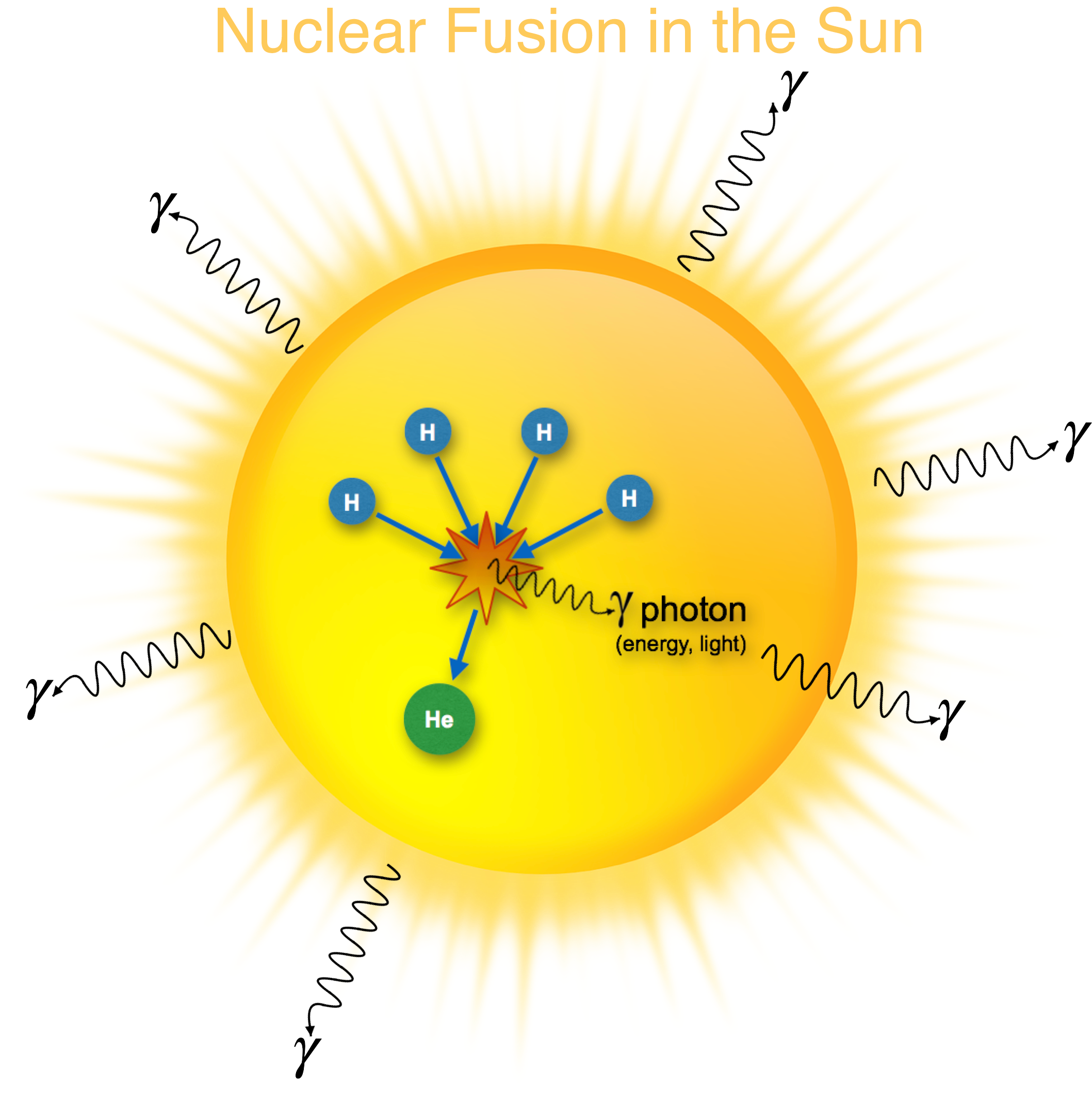
The Sun releases energy that is necessary for all life on Earth. This energy, known as radiant energy, is released as 4 hydrogen atoms that are combined (nuclear fusion) to create a single helium atom. This reaction releases the radiant energy (photon) that eventually reaches the Earth, where it is either absorbed or reflected.
The energy that is released can largely be divided into three types of electromagnetic energy: infrared, visible, and ultraviolet light. These three types of light are commonly described by their wavelength and are placed on a spectrum accordingly (see illustration below).
Infrared light has the longest wavelength and therefore is the least energetic. On the opposite side of the spectrum is ultraviolet light, having the shortest wavelength and the most intensely energetic.
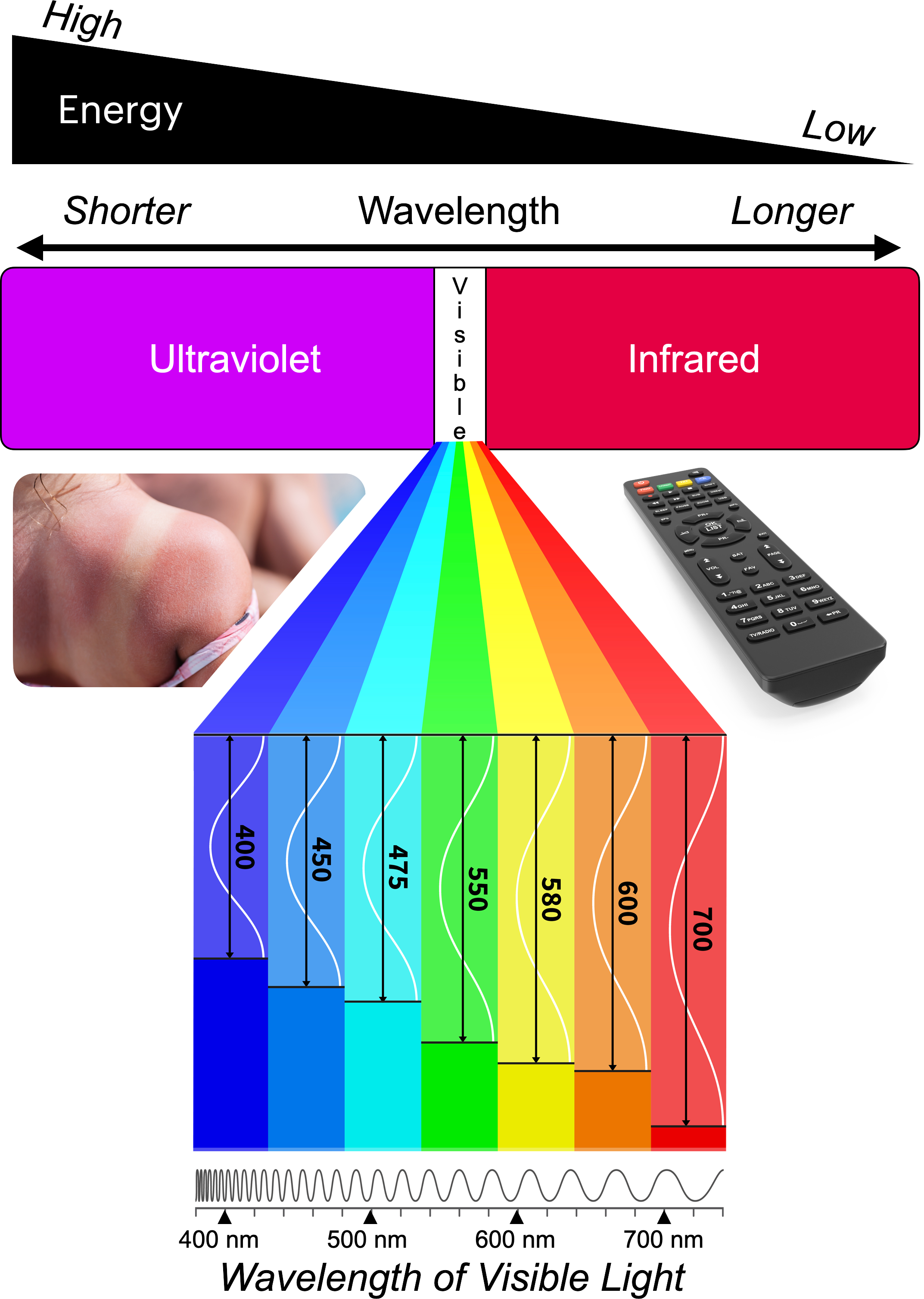
Visible light is placed between infrared and ultraviolet light according to its wavelength and energy. Although humans cannot see ultraviolet or infrared light, visible light can be viewed as light by humans. Visible light constitutes the majority of the light energy that reaches the Earth.
Visible Light
The visible light that reaches the Earth sustains life on Earth. Without it, all life on Earth would cease. For example, plants rely on light from the Sun for photosynthesis, the process of producing food necessary for life. Animals, in contrast, do not use light as a direct requirement for the production of food in the same way plants do. However, many animals rely on plants as food, plants which have survived due to the energy from the Sun. Animals that do not rely on plants for food consume other animals, animals that have eaten plants in order to survive. Thus, all life on Earth depends on light energy from the Sun.

Ultraviolet Light
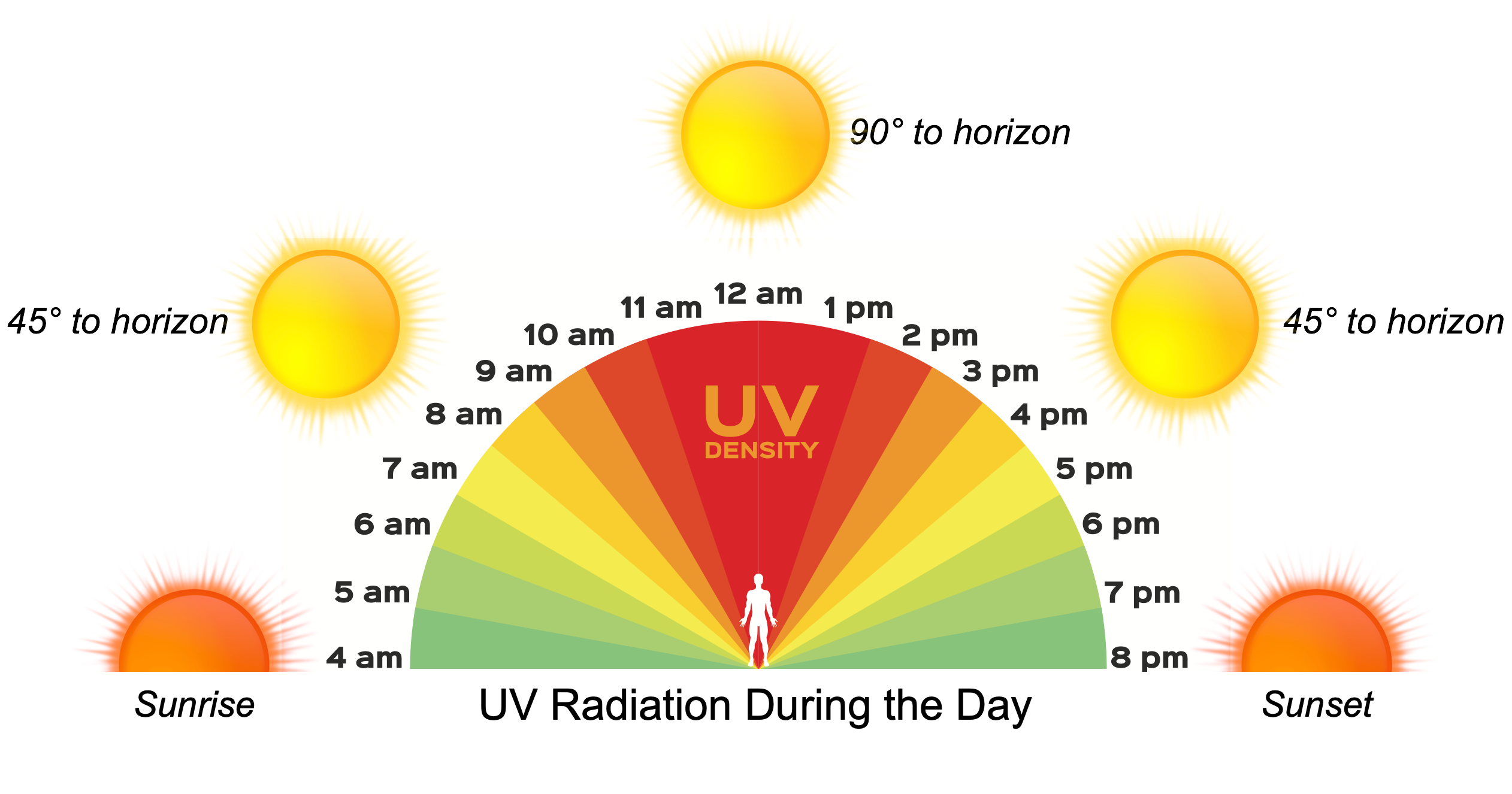
The energy of ultraviolet light is very intense. Many students may be aware of the damage that ultraviolet light from the Sun can have on the skin, damaging and killing skin cells. Ultraviolet light is the cause of sunburn and can cause skin cancer over time. The illustration below shows the position of the Sun over the course of a day. The most intense hours of UV radiation are between 10 AM and 2 PM. These are the hours that the American Cancer Society recommends avoiding direct exposure to the Sun to reduce skin damage, particularly during the summer months.
Infrared Light
In contrast, infrared light is not as energetic as ultraviolet light. Infrared waves are used for remote controllers as their energy is not high enough to damage cells and cause burns. light Infrared light warms objects that it contacts. When standing in the Sun, a person is warmed by the infrared rays that reach him or her but can be burned by the ultraviolet rays that reach them at the same time.
The illustration below shows two of many uses for infrared technology. Most students are familiar with the infrared thermometer depicted on the left. However (right side), infrared technology can be used to detect heat loss from builds and homes to assist in insulation efficiency, and energy savings. Reds and yellows indicate higher temperatures than greens and blues. Notice the bright reds and yellows for the older building on the left, particularly around the windows, compared to the cool blues and greens of the properly insulated building on the right.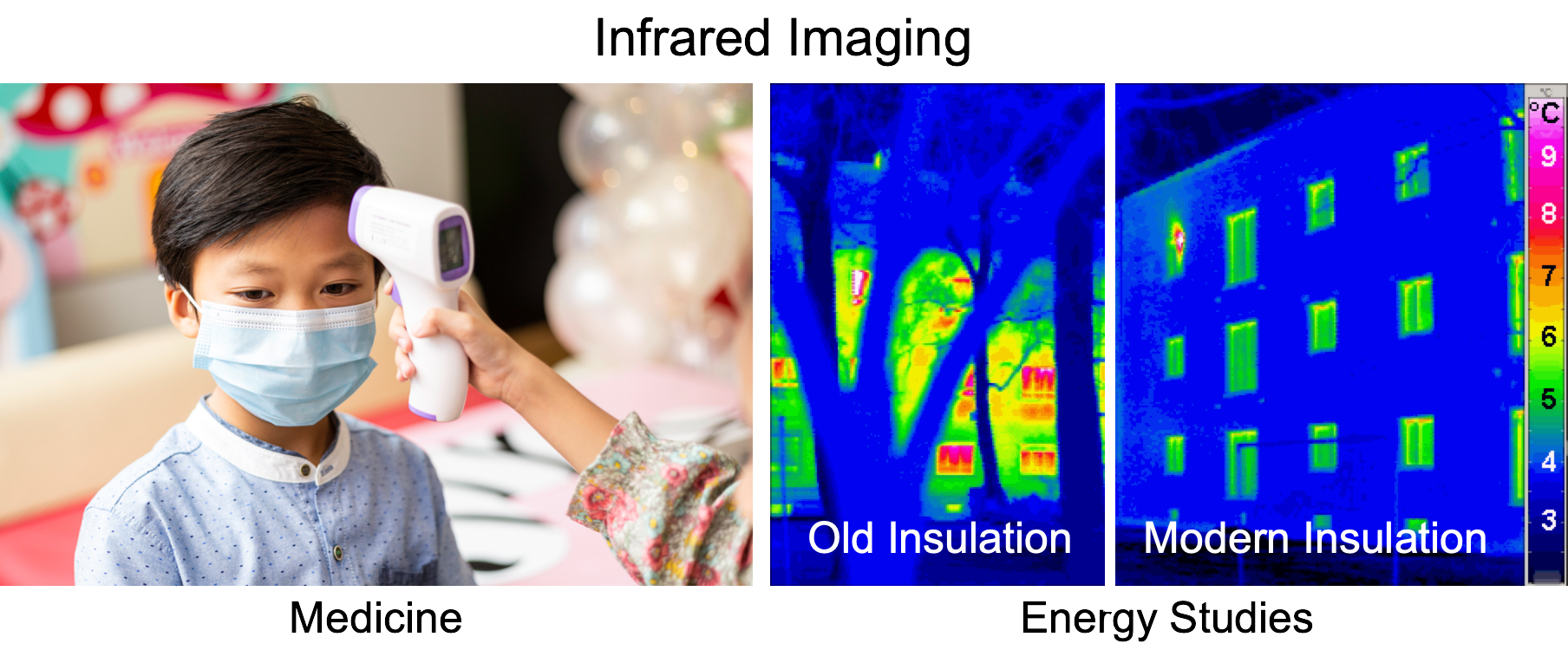
Once the energy from the Sun reaches the Earth, it may be absorbed or reflected. Much of the ultraviolet light that reaches the Earth is absorbed by the Earth’s atmosphere. Infrared light is largely reflected. However, the infrared light that reaches the Earth’s surface is able to sufficiently warm it. In both cases, the Earth’s atmosphere acts as a shield to the Earth, keeping large, harmful amounts of ultraviolet and infrared light from reaching the surface and causing vast damage to life on Earth.
In Investigation Two, students will explore energy from the Sun to more fully understand the Sun’s role in our Solar System.
Our Solar System: Investigation 2-Mathematics Concepts
Prelab
- time (seconds, minutes, hours, days, months, years
Lab
- time
- least to greatest
- length in cm
- estimate/verify predictions/measurements
- temperature
- size and shape
Postlab
- data table
- counting whole numbers
- data analysis
Our Solar System: Investigation 2 - Procedural Tools

Our Solar System: Investigation 2 - Cognitive Tools

Our Solar System:
Investigation 2 Quiz

