
Teacher Portal:
Plants and Animals Journey
Two: Animals
 PRINT IT
Use your browser to download a printable PDF as help during the slide presentation and to make additional notes. In your browser, go to File > Print and then choose to save as PDF.
NAVIGATE IT
Once the slide presentation is launched
- use your left and right arrows to advance or go back in the slide presentation, and
- hover your mouse over the left edge of the presentation to get a view of the thumbnails for all the slides so that you can quickly move anywhere in the presentation.
- Click HERE to launch the slide presentation for the CELL.
SHARE IT
SLIDE 2VPA-1
This is the second of three sections (presentations) of the LabLearner Plants and Animals Journey. In this section, students will focus on animals.
______________________________________________
SLIDE 2VPA-2
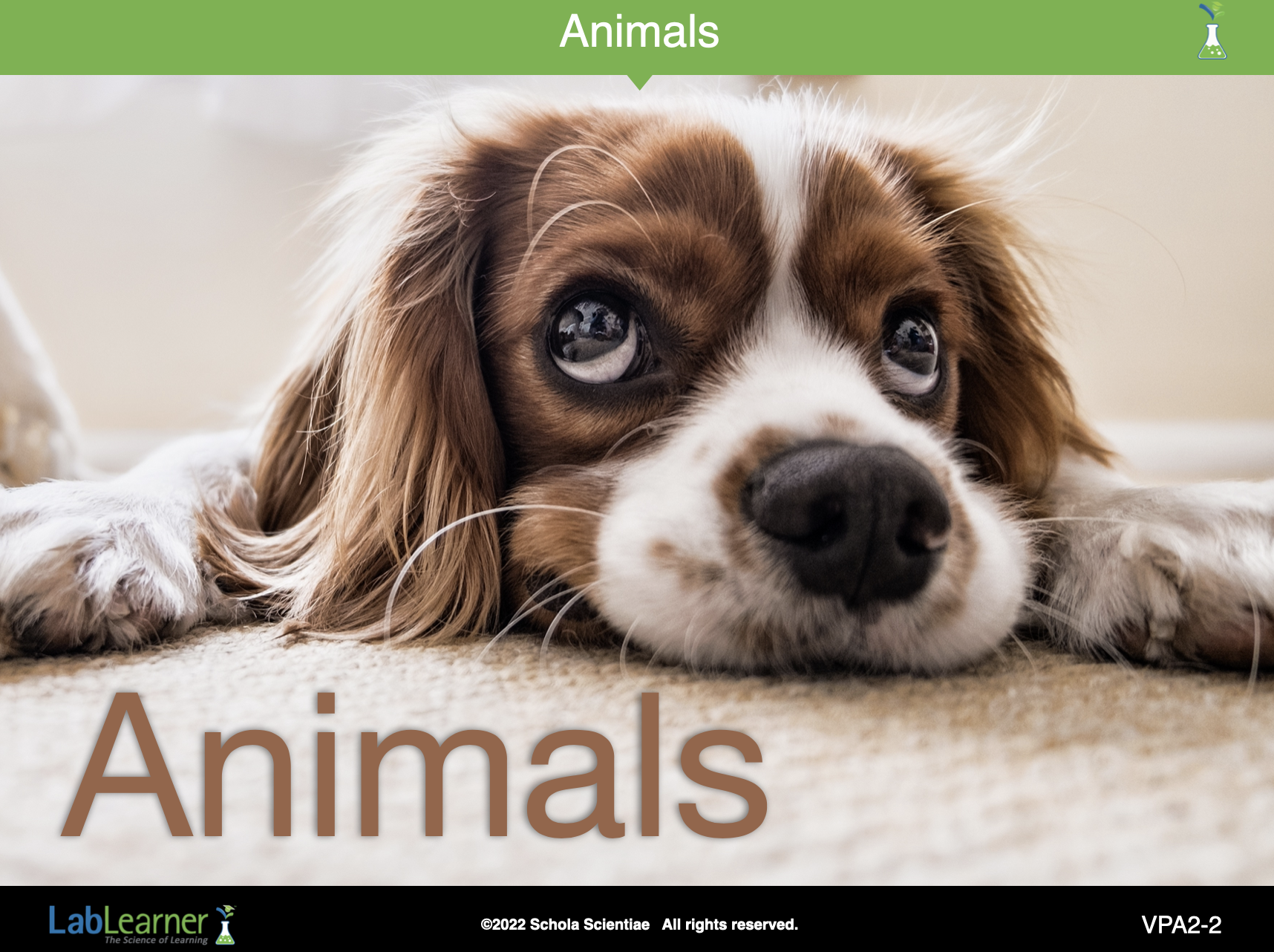
This is an introductory slide. The teacher might ask students:
Ask students: What might you learn about animals in this presentation? Student answers will vary.
______________________________________________
SLIDE 2VPA-3
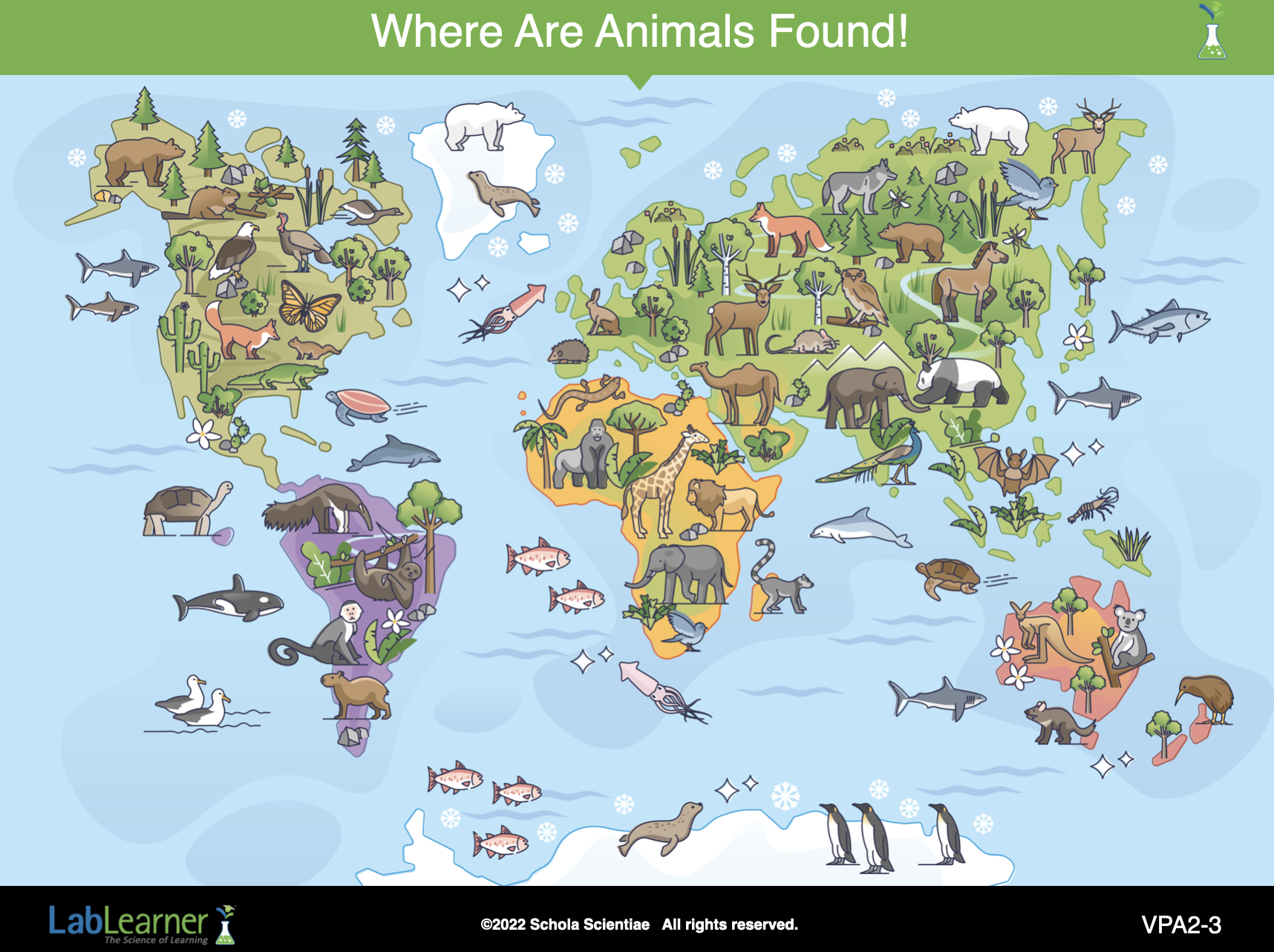
Begin by explaining that in this part of the Plants and Animals Journey, students will focus on other living things found on Earth – animals.
Direct students’ attention to the large map of the world. Ask students the following questions:
Ask students: Where do you think animals are found on the Earth? Student answers will vary. Students should indicate that animals are found on land and in the water.
Ask students: Are animals found on land? What kinds of animals might be found on land? Student answers will vary. Discuss various answers proposed by students. Examples might include dogs, cats, lizards, and spiders.
Ask students: Are animals found in the water? What kinds of animals might be found in the water? Student answers may vary. Examples might include fish, whales, and starfish.
You can see a larger version by clicking on the image below:

______________________________________________
SLIDE 2VPA-4
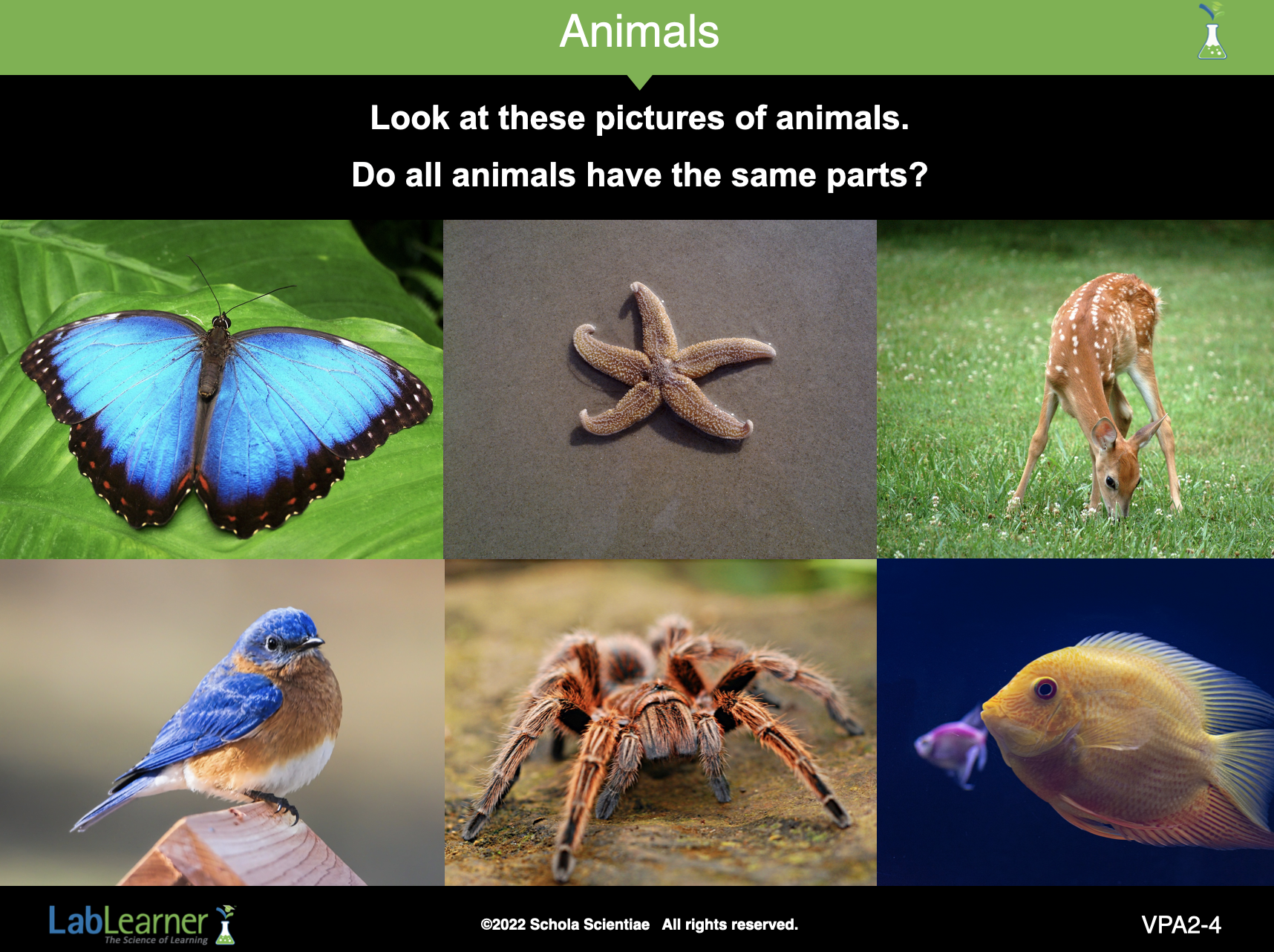
Show students the pictures of animals. Remind students that when they began the Plants and Animals Journey, they looked at different pictures of plants. They also investigated the parts of plants. They discovered that although plants looked different, most had the same three parts: roots, stems, and leaves.
Ask students the following questions about the animals.
Ask students: Do all of the animals look the same? Student answers will vary.
Ask students: What are some differences among the animals? Student answers will vary
Ask students: Do you think all animals have the same parts? Student answers will vary
Use students’ answers to lead into a discussion of how scientists classify animals. This will be the focus of the next set of slides.
______________________________________________
SLIDE 2VPA-5
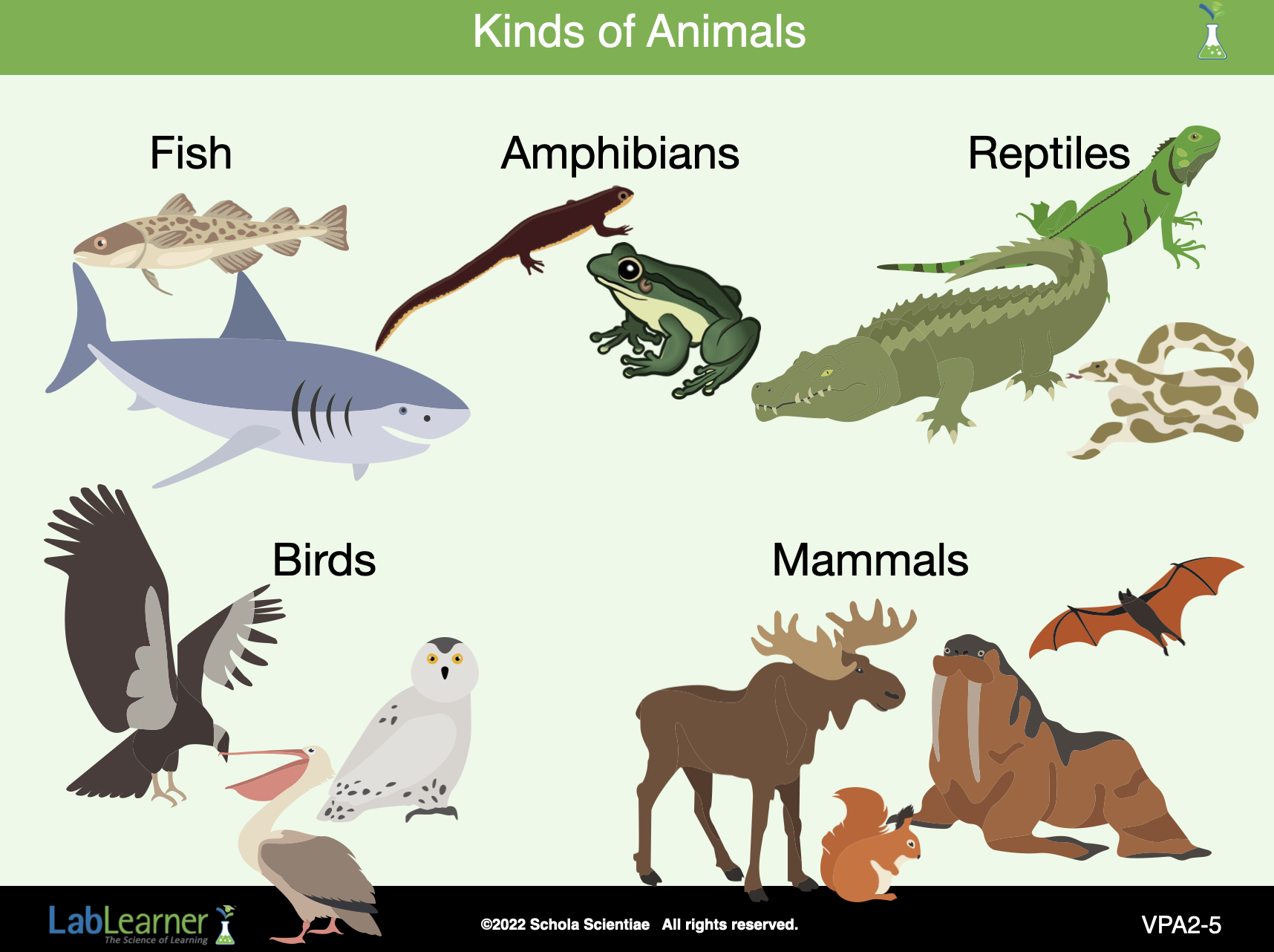
After looking at the pictures of animals in the previous slide, students should have concluded that animals are not like plants in that they do not all share the same parts and, therefore, may not share all of the same functions or abilities.
The next set of slides is designed to help students understand that scientists use similarities in structure and function to help group animals into categories. The next five slides each describe a different category of animals: mammals, fish, reptiles, birds, and amphibians. Each slide describes a few major characteristics that the animals in the category share and pictures showing examples of the animals in the category. From these slides, students should also realize that the characteristics are properties that the animals in that particular category have in common but that these properties are, in many cases, different from other categories or types of animals.
As each category of animals is discussed with students, it is important to note that students may discover that not all animals in that category share all of the characteristics. For example, dolphins and whales are mammals. They bear live young, and the females produce milk. However, whales do not have fur or hair on their skin. In addition, rays and sharks are classified as fish, yet most rays and sharks do not have scales. Yet, both rays and sharks live underwater and breathe through gills.
As students come across these exceptions, they should first be directed to understand that there are some characteristics that the animals do possess. Otherwise, they would not be classified as a part of that category of animals.
After students have investigated the five categories of animals, they will have an opportunity to see that these five smaller categories of animals are part of a larger category of animals called vertebrates or animals that possess a backbone (spine). Therefore, although mammals have characteristics that are mostly different from fish, one characteristic they share is a backbone.
______________________________________________
SLIDE 2VPA-6
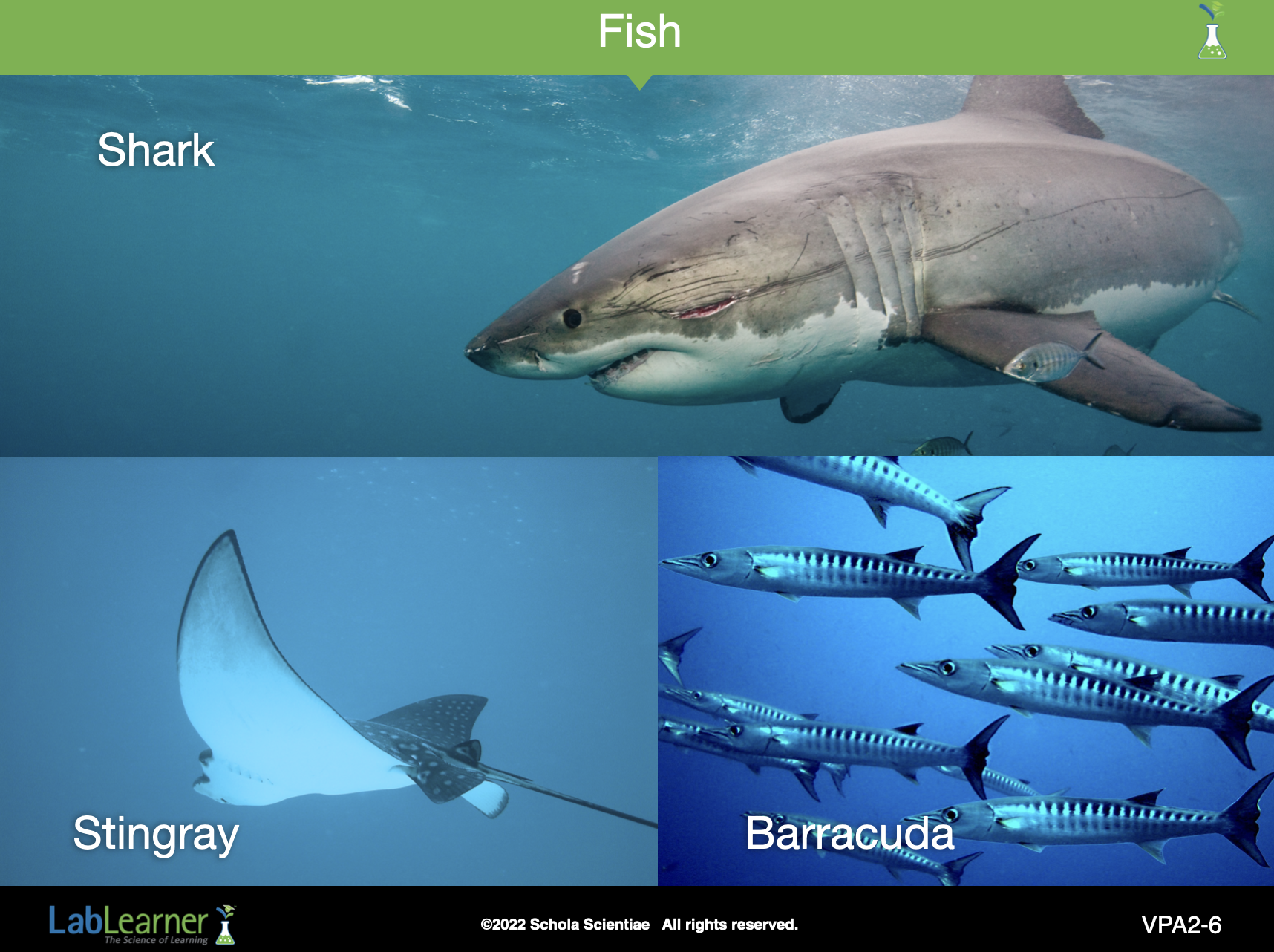
Fish live in water and breathe through gills.
Most fish have fins.
Most fish have scales covering their body.
Most fish lay eggs.
All three of the examples of fish in this slide live in saltwater. There are also many different kinds of freshwater fish that live in ponds, lakes, rivers, and streams.
______________________________________________
SLIDE 2VPA-7
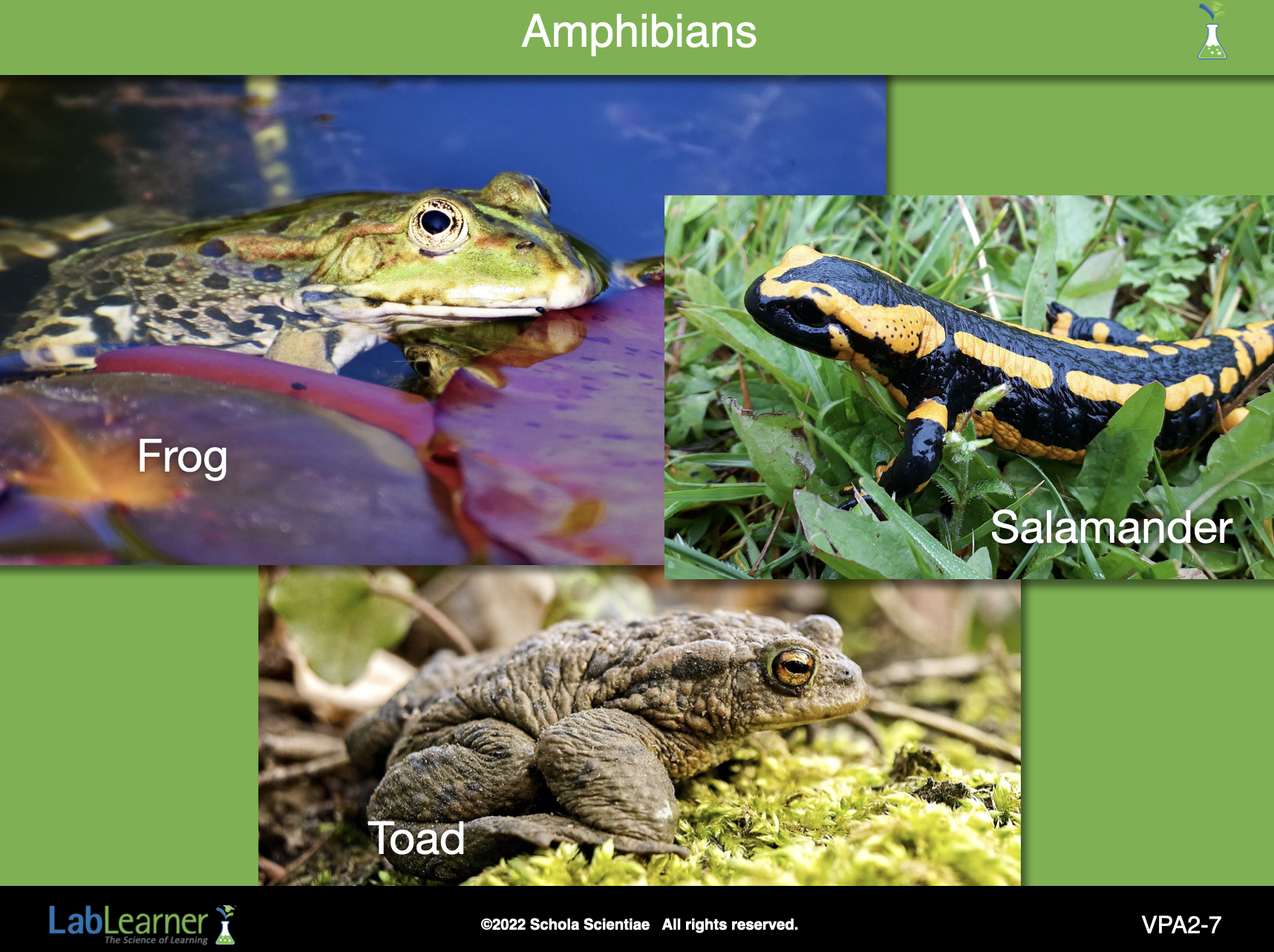
Amphibians have smooth skin without scales, feathers, or fur.
Amphibians do not have claws on their feet.
Amphibians have skin that needs to be moist to help them breathe.
Amphibians lay eggs.
______________________________________________
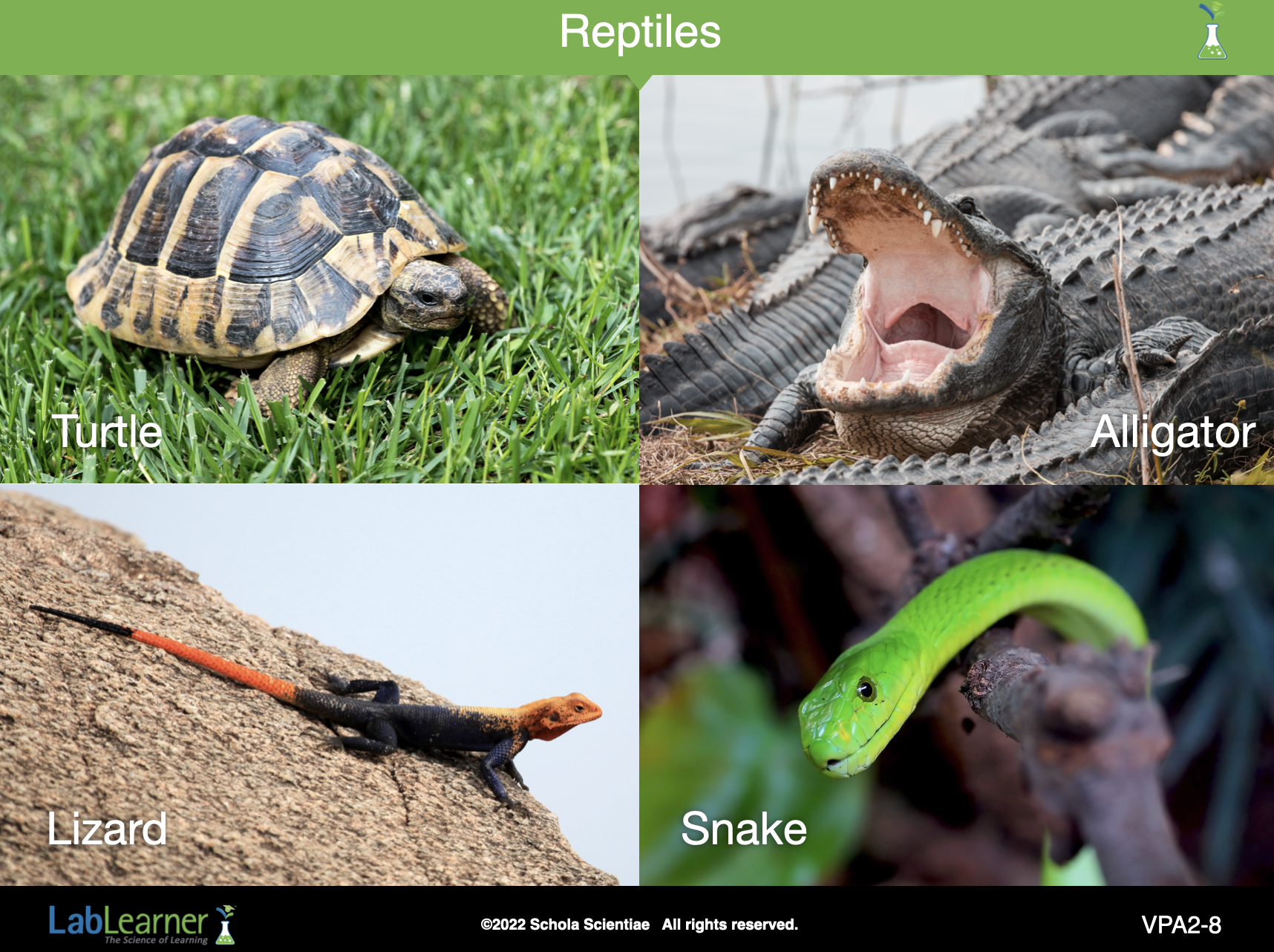
SLIDE 2VPA-8
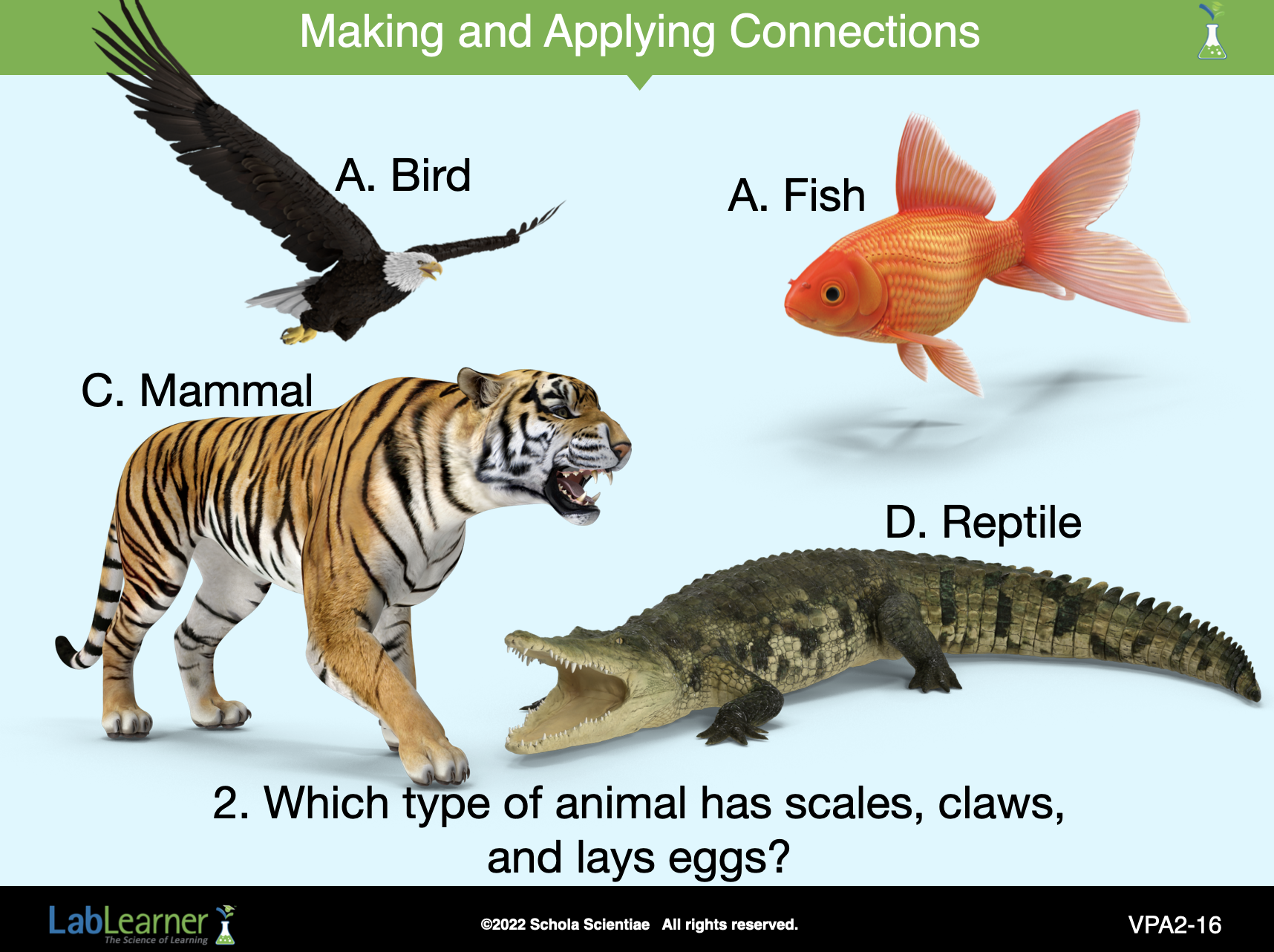
Reptiles have skin with scales.
Reptiles have claws. Snakes are exceptions.
Reptiles lay eggs.
______________________________________________
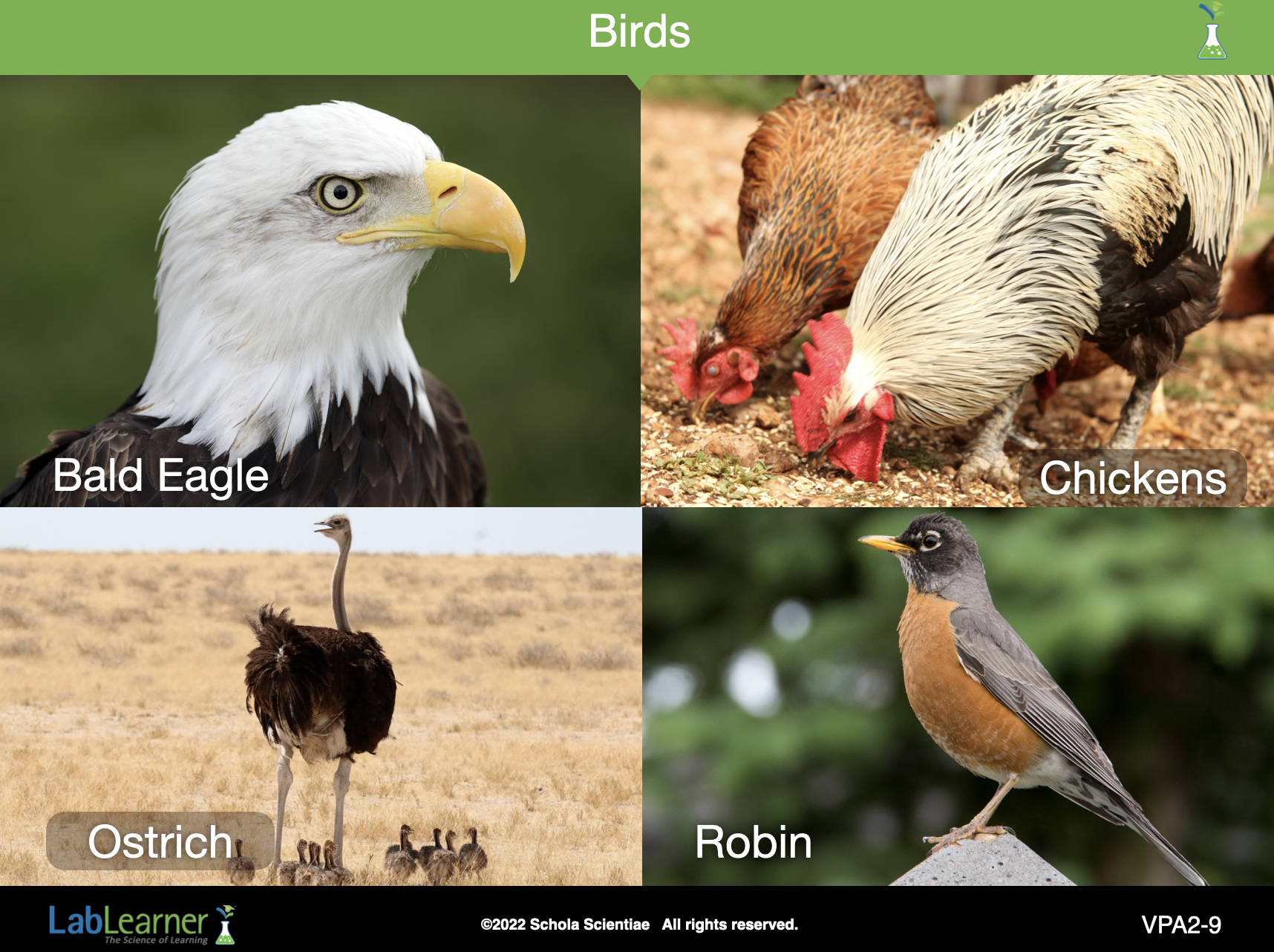
SLIDE 2VPA-9
Birds have a body covered in feathers.
Birds have wings.
Birds usually have bones that are light and hollow.
Birds lay eggs.
______________________________________________
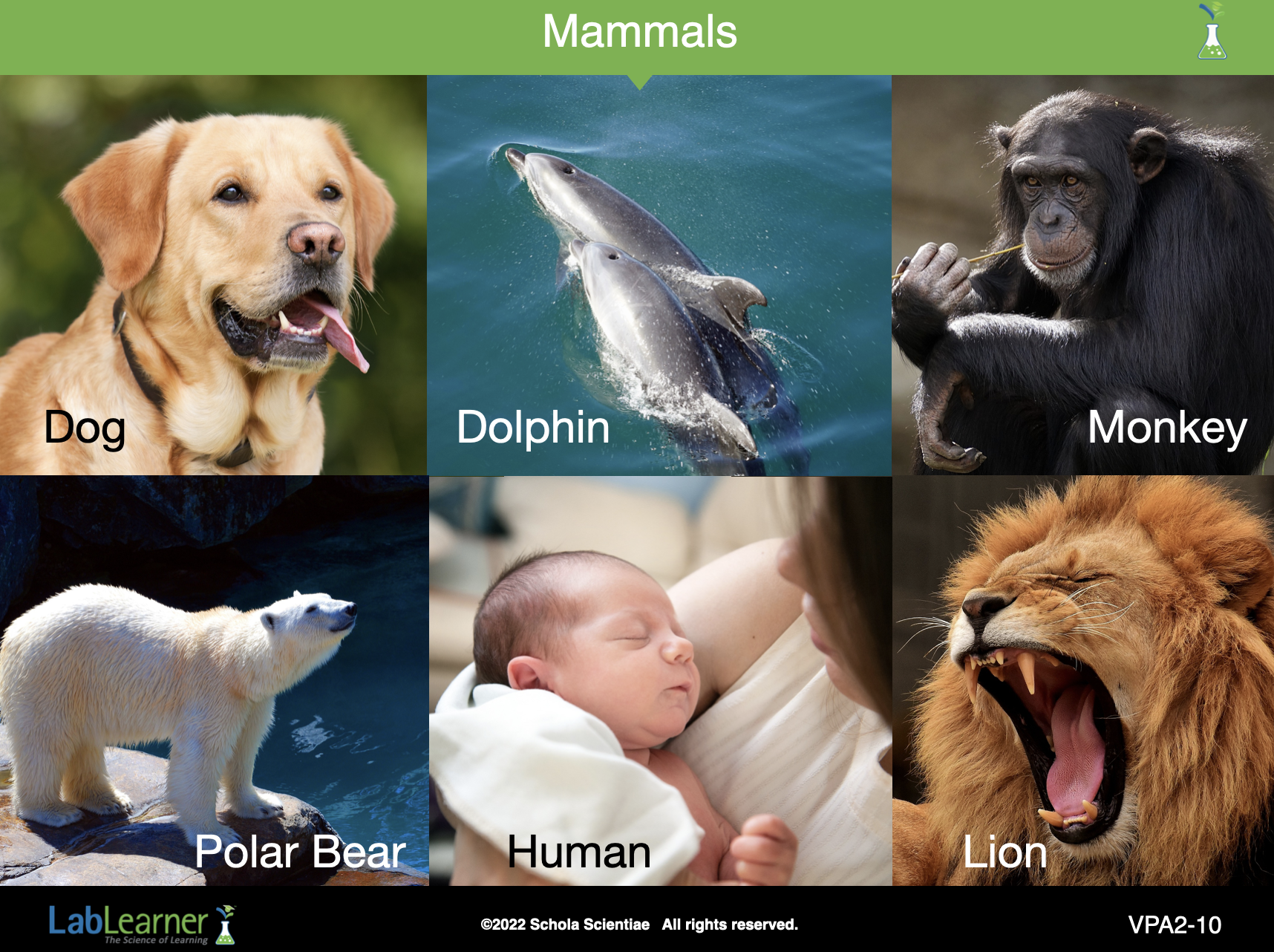
SLIDE 2VPA-10
Mammals make milk.
Most mammals have hair or fur on their bodies.
Most mammals give birth to live young. They do not lay eggs.
______________________________________________
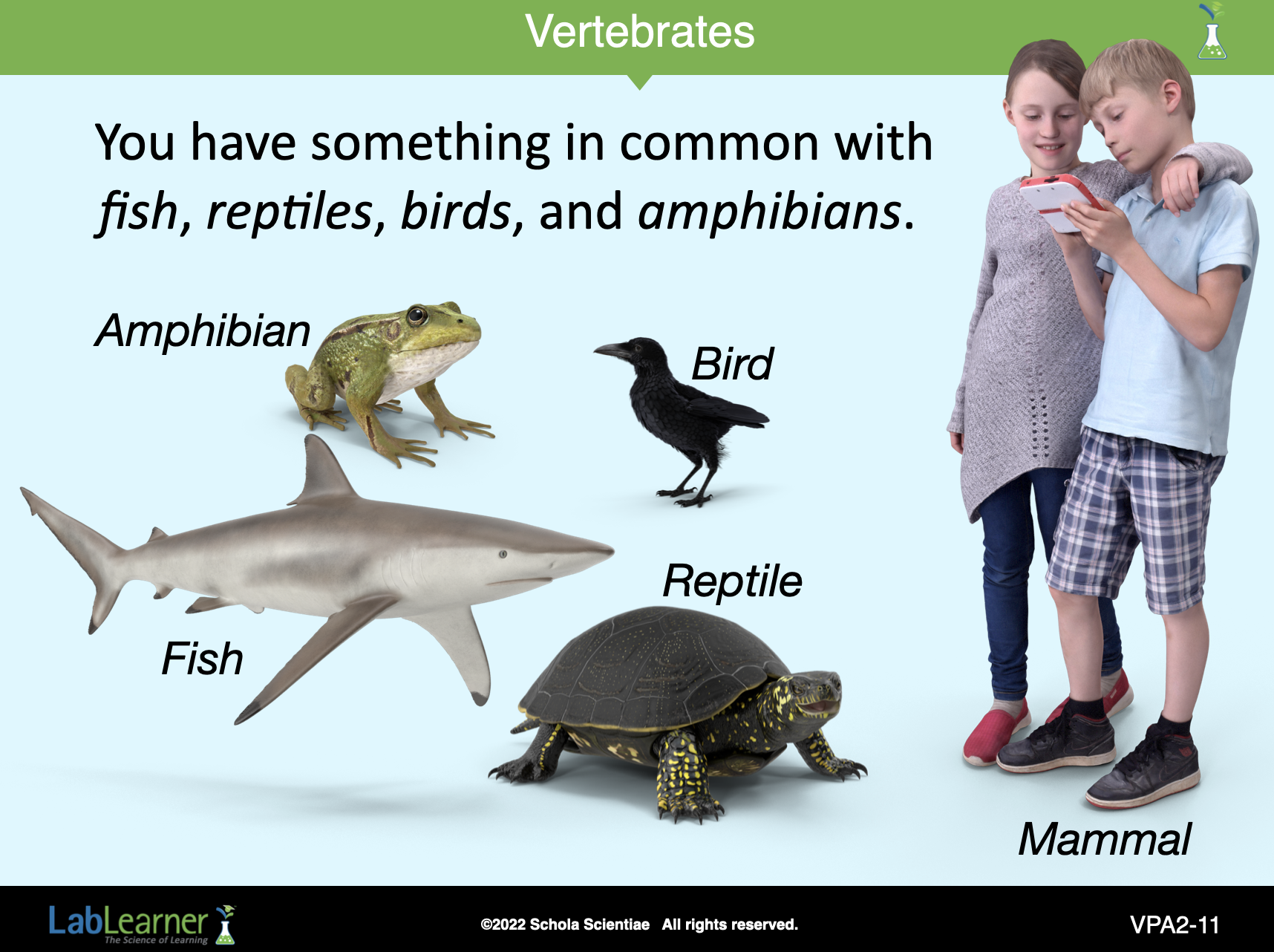
SLIDE 2VPA-11
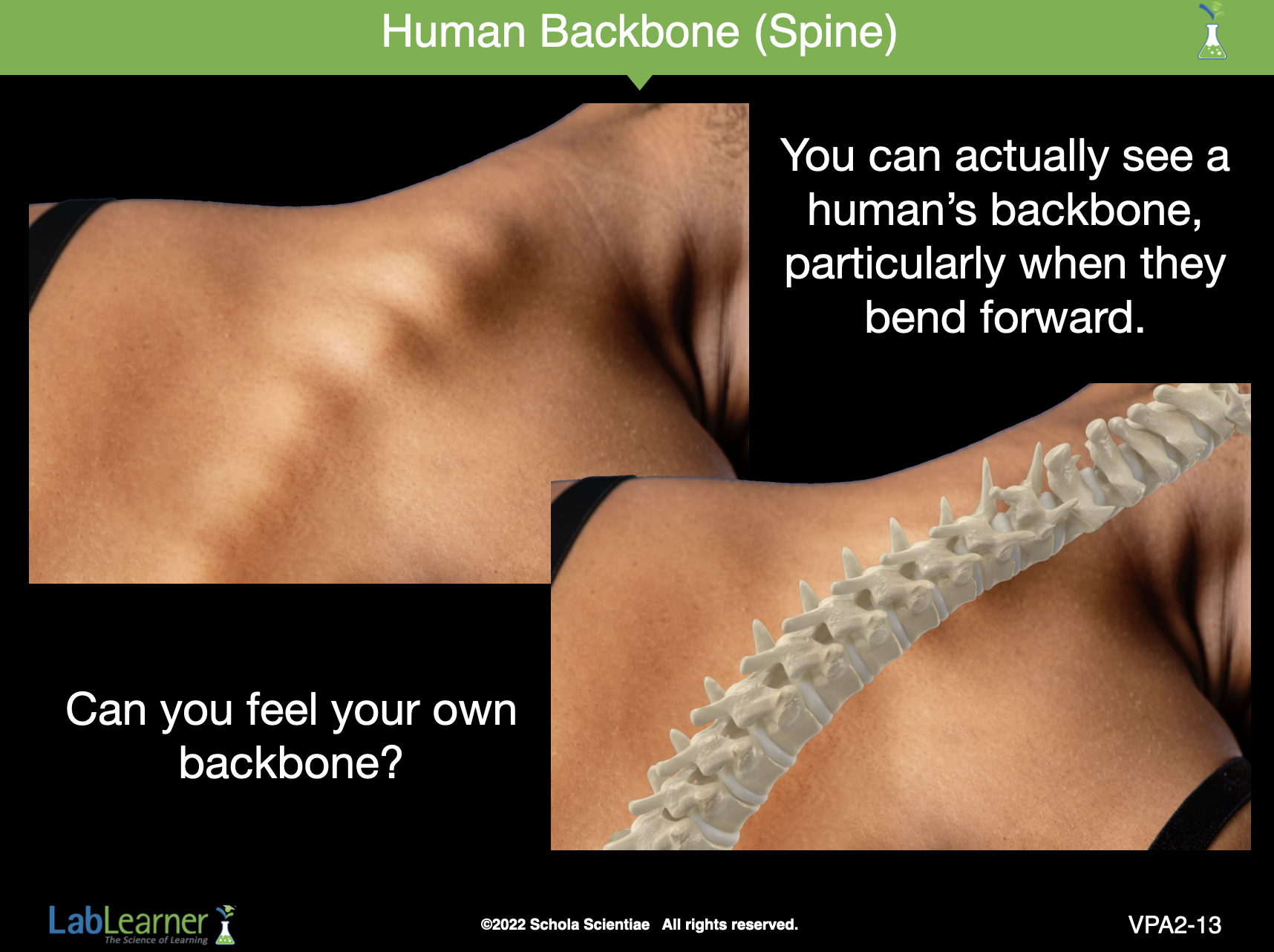
Vertebrates are animals that have a backbone.
______________________________________________
SLIDE 2VPA-13
Help students find their backbones if necessary.
______________________________________________
SLIDE 2VPA-14
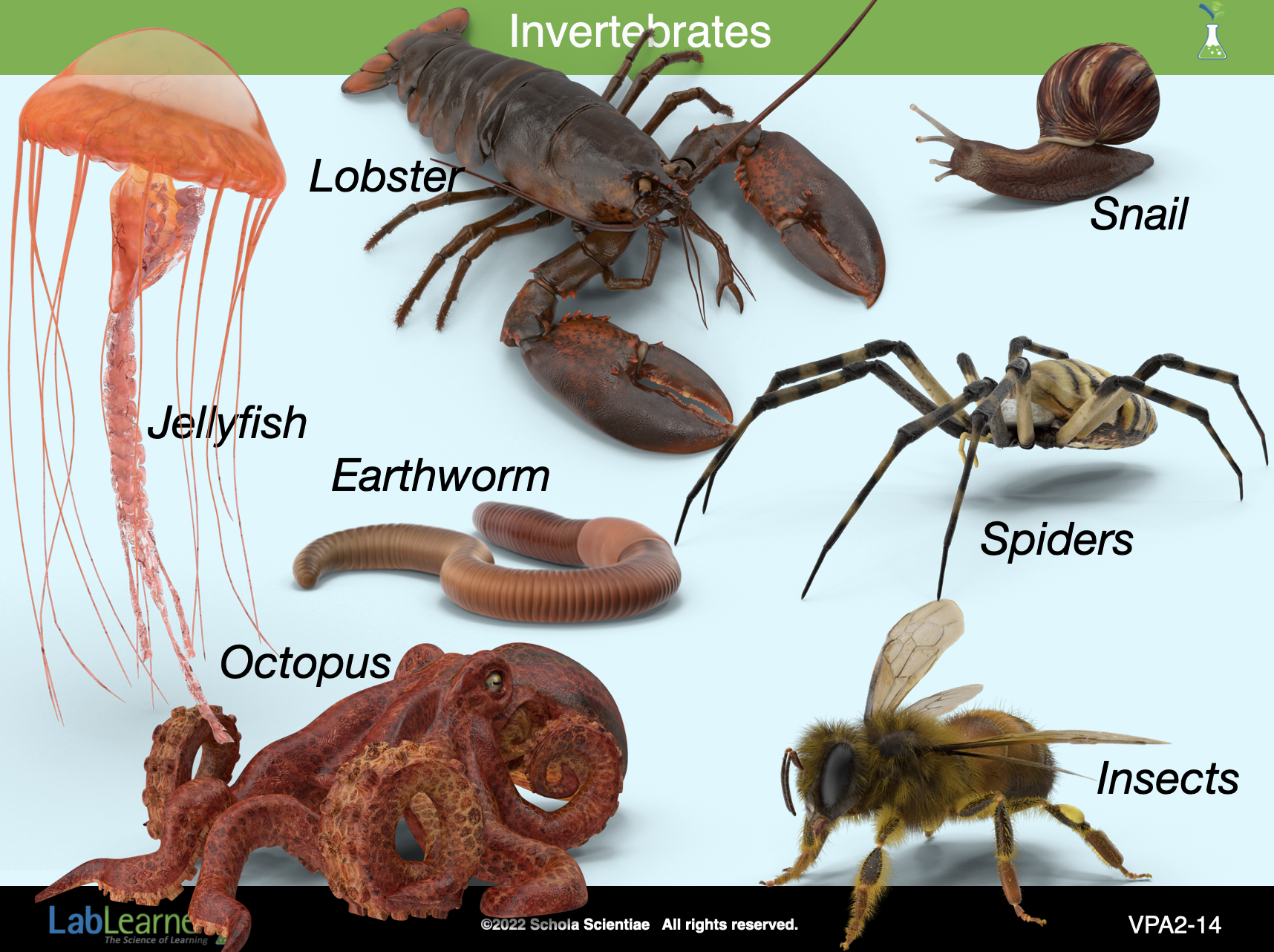
Invertebrates are animals that do not have backbones. There are many times more invertebrates on Earth than vertebrates.
Ask students: Do you think that all invertebrates look the same? Answers will vary. There is a very large variety of invertebrate animals living on Earth today. They live in on land, in the water, and in the air.
Ask students: Can you think of invertebrates that live on land? Answers will vary. Spiders, most insects, and many snails.
Ask students: Can you think of invertebrates that live in water? Answers will vary. Jellyfish, many snails, lobsters and crabs, octopi, and many others.
Ask students: Can you think of invertebrates that live in the air? Answers will vary. Many insects fly. Insects are the only invertebrates that can fly.
______________________________________________
SLIDE 2VPA-15
Answer
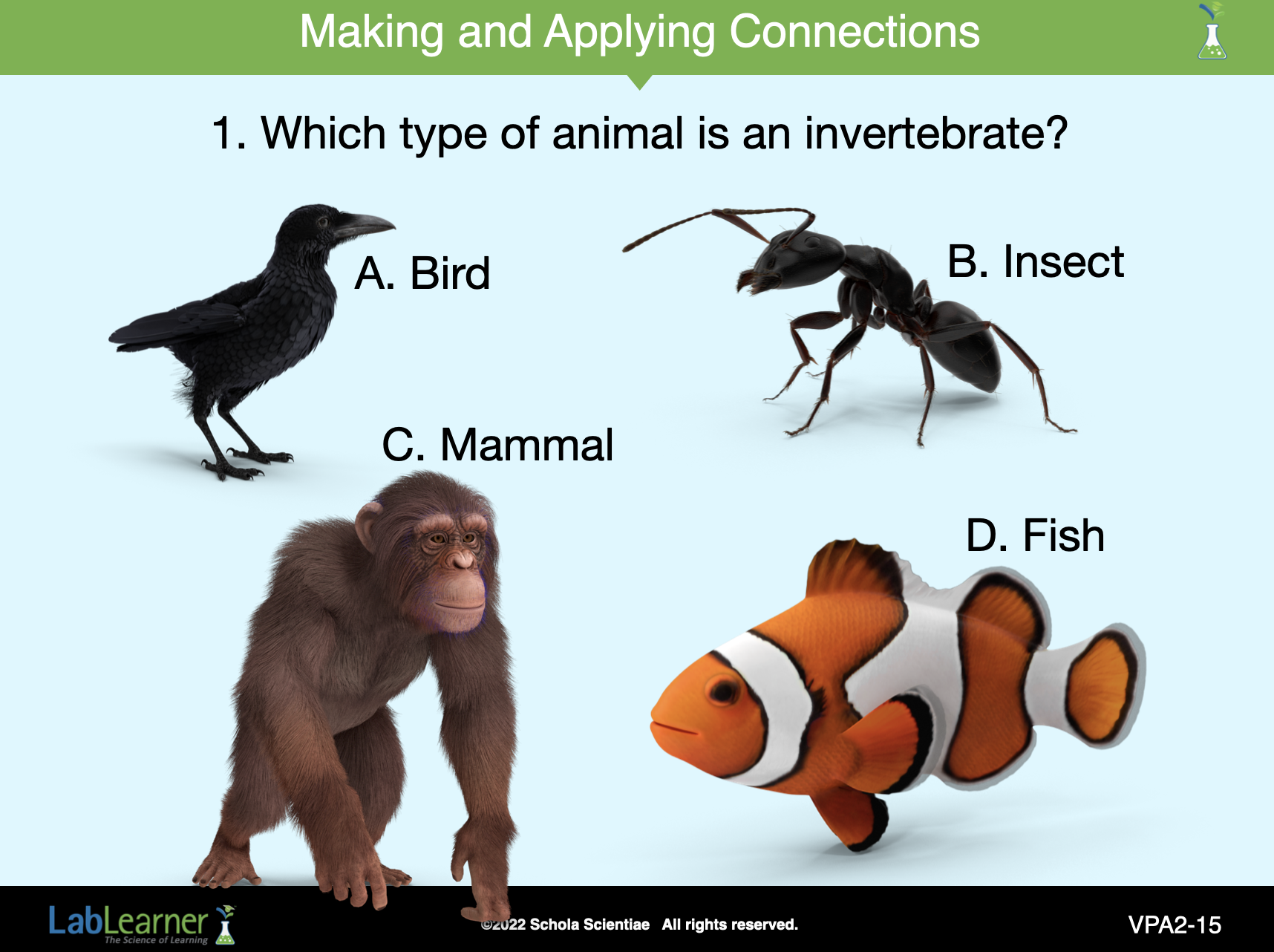
Question 1: B (Insect)
______________________________________________
SLIDE 2VPA-16
Answer
Question 2: D (Reptile)
______________________________________________
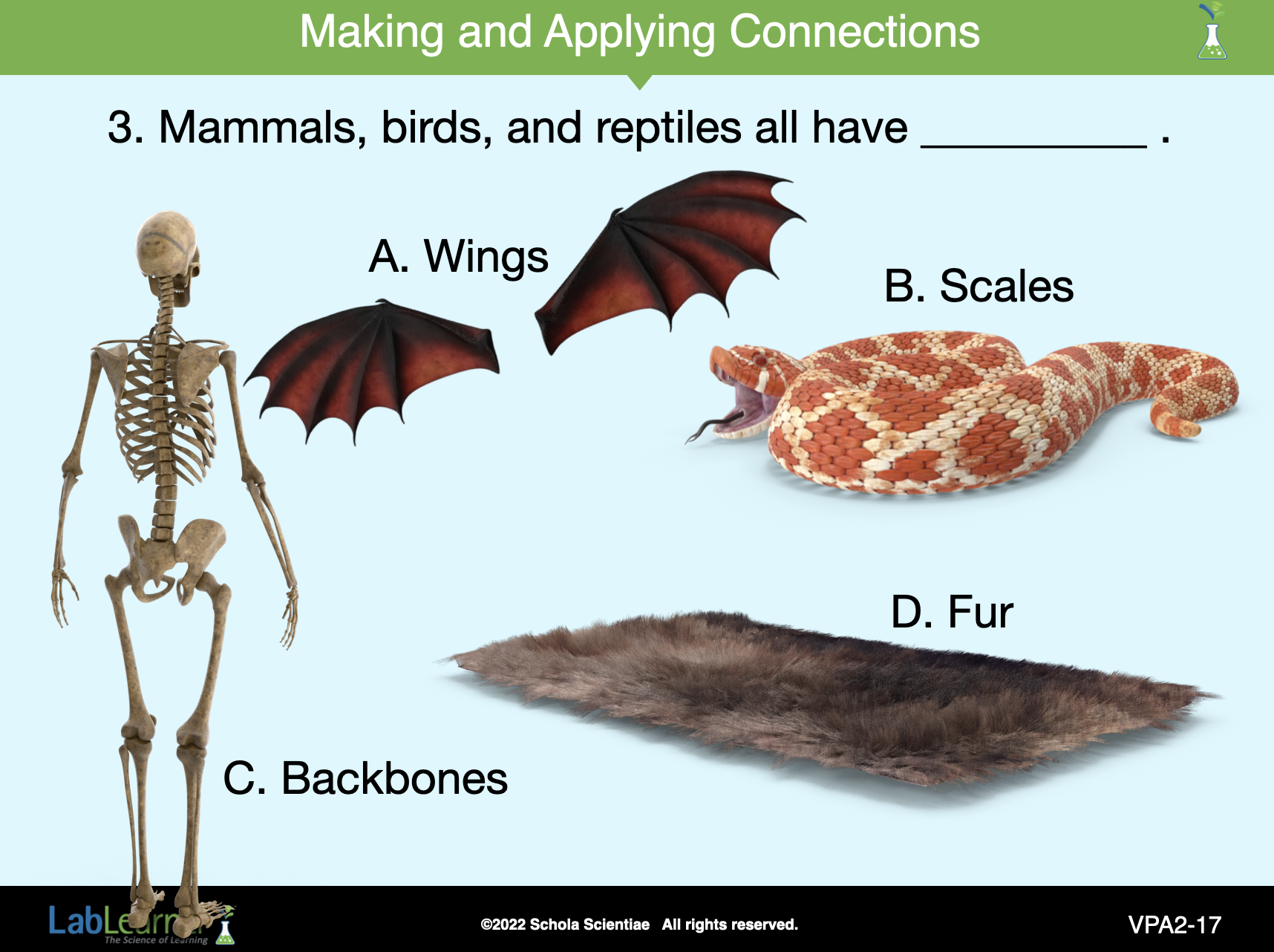
SLIDE 2VPA-17
Answer
Question 3: C (Backbones)
______________________________________________