
Teacher Portal:
Examining Nutrition
Investigation 1
Investigation One:
The Digestive Process
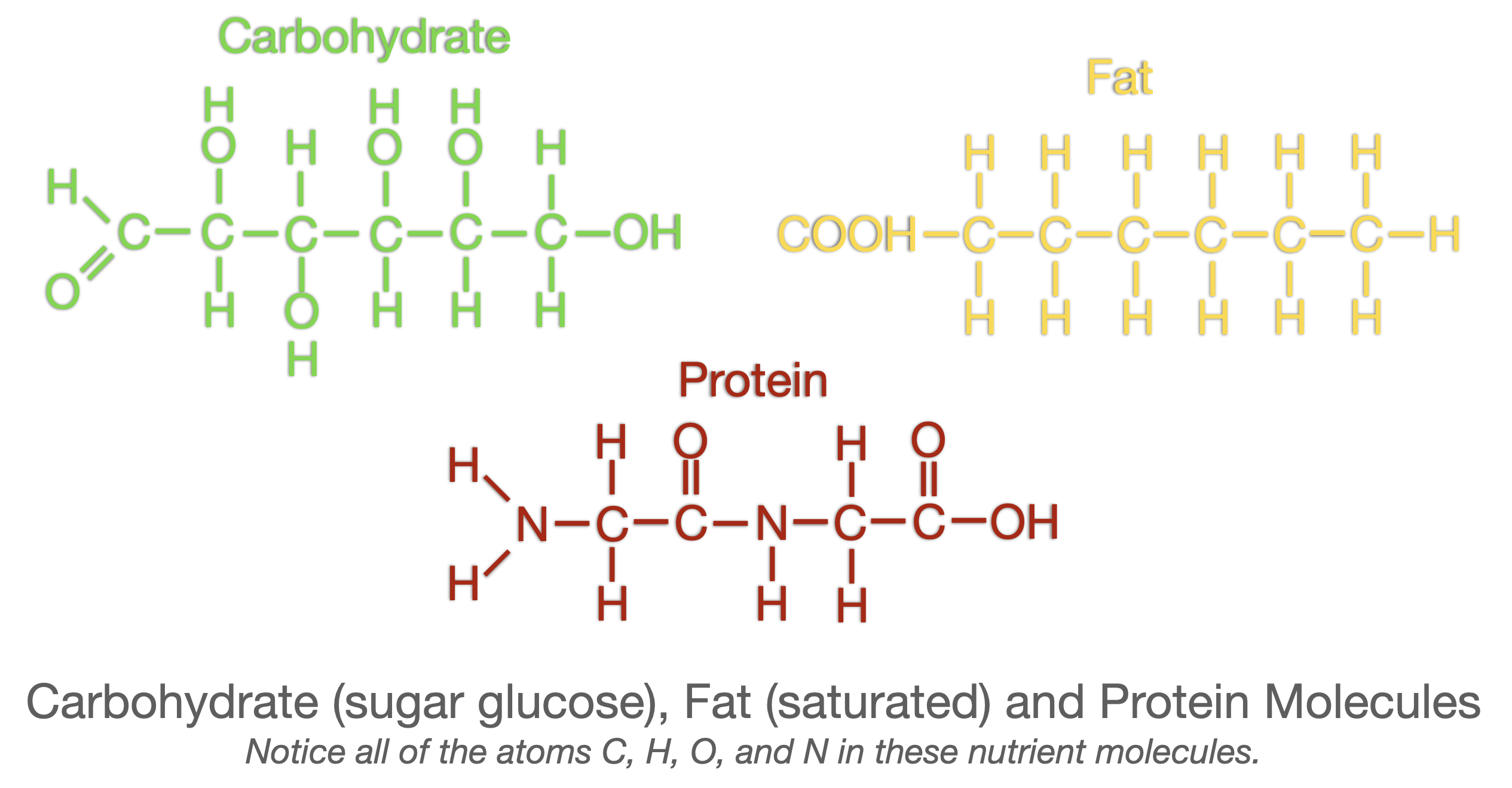
The human body contains 59 different chemical elements arranged in various combinations to create the structure of the cells, tissues, and organs which make up the different body systems. Carbon (C), hydrogen (H), oxygen (O), and nitrogen (N) 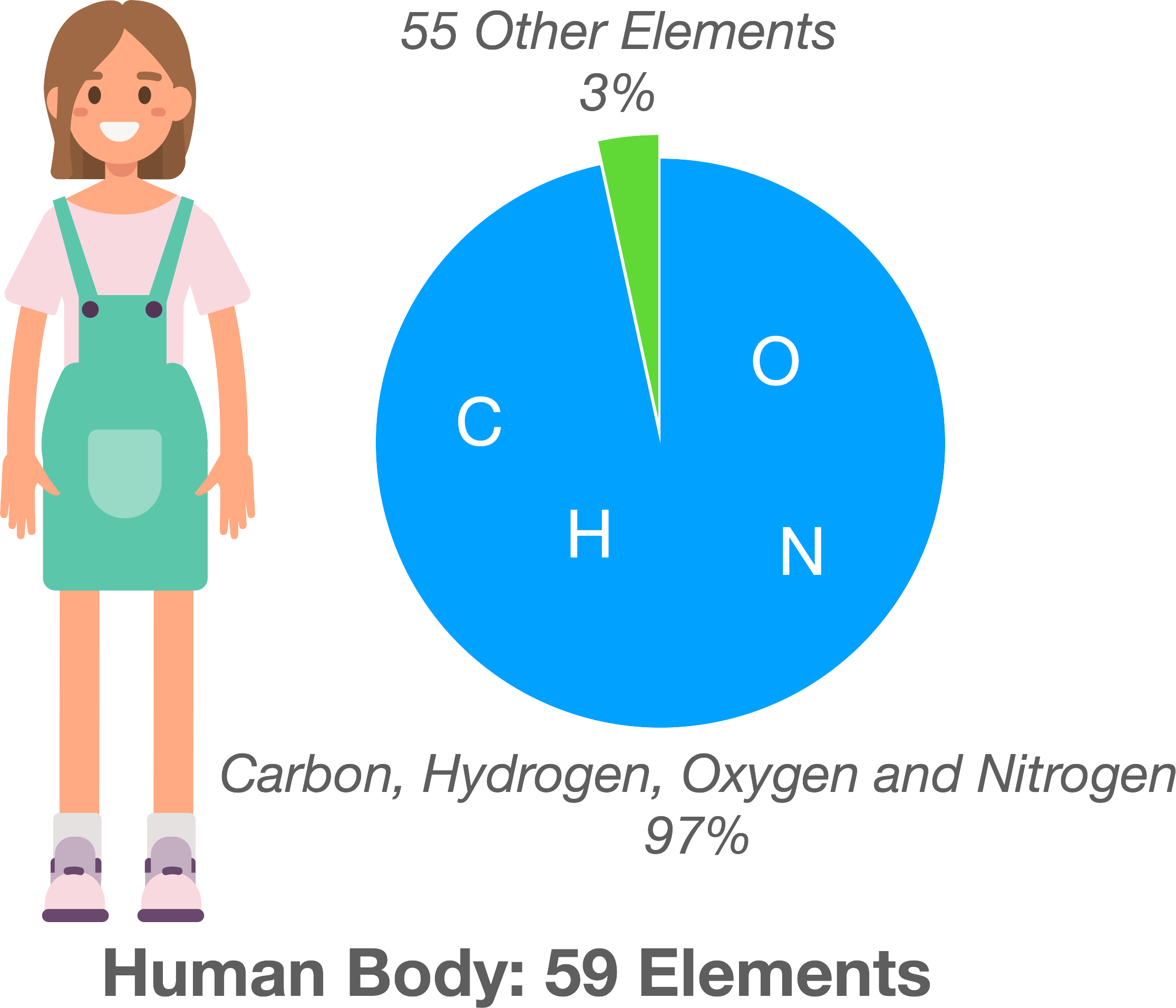 make up the greatest percentage of the body’s elements. Together they represent about 97% of the body elements. The remaining 55 elements are minerals. Children constantly need a steady supply of all 59 elements for growth, as growth is a process of creating new cells which are added to the different tissues. Adults also need a steady supply of these elements because, even though their body systems are no longer increasing in size, their tissues are constantly renewing themselves. Carbon, hydrogen, oxygen, and nitrogen are found in four classes of compounds needed by the body: carbohydrates, proteins, fats, and vitamins. These compounds, along with water and the remaining elemental minerals, are called nutrients. Humans obtain nutrients from food. The study of nutrients in food and how they are used by the body is called nutrition. This CELL is designed to introduce students to the process by which humans obtain nutrients from food, the different categories of nutrients and their roles in the body, and the importance of eating the right foods to maintain a healthy body.
Investigation One focuses on how the body obtains nutrients and uses them for energy and growth. This process is called digestion. Digestion occurs in the digestive system. The digestive system is a collection of organs and tissues devoted to breaking down food into parts while absorbing the required nutrients from it.
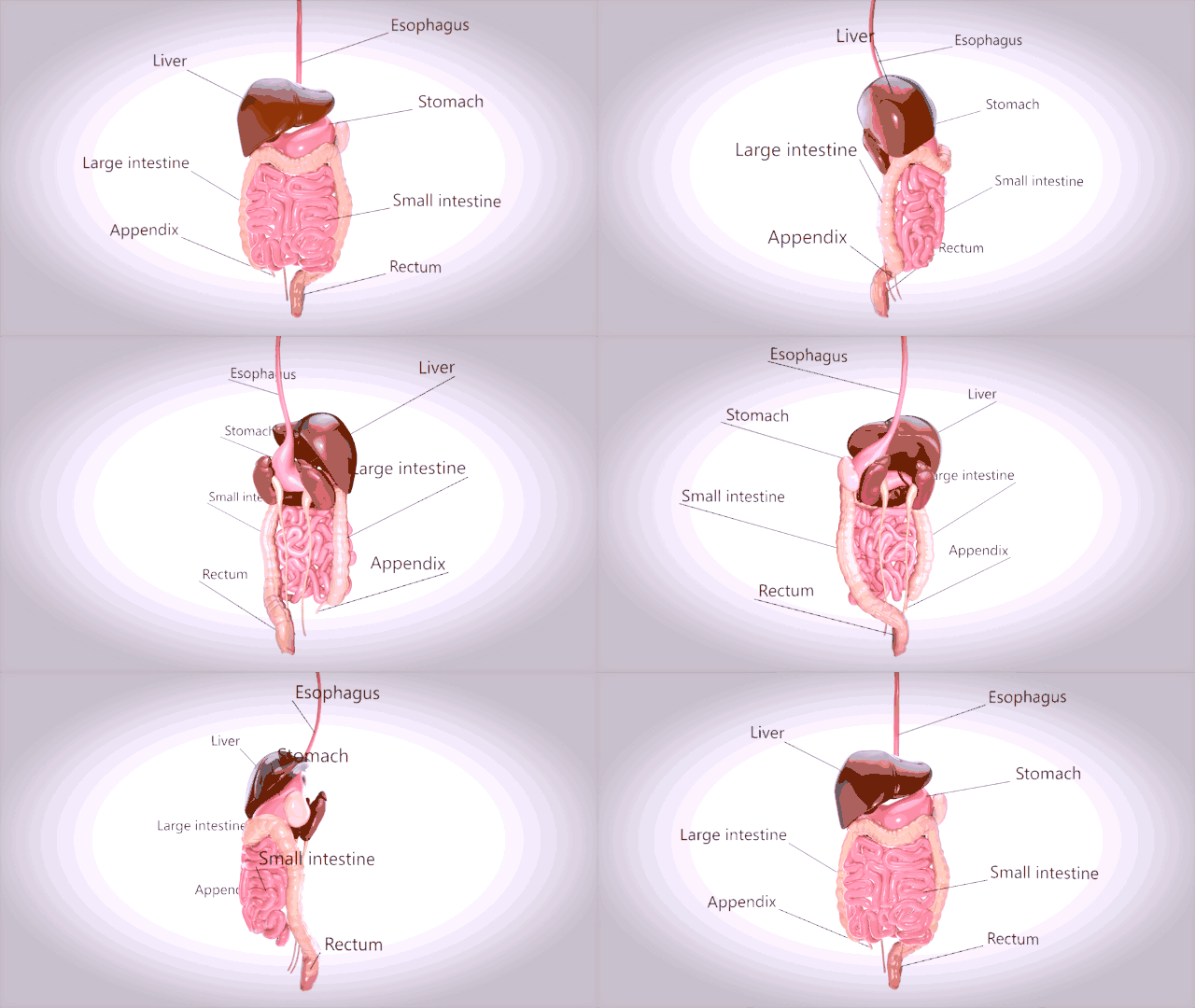 The Digestive System
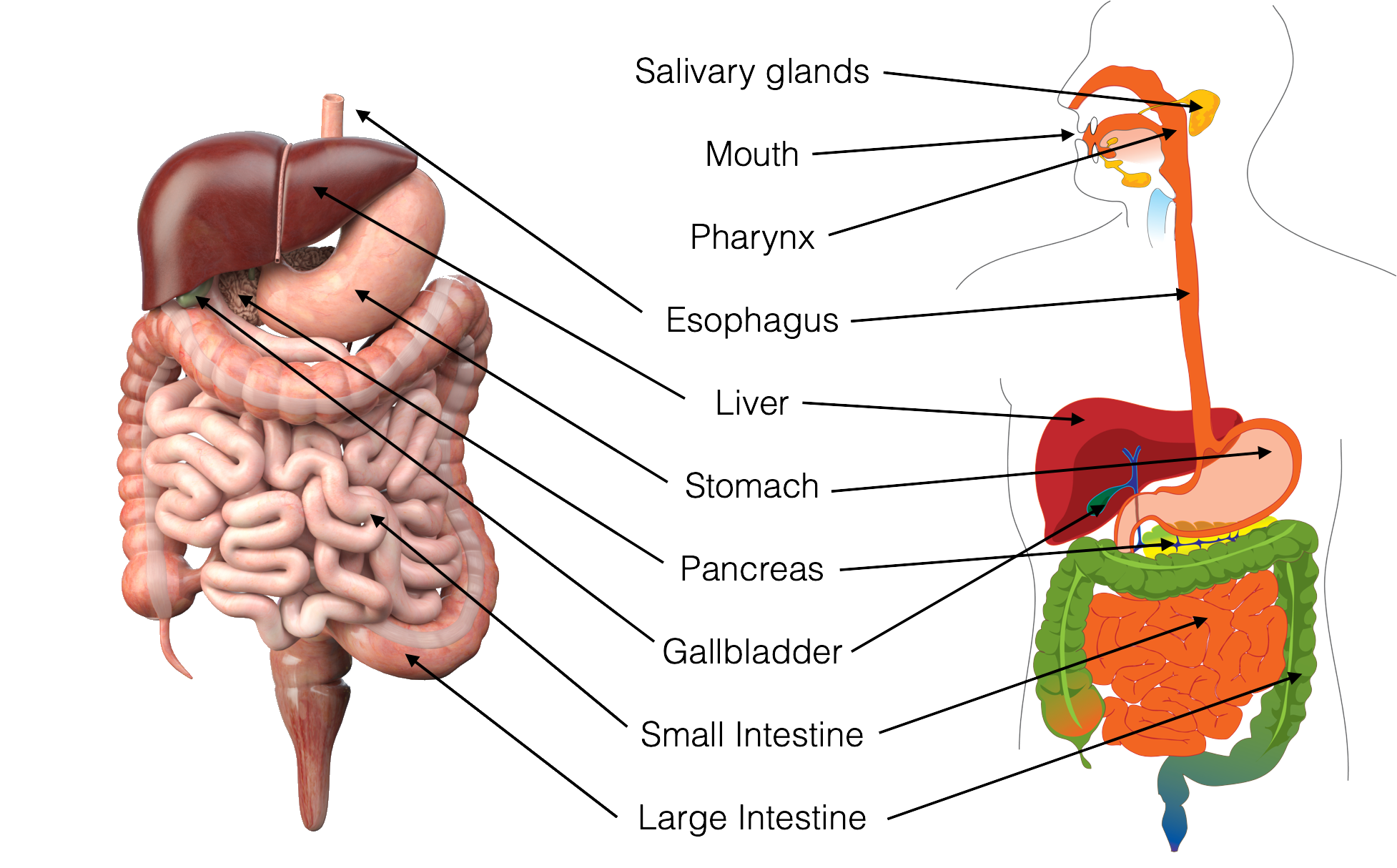
The digestive system is composed of the mouth, esophagus, stomach, small intestine, large intestine, and rectum, as well as three additional organs that provide many of the chemicals necessary for chemical digestion. These organs are the liver, pancreas, and gall bladder. The liver produces bile, which is used in the process of digesting fat. Bile is stored in the gall bladder for release into the small intestine when needed. The pancreas secretes several special chemicals called enzymes that help speed up the chemical process of digestion by breaking chemical bonds.
Mechanical Digestion
 Digestion can be divided into two categories: mechanical digestion and chemical digestion. Mechanical digestion is the physical process of digesting food and begins in the mouth with the act of chewing food. Chewing serves several purposes. First, it breaks large pieces of food into smaller particles that can be more easily swallowed. Chewing allows food particles to be mixed with saliva, which moistens the food for easier swallowing and also contains a chemical that starts the process of chemical digestion. Chewing also exposes more of the food’s surface area to the digestive chemicals in saliva and aids in chemical digestion. Swallowing delivers food to the stomach where contractions mix the food with other chemicals for digestion. After the stomach, food moves to the
 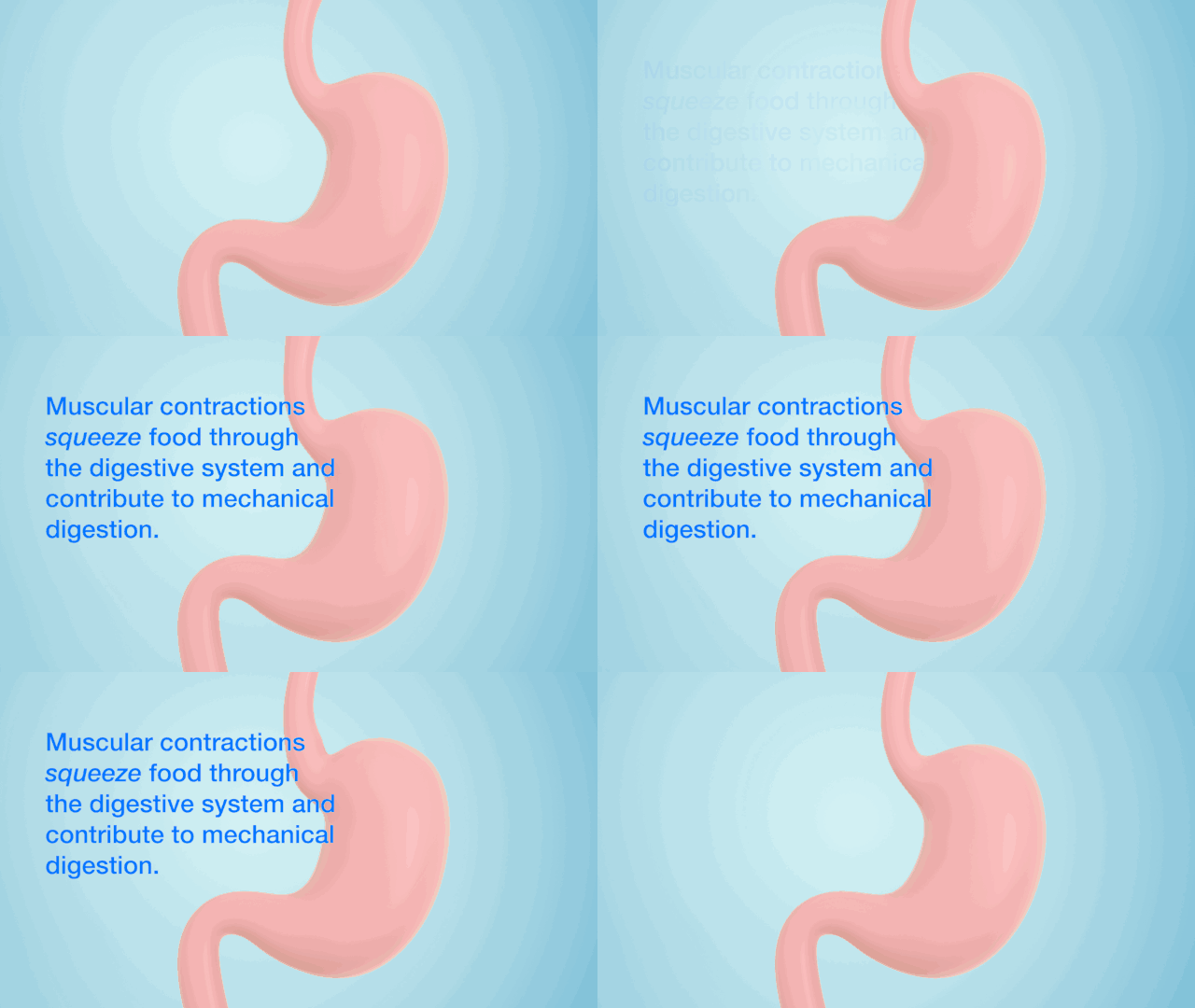 small intestine, where additional chemical digestion occurs and the majority of nutrients are absorbed. Contractions continue along the small intestine to maintain the mixing and moving process. Food then passes into the large intestine where the remainder of absorption takes place before undigested food is eliminated from the body.
Chemical Digestion
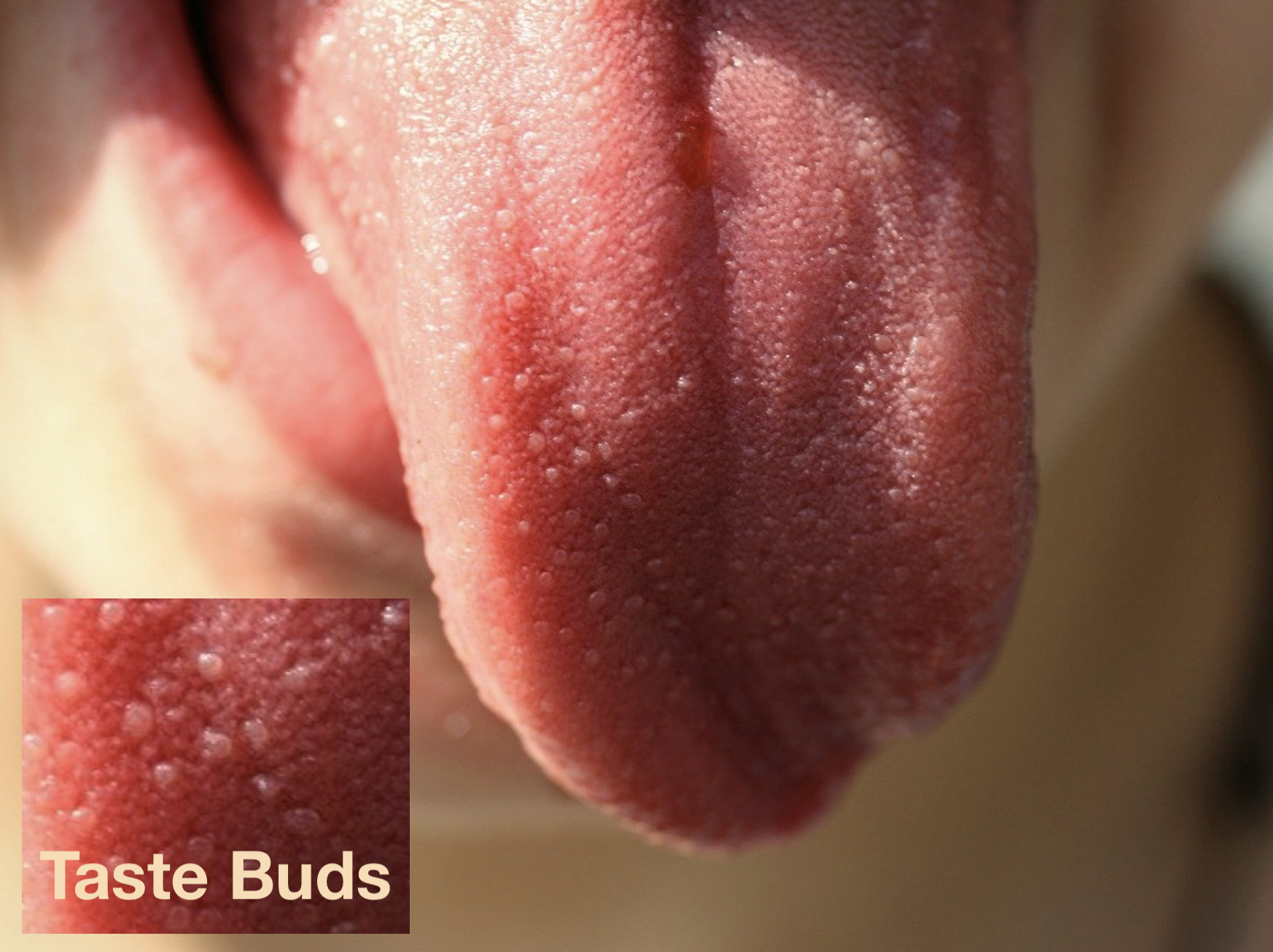
 Chemical digestion, like mechanical digestion, begins in the mouth. Saliva contains an enzyme called amylase which begins the digestion of starches to sugars. We can actually taste this process as it happens. If a starchy food such as plain white bread is chewed until it is moist and then held on the tongue, the taste buds will begin to detect a sweet taste. This happens because the taste buds begin to detect the sugar as it is released from the starch.
 Chemical digestion continues in the stomach where food is mixed with hydrochloric acid and another enzyme, pepsin, which are released from the stomach lining. These chemicals begin to break down proteins. Food passes from the stomach into the small intestine where it is mixed with other enzymes that break down fats, carbohydrates, and proteins. Bile is released into the small intestine from the gall bladder to emulsify fats. Bile serves the same purpose as mustard in a vinaigrette salad dressing; compounds in the bile surround tiny amounts of fats, dispersing them throughout the watery solution of food and enzymes. Otherwise, fats would clump together in one large group, which would prevent their absorption and cause problems in the digestive system. Because it is broken down into tiny portions, more fat is exposed to the lining of the small intestine where it can be absorbed. Some vitamins are also fat-soluble, so this process exposes more vitamins to the lining for absorption as well. Food then travels into the large intestine where the majority of the water in the food is absorbed along with water-soluble vitamins. The undigested food is eliminated as waste.
In Investigation One, students will be introduced to the concept of nutrition and the role of food in their bodies. Students will learn the different parts of the digestive system and their functions in the digestive process. Through experimentation, students will discover the difference between mechanical and chemical digestion and how chemical digestion releases nutrients from food in forms that can be used for growth and energy.
Examining Nutrition: Investigation 1 - Mathematics Concepts
Prelab
- parts/whole
- sequential order
- comparing (non)measurable characteristics
Lab
- temperature in Celsius
- parts/whole
- sequential order
Postlab
- Comparing (non)measurable characteristics
- Venn Diagram
- Data analysis
- Parts/whole
- Data table
- Sequential order
Examining Nutrition: Investigation 1 - Procedural Tools

Examining Nutrition: Investigation 1 - Cognitive Tools


Examining Nutrition:
Investigation 1 Quiz

