
Teacher Portal:
Microscopes and Magnification
Investigation 4 – Lab
 ASK WHY
Microscopes have made a tremendous contribution to science since their use began in the sixteenth century (the 1500s).
Microscopes are one of the most important scientific instruments developed. In fact, in the medical field, microscopes are largely responsible for making modern medicine “modern”!
BRANCH OUT
Microscopists today work in many different fields including field and laboratory life sciences, chemistry, materials science, and nearly every branch of biomedical research and medicine.
BE PREPARED
Supplies and Equipment:
Group Materials:
- 1 letter “e” slide
- 1 cork slide
- 1 calculator (optional)
- 1 compound microscope 1 hand lens
- 4 wood blocks
- 1 metric ruler
- 1 Square Sheet
Individual Materials:
- 1 Student Data Record
Teacher Preparation
-
- Place required materials at a central location.
- Divide the class into student groups
GET FOCUSED
1. Inform students that they will construct a working model of a low-power microscope objective.
a. Inform students that they will begin by observing the “specimen” using only the naked (unassisted) eye.
• One student from each group should remove the Square Sheet from their Student Data Record.
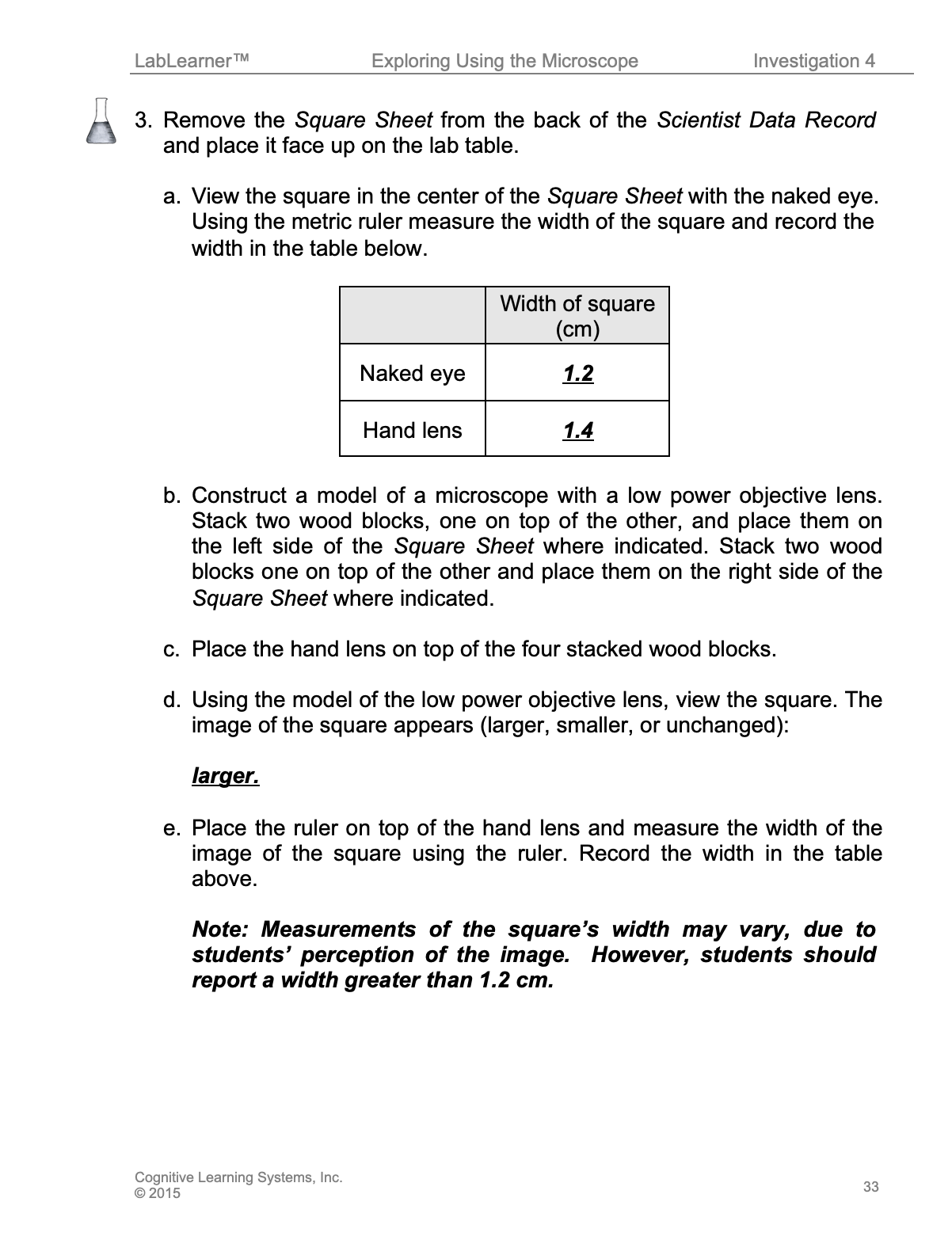
• Instruct students to use the metric ruler and measure the square in the center of the sheet. Students should record the width of the square in the Table in Problem 3a in their Student Data Record.
INVESTIGATE
b. Inform students that they will now observe the “specimen” using a model of a low-power microscope objective.
• Students should stack two wood blocks one on top of the other and place them on the left side of the Square Sheet where indicated. Students should then stack two wood blocks one on top of the other and place them on the right side of the Square Sheet where indicated.
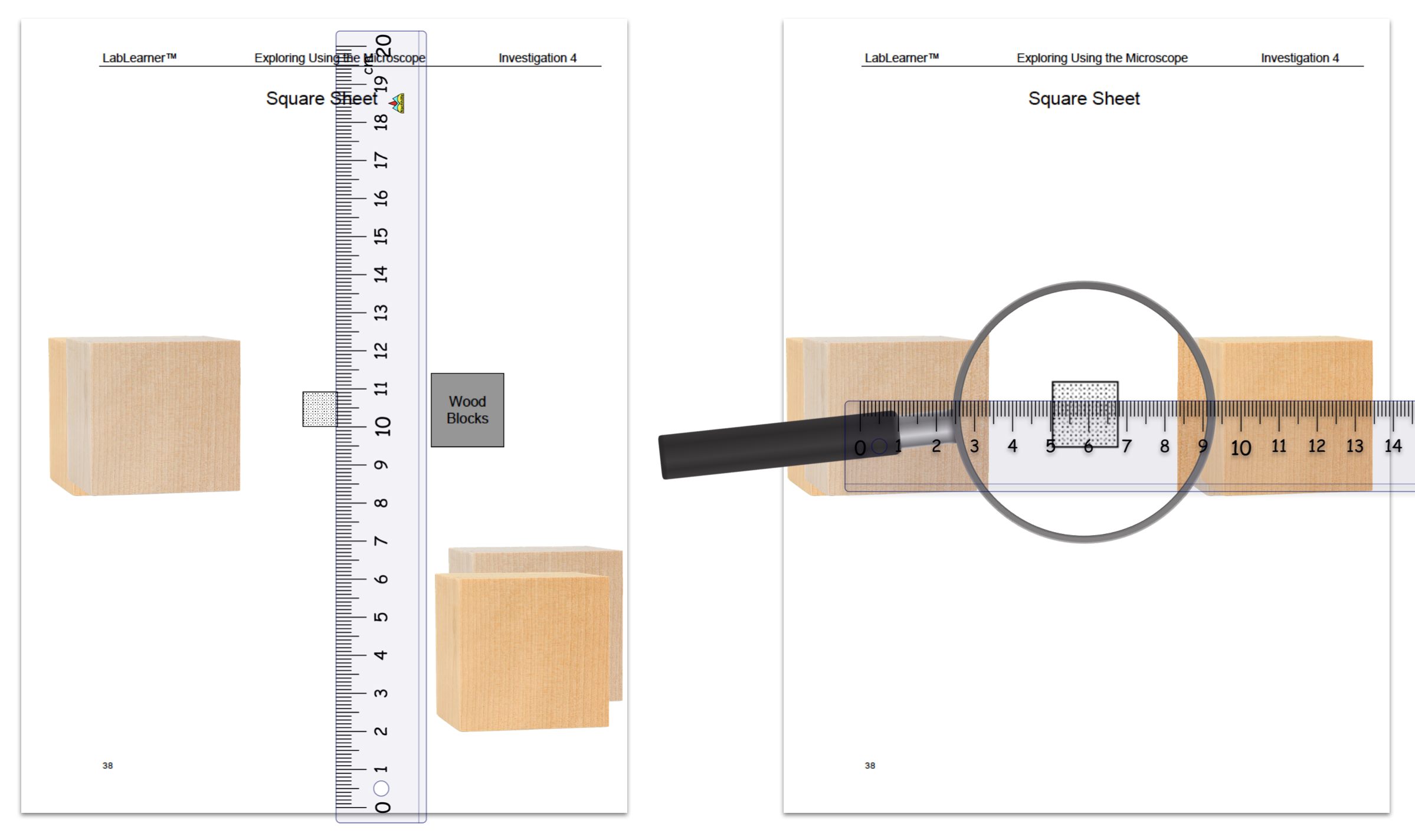
• Students should then place the hand lens on top of the blocks and view the square.
• Using the metric ruler, students should measure the width of the square’s image and record the width in the table in Problem 3a in their Student Data Record.
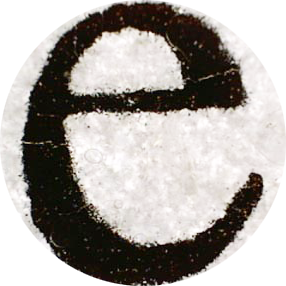
2. Ask students to locate the “letter e” slide in their box of prepared slides.
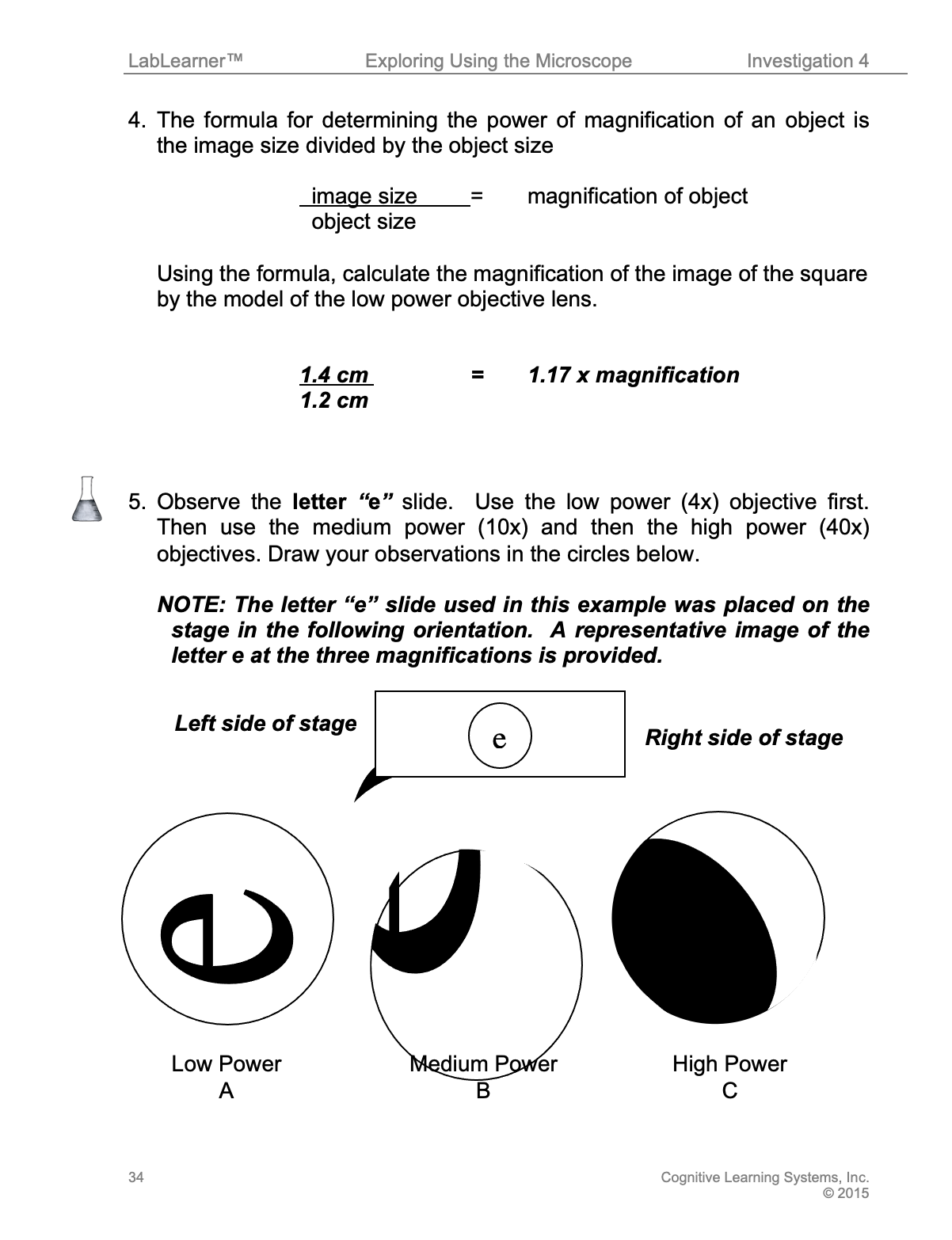
a. Ask students to view the “letter e” slide using first the 4x, then the 10x, and finally the 40x objective.
b. If necessary, remind students of the procedure for Compound Microscope Use and Operation found in the Procedural Toolbox. Students may also use the procedure found in Investigation Three in their Student Data Record.
c. Ask students to record their observation of the “letter e” slide at each magnification in Problem 5 in their Student Data Record.
d. Ask students to calculate the total magnification of the three objectives and record their answer in Problem 6 in their Student Data Record.
___________________________________________
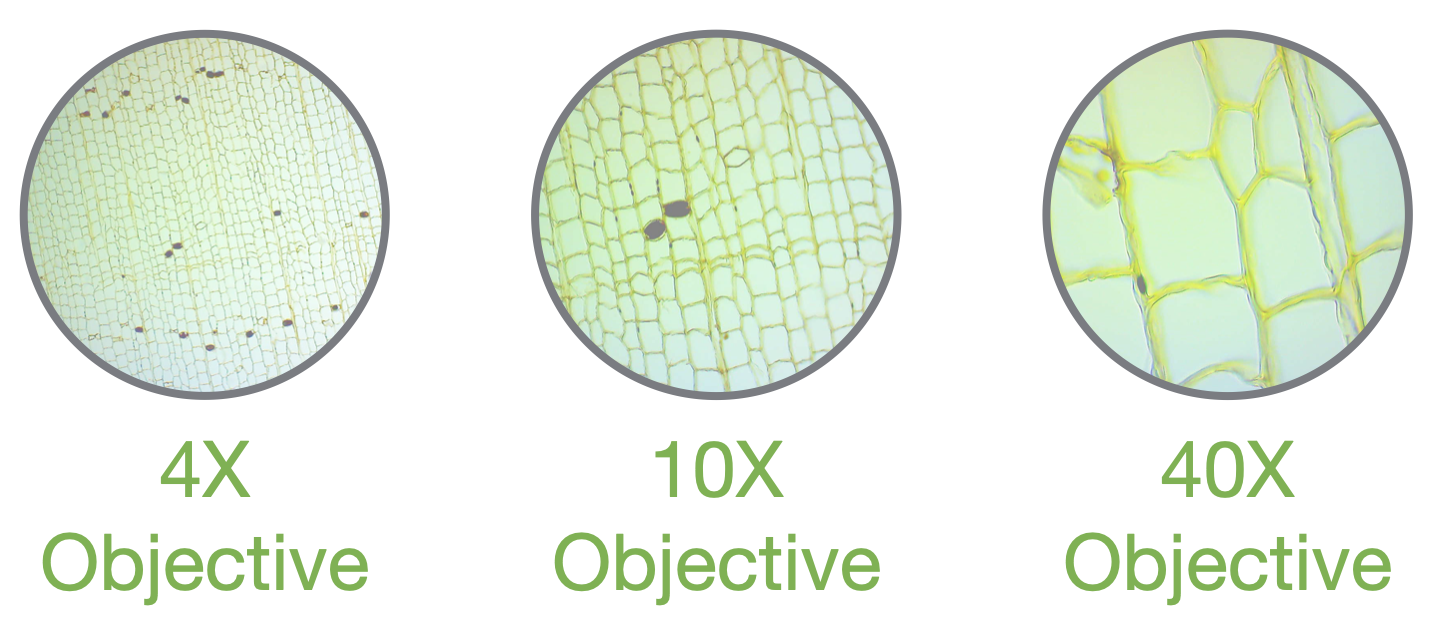
3. Ask students to locate the cork slide in their box of prepared slides.
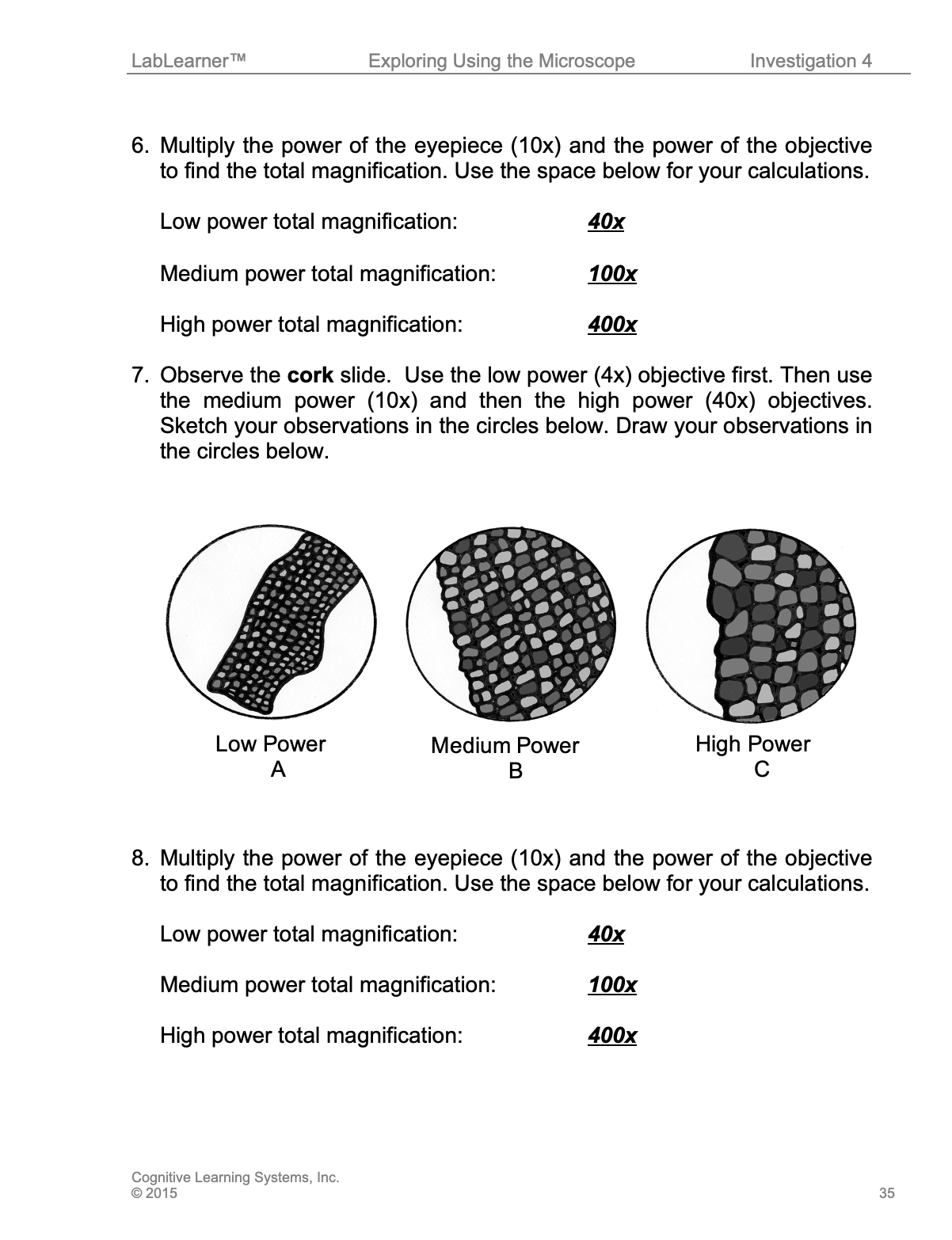
a. Ask students to view the cork slide using first the 4x, then the 10x, and finally the 40x objective.
b. If necessary, students should use the procedure for Use and Operation of the Compound Microscope found in the Procedural Toolbox. Students may also use the procedure found in Investigation Three in their Scientist Data Record.
c. Ask students to record their observation of the cork slide at each magnification in Problem 7 in their Student Data Record.
d. Ask students to calculate the total magnification of the three objectives and record their answer in Problem 8 in their Student Data Record.
___________________________________________
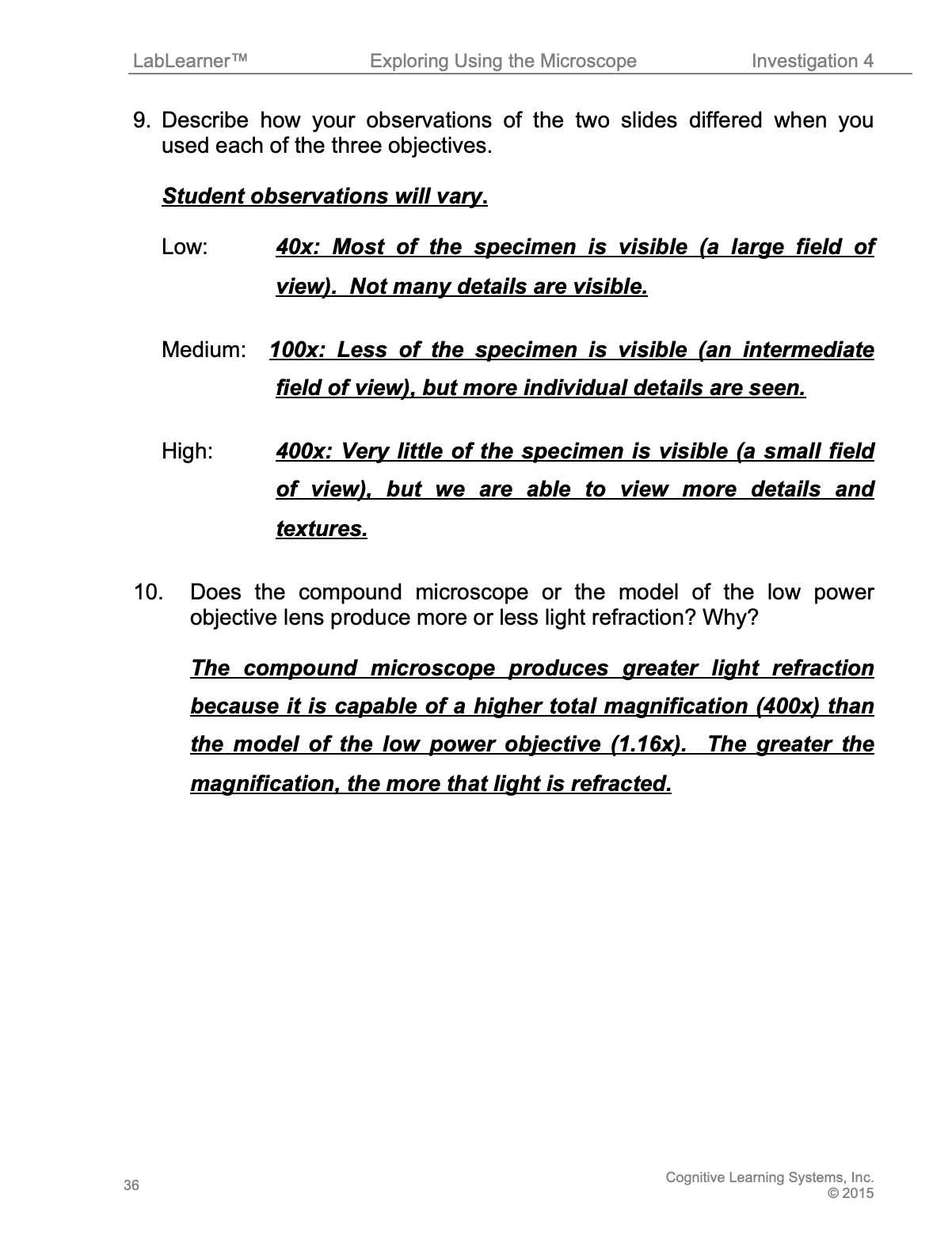
 4. Ask students to answer Problem 9 in their Student Data Record and discuss their observations of the “letter e” and the cork slide.
5. Ask students to answer Problem 10 and discuss their answers.
• Does the compound microscope or the model of the low power objective lens produce more or less light refraction? Why? The compound microscope produces greater light refraction because it is capable of higher total magnification (400x) than the model of the low power objective (~1.17x). The greater the magnification, the more that light is refracted.
KEYS
CLEAN UP
Let students know your expectations for clean-up. Ask them to clean up.