
Teacher Portal:
Microscopes and Magnification
Investigation 3 – Lab
 ASK WHY
Microscopes have made a tremendous contribution to science since their use began in the sixteenth century (the 1500s).
Microscopes are one of the most important scientific instruments developed. In fact, in the medical field, microscopes are largely responsible for making modern medicine “modern”!
BRANCH OUT
Microscopists today work in many different fields including field and laboratory life sciences, chemistry, materials science, and nearly every branch of biomedical research and medicine.
BE PREPARED
Supplies and Equipment:
Group Materials:
- 1 letter “e” slide
- 1 compound microscope
- 1 Compound Microscope Transparency
Individual Materials:
- 1 Student Data Record
Teacher Preparation
- Place required materials at a central location.
- Divide the class into groups.
INVESTIGATE
- Direct each student pair to obtain the following required materials: one (1) microscope and one (1) letter “e” slide.
- Remind students to always hold and carry the microscope with two hands, one on the arm and the other on the base.
-
- Introduce the compound microscope as a scientific tool that can be used to magnify microscopic specimens or specimens that are too small to be seen with the naked eye.
- Inform students that they will first need to learn the parts of the microscope and the function of each of the parts.
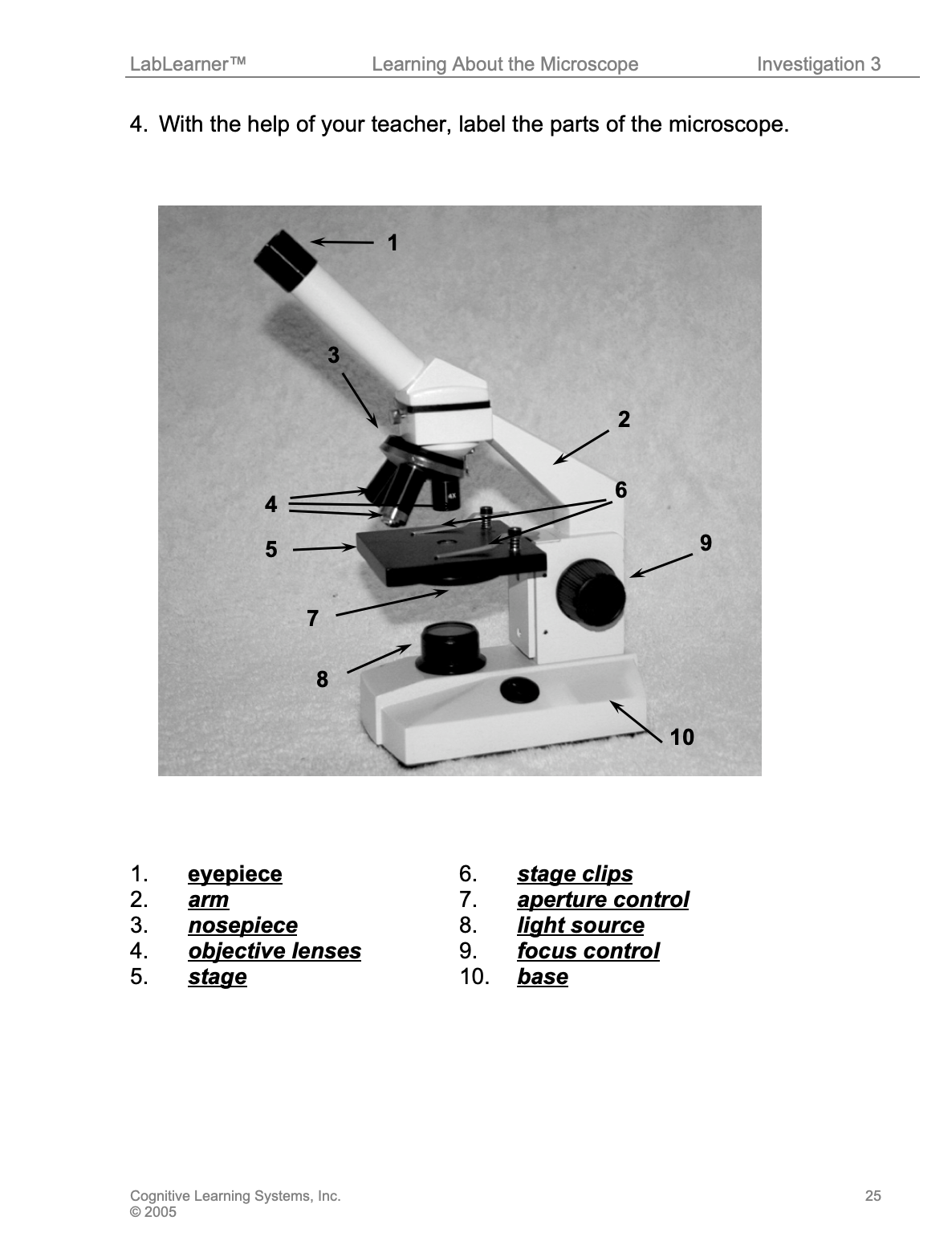
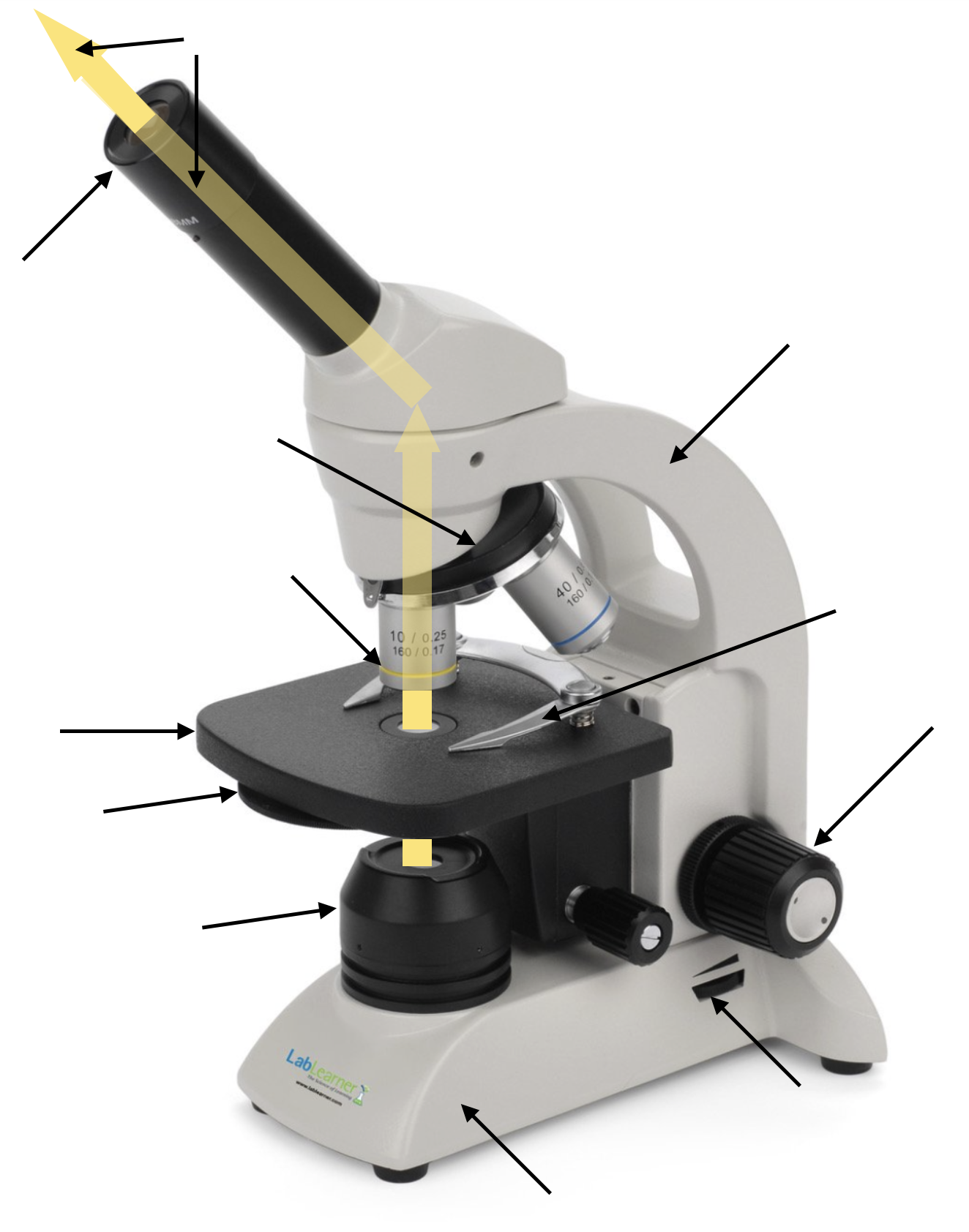
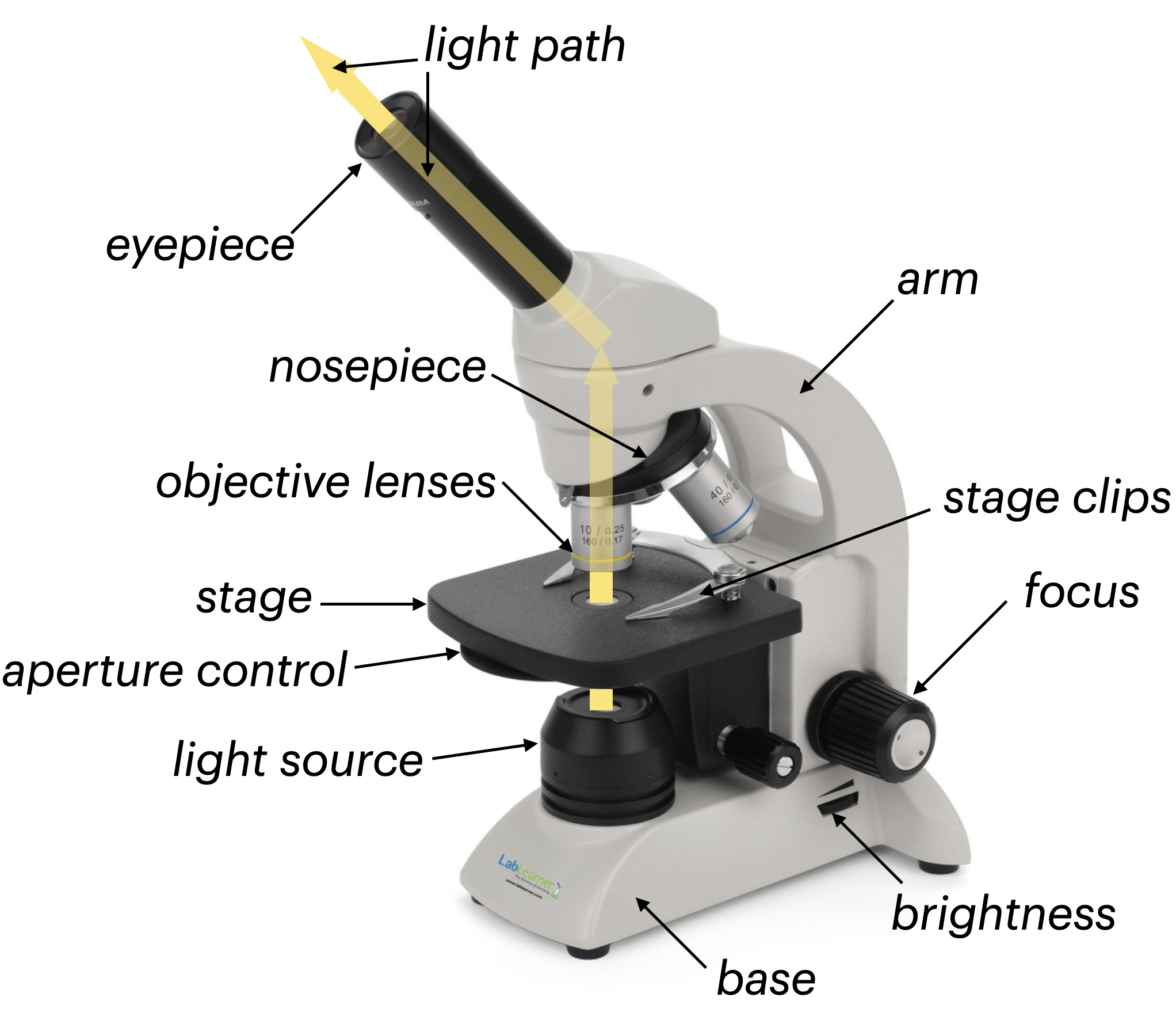
- Ask students to turn to Problem 4 in their Student Data Record. Introduce students to the parts of the microscope and their function.
- Instruct each student group to identify the parts of their own microscopes as they are introduced to them.
- As each part of the microscope is identified, ask students to record the name of each part in Problem 4 in their Student Data Record. In addition, the Compound Microscope Transparency can be used to aid with this activity.
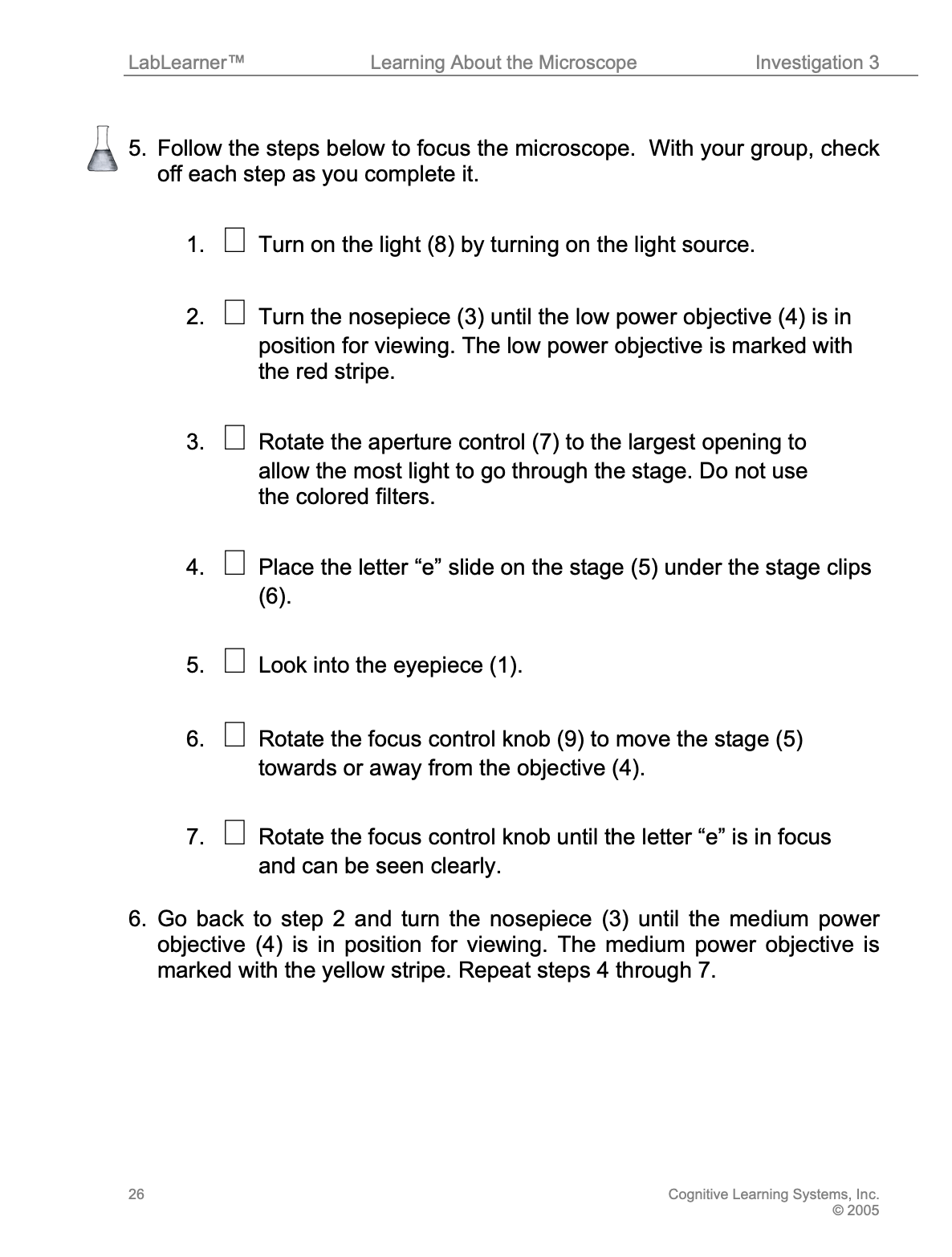
- After students have identified the parts of the microscope, ask students to refer to the procedure for the Use and Operation of the Compound Microscope found in Problem 5 in their Student Data Record.
- Instruct students to follow the steps in problem 5 in their Scientist Data Record that instruct them in the use of the low power objective of the compound microscope. Students should refer to the illustration of the microscope in Problem 4 in their Student Data Record and to the numbered parts. Allow all students in each group the opportunity to use the microscope.
- Instruct students to go back to Step 2 and use the medium power objective to view the letter “e” slide. Students should then repeat Steps 4 through 7 in Problem 5 in their Student Data Record. Allow all students in each group the opportunity to use the microscope.
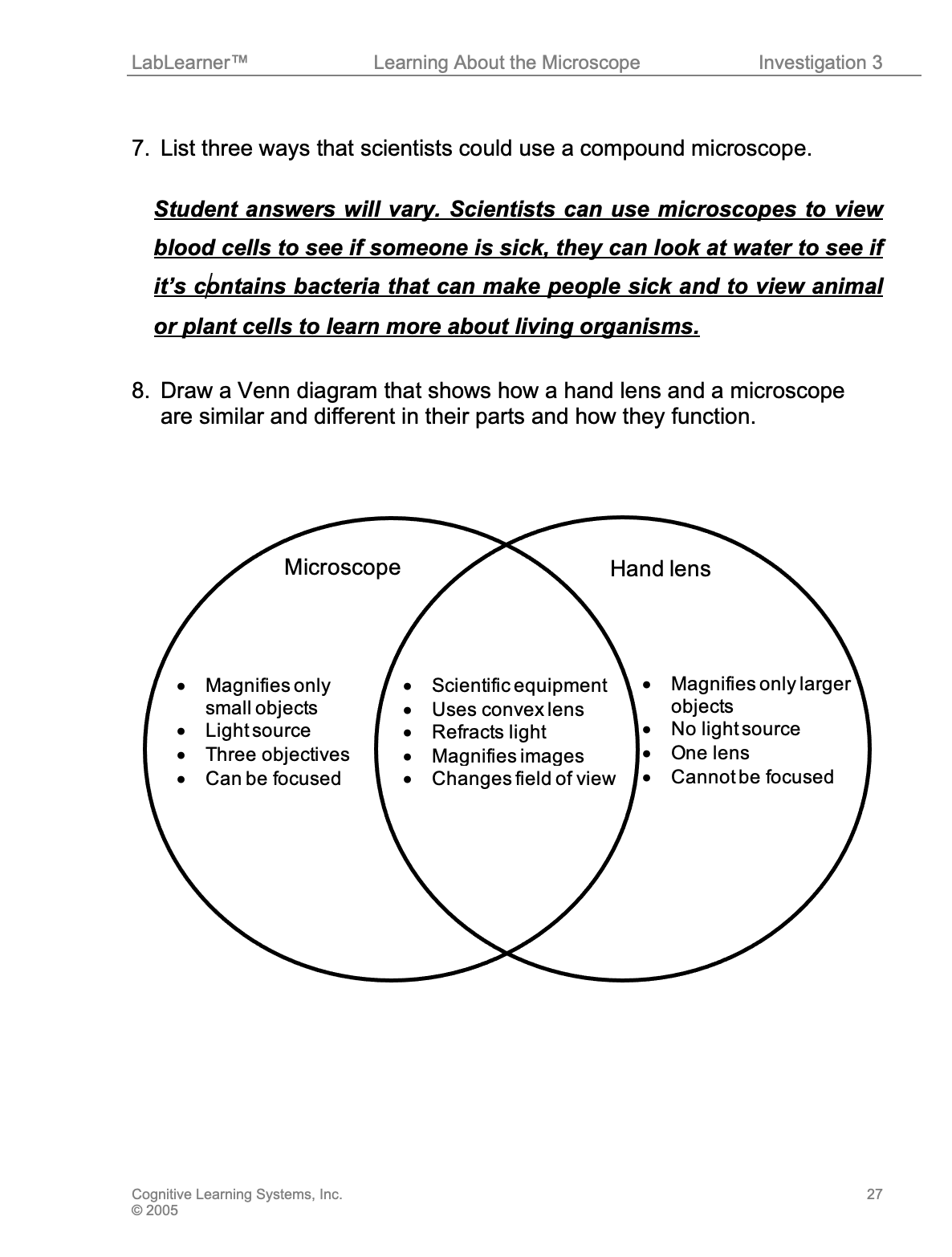
- After students have viewed the letter “e” slide, ask them to answer Problem 7 in their Student Data Record.
Ask students: List three ways that scientists could use a compound microscope. Student answers will vary. Scientists can use microscopes to view blood cells to see if someone is sick, they can look at the water to see if it contains bacteria that can make people sick, and to view animal or plant cells to learn more about living organisms.
KEYS
CLEAN UP
Let students know your expectations for clean-up. Ask them to clean up.