Teacher Portal:
Microscopes and Magnification
Investigation 1 – PostLab
 ASK WHY
Microscopes have made a tremendous contribution to science since their use began in the sixteenth century (the 1500s).
Microscopes are one of the most important scientific instruments developed. In fact, in the medical field, microscopes are largely responsible for making modern medicine “modern”!
BRANCH OUT
Microscopists today work in many different fields including field and laboratory life sciences, chemistry, materials science, and nearly every branch of biomedical research and medicine.
PRINT IT
Use your browser to download a printable PDF as help during the slide presentation and to make additional notes. In your browser, go to File > Print and then choose to save as PDF.
NAVIGATE IT
Once the slide presentation is launched
- use your left and right arrows to advance or go back in the slide presentation, and
- hover your mouse over the left edge of the presentation to get a view of the thumbnails for all the slides so that you can quickly move anywhere in the presentation.
- Click HERE to launch the slide presentation for the CELL.
SHARE IT
SLIDE M&M1-post-1
Begin the PostLab analysis and discussion by focusing students’ attention on the data they collected in the lab.
______________________________________________
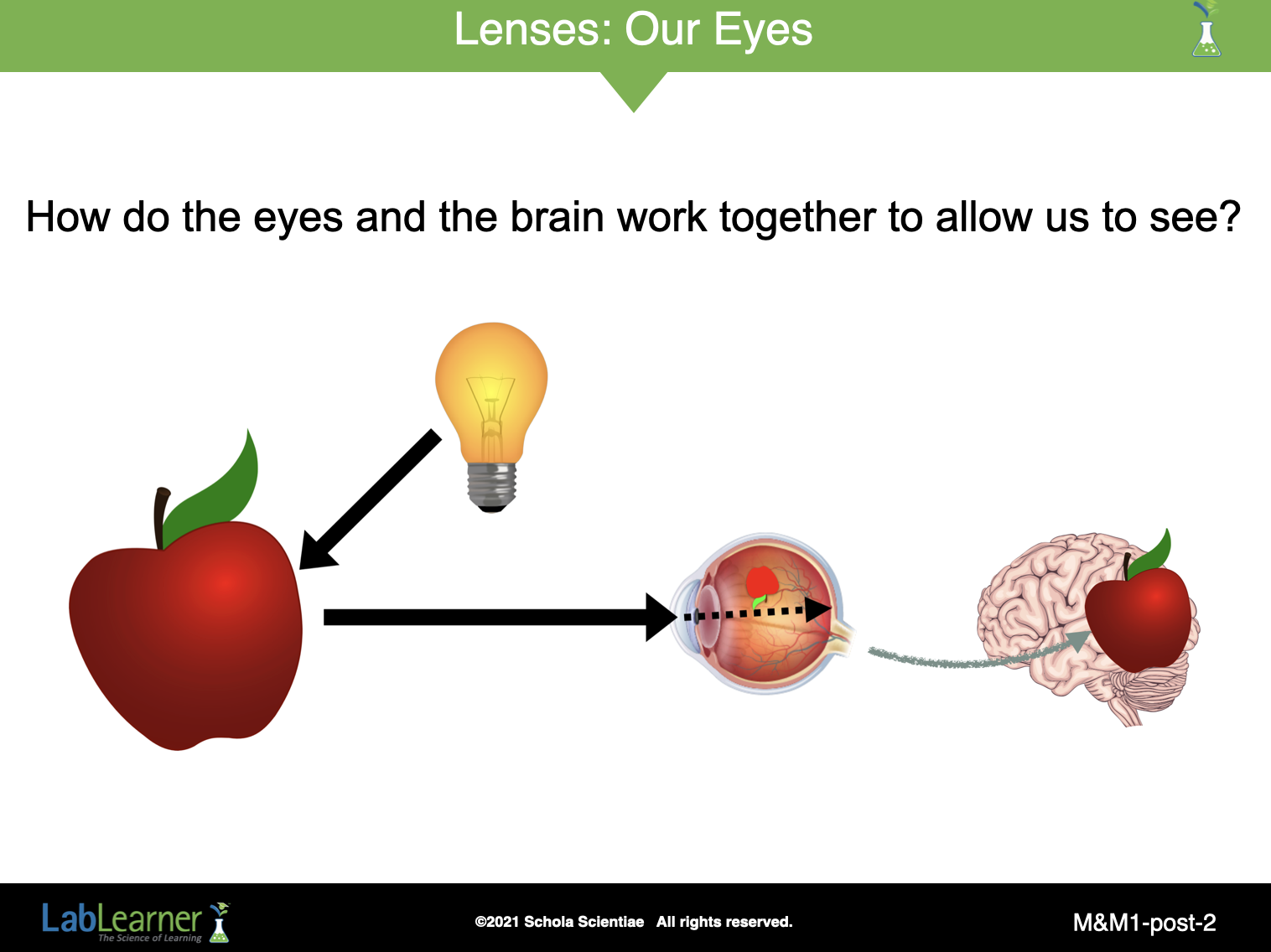
SLIDE M&M1-post-2
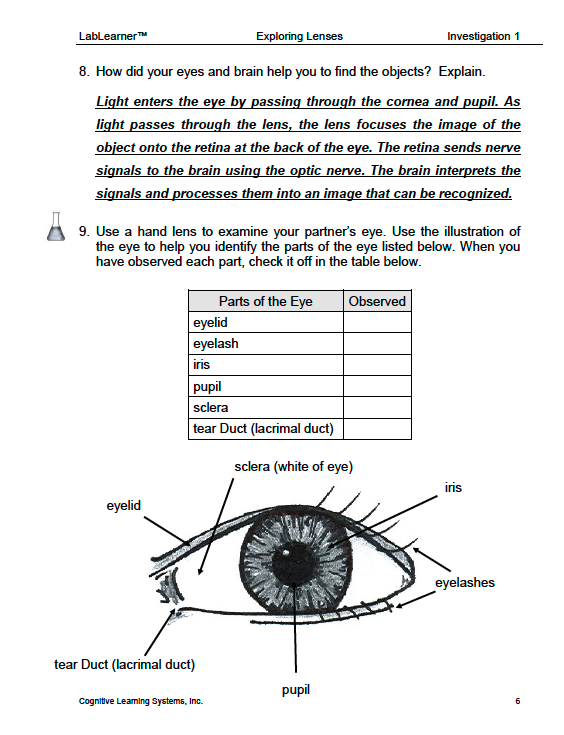
Ask Students: How do the eyes and the brain work together to allow us to see? When you look at an object, light from the object passes through the outer layer of the eye, called the cornea, and then through an opening called the pupil. Next, the light passes through a lens that focuses the image of the object onto a structure in the back of the eye called the retina. Cells in the retina send nerve signals through the optic nerve to the brain. The brain interprets the signals and allows us to identify the object.
______________________________________________
SLIDE M&M1-post-3
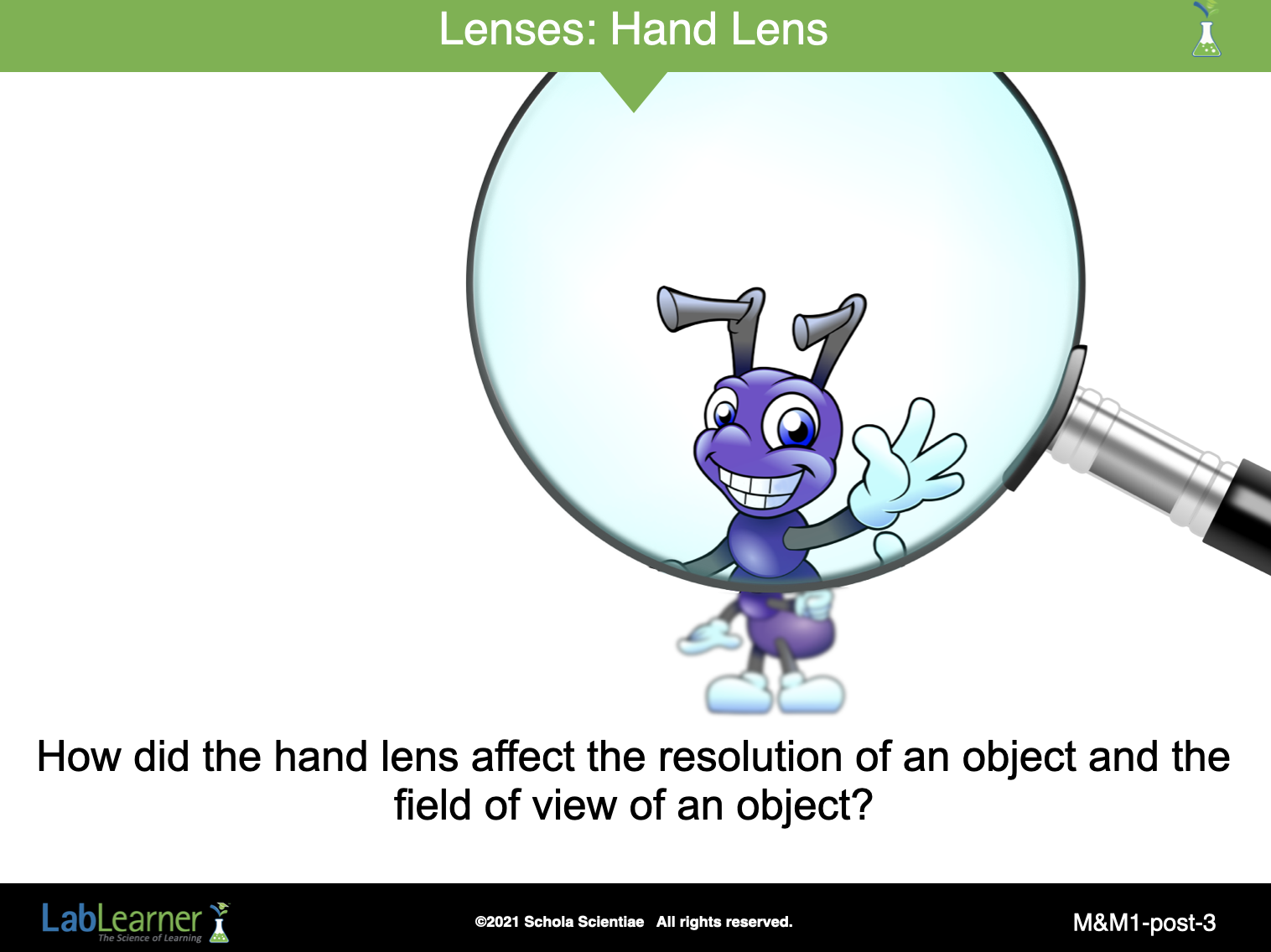
Ask students: How did the hand lens affect the resolution of an object and the field of view of an object? The hand lens increased the resolution of an object but decreased the field of view. In the experiment, students could see the details of their partner’s eye better with the hand lens but the hand lens only allowed them to view a small area of their face.
______________________________________________
SLIDE M&M1-post-4
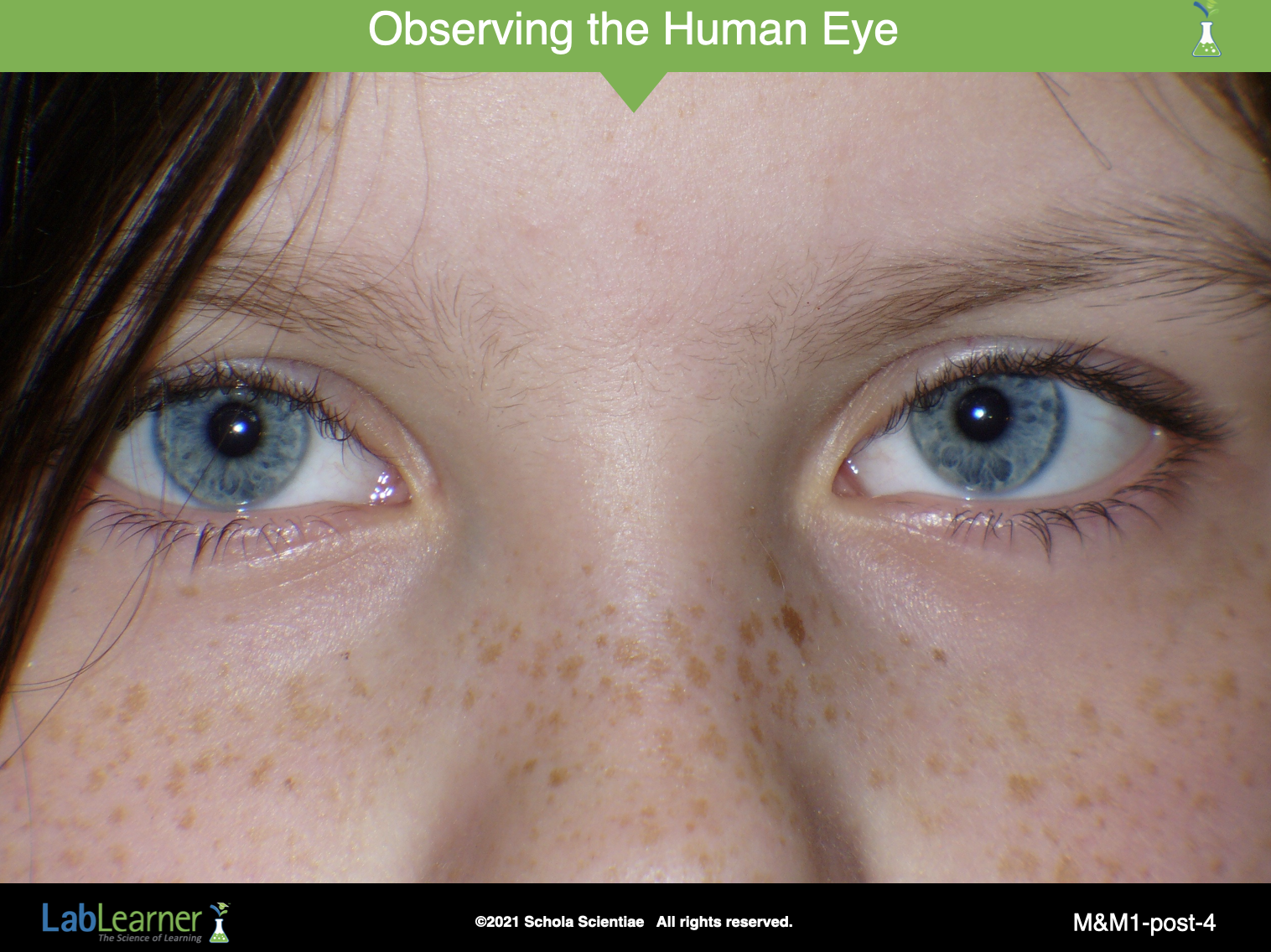
Ask students to turn to Problem 9 in their Student Data Record. Ask students to answer the following questions based on their observations.
- Could you see a tear duct with the naked (unassisted) eye? No, it was too small.
- Could you see a tear duct with the hand lens? Yes, the hand lens magnified the tear duct so that it was visible.
- Could you have counted the number of eyelashes on your partner’s eyelid with the naked (unassisted) eye? No, they were too small to count with the naked eye.
- Could you have counted the number of eyelashes on your partner’s eyelid with the hand lens? Yes, the hand lens magnified the eyelid enough that the eyelashes could have been counted the eyelashes.
- What effect did the hand lens have on the resolution of your partner’s eye? The hand lens increased the resolution of the objects. Students could see the details of their partner’s eye better with the hand lens.
- Could you see your partner’s entire face with your naked (unassisted) eye? Yes
- Could you see your partner’s entire face with the hand lens? No, the hand lens only magnified a portion of the face.
Discuss how their partner’s eye appeared with and without the hand lens. Refer to Problems 10, 11, and 12 in students’ Student Data Record.
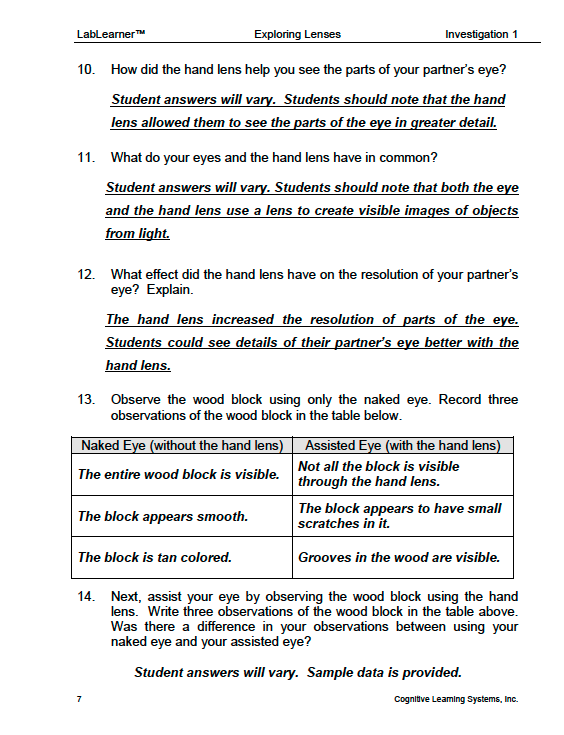
- How did the hand lens help you see the parts of your partner’s eye? Student answers will vary. Students should note that the hand lens allowed them to see the parts of the eye in greater detail.
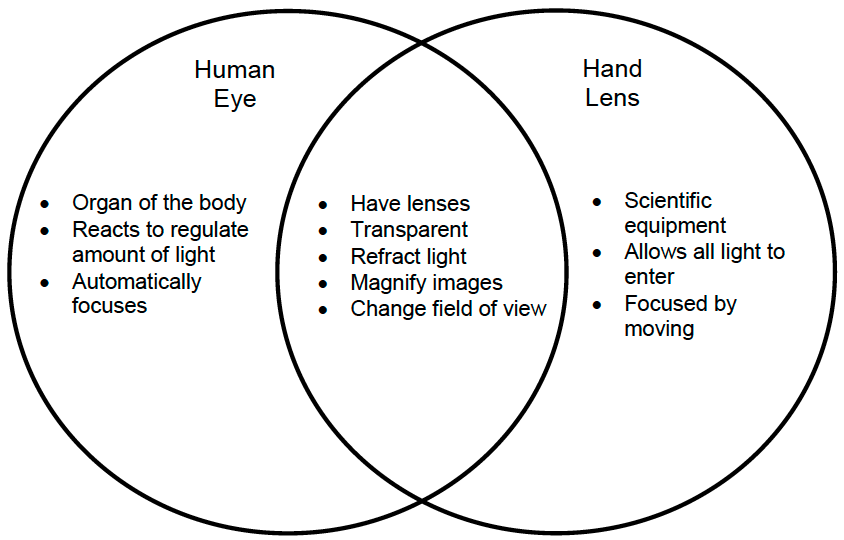
- What do your eyes and the hand lens have in common? Student answers will vary. Students should note that both the eye and the hand lens use a lens to create visible images of objects from light.
- What effect did the hand lens have on the resolution of your partner’s eye? The hand lens increased the resolution of the objects. Students could see the details of their partner’s eye better with the hand lens.
______________________________________________
SLIDE M&M1-post-5
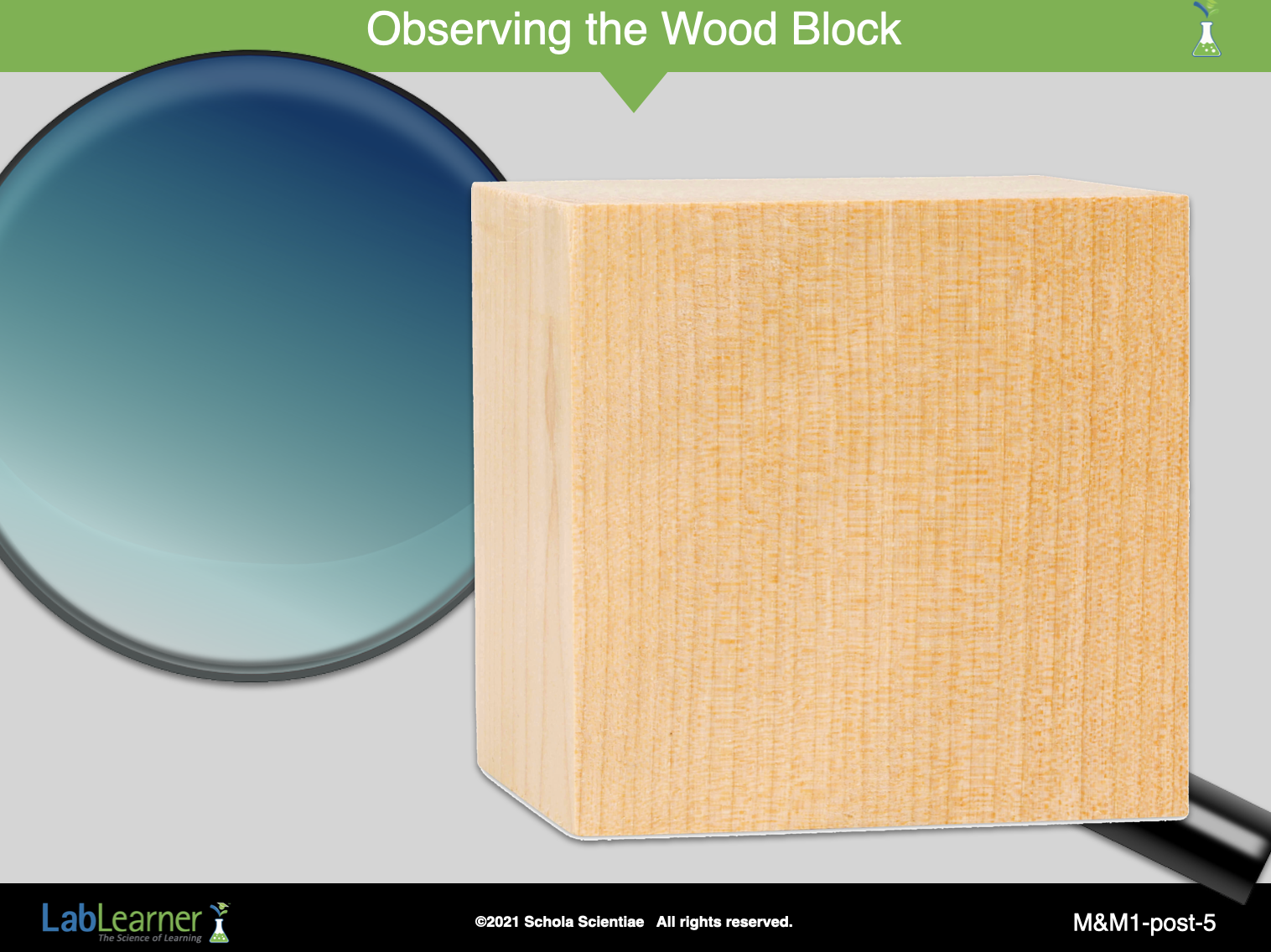
Refer to Problem 14 in students’ Student Data Record. Discuss students’ observations of the wood block with and without the hand lens.
______________________________________________
SLIDE M&M1-post-6
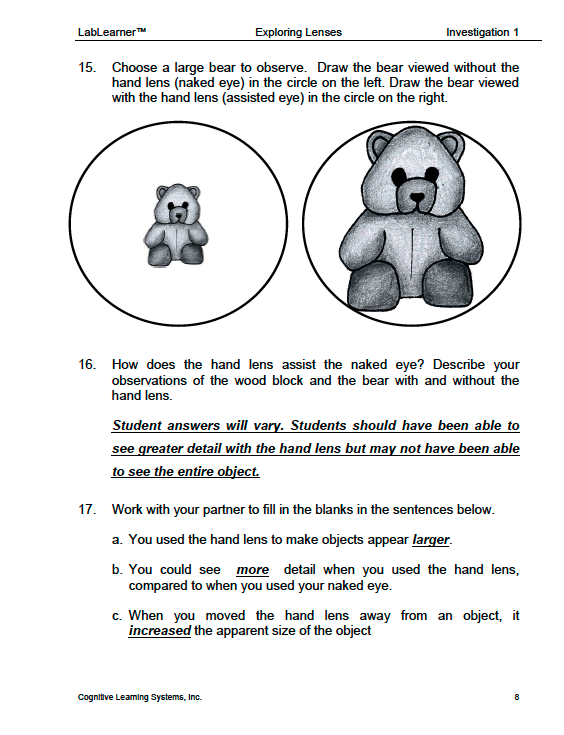
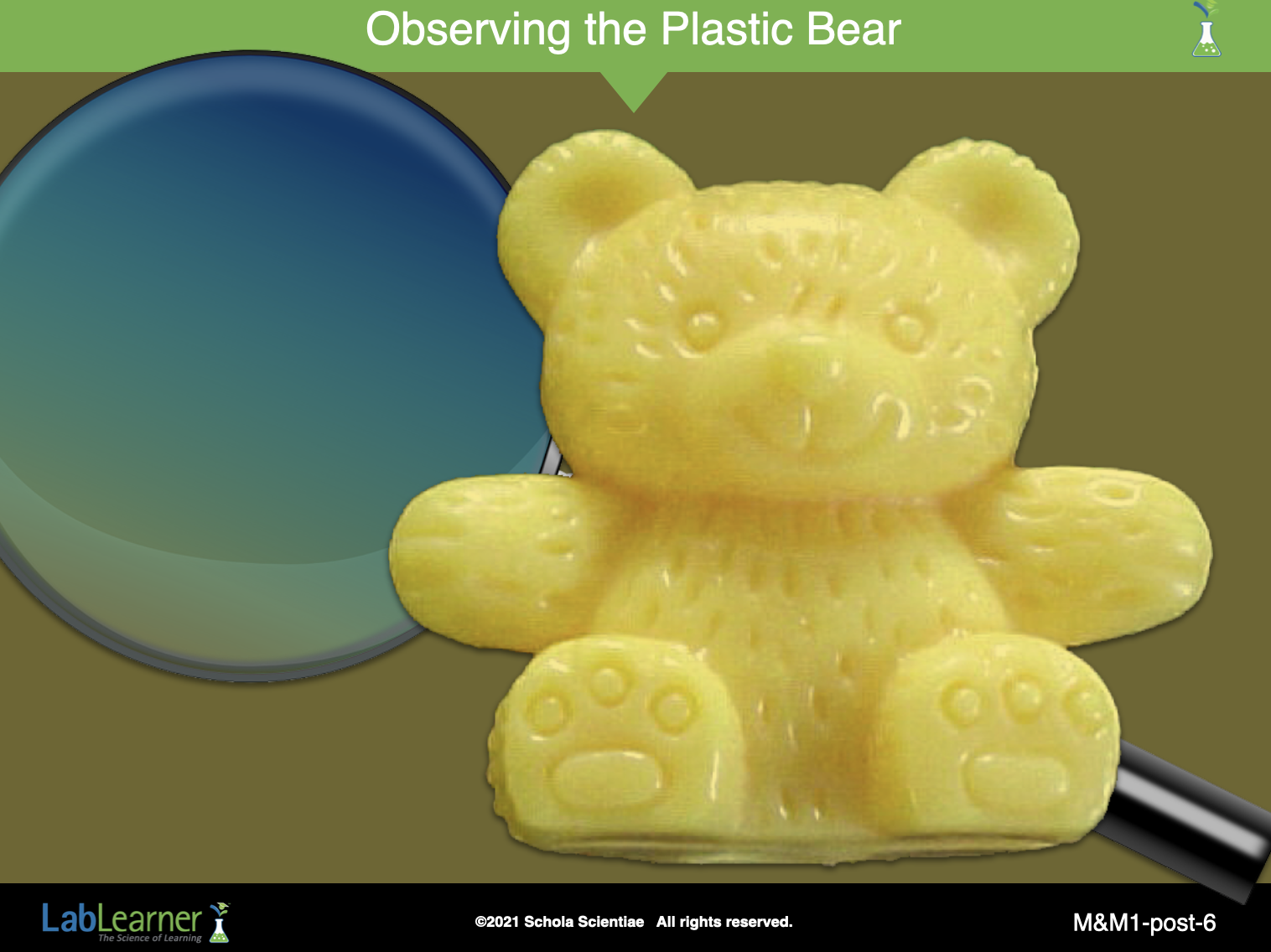
Ask students to turn to Problem 15 and 16 in their Student Data Record. Discuss the difference in the appearance of the bear using a naked (unassisted) eye and an assisted eye.
Ask students: How does the hand lens assist the naked (unassisted) eye? Describe your observations of the wood block and the bear with and without the hand lens. Student answers will vary. Students should have been able to see greater detail with the hand lens but may not have been able to see the entire object.
______________________________________________
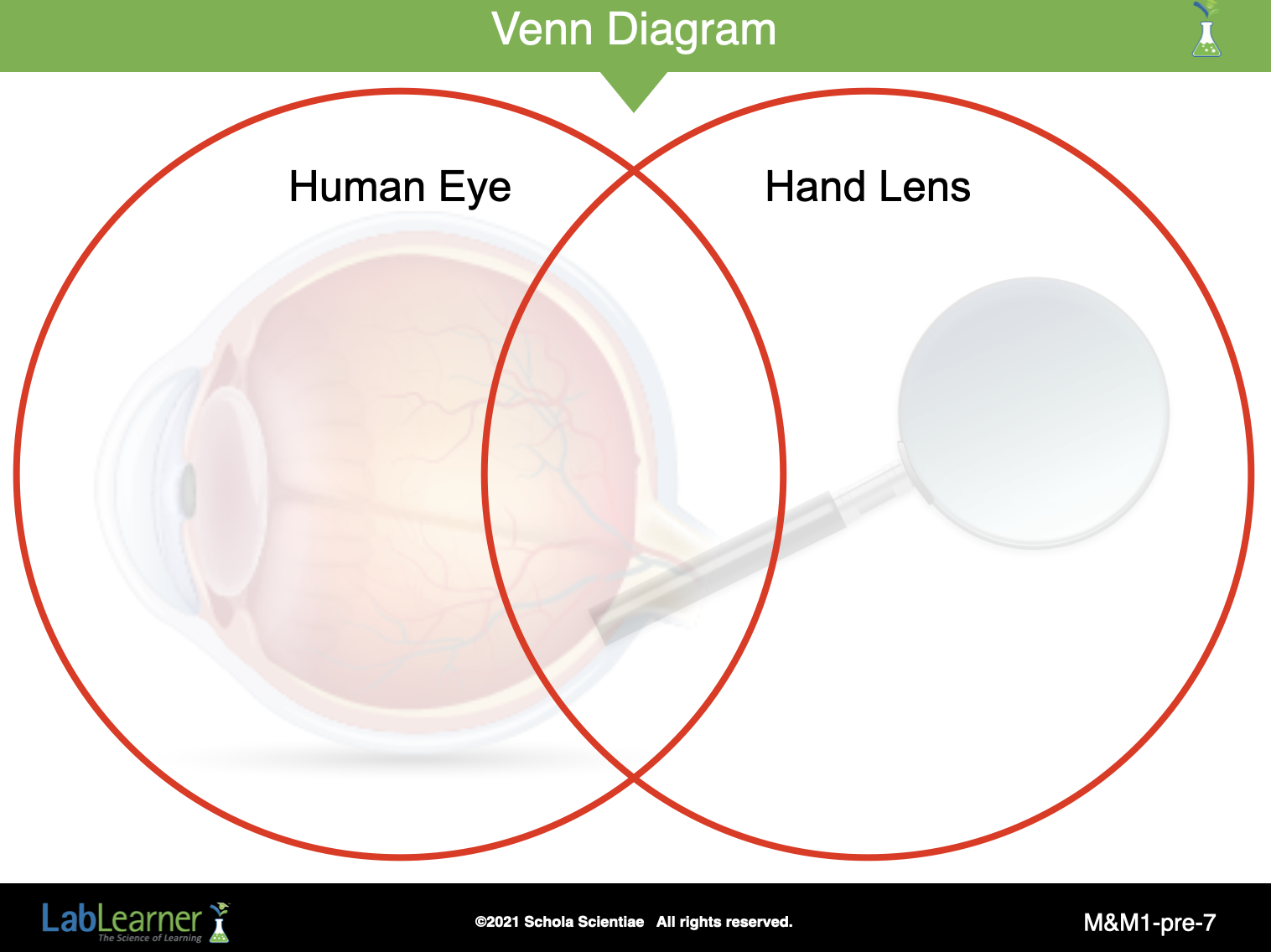
SLIDE M&M1-post-7
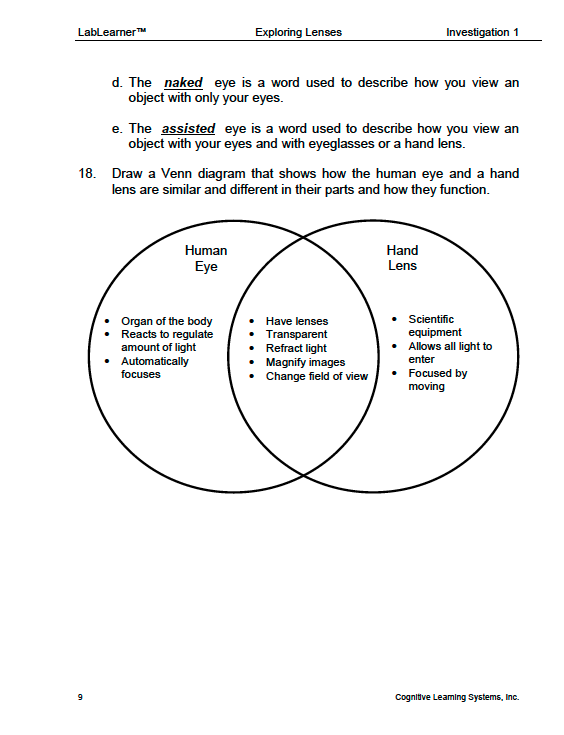
Ask students to answer Problems 17a – 17e and discuss their answers.
Ask students to refer to Problem 18 in their Student Data Record. Student partners should work together to draw a Venn diagram that shows the similarities and differences between the parts and functions of the human eye and a hand lens.
______________________________________________
KEYS: POSTLAB EXERCISE