
Teacher Portal:
Microscopes and Magnification
Performance Assessment – PreLab
ASK WHY
Microscopes have made a tremendous contribution to science since their use began in the sixteenth century (the 1500s).
Microscopes are one of the most important scientific instruments developed. In fact, in the medical field, microscopes are largely responsible for making modern medicine “modern”!
BRANCH OUT
Microscopists today work in many different fields including field and laboratory life sciences, chemistry, materials science, and nearly every branch of biomedical research and medicine.
STEM MINDSET
This Performance Assessment is designed to:
- promote problem-solving skills by encouraging students to find appropriate solutions to a designated problem.
- encourage planning and reasoning as students use their observations to successfully match a specimen to a description of the specimen.
- assess students’ procedural knowledge of the use of the compound microscope to successfully match a specimen to a description of the specimen.
- encourage students to apply their knowledge of the compound microscope when assessing the power of magnification and field of view of the different objectives.
PRINT IT
Use your browser to download a printable PDF as help during the slide presentation and to make additional notes. In your browser, go to File > Print and then choose to save as PDF.
NAVIGATE IT
Once the slide presentation is launched
- use your left and right arrows to advance or go back in the slide presentation, and
- hover your mouse over the left edge of the presentation to get a view of the thumbnails for all the slides so that you can quickly move anywhere in the presentation.
- Click HERE to launch the slide presentation for the CELL.
SHARE IT

SLIDE M&M-PA-1
This set of slides walks students through exactly what they will be expected to do in the Performance Assessment. The class can read and discuss as each slide is presented. While all of the information is printed directly on the slides for review as a class, the wording is also included in the annotations for ease of quick review for the teacher.
______________________________________________

SLIDE M&M-PA-2
Dr. Dover, a veterinarian, needed to use the compound microscope.
______________________________________________
SLIDE M&M-PA-3
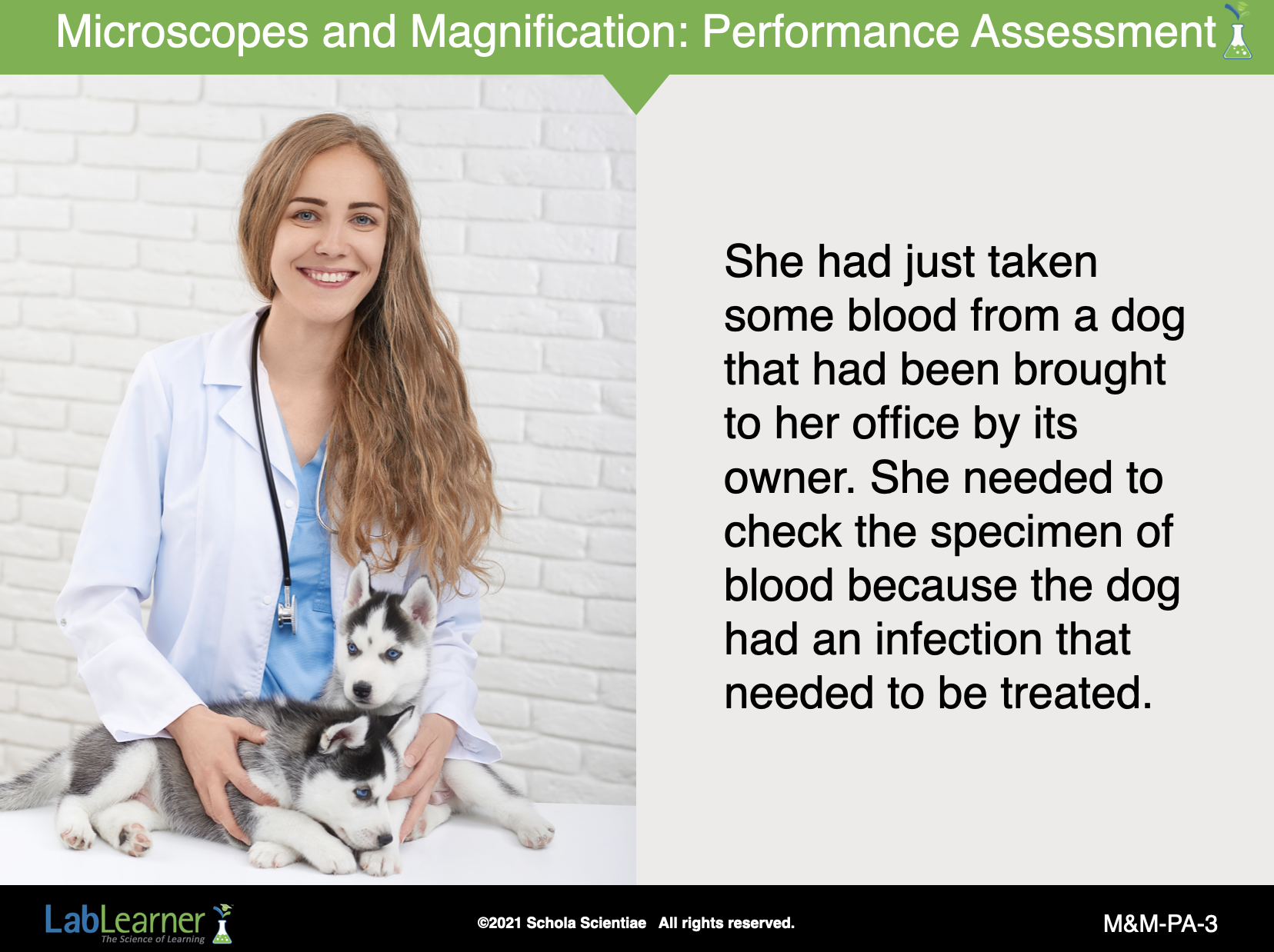
She had just taken some blood from a dog that had been brought to her office by its owner. She needed to check the specimen of blood because the dog had an infection that needed to be treated.
______________________________________________
SLIDE M&M-PA-4
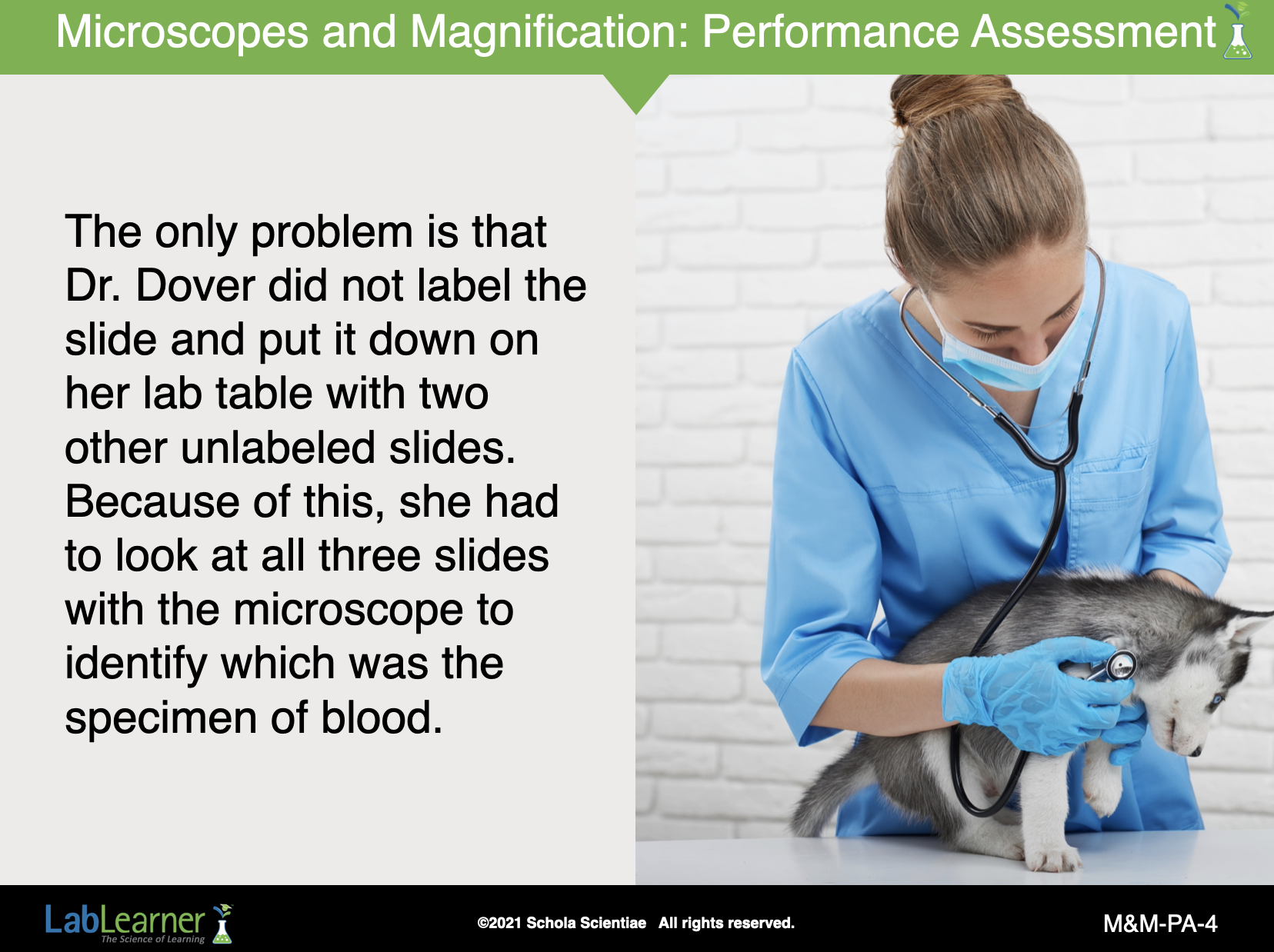
The only problem is that Dr. Dover did not label the slide and put it down on her lab table with two other unlabeled slides. Because of this, she had to look at all three slides with the microscope to identify which was the specimen of blood.
______________________________________________
SLIDE M&M-PA-5
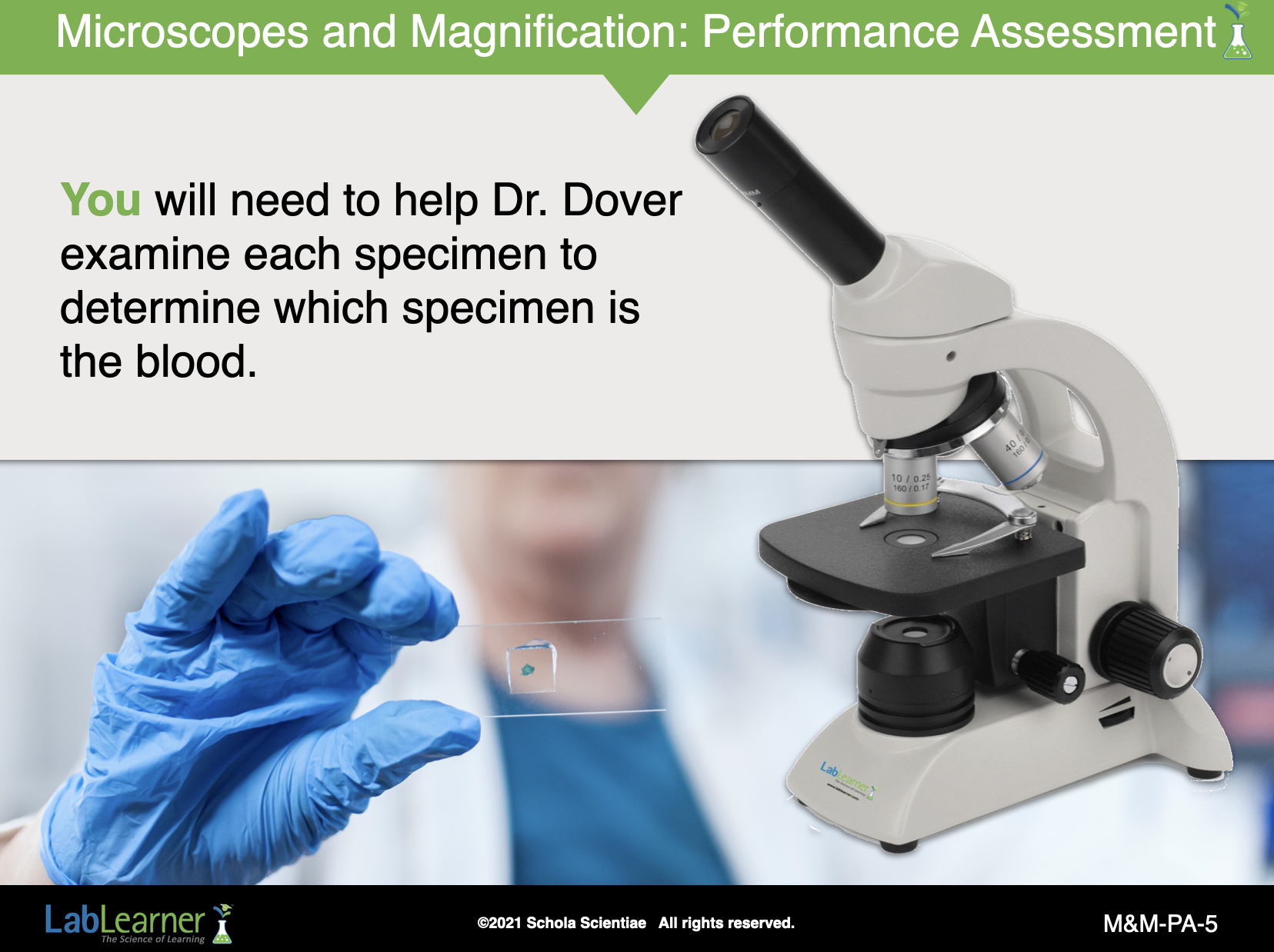
You will need to help Dr. Dover examine each specimen to determine which specimen is the blood.
______________________________________________
SLIDE M&M-PA-6
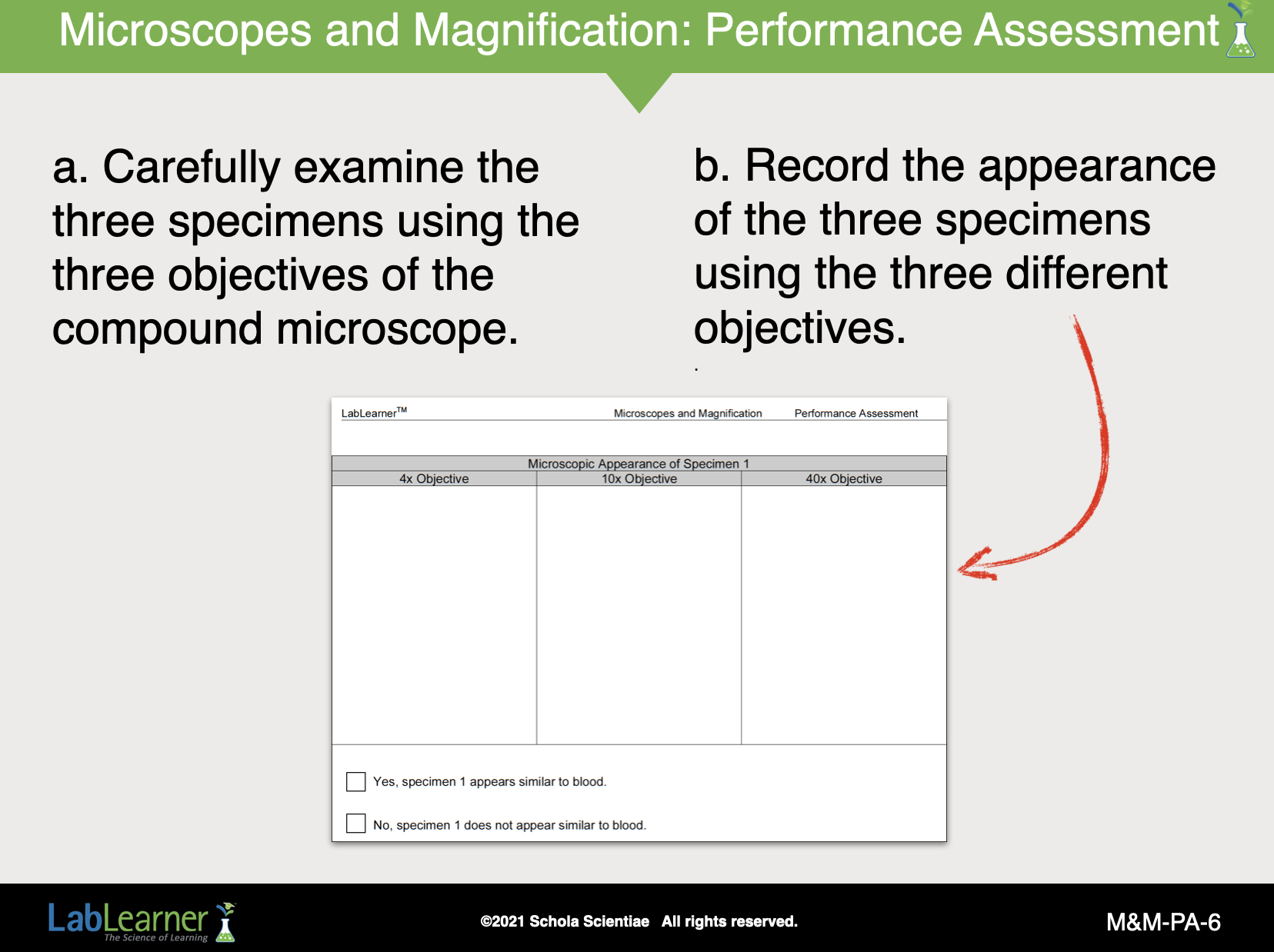
a. Carefully examine the three specimens using the three objectives of the compound microscope.
b. Record the appearance of the three specimens using the three different objectives.
______________________________________________
SLIDE M&M-PA-7
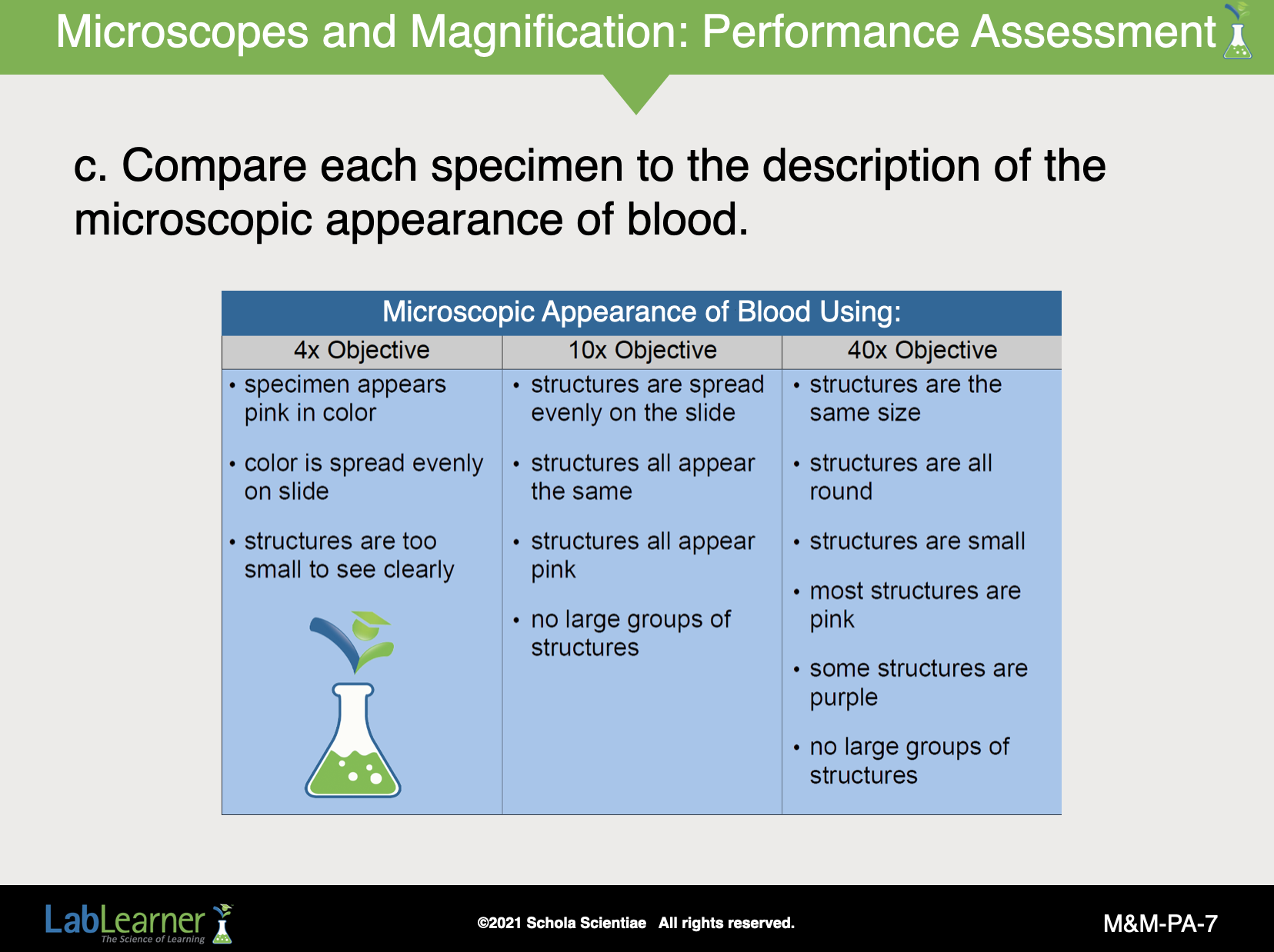
c. Compare each specimen to the description of the microscopic appearance of blood.
______________________________________________
SLIDE M&M-PA-8
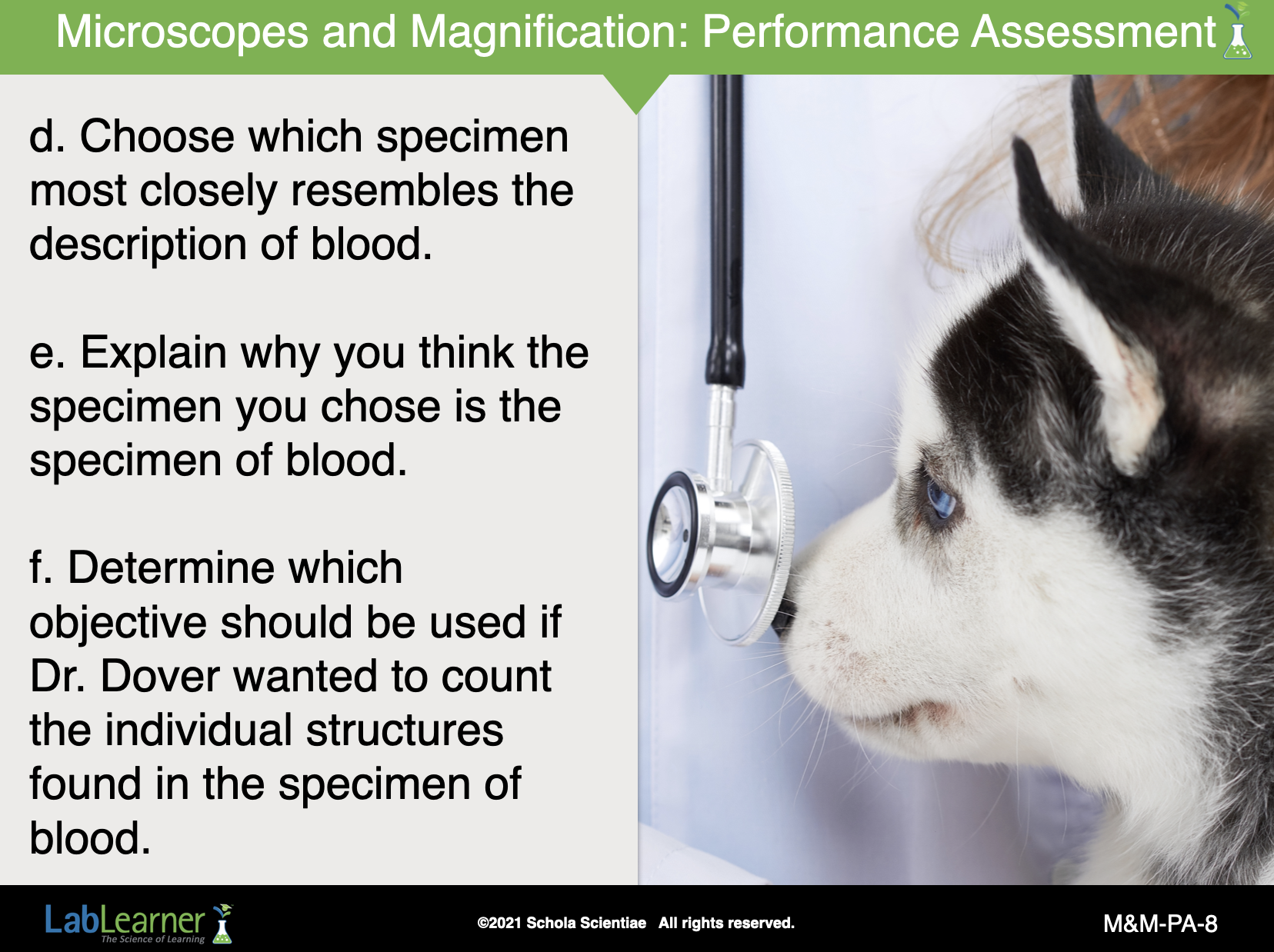
d. Choose which specimen most closely resembles the description of blood.
e. Explain why you think the specimen you chose is the specimen of blood.
f. Determine which objective should be used if Dr. Dover wanted to count the individual structures found in the specimen of blood.
______________________________________________
SLIDE M&M-PA-9
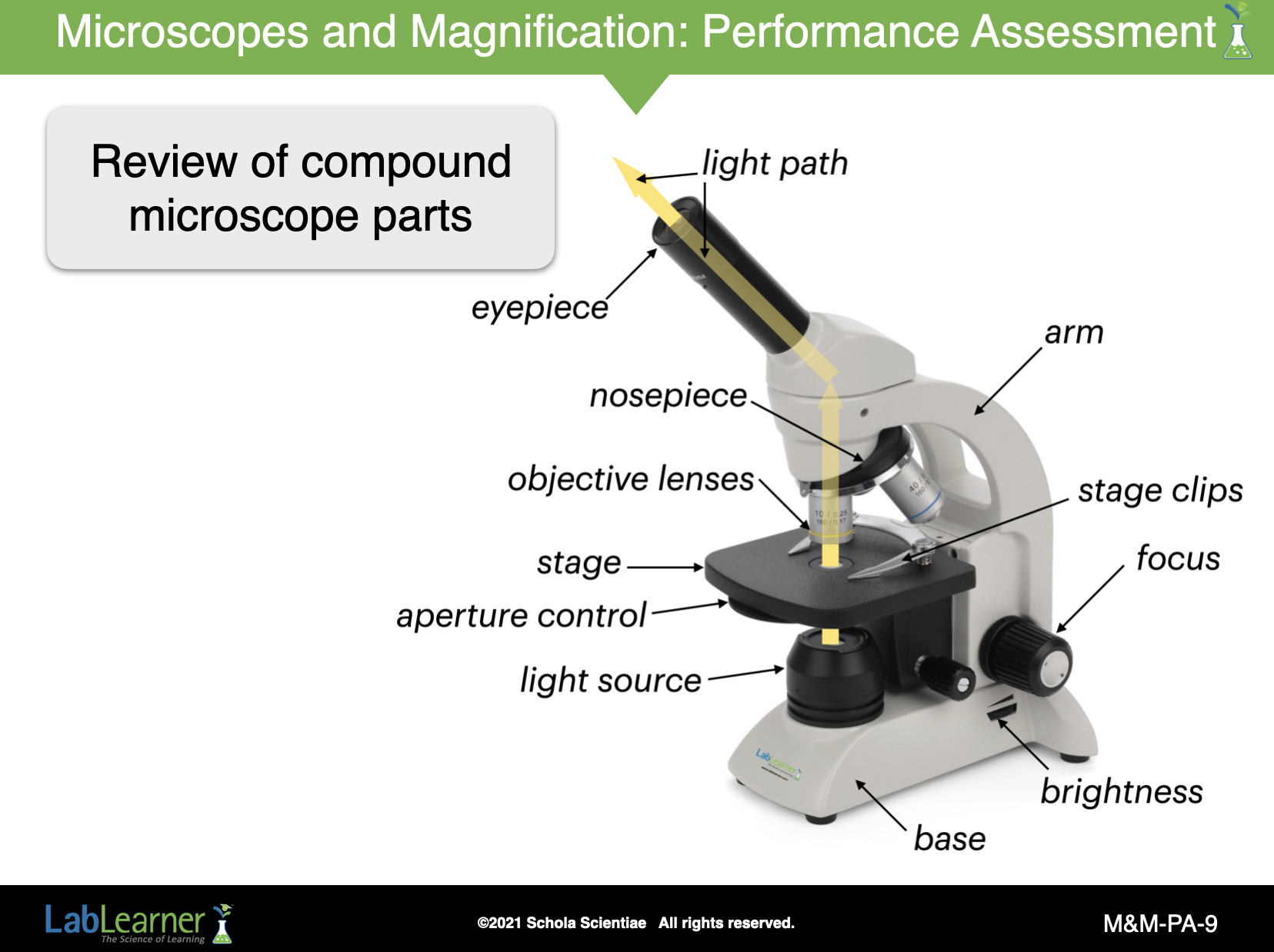
Take a few moments to go over the compound microscope, in particular the careful handling of glass microscope slides.
______________________________________________
SLIDE M&M-PA-10
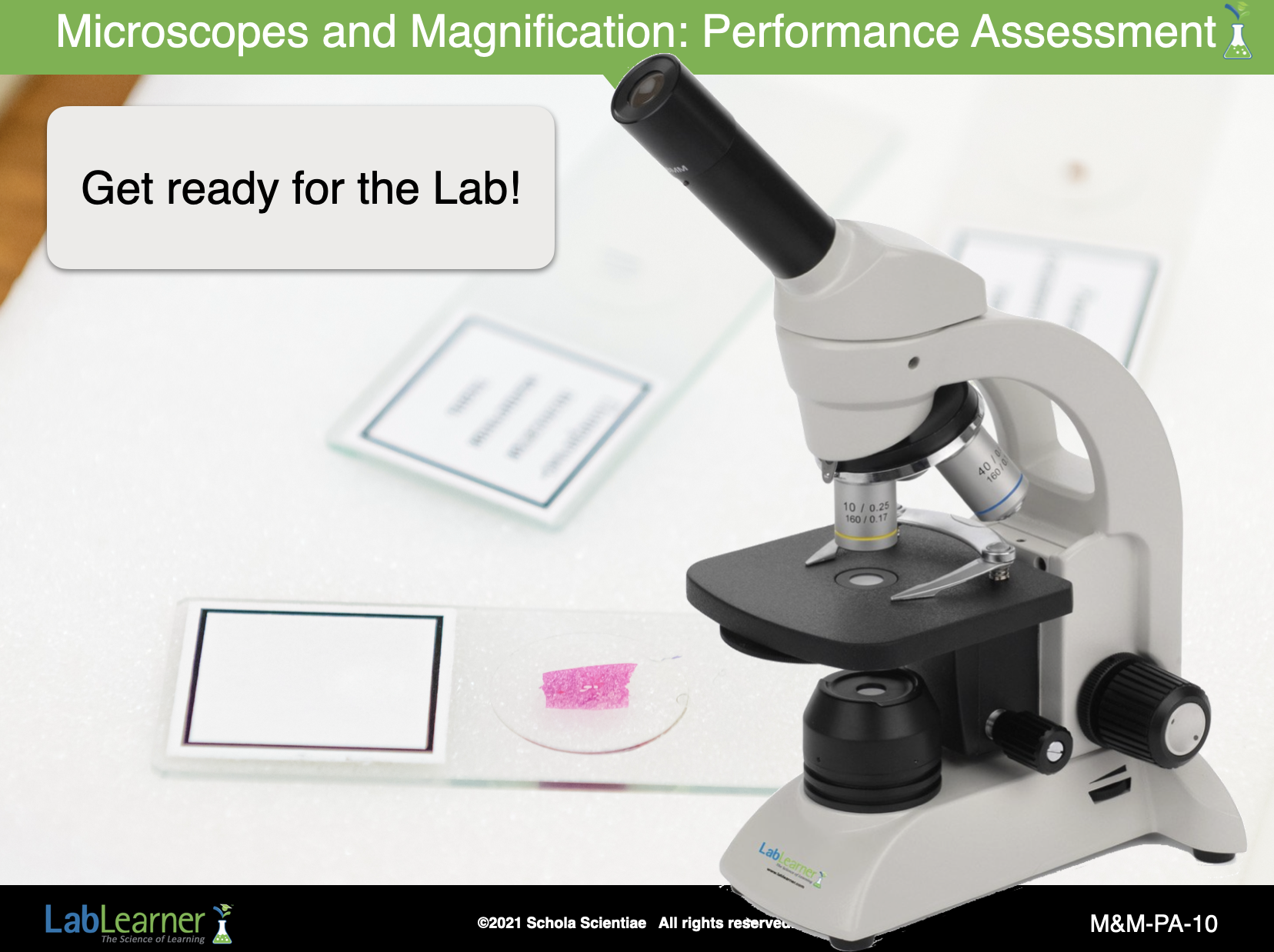
Use this slide as a backdrop while students are able to ask questions or discuss approaches to doing the Performance Assessment with their lab groups.
______________________________________________