
Teacher Portal:
Light and Optics
Investigation 4
Investigation Four: The Visible Spectrum
 In Investigation One, students were introduced to the absorption, transmission, and reflection of light. In Investigation Two, students were introduced to the Law of Reflection. In Investigation Three, students applied the Law of Reflection to take advantage of multiple angles of incidence and reflection allowing them to view an object hidden from direct view. In Investigation Four, the concept will be introduced that light is not homogeneous but is composed of various colors of the Visible Spectrum.
Light Waves
Light consists of waves of energy that are composed of crests and troughs. Each crest and trough is perpendicular to the direction that which the wave travels. The wavelength of a light wave is the distance between two crests or two troughs. The frequency of a light wave is the number of crests or troughs of a moving wave that passes a stationary point every second.
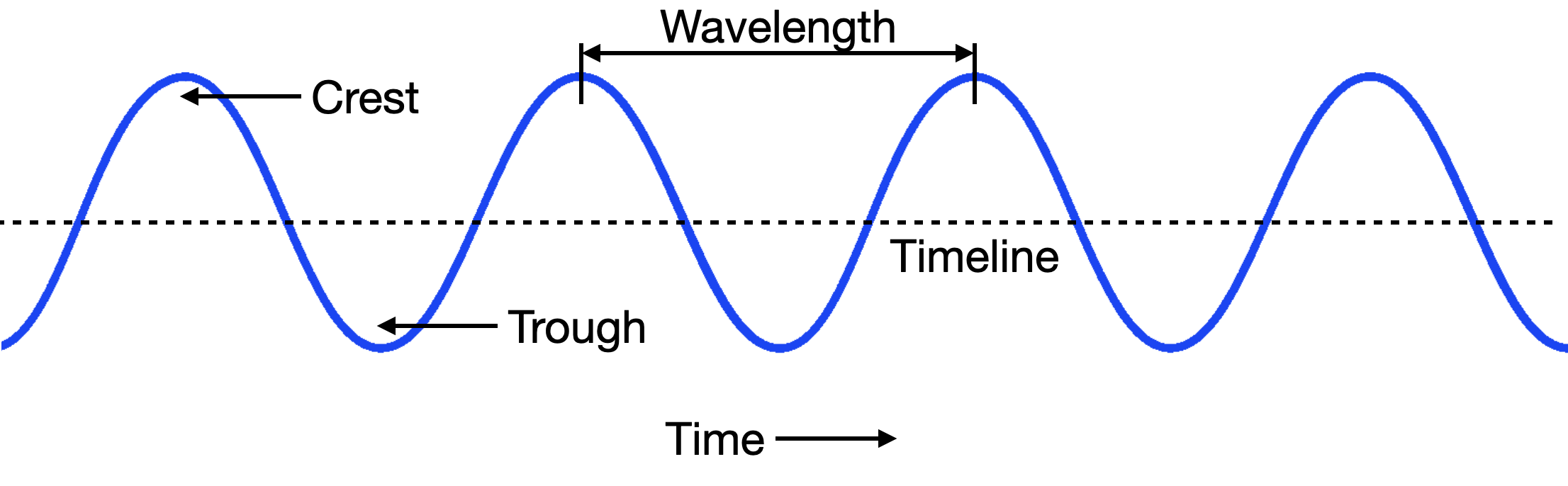
Wavelength and frequency are related for the following reason. If a light wave possesses a large wavelength it will possess a low frequency. Conversely, a wave with a shorter wavelength possesses a higher frequency. The speed of light is a constant for all light waves, so as the wavelength increases, the frequency of a wave decreases.
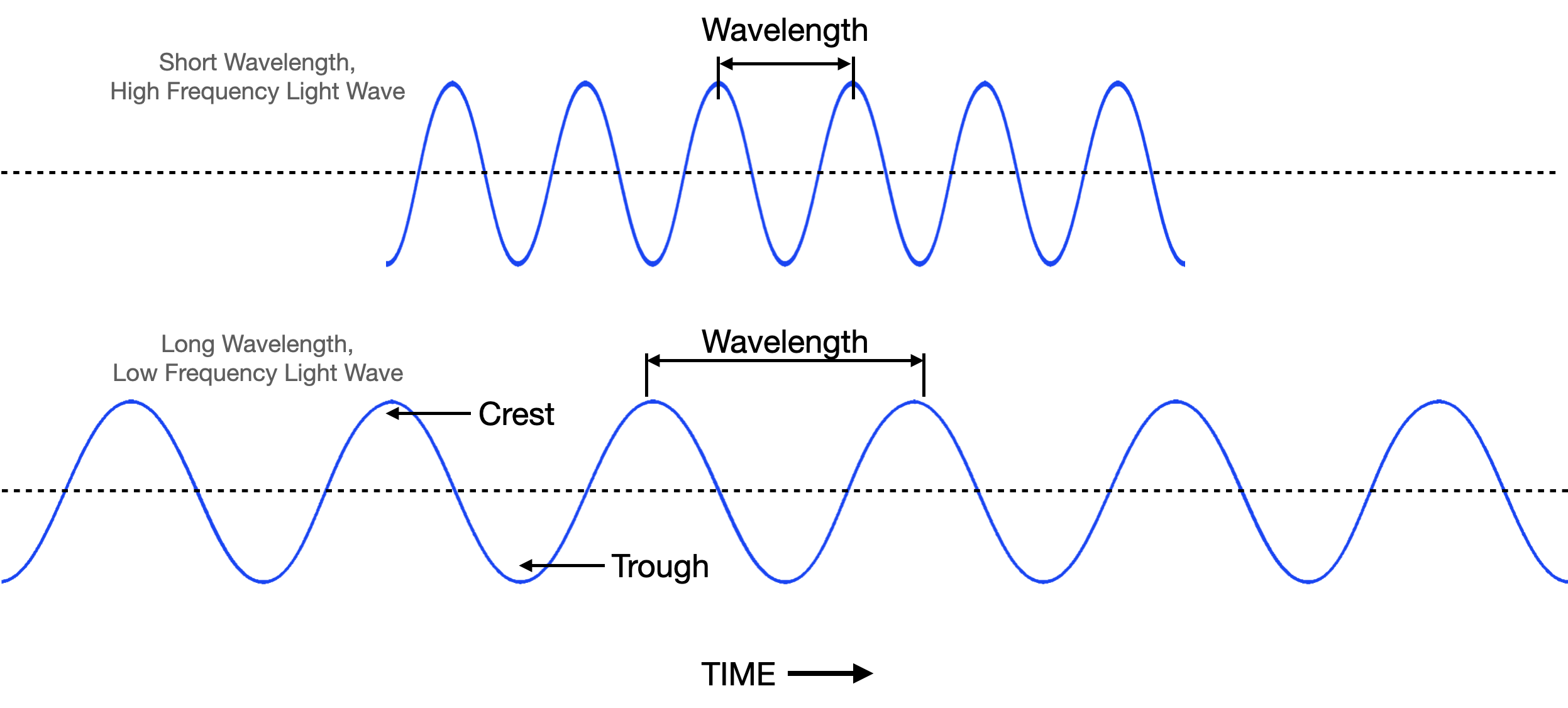
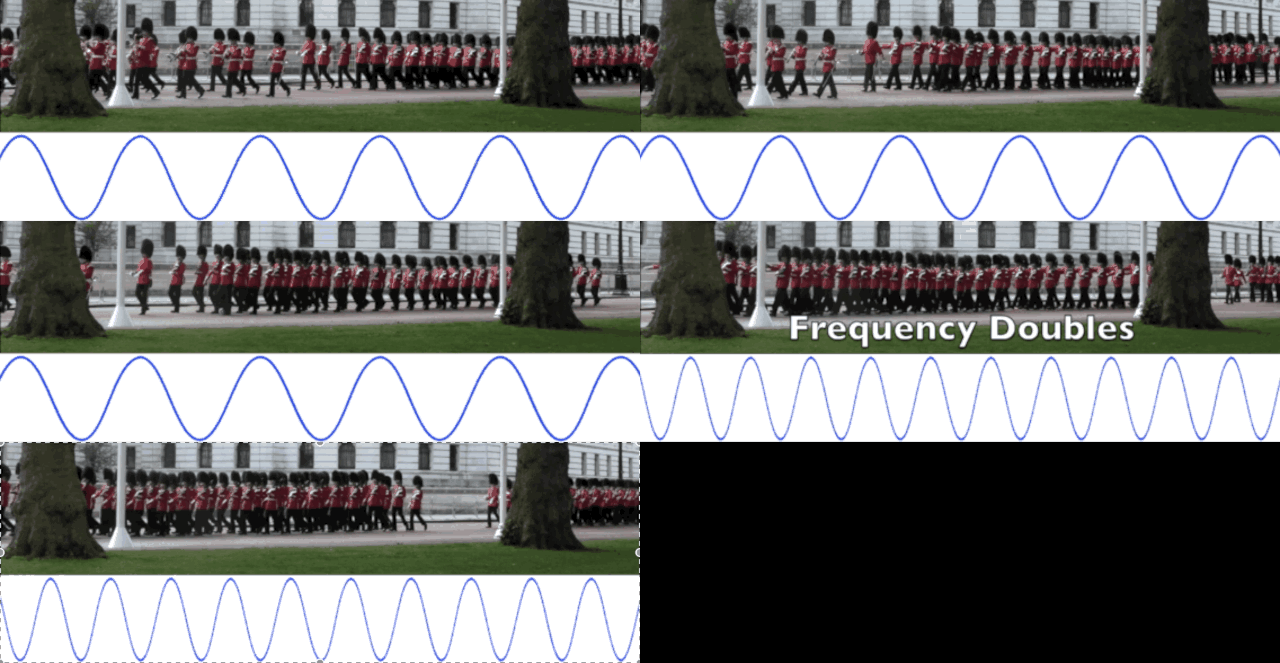
For example, the two light waves shown above each possess six crests and six troughs. The top wave possesses a wavelength that is one-half the wavelength of the bottom wave. Since the speed of light, is a constant, in the time it takes all the crests of the first wave to pass a stationary point, only three crests of the second will pass. The frequency of the crests of the first wave is greater than the frequency of the crests of the second wave.
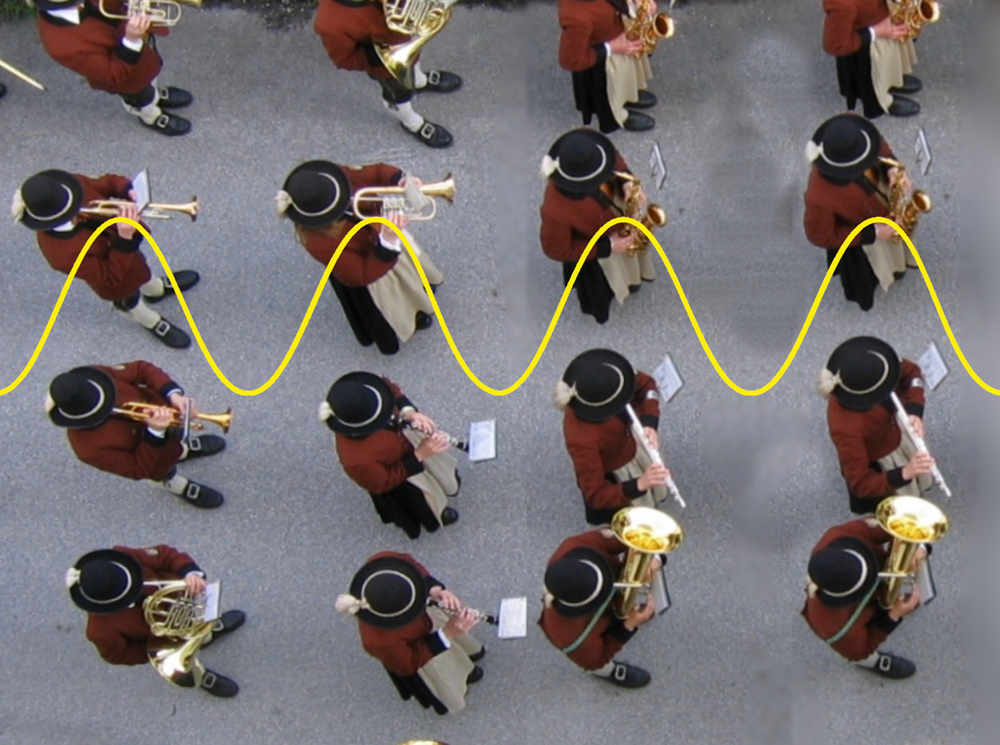
A useful analogy to describe light waves is that of two marching bands passing a spectator as they march down the street. In the first band, the rows of musicians are spaced two meters apart and in the second, the rows of musicians are spaced four meters apart. If the bands are both marching at the same speed, more rows of the first band will pass the spectator than the second band during any set time period. Stated differently, the frequency of rows passing the spectator is greater when the spacing between rows is smaller. The analogy can be directly related to light waves by assuming that each row is a crest, the distance between rows is the wavelength and the number of rows passing the spectator during a certain time period is the frequency.
The Visible Spectrum: Color
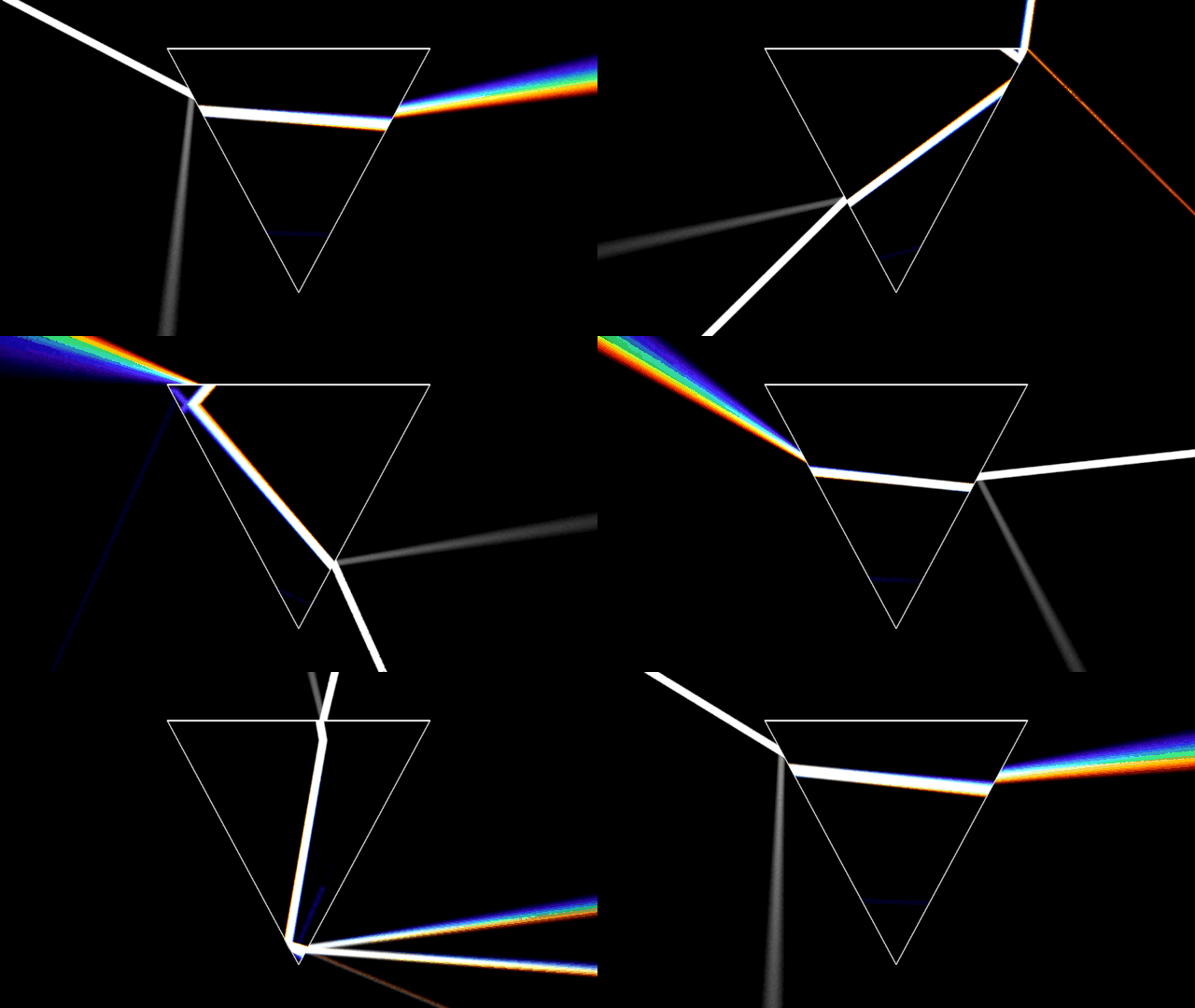 Visible light is the most familiar form of light energy and the Sun is the most familiar source of visible light. Visible light is perceived by the human eye as “white” light. However, visible or white light can be separated by, for example, a glass prism into a continuous spectrum of waves of different wavelengths. As white light passes through a prism, each wavelength is bent or redirected in the refraction of the light. Shorter wavelengths are refracted by a greater amount than longer wavelengths. This difference in refraction results in different angles of refraction for each wave as they exit the prism. The different angles of refraction result in the separation of white light into a continuous spectrum of light waves of different colors called the Visible Spectrum.
The six most obvious colors of the Visible Spectrum are red, orange, yellow, green, blue, and violet. Using the acronym, ROY G. BIV, their order is easily remembered. It should be noted that the Visible Spectrum seamlessly changes from one color to the next as the wavelength of each light wave changes incrementally. The colors that are typically identified in the Visible Spectrum are simply those that are most easily recognized as discrete colors.
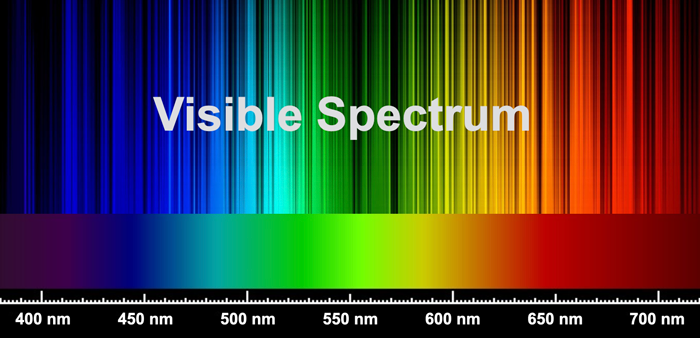
The colors of the Visible Spectrum correspond to individual light waves of differing wavelengths. As shown in the Figure above, the Visible Spectrum extends from violet light with a wavelength of 0.00004 cm (400 nm) to red light with a wavelength of 0.00007 cm (700 nm). As discussed above, as the wavelength changes, the frequency changes. For example, violet light with a wavelength of 0.00004 cm possesses a frequency that is higher than the frequency of red light with a frequency of 0.00007 cm.
Light and Optic: Investigation 4 - Mathematics Concepts
Prelab
- frequency
- greater than/less than/equal to
- continuum scale in cm
- decimals
Lab
- distance in cm and meters
Postlab
- least to greatest
- frequency

Light and Optics: Investigation 4 - Procedural Tools

Light and Optics: Investigation 4 - Cognitive Tools

Light and Optics:
Investigation 4 Quiz

