
Teacher Portal:
Inheritance and Adaptations
Investigation 3 – Lab
 BE PREPARED
| Class materials |
|
| Pair materials: |
|
| Individual Materials |
|
Teacher Preparation
1. Assemble materials at a distribution point.
2. Divide the class into cooperative pairs.
Instruction
Direct each student pair to obtain the following necessary materials from the distribution point: 2 crayons or colored pencils of different colors, 1 pair of gram cubes of one color and 1 pair of gram cubes of a different color.
GET FOCUSED
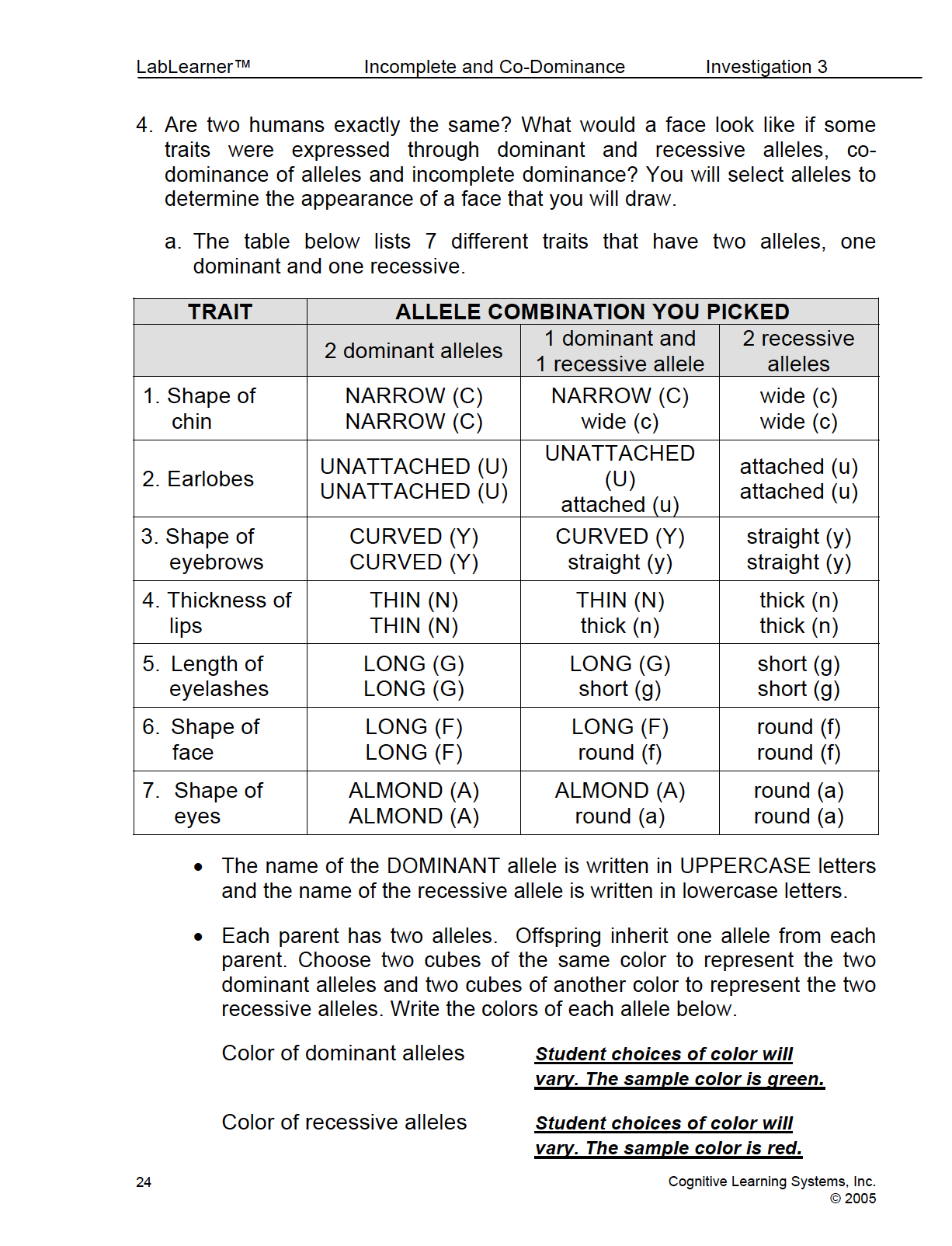
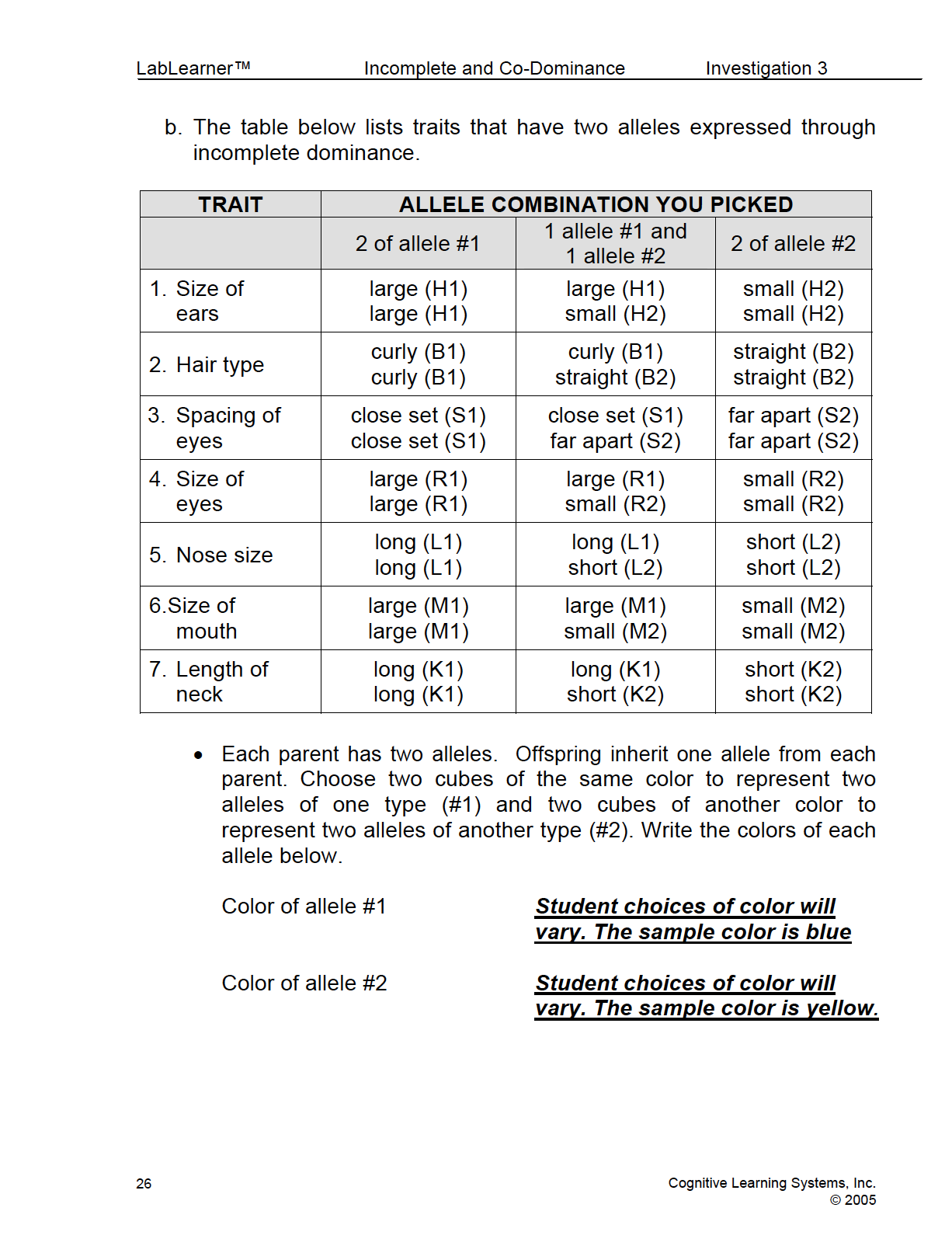
During this investigation, students will examine fifteen traits. Seven of the traits are facial traits expressed through a dominant and a recessive allele. Seven other facial traits are expressed through incomplete dominance. One additional trait for blood type is expressed through the co-dominance of two different alleles.
Note: The inheritance of some of the traits included in this investigation is more complex than the way in which is presented in this CELL. The modes of inheritance for some of the traits are modeled in a more simplified manner in order to promote student understanding of the differences between complete (dominant/recessive), incomplete, and co-dominant modes of inheritance.
INVESTIGATE
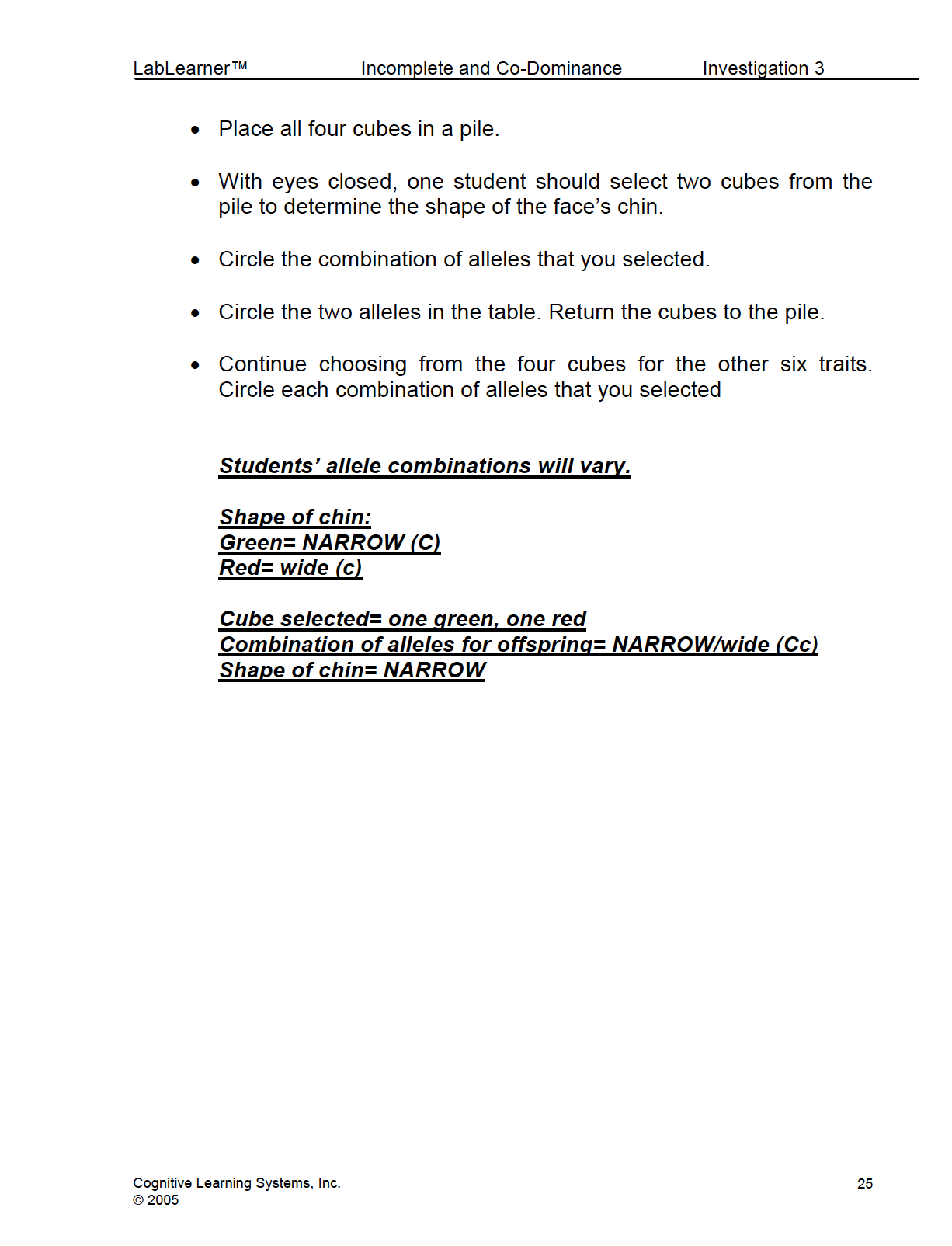
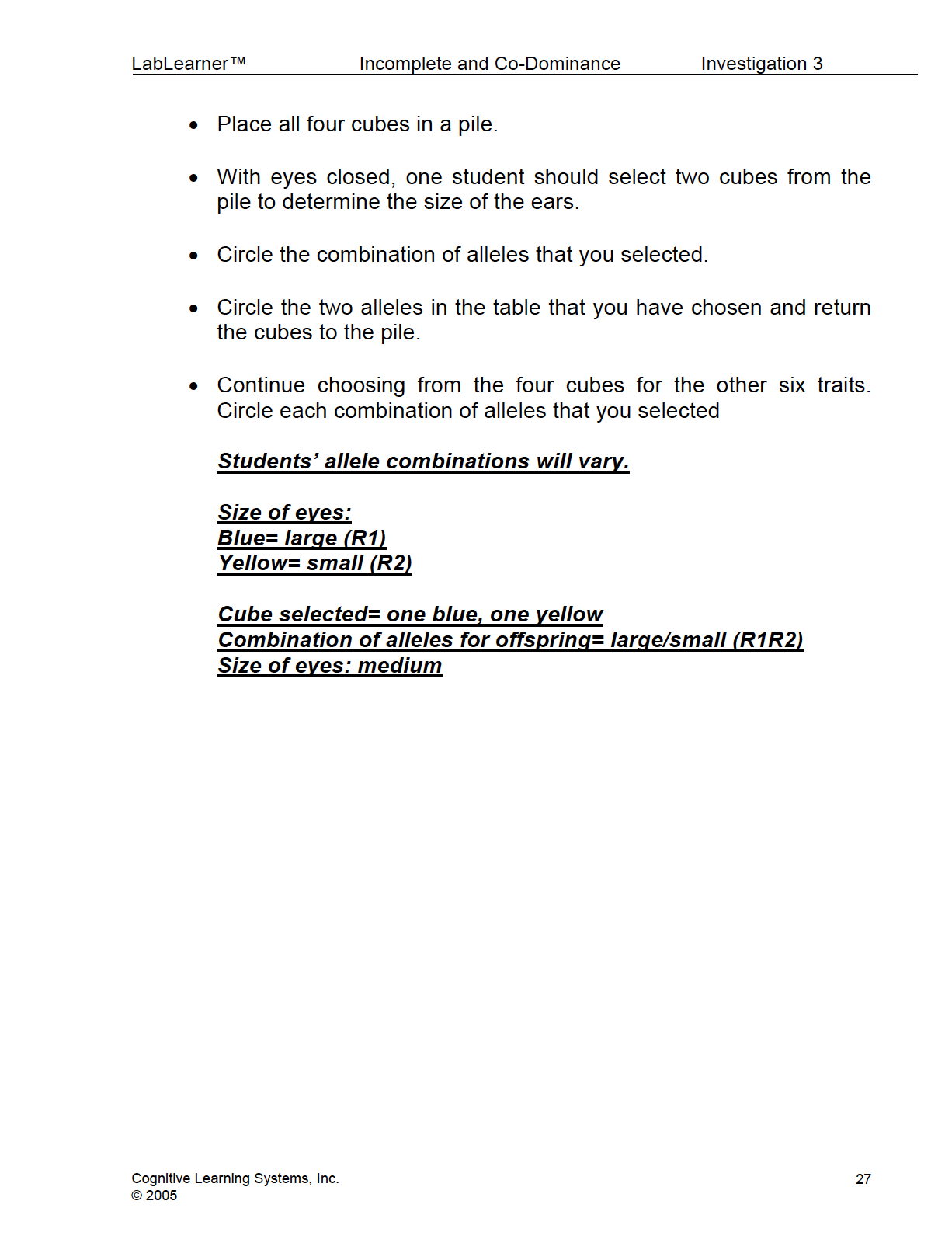
- In the case of the dominant and recessive alleles and alleles inherited through incomplete dominance, student pairs will randomly select which alleles are inherited from each parent and how the expression of the combination of alleles determines the seven facial traits.
- In the case of the expression of alleles due to co-dominance, student pairs will randomly select which alleles are inherited from each parent and how the alleles are expressed to determine blood type.
- Students will then use the alleles that were selected to draw a picture of a human face and to determine the blood type of their individual. As students perform their experiment they should consider the following questions:
Can two humans look exactly the same?
What would a face look like if some traits were expressed through dominant and recessive alleles, codominance of alleles, and incomplete dominance?
- Once students have selected the allele pairs for each trait, they will draw a face with the representative traits expressed. Students should select whether they are drawing a boy or a girl in Problem 4d and should then draw their representation of a human face in the box in Problem 4e. Student drawings will vary depending upon the traits chosen.
- Based on their selection of alleles for blood type, students should record in Problem 4f the blood type of the individual.
Upon completion of the experiment, permit enough time to clean up the lab and return materials to the distribution center.
KEYS
CLEAN UP
Let students know your expectations for clean-up. Ask them to clean up.