
Teacher Portal:
Inheritance and Adaptations
Investigation 1 – PreLab
 MINDSET
This Investigation is designed to:
- provide students with the framework for understanding how genetic information is organized in a cell.
- help students identify that all genetic information is found in the DNA that is contained in a cell’s nucleus.
- give students an opportunity to break open the nucleus of a cell and extract the DNA it contains.
- encourage students to accurately and precisely follow the steps in an experimental procedure.
SCIENTIST’S GLOSSARY
- Cell: The smallest level of organization found in living things.
- Chromosome: Structures of DNA and protein found in the nucleus of cells; where a gene is located.
- DNA: Deoxyribonucleic acid. DNA carries genetic information in cells.
- Genetics: The study of how characteristics are passed from parents to offspring.
- Gene: A small portion of DNA that carries specific genetic information. Genetics: The study of how characteristics are passed from parents to offspring.
- Tissue: A group of cells with similar functions that join together to form larger groups.
- Proteins: Large biological molecules that control almost all functions of the cell.
BE PREPARED
Watch the Investigation 1 Teacher Video and Student Video below to prepare for the PreLab.
SET FOR SUCCESS
- Tell students that they are about to begin the Inheritance and Adaptation CELL.
- Ask students to share the kinds of things they might learn in these Investigations.
Begin the PreLab Concept Slides to start students on their learning journey. Then watch the Pre-Lab Student Video as a class.
NAVIGATE IT
Once the slide presentation is launched
- use your left and right arrows to advance or go back in the slide presentation, and
- hover your mouse over the left edge of the presentation to get a view of the thumbnails for all the slides so that you can quickly move anywhere in the presentation.
- Click HERE to launch the slide presentation for the CELL.
SHARE IT
SLIDE INHERIT1-pre-1
This slide is the first in the Inheritance and Adaptations CELL.
______________________________________________
SLIDE INHERIT1-pre-2
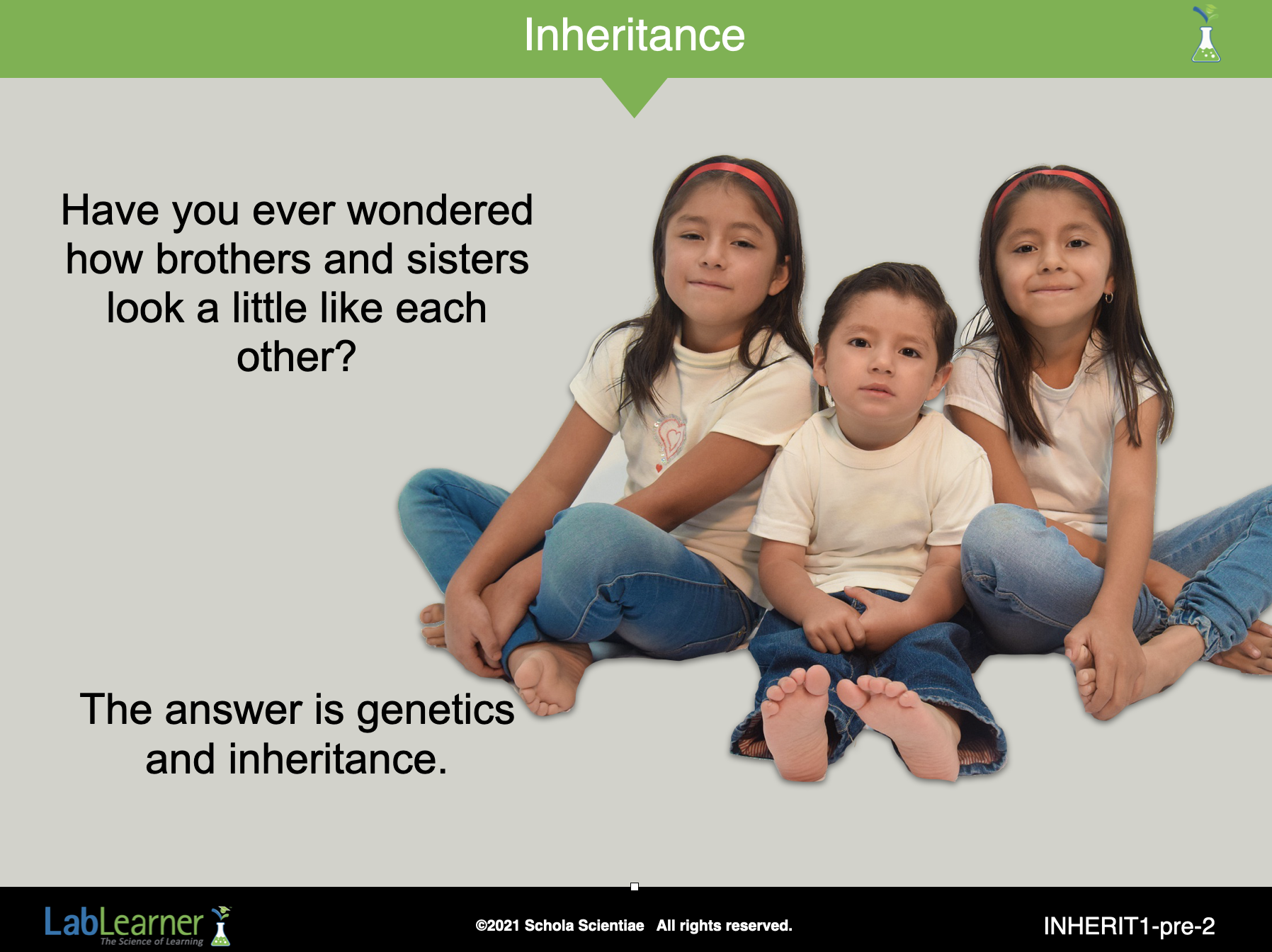
This slide simply poses the question, “Have you ever wondered how brothers and sisters look a little like each other?”
- Students may have their own stories about how a neighbor always confuses them with their sibling or times they have heard comments like, “You can sure tell they are related!”
- Explain to students that this CELL is designed to explore the science of genetics. During the Investigations, students will explore the genetic information that is contained in cells, determine how parents pass information to their offspring, and come to understand how changes in this information can affect individuals as well as entire populations over time.
Ask students: How is the human body organized? Can you give some examples of this organization? Students should indicate that the human body is organized into different systems. The circulatory, respiratory, and digestive systems are examples of this organization.
Ask students: How are the systems of the body organized? Can you give some examples of this organization? Students should indicate that the systems of the body are organized into different parts or organs. The heart, veins, and arteries are examples of organs that are organized into the circulatory system.
______________________________________________
SLIDE INHERIT1-pre-3
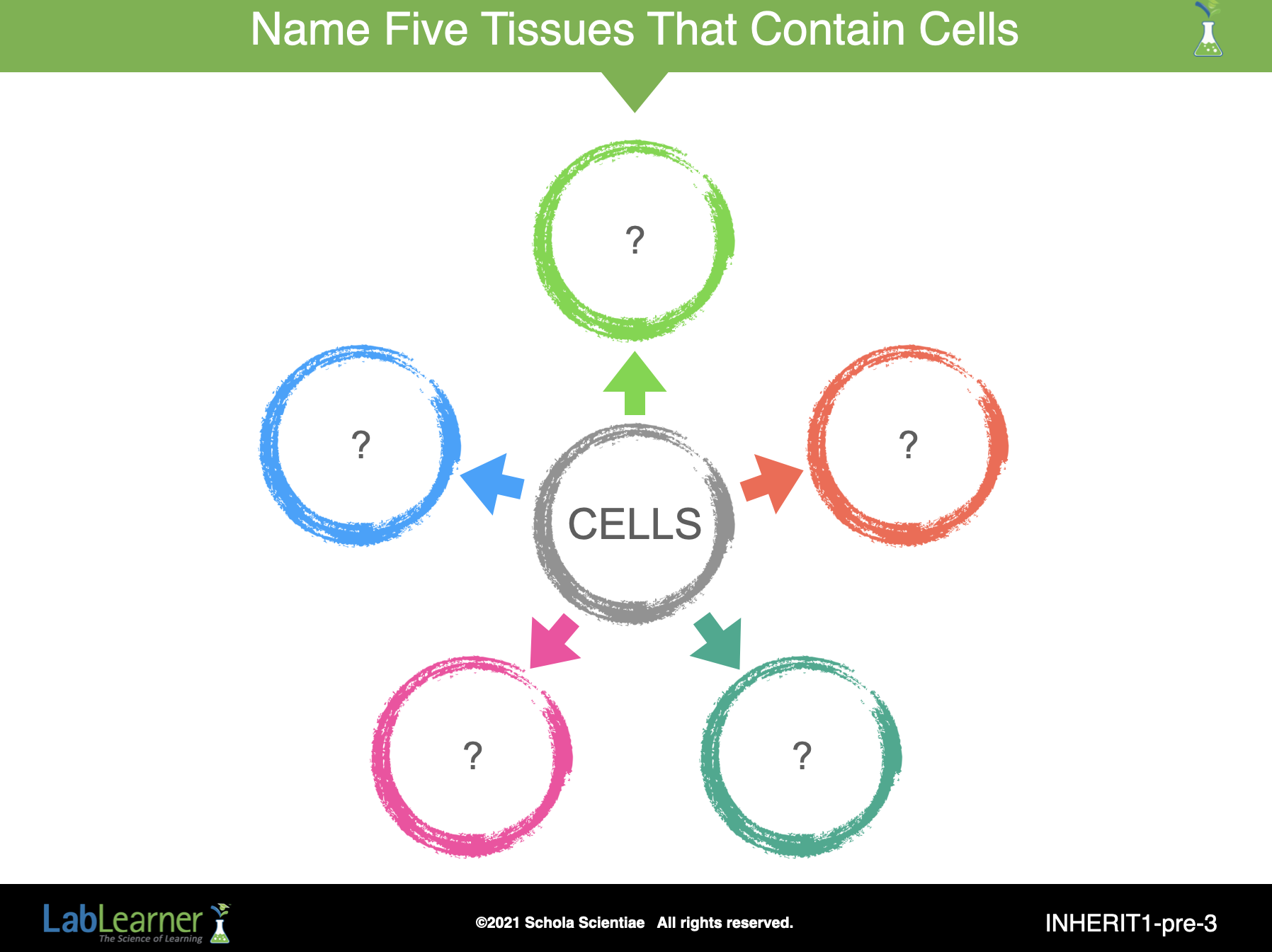
This slide can help direct a discussion about tissues and cells. Explain to students that smaller parts (cells) join together to create larger parts (tissues, organs, systems).
- Ask students to locate Problem1 on their Scientist Data Record.
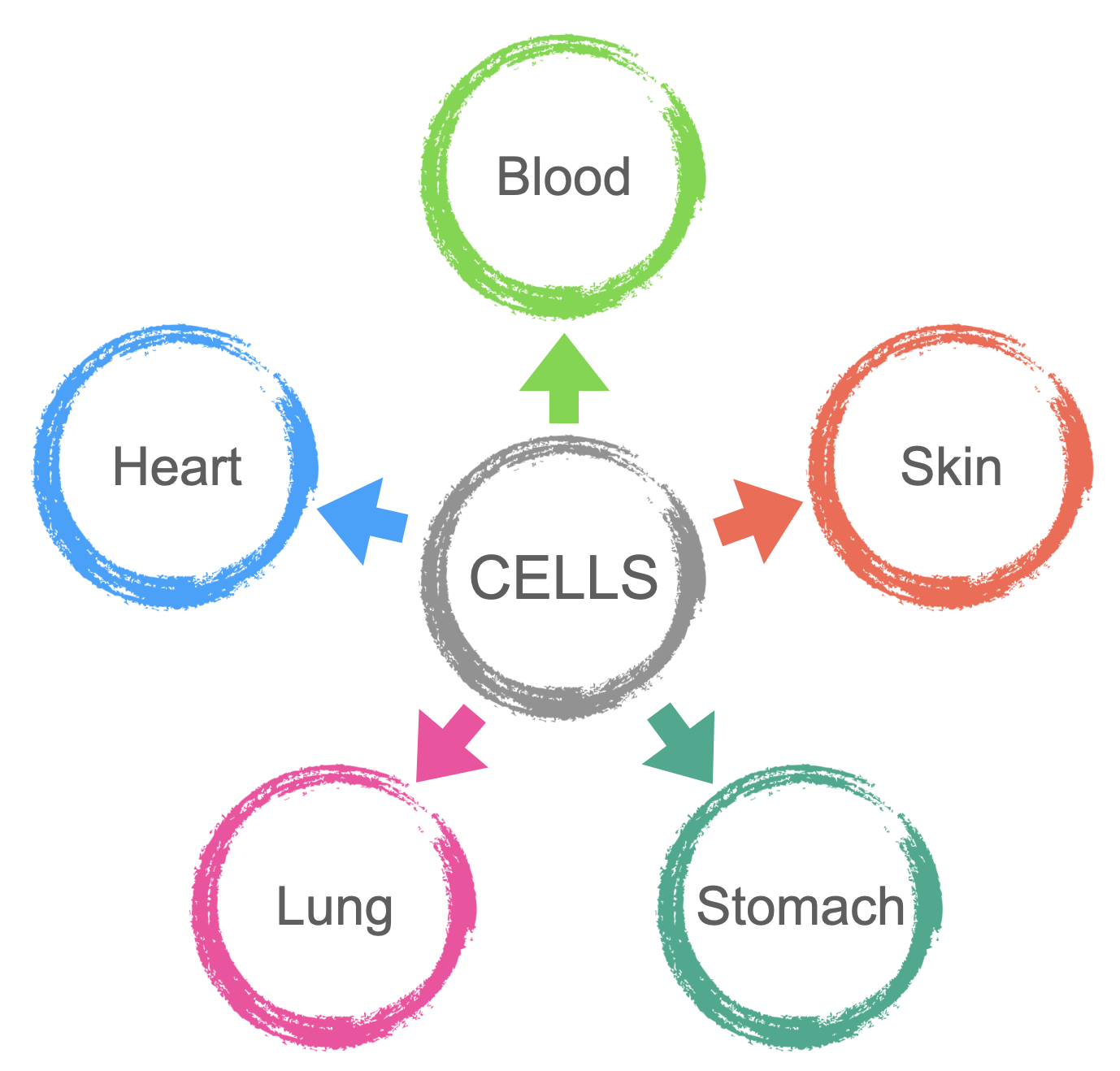
- Explain that problem 1 shows a simple concept map. The concept map shows the word “cells” in the center.
- Ask students to list five different tissues found in the human body that are made up of many cells.
- Allow several student volunteers to share their answers with the class.
- An example of a filled-in chart is shown below.
______________________________________________
SLIDE INHERIT1-pre-4
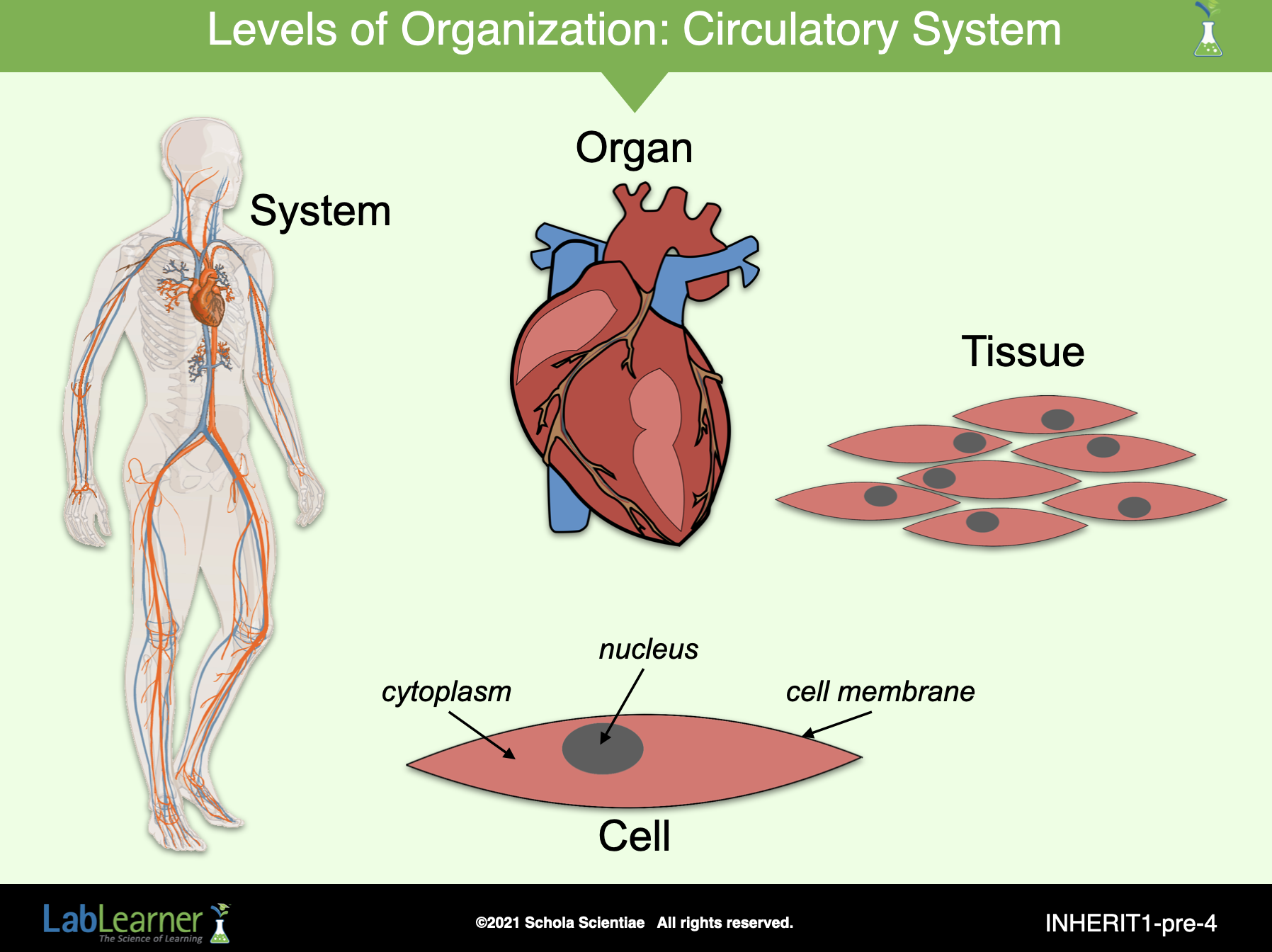
This slide shows the organizational hierarchy of the circulatory system.
- Point out the arteries, veins, atria, and ventricles of the heart. If necessary, write these terms on the board.
- Point out the nucleus, membrane, and cytoplasm of the cells. If necessary, write these terms on the board.
- Direct students to copy the heart, tissue, and individual cells from this slide to Problem 2 in their Scientist Data Records.
______________________________________________
SLIDE INHERIT1-pre-5
Now, narrow the focus of the discussion by asking students to recall what they know about the organization of cells.
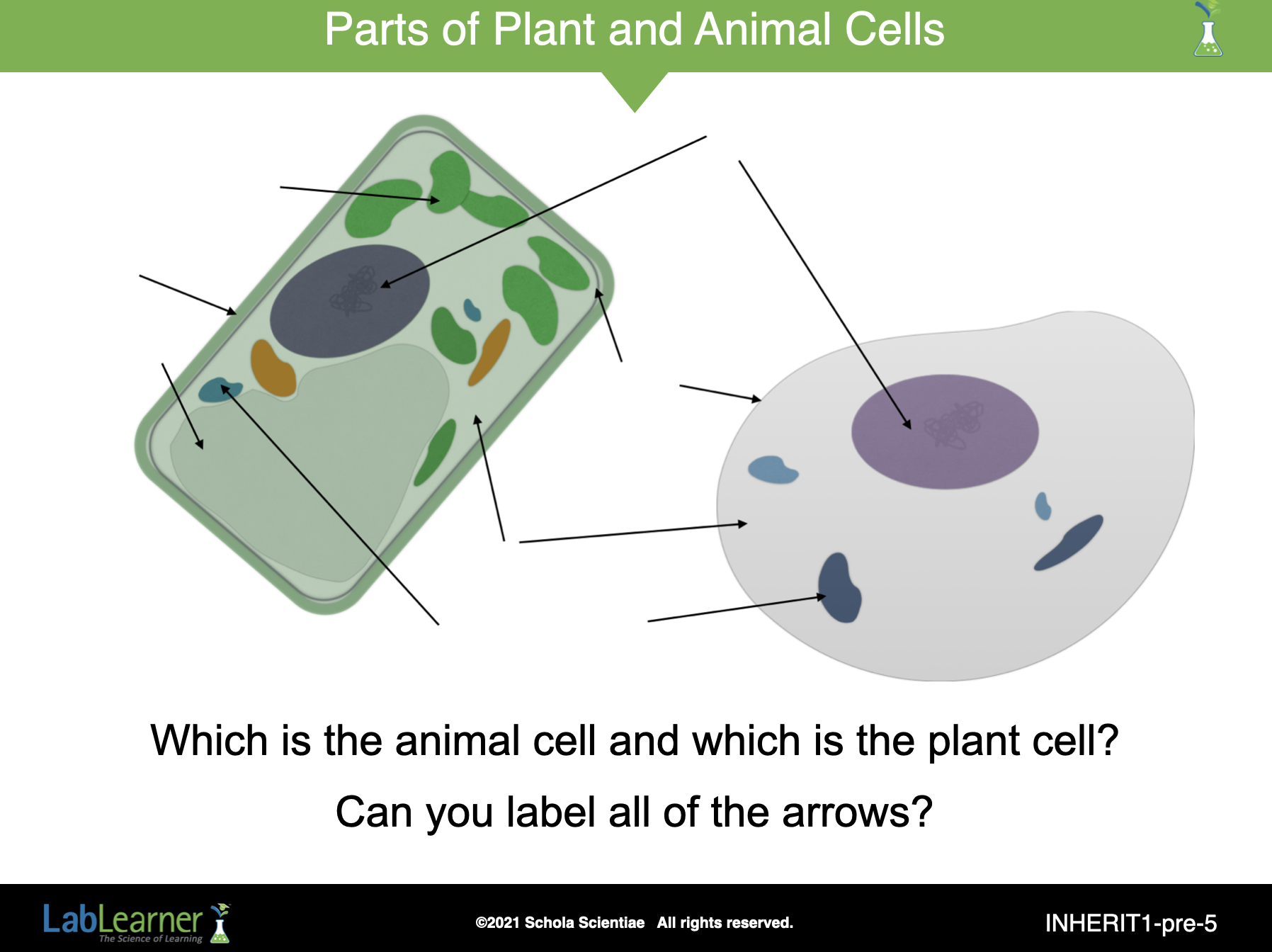
Direct students to draw the plant cell and the animal cell in Problems 3 and 4 of their Scientist Data Records.
Ask students: Which cell is a plant cell? Which cell is an animal cell? How can you tell which one is which? Students should indicate that the plant cell is on the top and the animal cell is on the bottom. The plant cell has a large vacuole, chloroplasts, and a cell wall.
Encourage student volunteers to name some of the parts of the animal cell and plant cell:
Write the names of these parts on the board and instruct students to label their drawings accordingly. If students did not know the components of the cells be sure to point out:
- the nucleus, mitochondria, cytoplasm and cell membrane on the animal cell.
- the vacuole, chloroplasts, mitochondria, cell membrane and cell wall in the plant cell.
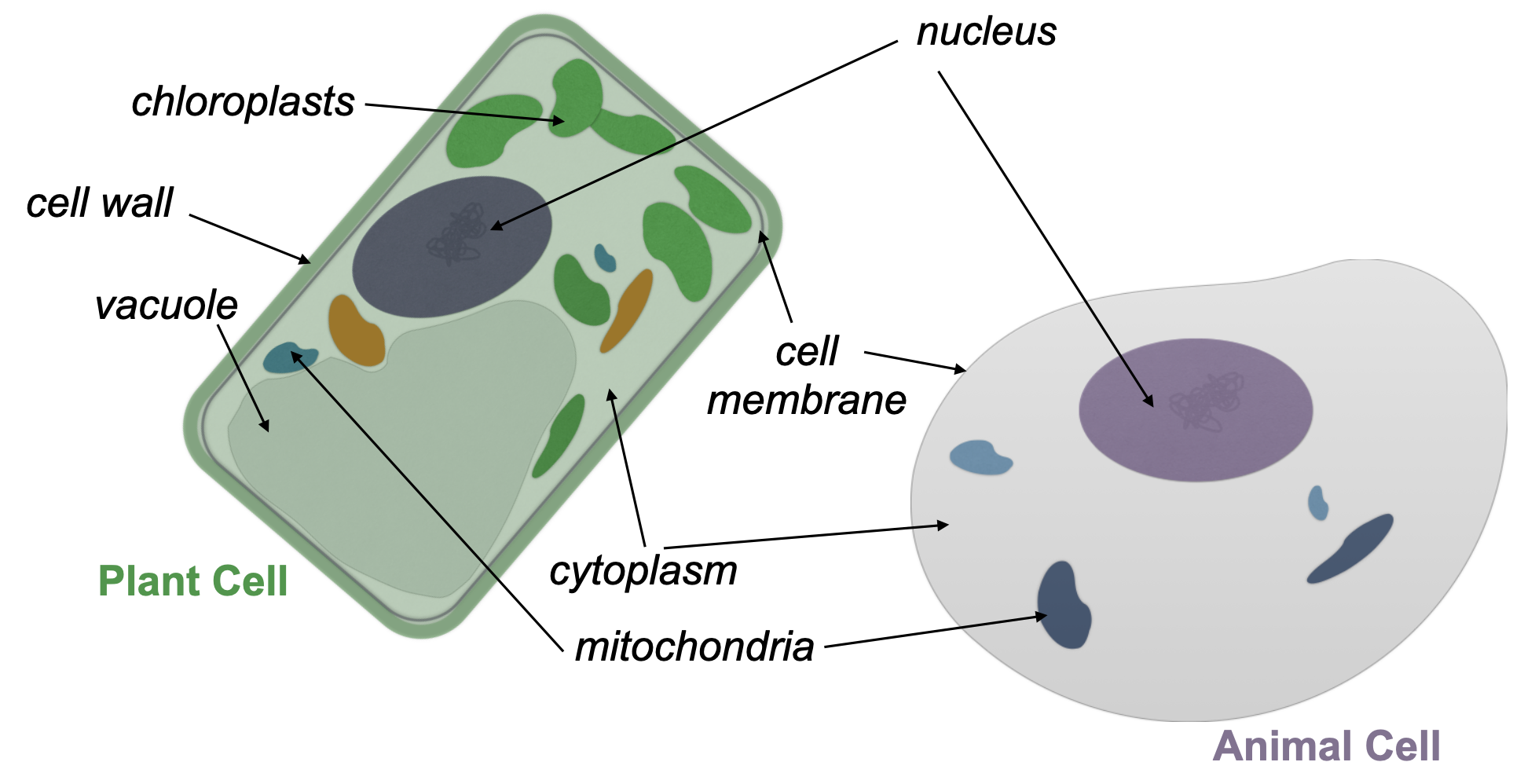
Ask students: Can you name some of the parts that animal cells and plant cells have in common? Can you name some of the parts that are different? Student answers may vary. Examples of cell parts that are similar in animal and plant cells are the cell membrane, nucleus, and cytoplasm. Plant cells contain a cell wall, chloroplasts, and a very large vacuole, but animal cells lack these parts.
Ask students: How do you think each type of cell gets its own unique characteristics? Student answers may vary. Encourage students to realize that each cell contains information that gives each cell its unique characteristics.
Ask students: Which part of the cell holds the information that gives each cell its unique characteristics? Student answers may vary. Encourage students to realize that the information found in each cell is contained inside the nucleus of that cell.
Ask students: Think about breaking open the nucleus of a cell. What do you think would be inside of the nucleus? Allow several student volunteers to share their answers. Student answers may vary.
______________________________________________
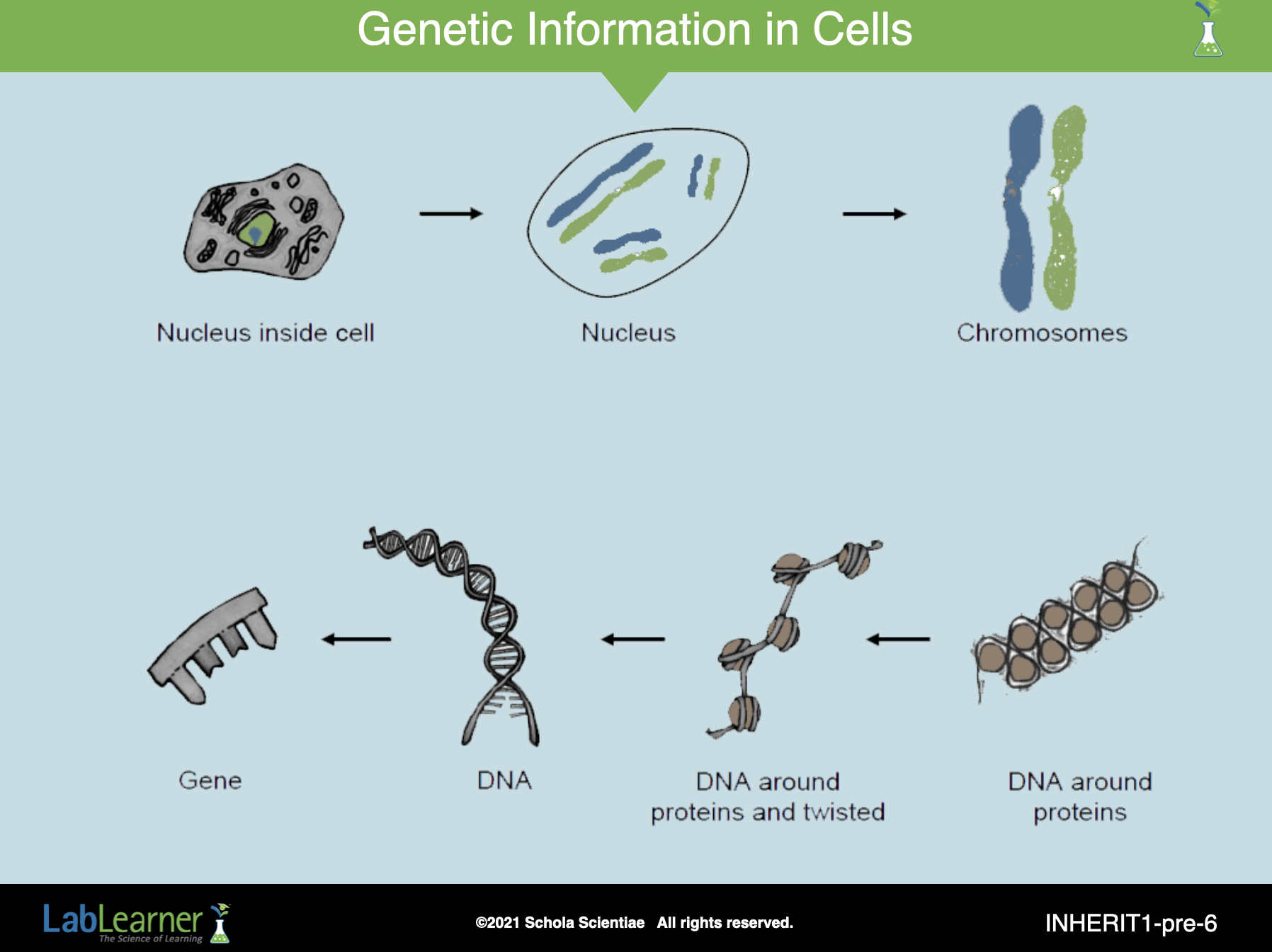
SLIDE INHERIT1-pre-6
Ask students: Think about breaking open the nucleus of a cell. What do you think would be inside of the nucleus? Allow several student volunteers to share their answers. Student answers may vary.
Direct students to follow the pathway of organization:
The nucleus of each cell contains several pairs of chromosomes. Each pair is different from the other pairs.
- Each chromosome is made up of DNA that is wrapped around a molecule called a protein.
- If the chromosomes are unwound or stretched out, you would find long strands of DNA.
- DNA (deoxyribonucleic acid) contains all of the genetic information for every cell.
- Each strand of DNA contains many genes.
______________________________________________
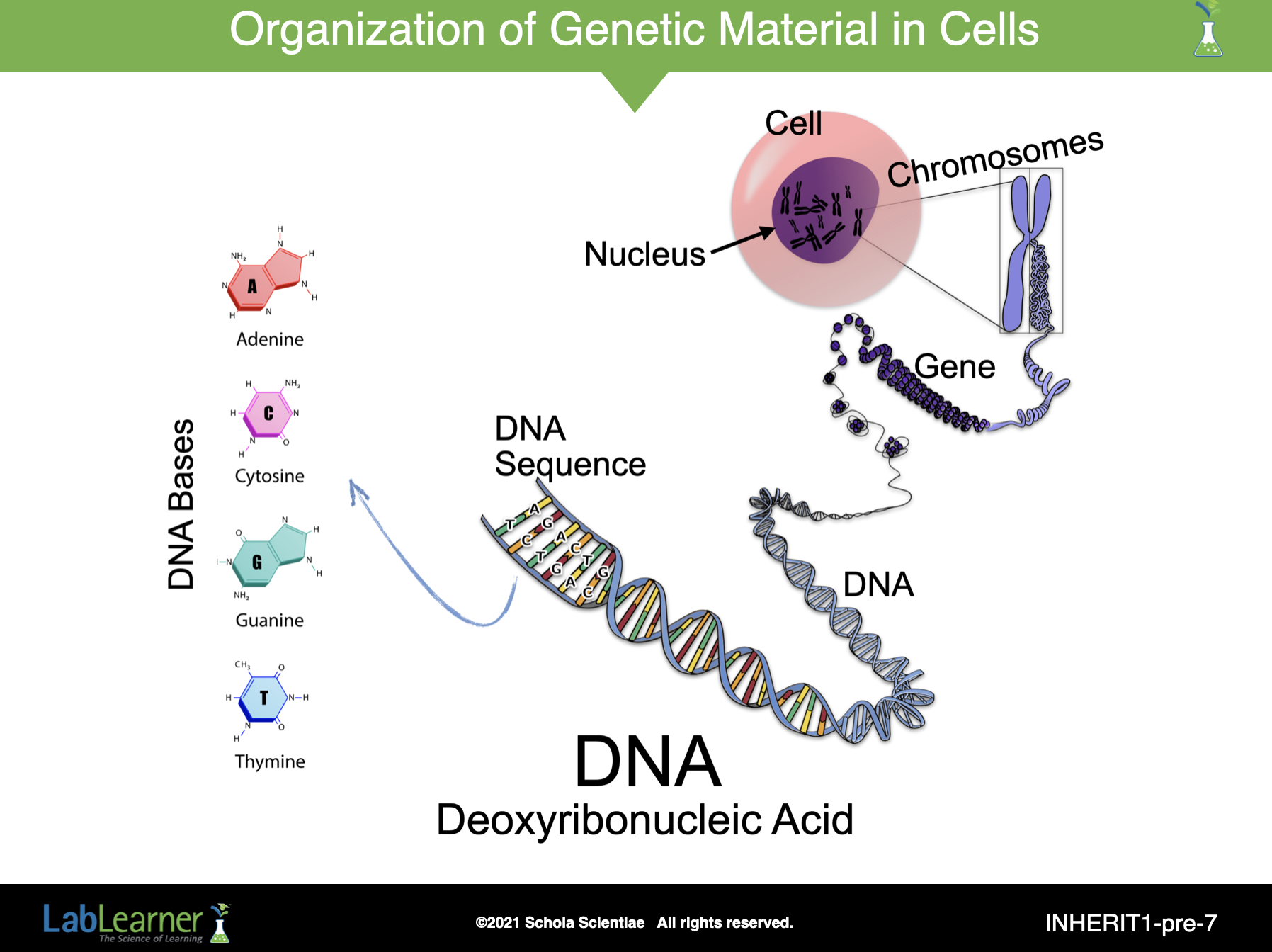
SLIDE INHERIT1-pre-7
This is another diagram of the organization of genes on the DNA molecule. The DNA is wrapped up with proteins. Removal of the proteins yields purified DNA.
Notice that the DNA molecule is long and stringy. Students may remember this graphic during Investigation 1 lab, as the isolated DNA from onion cells will likely have a stringy, viscous texture.
Finally, notice that the four bases that hold the DNA molecule are shown in this slide as well. The four bases in DNA are:
- Adenine
- Cytosine
- Guanine
- Thymine
______________________________________________
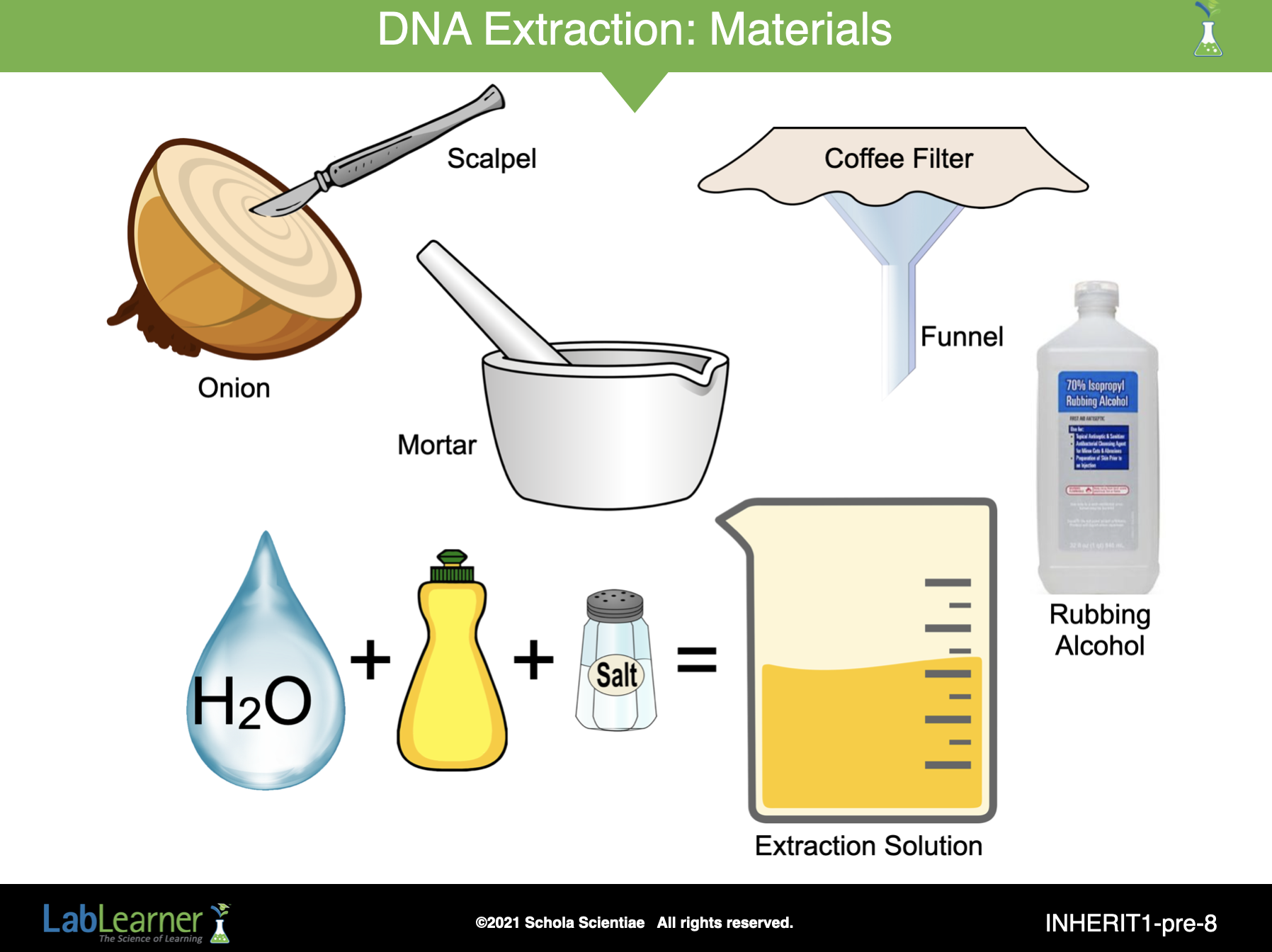
SLIDE INHERIT1-pre-8
In Investigation 1 lab, students will isolate DNA from an onion. This slide simply shows the major materials that will be used in the lab. In addition, a small amount of sand will be added to the mortar to help to grind and break the onion cells in the extraction solution.
The detergent in the extraction solution helps solubilize the cell membranes.
______________________________________________
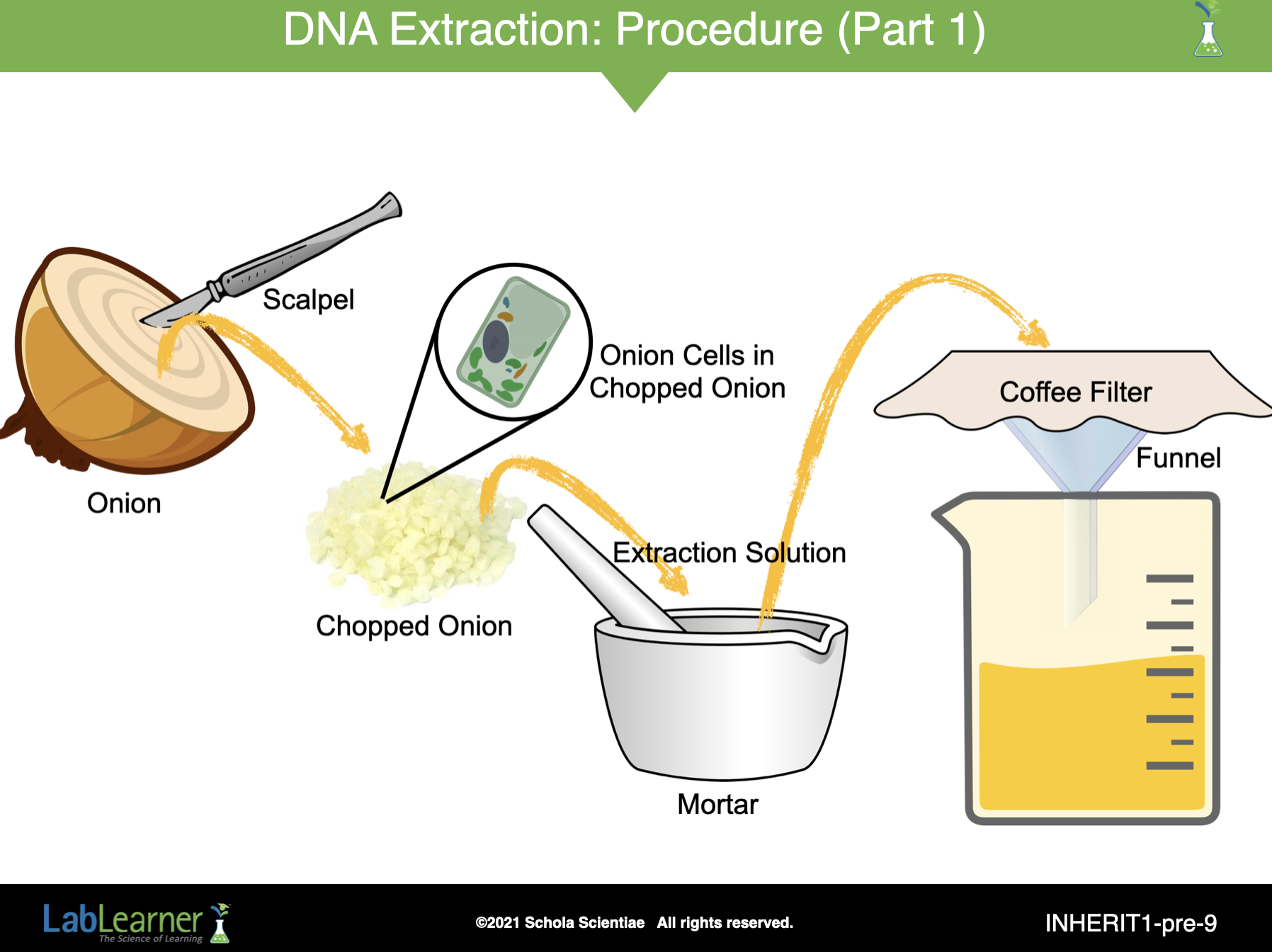
SLIDE INHERIT1-pre-9
DNA Extraction from Onion (First steps):
- The onion is chopped with a scalpel and transferred to a mortar and pestle with extraction solution.
- The mixture is ground with the addition of a small amount of sand.
- The ground suspension is transferred to a funnel cover with a coffee filter.
- The filtrate is used in the next step shown on the following slide.
______________________________________________
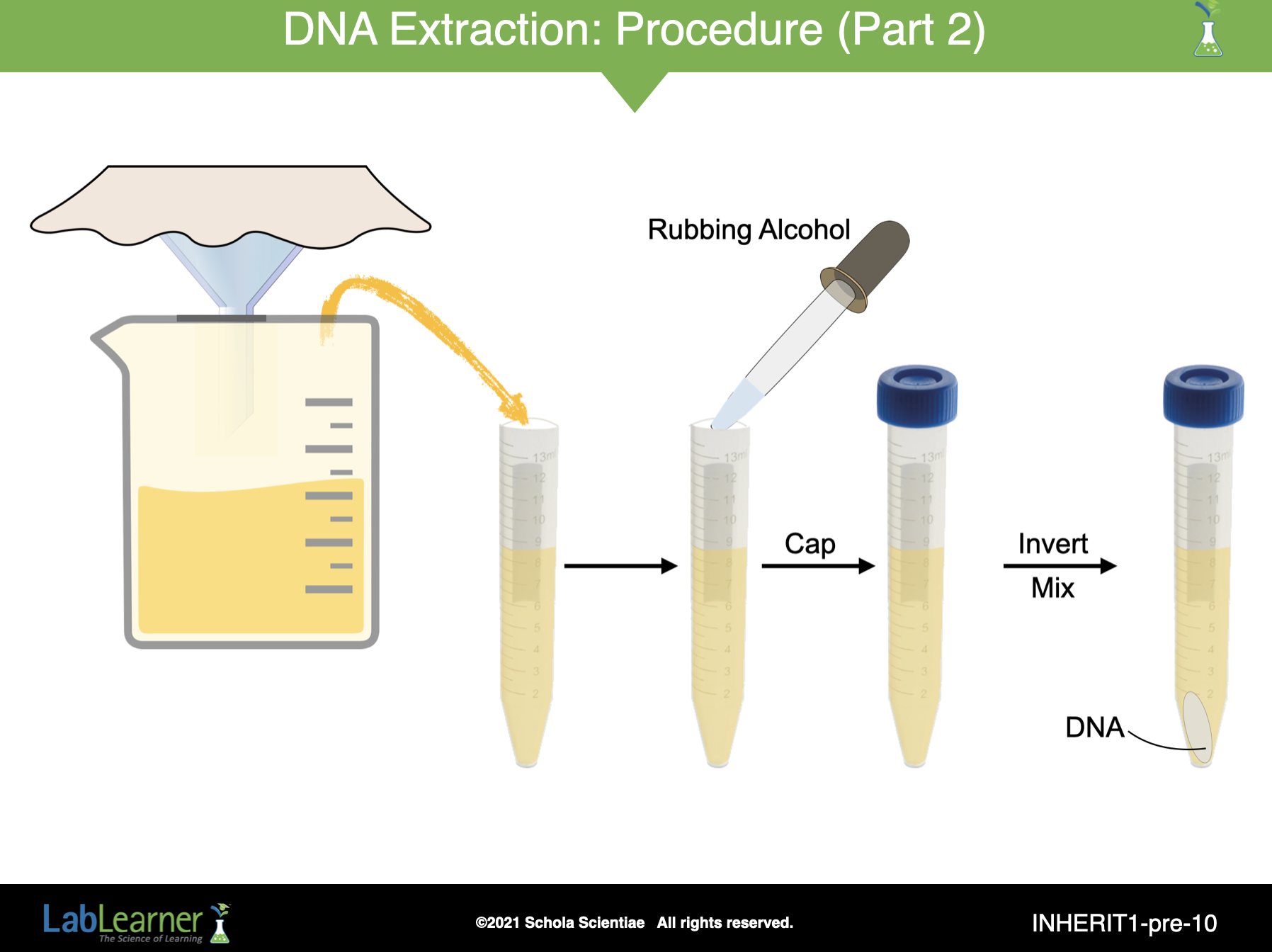
SLIDE INHERIT1-pre-10
DNA Extraction from Onion (next steps):
- The filtered suspension (filtrate) of ground onion in extraction solution is transferred to a 15 ml centrifuge (Falcon) tube.
- Rubbing alcohol (isopropanol) is added.
- The cap is tightly screwed on the centrifuge tube and the tube is then inverted several times to mix the contents.
- After mixing, the mixture is allowed to stand for a moment as whitish-color “globs” or strands of DNA become apparent.
______________________________________________
WATCH IT
Play the following Student Video in preparation for the lab. Discuss as necessary to answer student questions.