
Teacher Portal:
Investigating Heat
Investigation 4 – Lab
 BE PREPARED
| Class materials: |
|
| Group materials: |
|
| Individual Materials: |
|
Teacher Preparation
1. Cut five (5) pieces of string approximately 50 cm in length.
2. Tear five (5) pieces of plastic wrap, approximately 6 cm x 29.2 cm (or the width of the roll).
3. Fill the liter pitcher with water and allow the water to sit until it reaches room temperature (20 – 24°C).
4. Organize the required materials at a distribution point.
5. Separate the class into five cooperative groups.
Instruction
Direct each student group to obtain the following necessary materials from the distribution point: one (1) straw, one (1) stopwatch, one (1) metric ruler, three (3) thermometers, one (1) paper towel, one (1) 400 ml beaker, one (1) 50 cm piece of string, and one (1) piece of plastic wrap.
GET FOCUSED
- As students perform their lab experiments, they should keep the following questions in mind:
Why does the body perspire when it is overly warm?
Can we change the temperature of the air exhaled from our bodies?
INVESTIGATE
 Trial 1
During the PreLab, students discussed the body’s responses to temperature extremes. One of the body’s responses to heat is perspiration.
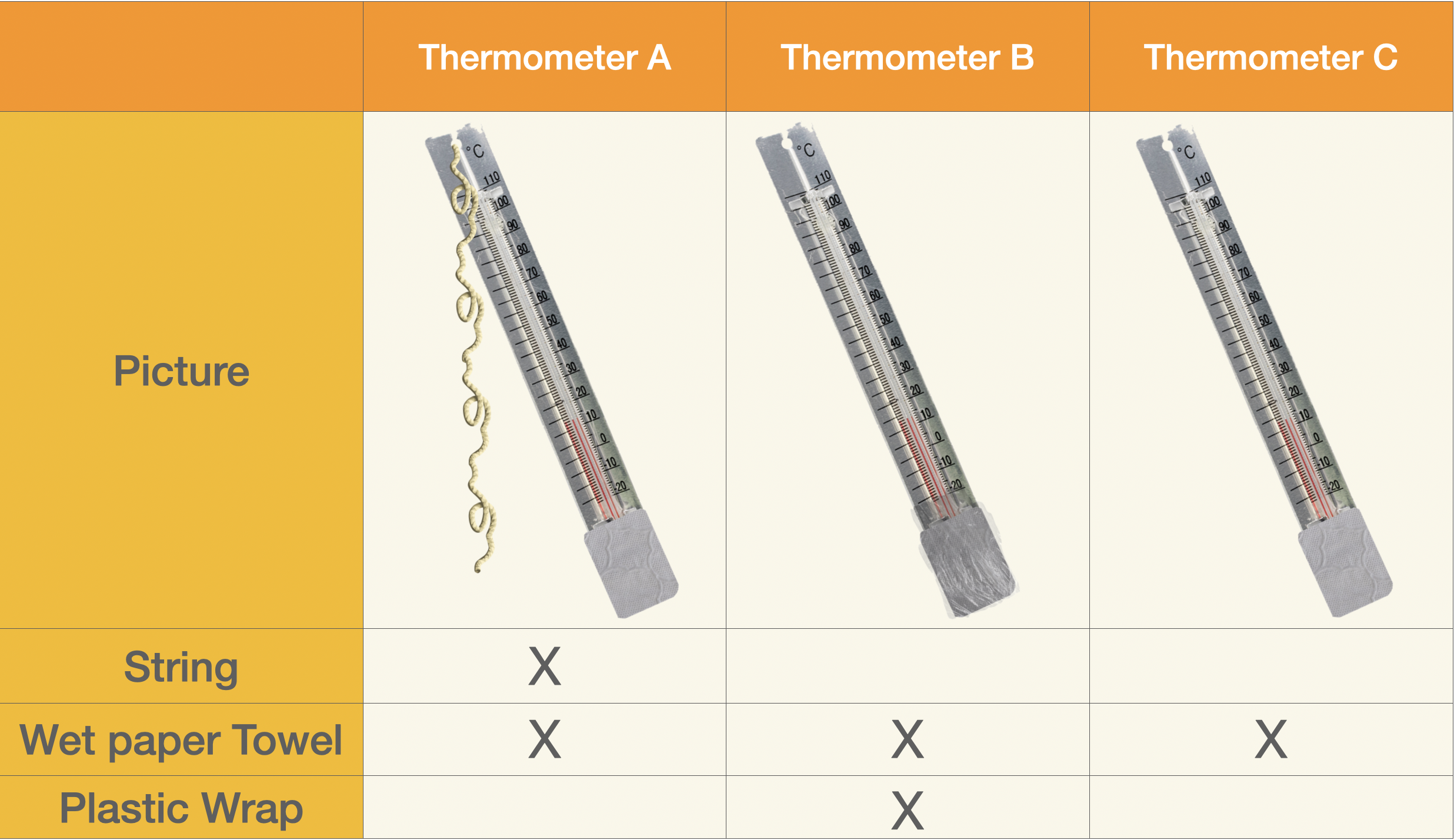
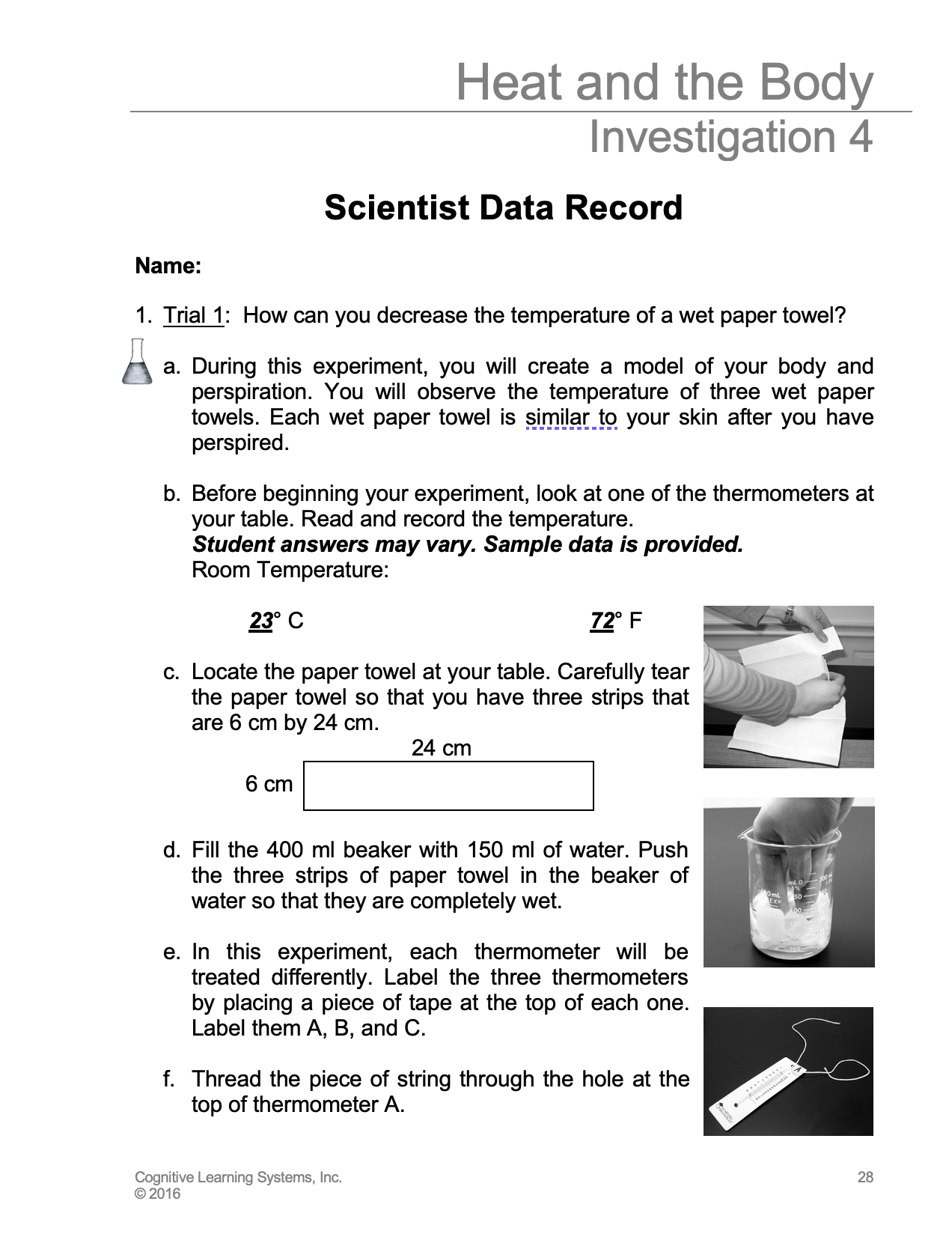
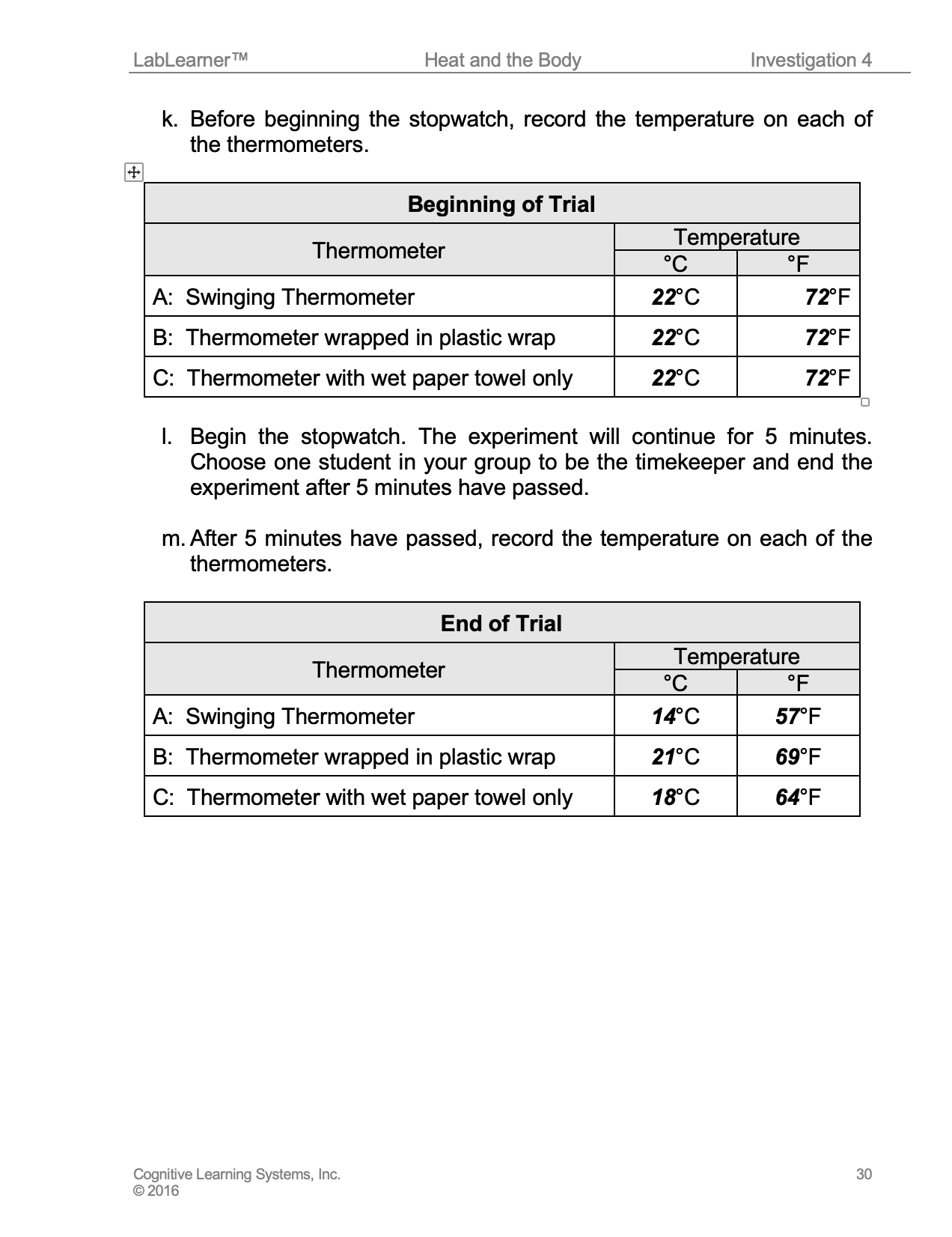
In this Trial, students will create a model to demonstrate how perspiration cools the body. They will perform three experiments simultaneously. In each experiment, a wet paper towel represents a person’s skin wet with perspiration. Students will wrap the strips of paper towel around the bulb of the thermometer and will determine changes in heat transfer by measuring changes in the temperature of the towel. In the model, the strips of paper towels should be approximately 6 cm by 24 cm. The uniform size of the paper towel ensures uniform thickness around the thermometer.
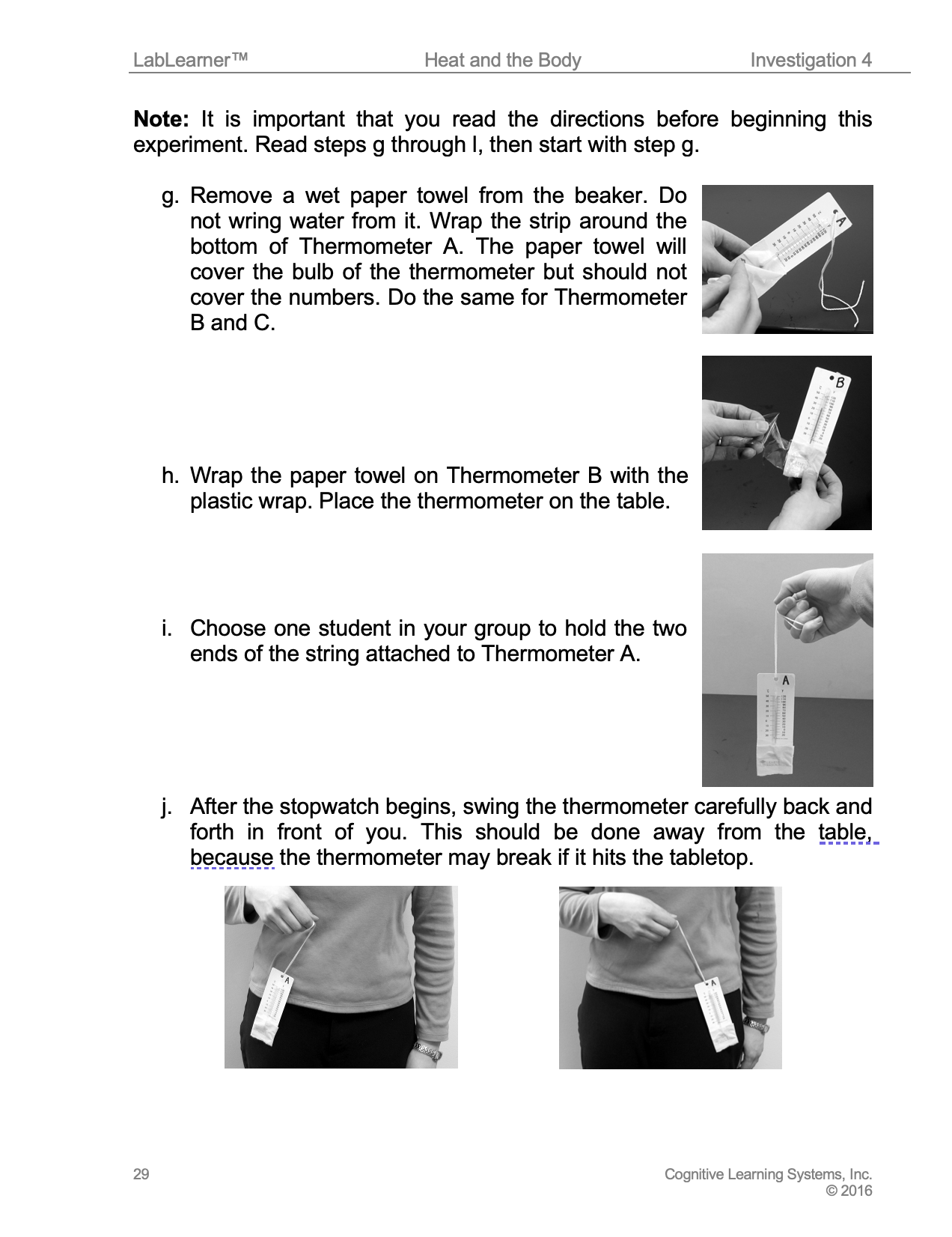
One paper towel will be wrapped around a thermometer labeled A. A piece of string will be attached to this thermometer and one student from each group will gently swing the thermometer, causing more rapid evaporation of the water on the paper towel.
NOTE: To ensure the safe performance of the experiment, students should swing the thermometer as if it were a pendulum, swinging it gently back and forth in front of their bodies. Students should not swing the thermometer over their heads or into other objects, as the thermometers will break if impacted greatly.
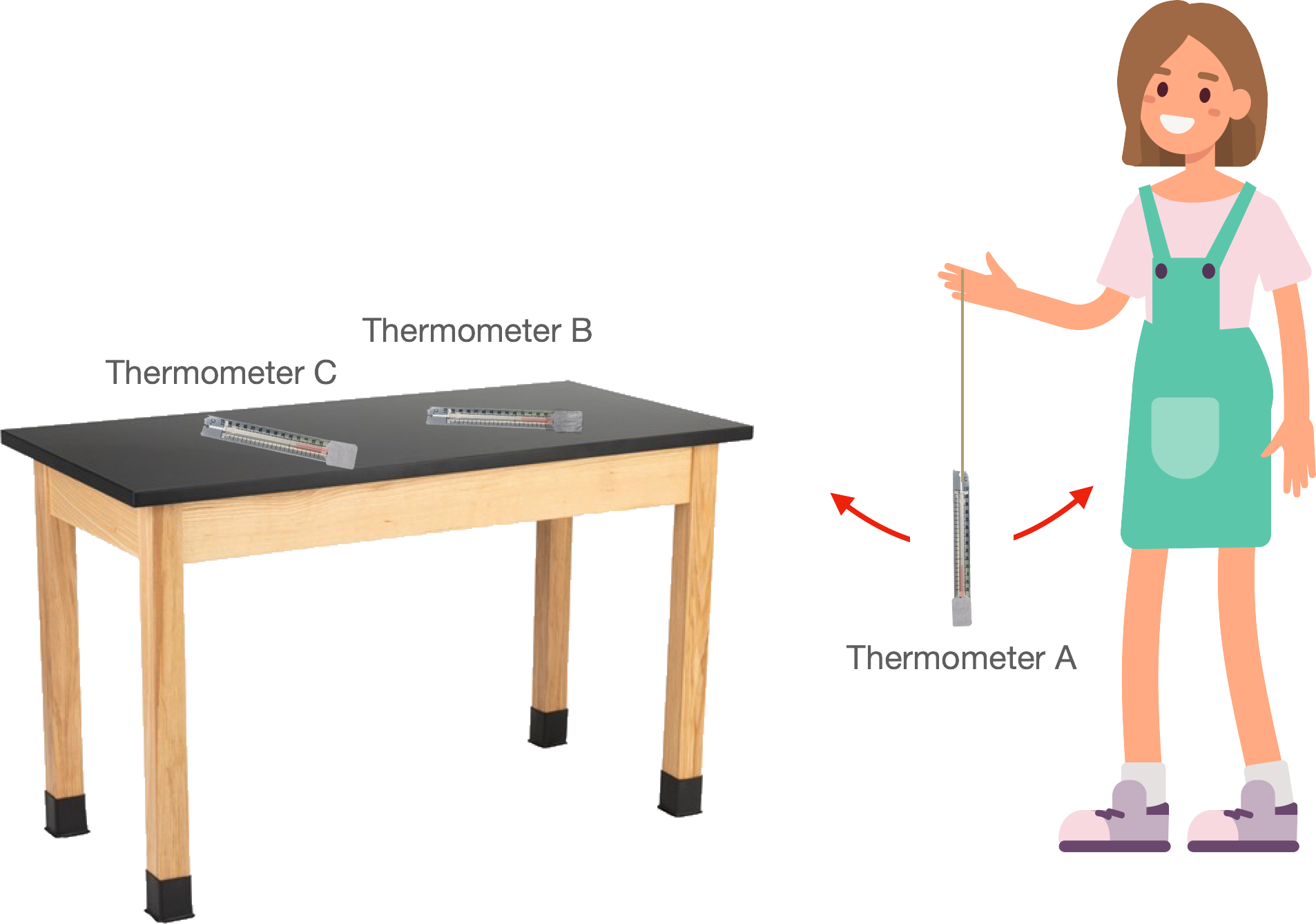
The paper towel wrapped around Thermometer B will be covered with plastic wrap. The plastic wrap will inhibit evaporation. Thermometer C will be wrapped with a paper towel and placed on the table. This thermometer will demonstrate evaporation at a moderate rate, not accelerated by waving or slowed by covering.
By performing this trial, students will answer the question:
How can you decrease the temperature of a wet paper towel?
Trial 2
During this Trial, students will continue to investigate the effect of evaporation on the body.
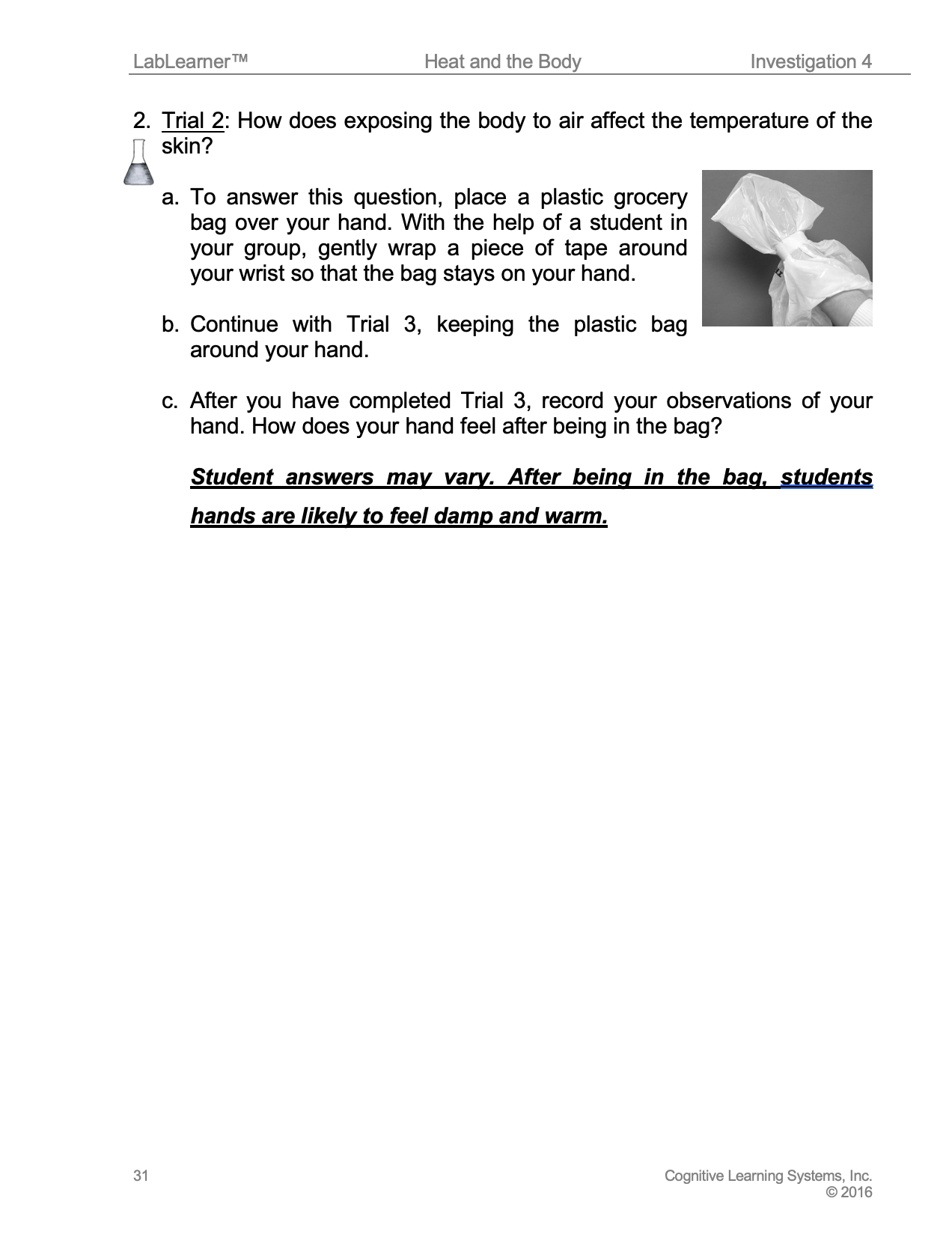
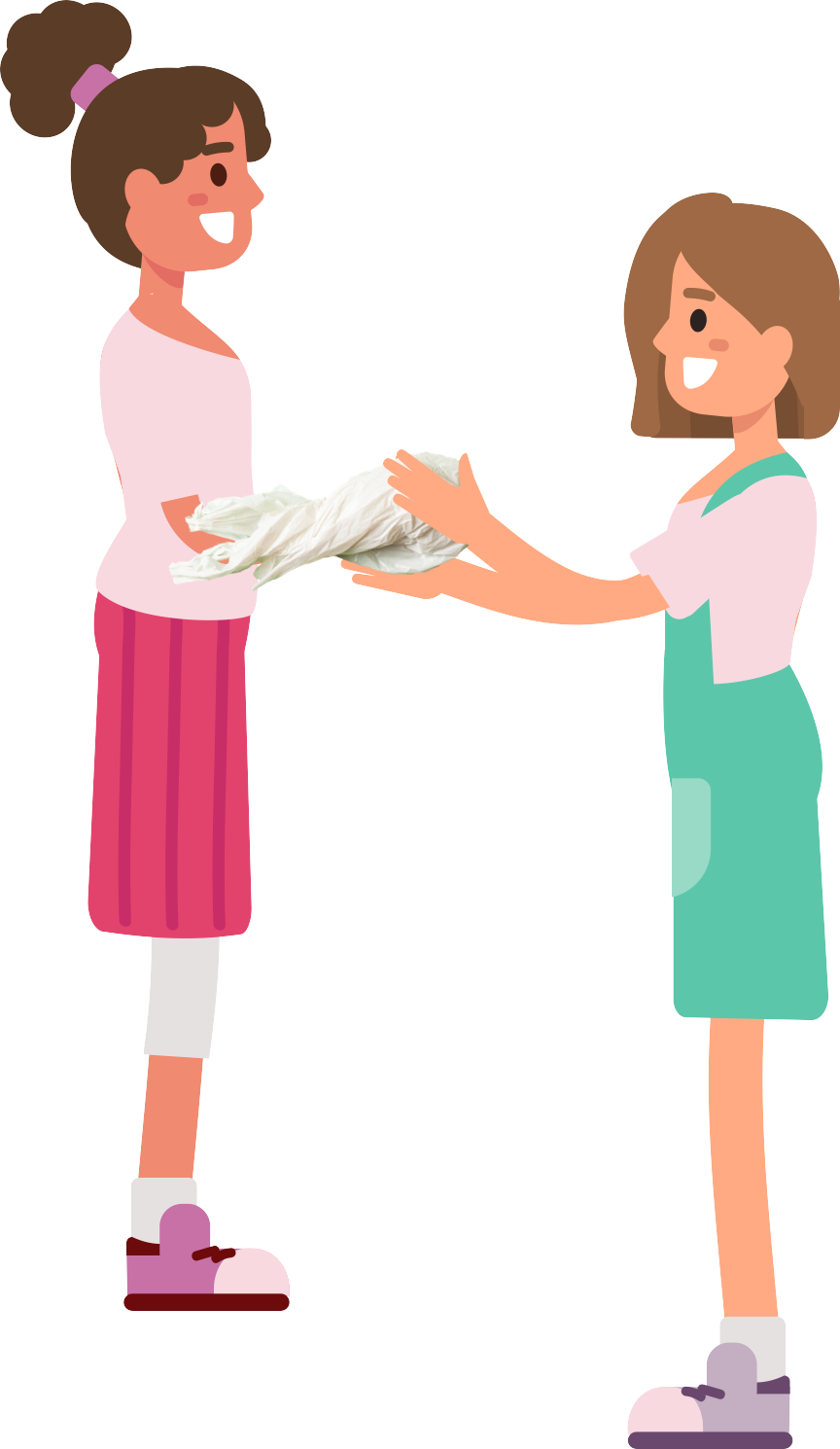 Students will place a plastic bag over their hands to decrease the flow of air over their skin. As students place the bag over their hands, encourage them not to place the bag on the hand they use to write, as they will keep the bag on their hand for 10 minutes. By placing a plastic bag over their hands, students will slow the evaporation of the perspiration accumulating on their hands.
Because of the slowed evaporation, their hands will begin to feel both warm and damp. Students should begin to connect the results of Trial 1 to the sensations and changes in temperature that they observe in this trial. By conducting both Trials, students should conclude that the rate of evaporation is increased by the circulation of air and that the process of evaporation results in the transfer of heat from the skin to the surroundings. The result is that evaporation of sweat helps to decrease body temperature, cooling the body.
NOTE: After students have placed the bag on their hand, instruct them to move to the next trial. While performing Trial 3, students will be instructed to observe their hand and record their observations in Problem 3c of their Student Data Records.
By performing this trial, students will answer the following question:
How does exposing the body to air affect the temperature of the skin?
Trial 3
Trials 1 and 2 focused on the body’s ability to cool itself through perspiration. This ability aids the body in maintaining a constant internal temperature, which is important for the proper functioning of the body.
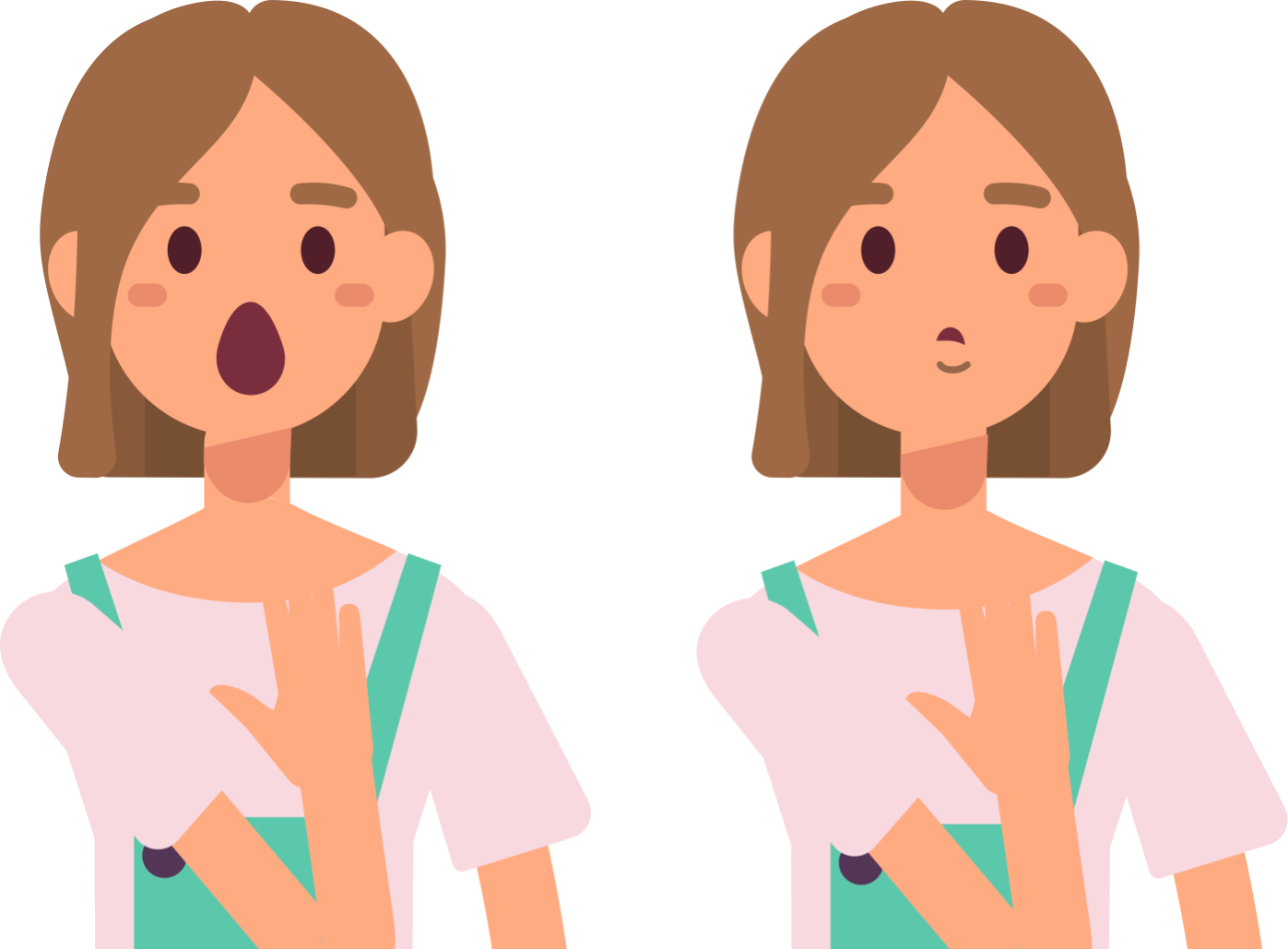
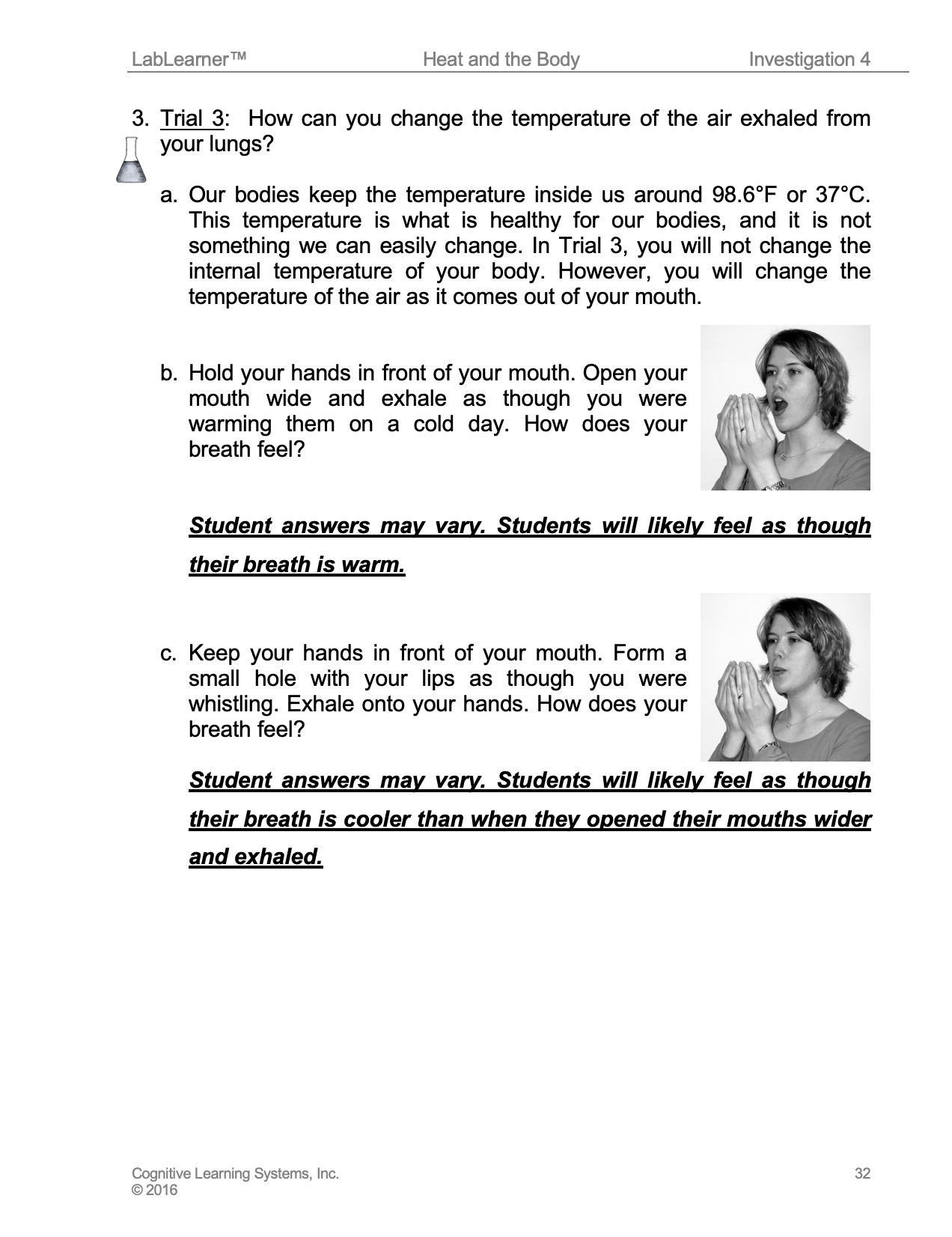
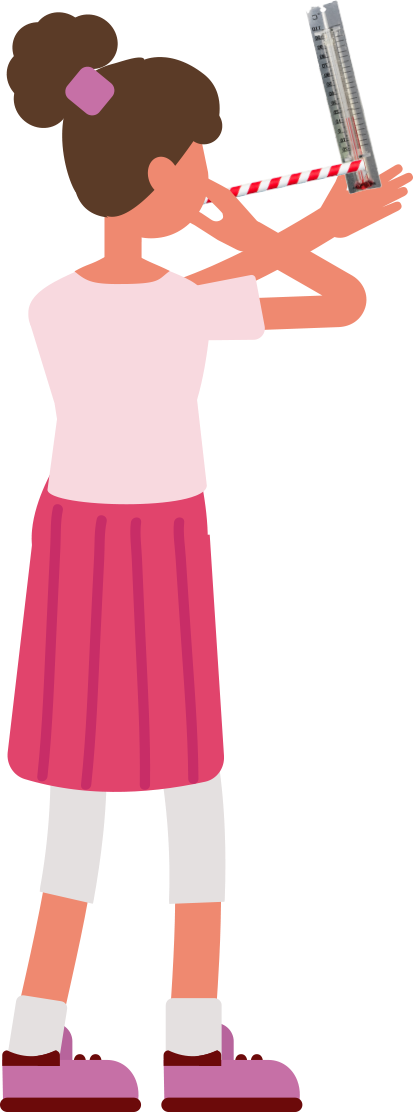 Although we cannot easily change the temperature inside our bodies, Trial 3 will lead students to an investigation of the temperature of air that we exhale. Students will first observe that by changing the shape of their mouths as they exhale, they are able to change the temperature of the air from their mouths.
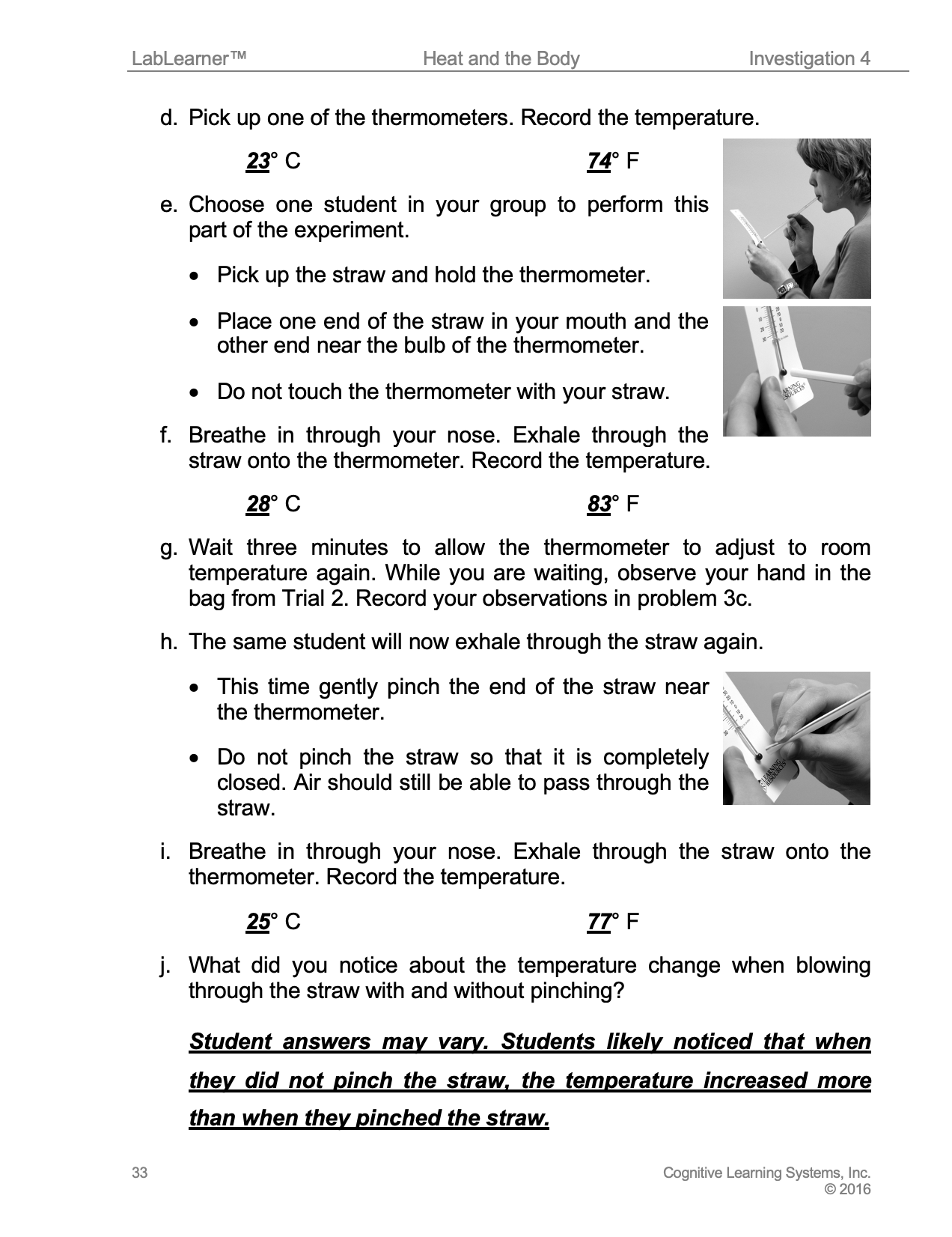
Students will then breathe through a straw onto the bulb of a thermometer. After observing and recording the increase in temperature, students will gently pinch the end of the straw, narrowing the space through which the air travels. Students will find that the air released as the straw is pinched will be cooler than the air from the completely open straw. This is due to the Joule-Thompson effect, a phenomenon in which a gas that is compressed and then allowed to expand will experience a decrease in temperature. By pursing their lips and creating a small opening through which air flows out of the body, the students condense their breath. As it leaves the body, the breath expands and cools.
During this Trial, students will answer the following question:
How can you change the temperature of the air exhaled from your lungs?
KEYS
CLEAN UP
Let students know your expectations for clean-up. Ask them to clean up.