
Teacher Portal:
Forms of Energy
Investigation 5 – Lab
 BE PREPARED
Supplies and Equipment:
Class Materials:
- 5 g baking soda
- 50 ml vinegar
- paper towels
- 1 roll of masking tape
- 1 lab scoop
Group Materials:
- 1 Lego® car
- 3 15 ml falcon (centrifuge) tubes
- 1 woodblock
- 1 balloon
- 1 flexible straw
- 1 rubber band, 3.5” by 1/8”
- 1 meter stick
- 2 metric rulers
- 1 10 cm piece of masking tape
- 1 6 cm piece of plastic tubing, 13 mm diameter
- 1 rubber stopper, size 00
- 1 storage container, 4.9 gallons
- 1 plastic dropper
- 1 paper towel
Individual Materials:
- 1 pair of safety goggles
- 1 Scientist Data Record
Teacher Preparation:
- Fill five (5) falcon (centrifuge) tubes to the 10 ml mark with vinegar.
- Use the lab scoop to fill ten (10) falcon tubes with 0.5 g of baking soda. This can be estimated by filling each tube with 1 cm of baking soda.
- Cut five (5) 10 cm pieces of masking tape.
- Remove the three (3) blocks forming the backs of the Lego® cars. Students will use only the flat portion of the cars for this investigation.
- Place all materials at a central distribution point.
- Divide students into five cooperative groups.
Instruction:
- Direct one student from each group to obtain the following from the central distribution center: one (1) falcon tube of vinegar, two (2) falcon tubes of baking soda, one (1) balloon, one (1) flexible straw, one (1) rubber stopper, one (1) rubber band, one (1) meter stick, two (2) metric rulers, one (1) Lego® car, one (1) wood block, one (1) 10 cm piece of masking tape, one (1) storage container, one (1) plastic dropper, one (1) 6 cm piece of plastic tubing and one (1) paper towel.
GET FOCUSED
Investigation Five introduces students to the concept of energy transfer of both gravitational potential energy and chemical potential energy into mechanical kinetic energy.
INVESTIGATE
Trial 1:
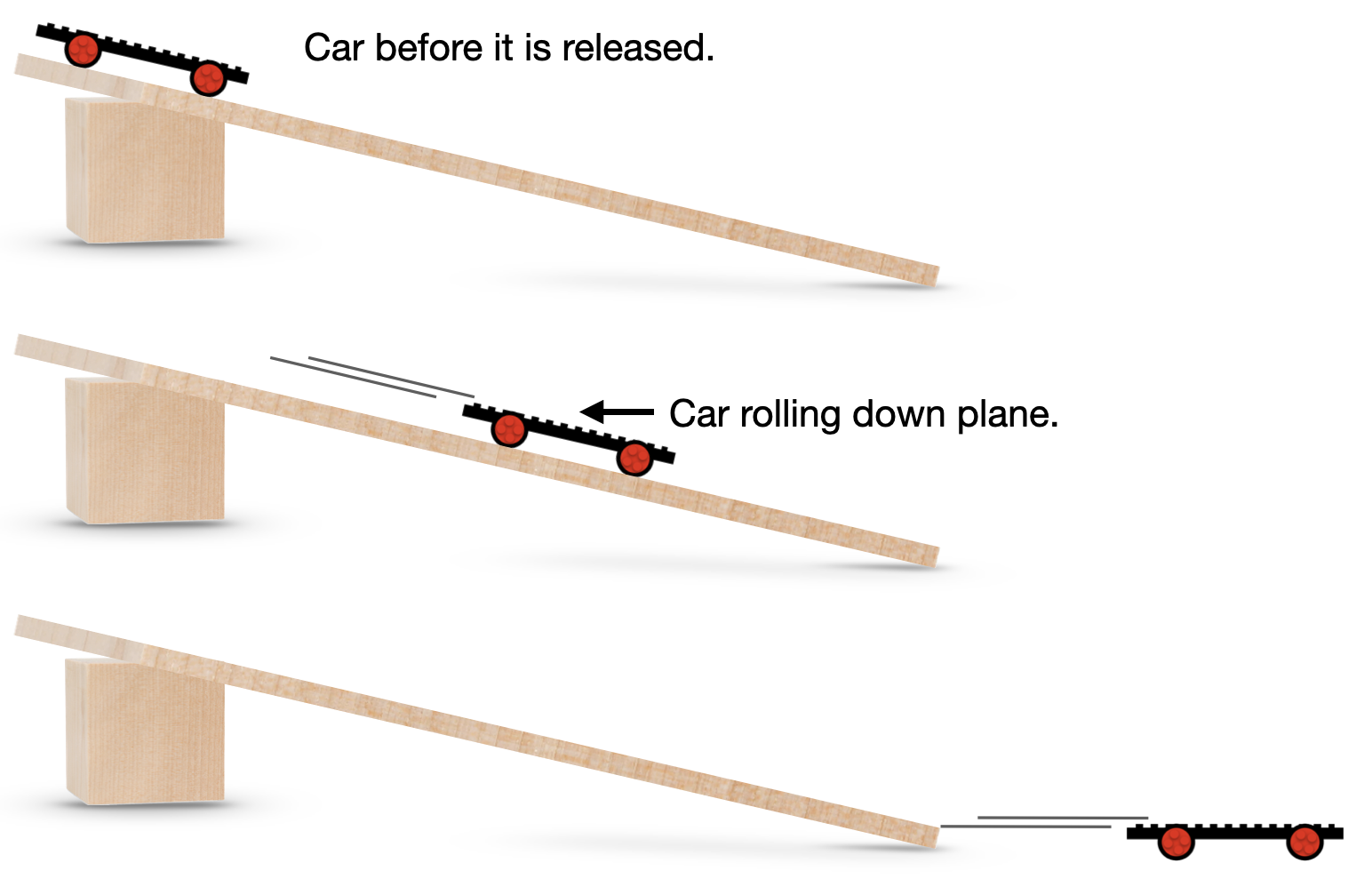
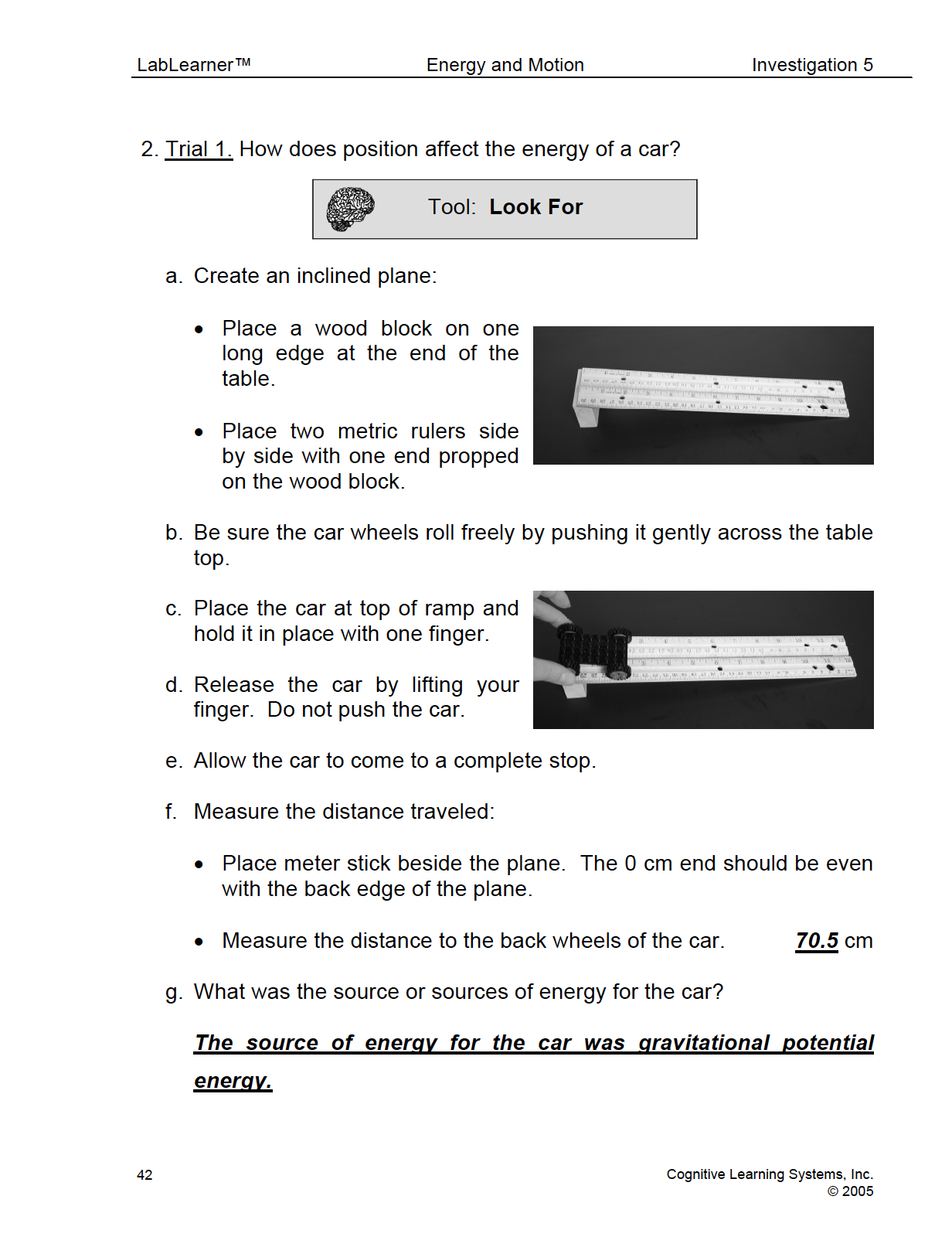
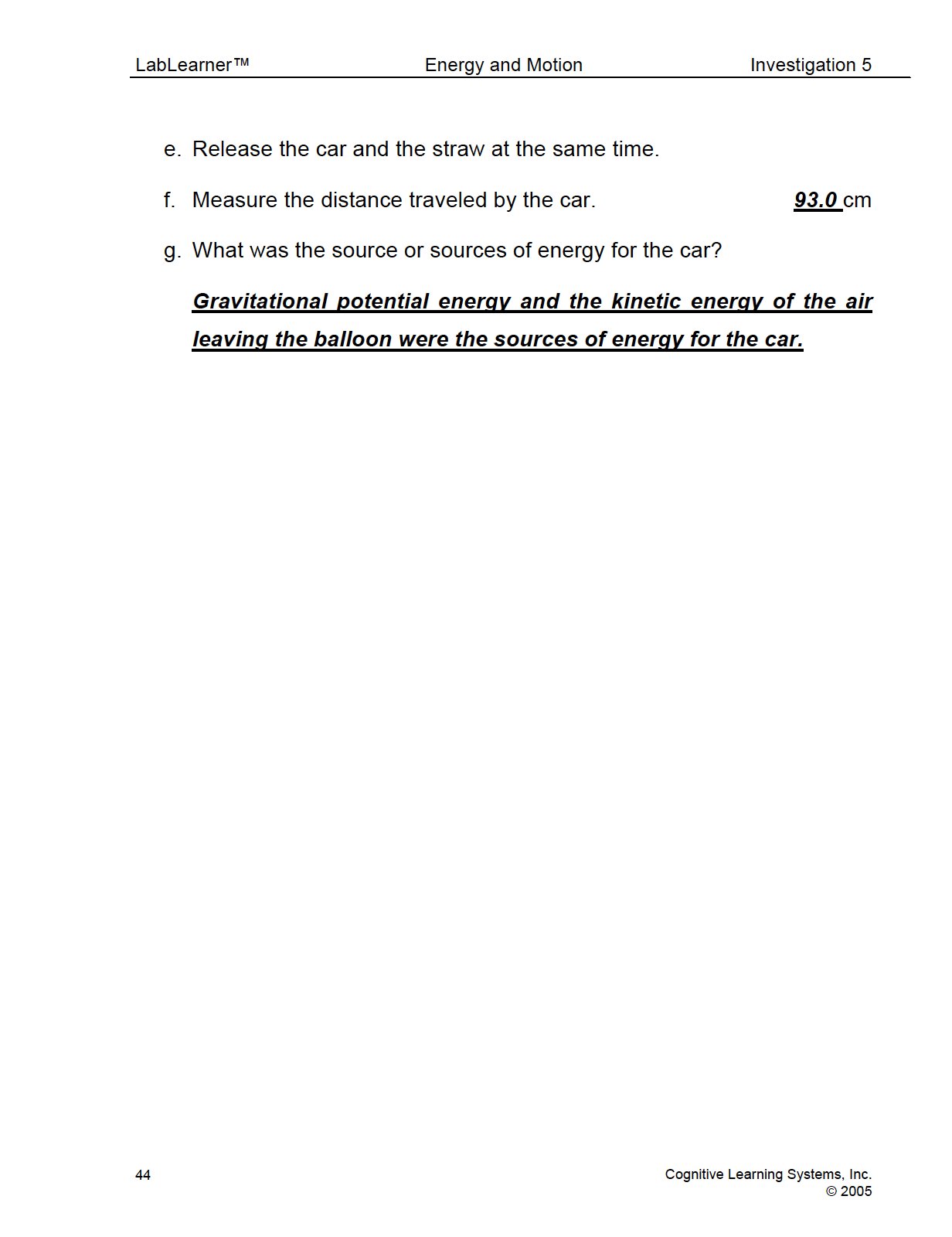
Students will investigate the conversion of gravitational potential energy to mechanical kinetic energy by allowing a model car to roll down an inclined plane. Students will measure the distance the car travels under the influence of gravity. Students will discover that the initial elevated position of the car allows the force of gravity to draw it down the plane. As a result, the potential energy in the car as a result of its position is converted to kinetic energy as the car rolls down the plane and eventually comes to a stop. Encourage students to notice the similarity between this trial and the experiment in Investigation One where marbles were rolled down an inclined plane.
As students complete this trial, they will answer the following question:
How does position affect the energy of a car?
a. Direct students to create an inclined plane from two metric rulers and a woodblock as instructed in Step 2a of their Scientist Data Record.
b. Students should then make sure the car wheels turn freely by gently rolling it across the table as instructed in Step 2b.
c. Direct students to determine what will happen if the car is placed at the top of the inclined plane and released by performing Steps 2c through f in their Student Data Record.
d. Direct students to answer Problem 2g.
Trial 2:
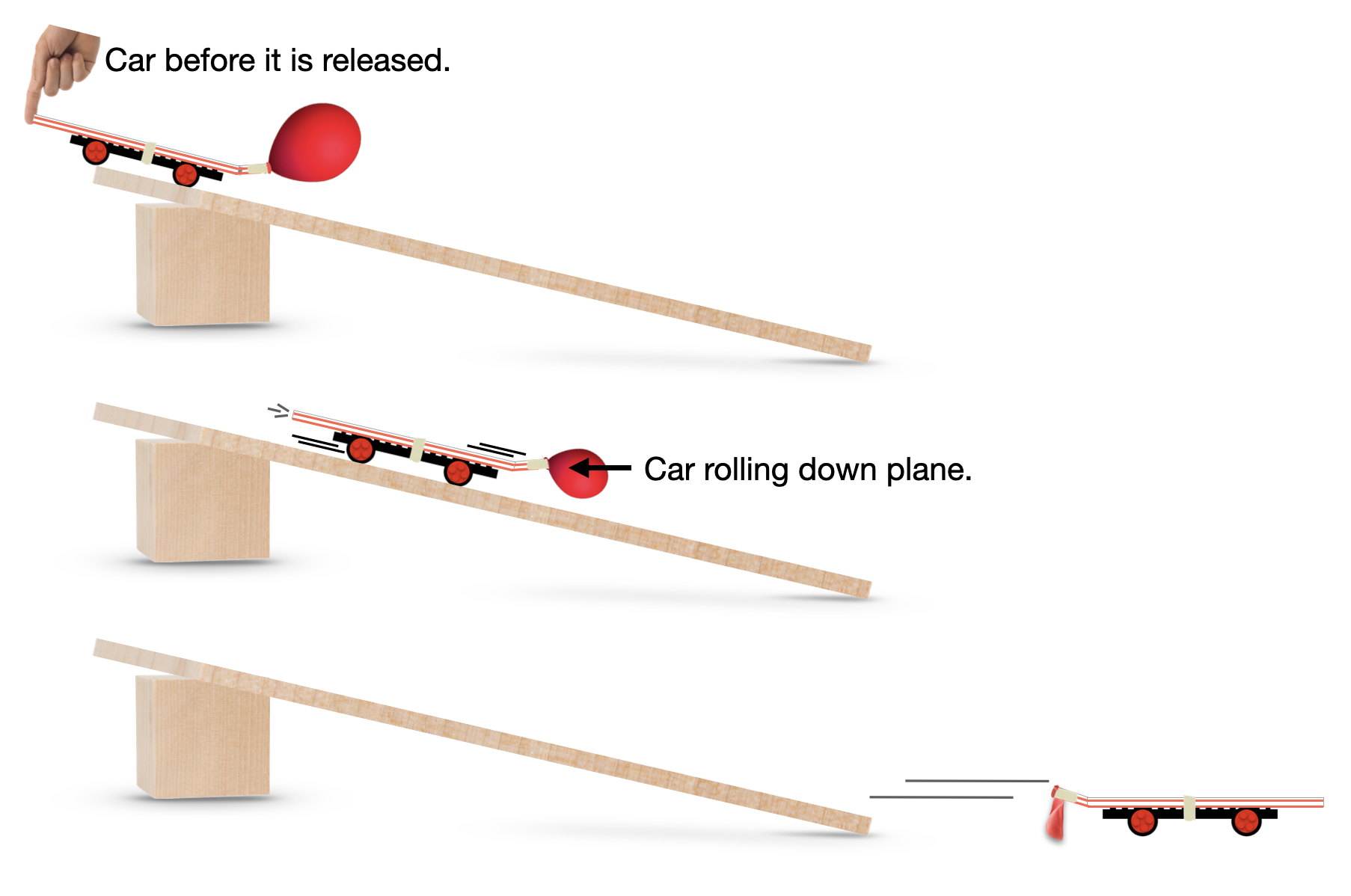
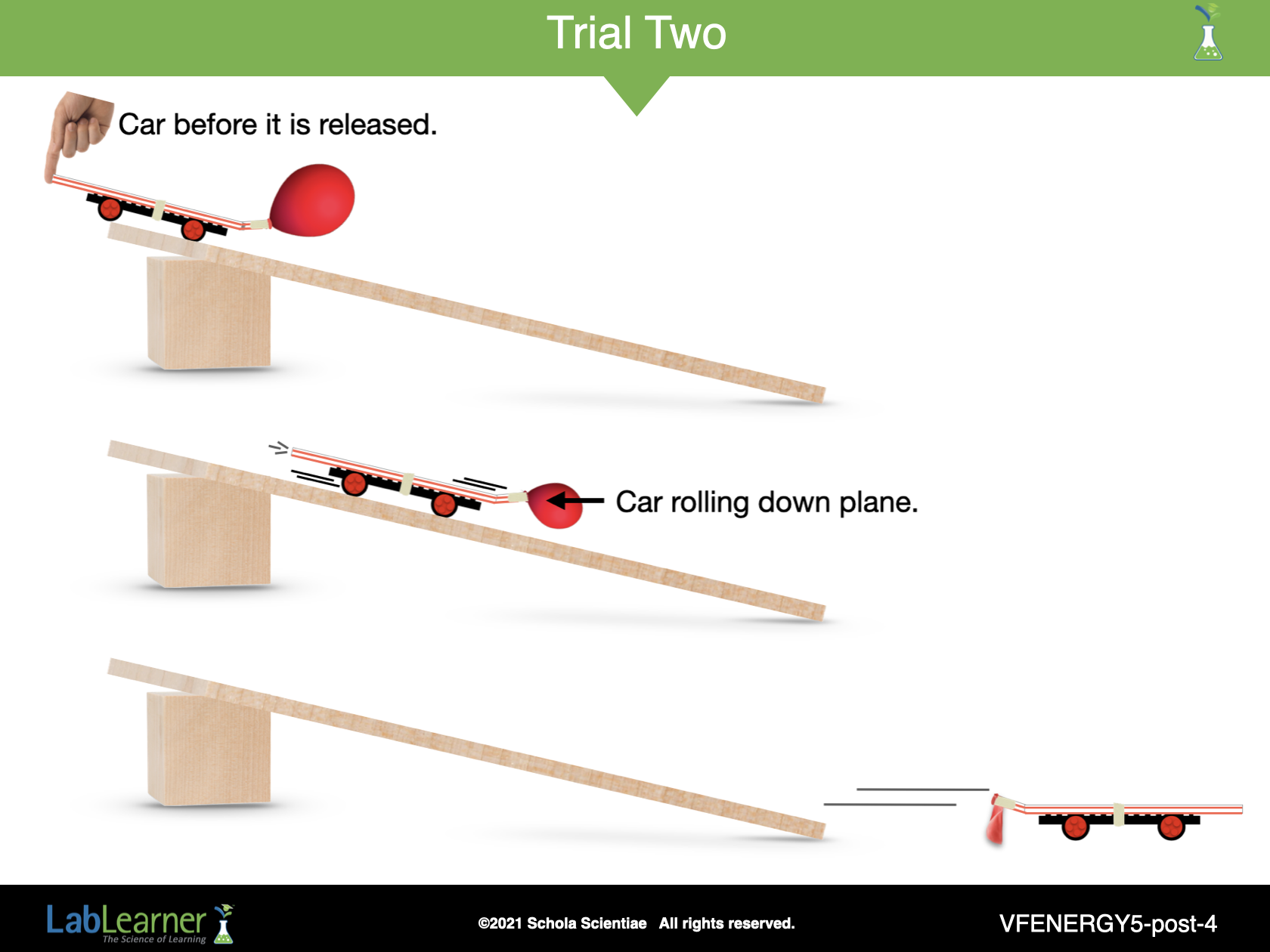
In this Trial, students will investigate how energy conversions occur when there are two sources of energy. In the previous Trial, the only source of energy was gravity. In this Trial, students will add an “engine” to the car with a balloon. They will discover that both gravity and the inflated balloon are sources of potential energy for the car.
As students complete this trial, they will answer the following question:
How does an engine affect the energy of a car?
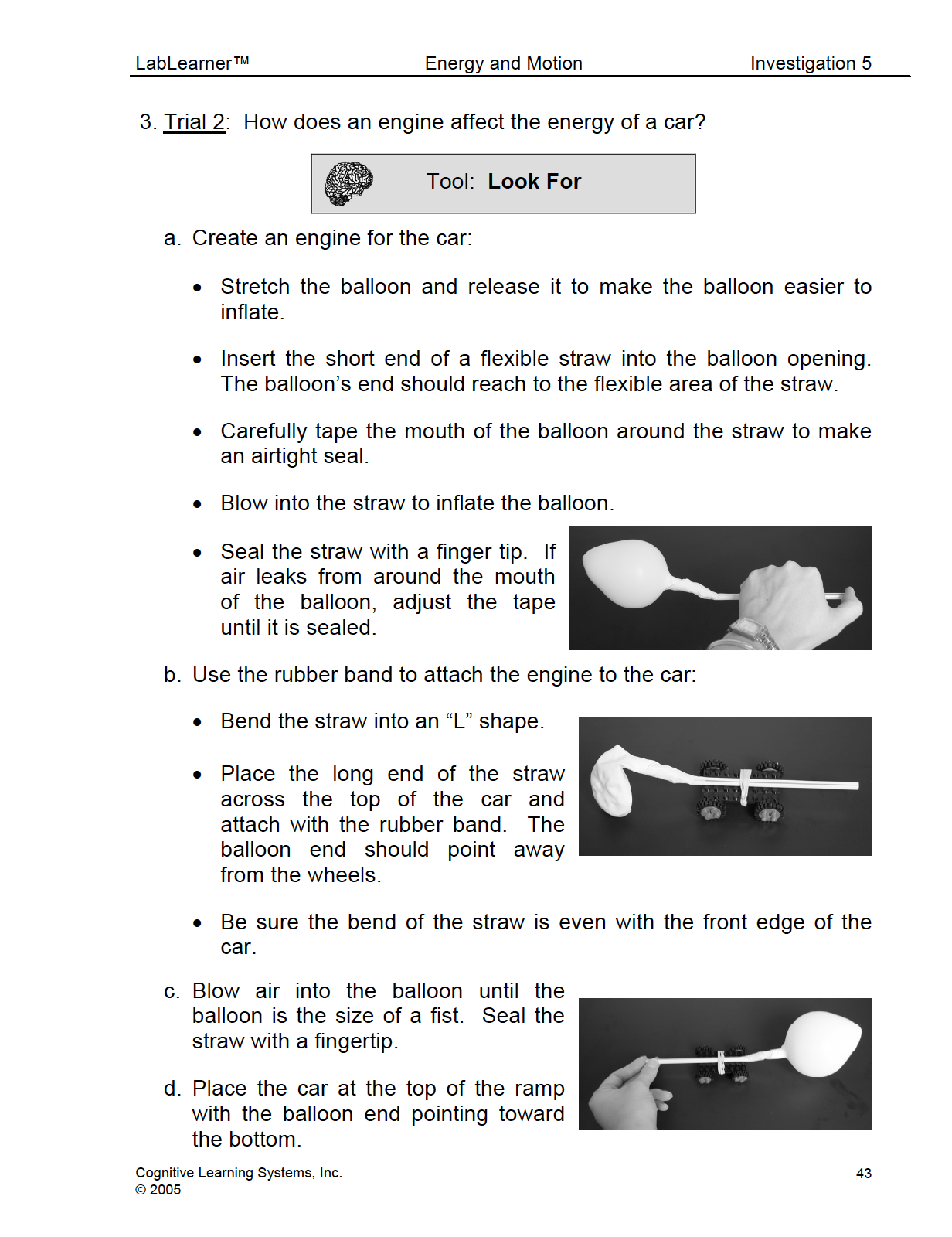
a. Direct students to create an engine for their cars by inserting the short end of a flexible straw into the balloon and creating an airtight seal with masking tape as instructed in Step 3a in the Student Data Record.
NOTE: For sanitary reasons, the student who first tests the balloon’s seal by blowing into the straw should be the student who continues to inflate the balloon throughout the trial.
b. Direct students to attach the engine to the car as instructed in Step 3b.
c. Direct students to test the effect of the engine by performing Steps 3c through f in their Student Data Records.
d. Direct students to answer Problem 3g.
Trial 3:
In this Trial, students will explore how chemical energy can be transformed into mechanical energy. Students will add vinegar to a small amount of baking soda in a falcon tube and immediately seal the tube with a rubber stopper. The reaction of baking soda and vinegar results in the formation of a solid chemical called sodium acetate and releases carbon dioxide, a gas. In the sealed tube, the rapid pace of the reaction quickly causes a large amount of pressure to develop as the gas is released. The pressure of the gas pushes the rubber stopper out forcefully.
As the students complete this trial, they will answer the question:
Can chemical energy make an object move?
a. Before beginning the Trial, stress to students that this Trial requires them to cooperate and work very quickly together in order to observe a result.
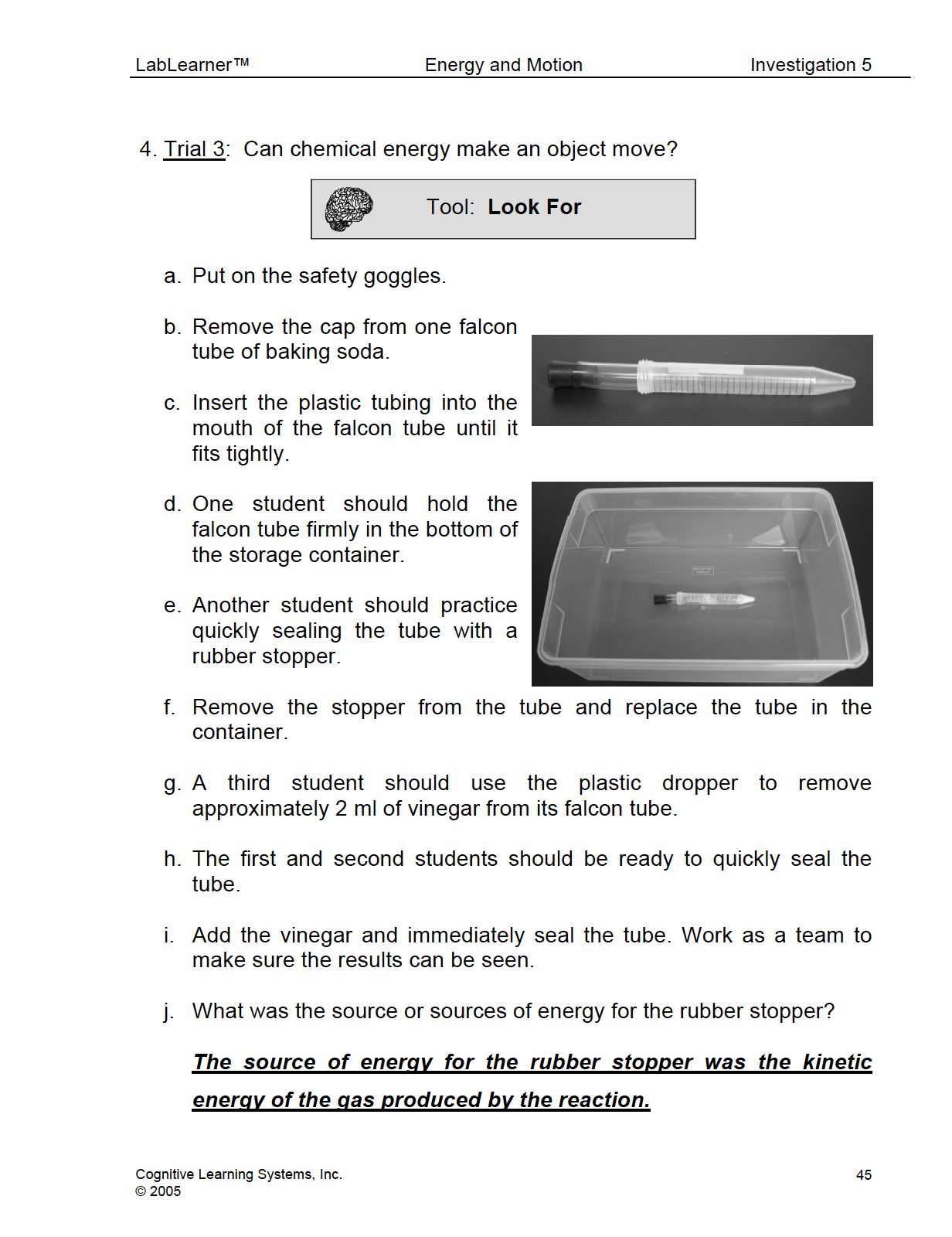
b. Direct students to prepare the falcon (centrifuge) tube for the rubber stopper as instructed in Steps 4a and b in their Student Data Records.
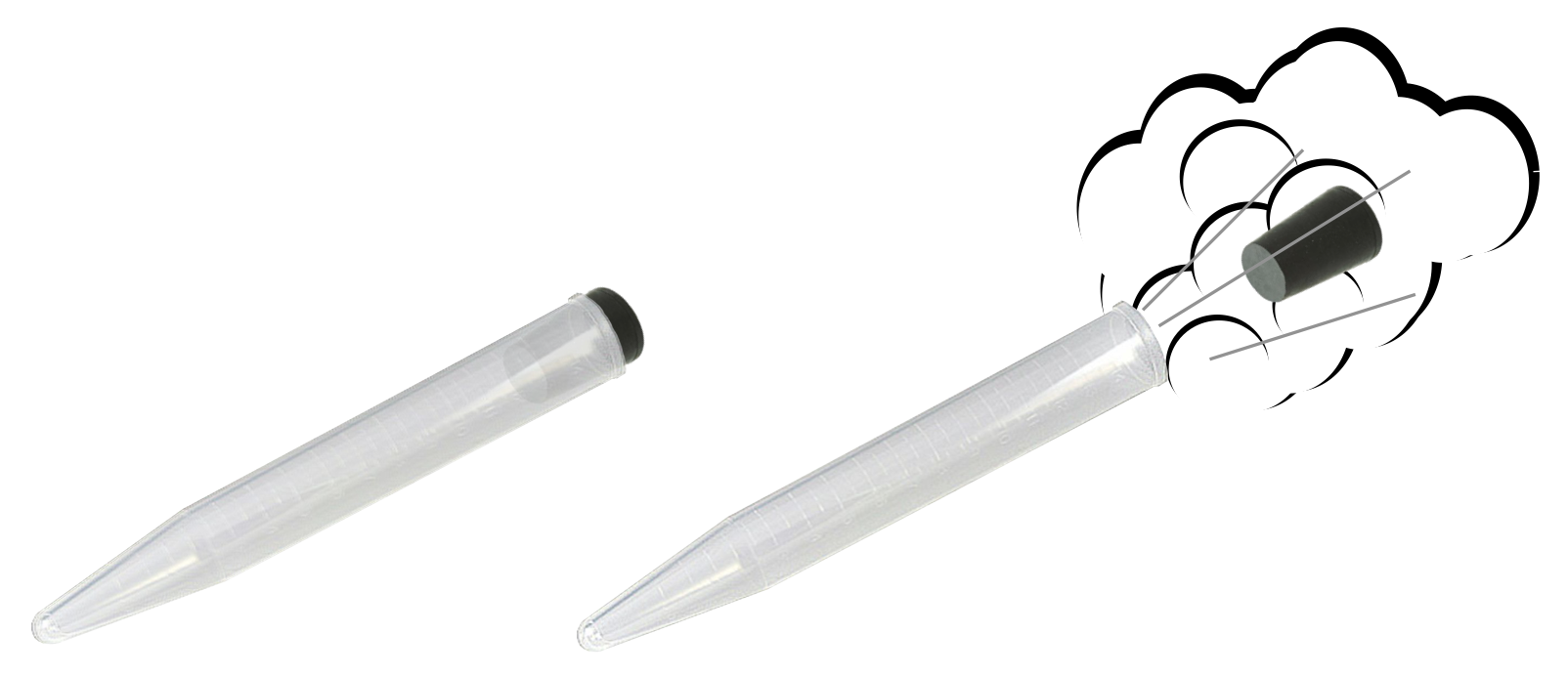 c. Encourage students to practice inserting the rubber stopper quickly and tightly as outlined in Steps 4c and d. Students should practice this step several times in order to be able to perform the steps rapidly after the vinegar is introduced into the tube.
d. Before proceeding with Step 4g, all students should put on their safety goggles as a precaution. The reaction of baking soda and vinegar is rapid and the stopper will be expelled with some force from the falcon (centrifuge) tube.
e. Direct students to perform Steps 4g through i in rapid succession. You may choose to let students practice the addition of the vinegar with a dry plastic dropper before adding the vinegar.
f. Direct students to answer Problem 4j in their Student Data Records.
Optional Extension:
In the previous Trial, students generated mechanical energy from the chemical reaction of baking soda and vinegar to force the rubber stopper from the falcon tube. In this Trial, students will use this same method to generate movement of the car model. Students will discover that when the falcon (centrifuge) tube is secured to the top of the car and placed against the end of the container, the force of the carbon dioxide gas will cause the falcon (centrifuge) tube and the car to move away from the rubber stopper and travel across the container. In much the same way, the combustion of petroleum products inside an automobile engine generates a burst of superheated air that rapidly expands inside the cylinder. This pushes the piston downward to generate torque (rotational force) on the drive shaft of the car, causing the car to move forward.
As students proceed with this experiment, they will answer the question:
Can a chemical reaction cause a car to move?
a. Before beginning the Trial, stress to students that this Trial requires them to cooperate and work very quickly together in order to observe a result.
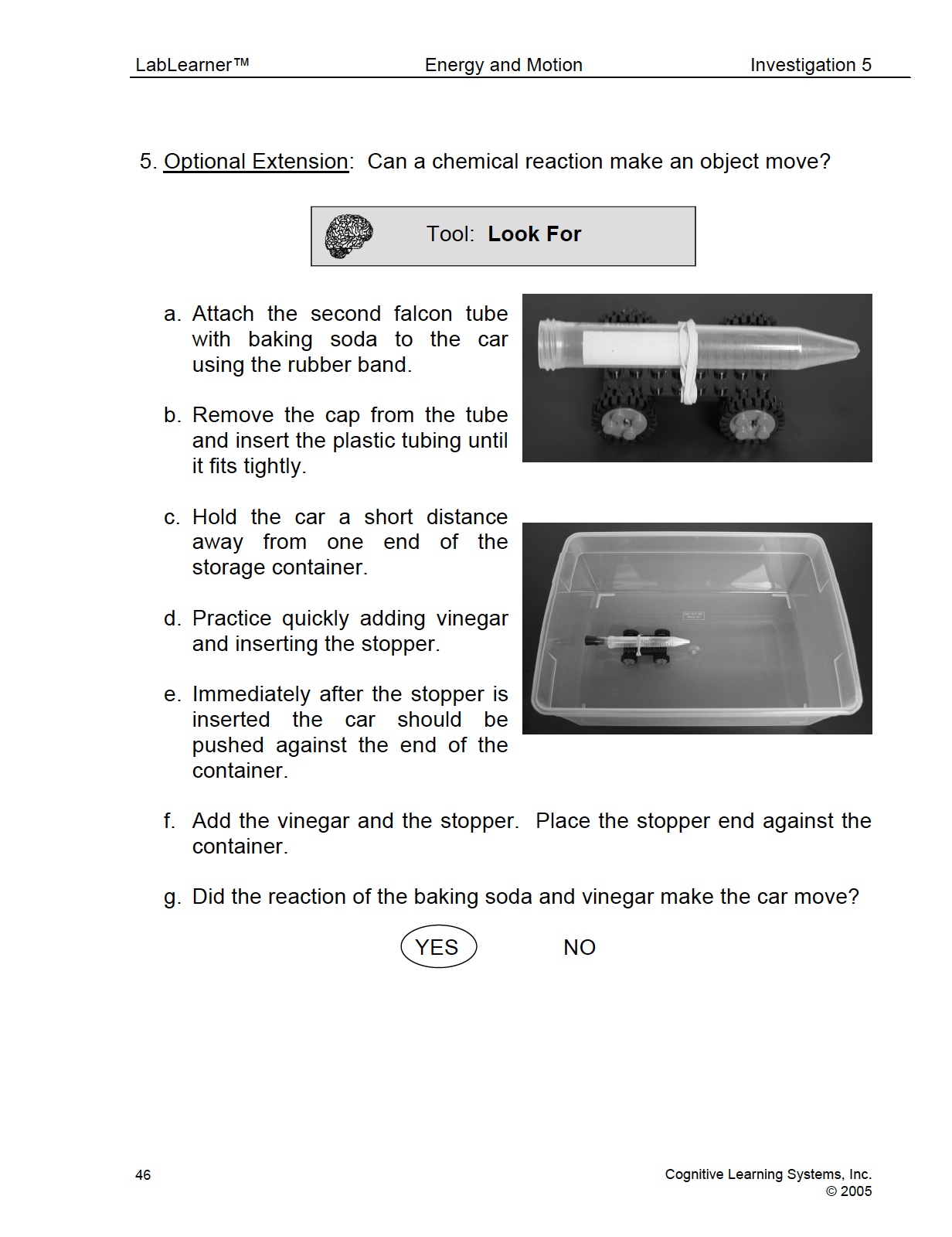
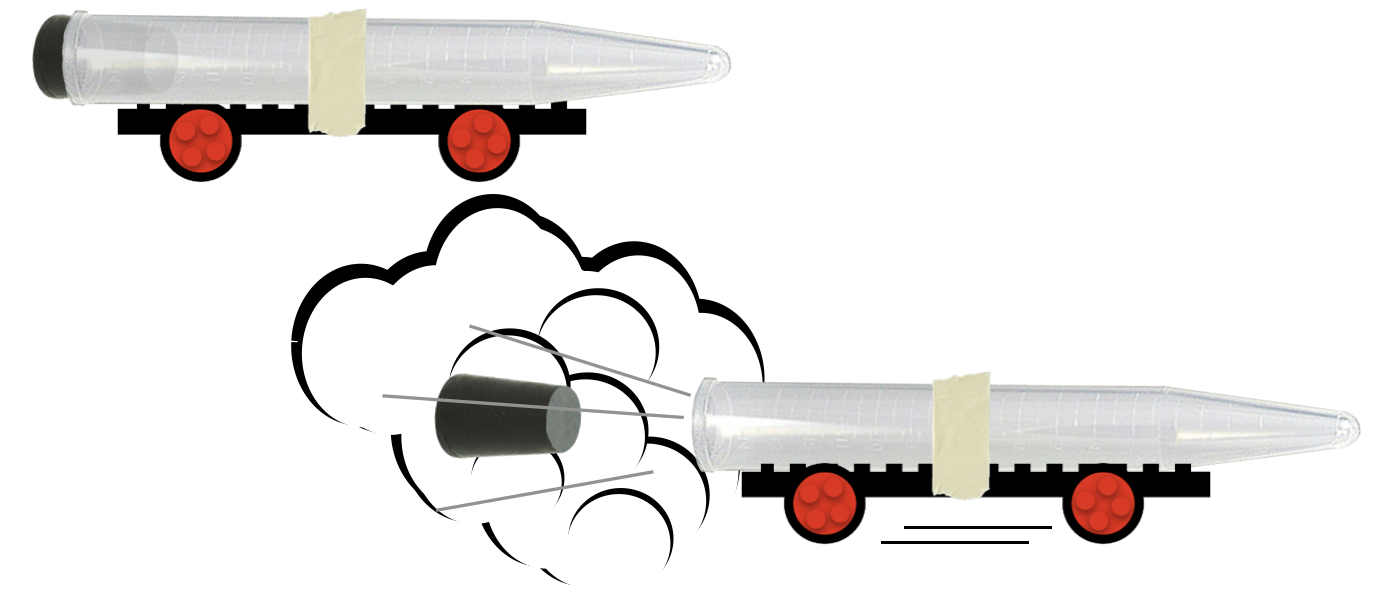 b. Direct students to attach the remaining falcon (centrifuge) tube containing baking soda to the car with the rubber band and prepare it as instructed in Steps 5a through c in their Student Data Records.
c. Explain that this time the car will be placed against the end of the storage container after the vinegar and stopper are inserted.
d. Provide students with an opportunity to practice inserting the stopper and placing the car rapidly against the end of the container before students proceed with the experiment.
e. Direct students to proceed with the experiment as outlined in Steps 5d through f in their Student Data Records.
f. Direct students to answer Problem 5g.
CLEAN UP
Ask students to clean up their bench after finishing their investigations.
KEYS

CLEAN UP
Let students know your expectations for clean-up. Ask them to clean up.