Teacher Portal:
Forms of Energy
Investigation 4 – Lab
 BE PREPARED
Supplies and Equipment:
Class Materials:
- 45 g non-chlorine powdered bleach
- 400 ml water
- paper towels
- 1 liter pitcher
- 1 funnel
Group Materials:
- 1 falcon (centrifuge) tube
- 1 glass stirring rod
- 1 thermometer
- 1 100 ml beaker
- 2 paper towels
Teacher Demonstration Materials:
- 3 falcon (centrifuge) tubes
- 9 g sugar
- 3 3 cm squares of aluminum foil
- 2 100 ml beakers
- 1 timer or stopwatch
- 1 stir plate
- 1 hot hand protector
- 3 paper towels
Individual Materials:
- 1 pair of safety goggles
- 1 Scientist Data Record
Teacher Preparation:
1. Fill five (5) falcon tubes to the 15 ml mark (8.8 g) with non-chlorine powdered bleach by carefully pouring the bleach through the funnel.
2. Fill a liter pitcher with 400 ml of water.
3. Fill three (3) falcon tubes to the 3 ml mark (2.7 g) with sugar.
4. Tear or cut three (3) 3 cm squares of aluminum foil.
5. Place the falcon tubes of bleach, the liter pitcher of water, and remaining group materials at a central distribution point.
6. Place the tubes of sugar, the squares of foil, and the remaining teacher demonstration materials at the teacher demonstration center.
7. Turn the hot plate to 6 (325o C).
8. Divide students into five cooperative groups.
Instruction:
1. Direct one student from each group to obtain the following from the central distribution center: one (1) falcon (centrifuge) tube filled with non-chlorine powdered bleach, one (1) empty 100 ml beaker, one (1) glass stirring rod, one (1) thermometer, and two (2) paper towels.
GET FOCUSED
Investigation Three introduces students to the concept of chemical energy.
INVESTIGATE
Teacher Demonstration:
Overview
Students will observe a demonstration of an endothermic reaction. Endothermic reactions produce products that contain greater chemical energy than the amount available in the reactants. Therefore they must absorb heat from their surroundings in order for the reaction to proceed. In this demonstration, students will observe three samples of sugar for signs of caramelization, a chemical change that results when sugar is exposed to heat. Caramelization is a process in which exposure to temperatures greater than 120o C causes sugar to break down into chemicals that produce the characteristic color and odor of caramel. This process is endothermic because heat must be applied from the surroundings of the reaction container.
In this demonstration, students will observe three samples of sugar placed on squares of aluminum foil. One sample will be placed on the demonstration table to serve as the control. A second sample will be held in a student’s hand for the duration to determine if body heat is warm enough to cause the reaction to proceed. The third sample will be placed on a hot plate and heat will be applied to the sample to bring the temperature of the sugar above 120o C. Students will discover that under high temperatures, sugar will melt and turn brown. Melting is a physical change that occurs before the chemical change takes place.
NOTE: Melted sugar is extremely hot and can cause serious burns. It is advisable to supervise students closely when they approach the sample to make their observations during the demonstration.
 Demonstration
a. Begin this trial by explaining to students that a common endothermic reaction during candy-making is caramelization. Ask students: What is caramel? Student answers will vary. Students most likely will mention caramel-flavored foods such as ice cream topping or candy.
b. Explain that caramel candy gets its distinctive brown color and flavor from caramelized sugar. Explain that sugar caramelizes when it is exposed to heat and that the caramelization of sugar is a chemical change.
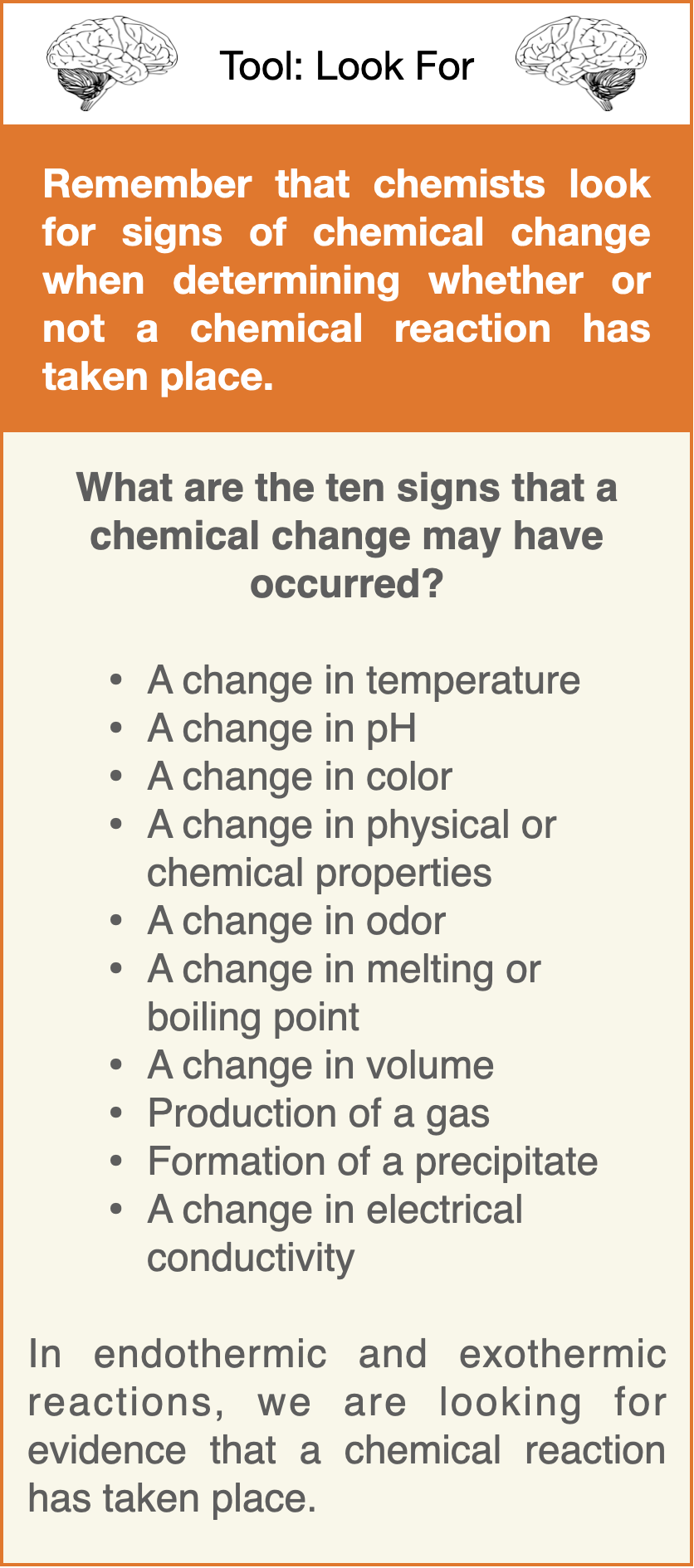
c. Remind students that they discussed signs of chemical change in the Pre-Lab. Ask students: What signs of a chemical change do you think we should look for during the demonstration? Student answers will vary.
The signs of chemical change that students will be able to observe that are associated with the caramelization of sugar are a change in color, a change in odor, and a change in temperature. However, the change in temperature will not be determined quantitatively in this demonstration. The change in temperature will be observed as a feeling of warmth coming from the foil beaker.
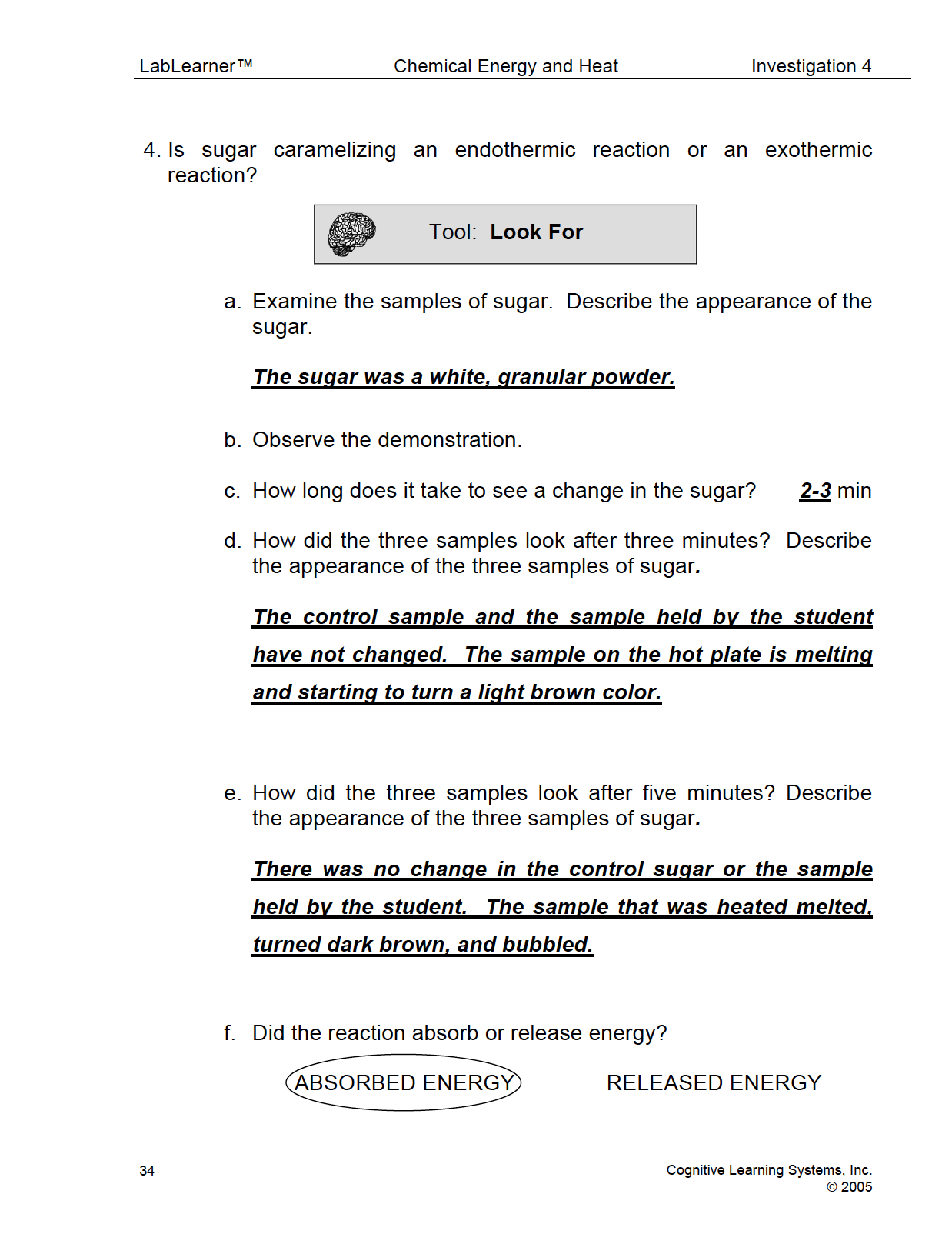
d. Pass the falcon (centrifuge) tubes of sugar around the classroom so that each student can examine the samples of sugar. Encourage students to study the samples and write a description in Problem 4a of their Student Data Record. Remind students that they should not taste or smell the samples as they pass them around.
NOTE: Although sugar is food and safe for students to handle, it is still wise to encourage good laboratory practices by students at all times. Students should never taste or smell any chemical during a lab exercise unless expressly told to do so by their instructor.
e. Select three student volunteers to assist you in preparing the sugar samples for the demonstration.
f. Direct the students to create a small pot out of a foil square. The third will be held during the demonstration by the student and may be shaped in a manner comfortable for the student to hold.
g. Direct the two students creating the pots to place them on the bench.
Note: Do not place the foil pots in glass 100 ml beakers.
h. Direct all three students to pour one falcon (centrifuge) tube of sugar into their foil pot.
i. Assign a fourth student to act as a timekeeper.
j. Place one foil pot of sugar on the demonstration table to act as a control.
k. Place the second pot of sugar on the hot plate. Direct the third student to place the foil pot containing the sugar on the palm of his or her hand. Start the stopwatch.
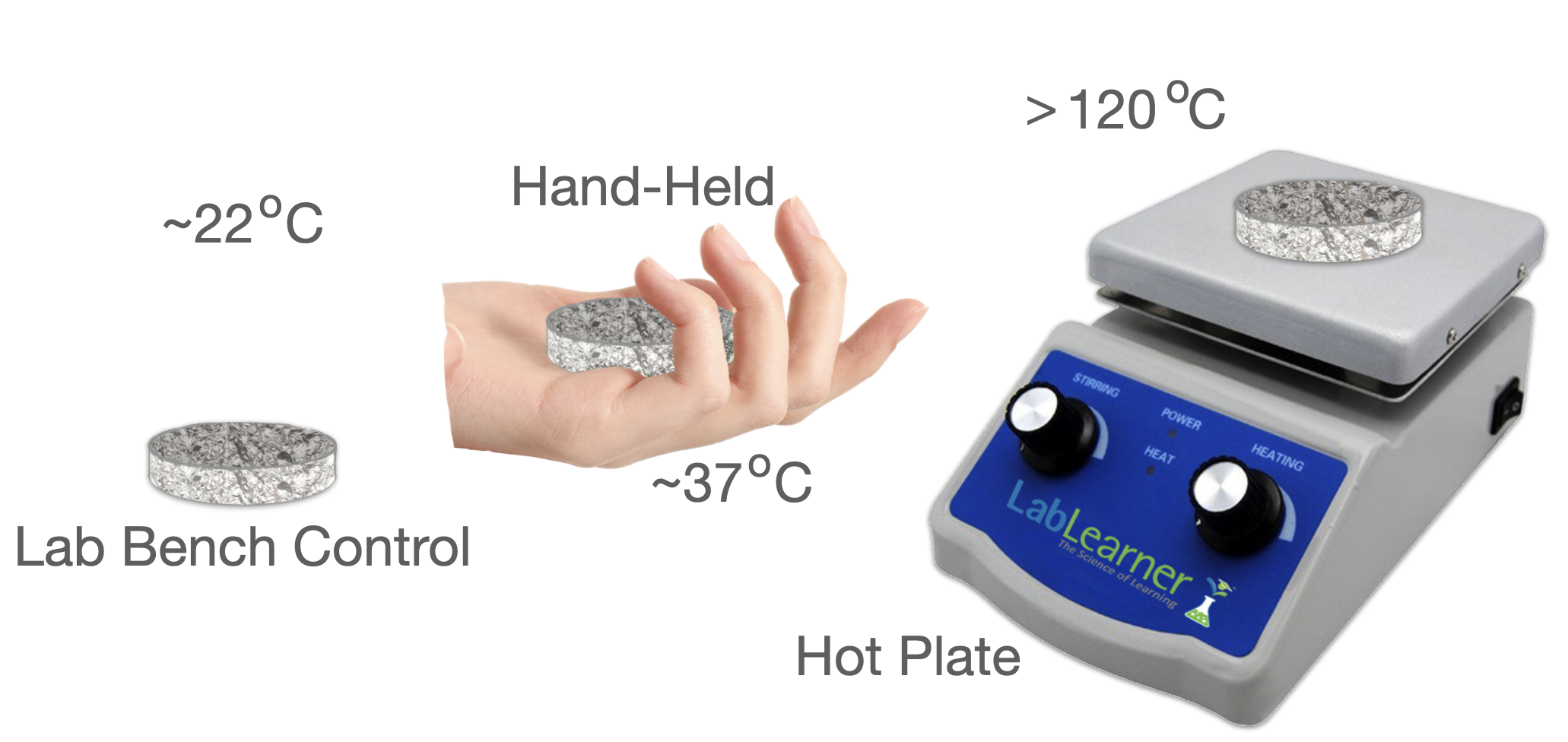
l. Assign a student volunteer to watch the sugar on the hot plate. Direct the student to indicate when they first observe a change in the sugar. At that point, ask the timekeeper to indicate how much time has passed. Direct students to record the time in Problem 4c of their Student Data Records.
m. After 3 minutes, direct the remaining students to approach the demonstration table in groups to observe the three samples. All students should record their observations in Problem 4c of their Student Data Records.
n. Continue heating the sugar. Direct the timekeeper to indicate when 5 minutes have passed. At the end of five minutes, remove the sample from the hot plate. Place the sample from the student’s hand and the sample from the hotplate beside the control sample. Turn off and unplug the hot plate.
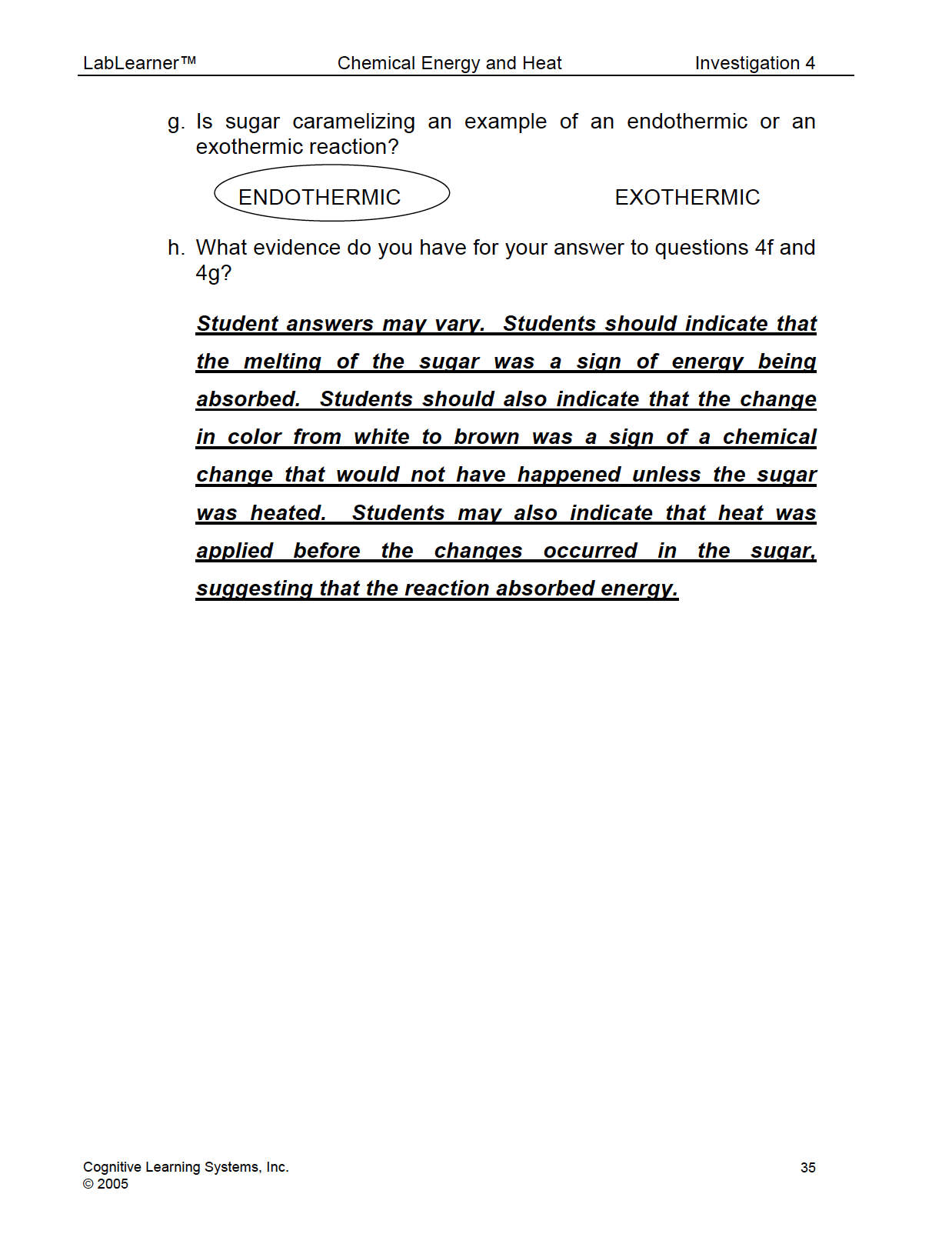
o. Again direct the students to approach by group to observe the sample and record their observations in Problem 4a-e of their Student Data Record and answer Problems 4 f, g and h.
Trial 1:
The demonstration of sugar caramelizing introduced students to an endothermic reaction. Students discovered that when adequate heat is available in the surroundings, an endothermic reaction can occur. By observing the control sample of sugar and the sample held by the student volunteer, students also discovered that when the heat of the surroundings is not adequate for a reaction to occur, the sugar did not caramelize.
In this single Trial, students will observe how an exothermic reaction differs from an endothermic reaction in that a greater amount of energy is present in the reactants than the products. As students complete this Trial, they will answer the following question:
Is bleach reacting with water an endothermic reaction or an exothermic reaction?
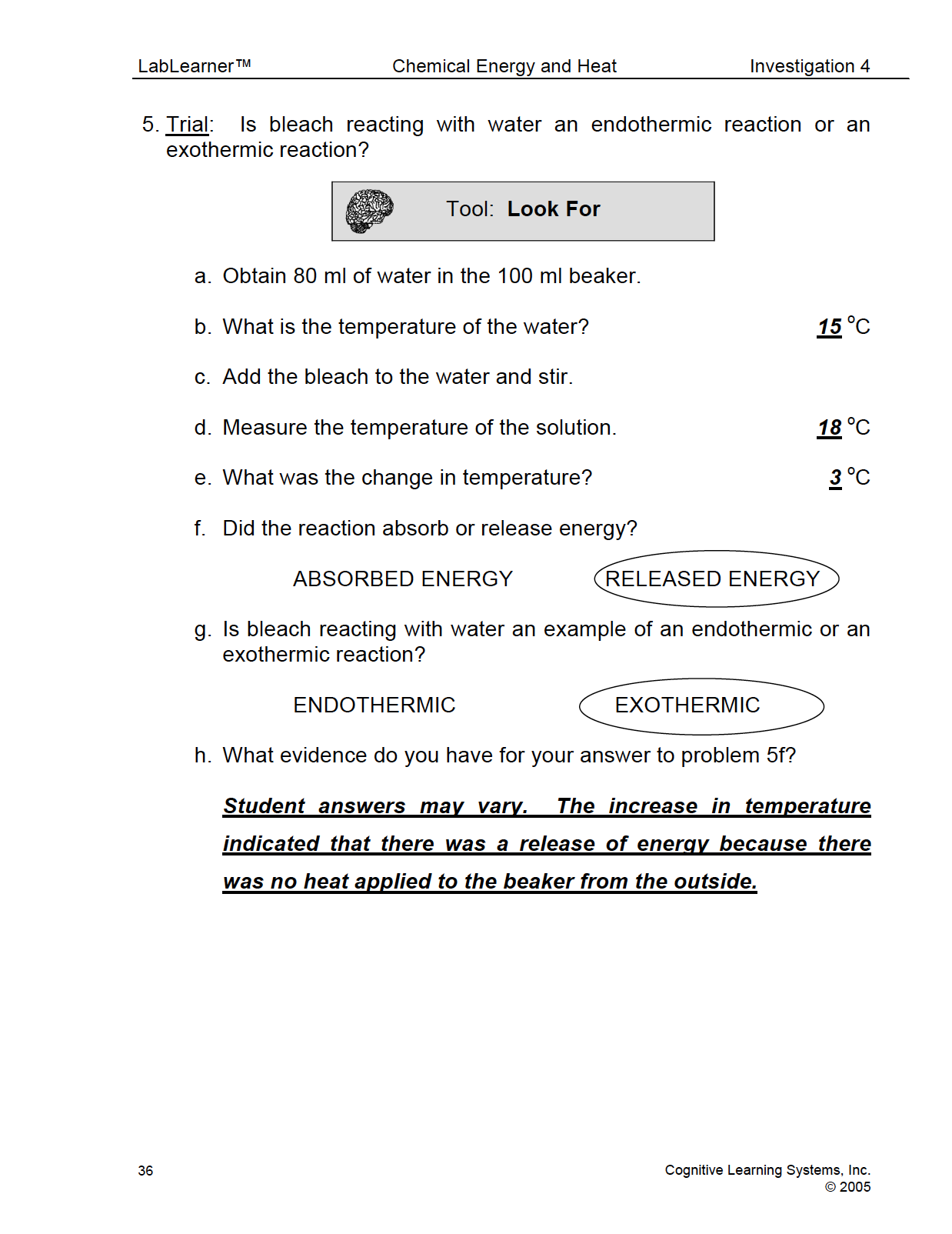
a. Direct one student from each group to obtain 80 ml of water in their 100 ml beaker.
b. Direct students to measure the temperature of the water and record it in Problem 5b of their Student Data Records.
c. Direct students to remove the thermometer from the water.
d. Direct one student from each group to carefully pour the powdered bleach into the water. Another student should stir the solution carefully to dissolve the bleach.
e. Direct students to measure the temperature of the solution and record the temperature in Problem 5d.
f. Direct students to subtract the smaller temperature from the larger temperature and record their result in Problem 5e of their Student Data Record.
g. Direct students to answer Problems 5f-h in their Student Data Record.
CLEAN UP
Ask students to clean up their bench after finishing their investigations.
KEYS

CLEAN UP
Let students know your expectations for clean-up. Ask them to clean up.