
Teacher Portal:
Forms of Energy
Investigation 1 – Lab
 BE PREPARED
Supplies and Equipment:
Class Materials:
- 1 roll of masking tape
Group Materials:
- 2 woodblocks
- 2 metric rulers
- 1 flower pot
- 1 triple beam balance
- 1 weigh dish
- 1 steel marble
- 1 plastic marble
- 1 marker
- 1 calculator
Individual Materials:
- 1 Student Data Record
Teacher Preparation:
1. Organize the required materials at a distribution point.
2. Divide students into 5 cooperative groups.
Instruction:
1. Direct each student group to obtain the following necessary materials from the distribution point: two (2) wood blocks, two (2) metric rulers, one (1) flower pot, one (1) triple beam balance, one (1) weigh dish, one (1) steel marble, one (1) plastic marble, one (1) marker and one (1) calculator.
GET FOCUSED
Investigation One introduces students to the relationship between potential and kinetic energy in the context of mechanical energy and investigates the effect of mass on potential and kinetic energy.
Students will conduct a series of experiments to determine the effect of mass on the potential and kinetic energy of plastic and steel marbles
INVESTIGATE
1. Direct each student group to obtain the following necessary materials from the distribution point: 2 wood blocks, 2 metric rulers, 1 flower pot, 1 triple beam balance, 1 weigh dish, 1 steel marble, 1 plastic marble, 1 marker, and 1 calculator.
Trial 1
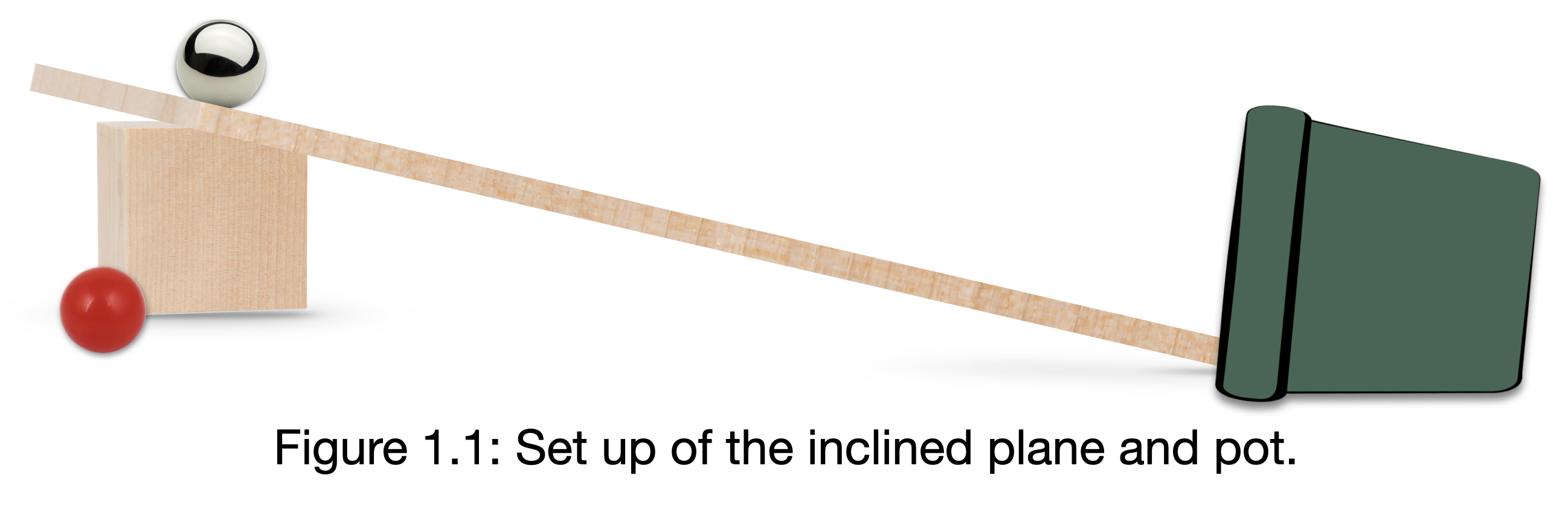
In this Trial, students will explore the effect of mass on the ability of a marble to perform work on a flower pot. Students will create an inclined plane from two rulers and a woodblock. The flower pot will be placed at the bottom of the inclined plane so that the edge of the flower pot is flush against, but not under, the ends of the rulers.
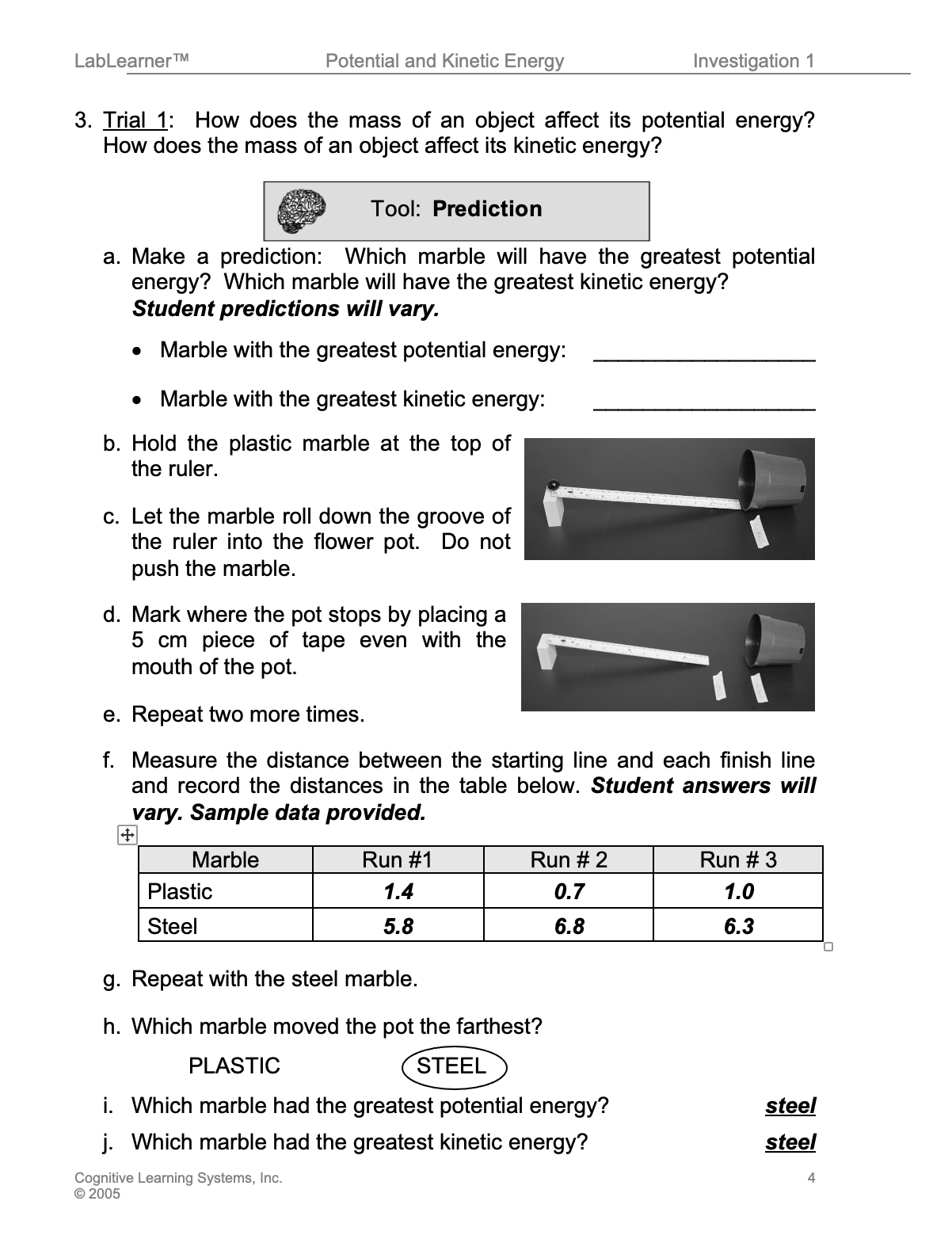
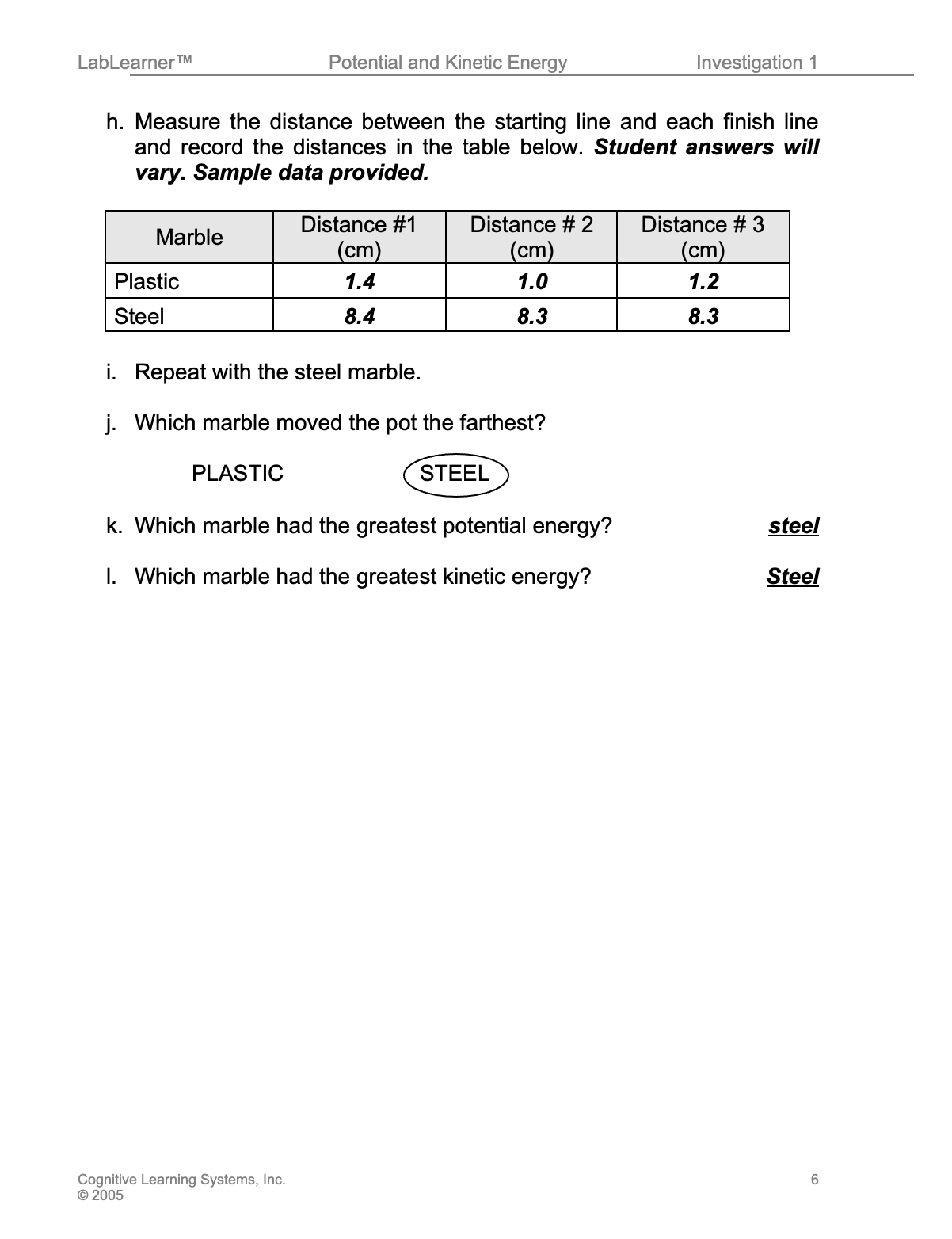
Students will determine the mass of each marble and then allow each marble to roll down the plane three times. Students will mark the distance the flower pot moves each time with a piece of masking tape, then calculate the average distance the pot moved for each marble.
Students will discover that when both marbles are released from the same height, the marble with the greater mass causes the flower pot to move farther. Thus, students should conclude that the marble with the greater mass has a greater capacity to perform work and therefore has greater mechanical energy.
As students complete this trial, they will answer the following questions:
How does the mass of an object affect its potential energy?
How does the mass of an object affect its kinetic energy?
a. Students will determine the mass of the marbles by using the triple beam balance. Review how to equilibrate the triple beam balance by reminding students to:
-
-
-
- Be sure the platform is empty and clean.
- Be sure all the poises are in the “0” position.
- Be sure the balance indicator lines up with the center graduation mark.
- If the indicator does not line up, turn the adjustment knob backward to bring the indicator line up. Turn it forward to bring the line down.
- Students may refer to the Triple Beam Balance Equilibration tool for additional assistance if needed.
-
-
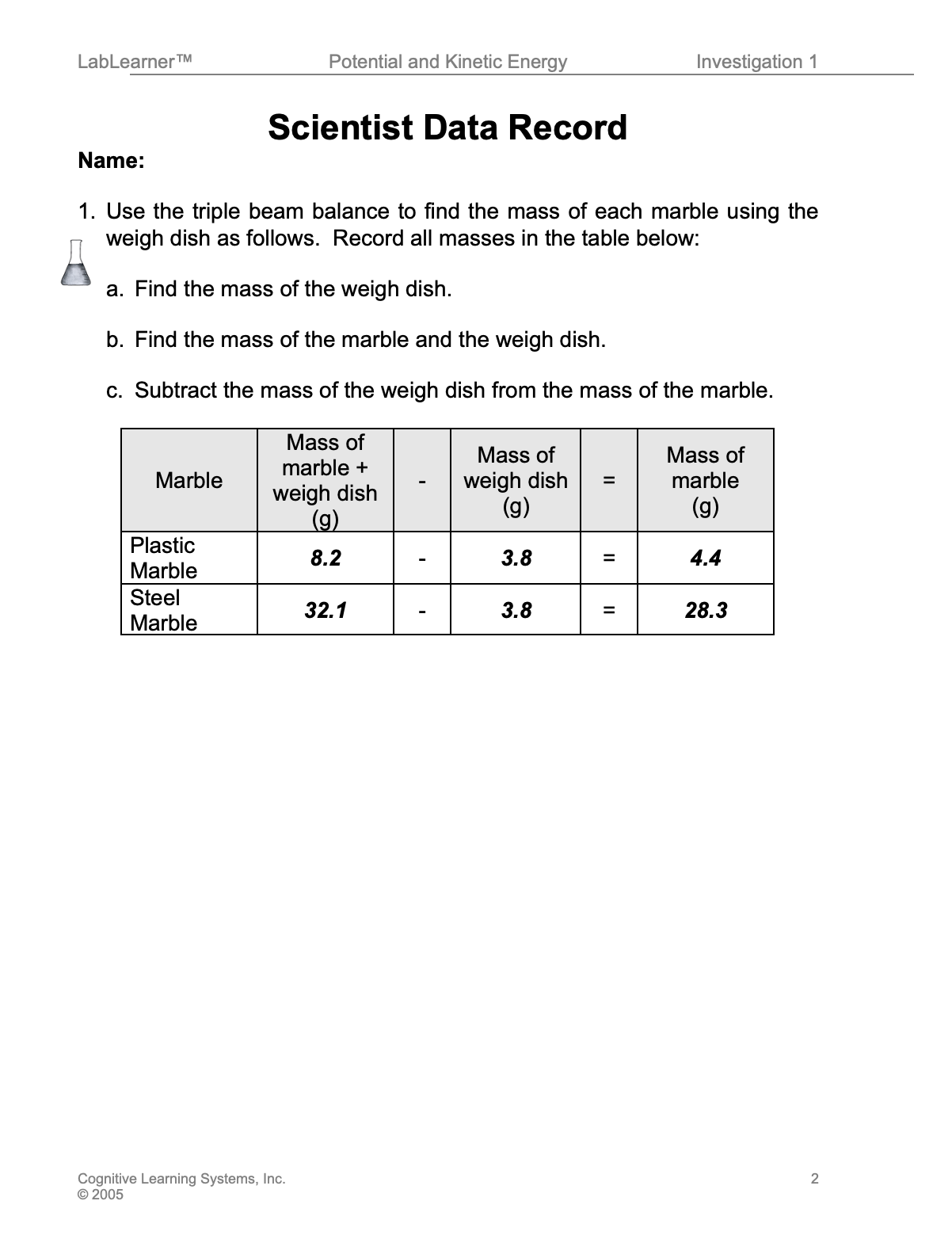
b. Students will need to use a container to determine the mass of the marbles. Remind students that they will need to determine the mass of the container alone before determining the mass of the marble and the container as directed in Step 1b. Refer students to the Measuring Mass with a Container tool if additional assistance is required.
c. Direct students to record the masses in the table and subtract the mass of the weigh dish from the mass of the marble plus the weigh dish to find the mass of the marble.
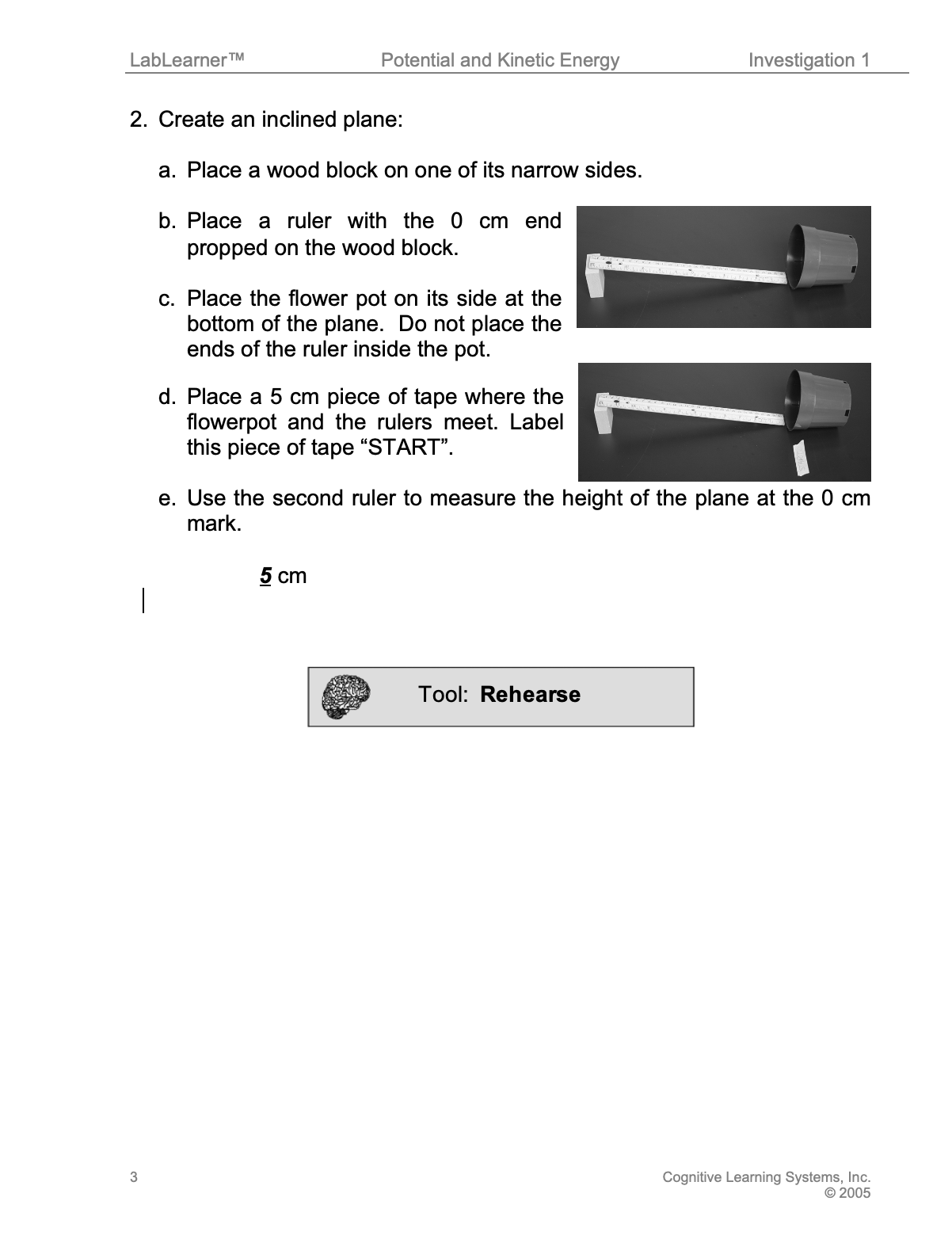
d. Direct students to build an inclined plane with a metric ruler, a woodblock, and a flower pot as instructed in Steps 2a through e of their Student Data Record. The completed plane is shown in Figure 1.1 below. Remind students that the end of the ruler should not be placed inside the pot.
e. Direct one student from each group to determine the distance each marble will move the flower pot three times as instructed in 3b through g. Distances should be recorded in the Table under 3g.
f. Direct students to answer Problems 3h through j in their Student Data Records.
Trial 2
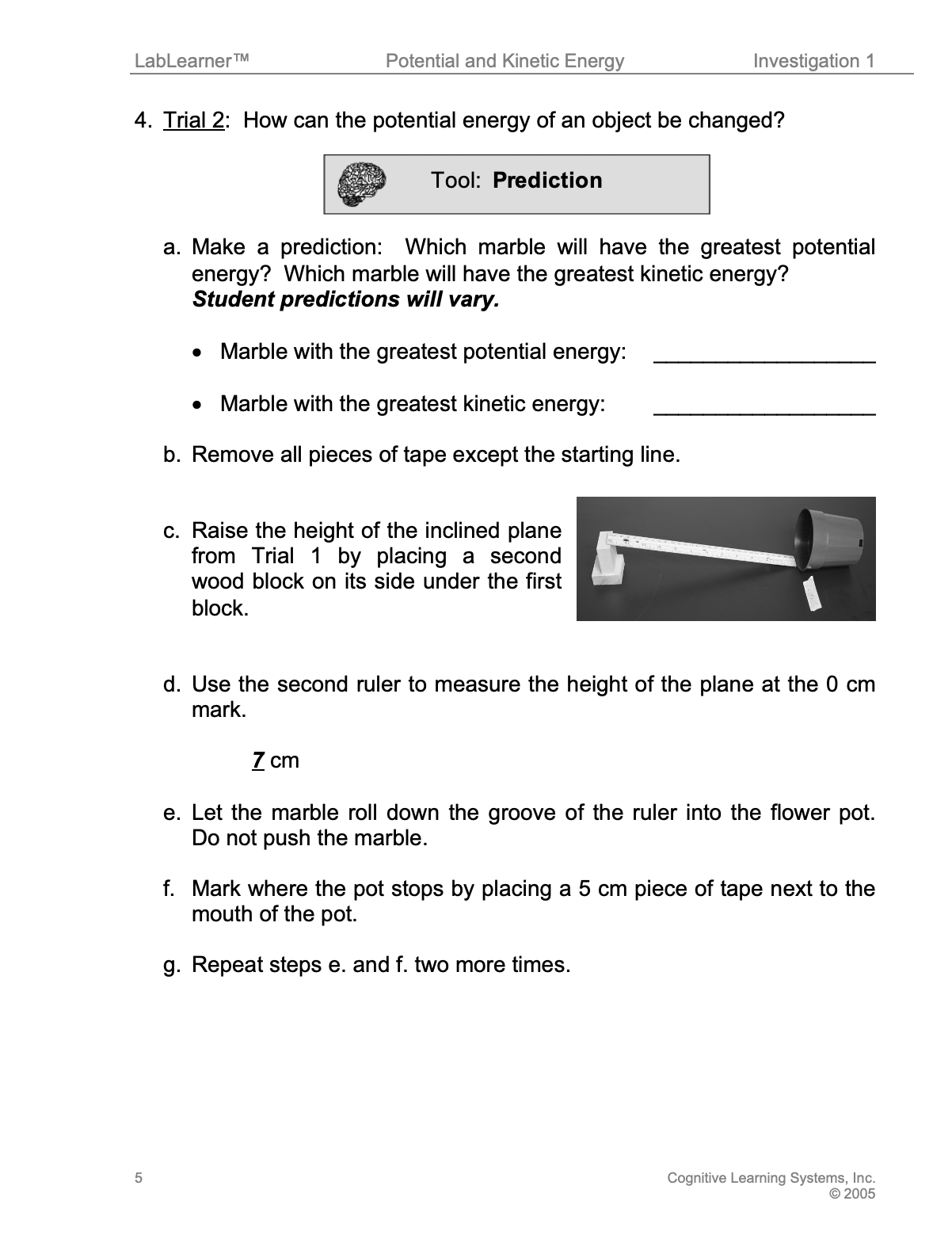
In Trial 1, students investigated how the mass of an object affected its potential and kinetic energy. In Trial 2, students will again investigate the effect of an object’s mass on its ability to perform work on a flower pot, but increase the height of the inclined plane.
Students will discover that the steel marble again causes the flower pot to move a greater distance, but that both marbles move the flowerpot a greater distance than in Trial 1.
As students complete this trial, ask them to consider the following question:
How can the potential or kinetic energy of an object be changed?
a. Direct students to increase the height of the plane by adding a second woodblock as instructed in Step 4c.
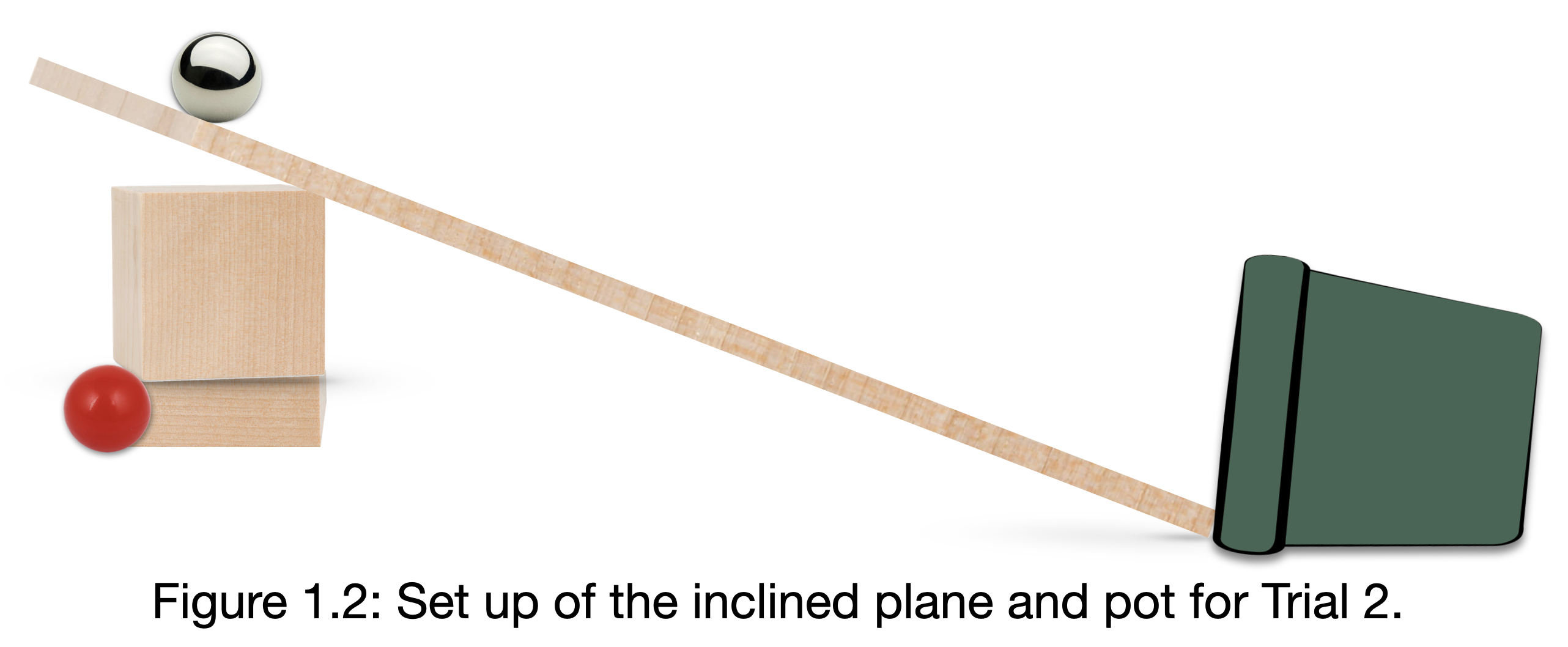
b. Remind students to be sure the flower pot is against the end of the ruler.
c. Direct students to determine the distance the pot will move with each marble as instructed in 4d through i.
d. Students should use their results to answer Problems 4j through l.
3. Upon completion of the investigation, permit enough time to clean up the lab and return the materials and equipment to their assigned locations.
KEYS

CLEAN UP
Let students know your expectations for clean-up. Ask them to clean up.