
Teacher Portal:
Earth and Space Journey
Three: Earth’s Systems
 PRINT IT
Use your browser to download a printable PDF as help during the slide presentation and to make additional notes. In your browser, go to File > Print and then choose to save as PDF.
NAVIGATE IT
Once the slide presentation is launched
- use your left and right arrows to advance or go back in the slide presentation, and
- hover your mouse over the left edge of the presentation to get a view of the thumbnails for all the slides so that you can quickly move anywhere in the presentation.
- Click HERE to launch the slide presentation for the CELL.
SHARE IT
SLIDE 3VES-1
______________________________________________
SLIDE 3VES-2
Teacher’s Notes
- Question 1
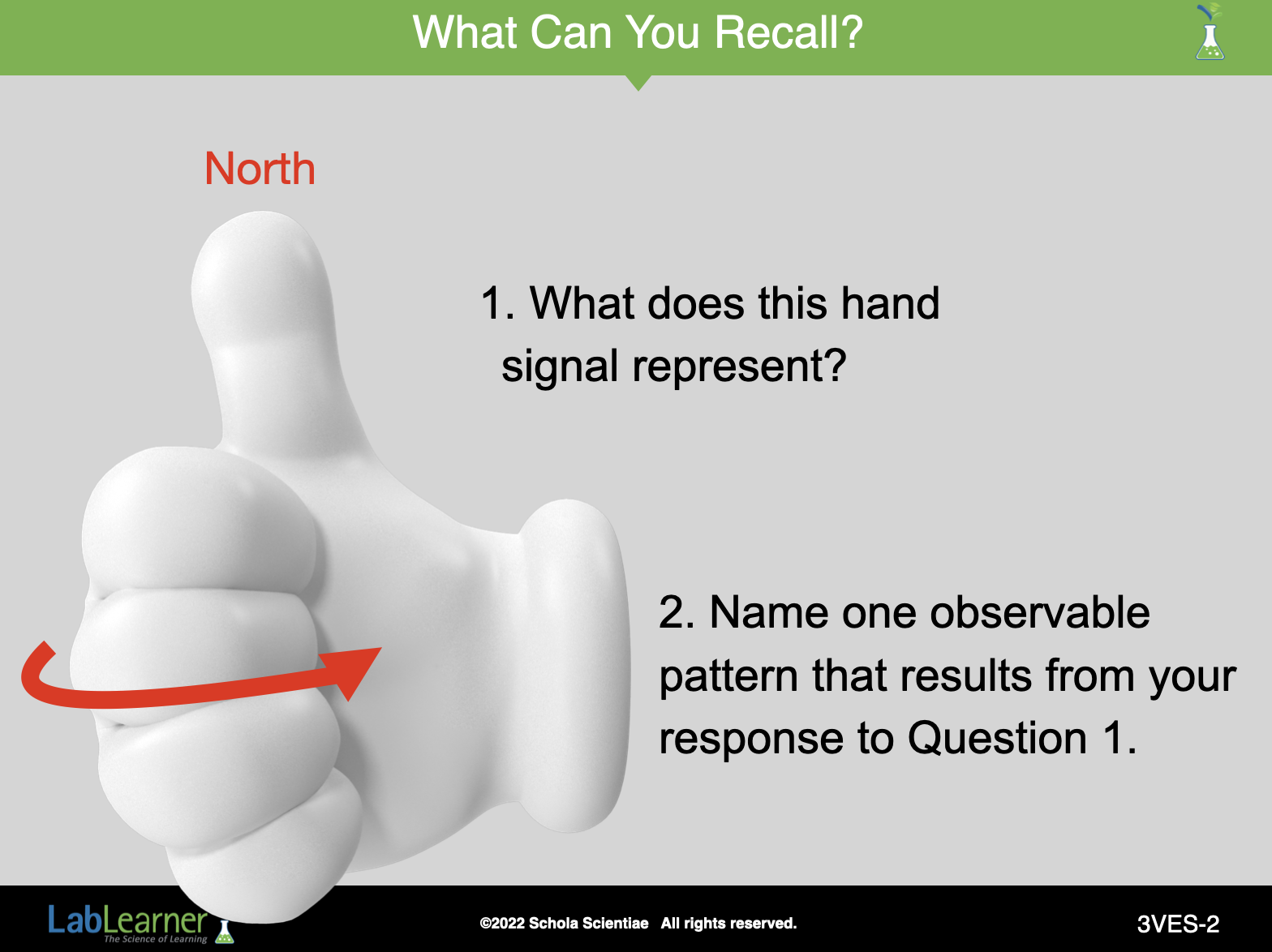
One way to visualize how Earth turns is to hold out your right fist with your thumb extended and pointing straight up. If you visualize that your thumb points north, then your fingers are curling in the direction of Earth’s rotation. We can say that the earth rotates in a “right-handed” manner (because you are using your right hand as a model).
- Question 2
Note: Student answers may vary, as there are four patterns introduced in Day 2 of the Journey. Sample responses are below.
Sample Response – 1
Earth is constantly rotating from west to east (counterclockwise when viewed from the North Pole) on its axis, the line between day and night is constantly moving around Earth creating perpetual cycles of day and night.
Sample Response – 2
In some photographic images, stars can appear like curved lines instead of light dots. This is due to Earth’s rotation.
Sample Response – 3
Earth’s rotation causes an apparent movement of our closest star, the Sun. On a daily basis, the Sun rises in the east, makes its slow journey across the sky, then sets in the west. It continues a journey around the other side of the Earth, and rises again the next morning.
Sample Response – 4
The Sun is a source of light that when hits an object causes shadows. As Earth rotates each day, the Sun appears to change position in the sky, and the changing angles of sunlight affect the appearance of shadows.
Shadows change length throughout the day because the angle at which the sun shines on stationary objects changes with the Earth’s rotation. For example, at 9:00 AM, when the sun is near the horizon, it casts long shadows when an object blocks the light. Conversely, when the sun is high overhead during the middle of the day (12:00 PM), the shadows become shorter, as the angle of the sun has changed.
______________________________________________
SLIDE 3VES-3
Teacher’s Notes
- Explain to students that our desire to push the boundaries of where we have been has led to numerous missions to the Moon. The first time people got a glimpse of the whole Earth was in December 1972, as the Apollo 17 crew left Earth’s orbit for the moon.
- Looking at Earth from that far away made it easy to see that all its parts – solid Earth, gases, both liquid, and frozen water, and living things – are connected to each other. Based on this way of looking at Earth, the idea of Earth System Science came into existence.
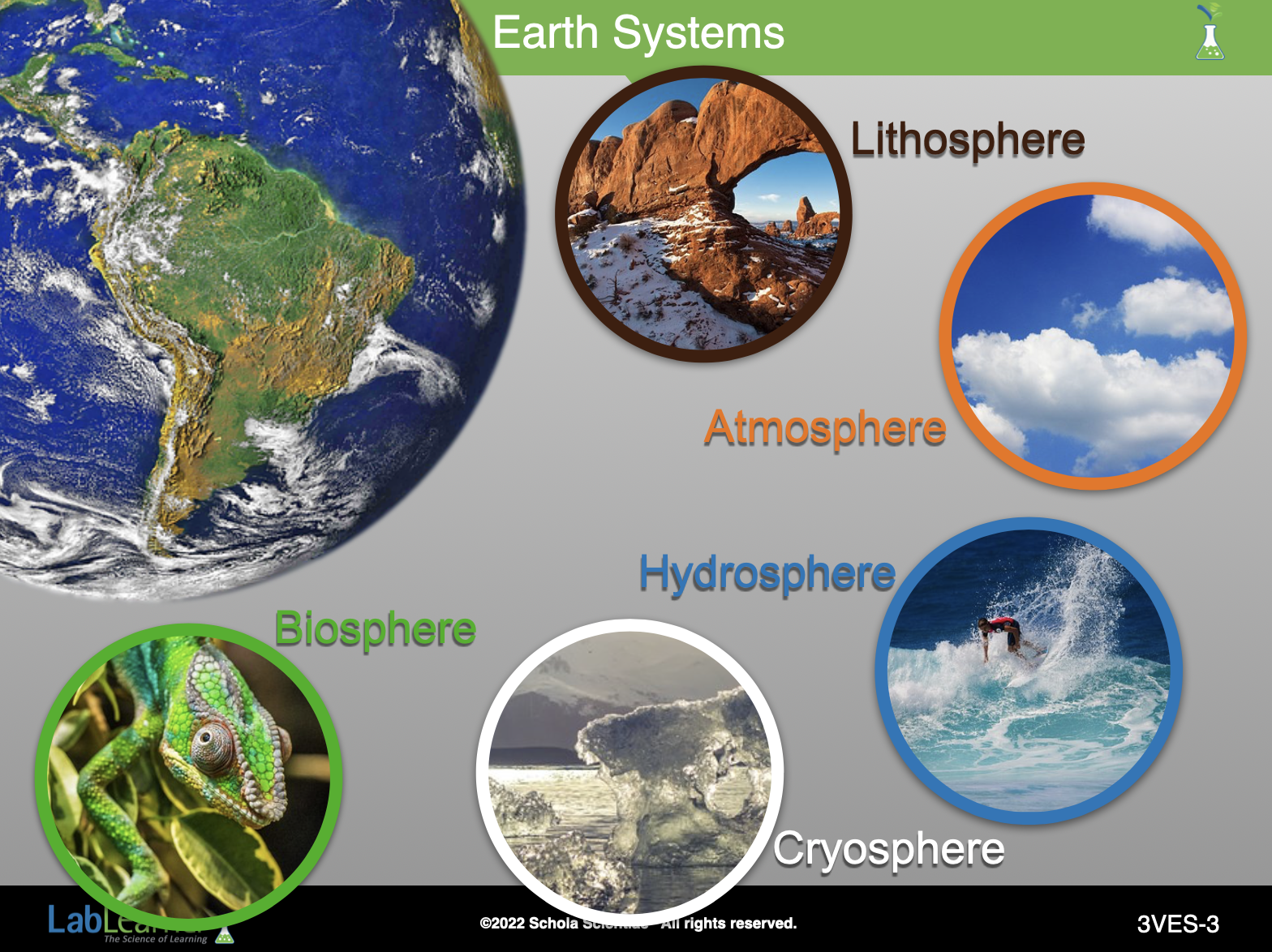
- The Earth System is comprised of multiple components – the lithosphere (solid Earth), the atmosphere (gases), the hydrosphere (liquid water), the cryosphere (frozen water), and the biosphere (living organisms) – that function as a single, connected system.
- Explain that this section of the Journey explores key characteristics and interactions of the Earth System.
Note: Missing in this simplified representation is the critical context within which the Earth System operates: the solar system and galaxy beyond (sometimes referred to as the exosphere), the source of driving energy for the Earth (the Sun), and of critical external inputs such as asteroids and comets whose impacts have altered the Earth System significantly in the past.
______________________________________________
SLIDE 3VES-4
Teacher’s Notes
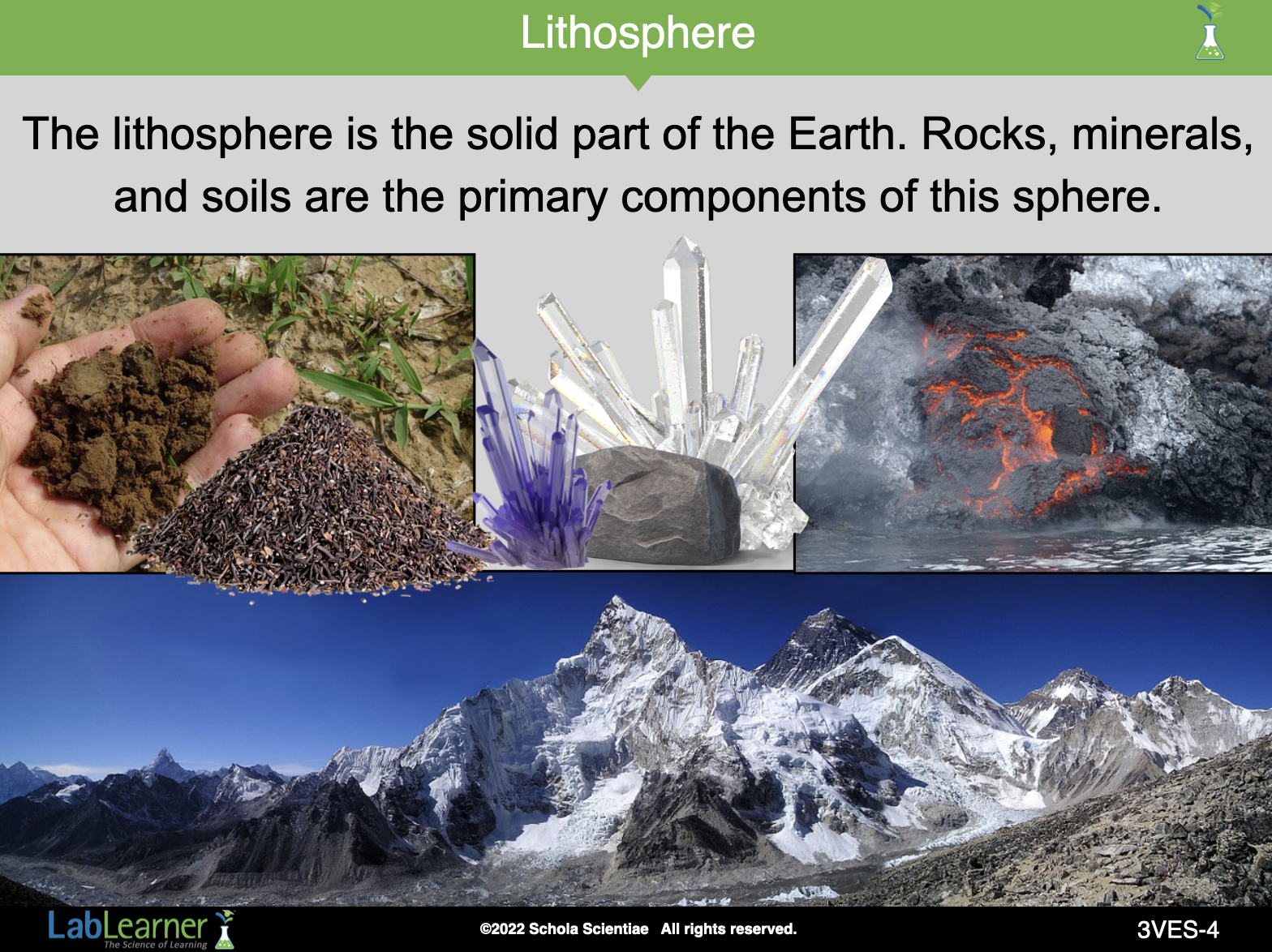
- Explain to students that lithosphere is the term given to the rock and minerals which form Earth’s outer crust and its tectonic plates. This is an important part of the Earth’s system as these rocks become eroded and weathered to provide important minerals to the other Earth Systems.
- The lithosphere is always changing due to volcanic eruptions, earthquakes, and plate tectonics. Throughout Earth’s history, the entire lithosphere has been recycled approximately six times.
______________________________________________
SLIDE 3VES-5
Teacher’s Notes
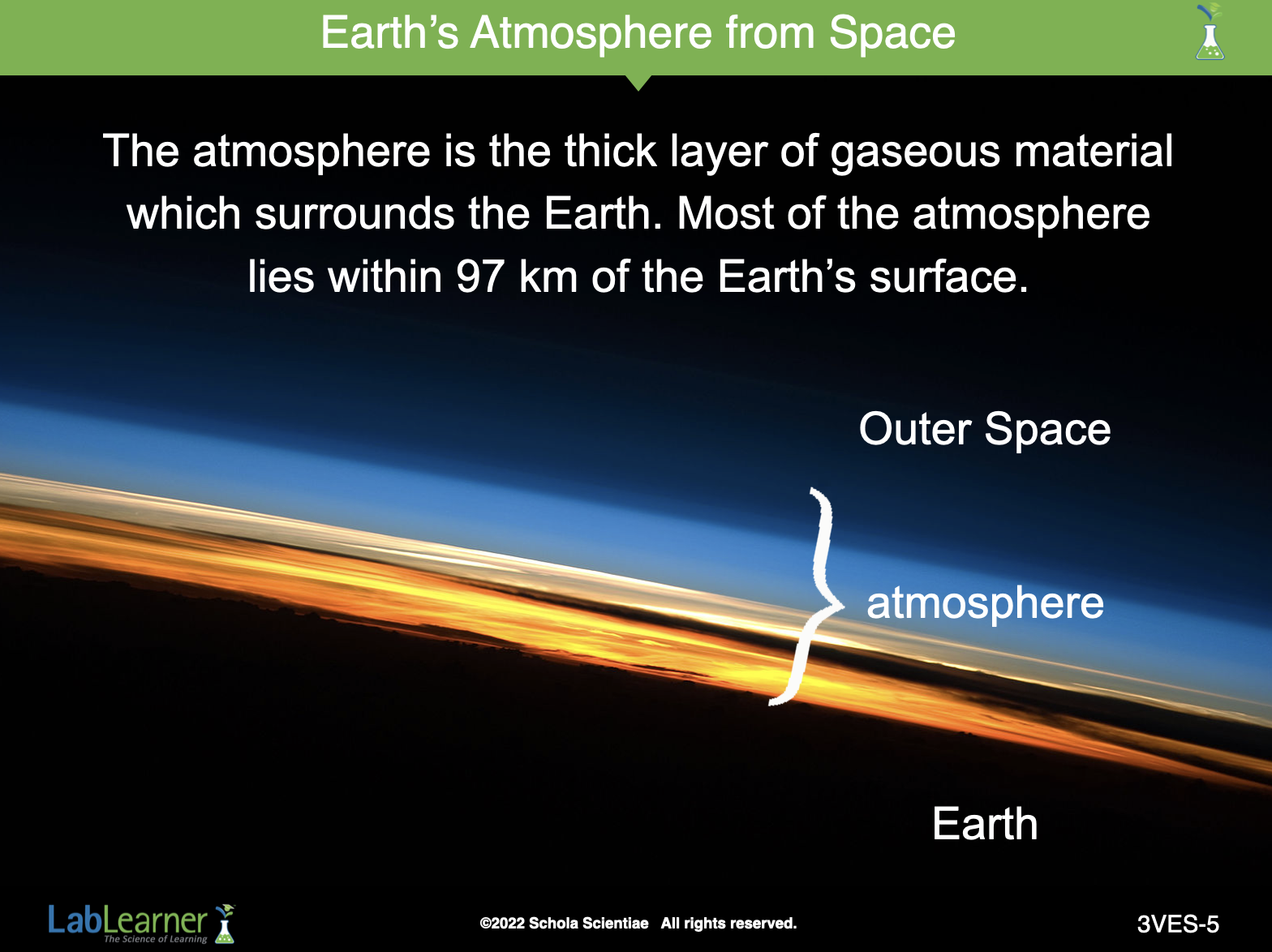
- Explain to students that Earth is one of the few planets in the solar system which has an atmosphere; a body of gases that surrounds our planet.
- The atmosphere is comprised of: 78.09% nitrogen, 20.95% oxygen, 0.93% argon, 0.039% carbon dioxide, and very small amounts of other gases. The small amounts of other gases are often termed ‘greenhouse gases’ as they are delicately balanced to maintain the Earth’s temperature at a level suitable to sustain life.
The greenhouse effect is a natural process that warms the Earth’s surface. When the Sun’s energy reaches the Earth’s atmosphere, some of it is reflected back to space and the rest is absorbed and re-radiated by greenhouse gases.
Without these gases, and the natural greenhouse effect, the average temperature of the Earth would be approximately -18°C (0°F) instead of its current 14°C (57°F). Life, as we know it, would not exist.
Note: Many greenhouse gases occur naturally in the atmosphere, such as carbon dioxide, methane, water vapor, and nitrous oxide, while others are man-made. Those that are man-made include chlorofluorocarbons (CFCs), hydrofluorocarbons (HFCs) Perfluorocarbons (PFCs), as well as sulfur hexafluoride (SF6). These gases trap heat similar to the glass panels of a greenhouse, hence the name greenhouse gases. A major issue for the scientific community today is understanding the impact of greenhouse gases, both naturally-occurring and manmade, on weather change and dangerous levels of global warming.
Note: The image depicts the layered structure of Earth’s atmosphere at sunset. The view is from the International Space Station.
______________________________________________
SLIDE 3VES-6
Teacher’s Notes
- Explain to students that the collection of all Earth’s life forms are distributed in major life zones known as biomes: tundra, boreal forest, temperate deciduous forest, temperate grassland, desert, savannah, tropical rainforest, chaparral, freshwater, and marine.
- Almost all the life on the planet is found between 3 meters below the surface of the Earth, up to 30 meters above the ground, and in the top 200 meters of the oceans.
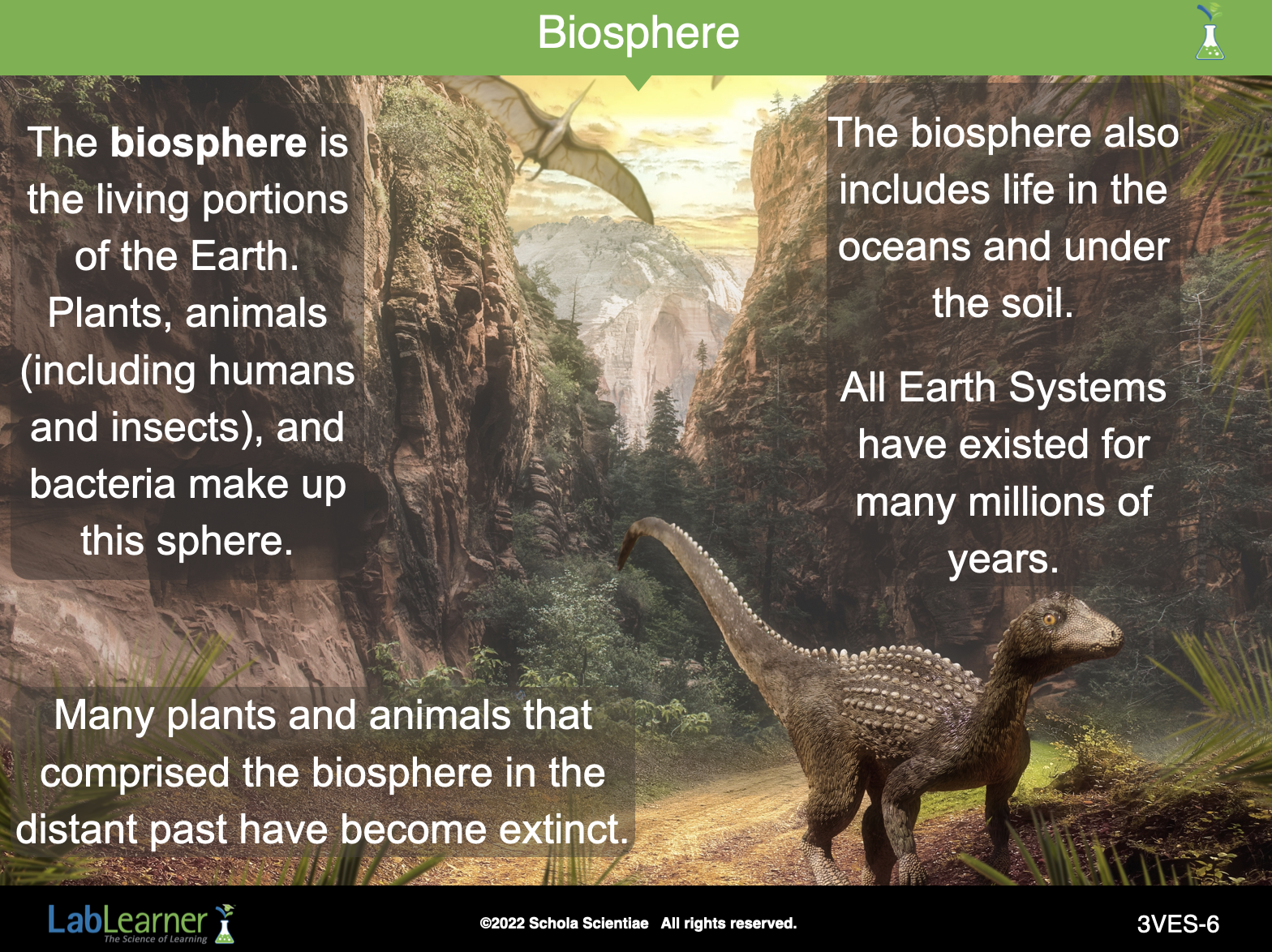
- Over the history of the Earth the biosphere has changed considerably with a great number of species evolving, adapting, and becoming extinct (see illustration in slide).
- The diversity of the biosphere varies greatly across the Earth, as species can be highly vulnerable to even minor variations in climate. A slight change in air temperature or moisture, for example, can alter the type of vegetation (flora) which is able to grow in a given location. This may, in turn, affect the distribution of animals (fauna) as they move or adapt to vegetation availability.
______________________________________________
SLIDE 3VES-7
Teacher’s Notes
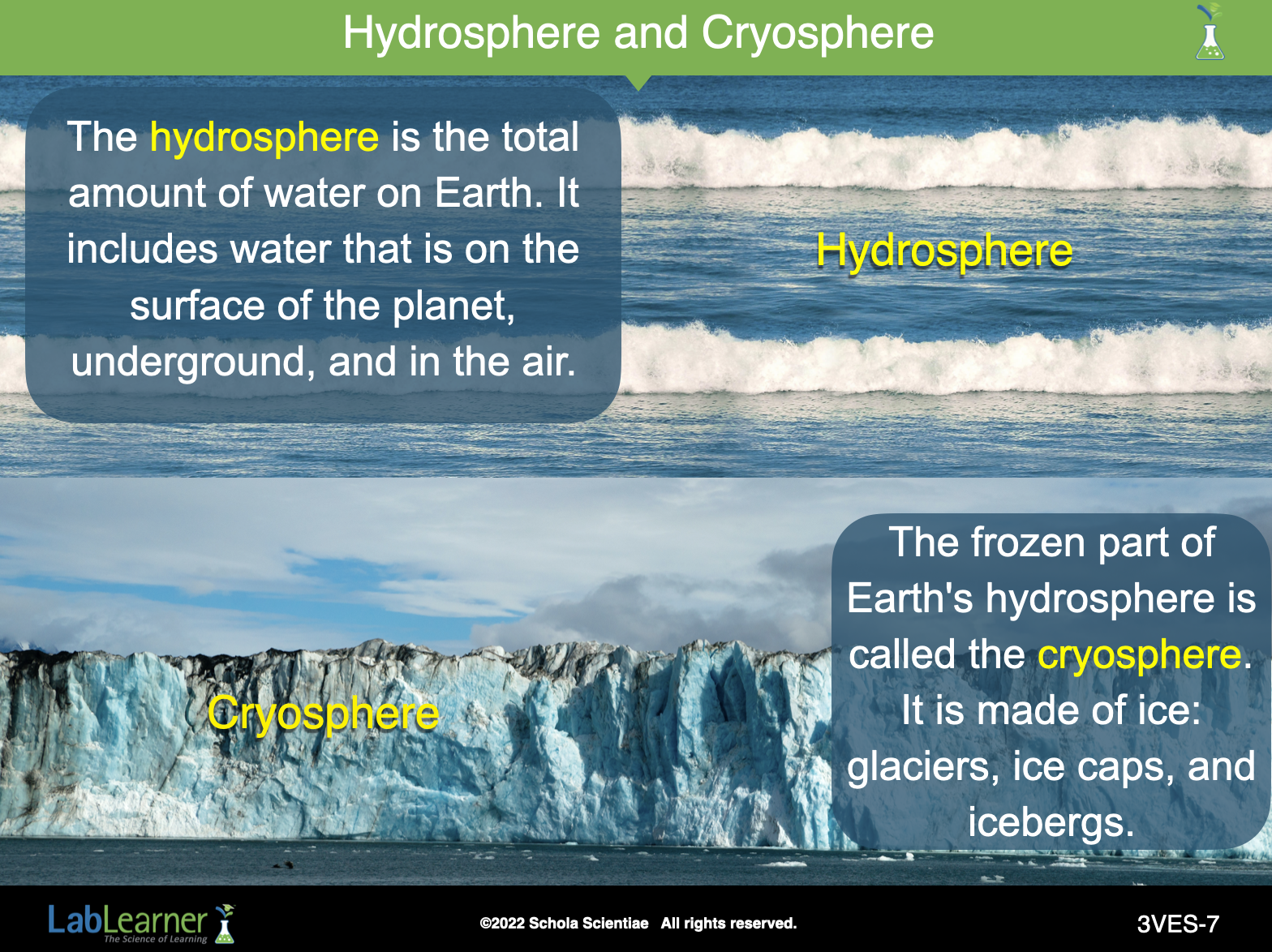
- Explain to students that the hydrosphere is a defining characteristic of the Earth. 71 % of our planet is covered by water, though people can’t use most of it because it is seawater, frozen, or deep underground. Many sources estimate that only 0.3 % of all water on Earth is clean, fresh water that is usable.
Note: Since 71 % of Earth is covered by water, it is often referred to as the ‘Water Planet’ or “Blue Planet’.
______________________________________________
SLIDE 3VES-8
Teacher’s Notes
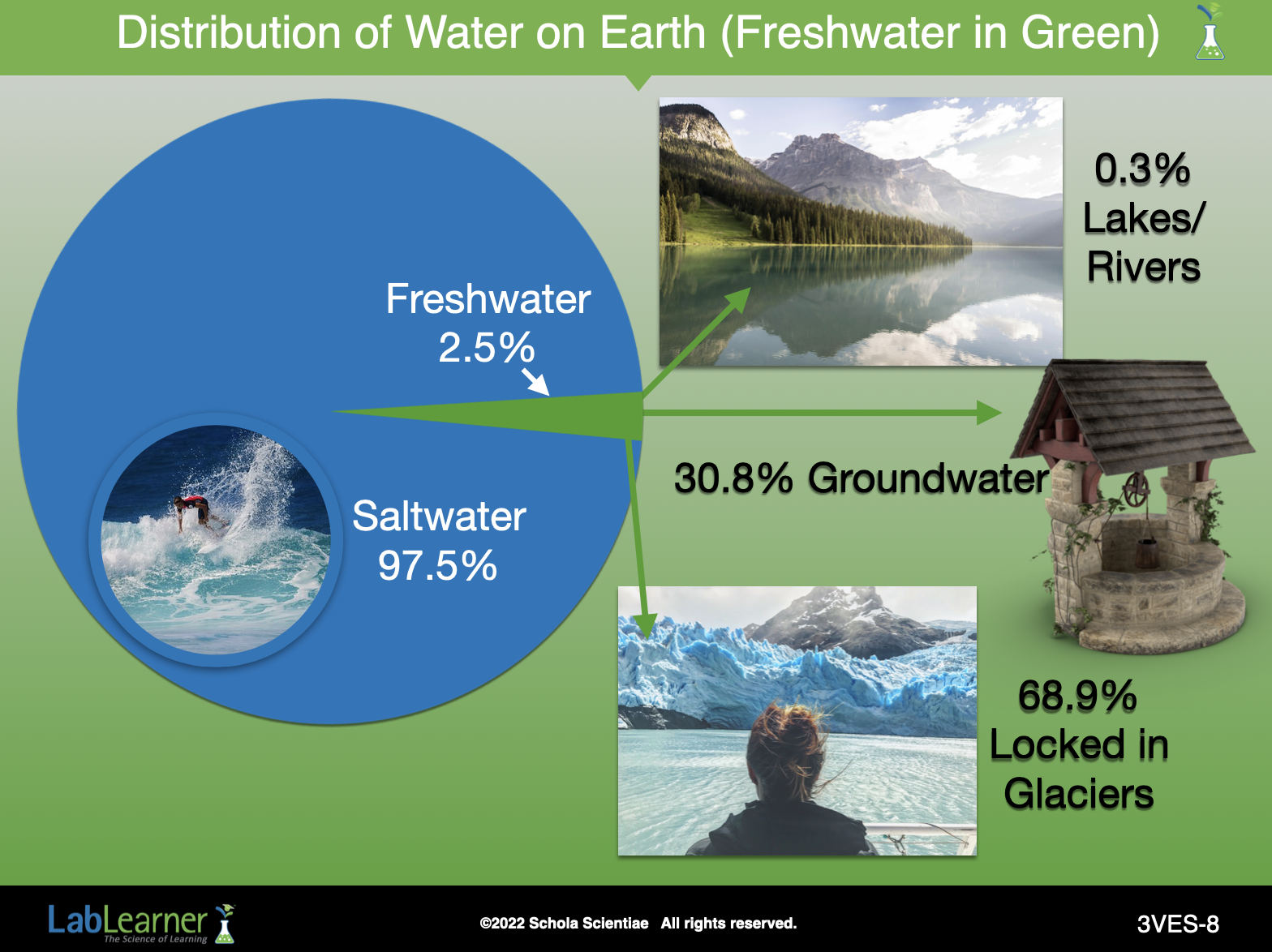
- Explain to students that Earth’s water exists naturally in different forms and locations. There is a variation of research about the exact percentages in the different forms and locations, but most sources agree that very little is fresh water usable for humans.
- As the graph depicts, Earth’s oceans (saltwater) contain 97.5% of the planet’s water, with the remaining 2.5% being freshwater (water with low concentrations of salts).
- The data to the right shows that almost all freshwater is locked up in ice and in the ground. Only a minute amount of freshwater is surface water found in lakes and rivers.
______________________________________________
SLIDE 3VES-9
Teacher’s Notes
- Remind students that Earth’s oceans contain 97.5% of the planet’s water.
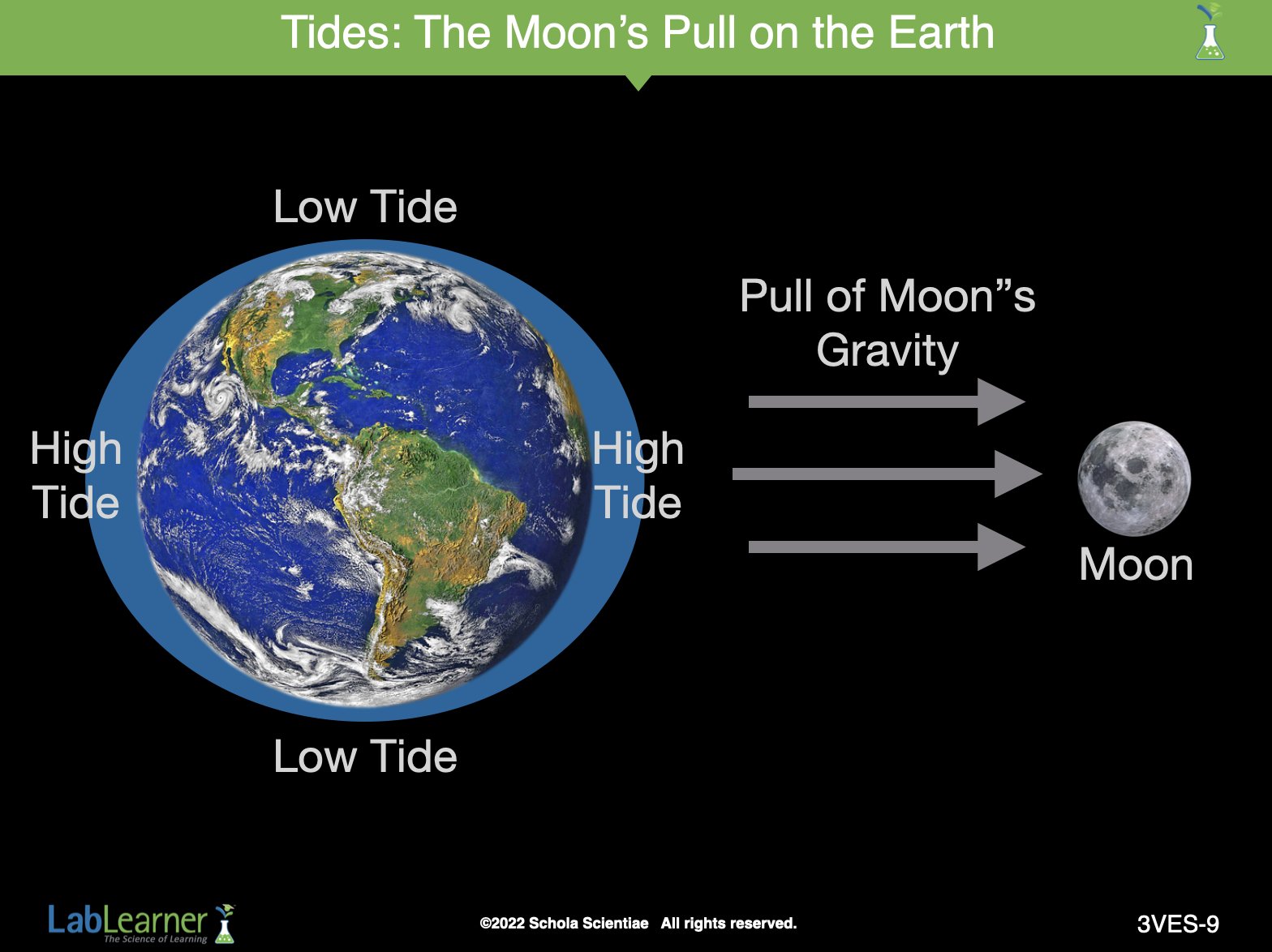
- Explain to students that, by definition, a tide is the regular rising and falling movement of the ocean.
Note: Direct students’ attention to the diagram to reference the bulges, high tide areas, and low tide areas. Notice that the two bulges are on opposite sides of Earth from each other. The same holds true for the two high tide areas and two low tide areas.
______________________________________________
SLIDE 3VES-10
Teacher’s Notes
- Remind students that the Earth System is comprised of multiple spheres that function as a single, connected system.
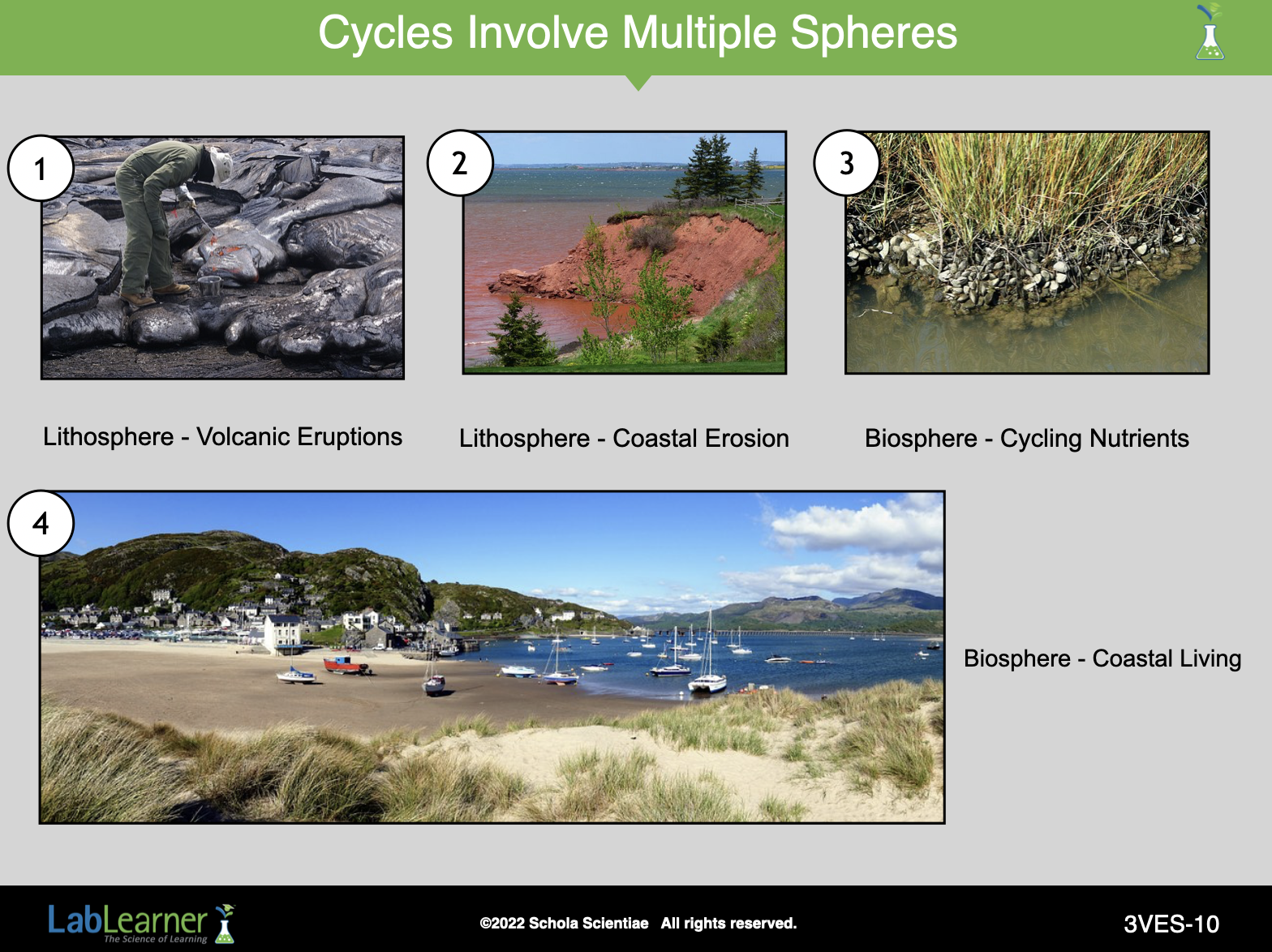
- The connections between spheres are evident when observing various cycles or events within the Earth System. Tidal cycles are a prime example. (Expound upon the slide images with the following information.)
Lithosphere
Image 1 – At the same time bulges are created in the ocean waters of the hydrosphere, very small deformations or movements in the Earth’s lithosphere are caused by the gravitational pull of the moon. These shifts of the lithosphere are called Land or Earth tides. Although land tides are not noticeable to people on a daily basis like ocean tides, they are still very important to scientists like volcanologists and geologists because the small shifts in Earth’s lithosphere may be able to trigger volcanic eruptions.
Image 2 – Tides, along with waves, currents, and wind, form complex interactions over time to cause erosion along some stretches of shoreline and growth or build-up in others.
Biosphere
Image 3 – Tidal fluctuations are vital to the unique plant and animal communities living within estuaries (where waters are brackish—a mixture of fresh water), as they cycle nutrients and provide a transportation mechanism for organisms such as shellfish, eels, and turtles during some stages of their life cycles.
Image 4 – Humans need to predict and measure tides in order to get cargo ships safely into and out of ports, determine the extent of an oil spill, build bridges, piers, and coastal homes, determine the best fishing spots, prepare for emergencies such as hurricane evacuation, and much more.
______________________________________________
SLIDE 3VES-11
Teacher’s Notes
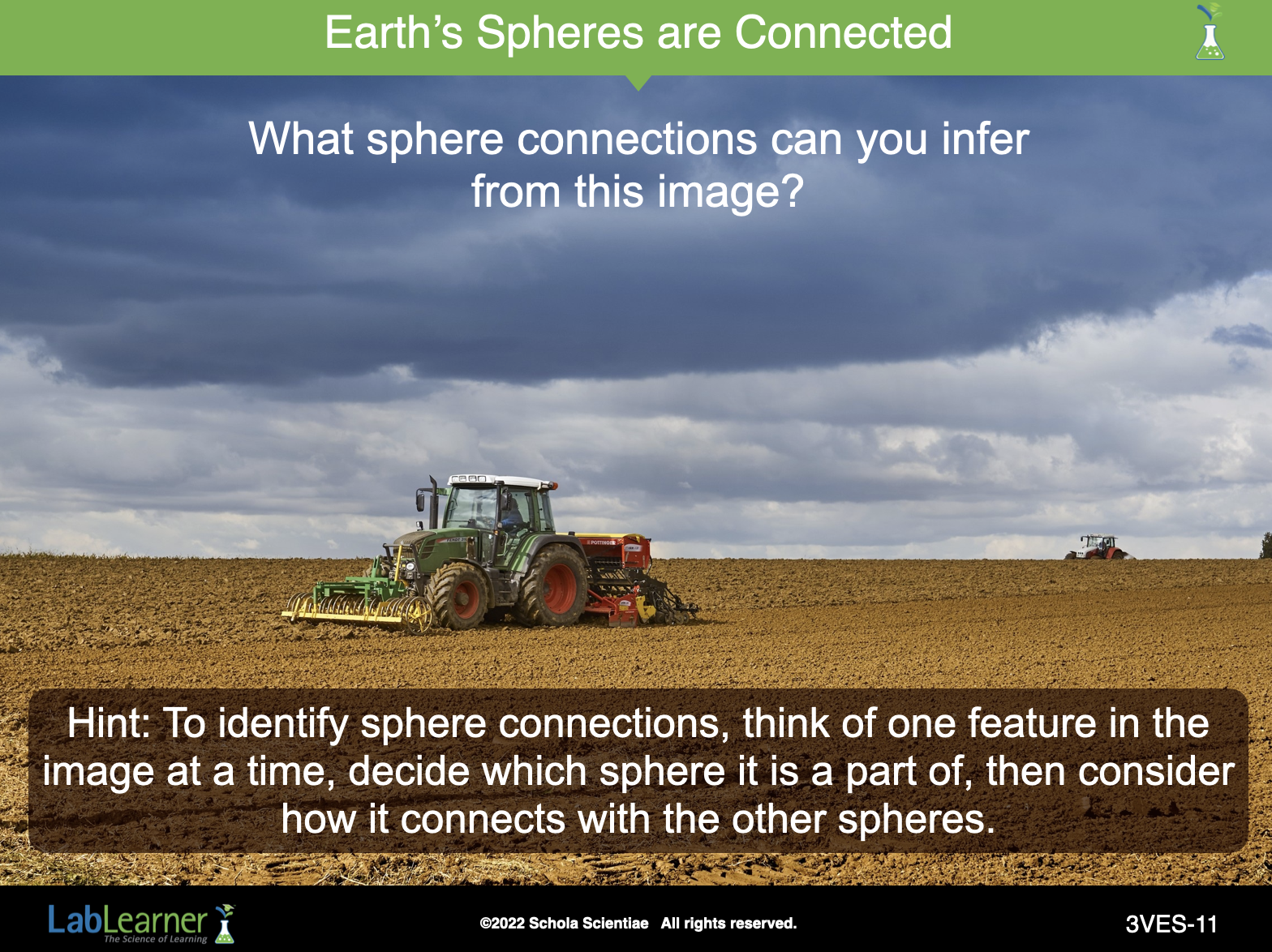
- Challenge students, “What sphere connections can you infer from this image?”
Note: Accept all scientifically valid responses. Suggested responses are below.
- Humans (biosphere) use farm machinery (manufactured from lithosphere materials) to plow the fields (lithosphere).
- Farm machinery (manufactured from lithosphere materials) burns fossil fuels (lithosphere/biosphere) into the atmosphere.
- Plants (biosphere) draw water (hydrosphere) and nutrients from the soil (lithosphere) and release water vapor into the air (atmosphere).
- The atmosphere brings precipitation (hydrosphere) to water the plants (biosphere).
- Weathering and erosion of the soil (lithosphere) may be caused by wind (atmosphere), rain (hydrosphere), and the person (biosphere) driving overland with heavy machinery (manufactured from the lithosphere materials).
- Plant and animal remains (biosphere), mix with the soil (lithosphere) to create fertile soil (lithosphere).
- Energy from the sun is stored by plants (biosphere).
- When humans or animals (biosphere) eat the plants (biosphere), they acquire the energy originally captured by the plants.
- The sphere connections from the farm and the tidal images (on the previous slide) are just a few examples of how spheres within the Earth System work together allowing Earth processes and events to occur.
- Emphasize to students that the current balance between sphere connections allows matter and energy to continually change and cycle through the Earth system, which makes it possible for life on Earth to flourish.
______________________________________________
SLIDE 3VES-12
Teacher’s Notes
Question 1:
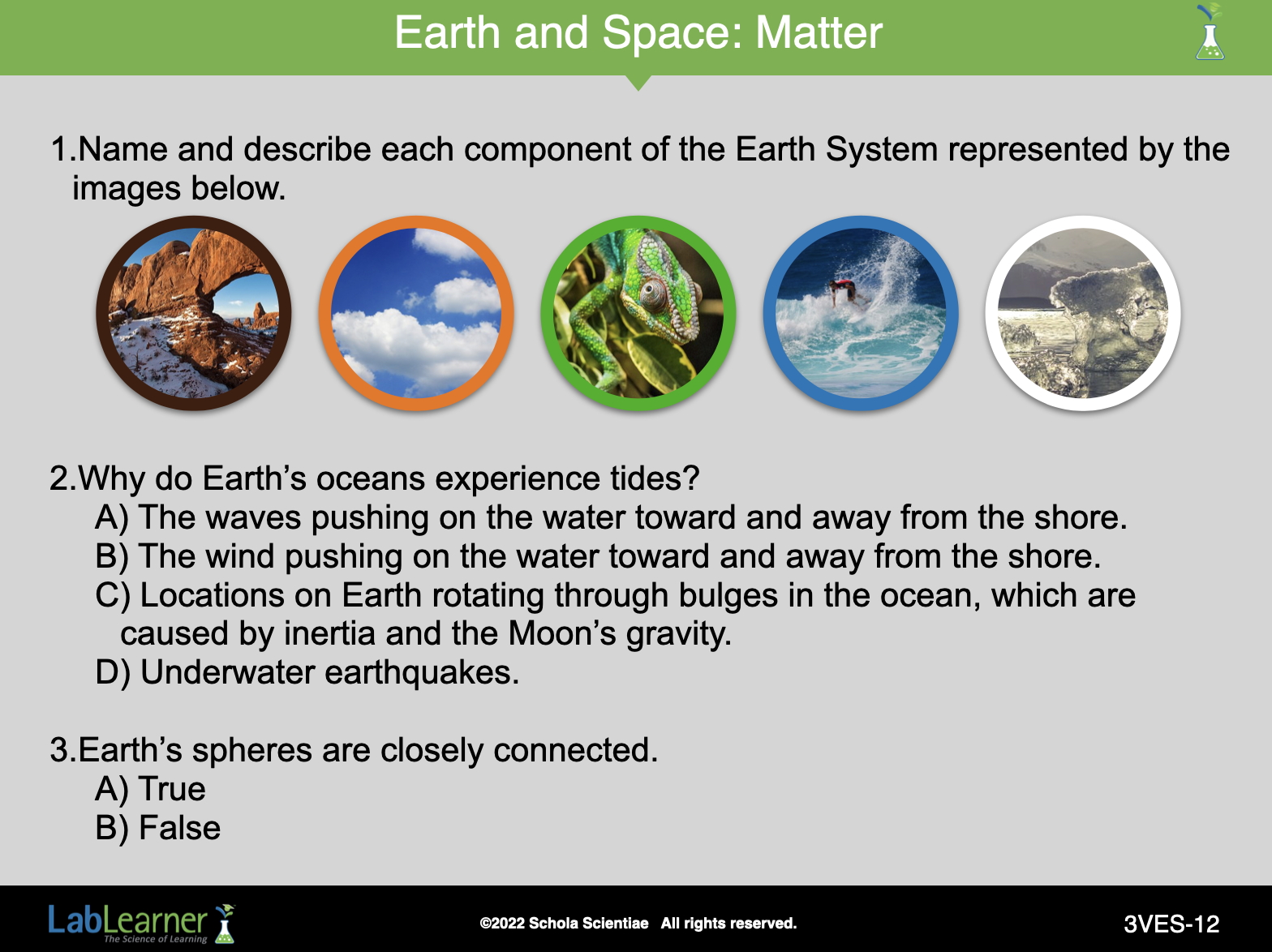
The images represent Earth’s Spheres. From left to right, the spheres are:
The Lithosphere – The lithosphere is the term given to the rock and minerals which form Earth’s outer crust and its tectonic plates.
The Atmosphere – The atmosphere is the body of gases that surrounds our planet.
The Biosphere – The biosphere is the living portion of the Earth. Plants, animals (including humans and insects), and bacteria make up this sphere.
The Hydrosphere – The hydrosphere is the total amount of water on Earth. It includes water that is on the surface of the planet, underground, and in the air.
The Cryosphere – The frozen part of Earth’s hydrosphere is called the cryosphere. It is made of ice: glaciers, ice caps, and icebergs.
Question 2 – Answer C
A tide is the regular rising and falling movement of the ocean.
As Earth rotates on its axis, various locations pass through two bulges in the oceans. The level of the ocean rises when locations approach the bulge and fall when it leaves. Rising ocean levels result in high tides, and falling ocean levels result in low tides.
Question 3 – Answer A
Explain to students that Earth’s spheres are closely connected. This is evident when observing various cycles or events within the Earth System.