
Teacher Portal:
Exploring Ecosystems
Investigation 5 – Lab
 BE PREPARED
Supplies and Equipment:
Group Materials:
- 175 gram cubes
- 1 stopwatch
- 1 balance pan (from primary balance)
Individual Materials:
- 1 100 ml beaker
- 1 pair of forceps
- 1 Student Data Record
Preparation:
1. Fill five (5) balance pans with 175 multi-colored one-gram cubes.
2. Place all materials at the distribution center.
3. Divide the class into five (5) cooperative groups.
NOTE: When preparing the gram cubes, if you choose to use a triple beam balance, remember to subtract the weight of the empty balance pan when weighing out the one-gram cubes.
Instruction:
1. Direct each student group to obtain the following necessary materials from the distribution point: 175 gram cubes, one (1) stopwatch or timer, one (1) balance pan.
2. Direct each student to obtain one (1) 100 ml beaker, and one (1) pair of forceps.

GET FOCUSED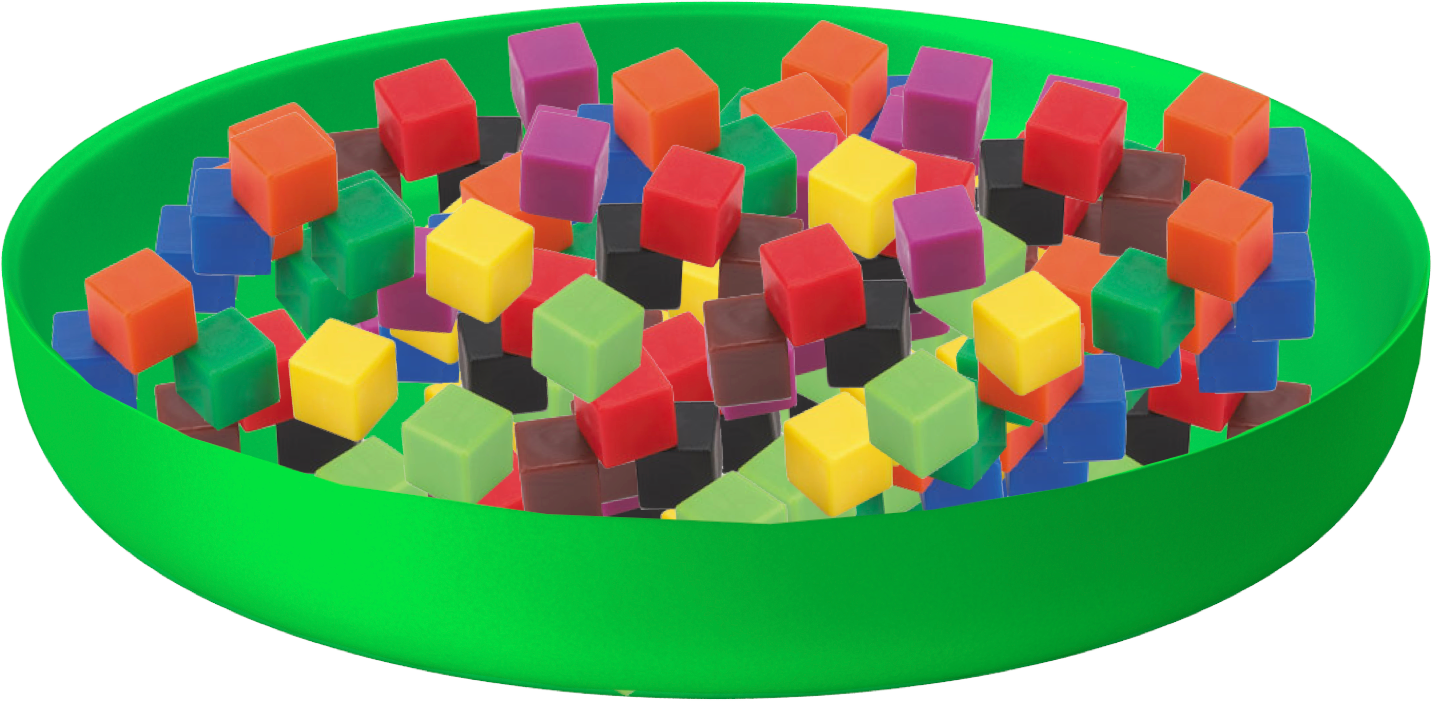
Investigation Five introduces students to the concept that pollutants, once entered the ecosystem, can spread from one organism to another and from one tropic level to another.
INVESTIGATE
Trial 1
1. Explain to students that they will perform an experiment in which they will play the part of rabbits who must eat as much food as possible within a year. The year will be modeled as one (1) minute.
a. Explain to the class that the balance pan represents the ecosystem and that the 175 one- gram cubes represent the amount of food – biomass – of the producer plants in the ecosystem.
b. Assign one student to be the time- keeper. Other students should be “rabbits.” Explain that they will now model what happens in Year 1.
c. Ask each “rabbit” to obtain a pair of forceps and a 100 ml beaker.
d. Tell the rabbits that they will have one minute to “eat” as much food as they can and that to “eat” means transferring gram cubes from the balance pan to their own 100 ml beaker. All rabbits must, of course, eat from the same balance pan at the same time, therefore they are in competition with each other.
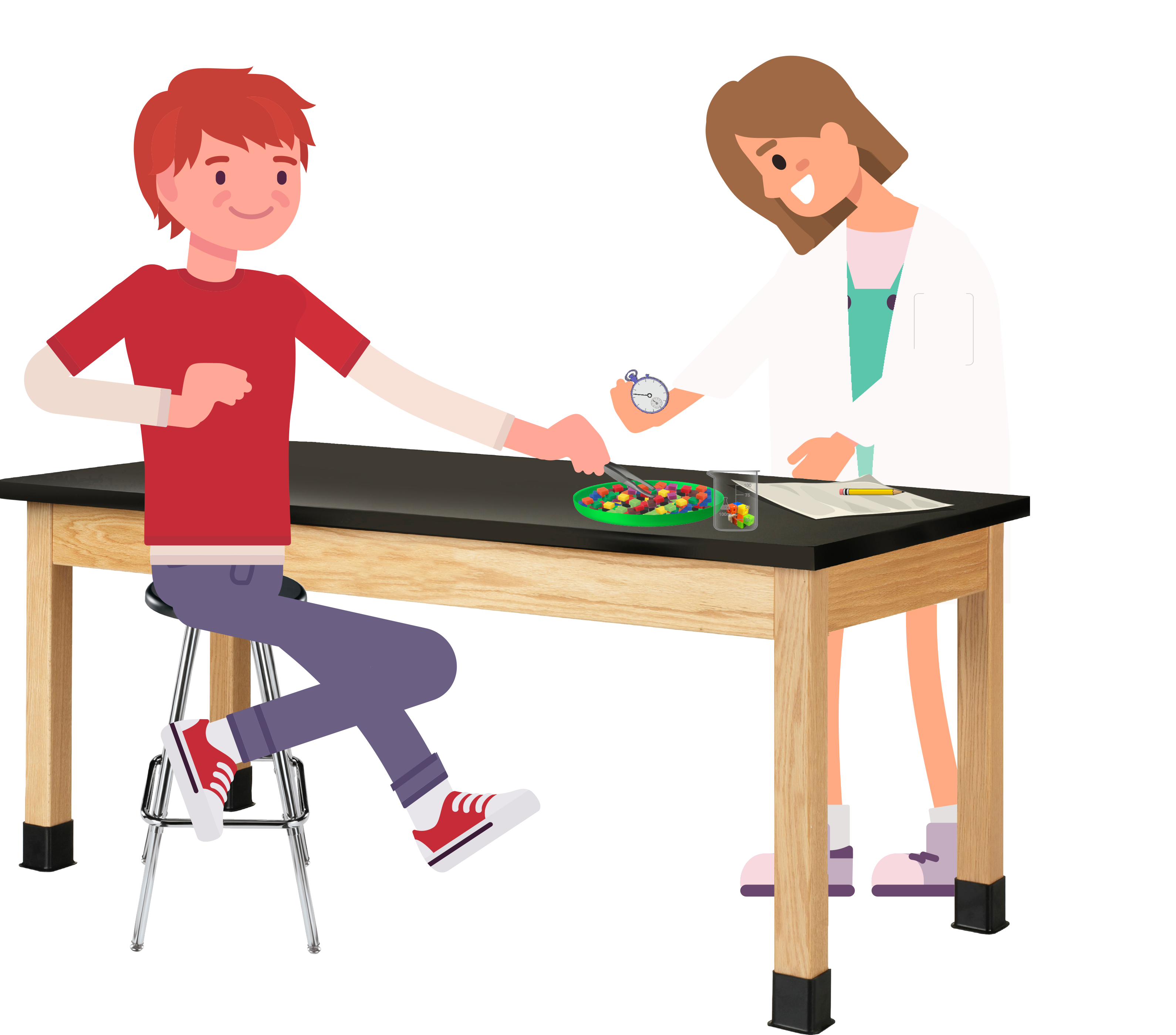 e. If a gram cube is dropped between the balance pan and their 100 ml beaker, the student must pick it up, place it in the beaker and continue.
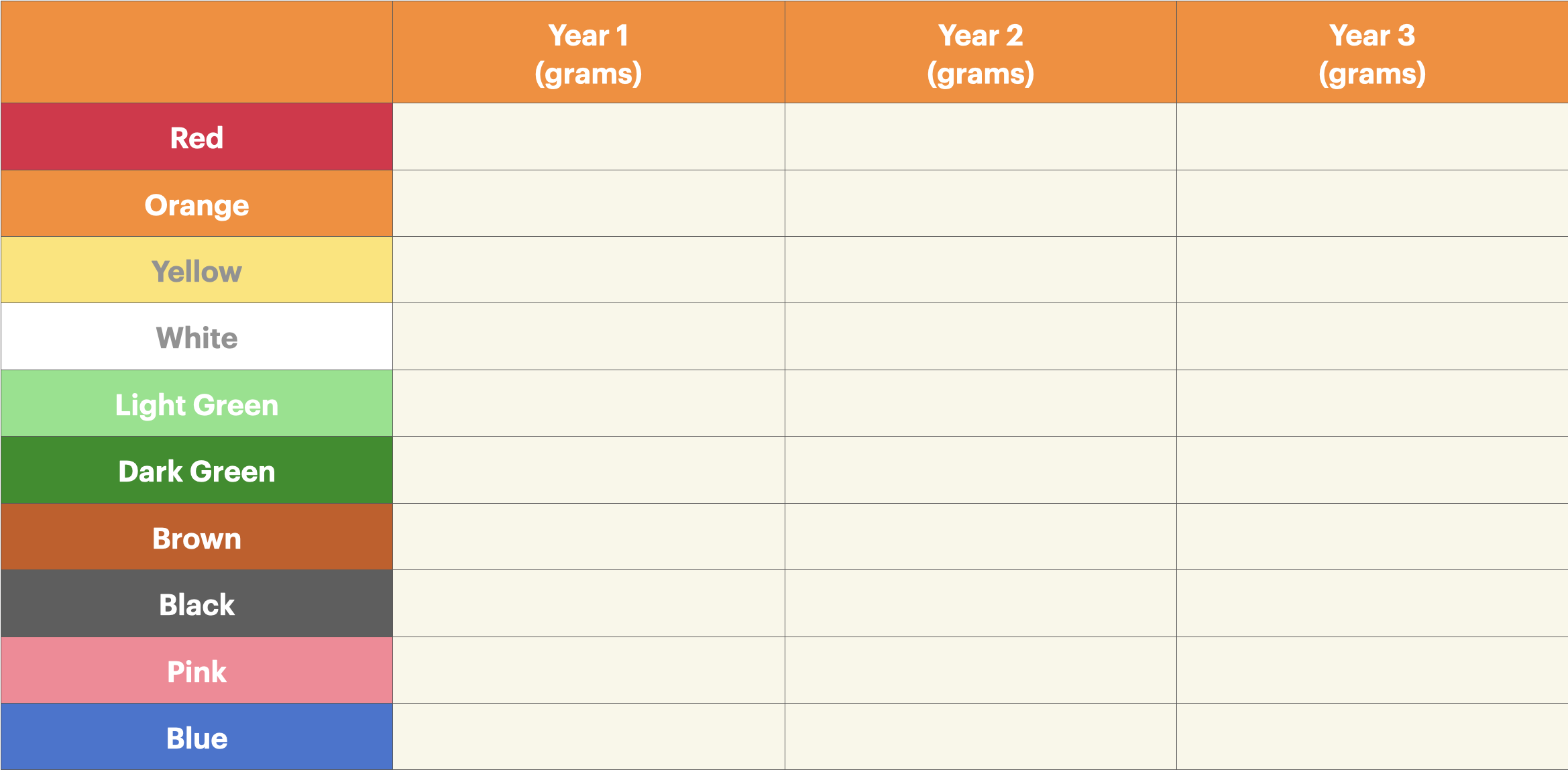
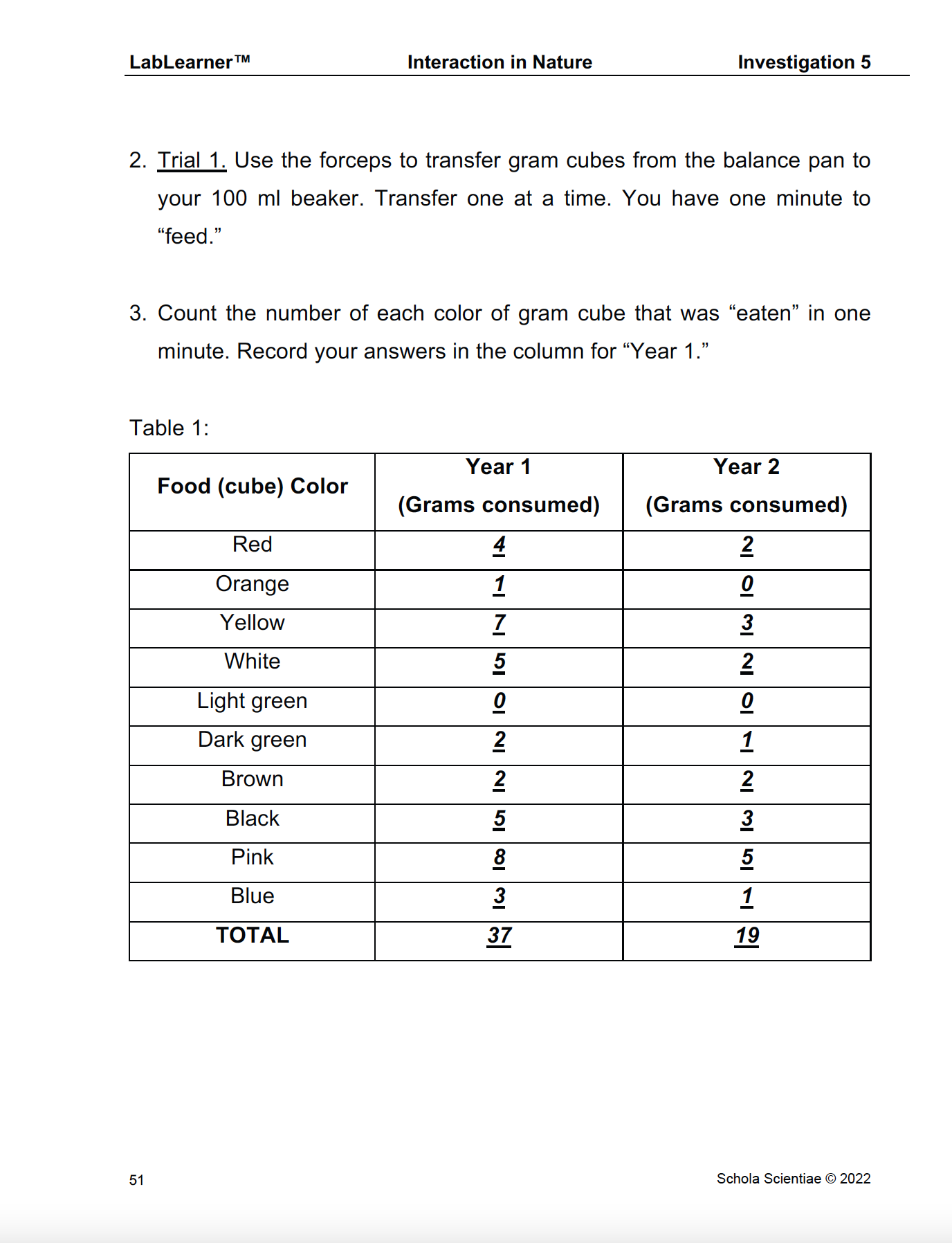
f. After 1 minute is over, instruct the students to fill in Table 1 of the Student Data Record by counting and recording each color of gram cubes “consumed”.
g. After Year 1 results are recorded, students should return all of the gram cubes to the pan balance.
Trial 2
In this Trial, students will model the results of pollution which affect the number of producers in the ecosystem.
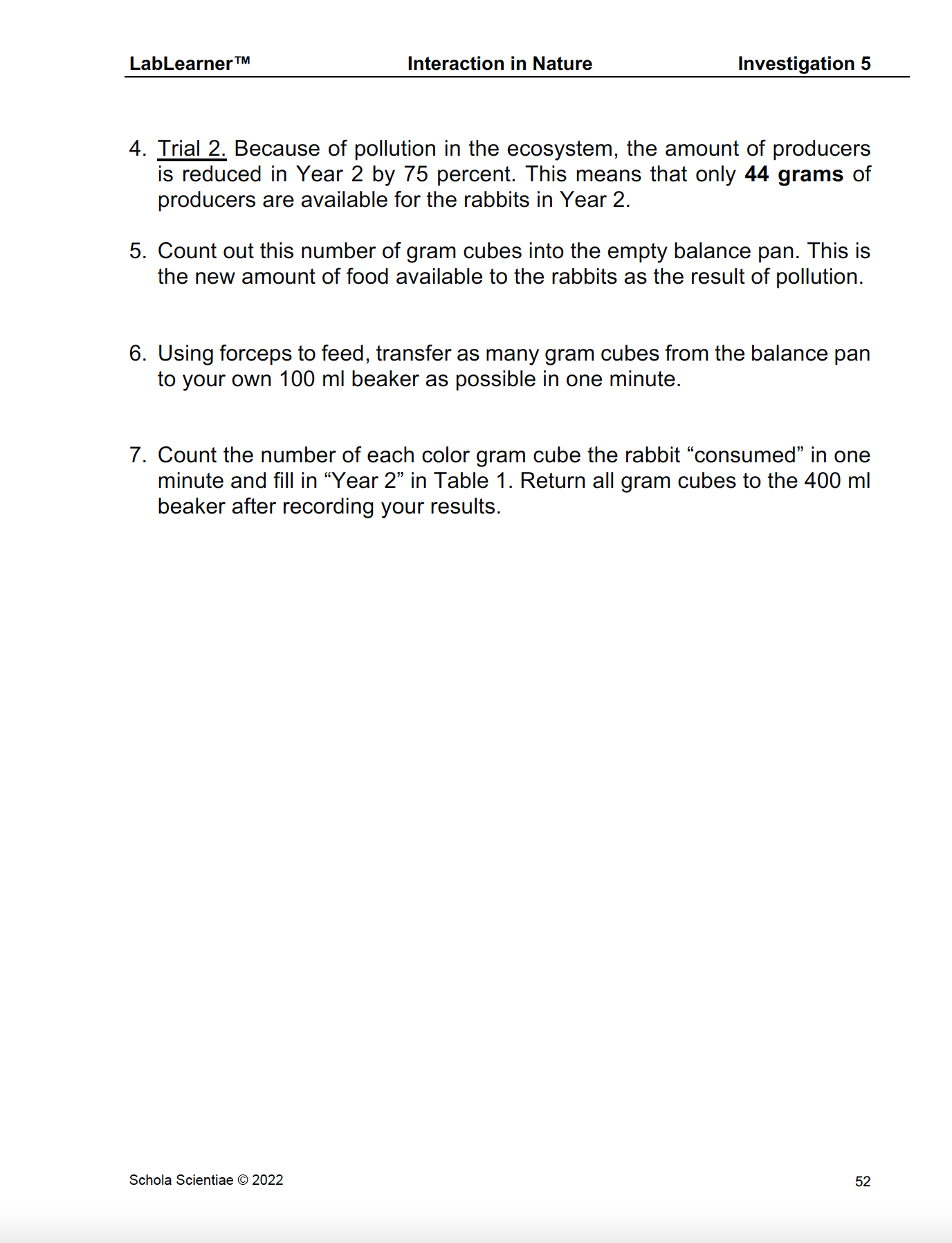
a. Tell the class that it is the following Year. As a result of pollution, the producers in the ecosystem are reduced by 75 percent.
b. As a class, discuss and calculate the number of producers (plants) that will be available in Year 2 for the rabbits to eat. The following steps provide support for students’ mathematical calculations:
- Ask students: If 75 percent of the food is gone, what percent is left? Students should recall that 25 percent is left.
- Explain that the goal of the calculation is to find 25 percent of 175 g. This is the same as one-fourth of 175 g, or 175 g divided by 4 = 43.75 g
- Ask students: which whole number is closest to 43.75 g? Students should suggest 44 g.
c. Students should record this reduced amount of food in Problem 4b of the Student Data Record.
d. Direct each group of students to remove all the gram cubes from the balance pan and then count out 44-gram cubes. Students should place the remaining gram cubes in the balance pan.
e. Once again, one student should serve as a group timer and the other students as “rabbits”, and “eat” as much as possible in one (1) minute.
f. Repeat the experiment as listed in Steps 1d – 1g above.
Reinforce to the class that this period of feeding represents a whole year. Direct students to count and record their results for Year 2 feeding in Table 1 of the Student Data Record.
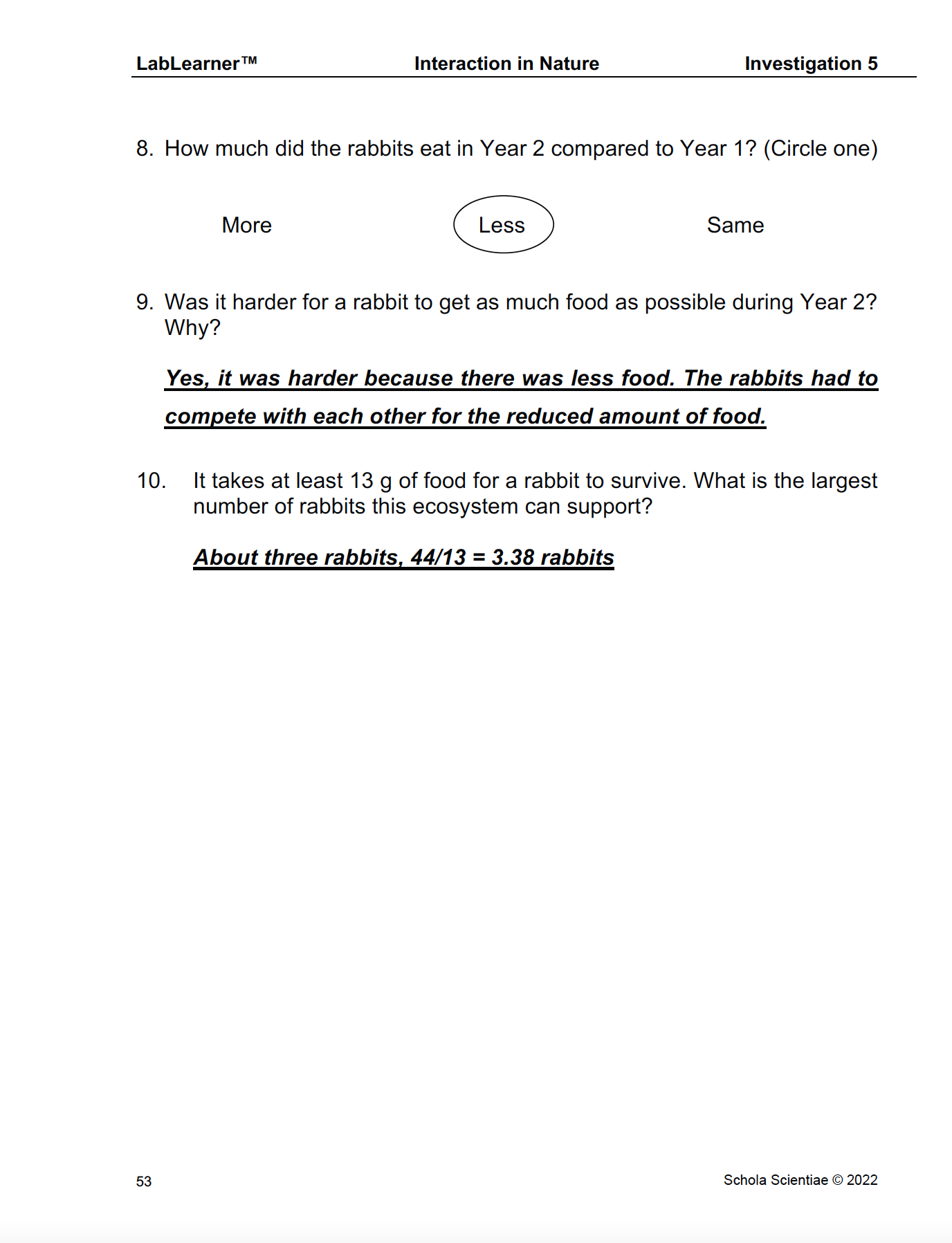
g. Instruct students to return the gram cubes to the 400 ml beaker and answer Problems 8 to 10 in their Student Data Record. It may be helpful to support students’ reasoning by working through pProblem 10 as a class.
Trial 3
 In this trial, students will model the effects of pollution by consuming food, specific types of which are unknowingly toxic. Do not reveal which cubes are “toxic” until after students have conducted the feeding portion of the experiment.
a. Tell students to transfer all 175 gram cubes to the balance pan.
b. Explain that this trial models an altered ecosystem in which they will perform the same one-minute feeding experiment performed previously.
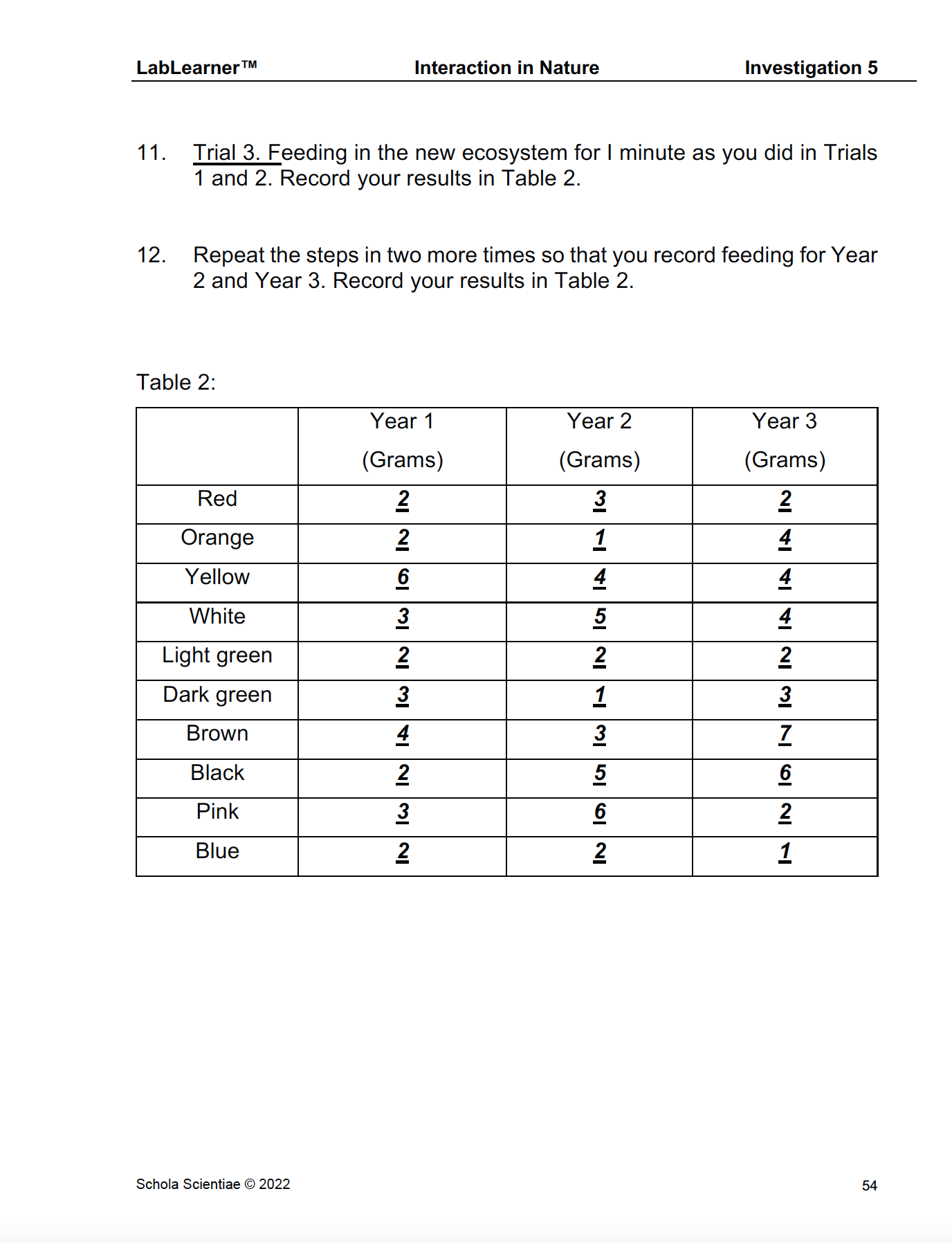
c. Instruct students to “eat” as much food as possible in one minute. as before. They should record their results in column “Year 1” of Table 2 in the Student Data Record.
d. Students should return all of the gram cubes to the balance pan and repeat the one-minute feeding experiment two more times. Students should add this data as Year 2 and Year 3 in Table 2 of their Student Data Record.
e. Tell students that some of the food was polluted and contained a toxic pollutant.
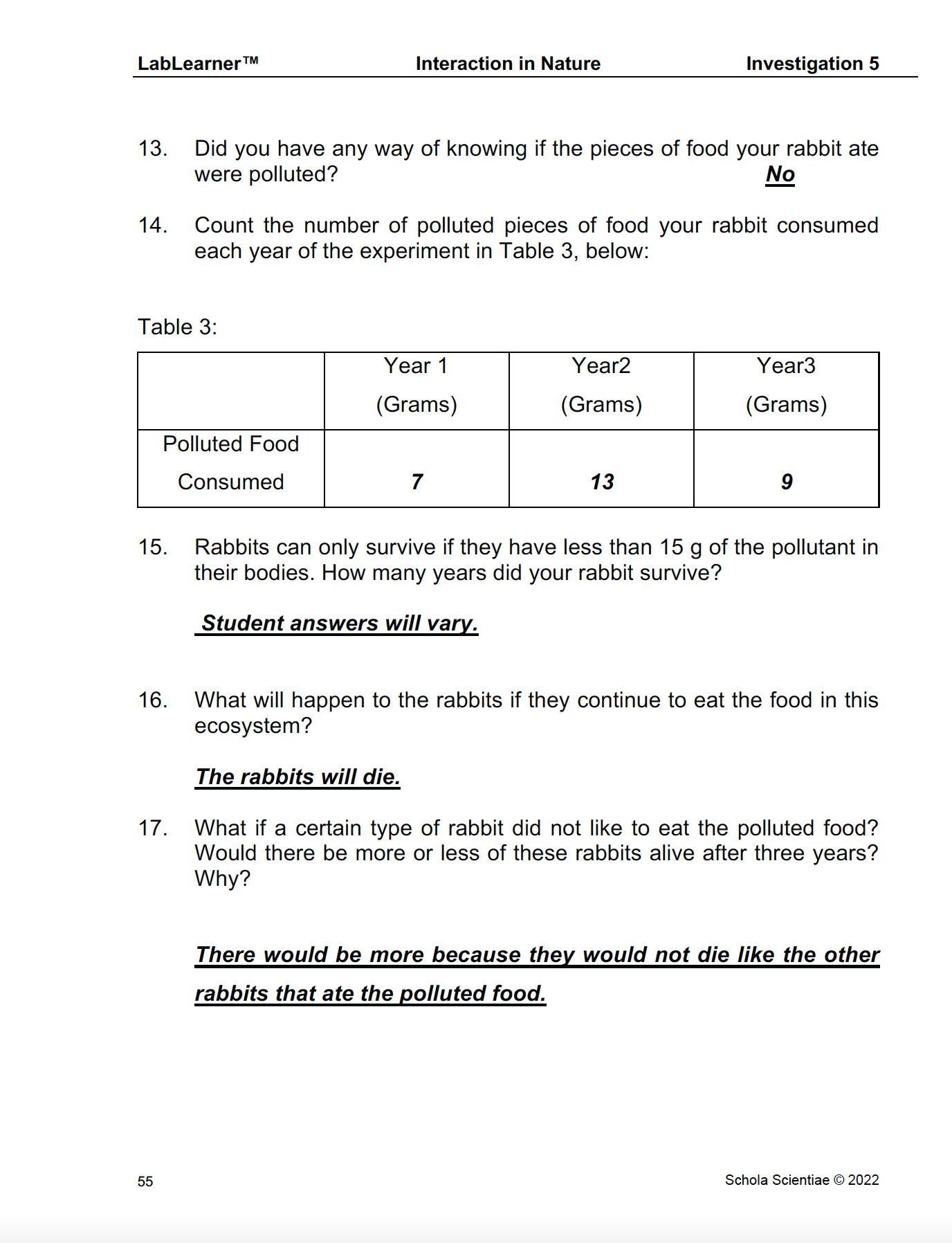
Ask students: did you have any way of knowing which pieces of food your rabbits ate were polluted? Students should record their answers to this question in Problem 13 of their Student Data Record.
f. Tell the class that only the pink, blue, and black gram cubes contained the pollutant. Direct students to determine how much of the polluted food their rabbits consumed each year using data in columns Year 1-3 in Table 2 and report the numbers in Table 3 in the Student Data Record.
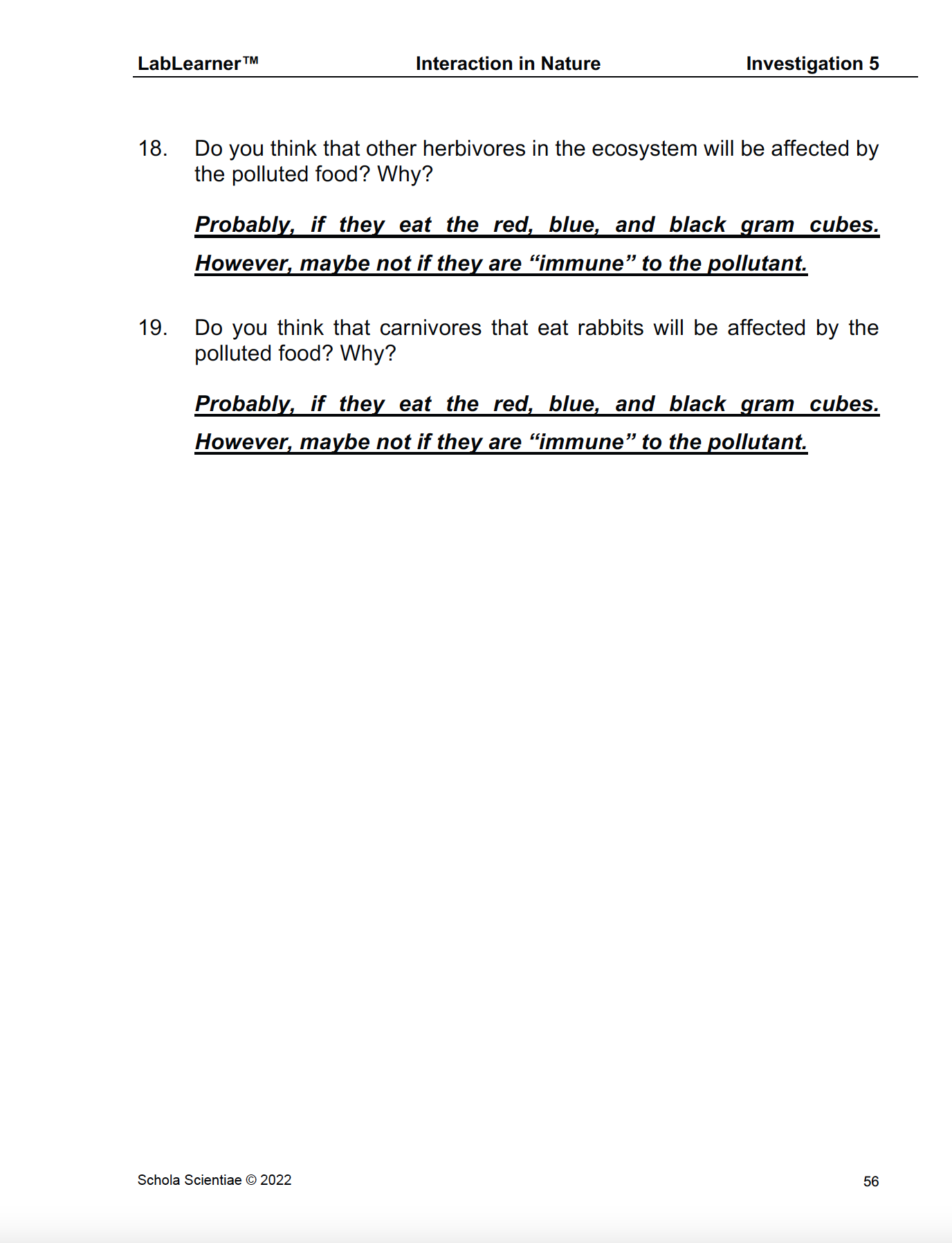
g. As a class, discuss and complete Problems 14-19 in the Student Data Record.
KEYS

CLEAN UP
Let students know your expectations for clean-up. Ask them to clean up.