
Teacher Portal:
Dynamic Earth Journey
Six: Earth Processes and Changes
 PRINT IT
Use your browser to download a printable PDF as help during the slide presentation and to make additional notes. In your browser, go to File > Print and then choose to save as PDF.
NAVIGATE IT
Once the slide presentation is launched
- use your left and right arrows to advance or go back in the slide presentation, and
- hover your mouse over the left edge of the presentation to get a view of the thumbnails for all the slides so that you can quickly move anywhere in the presentation.
- Click HERE to launch the slide presentation for the CELL.
SHARE IT
SLIDE 6VDE-1
______________________________________________
SLIDE 6VDE-2
Students should remember that, although we are focusing in this Journey on changes in the Earth’s surface caused by Continental Drift, weathering and erosion are also constant factors in this 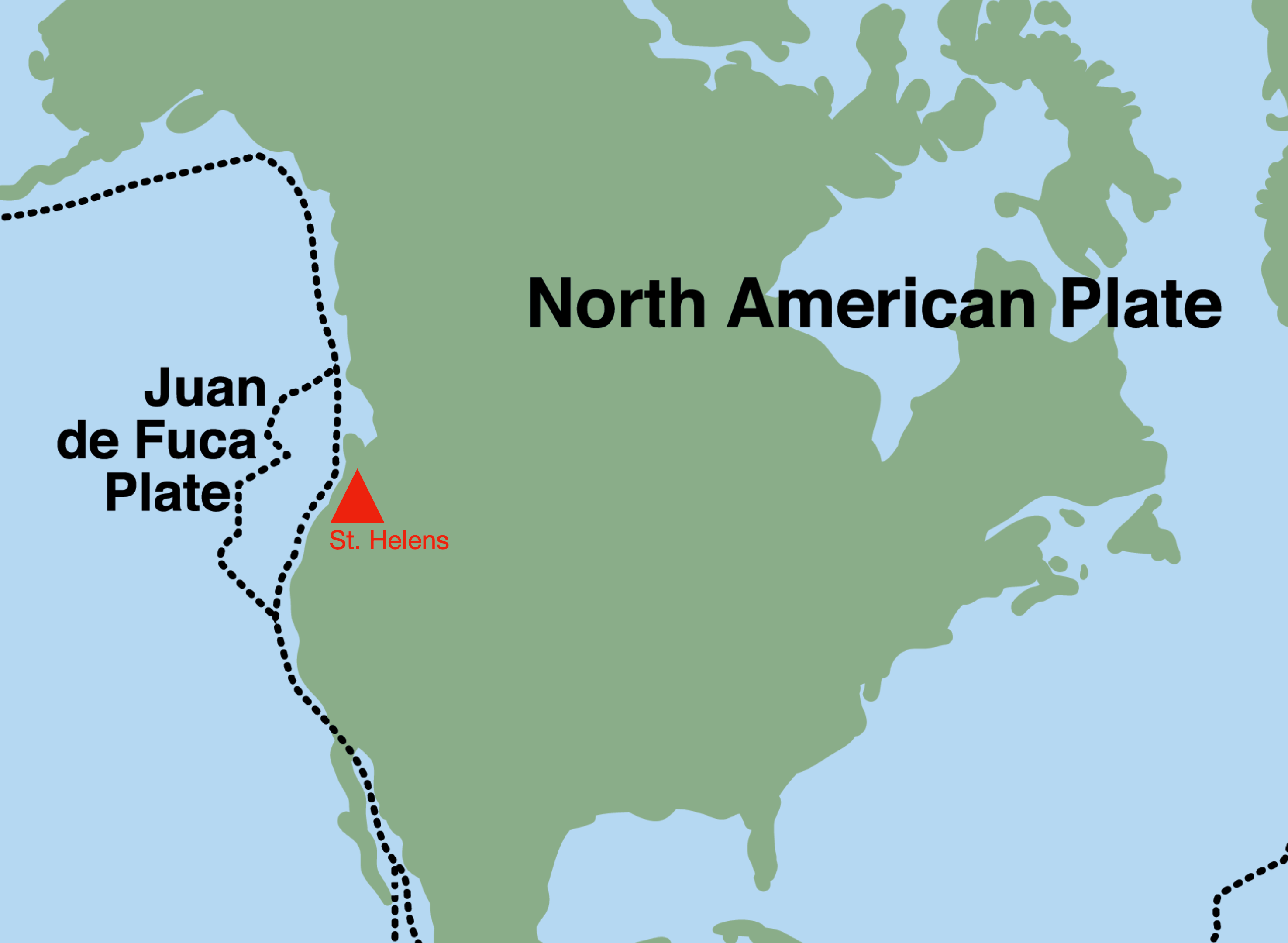 process of change.
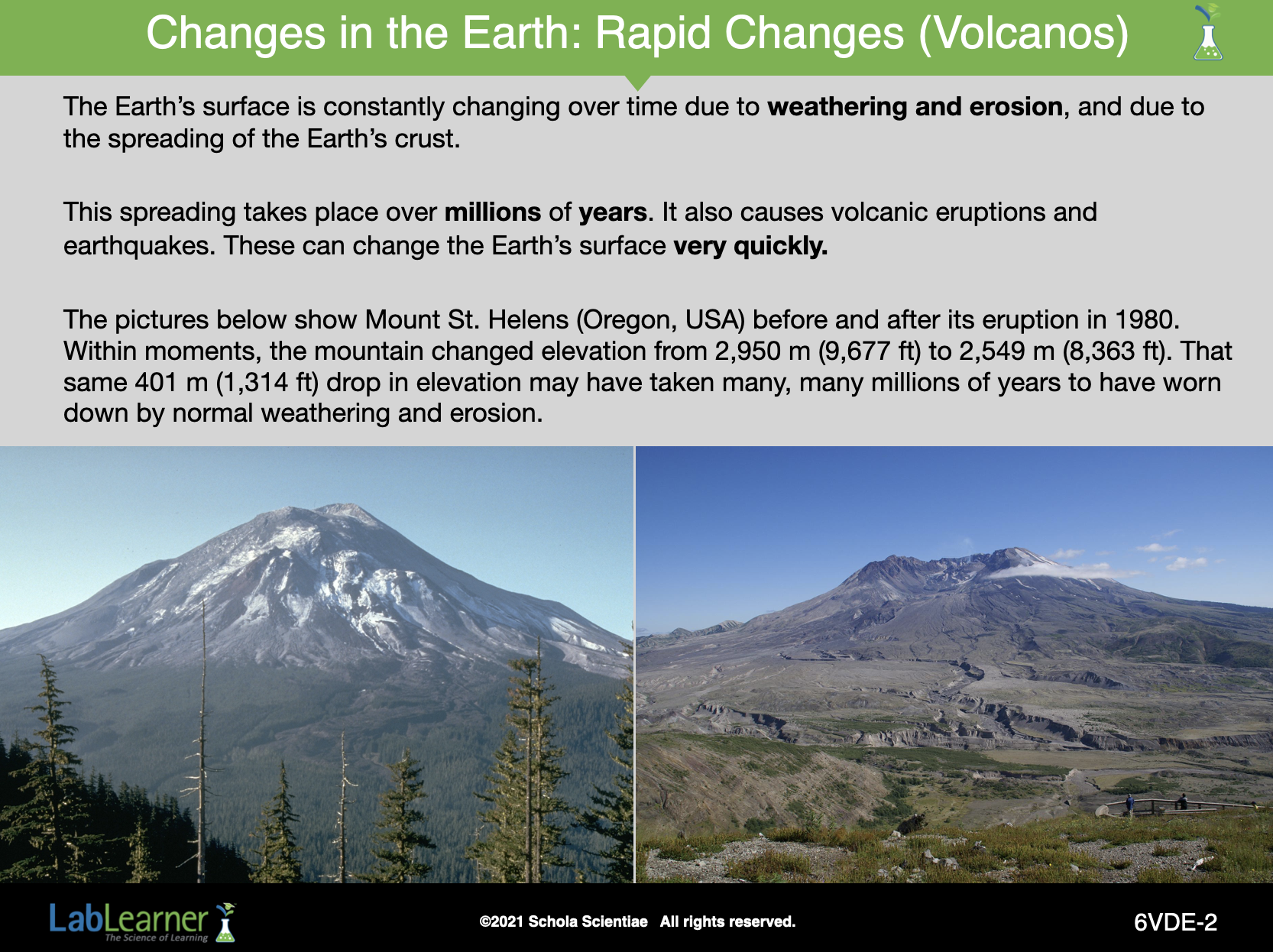
Weathering is generally a slow process, and erosion can be either fast or slow. Continental Drift is always a slow process — we can’t feel it happening. However, the movement of tectonic plates can cause fast, dramatic changes in Earth’s surface through volcanic eruptions and earthquakes.
The eruption of Mount St. Helens in 1980 clearly demonstrates just how quickly a major change in the Earth’s surface can occur. Mount St. Helens is a volcano near the convergent boundary between the North American and Juan de Fuca tectonic plates. We have already discussed how volcanos form near convergent boundaries of tectonic plates. Mount St. Helens is a good example.
______________________________________________
SLIDE 6VDE-3
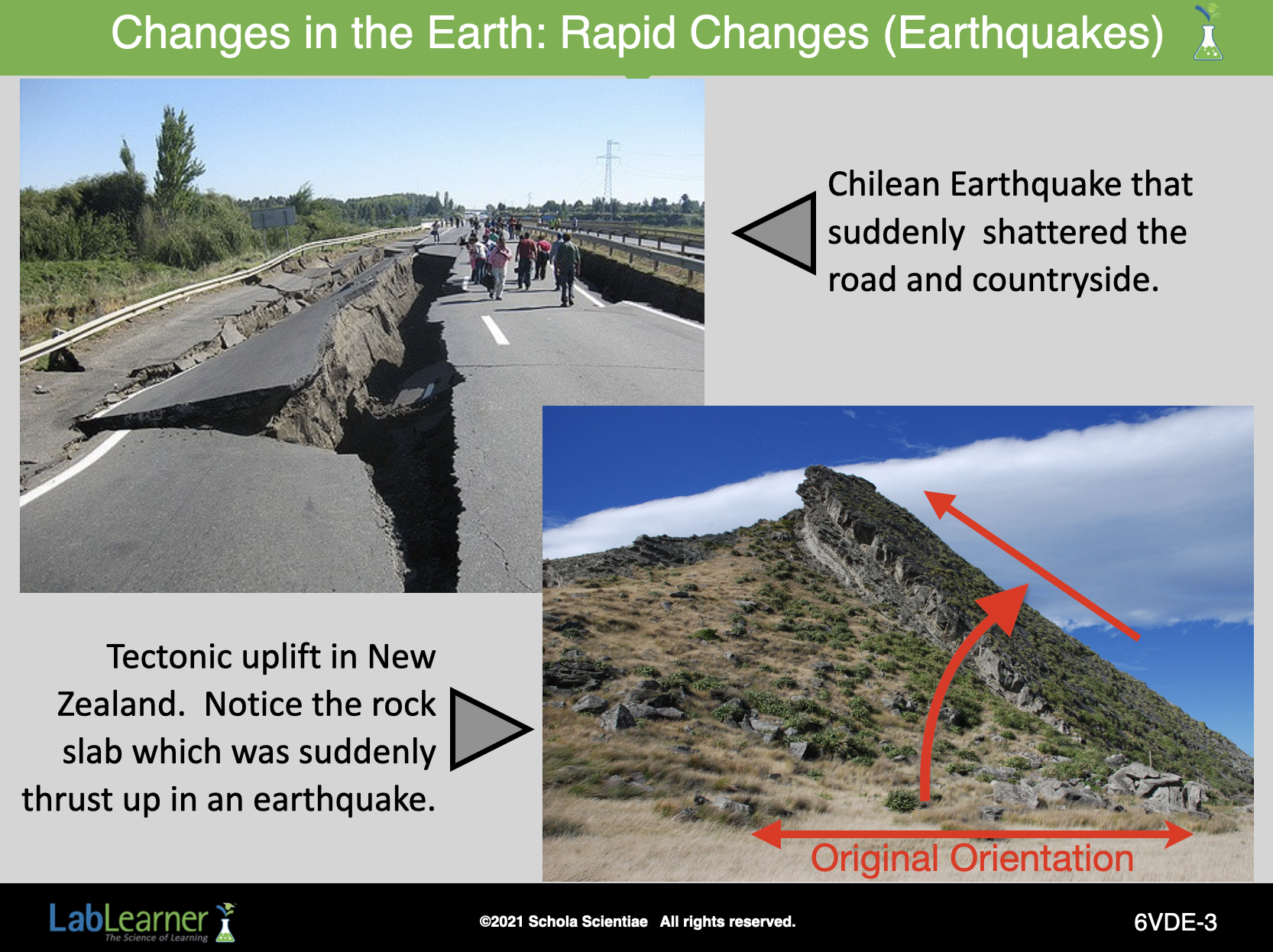
Think about Continental Drift and Plate Tectonics. These forces are constantly at work on the Earth’s surface but exert their impact over millions and millions of years. However, these extremely slow changes occasionally cause very noticeable and very rapid changes in the Earth’s surface.
In the previous slide, we saw how quickly a volcano can alter the Earth’s surface (Mount St. Helens). This slide provides two more examples of rapid change of the Earth’s surface, in this case, associated with earthquakes that occur near tectonic boundaries.
______________________________________________
SLIDE 6VDE-4
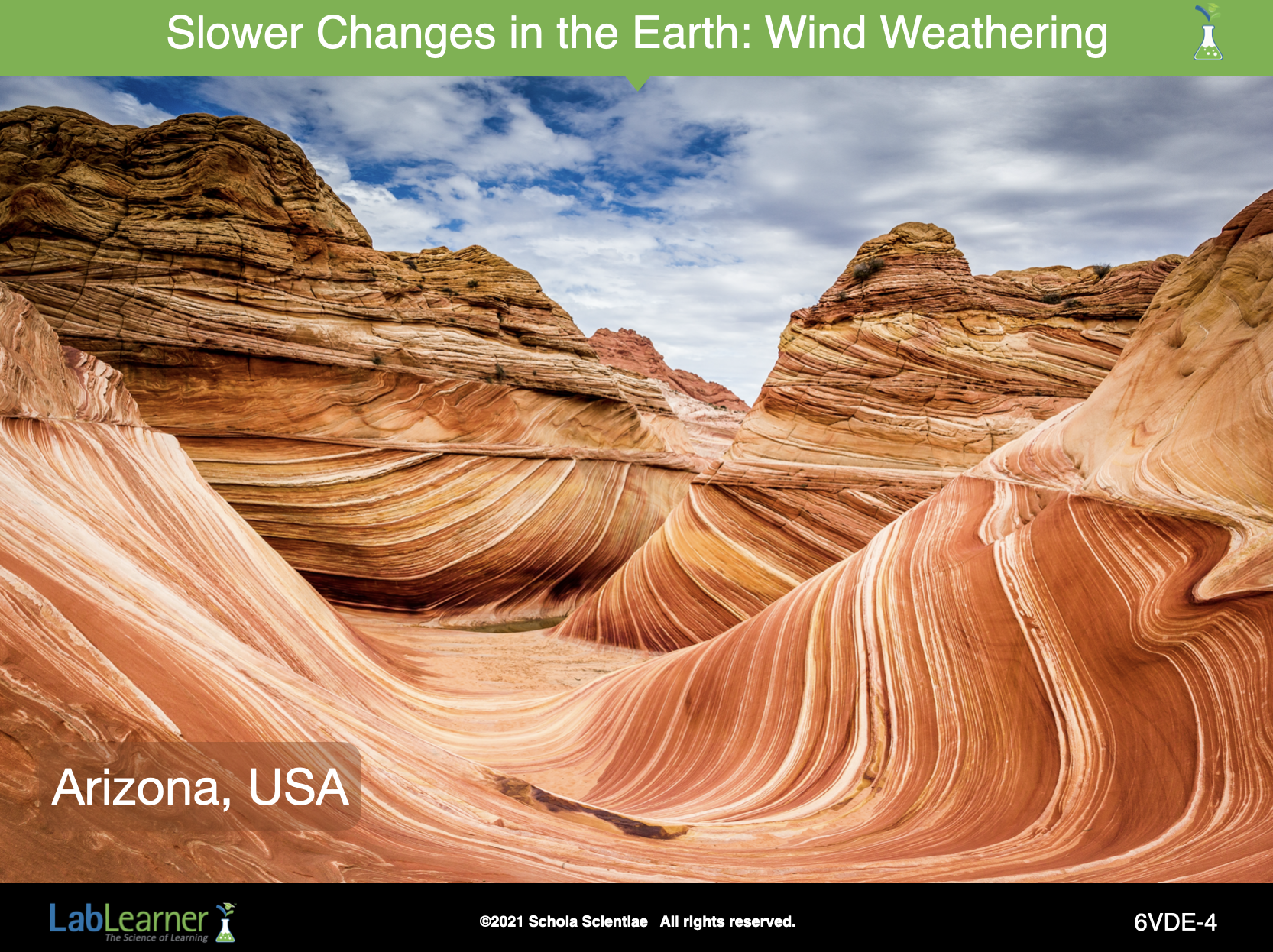
Breathtaking natural sculptures of sandstone are created by centuries of winds carrying sand particles that constantly scour the rock surfaces.
______________________________________________
SLIDE 6VDE-5
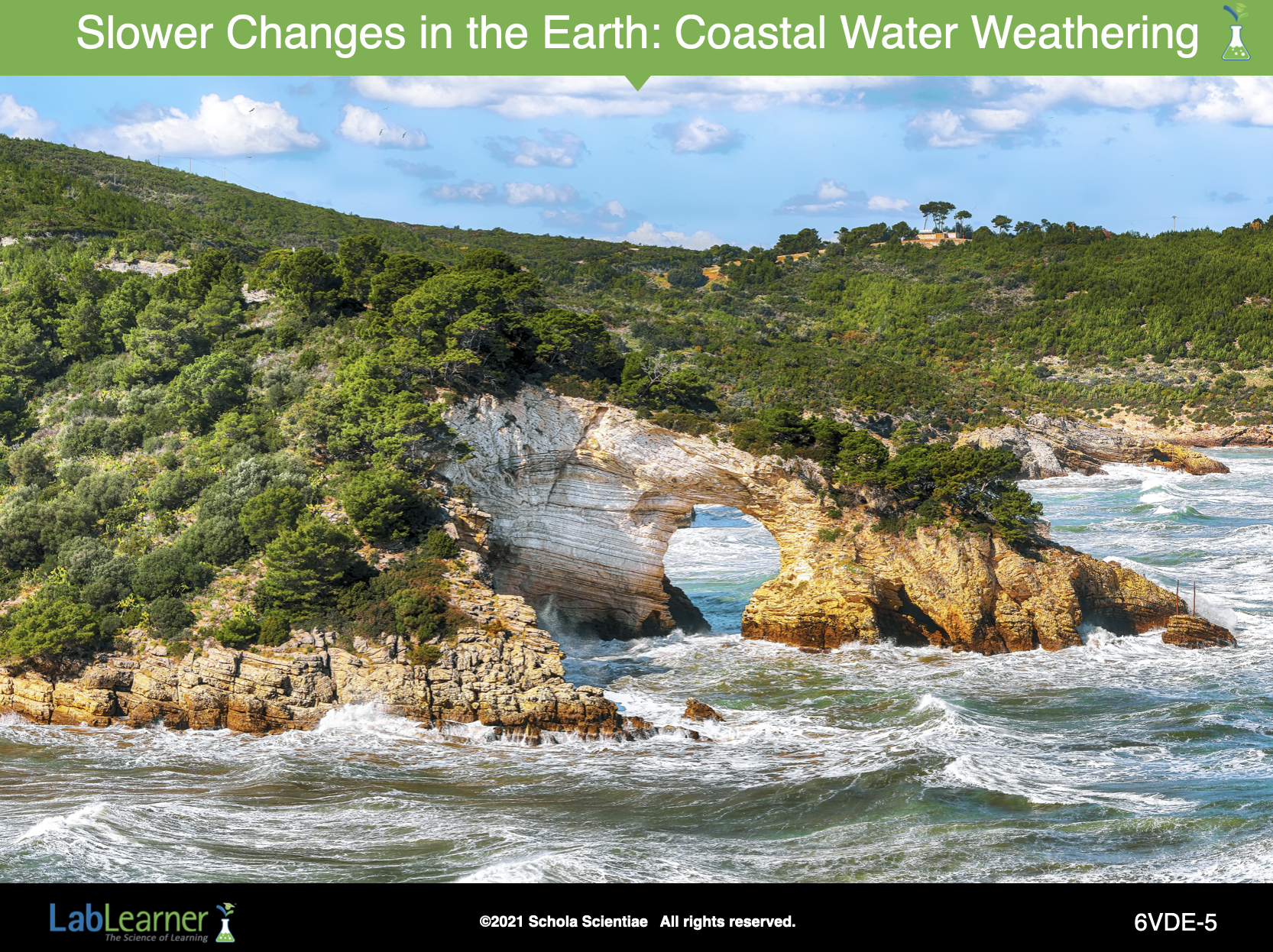
Waves continuously slam into the rocks along an ocean shore and exert a great deal of energy. The constant pounding, wave after wave, century after century, modifies the coastline dramatically over long periods of time.
The waves slowly dissolve the rocks and then pound the weakened stone, often fracturing off chunks.
In the surf, small rock fragments are worn down to smaller and smaller grains, thus forming a sandy beach.
______________________________________________
SLIDE 6VDE-6
There are other, less obvious, forces at work that lead to changes in the Earth’s surface — including weathering and erosion.
In contrast to earthquakes and volcanic eruptions, weathering and erosion are examples of slower changes that alter the Earth. Erosion can, however, happen very quickly if there are heavy rains and flooding.
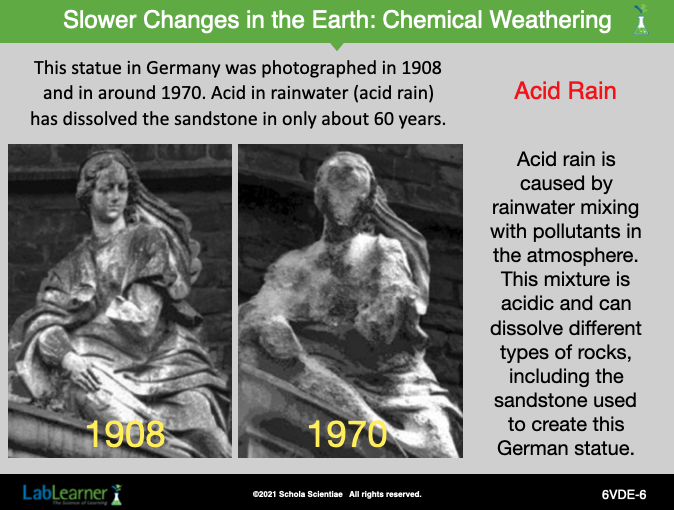
Look at this sandstone sculpture. The picture on the left was taken 60 years before the picture on the right. This is an example of weathering.
Since the statues are high above an outdoor entrance, the only thing that they came in contact with over this period was the weather.
Acid rain, increased by air pollutants, has accelerated the natural process of weathering by rainwater. Students will learn how the pH of rainwater is altered as it falls through the atmosphere in LabLearner middle school.
______________________________________________
SLIDE 6VDE-7
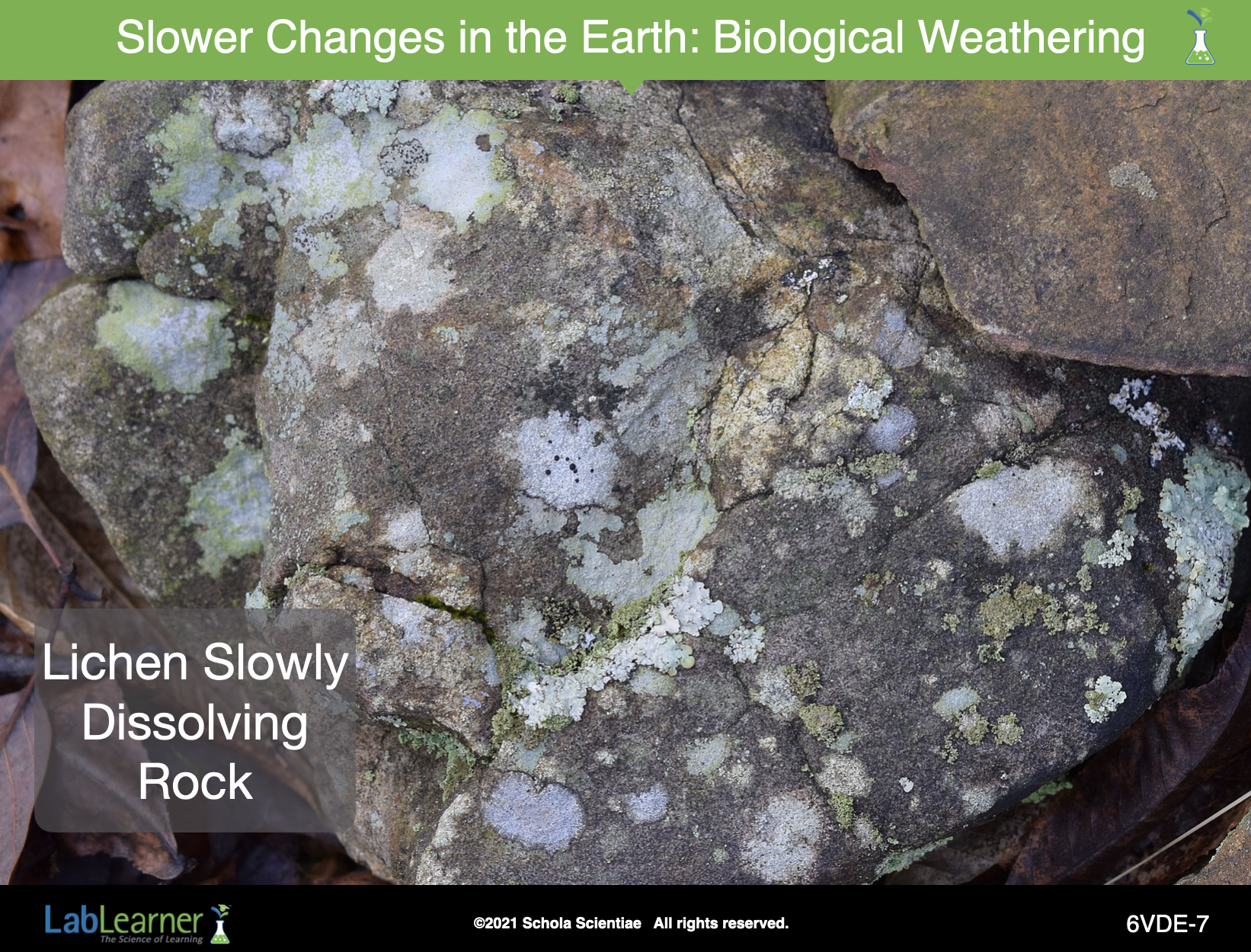
Lichen grows on rock and other materials. Lichen is an ancient lifeform composed of a mutually beneficial association between a fungus and an alga) It secrets a weak acid that dissolves and softens rock. The weakened rock is then easier to crack into smaller pieces by freezing and thawing and plant roots.
______________________________________________
SLIDE 6VDE-8
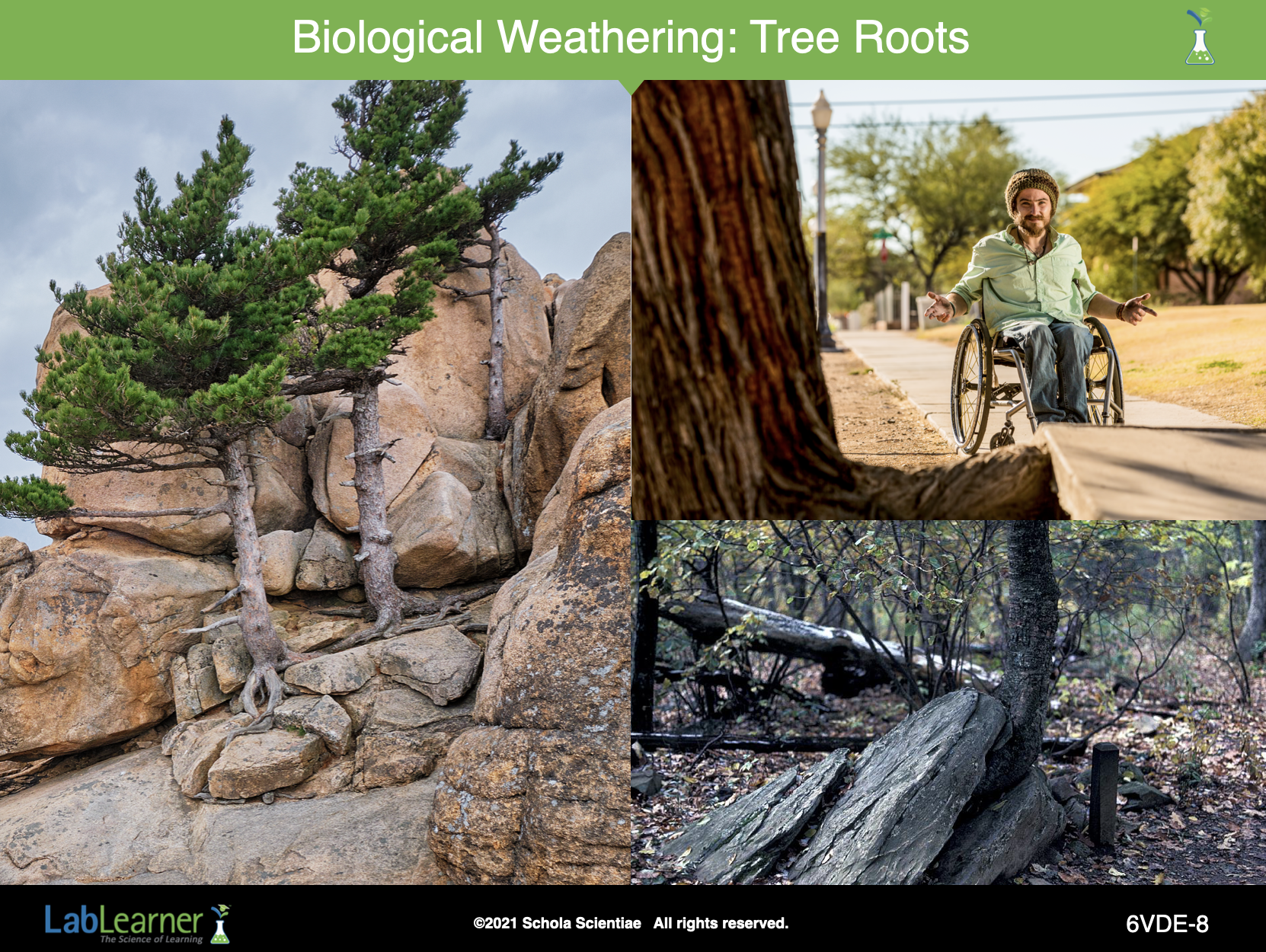
A tree grows so slowly that its growth cannot be detected in real-time. Its roots secrete an acid (carbonic acid) that very slowly dissolves rock surfaces. This provides nutrients for the growing plant and softens rocks so that their growing roots may actually shatter surrounding rocks into pieces.
This incredible power of tree roots can be seen in cities and parks worldwide. Trees planted near pavement and sidewalks begin to change the Earth’s surface around them as they grow. This often leads to large, heavy slabs of concrete being raised from their original position. Have you ever hit the edge of an uplifted sidewalk slab when riding your bike? Be careful!
______________________________________________
SLIDE 6VDE-9
______________________________________________
SLIDE 6VDE-10
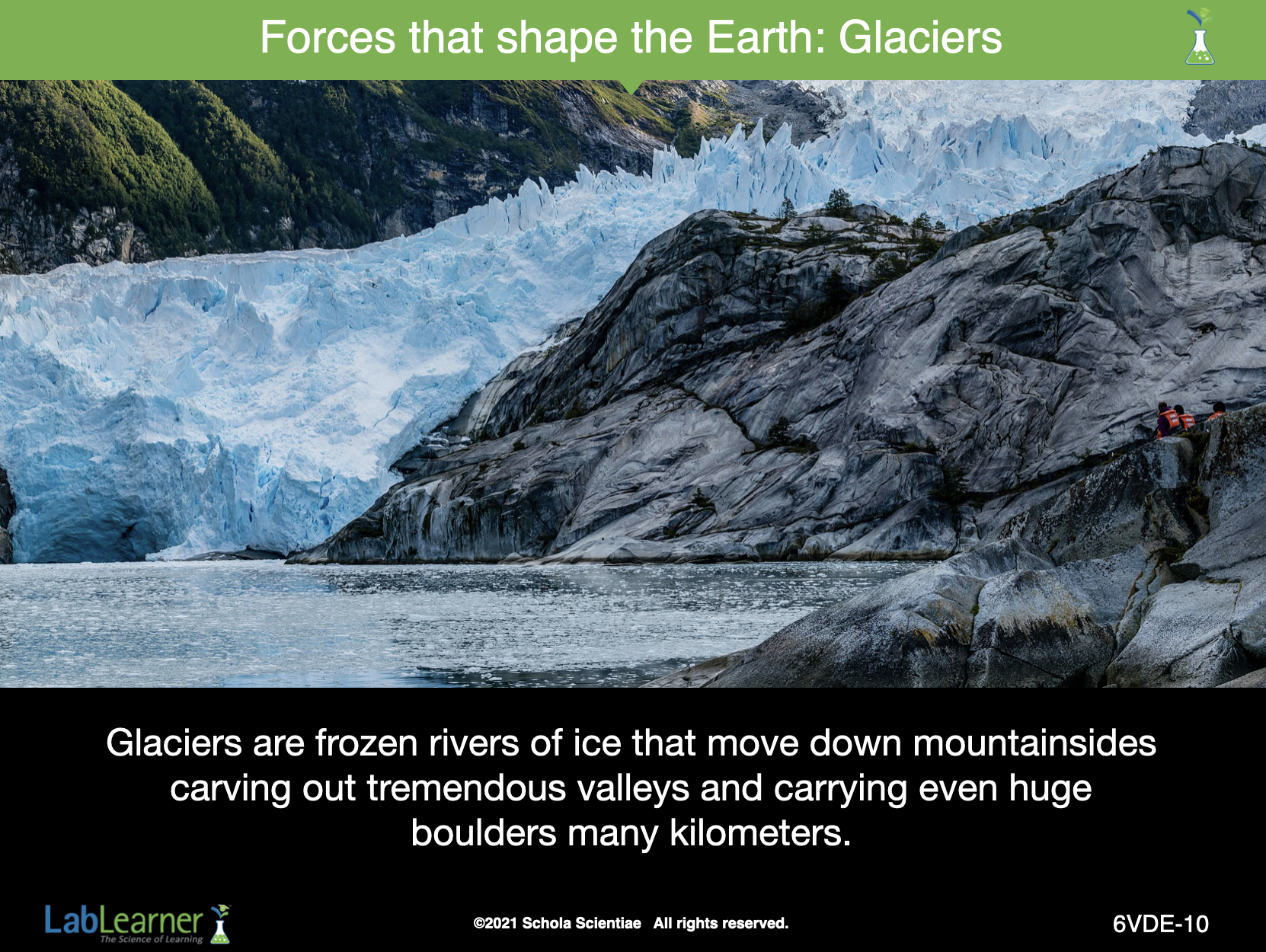
This is a glacier in Chile. Students may have heard (through popular movies) that much of the Earth was covered by glaciers during the last Ice Age that began about 30,000 years ago. These glaciers began shrinking and receding when the ice age ended some 10,000 years ago. As can be seen, they are still massive (look at the people in orange in the foreground for scale).
Question: Why does this glacier have a blue tint to it?
Answer: Simple answer, because it is made of water.
______________________________________________
SLIDE 6VDE-11
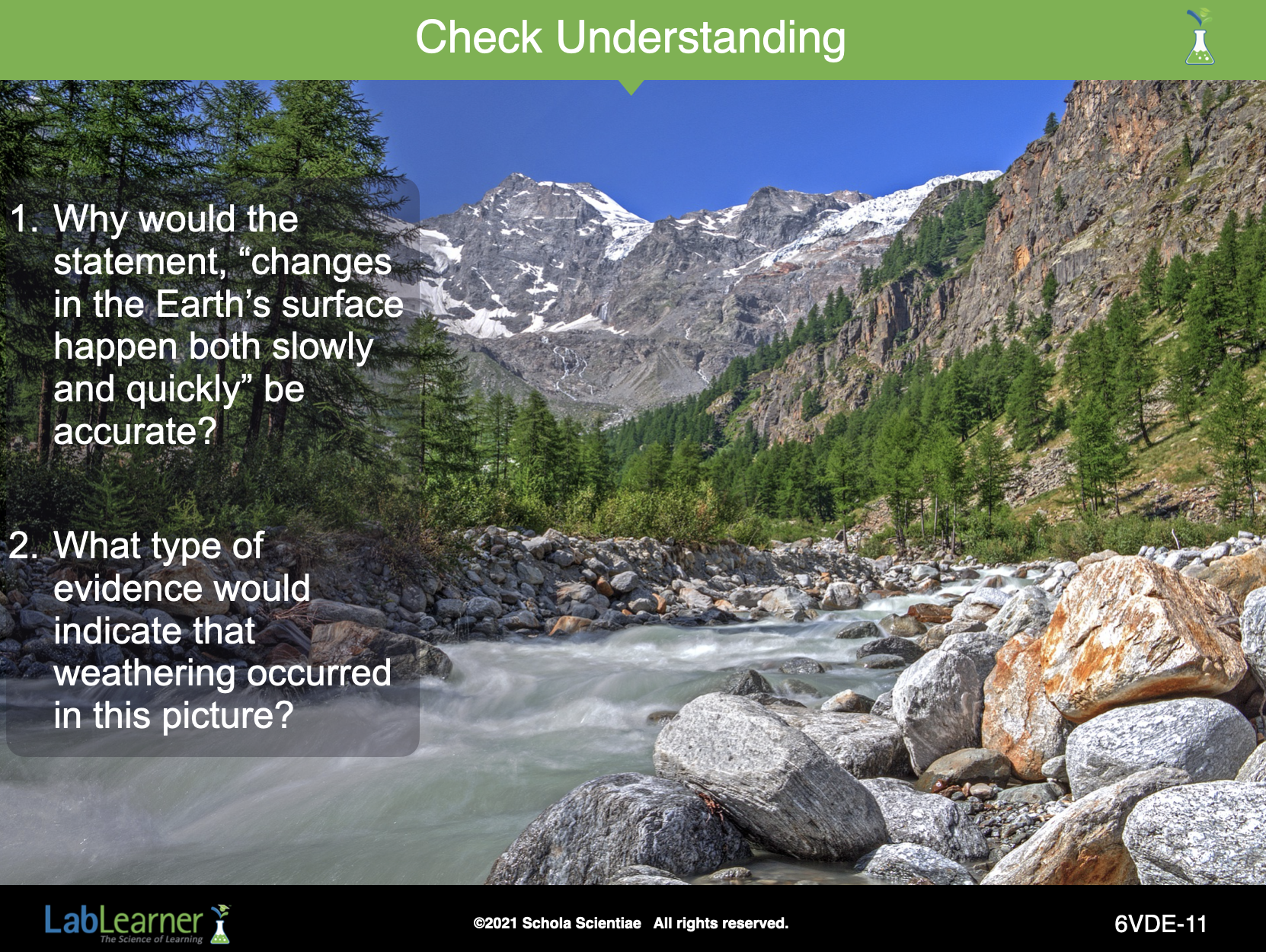
1. Why would the statement, “changes in the Earth’s surface happen both slowly and quickly.” be accurate?
Students have looked at several examples of both slow and fast change. All of which are naturally occurring processes, and all of which are happening all the time. They have seen the type of fast, dramatic change that can occur through earthquakes and volcanic eruptions.
In addition, students have looked at slower examples of weathering and erosion in previous slides as well. For these slower examples, it should be pointed out that at any time, faster forces can come into play due to changes in weather and tectonic plate activity.
2. What type of evidence would indicate that weathering occurred in the picture above?
Students know that mountains are formed when tectonic plates meet, causing one plate to rise up and form jagged mountain ranges, and another to be pushed deeper below the surface of the earth. They also have had a sneak peek at a glacier in the previous slide.
New, jagged mountains get weathered over millions of years by both wind and rain, causing them to appear less “sharp.” Erosion carries broken-down pieces and particles of rock down the mountains and deposits them near the bases. This sediment softens the slopes, and also provides the makings for soil.
In this slide (photograph taken in the Italian Alps), we can see that trees have grown in the rich deposits at the base of the mountains.
Finally, it is likely that a glacier gouged out the entire valley that we see in the picture!