
Teacher Portal:
Properties of Compounds
Investigation 5
Investigation Five: Chemical Combinations
In Investigations One through Four, students explored how chemical composition determines a compound’s physical properties. Students also examined the effects of composition on the chemical property of pH. In each Investigation, students focused on the properties of individual compounds. In Investigation Five, students will examine how the composition of compounds determines how they interact with each other in solution.
In prior Investigations, students explored the physical changes that occur when a solution is formed. Students learned that solutes change form while solvents remain the same. In each case, students examined solutes and solvents that do not react with one another. However, some compounds react when they are mixed.
A reaction is a chemical change. Reactions form new substances. The product or products of the reaction have different properties from the reactants. For example, when baking soda and vinegar react the products are solid sodium acetate, water, and carbon dioxide gas.
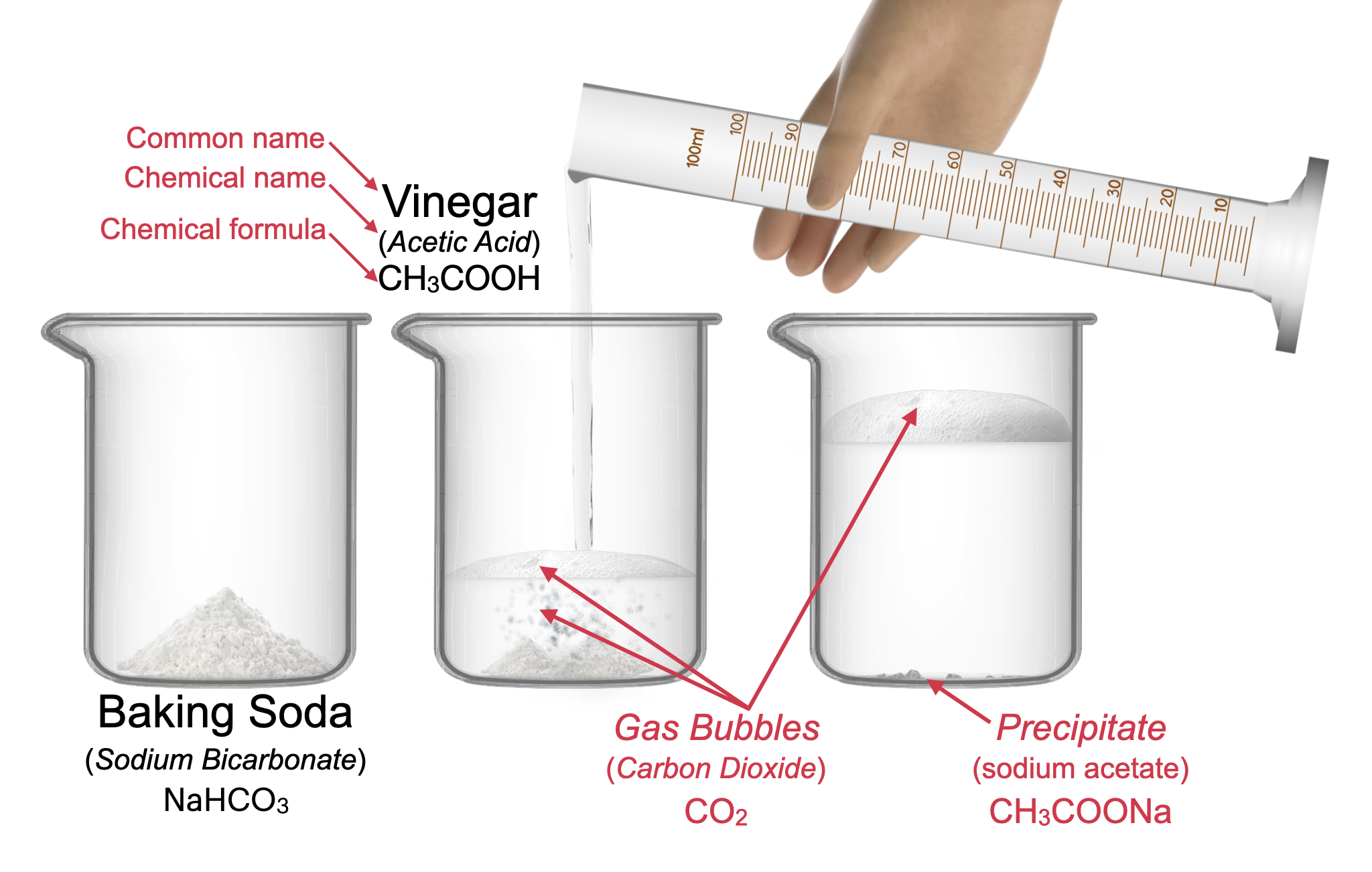
In the baking soda and vinegar example, the final solution looks very much like the initial solution with the exception of some unexploded gas bubbles and a small amount of solid percipatate on the bottom of the beaker. An untrained observer might suggest that no change occurred unless he or she looked for one or more of the ten common signs of chemical change. These signs are:
- A change in pH
- A change in temperature
- An unexpected color change
- A change in odor
- Production of a gas
- A change in physical or chemical properties
- Formation of a precipitate
- A change in volume
- A change in electrical conductivity
- A change in melting or boiling point
Each of these signs generally indicates that a new product may have formed. However, each of these signs may also accompany a physical change.
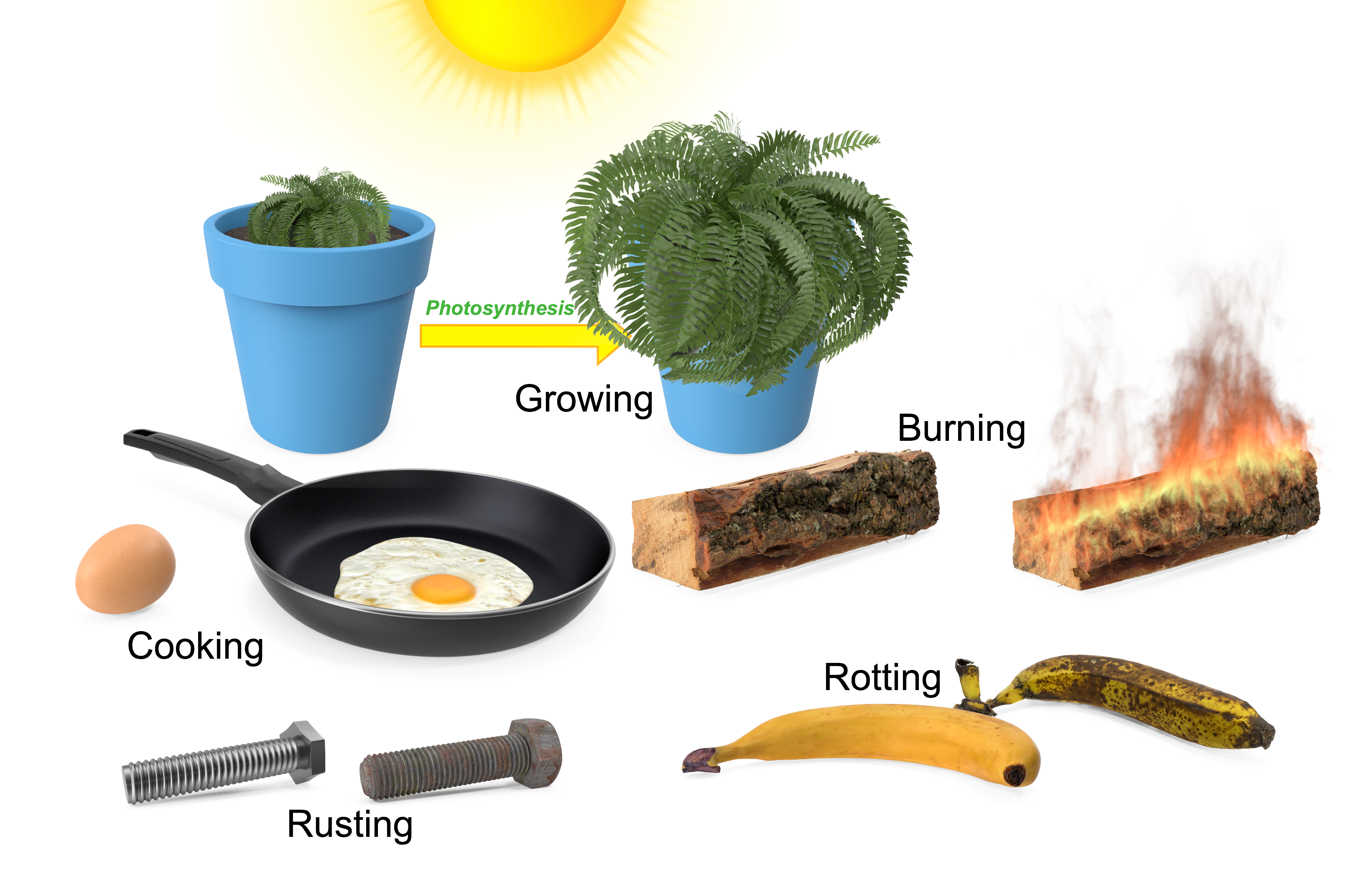
Common Examples of Chemical Changes
Chemists can often rely on their vast store of previous knowledge to determine whether a change is physical or chemical and whether the appearance of a sign listed above signals a chemical change. However, if they do not have previous knowledge of a particular reaction, they can observe a reaction to determine if more than one sign of chemical change has happened.
In the baking soda and vinegar example, there is a change in temperature, a change in odor, production of a gas, and formation of a precipitate. A chemist might also detect a change in pH in the solution. Taken together, these signs would indicate to the chemist that a chemical change has occurred.
In addition, the chemist would note that these signs would be more indicative of chemical change if there are multiple compounds present as there are instances in which several of these signs are present during a physical change in which only one compound is present. For example, water increases in temperature and gives off steam when heated, both signs that are described as signals of chemical change. However, during these changes the only substance present is water and scientists know that changes of state are purely physical despite the fact that more than one change occurred.
In some instances, the changes observed are subtle and chemists may be unable to determine from the signs alone whether or not a chemical change has occurred. In these cases, scientists may choose to conduct additional tests before concluding whether a change is physical or chemical.
In this Investigation, students will study six different combinations of chemicals to determine if a chemical change has occurred. As students conduct their investigations, they will use their observations of the common signs of a chemical change to predict whether the changes they see are chemical changes. Students will compare the results of these trial combinations to determine if compounds made of the same elements react differently. Students will also determine if compounds made of different elements react similarly.
Properties of Compounds: Investigation 5 - Mathematics Concepts
Prelab
- quantitative properties
- comparing (non)measurable characteristics
Lab
- comparing (non)measurable characteristics
- volume in mL
- mass in g
Postlab
- quantitative properties
- comparing (non)measurable characteristics
- data table
- data analysis
Properties of Compounds: Investigation 5 - Procedural Tools

Properties of Compounds: Investigation 5 - Cognitive Tools

Properties of Compounds:
Investigation 5 Quiz

